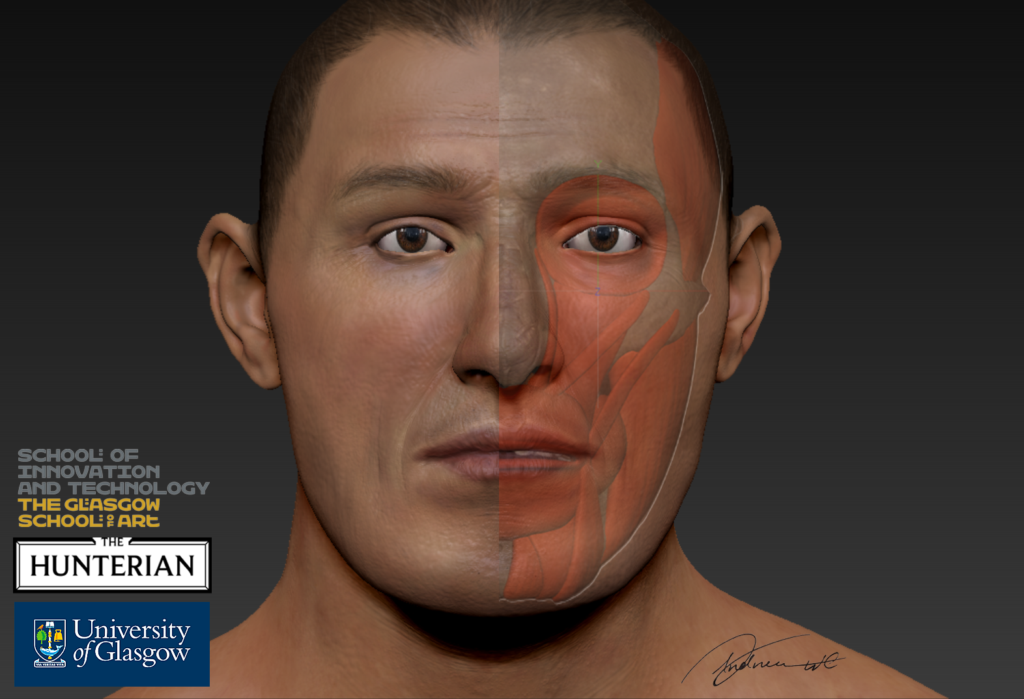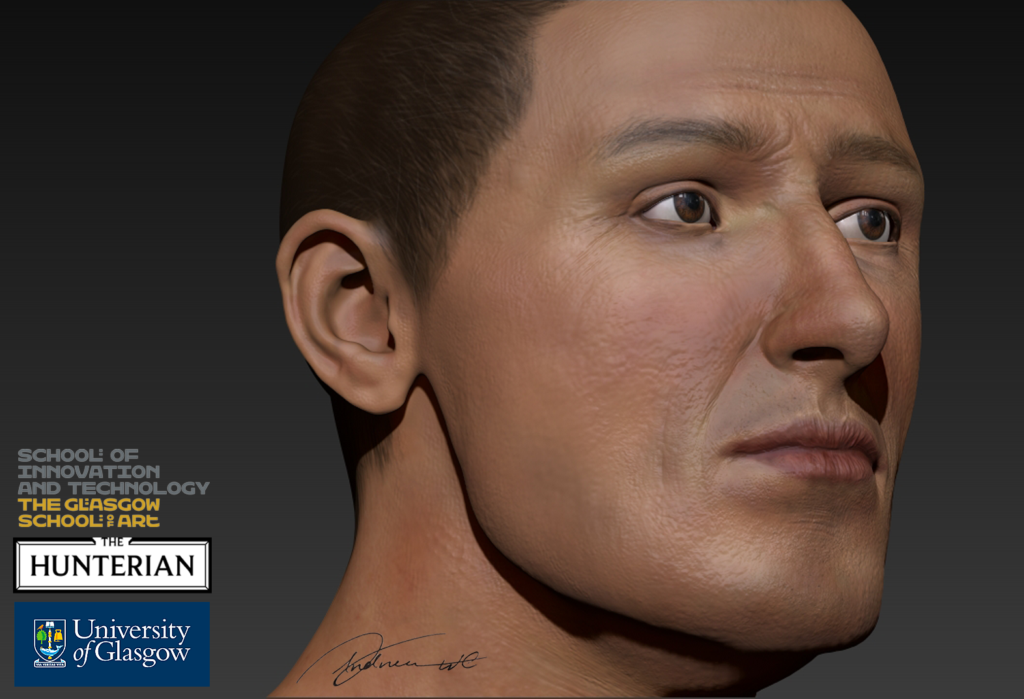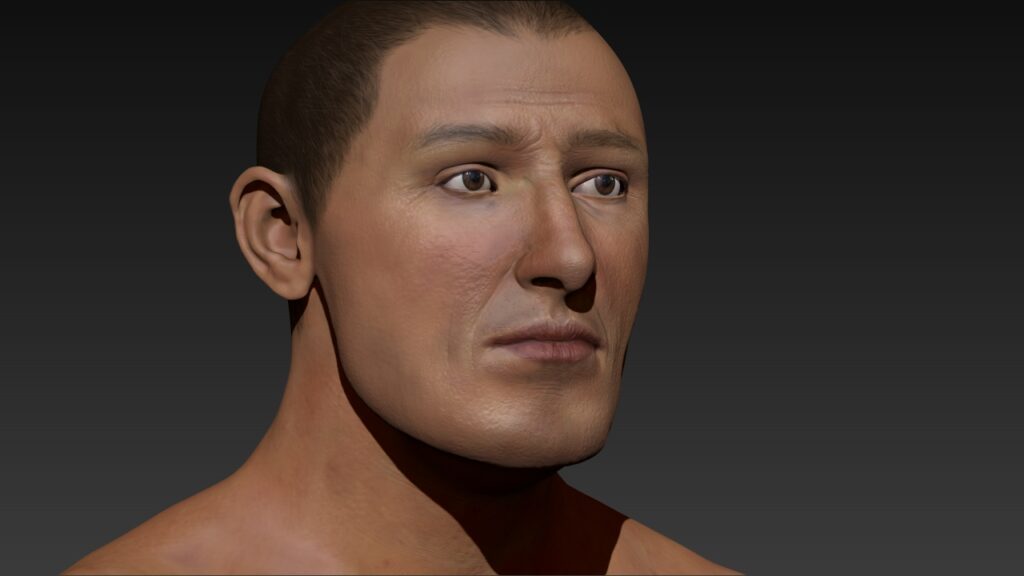
Thesis Project: 3D Computerised Facial Reconstruction of the Neolithic Clachaig Skull, c. 4000-2500 BCE (a revision of technology)
My thesis project, the 3D Computerised Facial Reconstruction of the Neolithic Clachaig Man (a revision of technology), was commenced under the excellent supervision of Eilidh Ferguson, Danny Buksh and Tobias Houlton for the MSc Medical Visualisation and Human Anatomy programme. The project is centered around the Clachaig Skull, which takes its name after the cairn of Clachaig Falls, situated on the Isle of Arran, from which it was excavated in the 1900s by Dr James Bryce; the skull itself dates back to sometime in the Neolithic Period (4000-2500 BCE).
In 1998 Professor Peter Vanezis, Regius Professor of Forensic Pathology at University of Glasgow produced a Computerised Facial Reconstruction of the Clachaig Skull, from which the sculptor Marvin Elliott produced a physical 3D bust of the Clachaig Man, which currently resides in the Isle of Arran Heritage Museum.
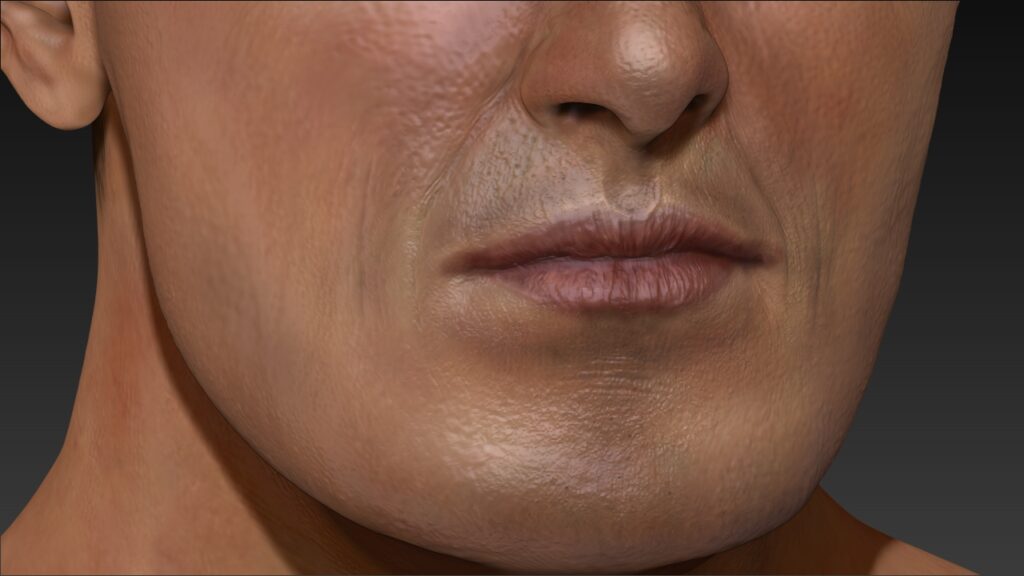
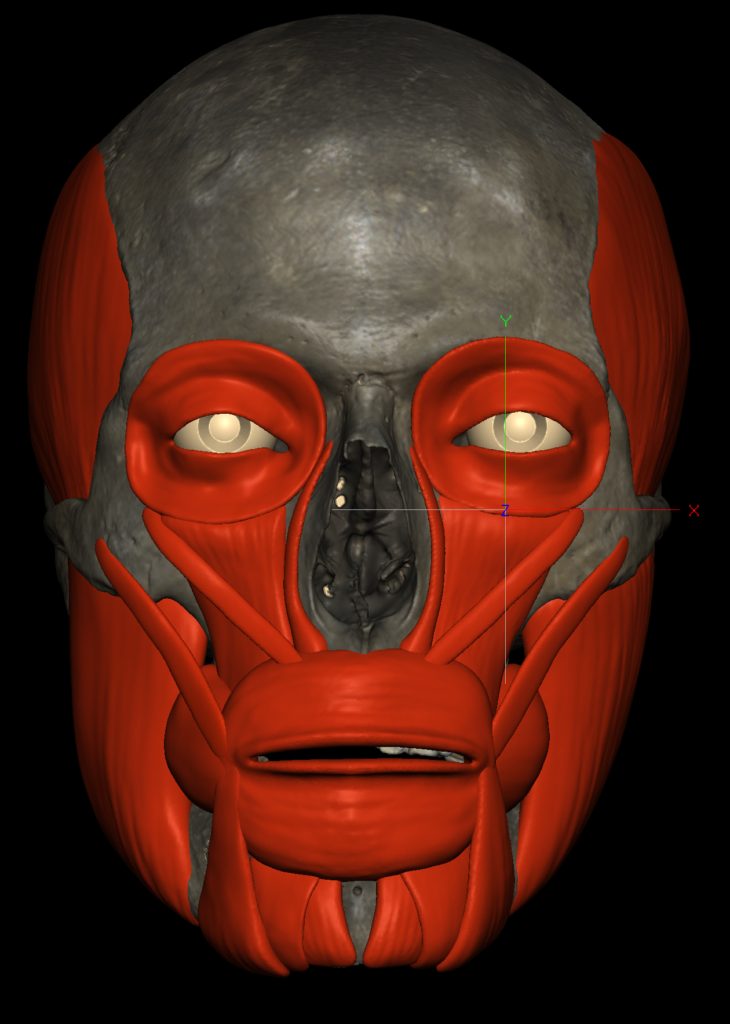
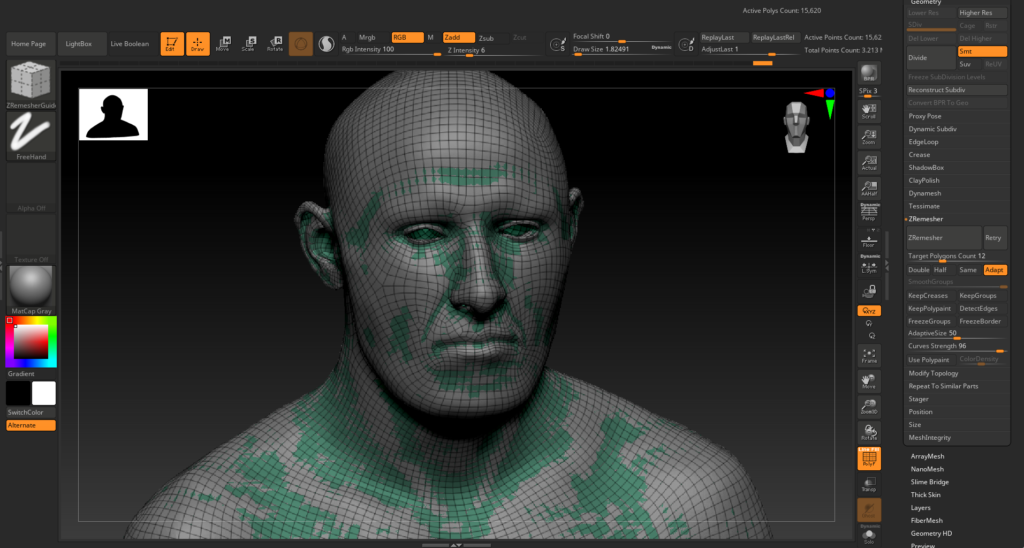
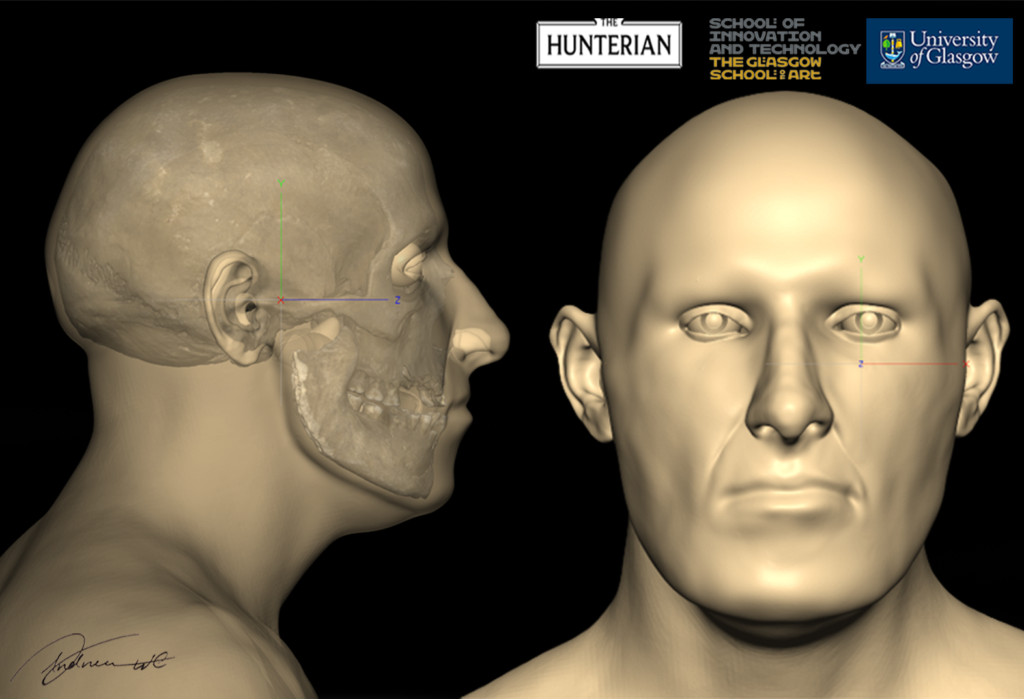
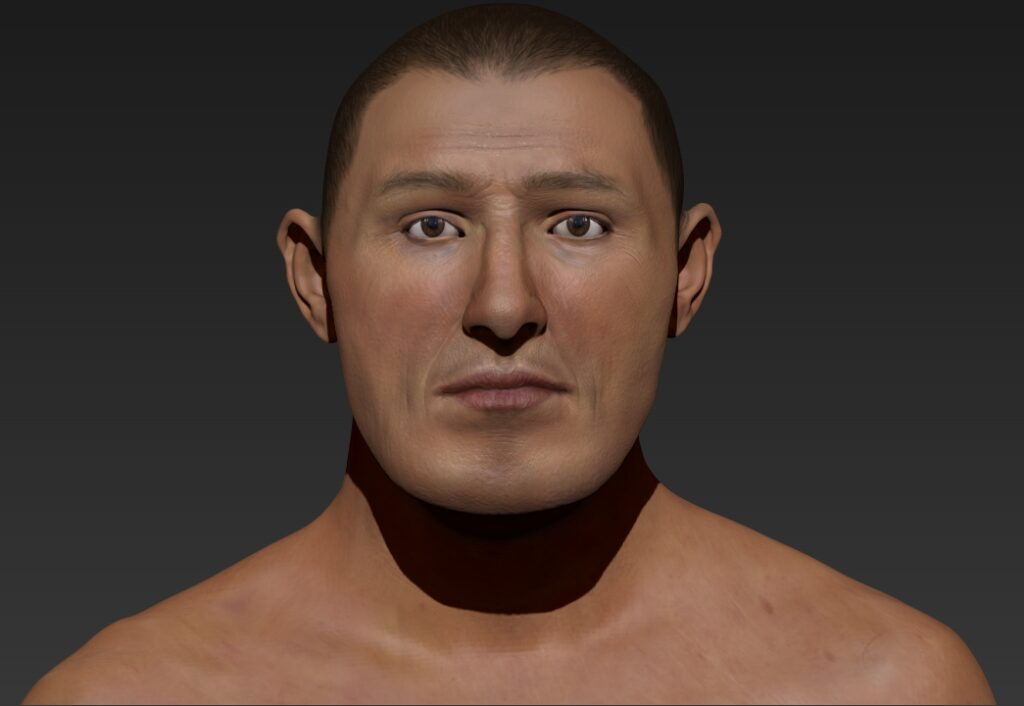
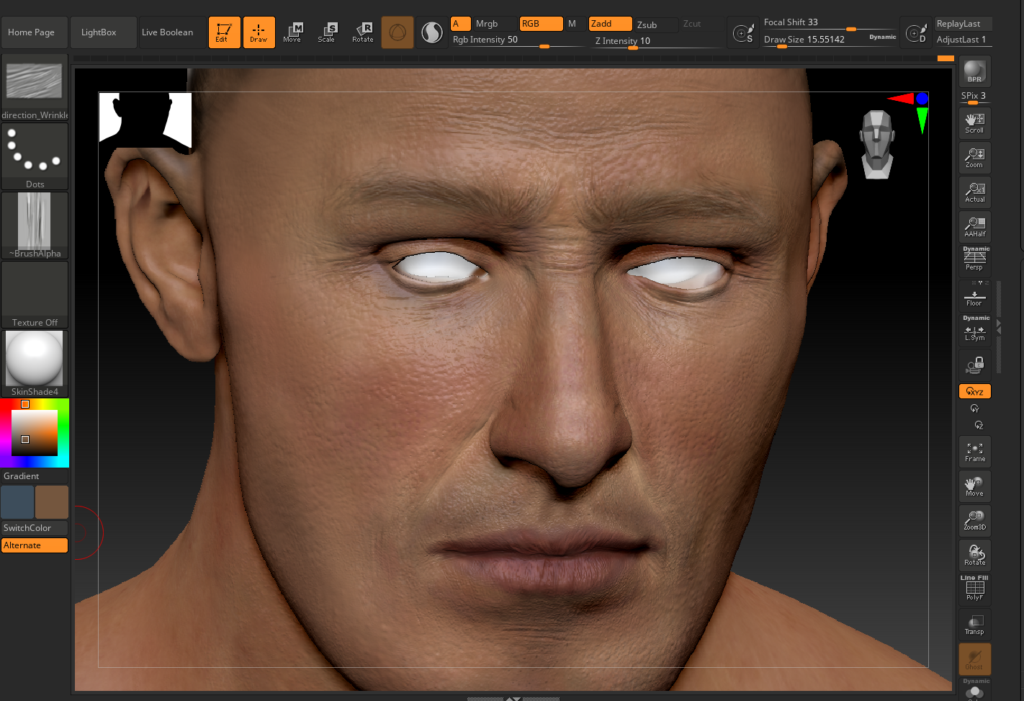
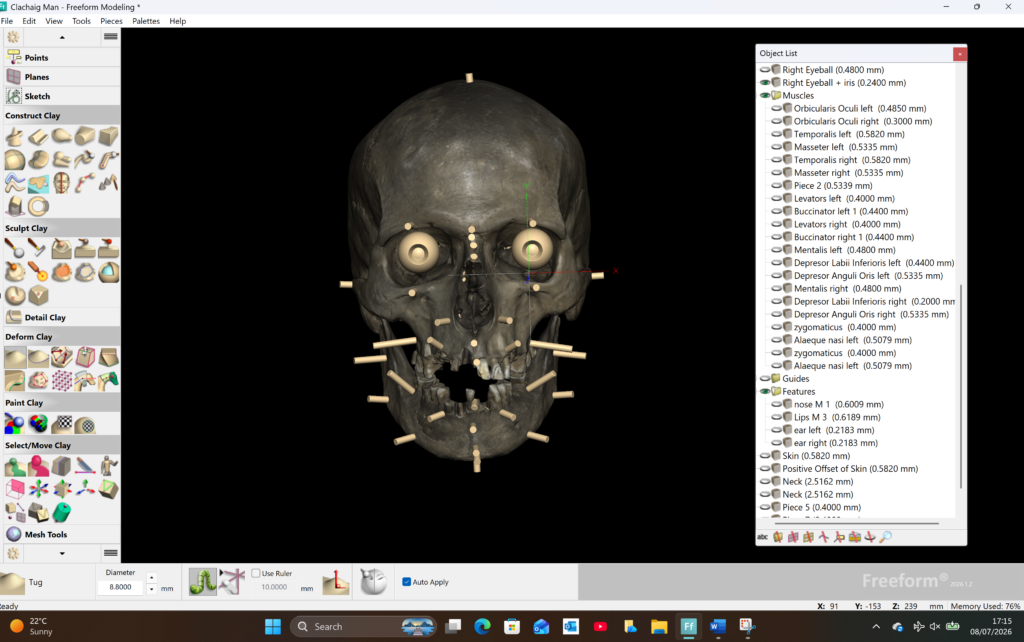
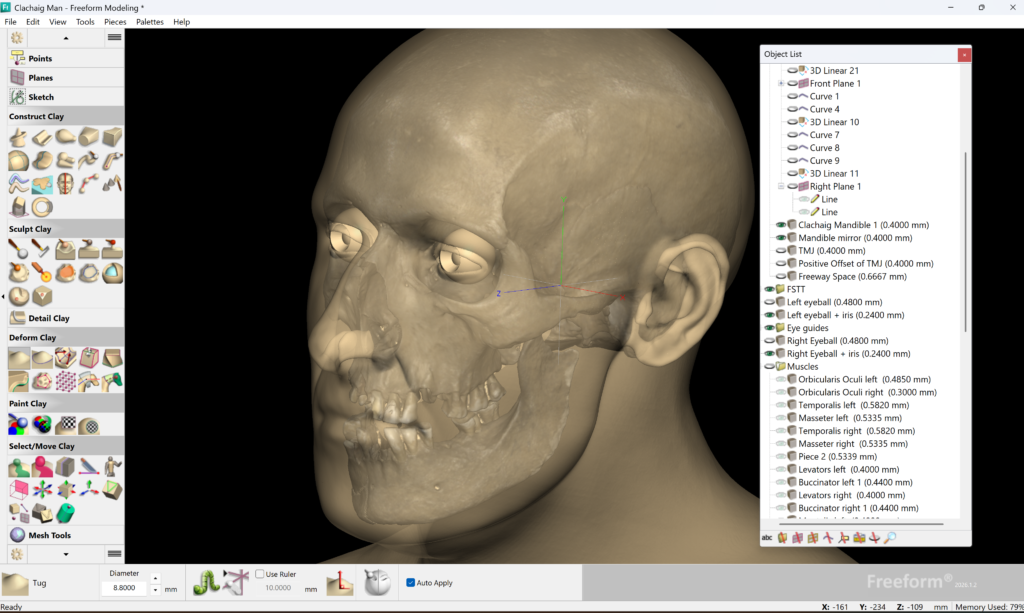
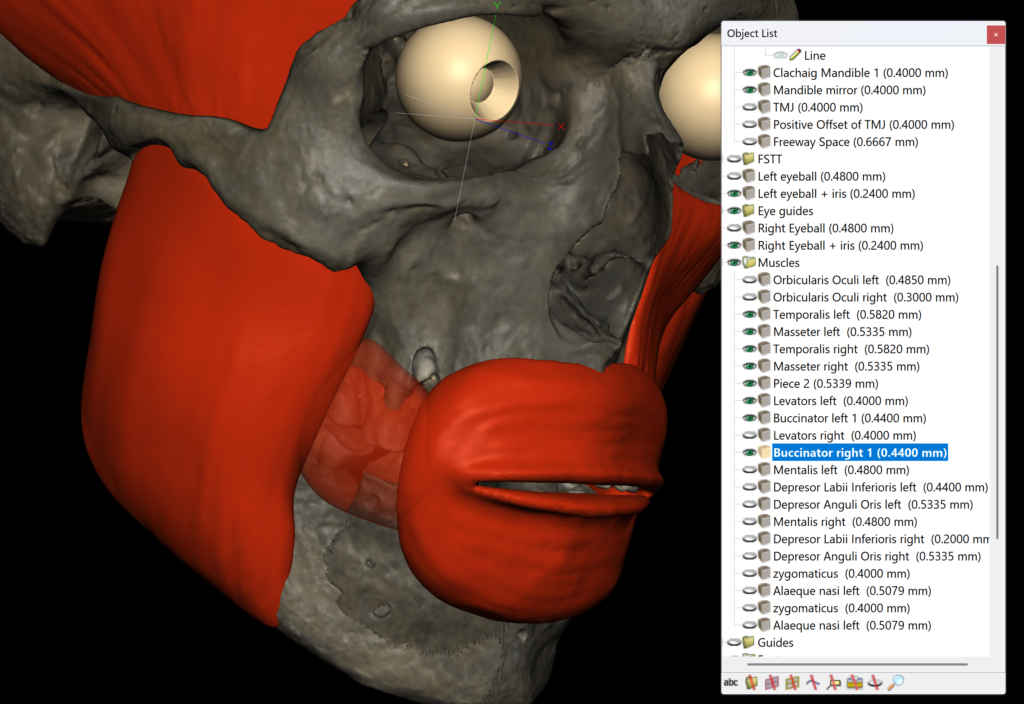
The scope of this research was to produce an updated 3D Computerised Facial Reconstruction of the Clachaig Skull in accordance with the advancement of techniques and technologies available in the field of Facial Reconstruction for Forensic and Archaeological purposes, such as the use of Haptic technologies and specialised software’s Geomagic Freeform, Maxon ZBrush and 3ds Max. A revision of these technological advancements may not only shed a different light onto how this native of Arran from 5,500 years ago may have looked like, but also give one of Scotland’s first farmers, a symbol of Scottish heritage and history, immortality beyond the glass cabinet of The Hunterian Museum, as the new 3D Computerised Reconstruction will remain exhibited in the Hunterian Anatomy Museum. To ensure a validated and accurate result, with appropriate training and guidance given by my supervisors and external collaborator, I was able to finalise this project under the exact workflow that experts in internationally recognised facial reconstruction laboratories use, such as the Face Lab.
I would like to express my gratitude to everyone involved in the support and supervision of this incredible opportunity, as well as the Hunterian Museum for their collaboration on this project.