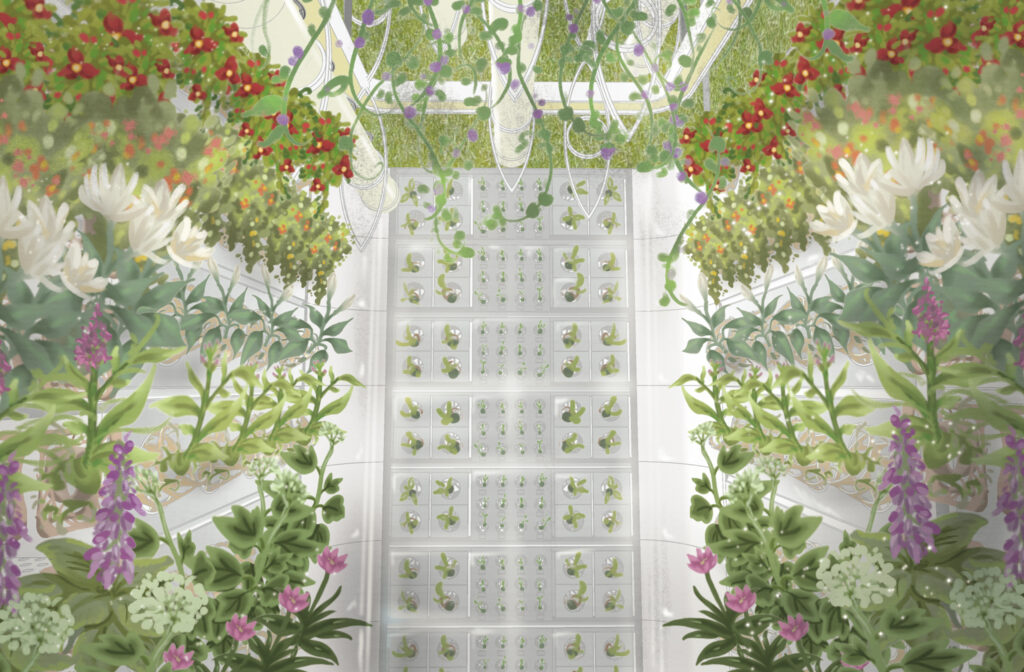
Garden at Stasis
Our relationship with plants has long been one-sided; humans control how they are grown, used, and altered, always assuming they lack intelligence or agency. In Dark Ecology, Timothy Morton (2016) challenges this bias, exposing how agricultural systems reduce plants to passive resources. Yet thinkers like James Bridle argue that plants can sense, adapt, communicate, and act, just not in the same way as humans.
This project speculates on a future where plants evolve, reshaping ecosystems on their own terms. It imagines a plant world not dictated by humans but by plant growth, behaviour, and survival. Through an interactive application, humans are forced to confront plant temporality and fragility.
Callous human activities cause plants to transform into biological statues, revealing their devastating ability to halt the ecosystem.
Human bias toward plants does not stem solely from domination or utility, but from a deeper mismatch with temporal reality. We struggle to recognize plant intelligence because they operate in a timescale hugely different from our own. What appears inert or passive is often too slow for our perception to register.
In Hyperobjects, Timothy Morton (2013) introduces a more diverse concept of intelligence as ecological, an interaction across time and space rather than solely based on human cognition. It is a form of coexistence between humans and nonhumans in which time serves as a critical lens that bridges the two.
This is evident in Bleached by Erez Nevi Pana, where it initially functions as a call to action about our mineral consumption and its ecological damage to the Dead Sea. The project allows the sea to transform the furniture through a five-year salt-crystallization process that ultimately reveals the interaction and coexistence of two nonhumans, amplified by time.
With time as a crucial ingredient, the Dead Sea becomes a hyperobject that transcends time and space, where each year of the furniture’s submersion reveals differences in crystal formation until the five-year mark. It reflects Tim Ingold’s (2007) view of materiality, where the properties of materials are not just physical attributes but stories and histories manifested over time.
As Schlanger (2024) notes, plants, for example, have sensory and temporal realities different from those of humans, and measuring them through human cognition will lead us to perceive them as inferior. A single plant may not be a hyperobject, but it exists within larger systems such as the ecosystem or the biosphere. These systems dwarf human timelines, much as climate change, nuclear materials, and plastic do, all of which exceed our ability to fully perceive or control.
Building on the narrative of plants evolving into “biological statues” as a defense against extreme environments and human activity, I chose to focus on the temporal gap between human and plant realities. The project started with multiple design iterations of planter systems that reveal conflicts between human interaction and plant sensitivity, mainly because I am still operating within a human-centred approach to design rather than looking deeper into the overall health and lifecycle of the plants. Early concepts of the planters tend to prioritise the blooms, which are visible to the human eye, rather than focusing on helping the plants grow by accommodating their needs for water, light, and a healthy root system, given their projected fragility in the future. This is also true of the digital archive, where early experiments were visually interesting but did not fully embody plant sentience.
Ultimately, the project aims to reframe our relationship with plants by foregrounding plant responses to human activity, which can be adaptive and, most of the time, defensive behaviours that can reshape our understanding of nature, with plants as the active agents.
In a speculative future, plants turn to biological statues when they are disturbed or feel threatened with human activity. The video shows a comparison of how human activity, in a form of sound, affects the reaction time of plants in the future before they turn into statues. Audioreactive model made with Touchdesigner
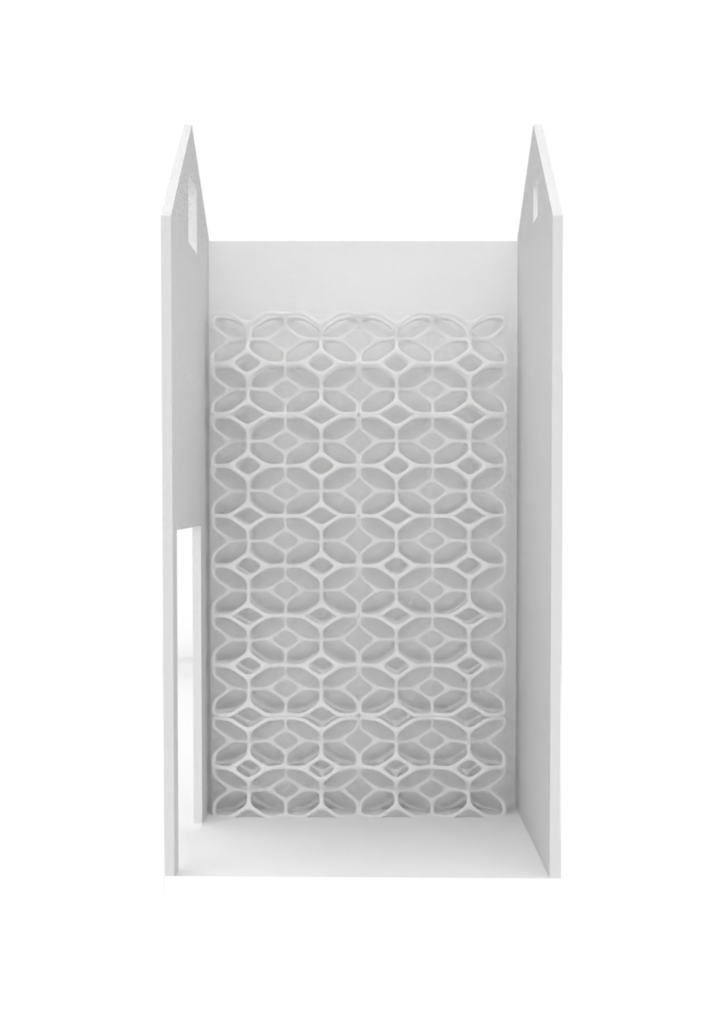
For the first design iteration, I was looking at creating lattices that themselves are structurally sound and will allow for a more organic planting system in the docoot,
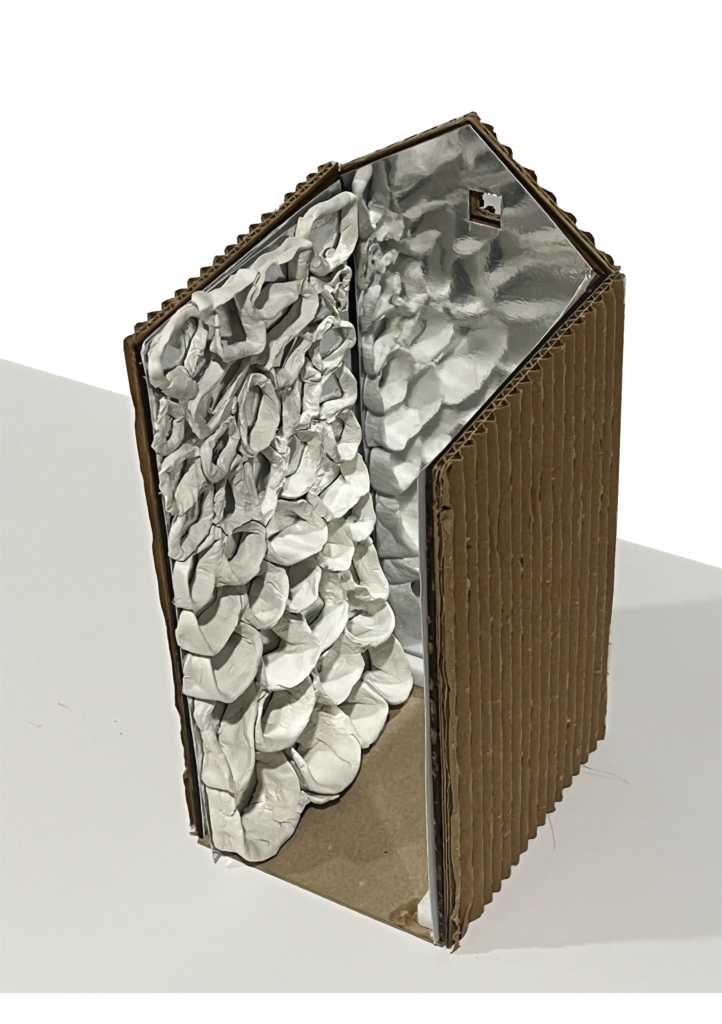
However, both design versions 1 and 2 create a huge planting network that will make the interior of the docoot too cramped and might even not maximize the space to grow multitude of plants. The design also does not allow other requirements like watering, lighting, and proper access within planters for maintenance.
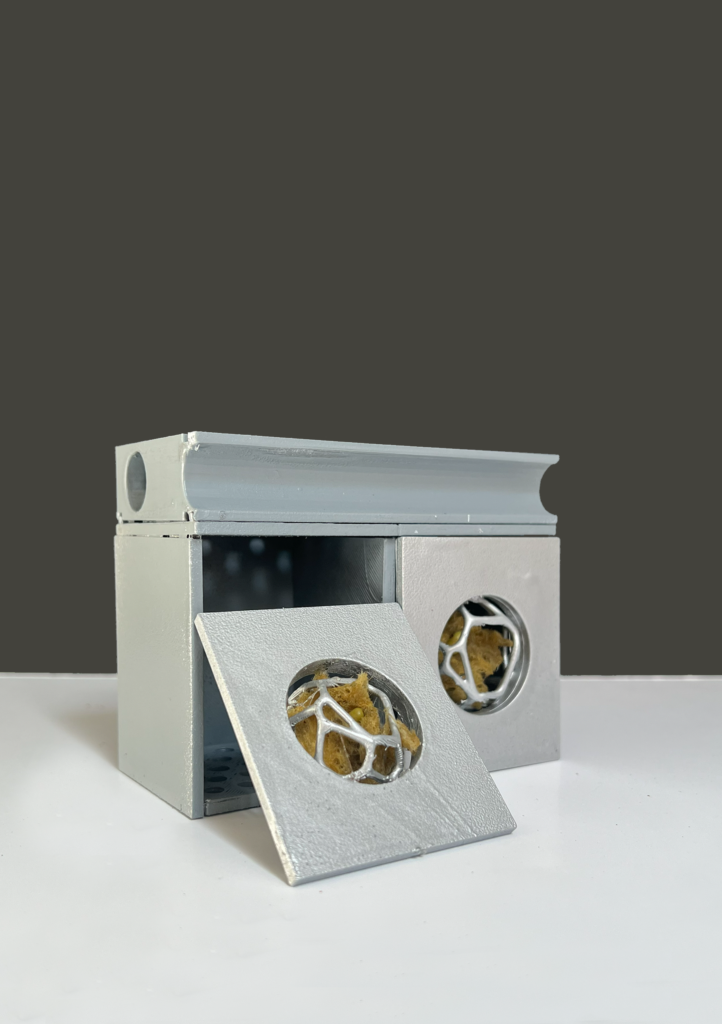
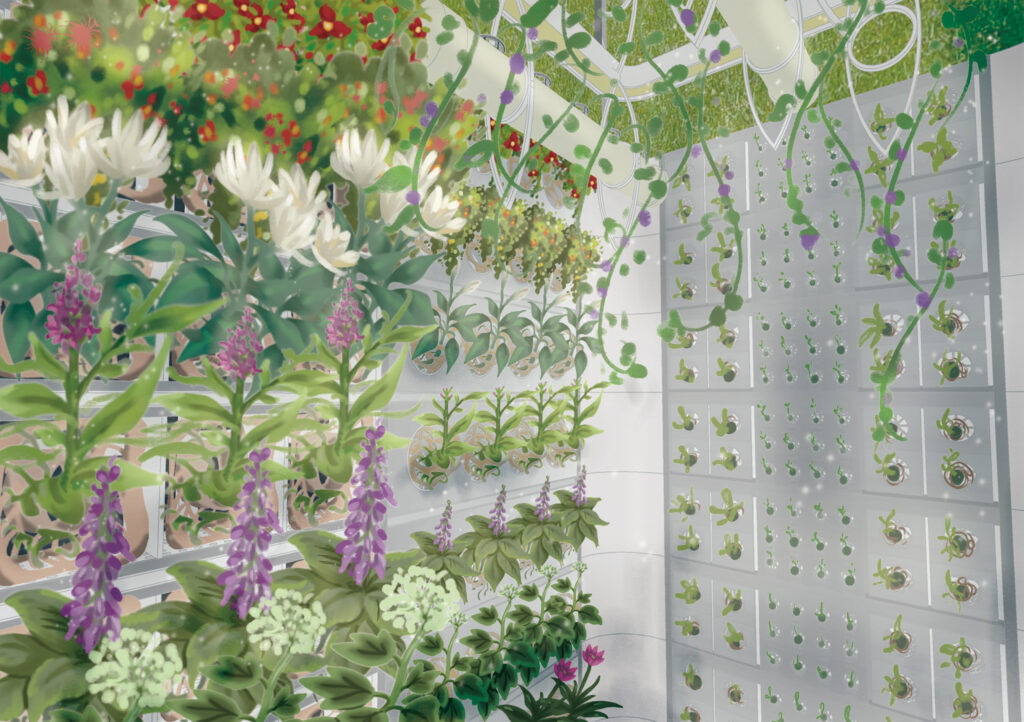
Planter final design for germinating stage (0–3 months)
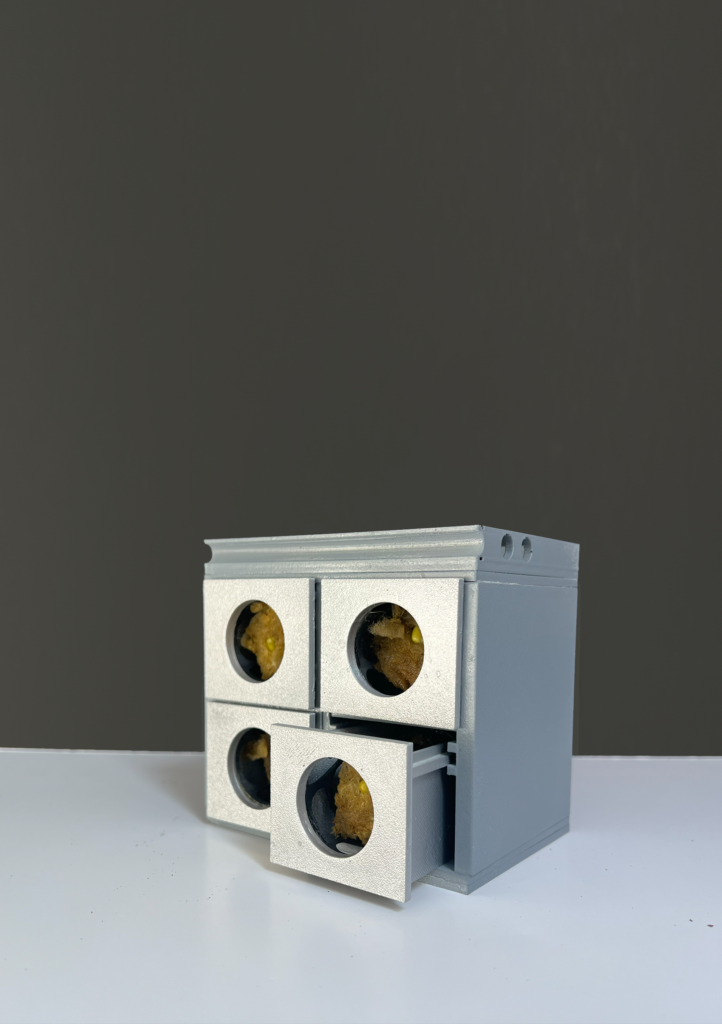
Planter Final design for rooting Stage (3 mos - 1 year and 6 mos)
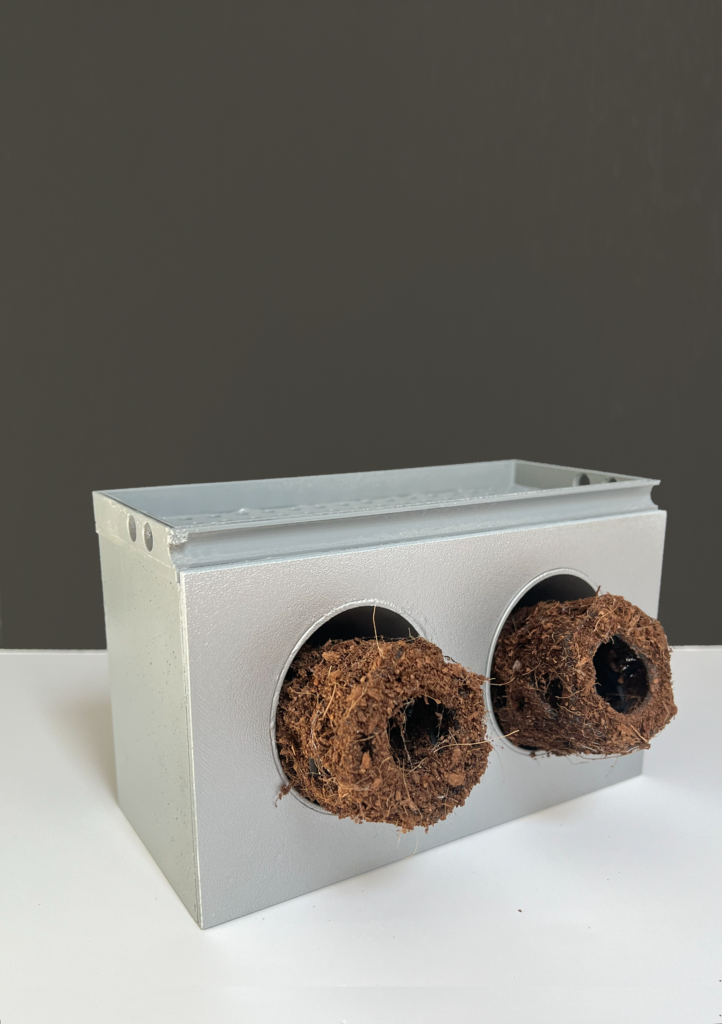
Planter final design for Growth Stage (1 year 6 mos - 3 years)
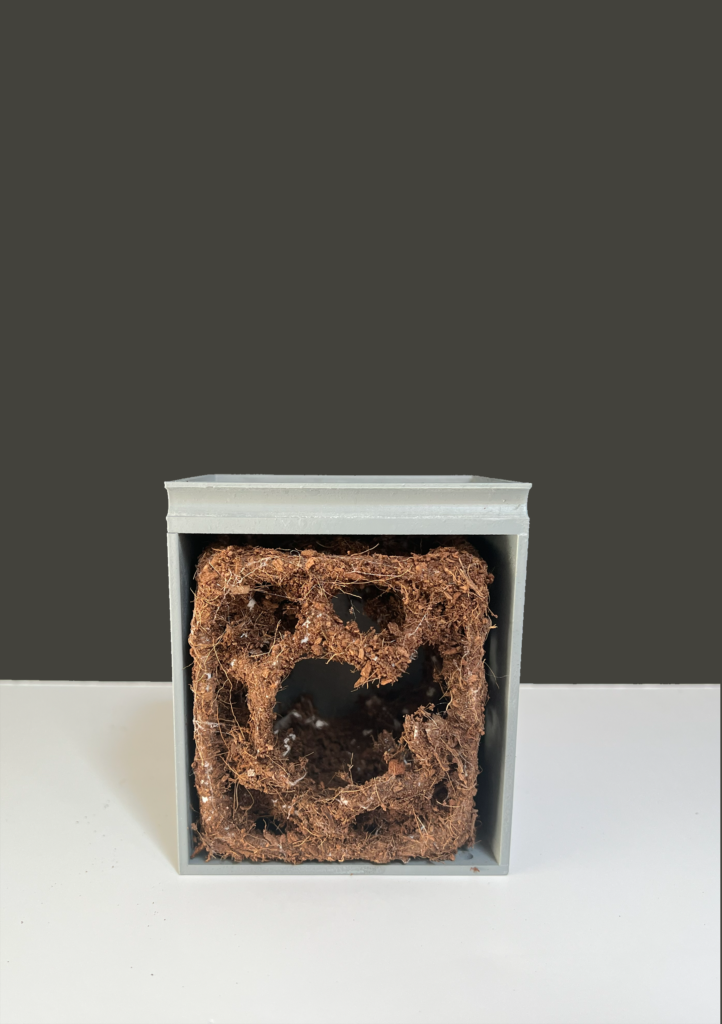
Planter final design for mature Stage (3 years - 7 years)