
Game Machine Series
As children, we would hold small cars in our hands, moving them through the air or pushing them across the floor, imagining them racing along endless roads. In this series, I turned that imagination into playable games. From the first mechanical driving game, to the second with gear transmission and button controls, to the third introducing coin mechanisms and collision detection, and the fourth blending design elements from the Nintendo Switch and Mario—each generation has evolved the interactive experience.
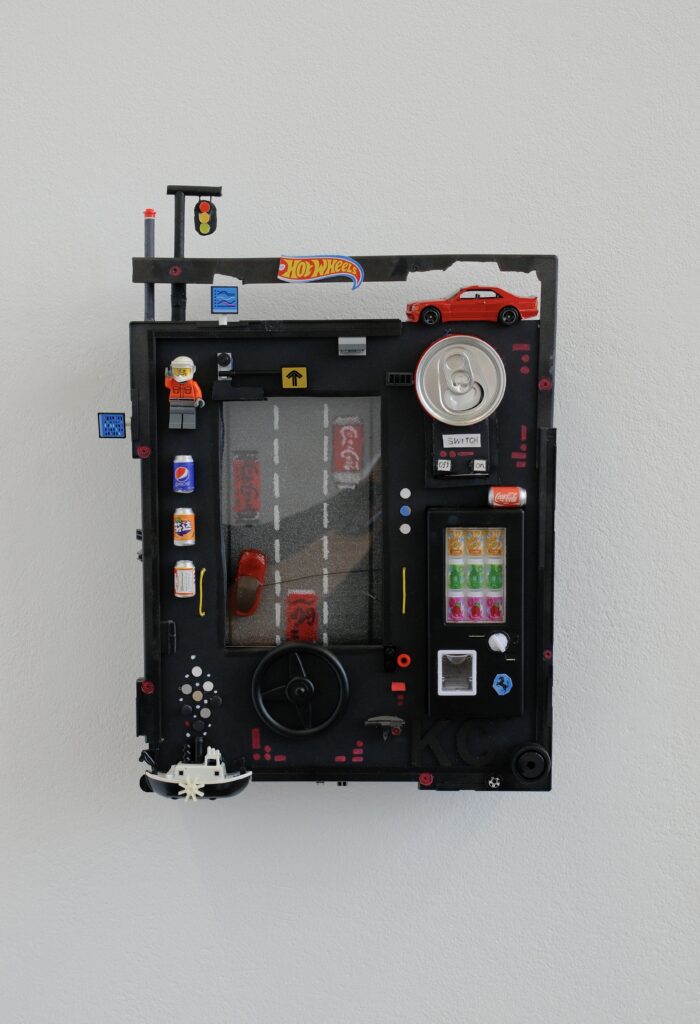
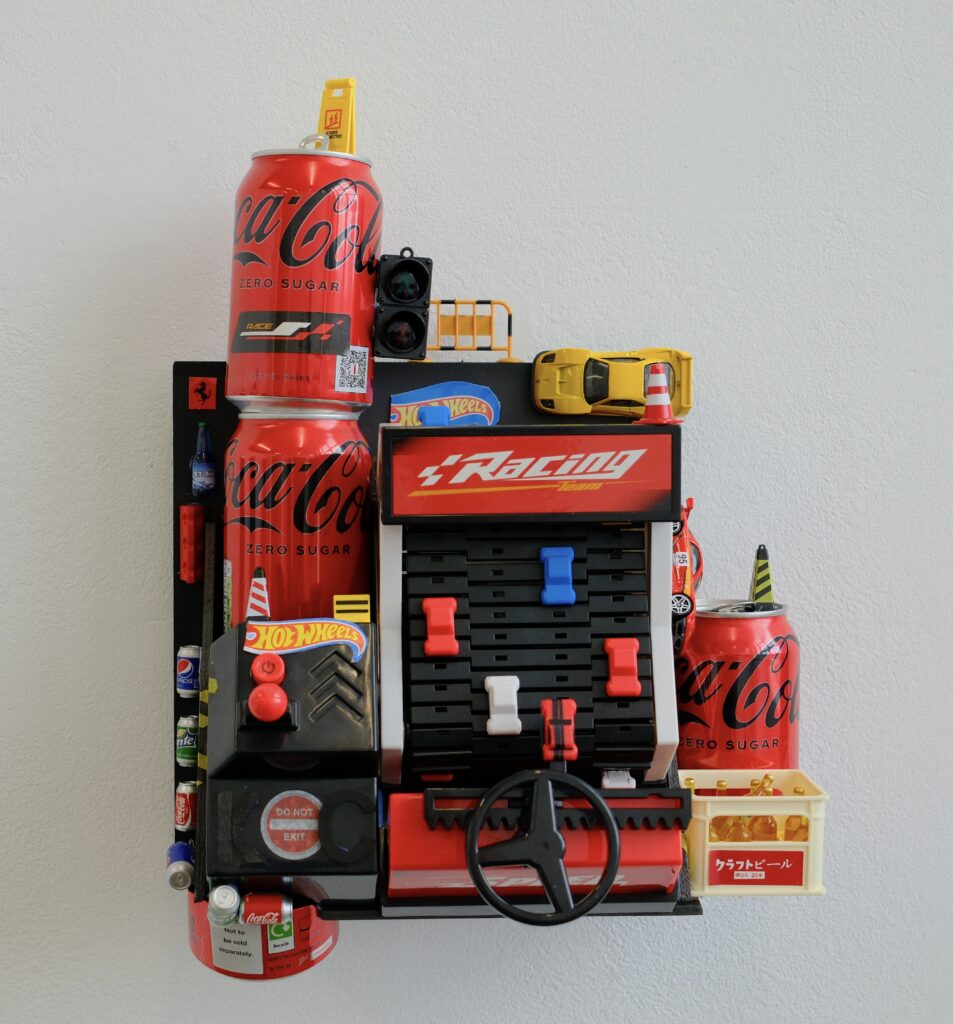
This is the second machine in my game machine series. I fixed some problems from the first one. For example, the background in the first one would get stuck when it turned. This time, I made the cars three-dimensional. I also changed the belt drive to a gear drive, which looks more exciting. For the steering wheel, I changed it from a wire pull system to a gear system. It is now smoother and easier to control. I also changed the switch. Before, you had to push it left or right. Now it is a button. It is easier to understand and use.
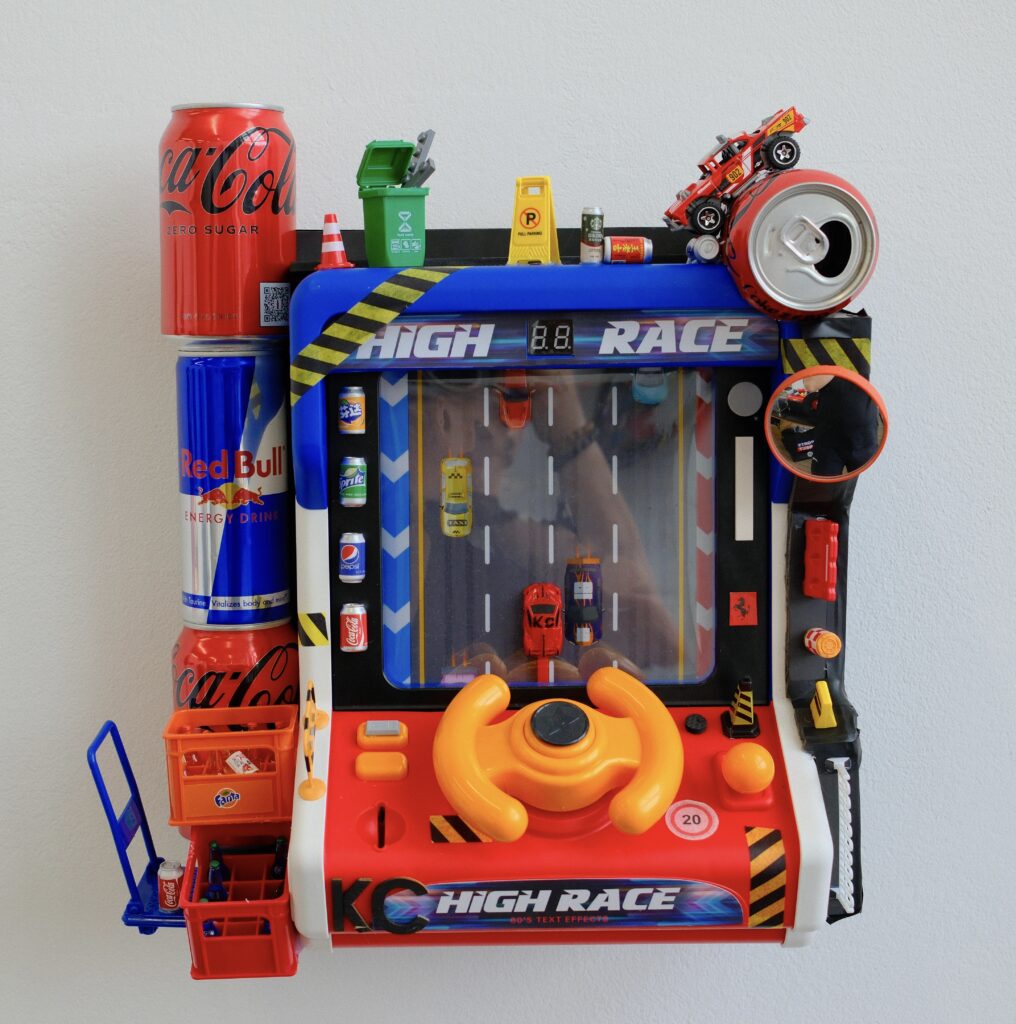
This is the third machine in my game machine series. In the first two machines, I focused on testing the game mechanics and the playing experience. For the third one, I looked at the style of arcade machines in game centres. I also tried to add a coin system to start the game. You need to put a coin in first. When the machine recognizes the coin, it makes a sound. In this work, I also added collision detection. In the first two machines, you had to avoid obstacles, but even if you crashed, the game would still continue. In this one, when the car crashes, the game stops and makes a crashing sound. You then need to restart it. One coin gives you three chances to play. But because I added collision detection, I had to give up the physical car from the second machine.
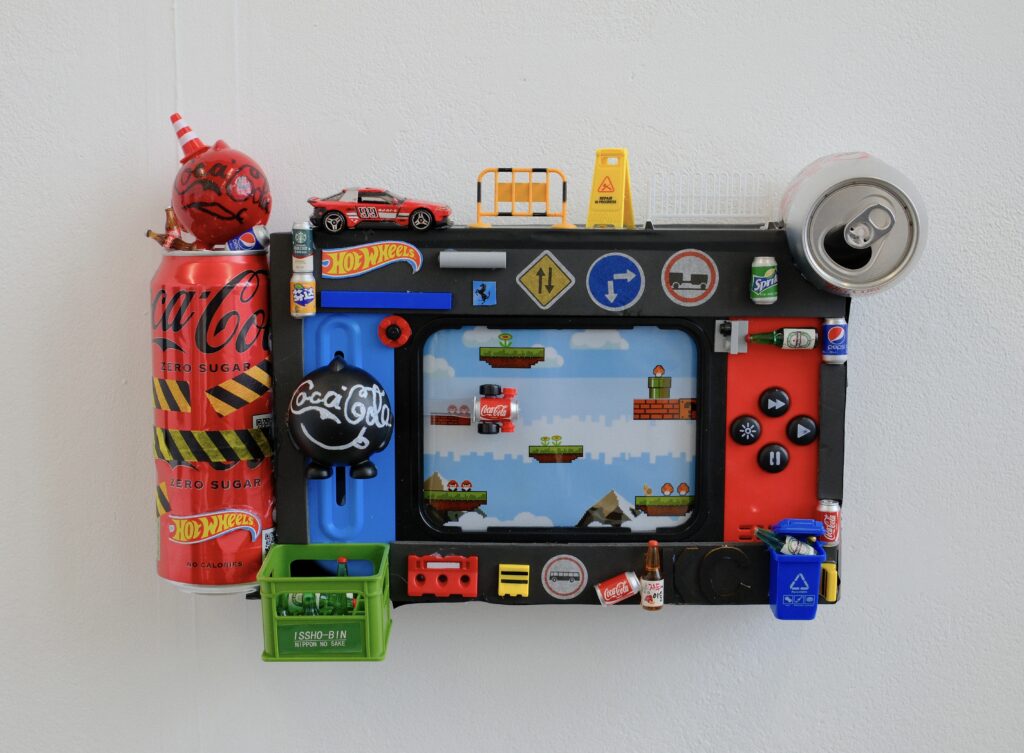
This is the fourth machine in my game machine series. I looked at the design of the Nintendo Switch for inspiration. I also added elements and gameplay from the classic game Mario. I kept the game mechanic from the third machine, where the game stops when you crash. I also kept part of the design from the second machine, which used a real physical car. This makes it feel more like a game that breaks out of the flat screen.