

Kecen Zhou
Kecen Zhou is an artist born in China, currently living and working between Wuhan and Glasgow. His practice is rooted in personal memory and childhood experience, using everyday objects like toy cars and vending machines as his medium to construct a miniature world suspended between reality and fantasy.
In an age dominated by consumerism and digital entertainment, adult imagination is gradually eroded by efficiency and pragmatism. Kecen Zhou’s work attempts to offer an escape from this loss. Through bold colour contrasts and interactive installations, he invites audiences to reactivate that forgotten sensibility—the childhood ability to give infinite possibilities to a simple toy.
His work is divided into two series. The Vending Machine series transforms the childhood fantasy of “insert a coin and get what you love” into tangible, interactive objects, exploring the delicate relationship between desire, memory, and materiality. The Game Machine series turns the simple act of pushing a toy car into an immersive experience, rebuilding the connection between people and imagination at the intersection of mechanics and play.
Kecen Zhou’s works are not objects to be viewed from a distance. They invite the audience to reach out, participate, and even fail and try again. His art is a bridge between memory and imagination, and a gentle resistance against the impoverishment of imagination in adult life. He believes that everyone carries a child within them, and that art can be a way to find that child again.
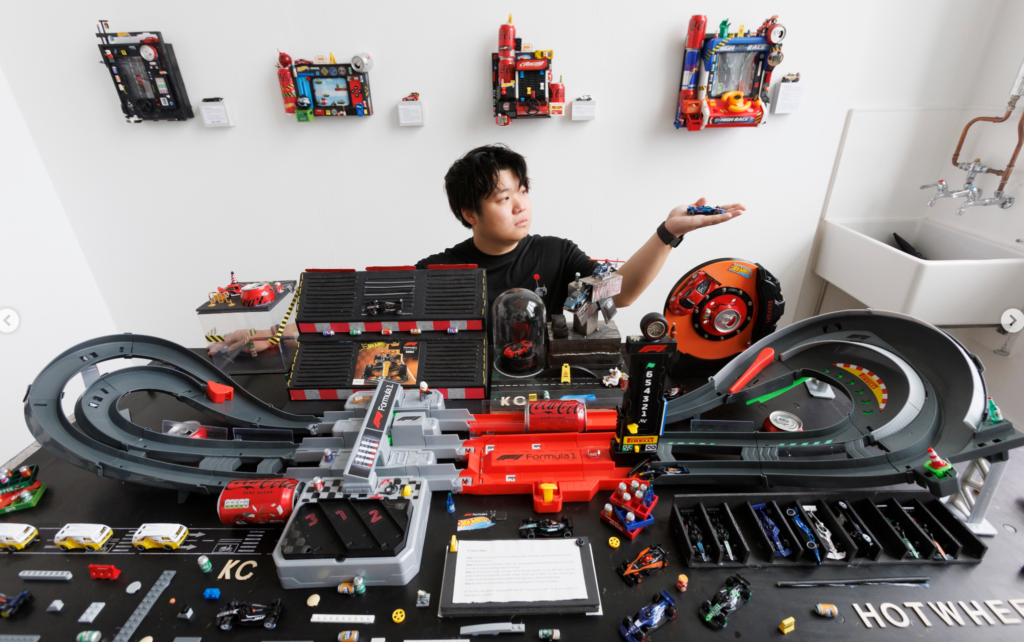
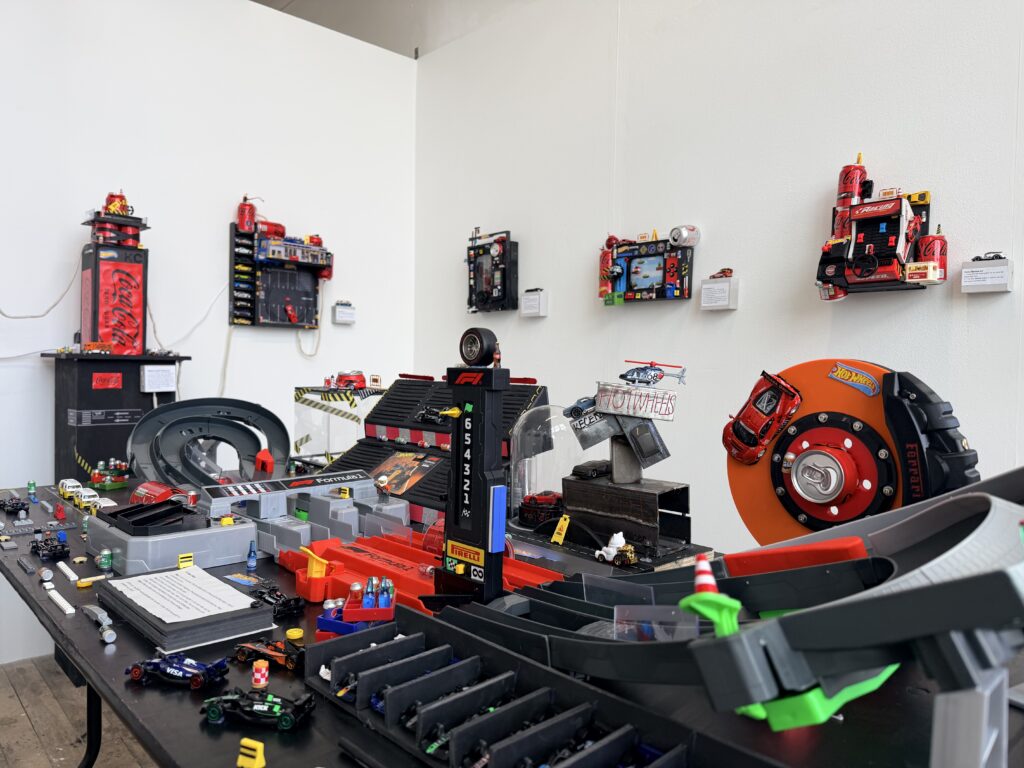
Childhood Vending Machine
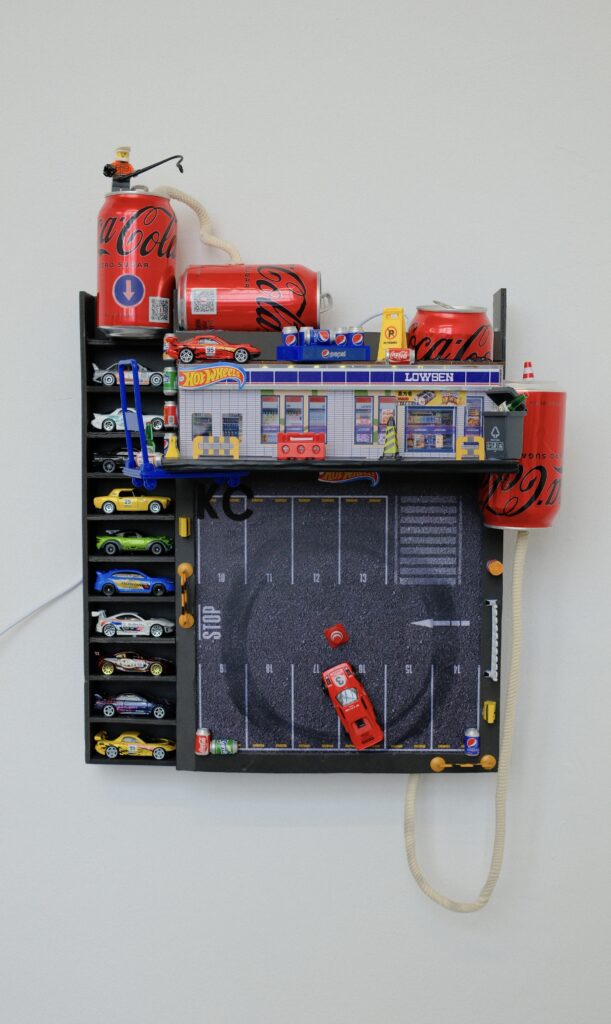
My project, Childhood Vending Machine, uses everyday objects like toy cars and drink vending machines to evoke childhood memories. The works employ strong colour contrasts to stir emotional responses in the audience. Through a series of interactive installations, the small cars that once only existed in childhood memories can now be physically controlled and played with.
As people grow older, their imagination and capacity for fantasy gradually decline. Through my work, I hope to bring audiences back to their childhood—to a time when picking up a toy meant entering a world of boundless imagination.
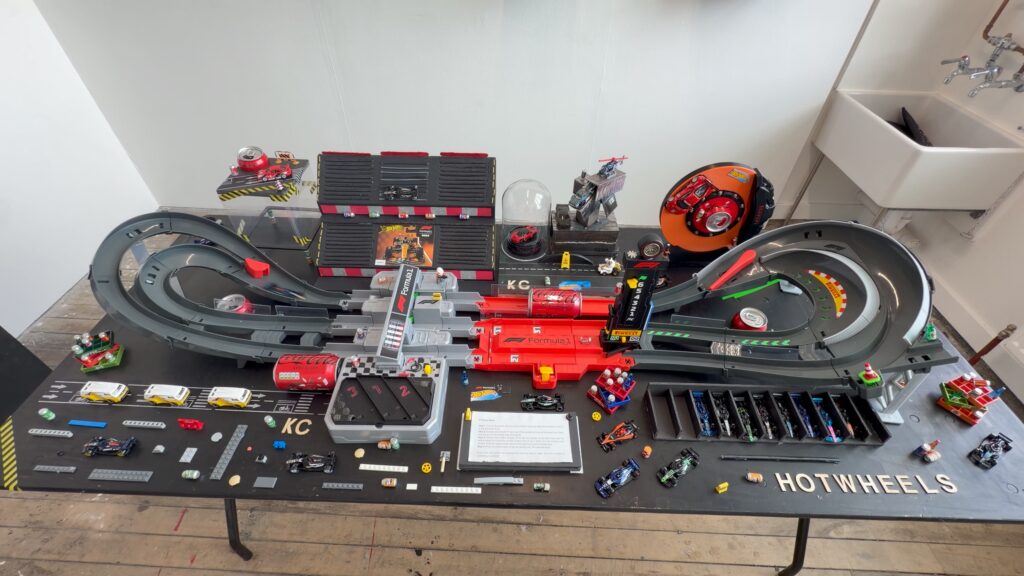
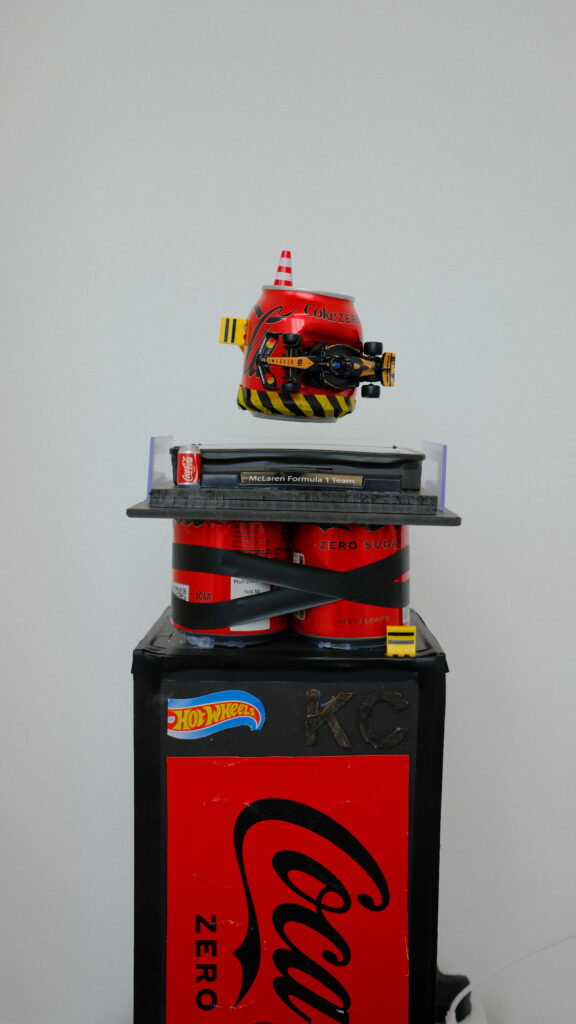
F1 Series & Maglev Series
I also took my earlier failed magnetic levitation experiments and improved them, combining the technology with the concept of drifting to create a magnetic levitation drift racer.
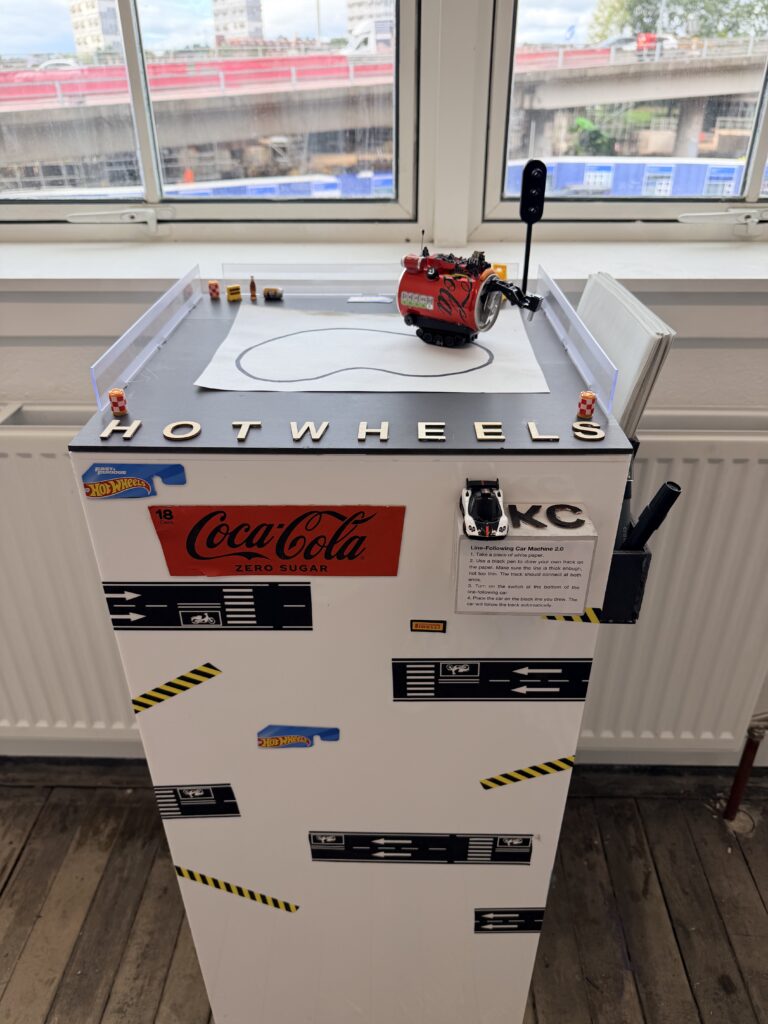
Together, these works form a complete group of interactive installations. They are not static pieces to be viewed on a wall. They invite the audience to crouch down, reach out, and play. I hope everyone who interacts with them can rediscover a piece of their childhood imagination and joy.
Game Machine Series
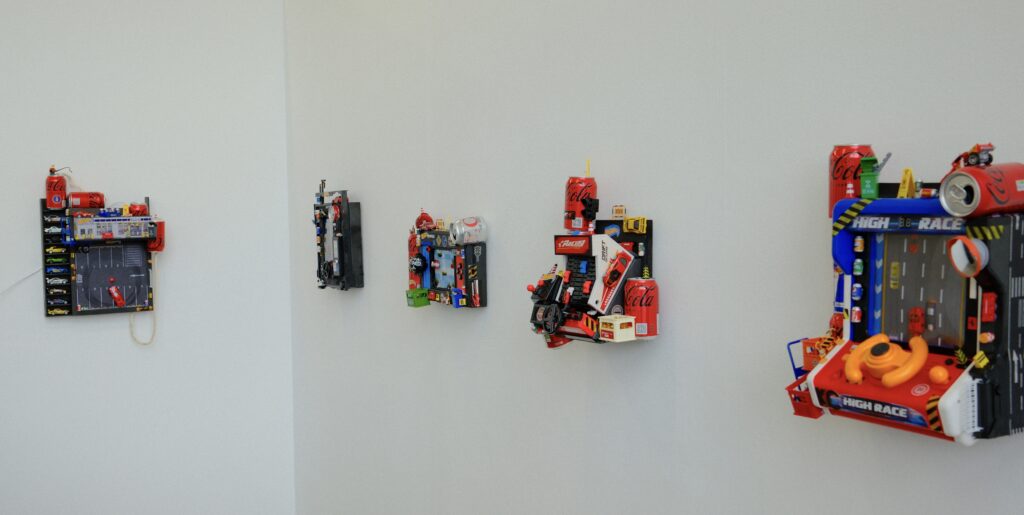
As children, we would hold small cars in our hands, moving them through the air or pushing them across the floor, imagining them racing along endless roads. In this series, I turned that imagination into playable games. From the first mechanical driving game, to the second with gear transmission and button controls, to the third introducing coin mechanisms and collision detection, and the fourth blending design elements from the Nintendo Switch and Mario—each generation has evolved the interactive experience.
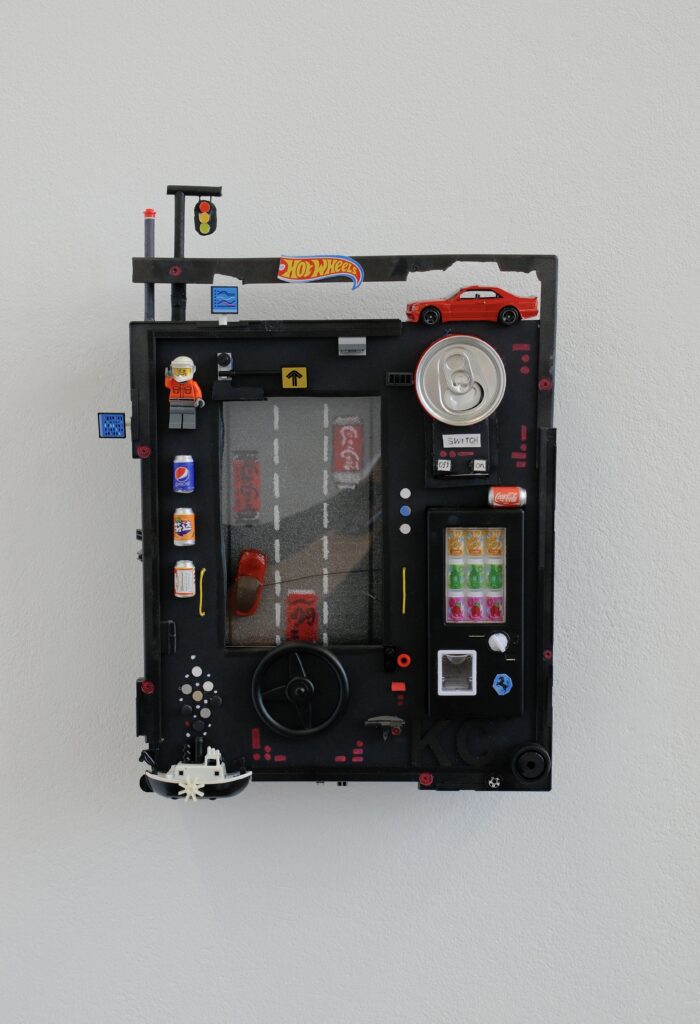
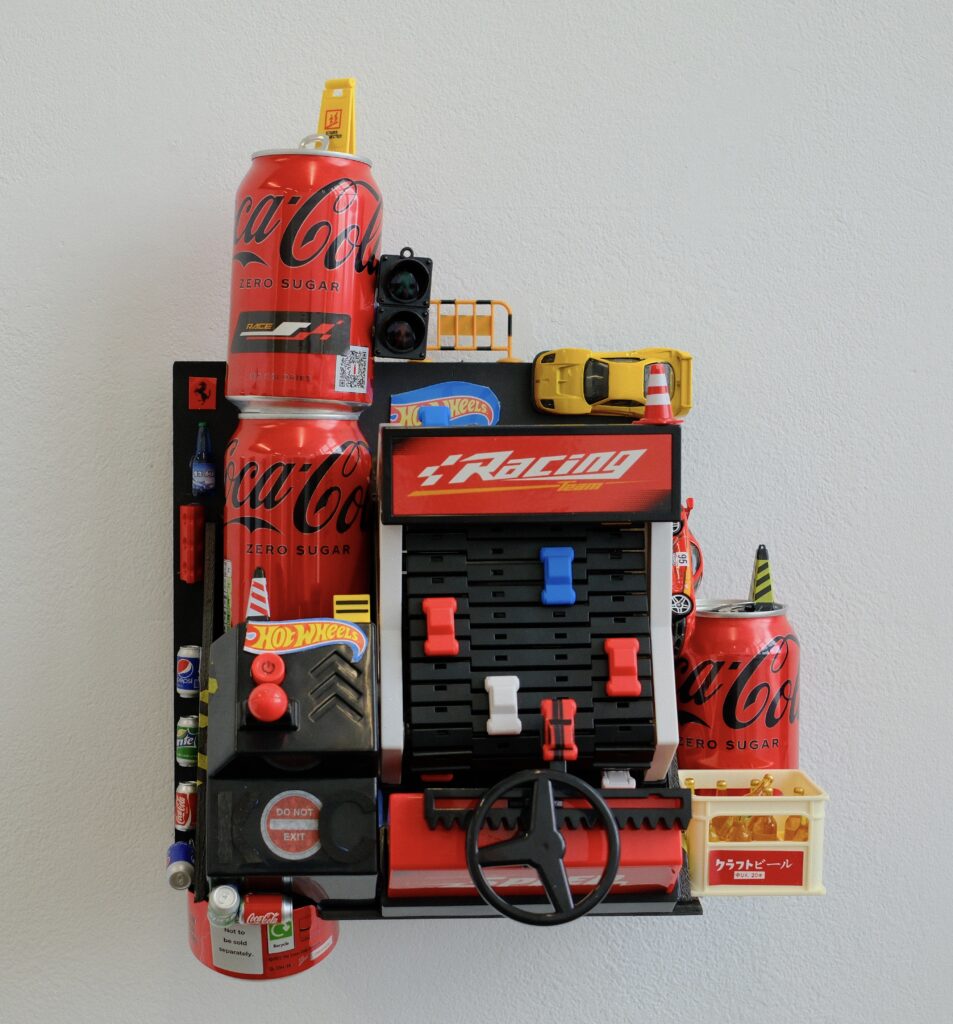
This is the second machine in my game machine series. I fixed some problems from the first one. For example, the background in the first one would get stuck when it turned. This time, I made the cars three-dimensional. I also changed the belt drive to a gear drive, which looks more exciting. For the steering wheel, I changed it from a wire pull system to a gear system. It is now smoother and easier to control. I also changed the switch. Before, you had to push it left or right. Now it is a button. It is easier to understand and use.
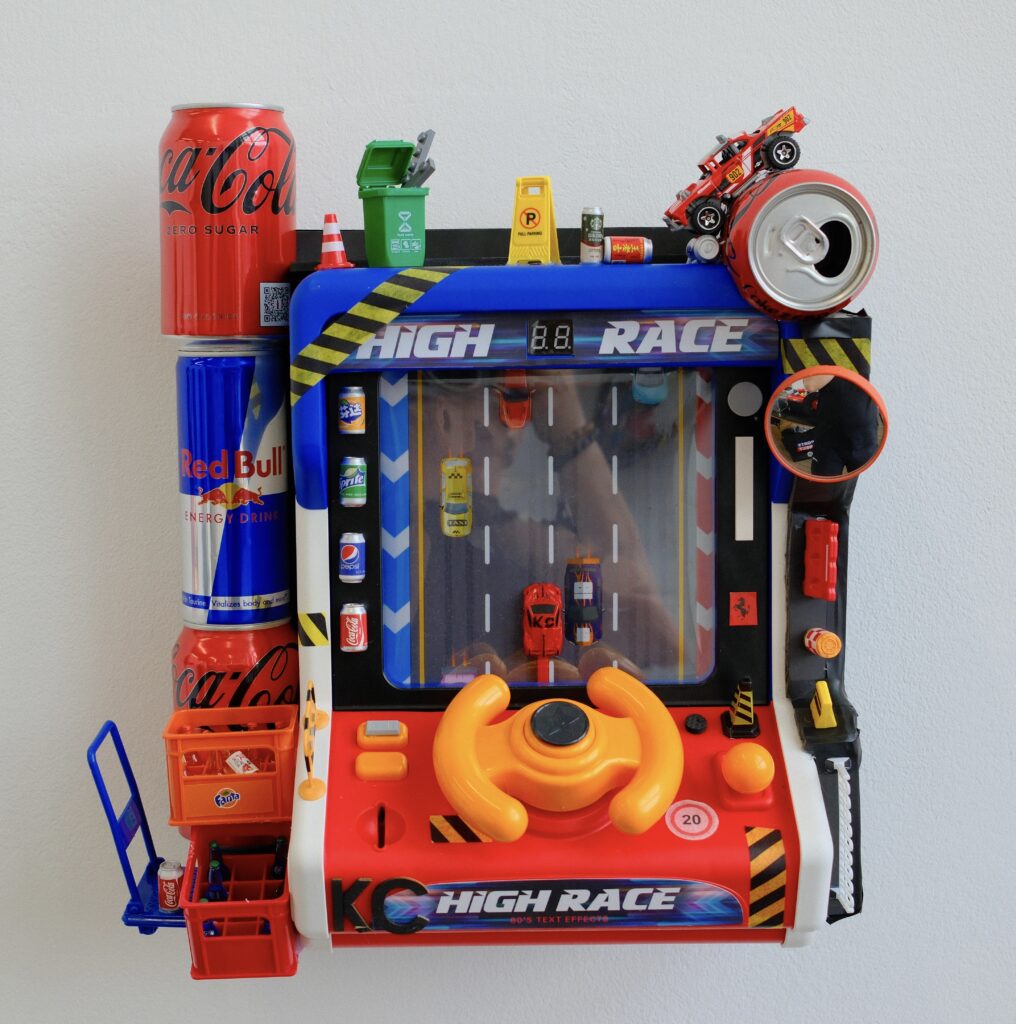
This is the third machine in my game machine series. In the first two machines, I focused on testing the game mechanics and the playing experience. For the third one, I looked at the style of arcade machines in game centres. I also tried to add a coin system to start the game. You need to put a coin in first. When the machine recognizes the coin, it makes a sound. In this work, I also added collision detection. In the first two machines, you had to avoid obstacles, but even if you crashed, the game would still continue. In this one, when the car crashes, the game stops and makes a crashing sound. You then need to restart it. One coin gives you three chances to play. But because I added collision detection, I had to give up the physical car from the second machine.
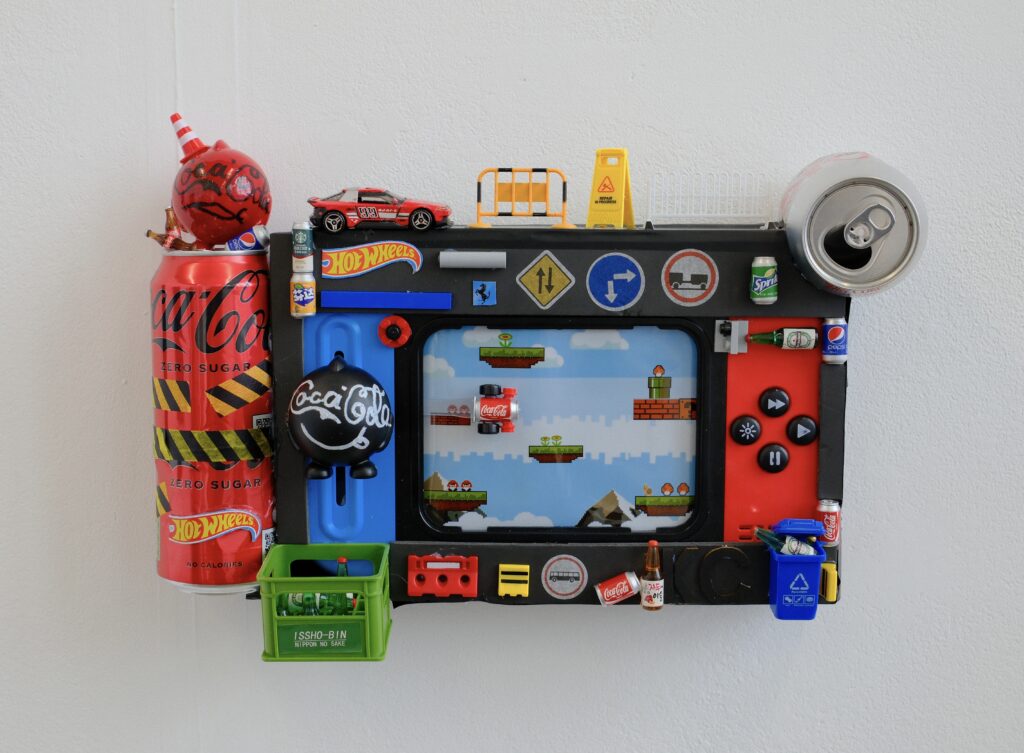
This is the fourth machine in my game machine series. I looked at the design of the Nintendo Switch for inspiration. I also added elements and gameplay from the classic game Mario. I kept the game mechanic from the third machine, where the game stops when you crash. I also kept part of the design from the second machine, which used a real physical car. This makes it feel more like a game that breaks out of the flat screen.
Gameplay video of the work
Each of my works can be played and interacted with. You can visit my offline graduation exhibition hall to have fun. I have marked the playing process and precautions for each work beside them. Here, I will show you the playing process through a video.
Vending Machine Series
My work is divided into two series:
Vending Machine Series
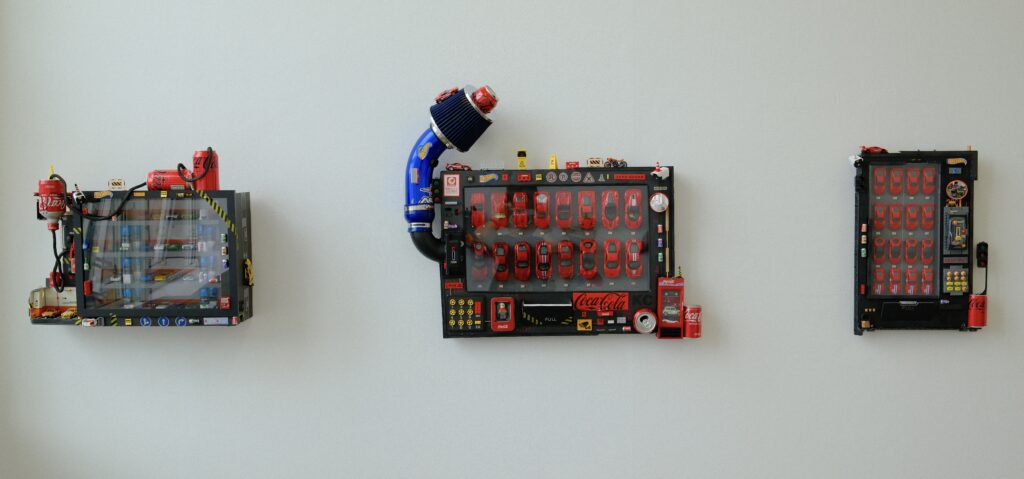
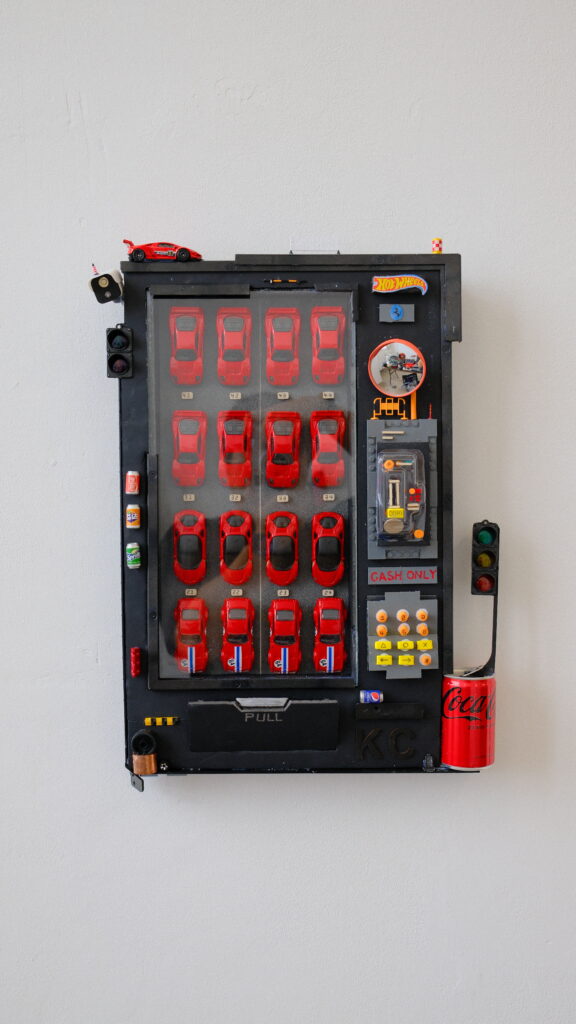
As a child, buying a drink from a vending machine was simple. But I always dreamed that one day, vending machines would sell my favourite toy cars. In this series, I developed three generations of vending machine works. The first was a rough handmade model. The second added lights, Easter eggs, and a traffic mirror. The third was enlarged in scale and incorporated a real car turbo element. I also created an infinite parking lot, using mirrors to visually extend the space, allowing viewers to see a continuously expanding miniature world from different angles.
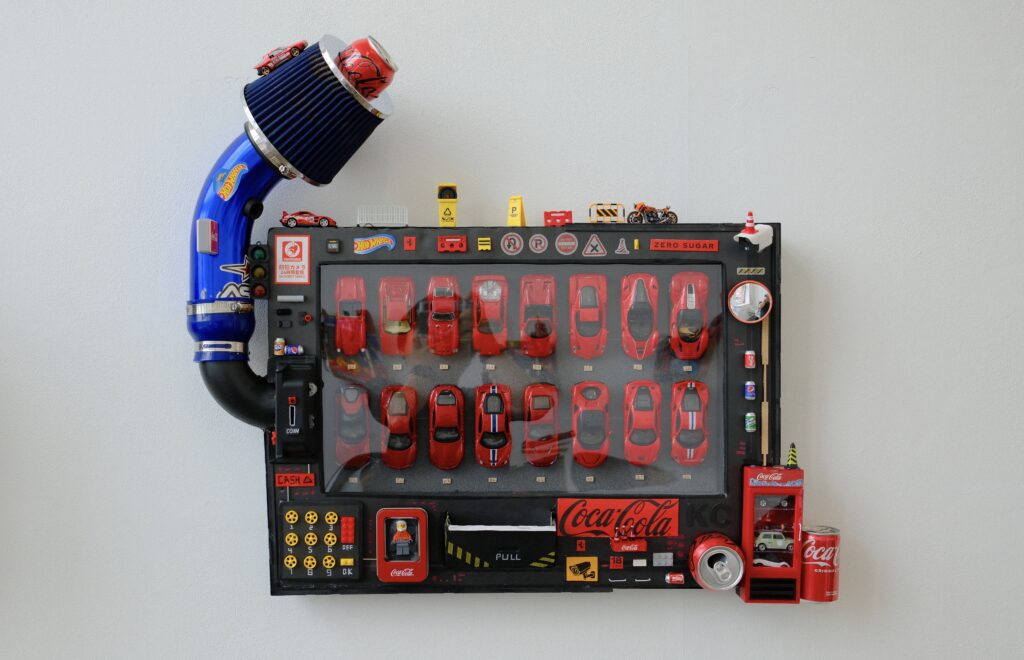
This is the third version of my vending machine. I made it bigger than the second one. I also added more types of cars, so it feels more like a real vending machine. I added more elements to make the work richer. For example, I connected a real car turbo to the coin slot. My first idea was that when you put a coin in, the turbo would spin and make an engine sound. But in the end, I could not make it work because I didn't have enough skills in electronics and mechanics. Compared to the second version, which was a tall vertical vending machine, this time I copied the shape of a wide horizontal vending machine.
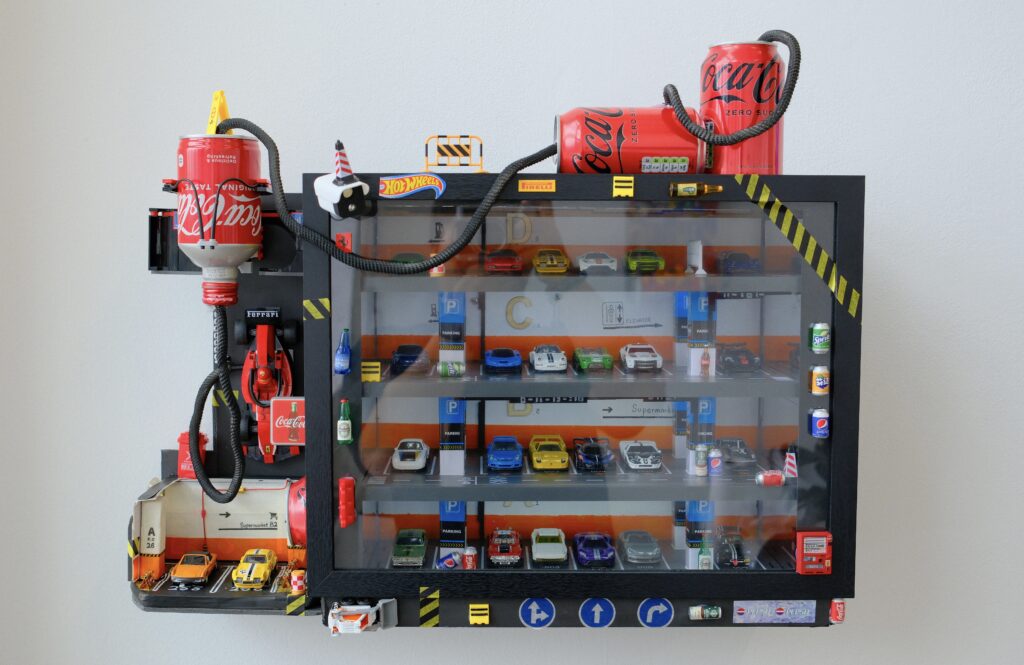
This is the second version of my parking lot. I made a big upgrade. I did not throw away the first parking lot or its idea of openness and extension. Instead, I combined the first version into the second one. I used mirrors to make the space look bigger. This continues the experience from the first version, where you could see the work from different angles. From different angles, you can see an endless parking lot in the mirrors. I also added many elements to make this parking lot more fun. For example, I took the F1 pit stop scene from my earlier work and turned it into a gas station. I also added lights, so people can see the details of the Hot Wheels cars more clearly.