Yutong Song
THE RIGHT TO PAUSE A Women’s Urban Sanctuary in St Enoch, Glasgow
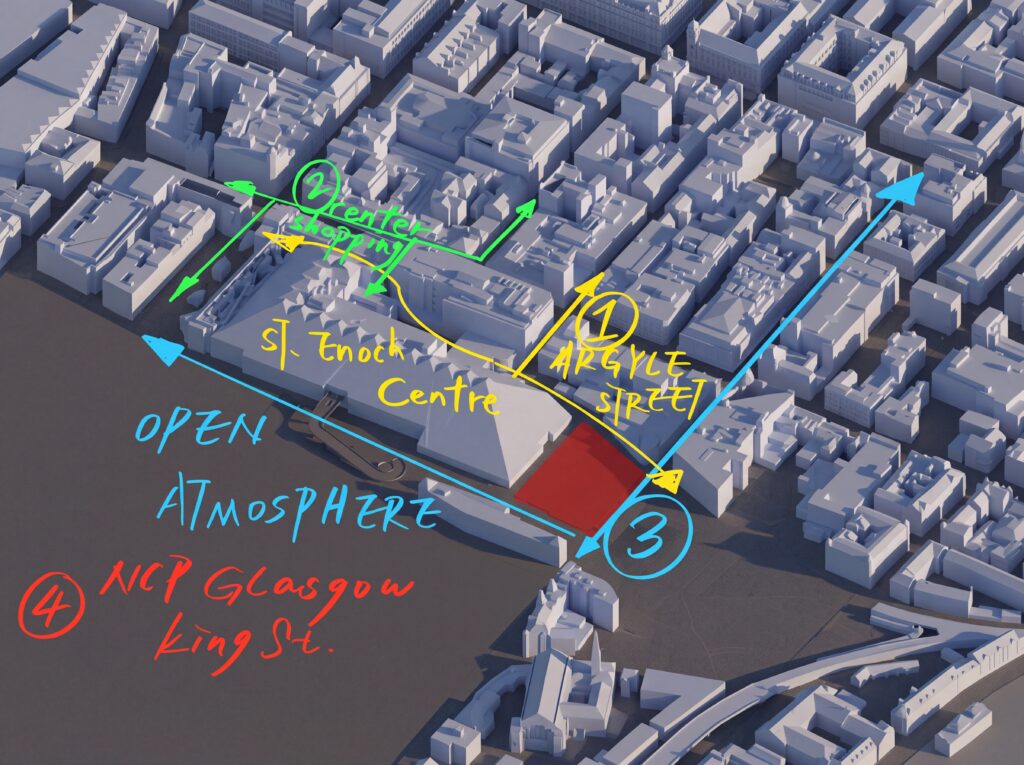
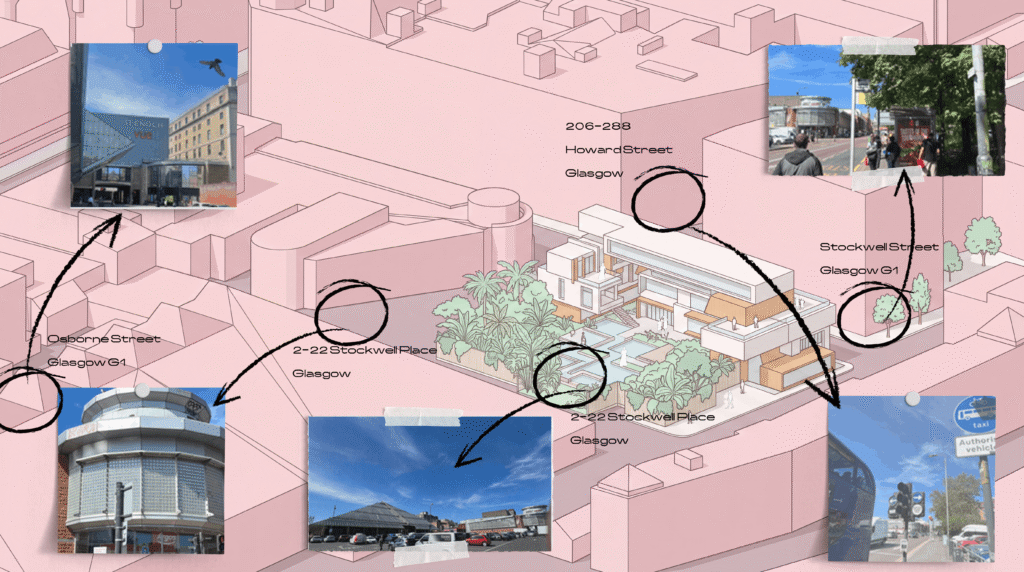
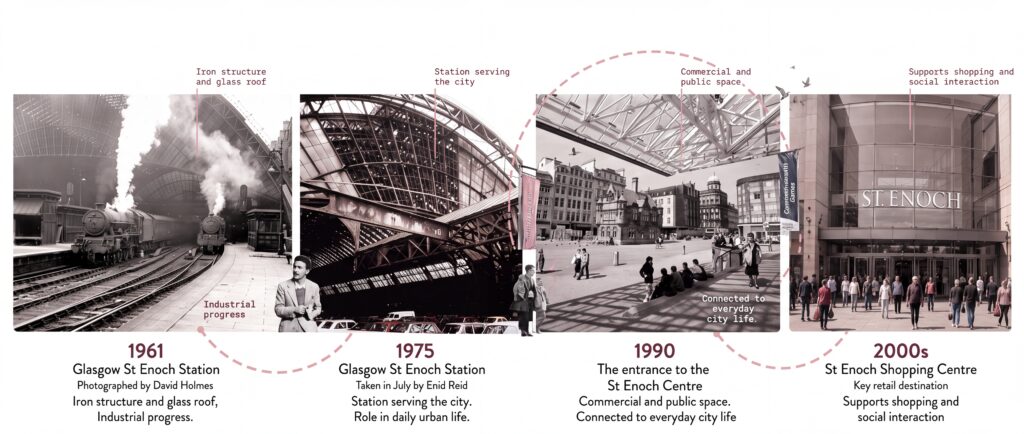
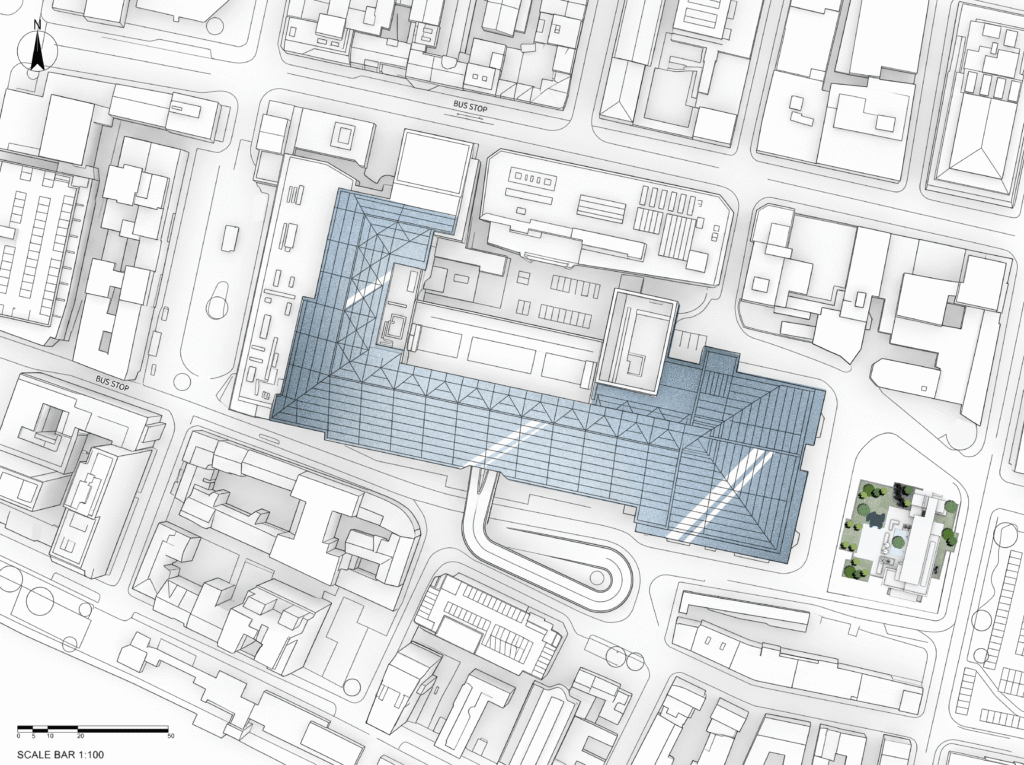
This project explores how women experience and engage with the urban environment in Glasgow, and how architecture can provide more supportive spaces within the city. The research focuses on St Enoch, an active area in Glasgow city centre shaped by transport, shopping and continuous pedestrian movement. Although the area is highly connected, there are limited places where people can slow down, rest or choose different levels of social interaction.
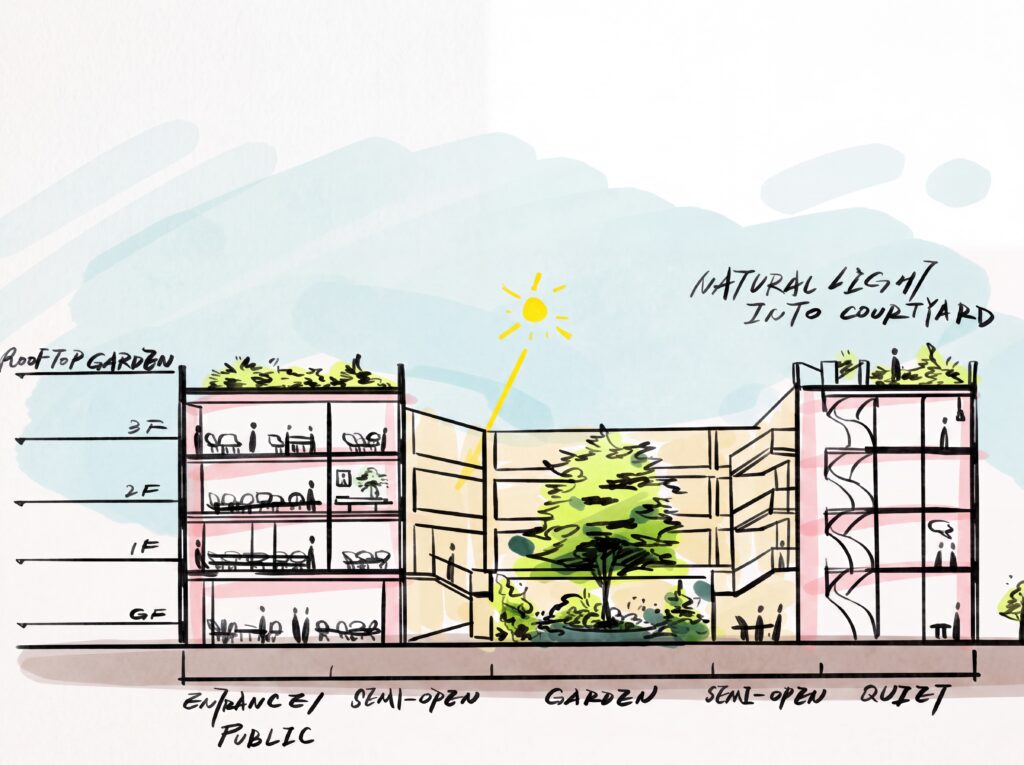
The project is informed by feminist spatial theory, which questions the idea that cities are experienced equally by everyone. It also considers how light, sound, material, landscape and enclosure can influence comfort and people’s experience of space. These ideas have developed the main design concept of layered thresholds, creating gradual transitions between public and private conditions rather than separating them completely.
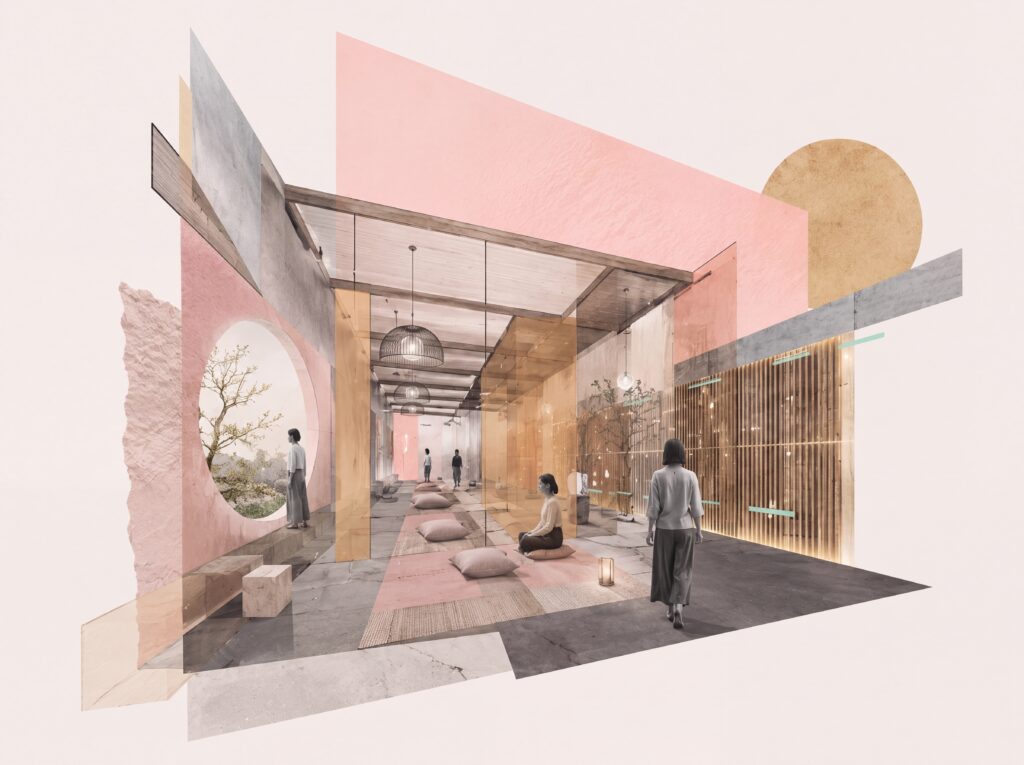
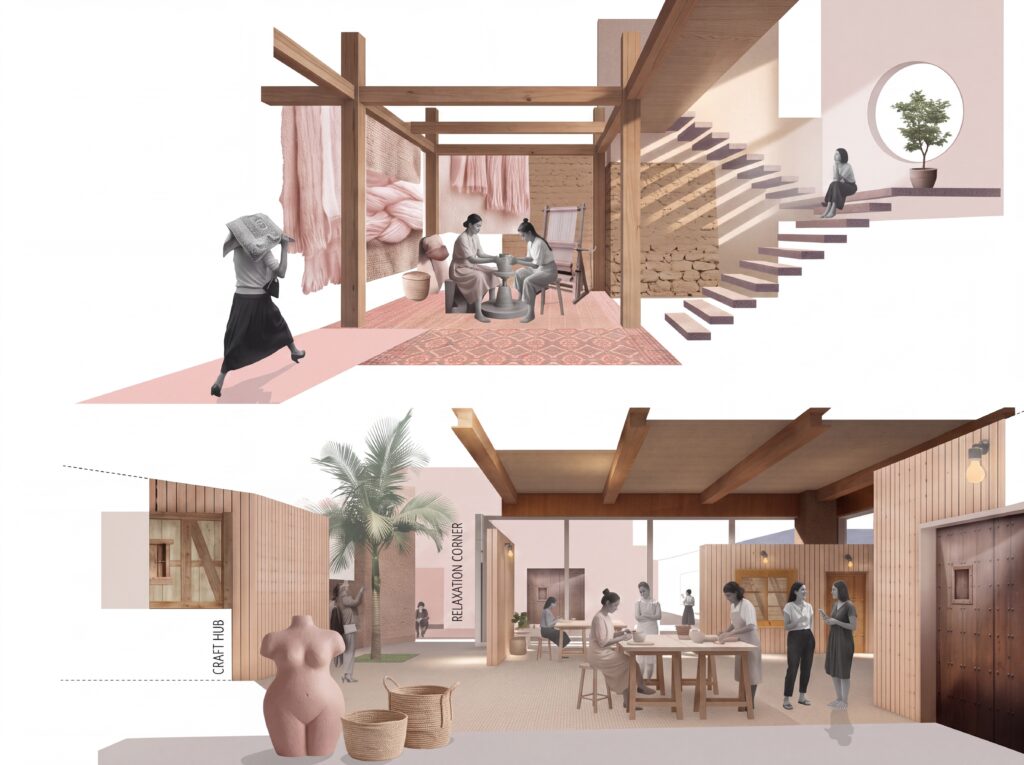
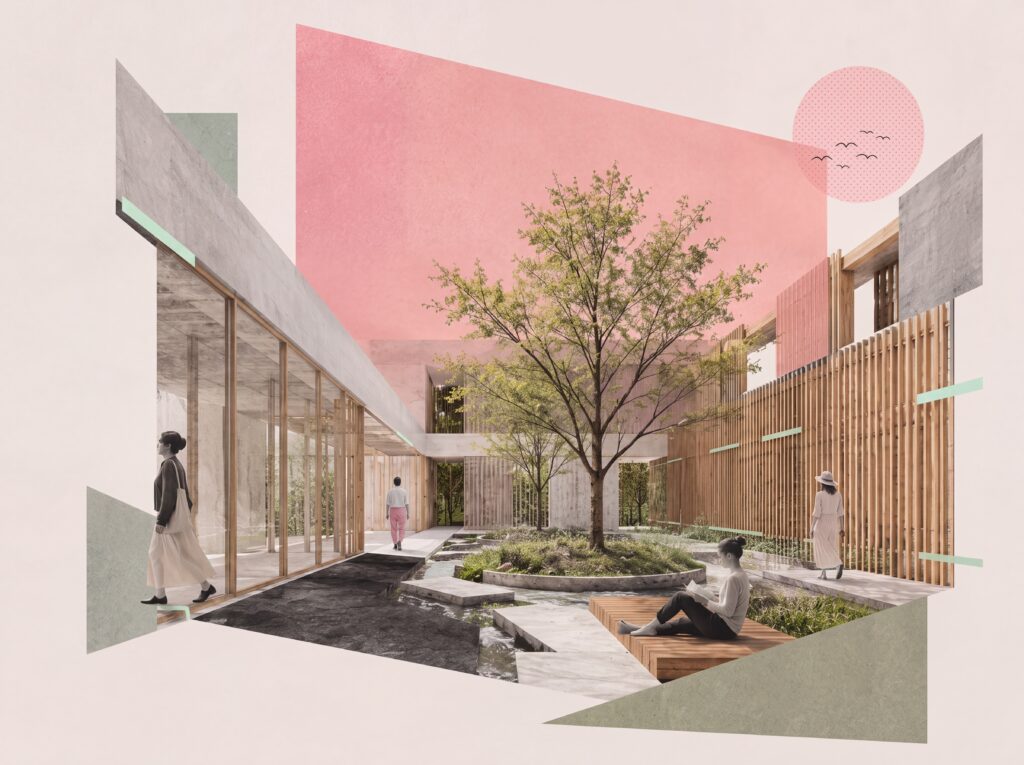
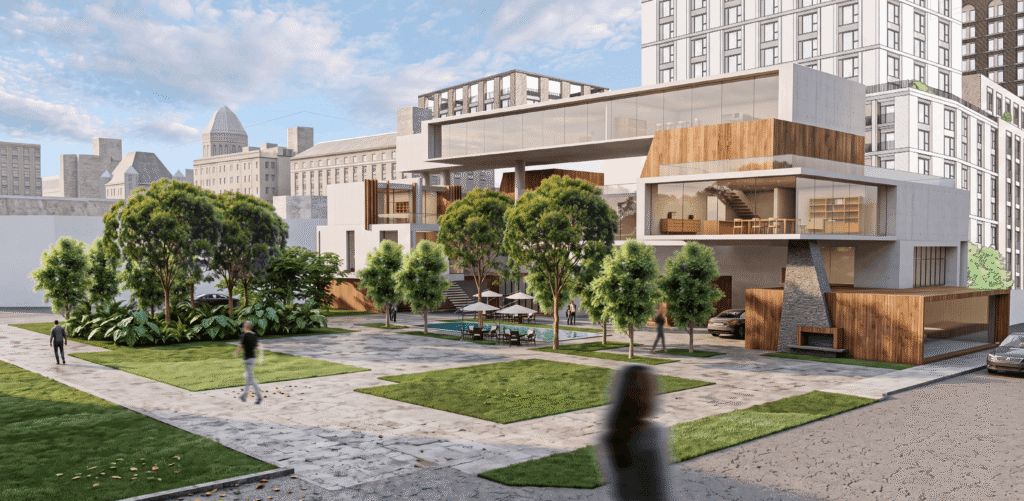
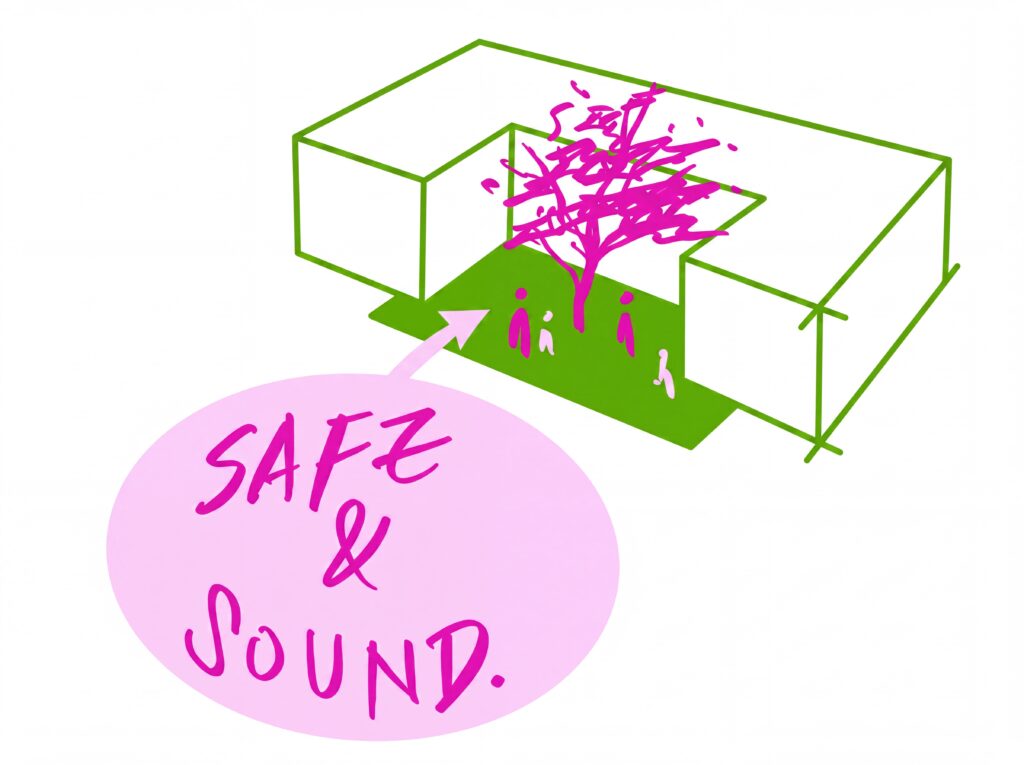
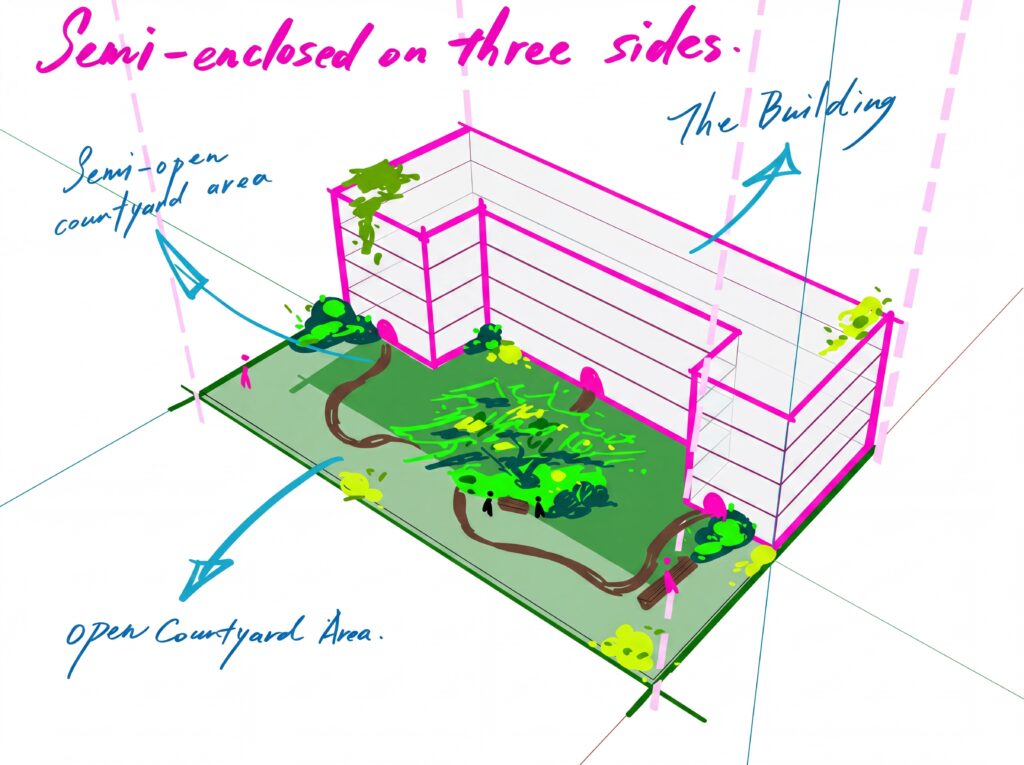
The final proposal is a Women’s Urban Sanctuary that allows users to choose how they engage with the city. Public and social spaces are connected with semi-private areas, quieter rooms and spaces for individual retreat. A central garden acts as an important threshold, bringing nature, daylight and moments of rest into the architectural experience.
Rather than creating an isolated space for women, the project aims to maintain a relationship with the surrounding city while providing opportunities for refuge. Through different levels of openness, enclosure and interaction, the design explores how architecture can support agency, comfort, connection and choice within everyday urban life.
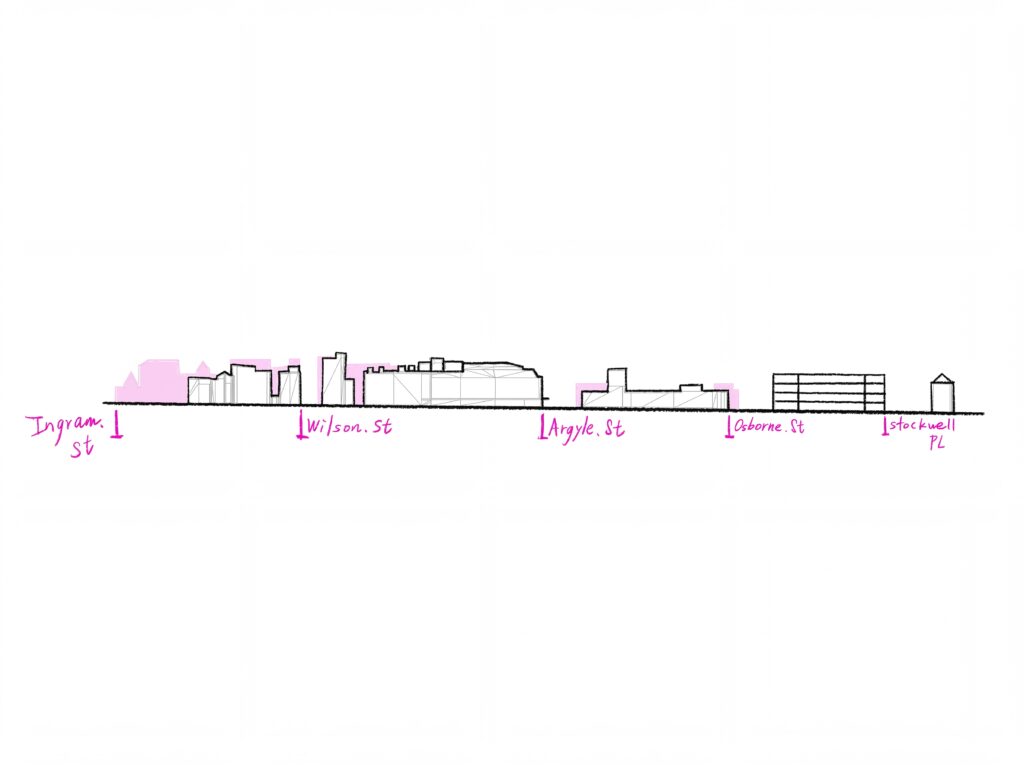
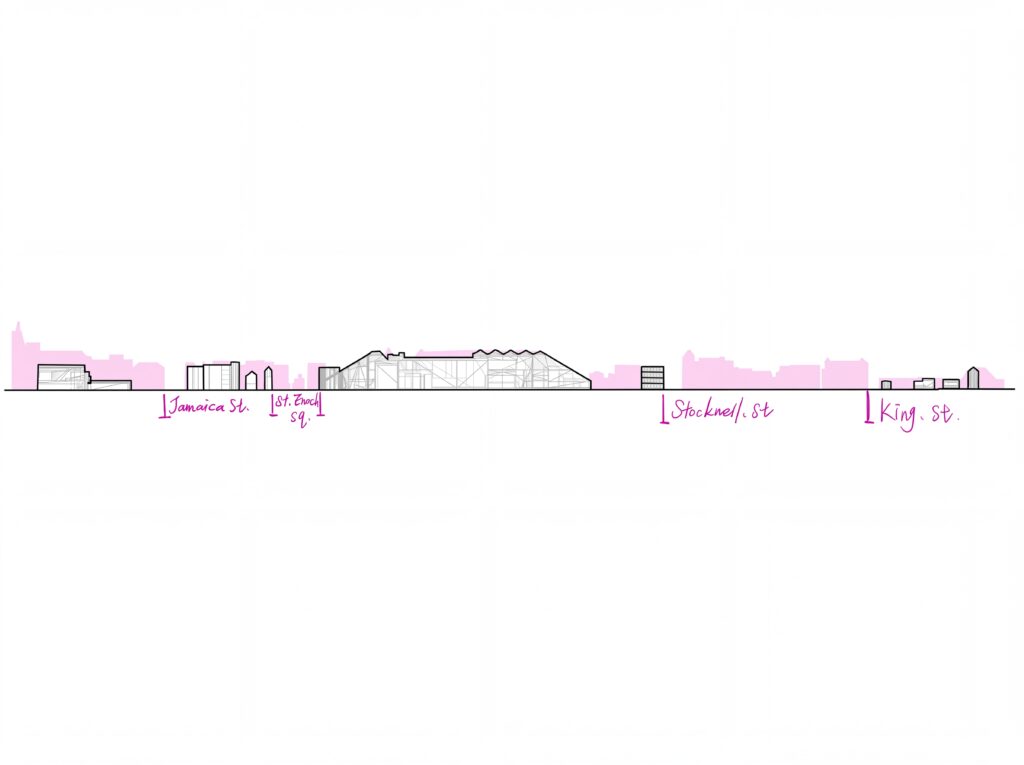
The central research question is thus: How can architecture, in a dense urban centre, give women security and autonomy and at the same time make them part of public life? The proposed Women’s Urban Sanctuary is not intended to ‘experience a new space away from Glasgow’, but will bring an added layer of spatial optionality to the city. The project unfolds in three interrelated levels inspired by the inherently feminist issues of everyday users and alternative modes of space occupation (Matrix Book Group, 1984; Grote, 1992). St Enoch is explored at the urban scale through movement, at the spatial scale through layered thresholds to choose and at the bodily scale through the opportunity to pause. Thus the thesis has a definite sequence: Move → Choose → Pause, but retains a connection with the everyday urban life of Glasgow.
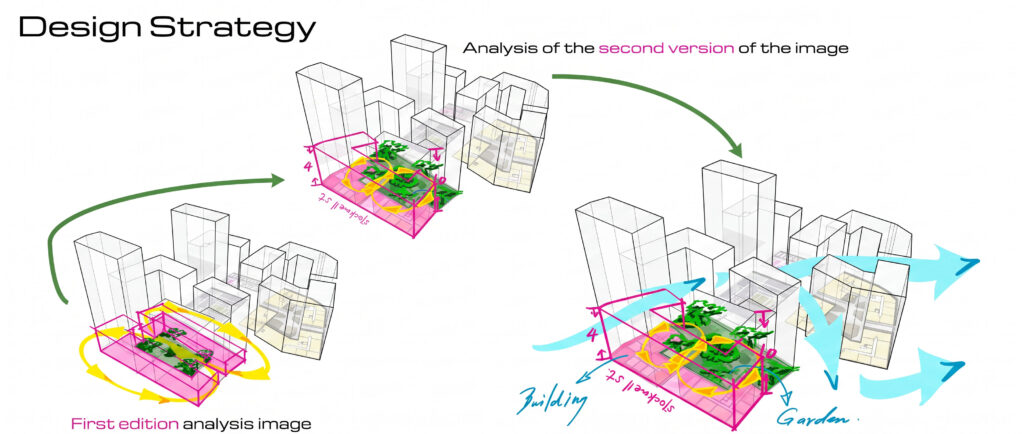
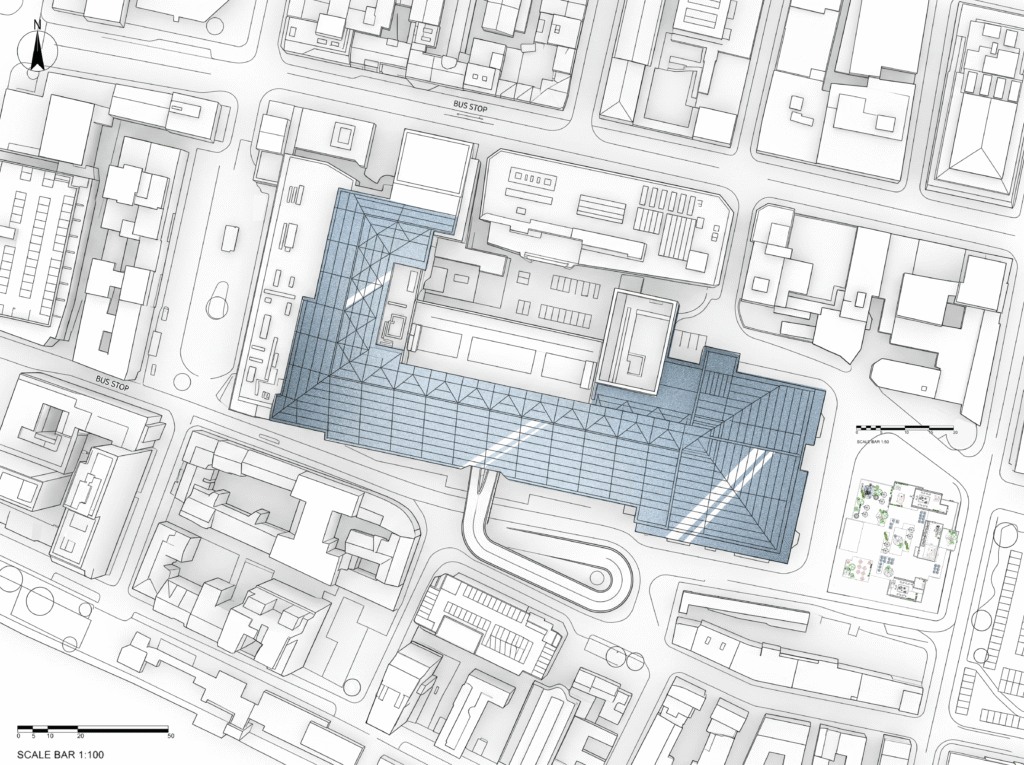
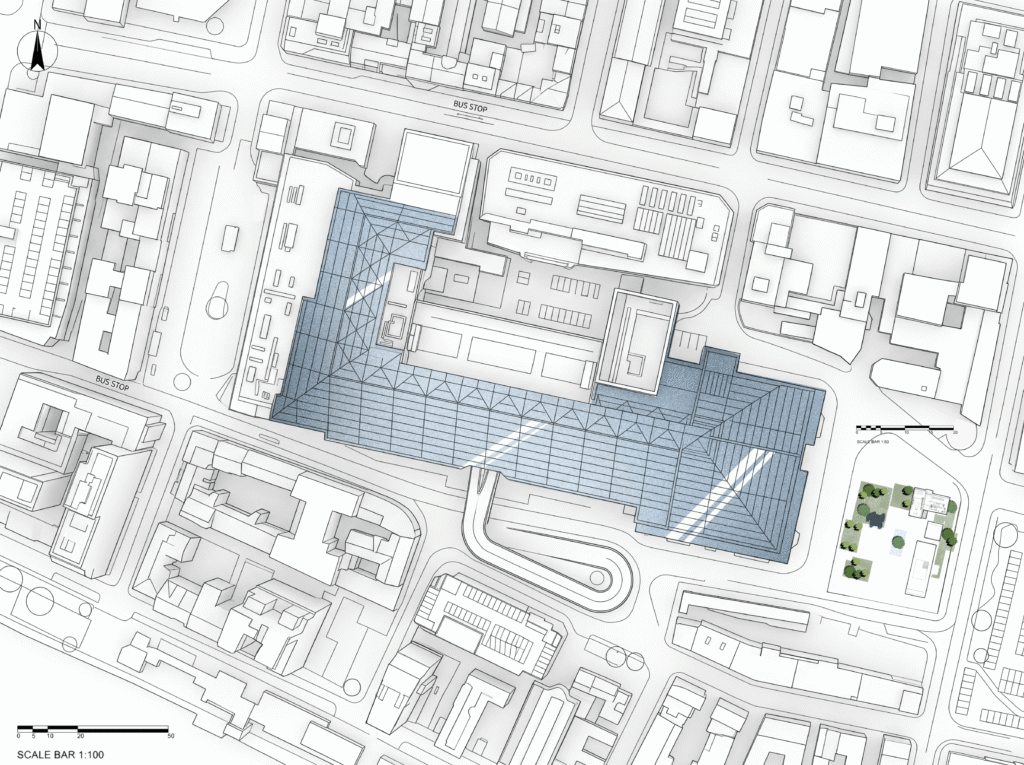
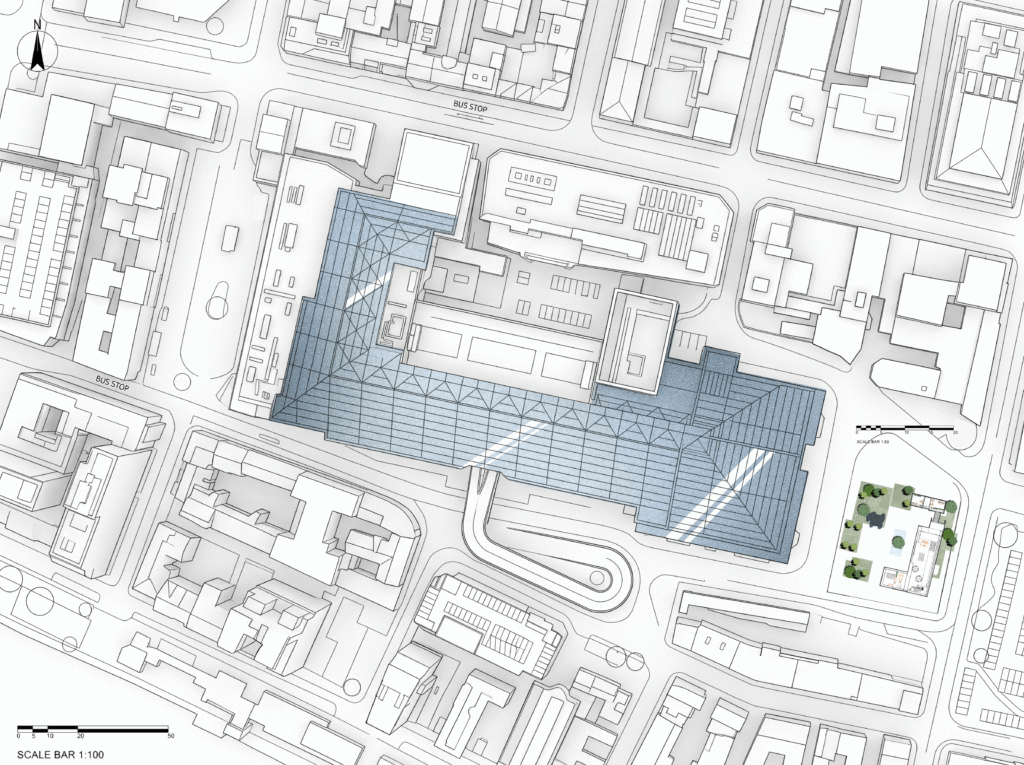
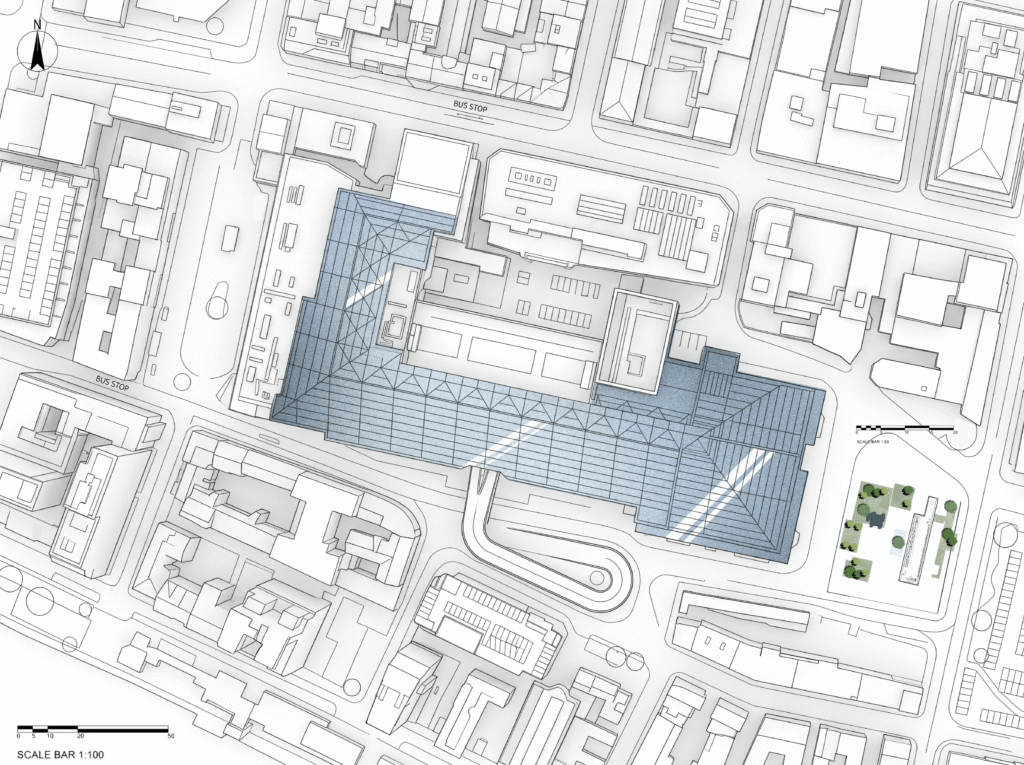
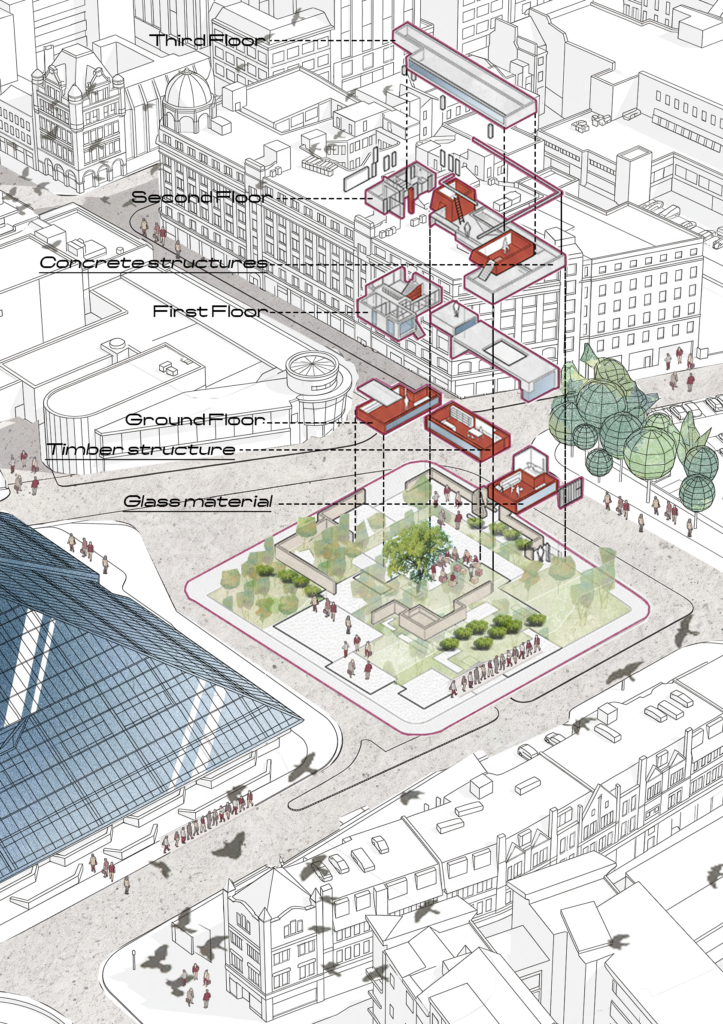
Exploded axonometric drawing illustrating the spatial hierarchy, circulation and relationship between architecture and landscape.