Yufei (Phelix) Wang
Hi, I am Phelix. My goal is to bridge the gap between engineering, service, and product design by positioning designers across the entire product lifecycle, enabling the creation of more effective, integrated, and impactful products.
easto
Abstract
Prolonged sitting has become a normal part of everyday work. During office work, people spend around 82% of their time sitting, while only about 5% is spent in upright postures such as standing or walking, with walking accounting for only around 2%. Remaining relatively still for long periods means that the pelvis and lower back experience very little movement, which can more easily lead to stiffness and discomfort.
Active chairs try to change this by allowing the seat to move, but they still rely on the user to actively initiate movement. A chair that can move does not necessarily mean that the person will actually move. This is because users need to engage their whole body and attention to maintain stability — something that people who want to stay focused on their work cannot afford.
easto is designed for exactly this situation.
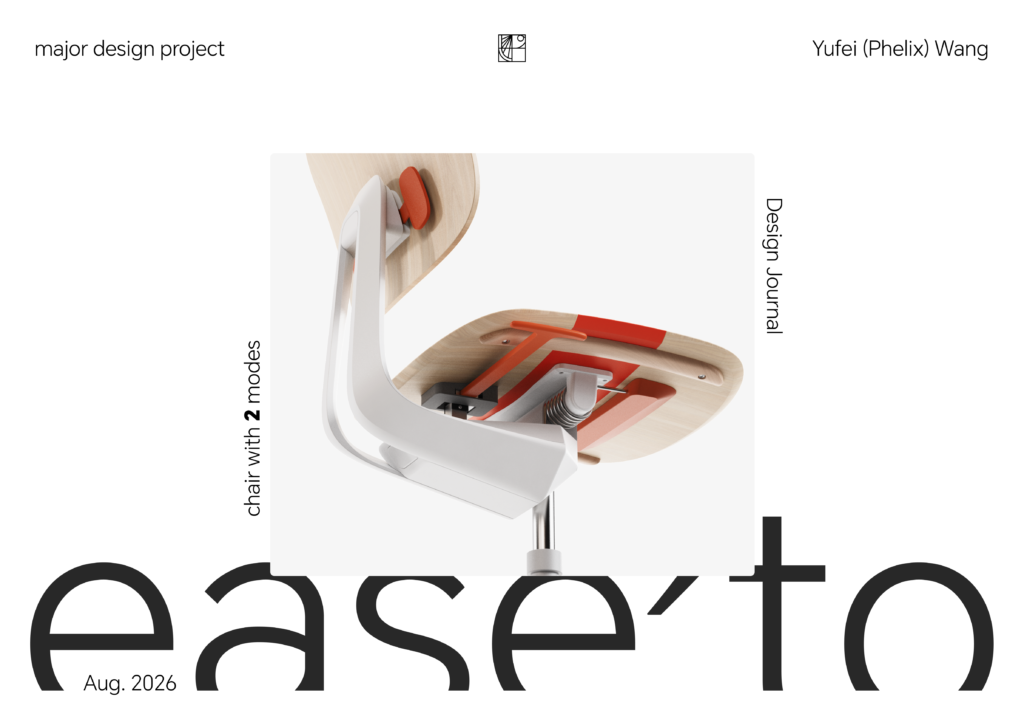
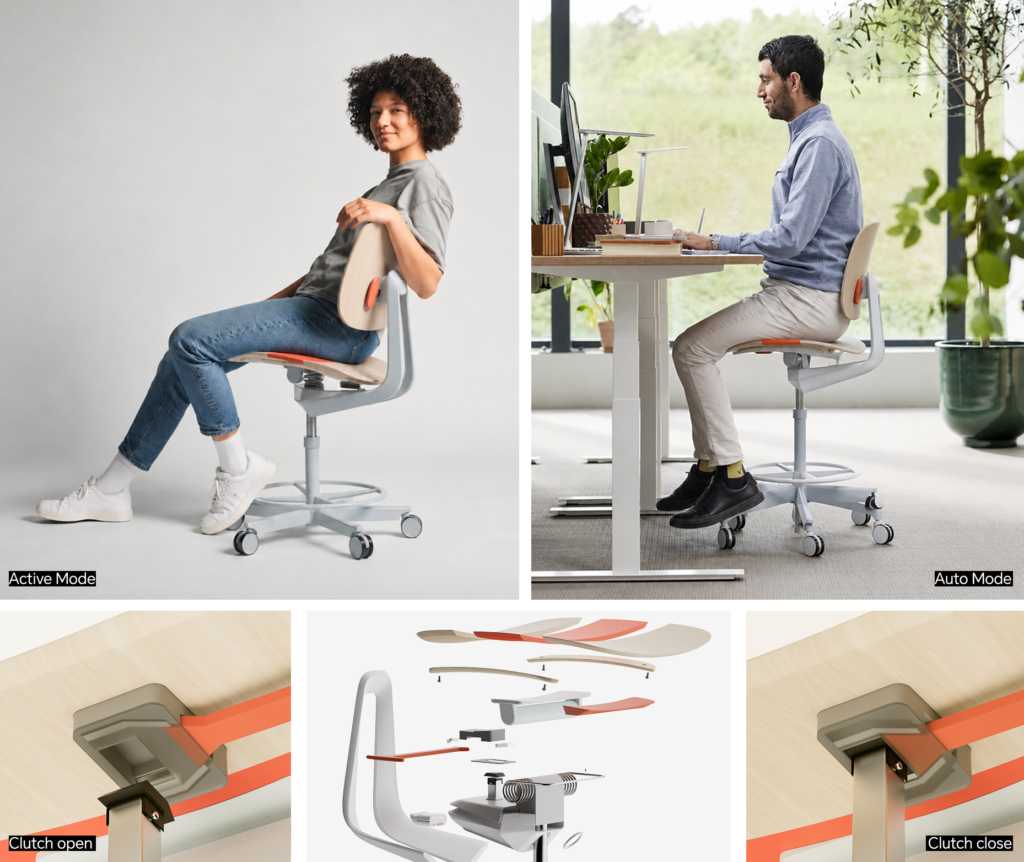
Easto has two modes of use. In Active Mode, the user can naturally rock the seat through their own body movement, while torsion springs provide gentle resistance and help return the seat to the centre. When the user needs to stay focused for a long period, they can switch to Auto Mode, allowing the linear actuator to connect with the seat and generate small, timed forward-and-back movements. In this way, the chair preserves the freedom of active sitting while also stepping in when the user forgets to move, using subtle motion to restore body awareness.
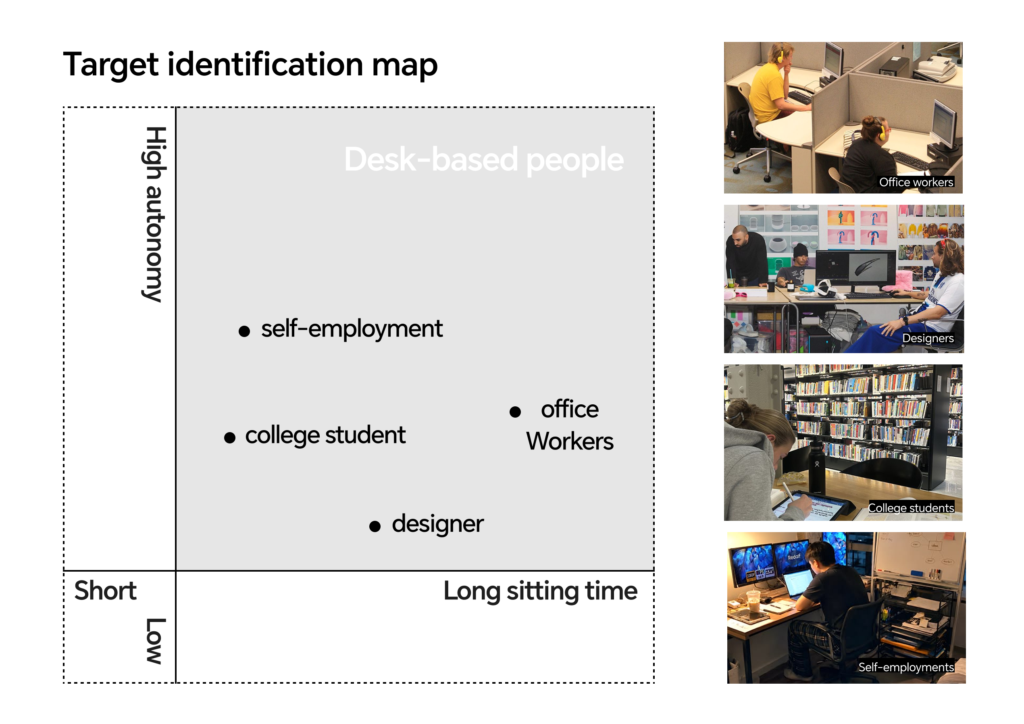
Target group
They are relatively young people with high psychological ownership. They value maintaining their focus while working, but also want to reduce the potential physical impact of prolonged sitting. However, early signals from their body are easily be overlooked.
CMF
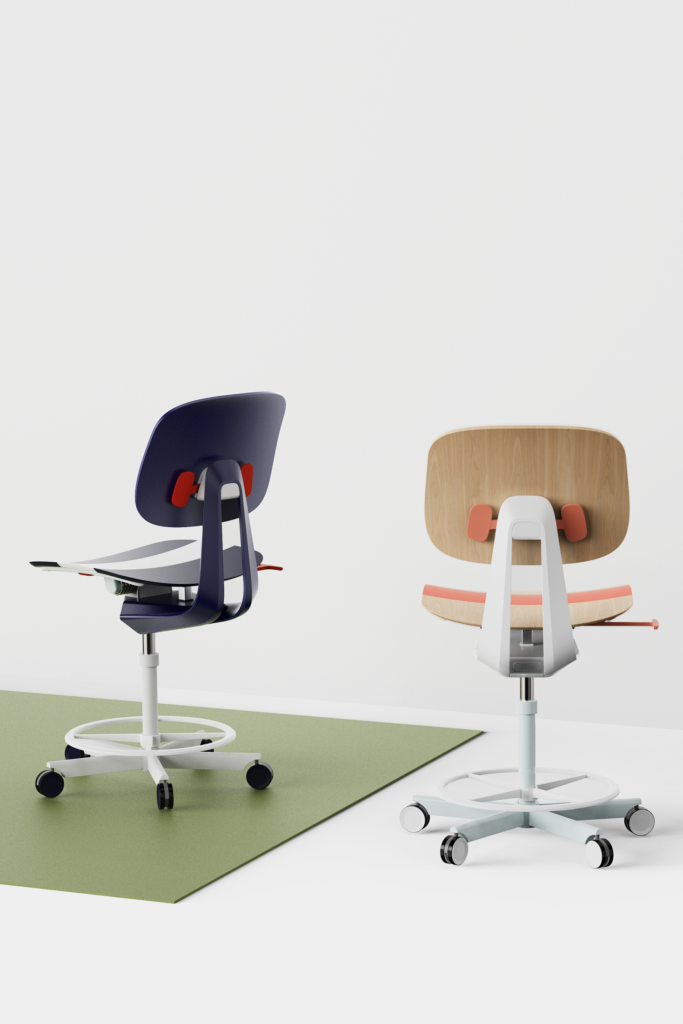
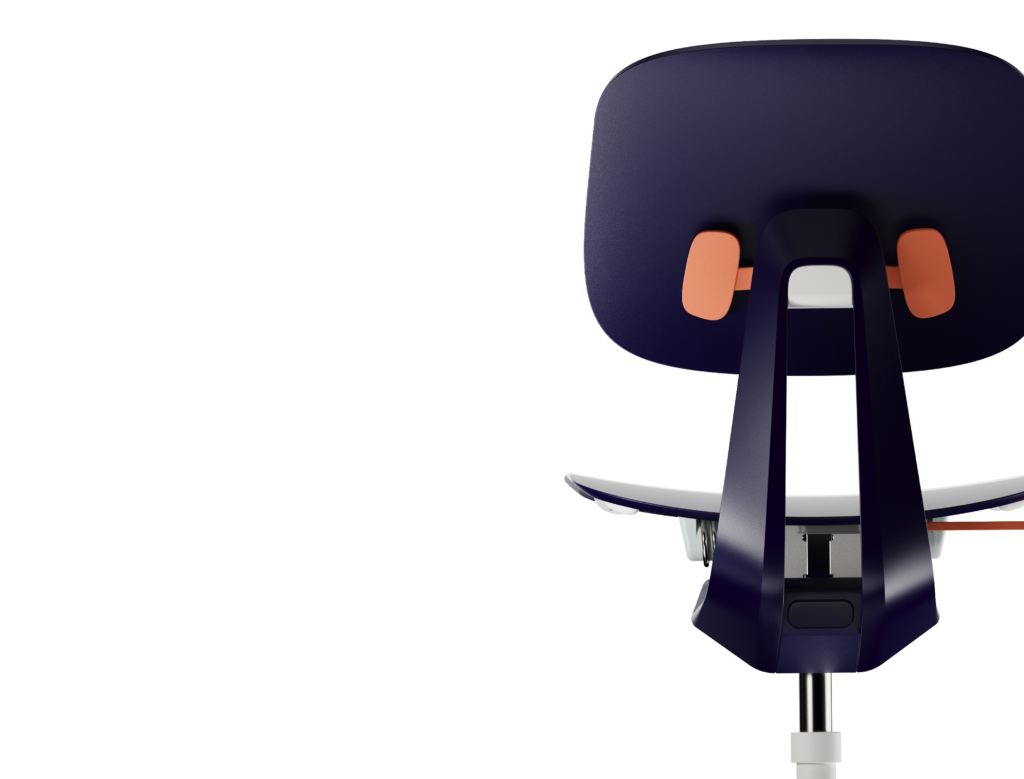
The CMF exploration investigated how the same product architecture could communicate different emotional qualities without changing its core function or identity. The light wood, warm white and orange palette was developed to emphasise familiarity, warmth and a furniture-like character, allowing the chair to sit more naturally within everyday office and home-working environments. In contrast, the navy blue version uses stronger tonal contrast to create a more technical, dynamic and product-oriented identity, making the engineered character of the chair more visually prominent. Despite these different intended personalities, both directions maintain the same functional colour language: the accent colour identifies the recommended seating zone above the pivot and highlights user-operated adjustment components. This allows CMF to contribute not only to the emotional positioning of the product, but also to the communication of its movement and interaction logic.
Dual mode
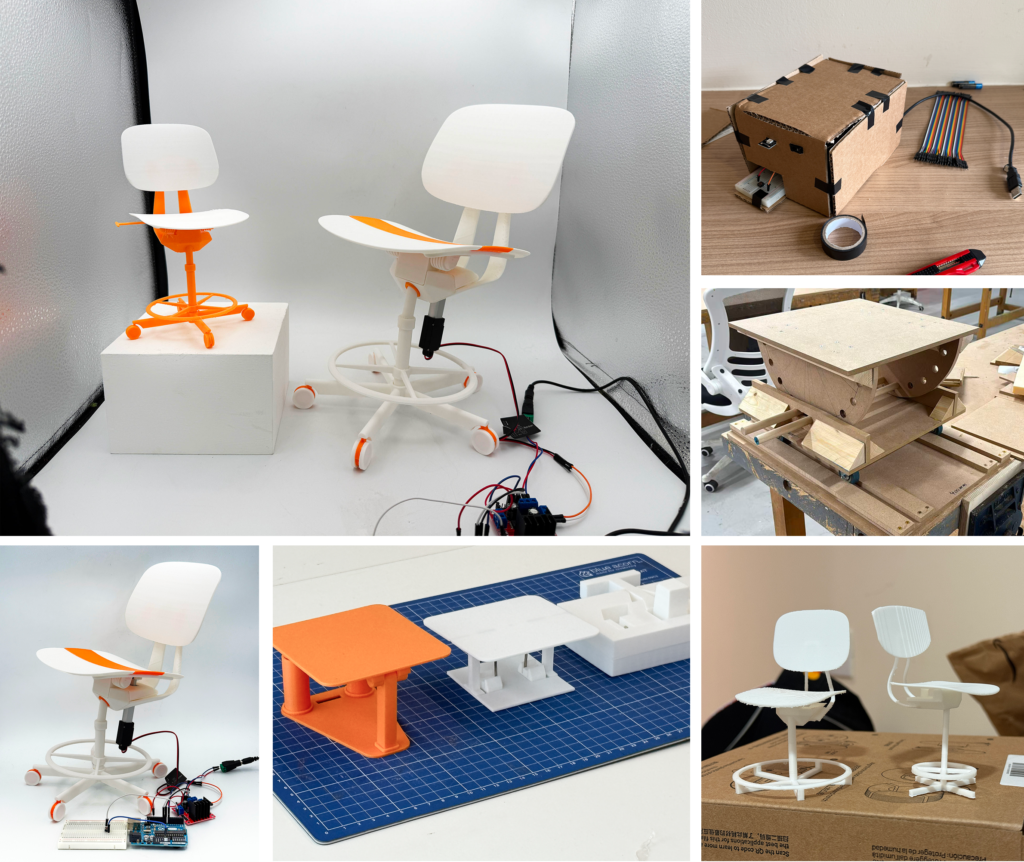
I wanted the chair to support more than one “correct” way of sitting. When users want to move, they can gently rock the seat themselves; when they become absorbed in work and forget to move, the chair can provide subtle motion prompts. To combine both behaviours in one system, I developed a switchable mechanism using a calculated torsion spring, linear actuator, and mechanical clutch, enabling both Active Mode and Auto Mode.
Visual guidance
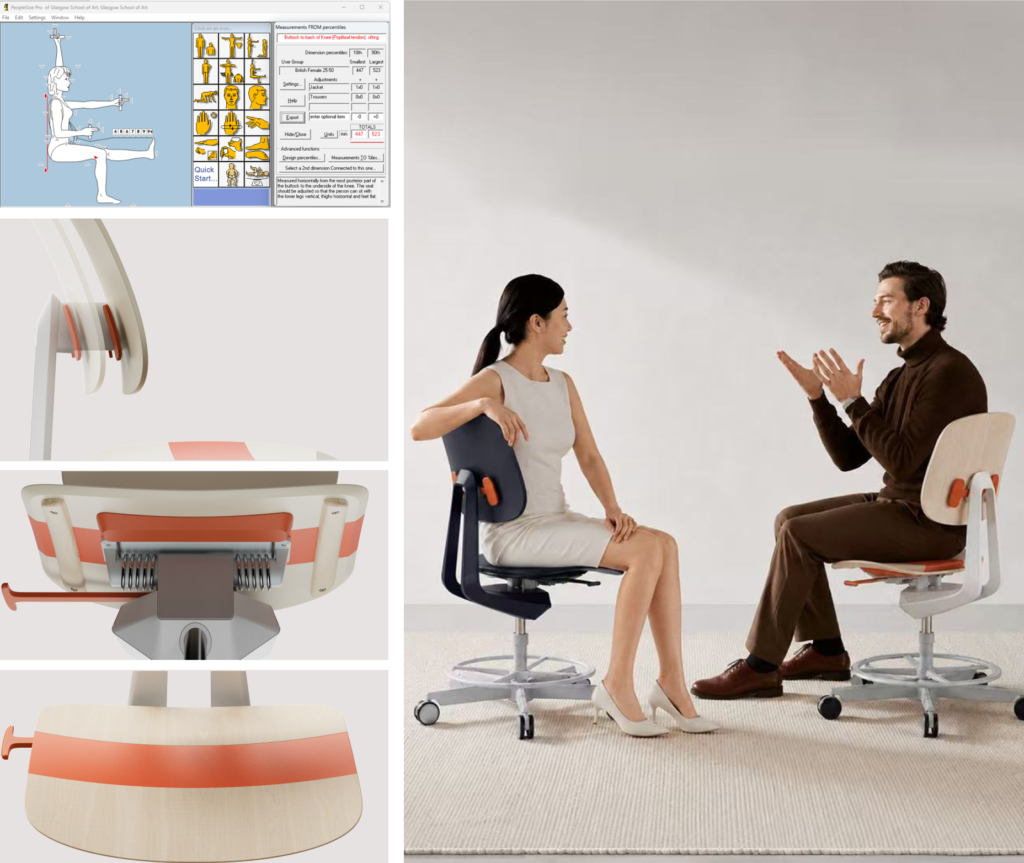
For a more natural user experience, the user should sit as close to directly above the pivot as possible, and several design considerations were made to support this. The seat can be adjusted forwards and backwards to accommodate different body sizes; a contrasting strip on the seat indicates the pivot position; and handles on both sides help the user control the seat movement more intuitively.