
Yiran Wang
I am an illustrator and visual storyteller from Beijing, China. I work across a range of illustration practices, with a particular interest in ink-based image-making and sequential storytelling. Combining expressive brushwork with digital composition, I explore movement, atmosphere and emotion through gesture, rhythm and landscape.
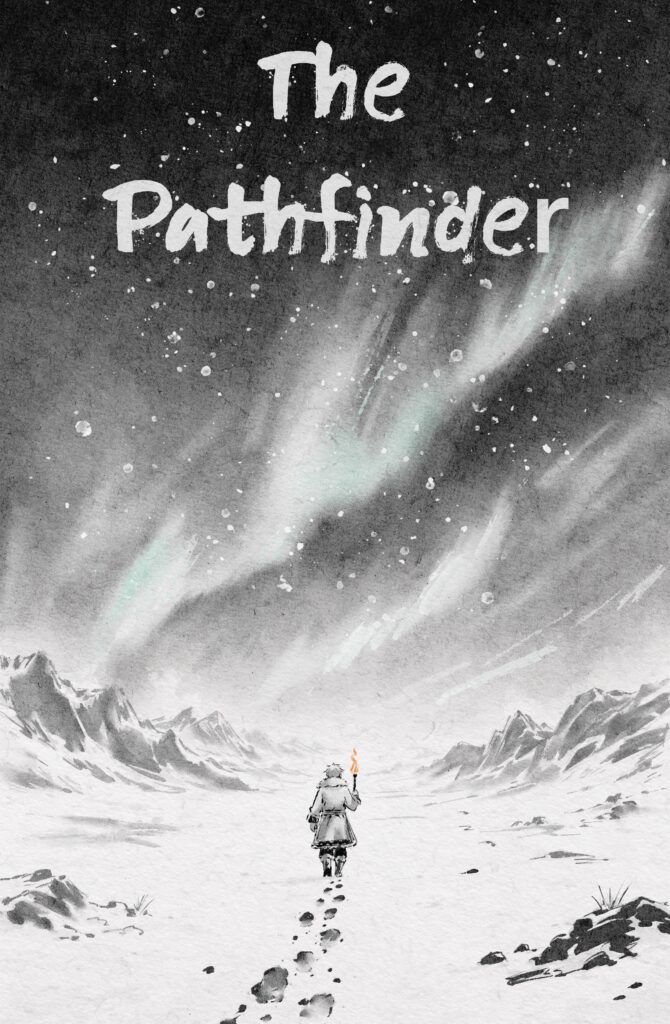
The Pathfinder: A Visual Retelling of a Sámi Folktale
The Pathfinder is a graphic narrative adapted from a traditional Sámi folktale about Aigin, a young boy captured and forced to guide his captors through a winter landscape. Rather than presenting Aigin as a conventional hero who succeeds through physical strength, the story locates his agency in observation, patience and knowledge of place.
At the centre of the project is a contrast between two ways of relating to the land: domination and attentiveness. Drawing on research into Sámi relationships with land, the project treats snow, wind, routes, reindeer and seasonal change as parts of a living cultural landscape rather than an empty wilderness. The captors regard the environment as something to cross and control, while Aigin reads its tracks, changes and warnings. His survival comes not from conquering nature, but from understanding his place within it.
Within the narrative, the reindeer represent more than a visible element of Sámi culture. Their tracks connect Aigin with home, cultural continuity and knowledge passed between generations. They also suggest that a path can remain legible to someone who understands the land, even when it is invisible to outsiders.
The torch develops as a second central symbol. Initially forced into Aigin’s hand, it represents captivity and imposed responsibility. As the storm intensifies, the captors become dependent on its limited light. The same object used to control Aigin therefore reveals their vulnerability and eventually becomes a means of resistance. This reversal suggests that power without understanding is fragile.
Through expressive ink, negative space and sequential rhythm, the work explores the relationship between people, culture and environment. Rather than reproducing a Sámi visual style, I interpret the story through my own ink-based practice while approaching its cultural context through research, care and respect.
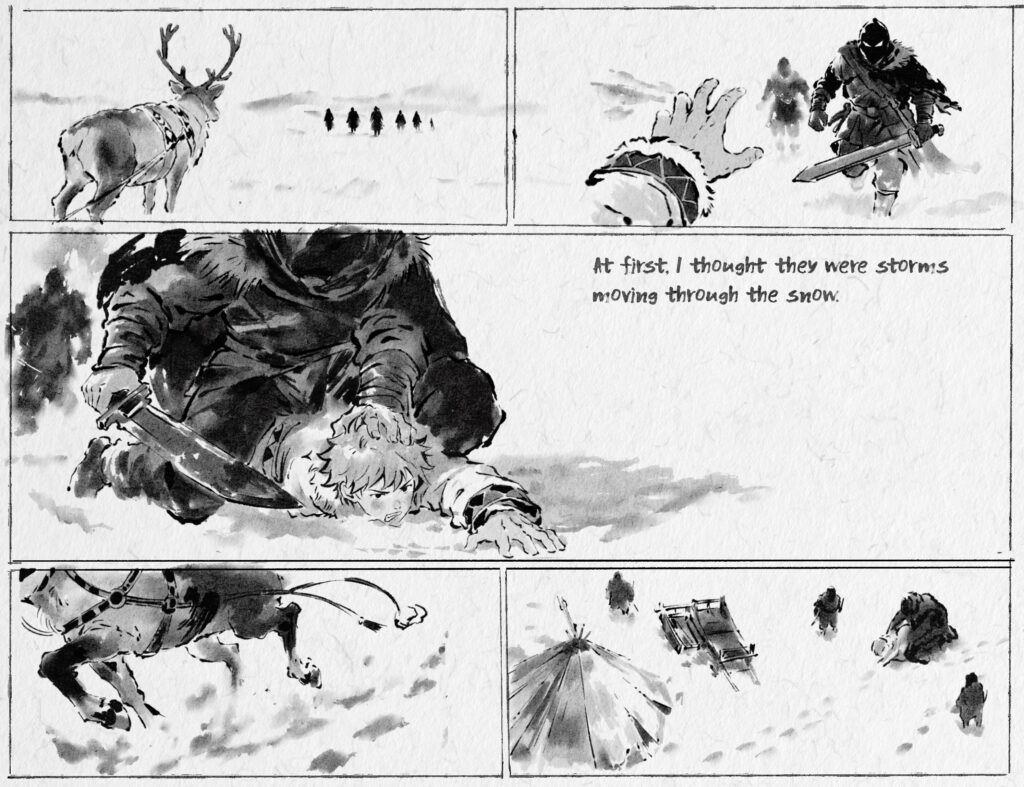
The Capture, 2026. Ink drawing and digital composition. This opening sequence shows Aigin being seized and restrained, establishing the danger and imbalance of power at the beginning of the story.
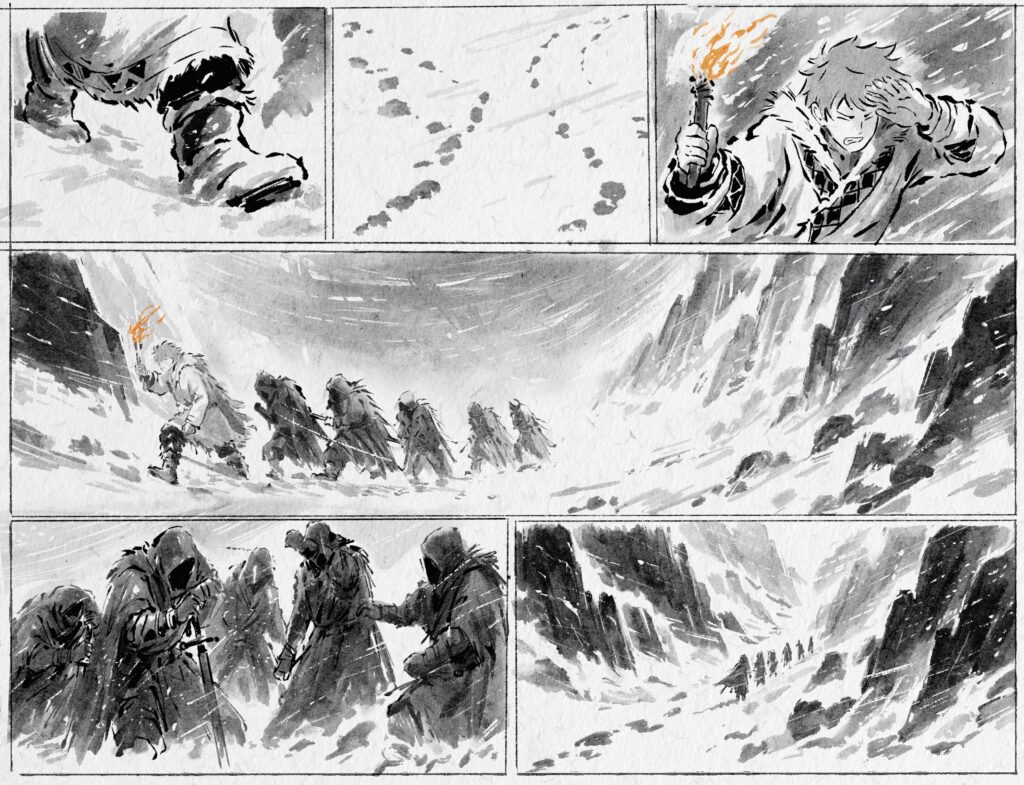
Through the Blizzard, 2026. Ink drawing and digital composition. Aigin guides his captors through an intensifying snowstorm as the torch gradually becomes their only point of direction.
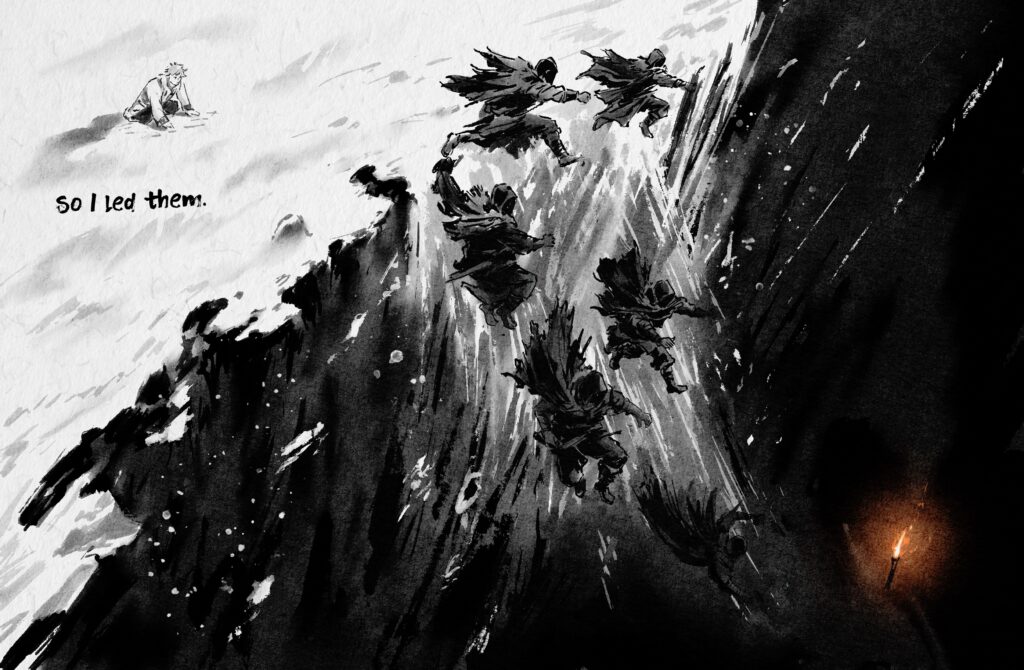
The Fall, 2026. Ink drawing and digital composition. This double-page spread marks the decisive reversal of the narrative. Aigin’s knowledge of the terrain allows him to resist without physical force, while the captors’ dependence on the torch leads them beyond the limits of their understanding.
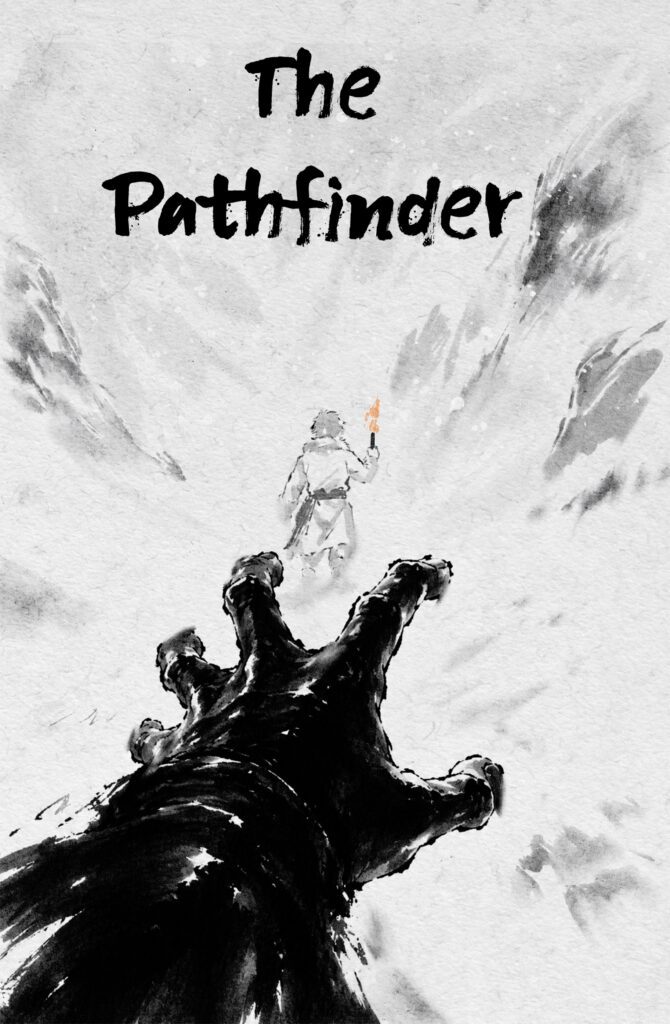
Cover Design 01: The Captor’s View, 2026. Ink drawing and digital composition. Seen from the captor’s perspective, an enlarged hand reaches towards Aigin’s back and the small flame ahead of him. The exaggerated viewpoint creates tension and introduces the story’s central themes of captivity, control and the changing meaning of the torch.
Cover Design 02: Beneath the Aurora, 2026. Ink drawing and digital composition. Aigin appears as a small figure within an expansive snowy landscape beneath the aurora. The quieter composition emphasises survival, solitude and his connection with the land, presenting the environment as a source of knowledge and belonging rather than a decorative background.
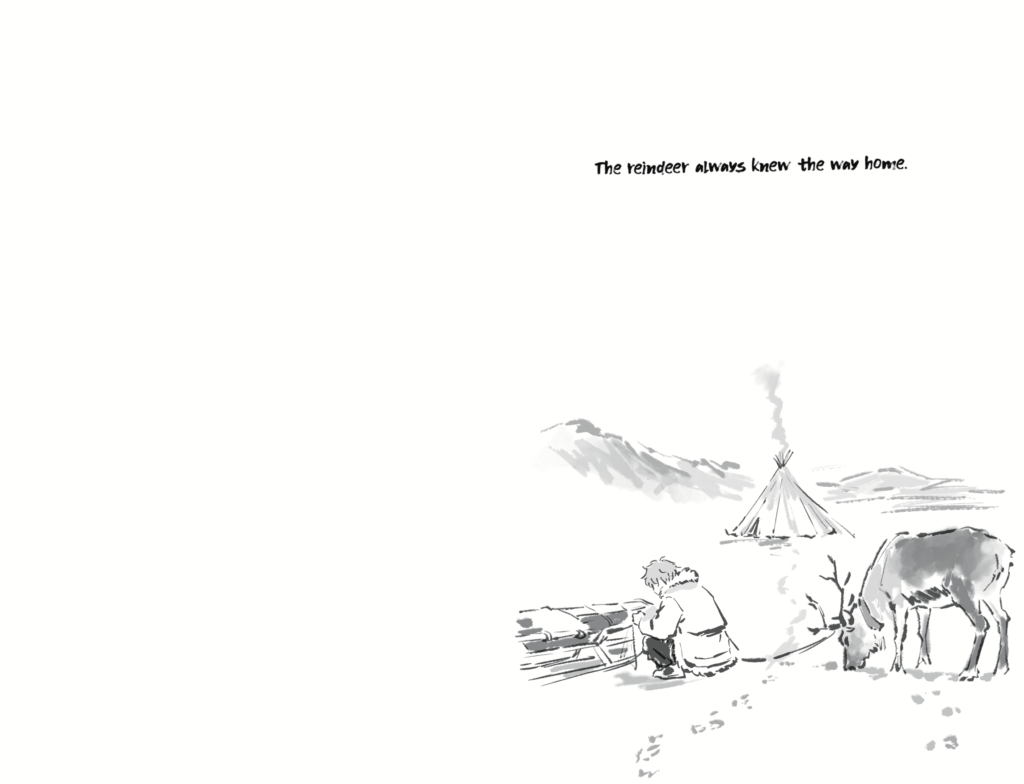
The opening storyboard establishes Aigin’s peaceful everyday life within the Sámi winter landscape. The reindeer, tent, sled and open snow introduce the cultural and environmental world of the story before it is interrupted by violence.
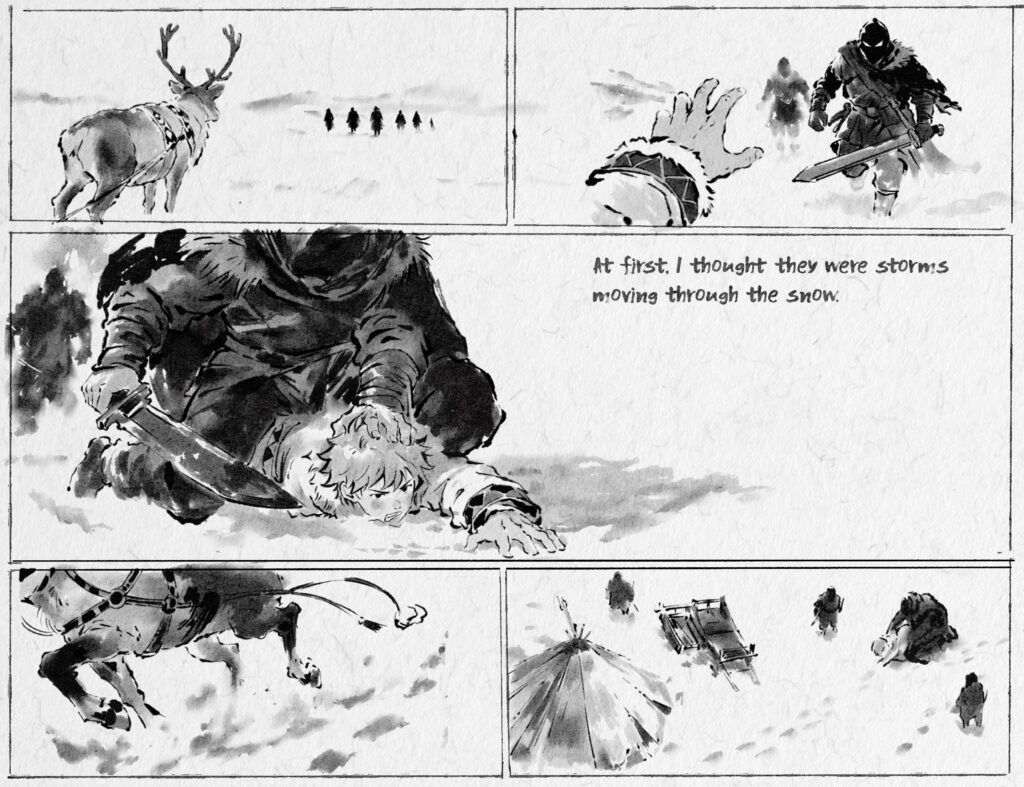
This double-page storyboard shows the sudden destruction of the peaceful opening. Aigin is surrounded, seized and restrained while the reindeer escape across the snow, establishing the central conflict of captivity and resistance.
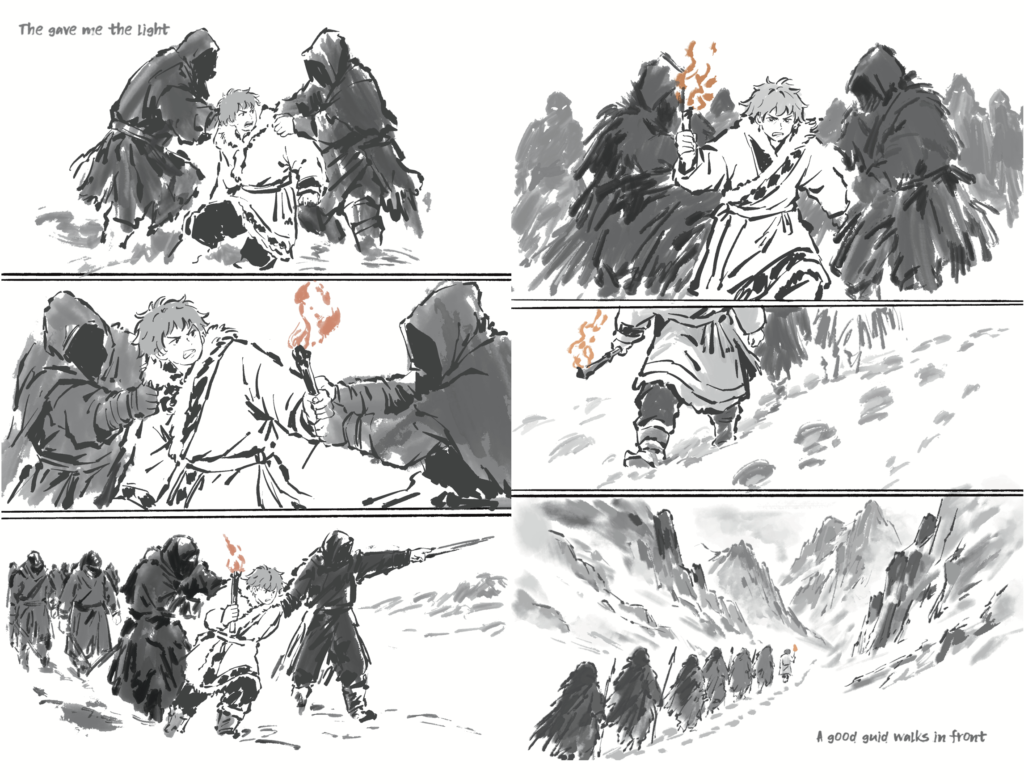
These two storyboard pages show the captors pulling Aigin upright, forcing a torch into his hand and moving him to the front of the group. As they begin travelling, the open snowfield gradually changes into steeper and more dangerous terrain.
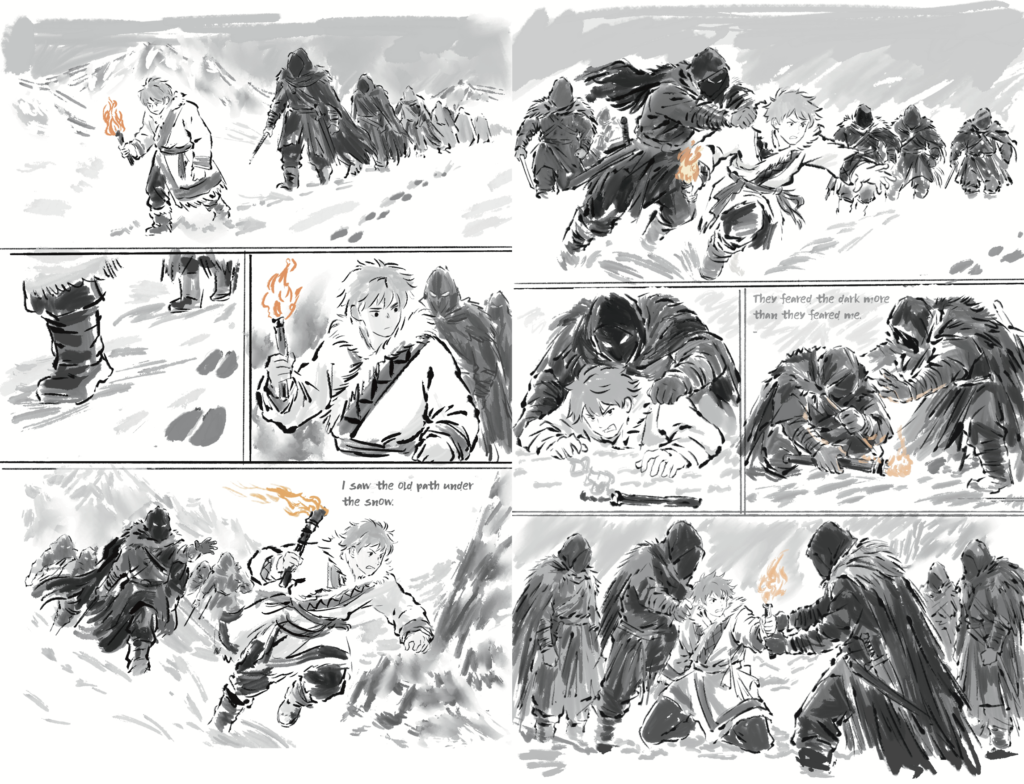
These two storyboard pages show Aigin recognising reindeer tracks and attempting to escape. He is caught and knocked into the snow, causing the torch to fall from his hand and go out.
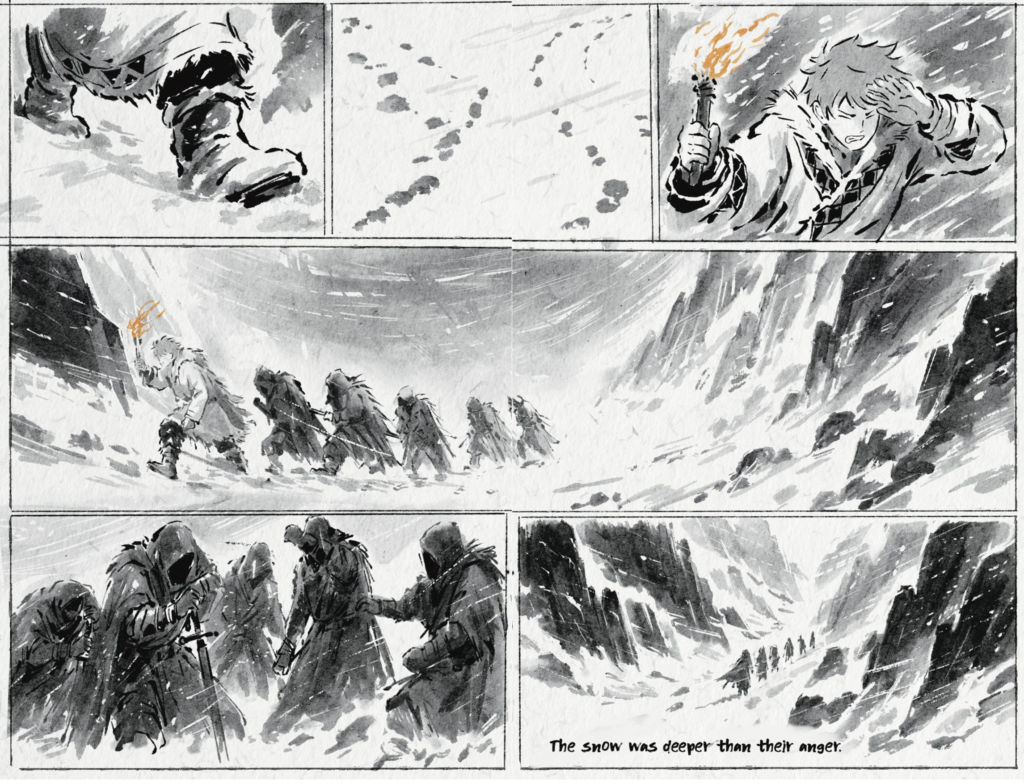
These two storyboard pages show the group entering an intensifying snowstorm. The captors stumble, fall and push one another, while Aigin continues to observe the snow, wind and changing terrain.
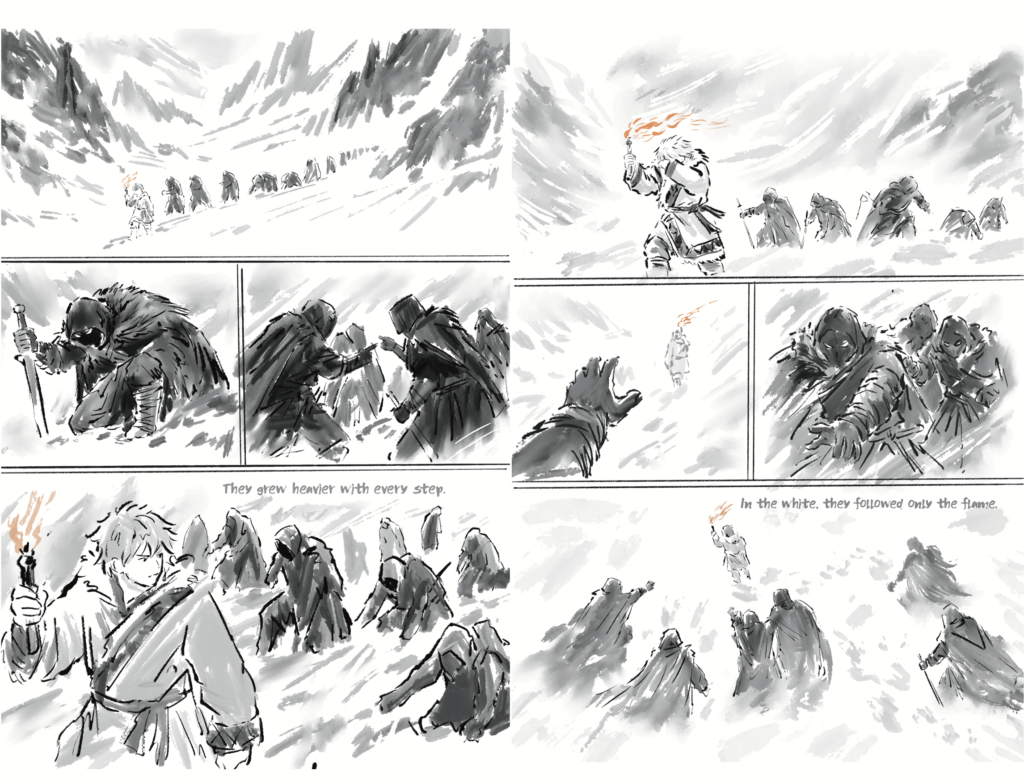
These two storyboard pages show the captors losing sight of the landscape and following the torch alone. Aigin recognises the approaching cliff and begins to understand how their dependence on the flame can be turned against them.
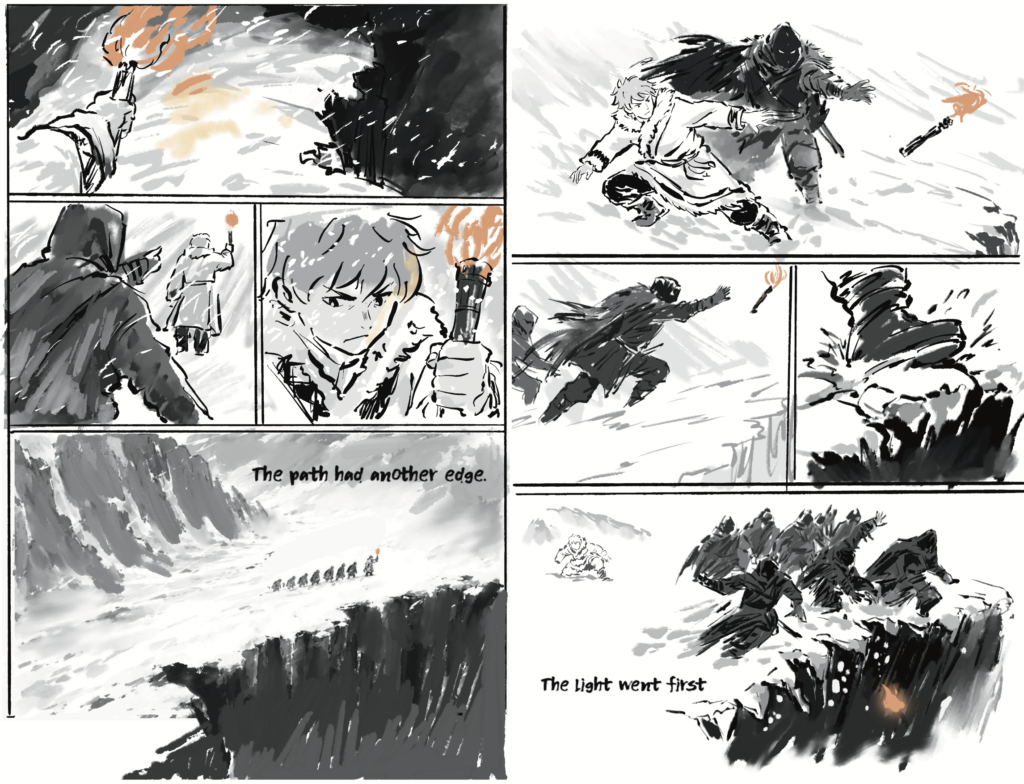
These two storyboard pages focus on Aigin’s point of view, determined expression and controlled movement of the torch. The closer viewpoints slow the narrative and prepare the reader for the final reversal.
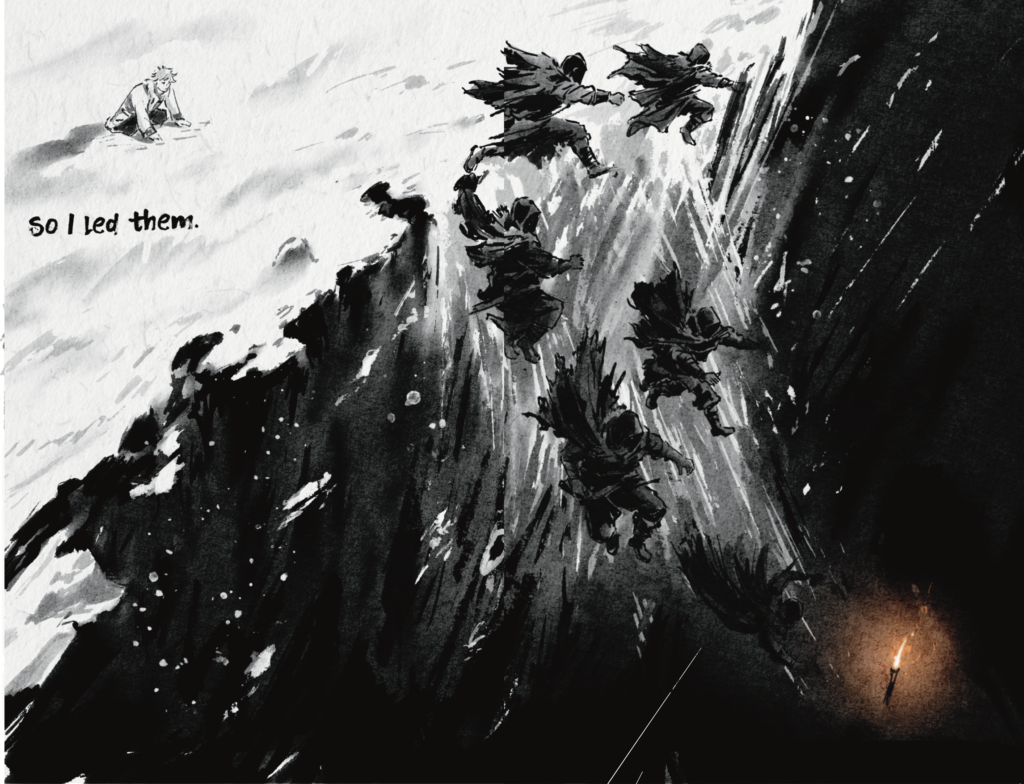
This double-page storyboard presents the decisive reversal of the narrative. The captors follow the torch beyond the cliff edge and lose control of their bodies as they fall, while Aigin remains above.
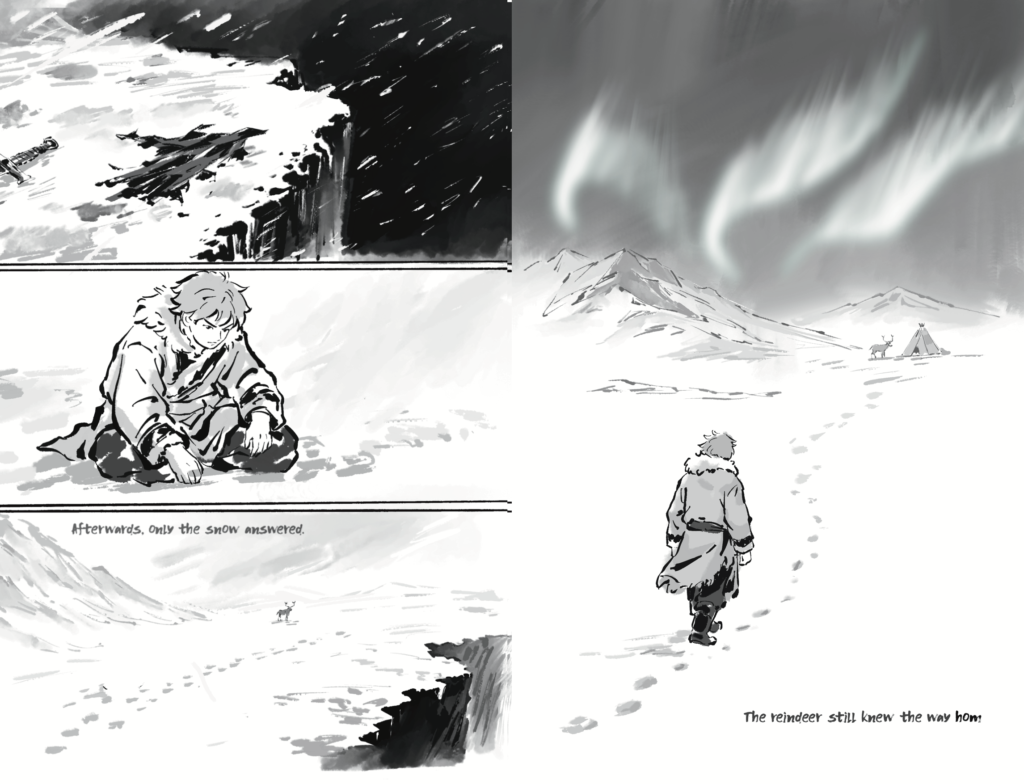
These two storyboard pages return the narrative to silence and open space after the fall. Aigin survives, recovers and continues alone through the snowy landscape, suggesting exhaustion and the beginning of his journey home.