
Yi-Hsiang Lin (Sam)
Before Glasgow, I spent five years in consumer electronics, working on the industrial design of commercial laptops and following them through tooling, supplier qualification and mass production. That work taught me how much of a design is decided after the concept stage. My MSc has taken me in the other direction — into user research and human factors — and my degree project applies both: a haptic feedback wearable that helps runners stay aware of their surroundings without breaking their focus.
FLOWSTATE — Awaraness for the whole path
A cap-mounted device that watches the path behind a runner, tells them what is coming, and tells everyone else what they are about to do.
The Product
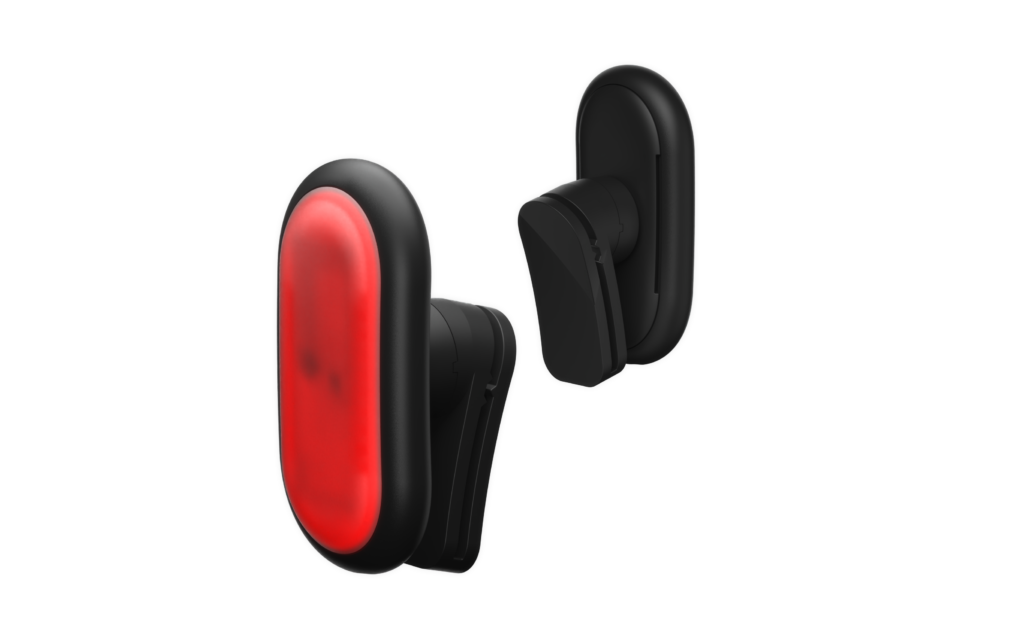
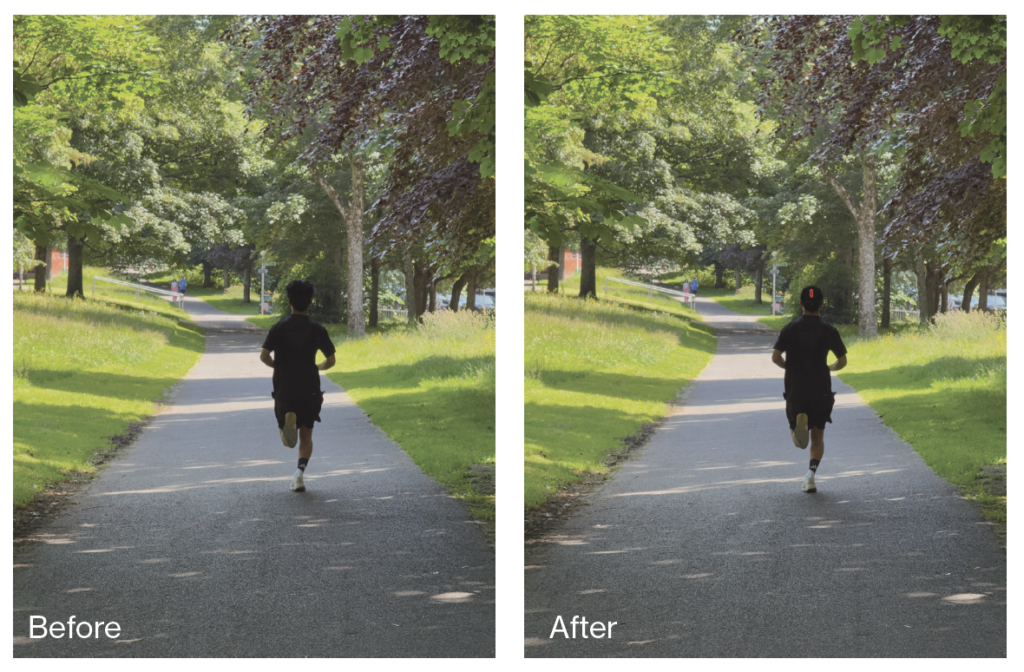
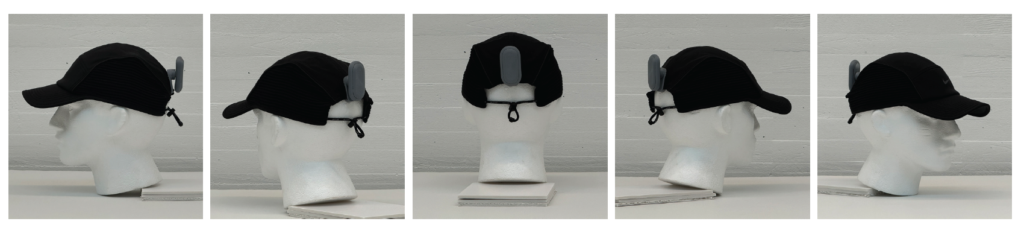
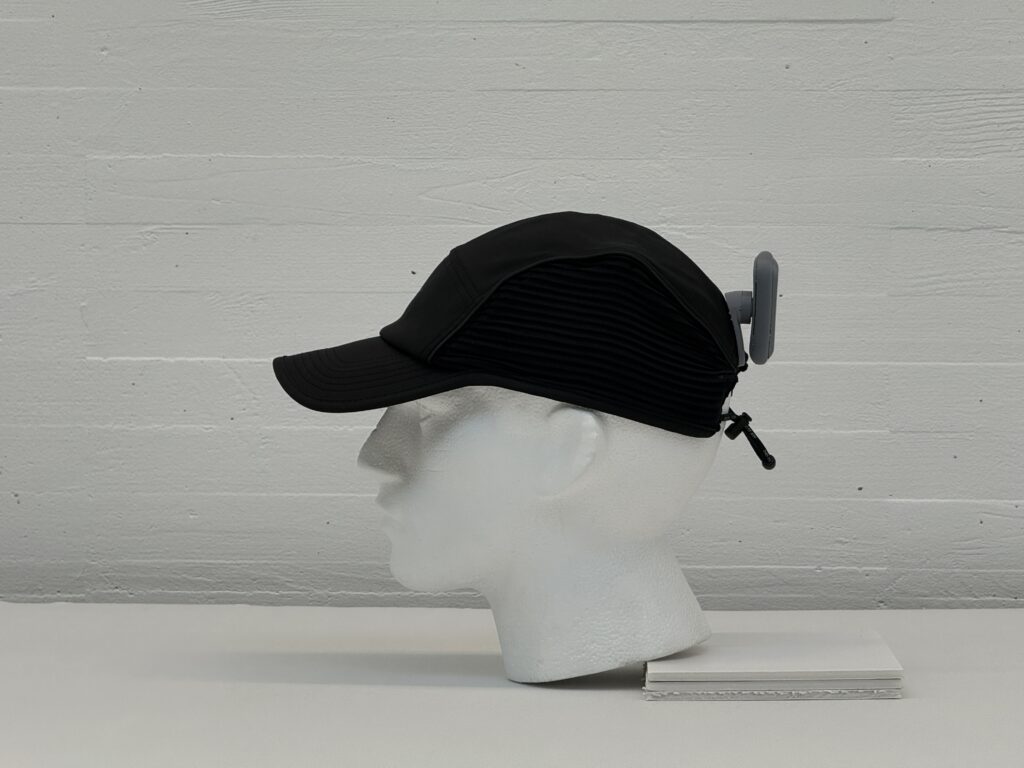
Flowstate is a small module that clips to the back of a running cap.
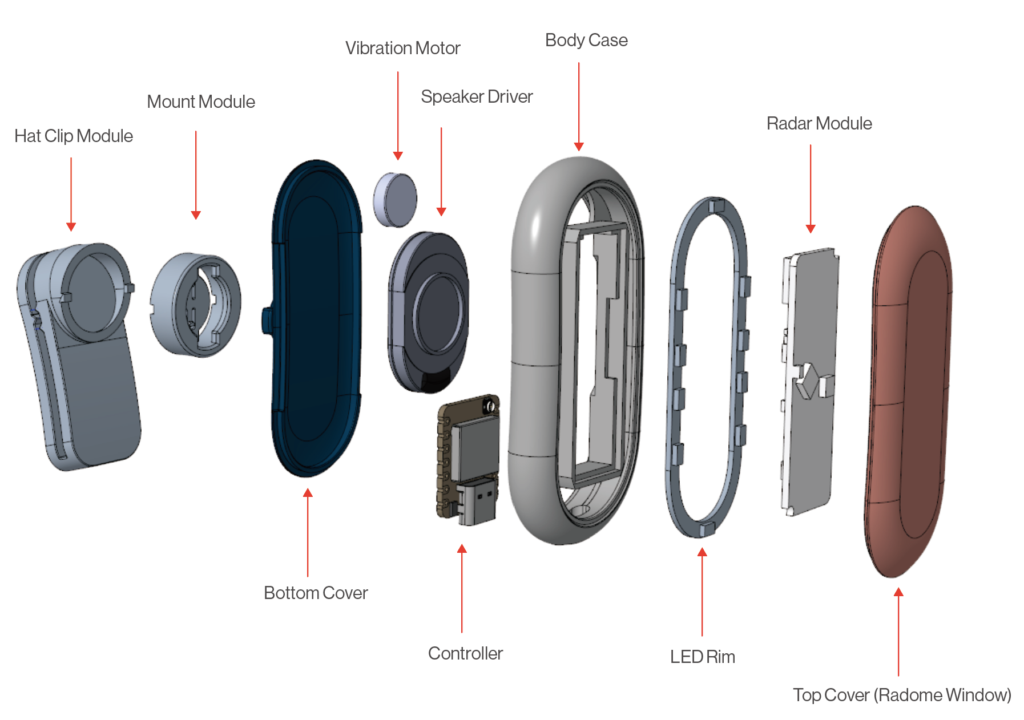
A radar watches the path behind you and a motor gives you a short buzz when something is closing. You stop having to guess.
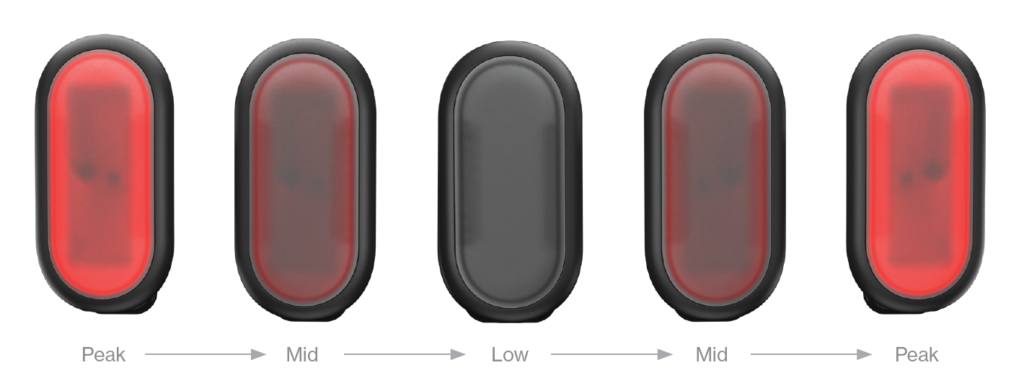
At the same moment the light rim changes from a slow breath mode to a fast flash mode, so the cyclist behind knows they have been seen. And when someone ahead has not noticed you, you can send an amplified footstep sound forward. They hear something they already understand, and step aside.
Three channels, two directions. Each one removes a different person’s need to stay alert.
Why on a Cap
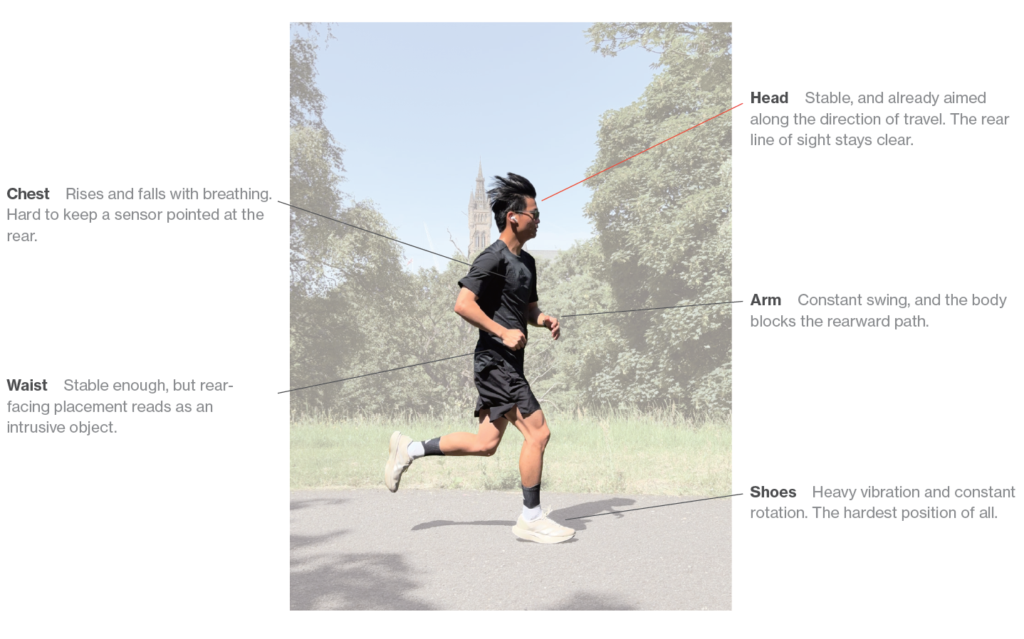
The head is the steadiest place on a running body, and it already points where you are going. Arms swing. Chests move with breathing. Shoes shake far too much.
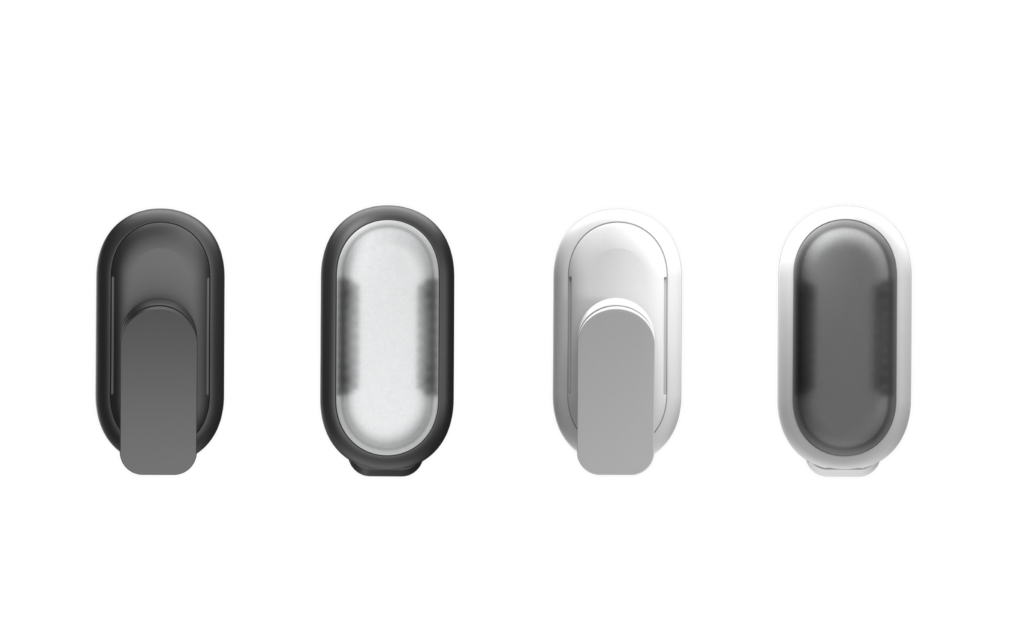
The mount is a separate part that twists on with a quarter turn, so the same module moves between a cap, a headband, or whatever you already wear. You keep the cap you already own.
Why
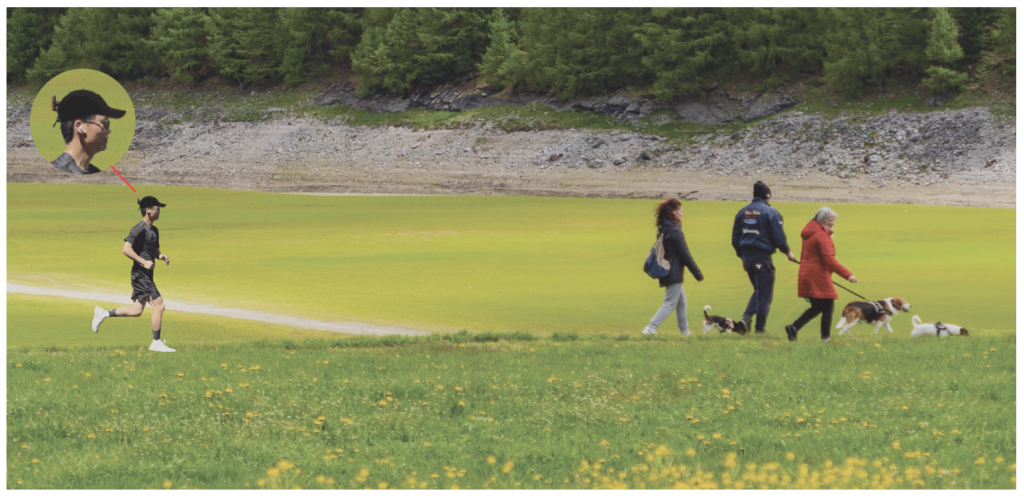
This started on my own runs. An e-bike came past me from behind on a shared path in Glasgow. No sound, no warning. Nothing happened, and I spent the rest of that run checking over my shoulder.
Runners look behind them without knowing whether anything is there. The cost is paid before the information arrives. Over a long run, those checks add up.
Twenty runners were surveyed at a half-marathon. Over sixty-five per cent had been startled by a bike from behind.
Requirements Before Components
The requirements came first. The parts were chosen to meet them.
A bike passing a runner closes the gap at about four metres a second. Five seconds of reaction time means the radar has to see twenty-one metres back. A walker ahead needs three seconds to notice and move, which at running pace is eight point three metres.
Those two numbers set the sensor and the speaker.
What this project produced
A working demonstrator, and a specification for the components a production version would need.
The radar in the demonstrator is an off-the-shelf module. Testing it on a moving body is what produced the specification for a purpose-built one.