
Xiye Lyu
(she/her)
Xiye Lyu is a new media artist working across moving image, installation, and interactive media. Her practice explores the evolving relationship between the virtual and the physical, examining how digital systems reshape human perceptions of space, time, and existence. For her, these are not separate realms, but forces that continuously interact and reorganise the world we inhabit.
In her work, reality is both preserved and transformed; the virtual is no longer simply a representation of reality, but a condition through which new relationships can emerge. Her recent practice engages with image circulation, artificial intelligence, and non-human subjects, examining how digital systems continue to shape lived experience and our relationship with the world around us.
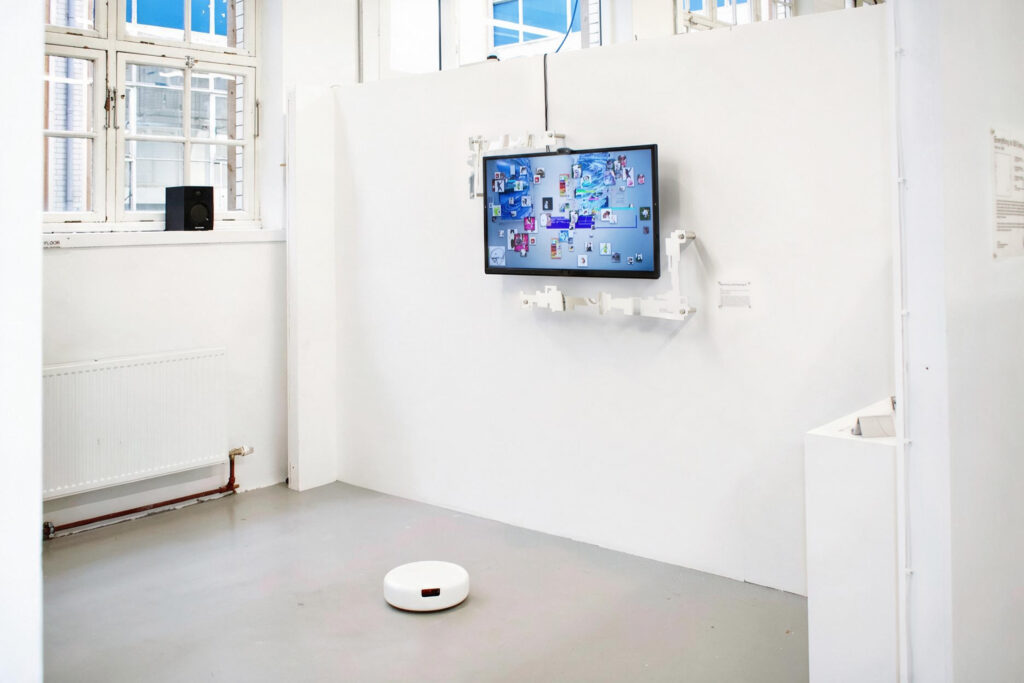
Her 2026 degree show, Everything Is Still Running, imagines a future in which virtual systems have become part of the infrastructure of reality, but eventually collapse. Heterogeneous data dust covers every piece of land, memes wander through the streets, and the virtual and the physical merge in chaos into a ruin that can no longer be fully separated.
The work constructs a post-virtual site that can never be fully explained: order has failed, yet everything is still running. It asks: when we can no longer fully withdraw from the virtual, and wholeness is no longer possible, how might we rebuild meaning upon the ruins?
Everything Is Still Running I
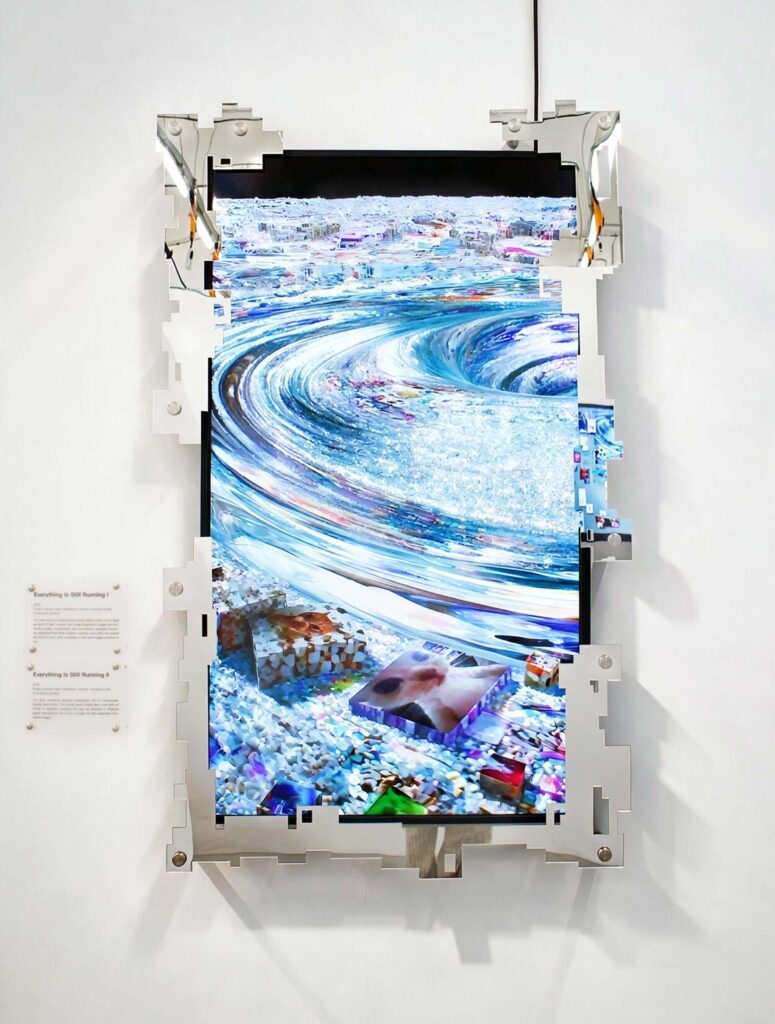
Single-channel video installation, monitor, mirrored acrylic
Dimensions variable
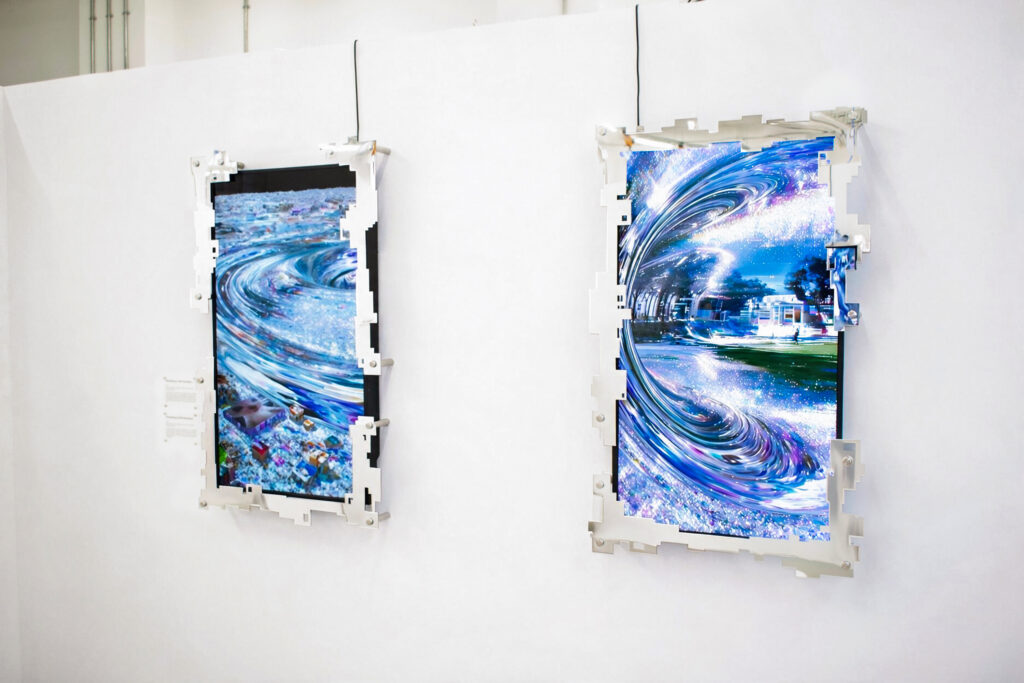
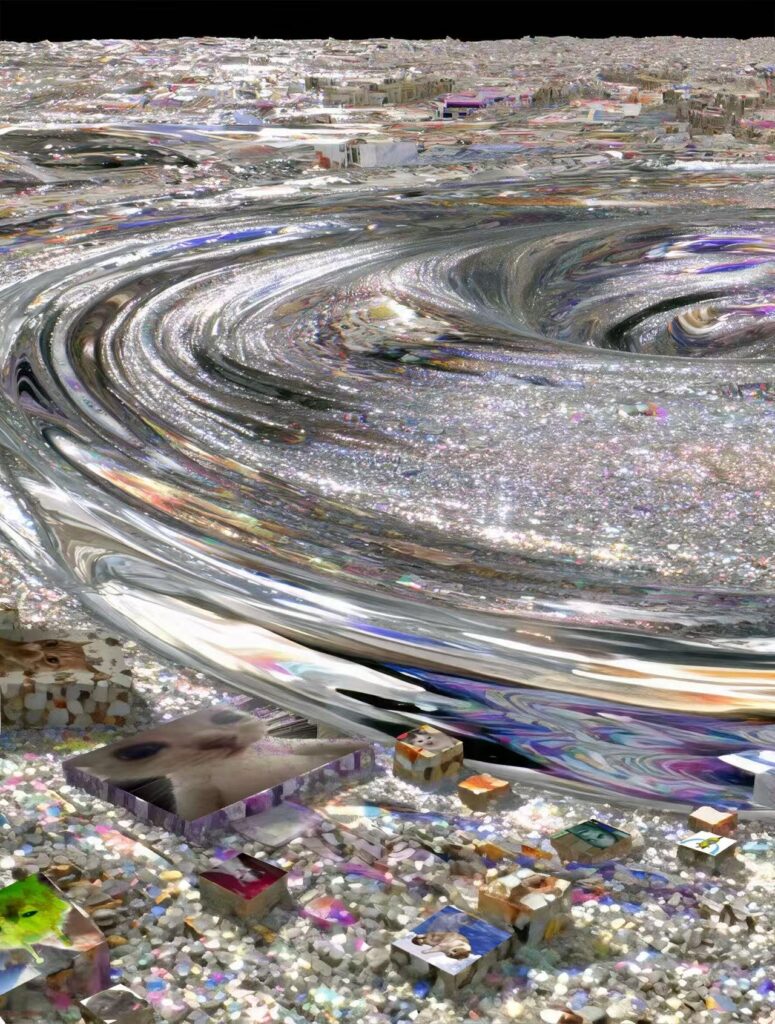
The work presents a vortex made up of vast amounts of data, memes, image fragments, and digital residue. They continuously rotate, accumulate, collide, and recombine, resembling a system that has lost its original order but continues to operate.
Here, memes do not simply appear as visual symbols of internet culture. They are highly compressed forms of images that are endlessly copied and circulated. Through continuous transmission, they gradually become detached from their original sources and contexts, yet retain a strong recognisability and continue to enter new relationships and produce new meanings.
Everything Is Still Running II
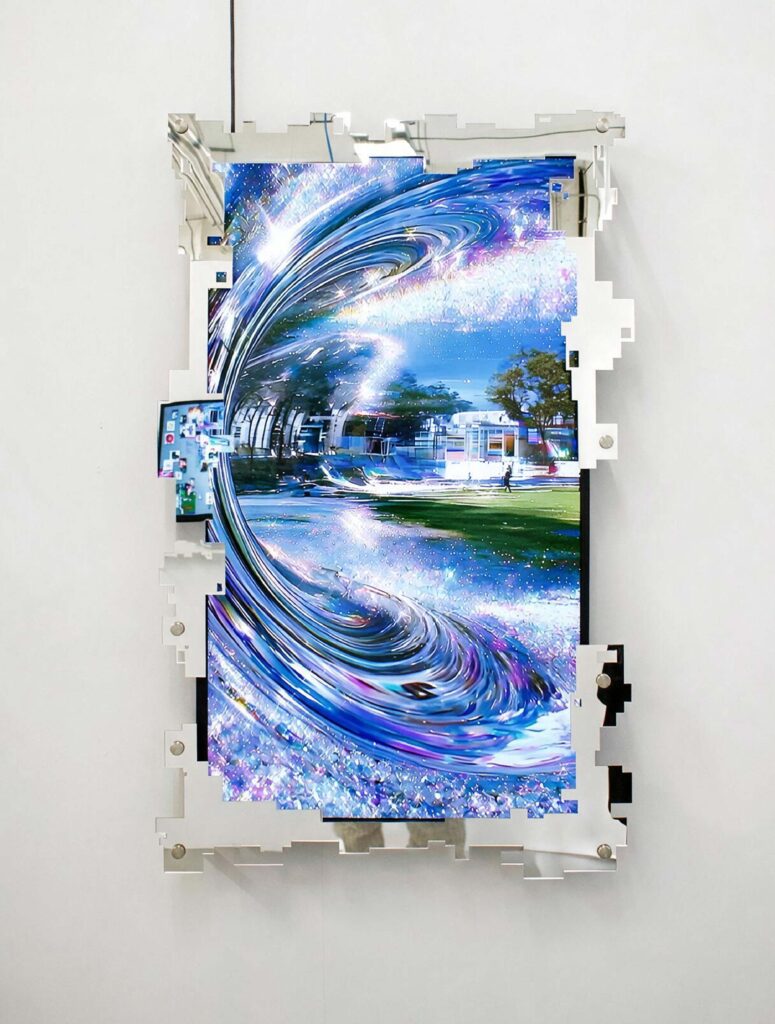
Single-channel video installation, monitor, mirrored acrylic
Dimensions variable
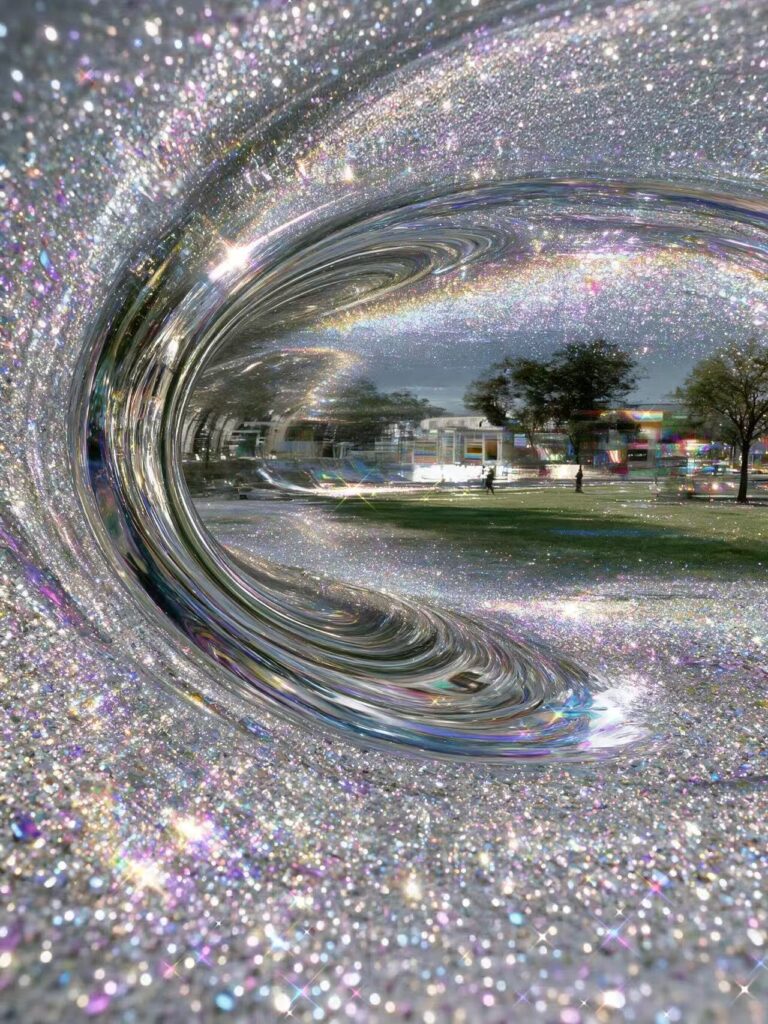
The work overlays real grasslands, forests, and man-made structures with a continuously rotating vortex of data. Images, data, and visual residue that once belonged within digital systems begin to merge with the physical landscape.
In this work, the virtual is no longer another layer of space contained within screens, devices, or networks. Instead, it begins to settle over reality like a new kind of terrain or weather, altering the way reality itself is perceived. Physical space remains present, but it can no longer be fully separated from digital imagery.
Everything Is Still Running III
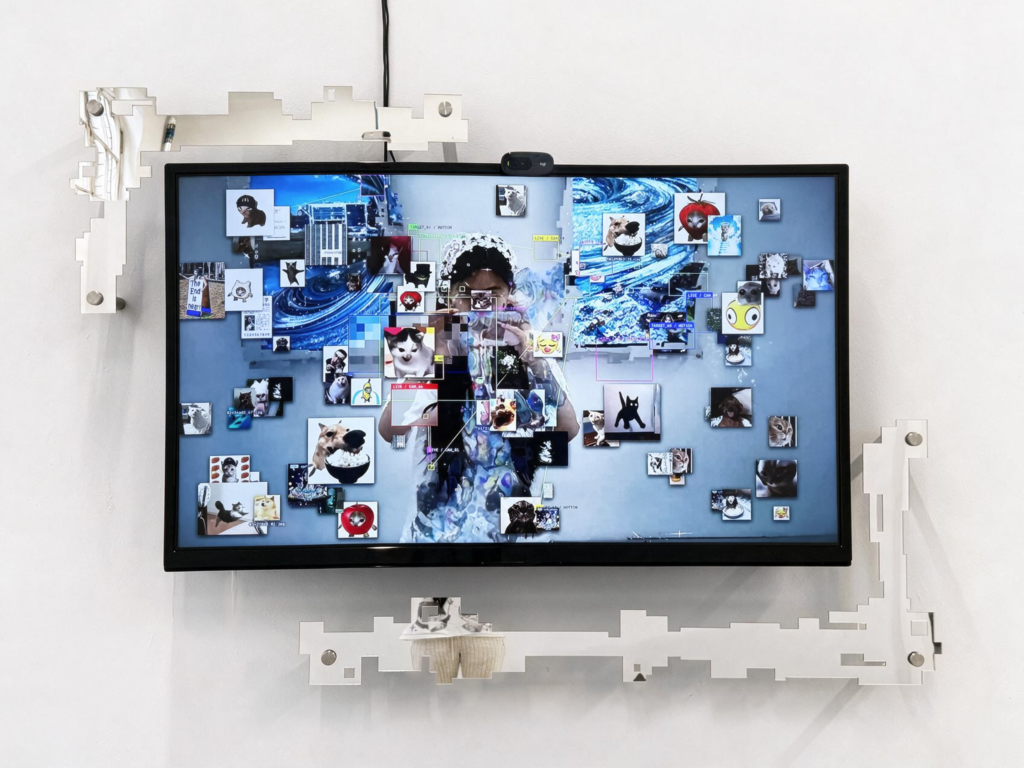
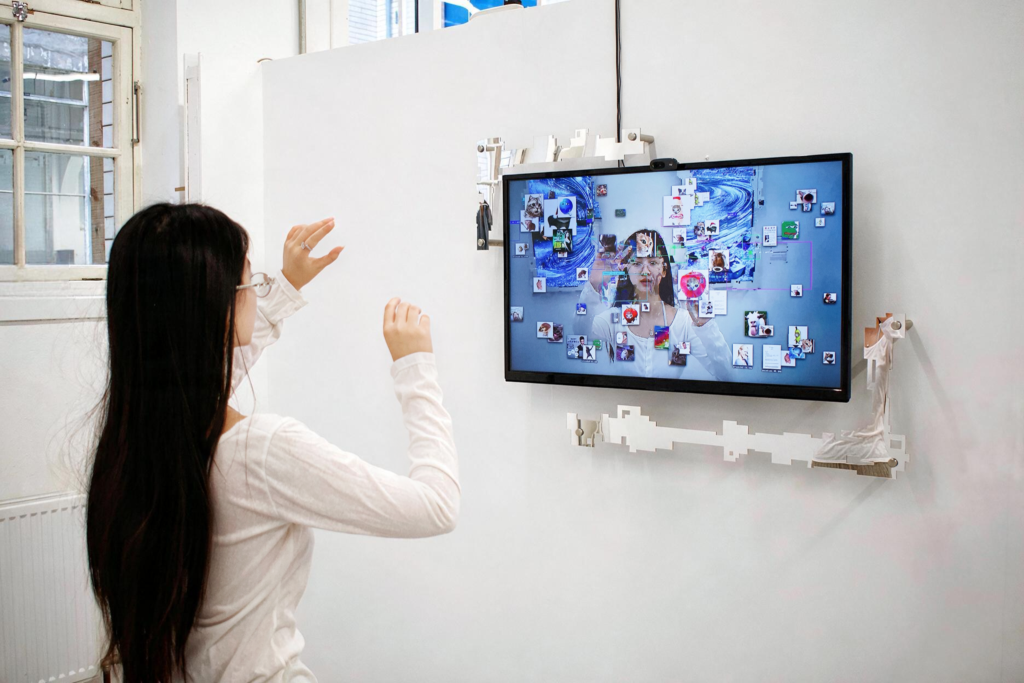
Real-time interactive video installation, monitor, mirrored acrylic, webcam, computer
Dimensions variable
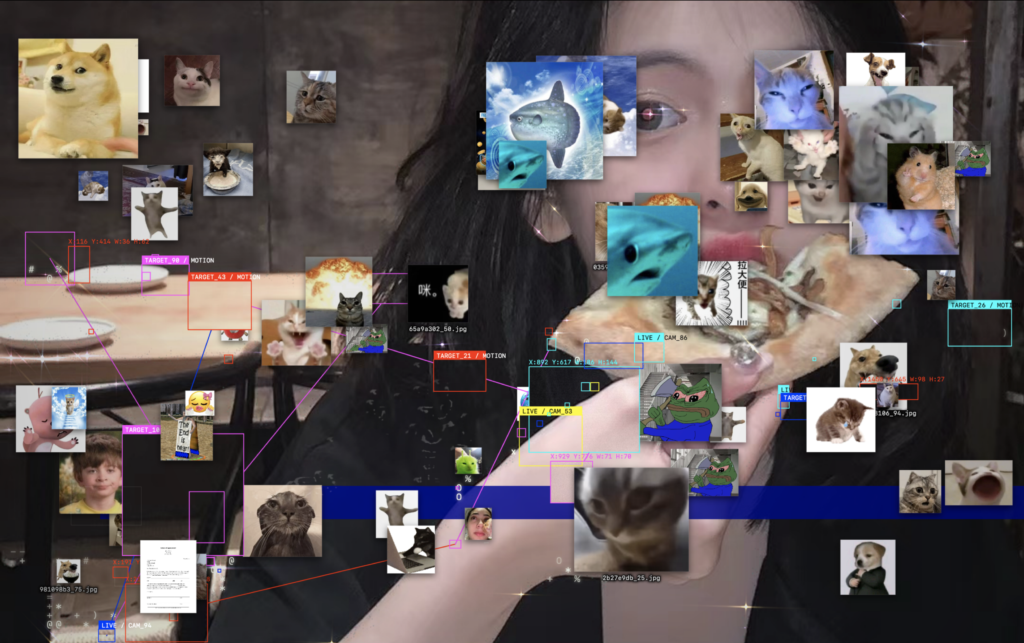
The work places the viewer directly within the disorder produced by the complete entanglement of the virtual and the physical. Images and information once contained within screens, devices, and data systems spill into the surrounding environment and merge with physical space. A camera captures the viewer’s body in real time and recomposes it with constantly flowing and deforming digital imagery. The viewer’s movements affect the transformation of the image, while their own body is simultaneously stretched, liquefied, and rewritten by these virtual residues.
Here, there is no longer a clear boundary between the physical and the virtual. The body can alter the data and images that continue to operate around it, while the residual virtual system continuously changes the way that body appears within the environment. The viewer is both a participant in this space and an unstable part of its ongoing transformation.
Adam
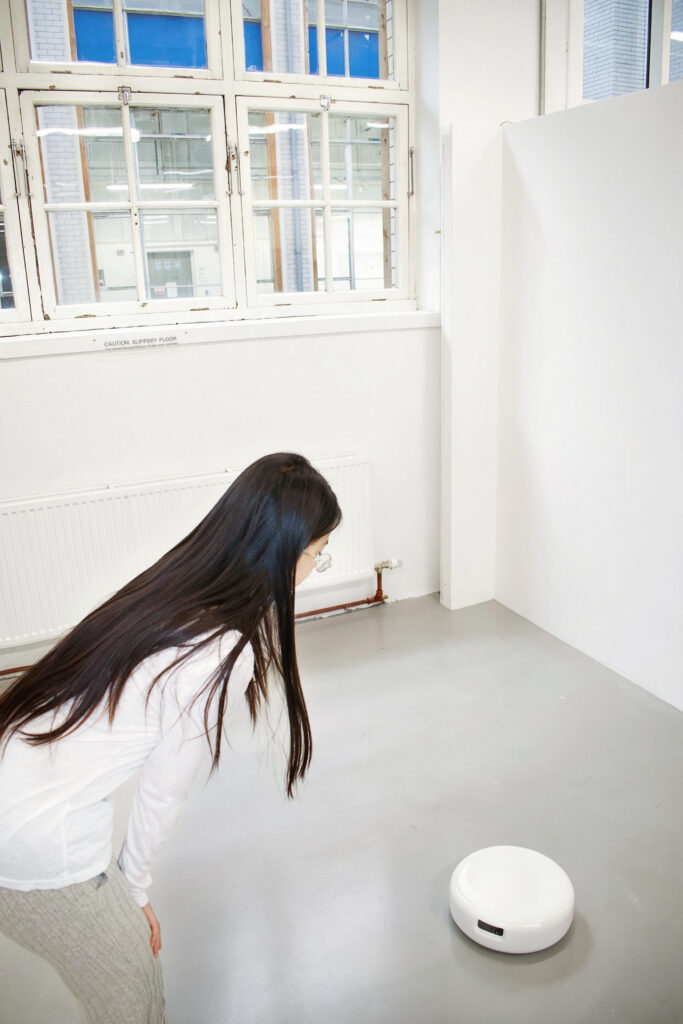
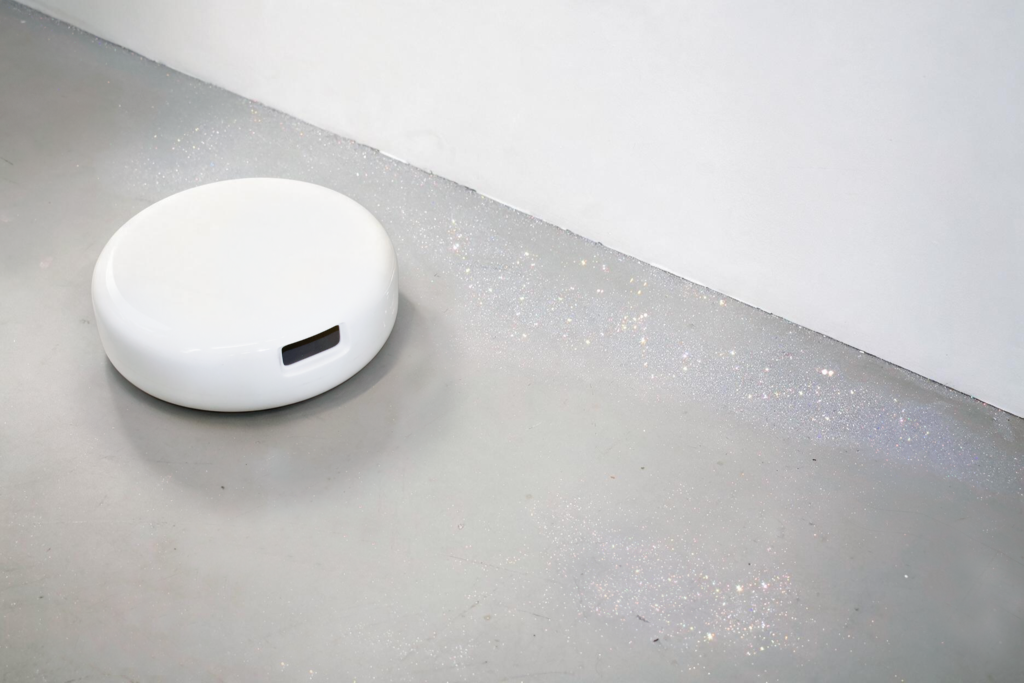
Interactive robotic installation, 3D-printed components, mobile mechanism, speaker, computer, glitter
32 × 32 × 11 cm (robot body)
In this future, virtual systems have become inseparable from everyday existence, yet the infrastructures that sustain them eventually collapse. Data-storage towers spread across the world unexpectedly explode, scattering heterogeneous data dust across the land and leaving the virtual and the physical fused into a ruin that can no longer be cleanly divided.
Within this world, a robotic vacuum appears as a non-human subject. It continues to move, pause, turn, and clean the powder covering the ground, while never truly restoring order. Assembled from old data, fragmented memories, system prompts, and human narratives, it firmly believes itself to be “the last human.” It repeatedly performs maintenance tasks, speaks to itself, and may respond to visitors, remaining suspended somewhere between machine, ghost, archival residue, and human role.
The installation forms another post-virtual site that resists complete explanation: order has failed, but maintenance continues; humans may no longer be present, yet the narrative of “the human” is repeatedly performed by a non-human object.
The work therefore asks: when memory, personality, and consciousness can all be stored, copied, and recomposed, what still constitutes a human being? If a non-human subject inherits human memories, language, and self-recognition, could it also become human? And when there is no longer any possibility of fully withdrawing from the virtual, and wholeness itself can no longer be restored, how might new meaning be constructed from the ruins?