
Xinran Qian
(she/her)
Xinran Qian is an interaction designer interested in the relationships between people, technology and the more-than-human world. Her practice explores how interaction design can support new ways of noticing, understanding and engaging with everyday environments.
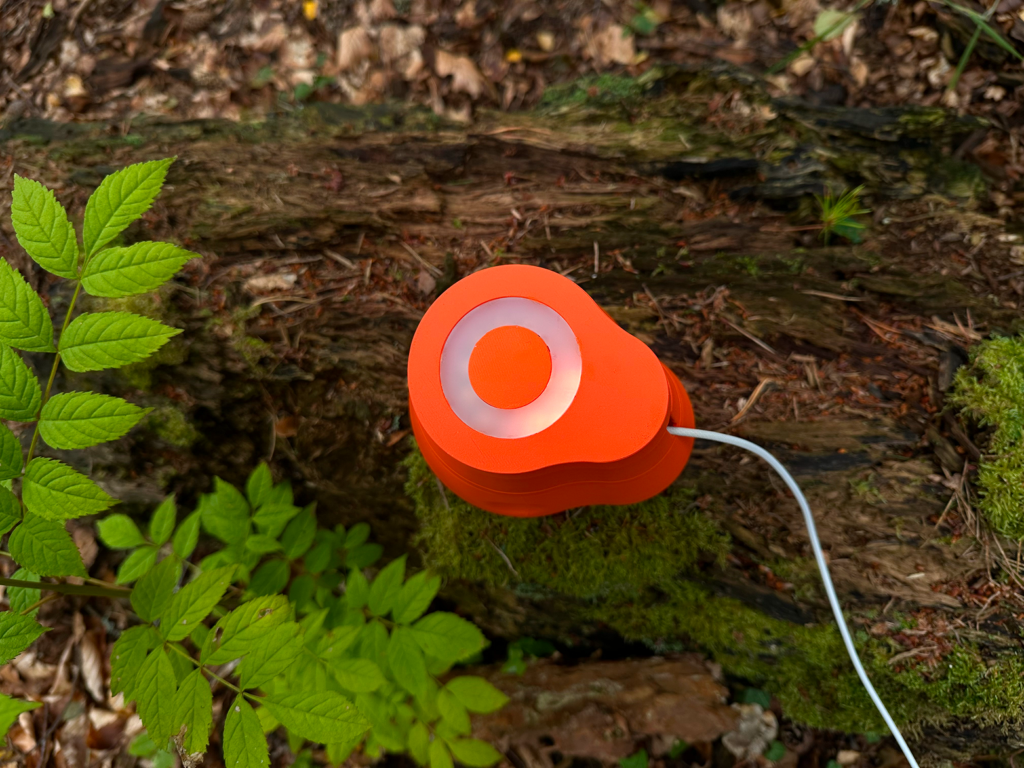
Noticing Deadwood:A Toolkit for Observing and Exploring
Deadwood is often seen as lifeless, messy or insignificant, yet it supports complex ecological processes and habitats.
This project explores how interaction design can help people notice, observe and engage with deadwood in new ways. The Deadwood Noticing Toolkit combines visual, listening and respiration-based activities to encourage slower, more attentive encounters with overlooked natural environments.
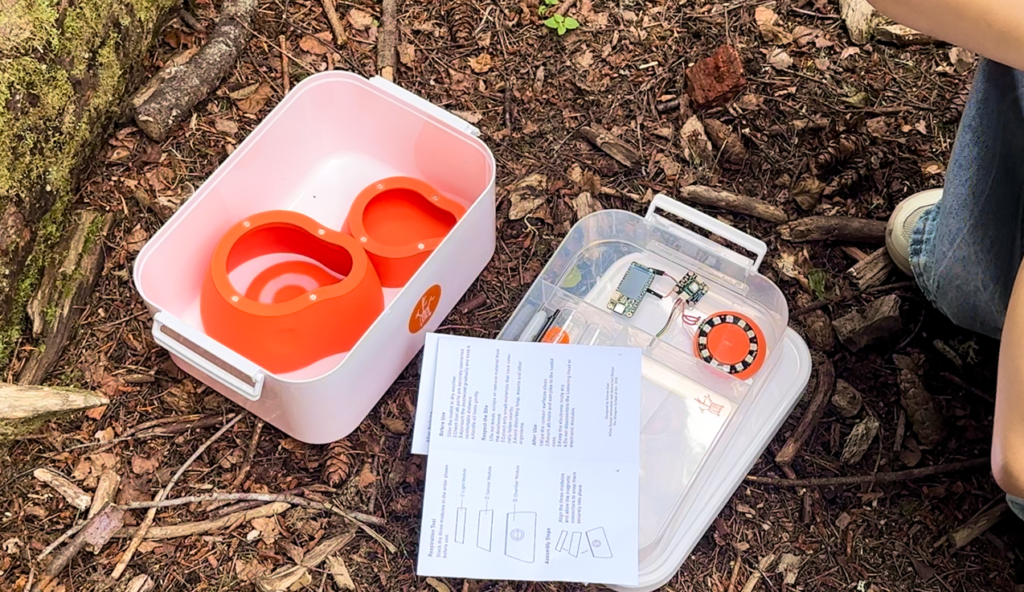
The complete toolkit brings together visual, listening and respiration-based activities for field exploration. It is designed to be portable, non-invasive and easy to use around deadwood.
The Respiration Check uses CO₂ sensing to make subtle changes around deadwood visible through light. Users first take a baseline reading in the surrounding air, then place the device on deadwood and observe how the light changes. The interaction uses breathing as a metaphor to draw attention to the ecological activity that continues within and around deadwood.
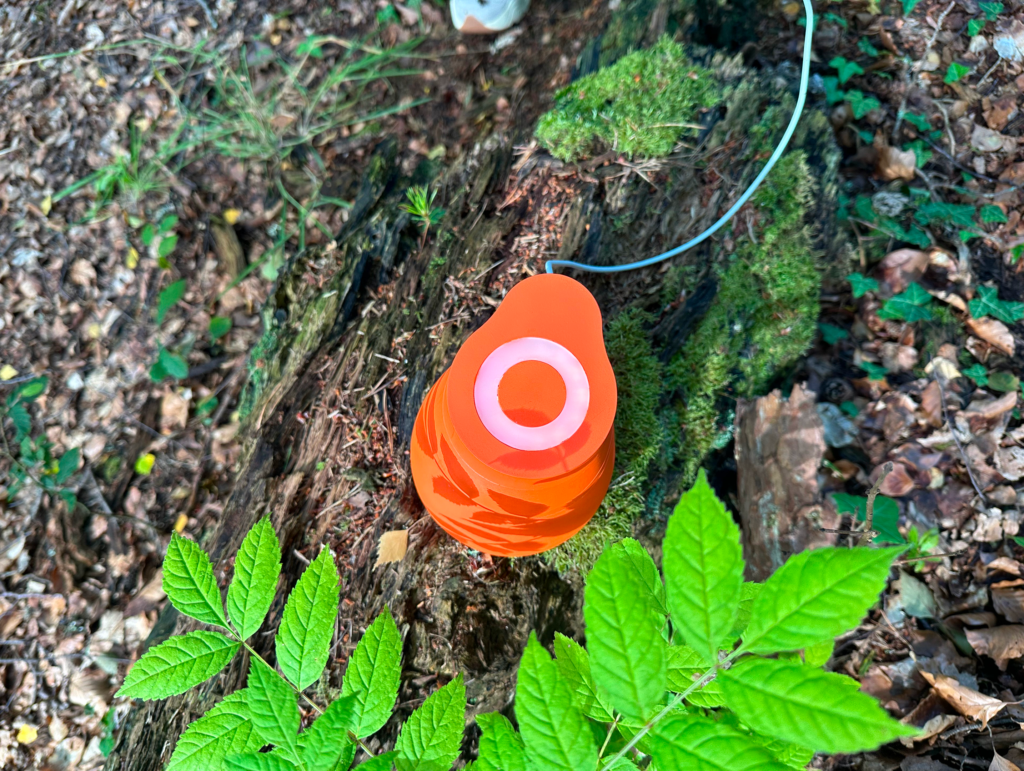
The circular light provides a simple visual response to changes detected around the deadwood. Rather than displaying raw sensor data, the tool translates environmental change into an intuitive signal that invites users to pause, notice and interpret what may be happening.
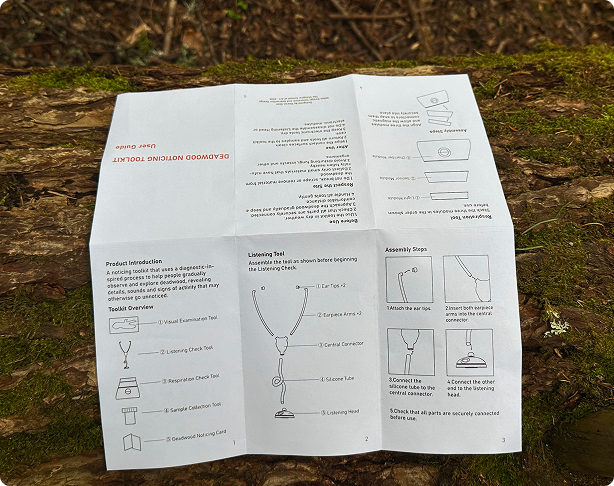
The instruction guide introduces the toolkit, explains how each tool should be assembled and used, and supports users in completing the experience independently in the field. It structures the activities as a gradual journey from noticing and observing to closer sensory exploration.
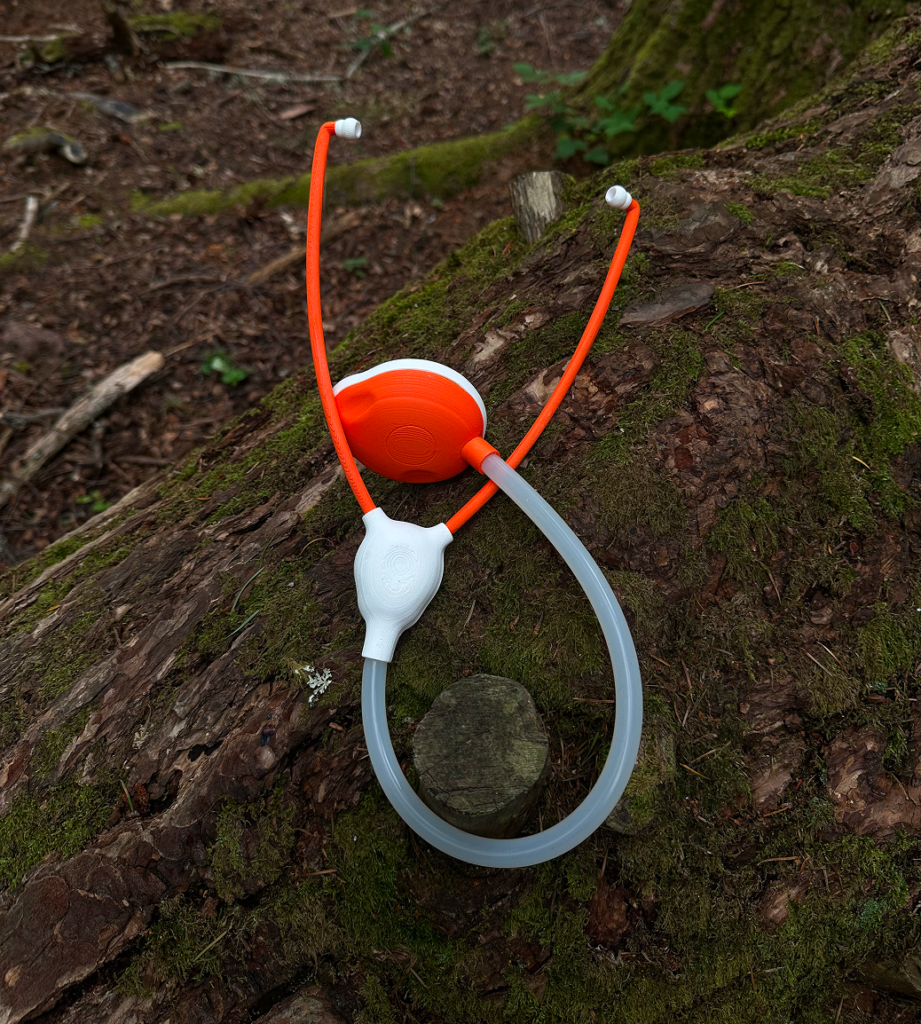
The Listening Check invites users to listen closely to deadwood through a simple physical listening tool, encouraging attention to subtle sounds and vibrations.
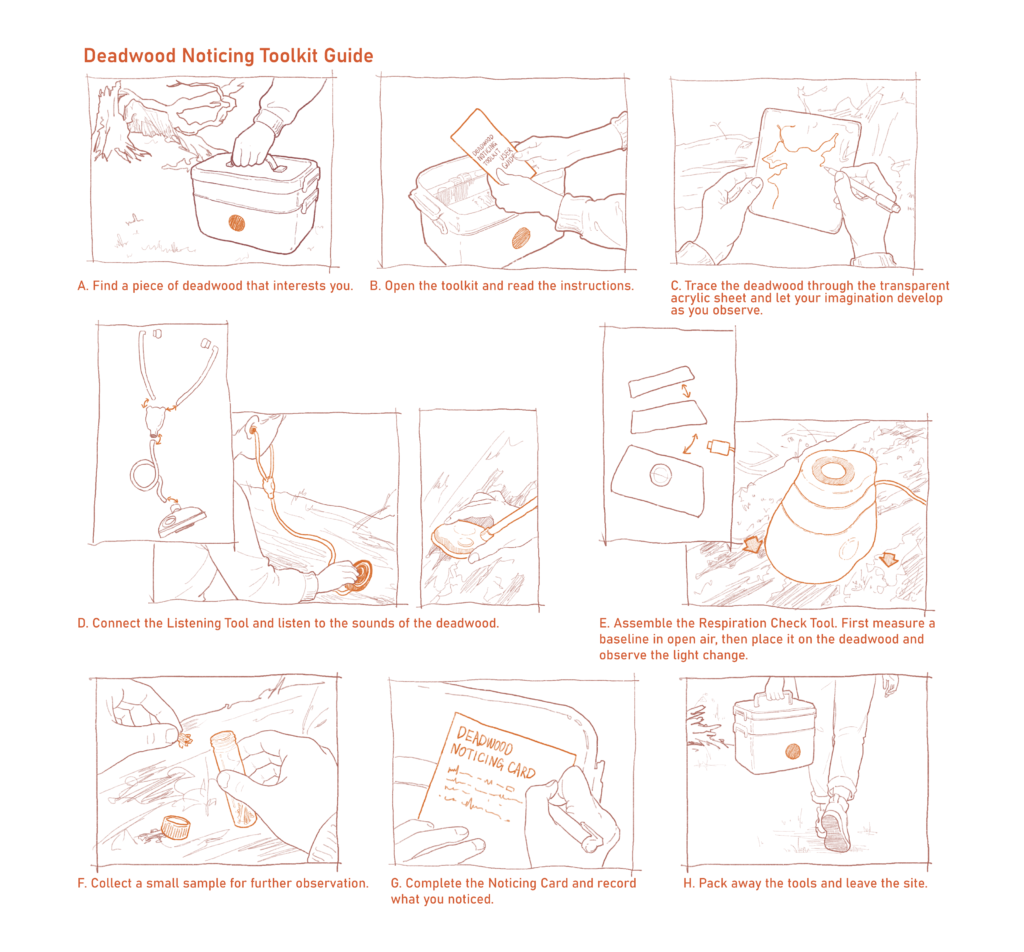
The guide presents the toolkit as a gradual field experience. Users begin by noticing and observing deadwood from a comfortable distance, then move through listening, respiration checking, sample collection and reflection before packing the toolkit away.
A short film demonstrating the full experience of using the Deadwood Noticing Toolkit in the field.