Xinnuo Han
Bio:
Xinnuo Han is a visual‑installation artist based in Glasgow, UK. Working across installation, found‑object assemblage, stereoscopic works, moving‑image projection and photography, she creates immersive sensory‑driven spatial archives. Drawing from personal lived experience, her practice investigates cultural representation, bodily autonomy, and the blurred boundaries between subject and object. Merging intimate observation with archival‑focused research, she invites audiences to question museum display conventions and how individual identities are framed by external categorising forces.
Artist Statement:
My degree show work, Lira’s Haptic Memory Archive, is an immersive mixed‑media installation series, physically realised through Lira’s Museum Office and Lira’s Fragmented Memory Zone. This fictional private museum office space is dedicated to recovering overlooked feminine domestic memories. Inspired by intimate anthropological research studios and small‑scale private museums, the work rejects the rigid, objective display logic of institutional exhibitions. It builds a personalised sensory archive across two interconnected zones with seven individual artworks, combining sculptural assemblages, vintage found objects, stereoscopic specimen pieces and dynamic projection to form a cohesive narrative space.
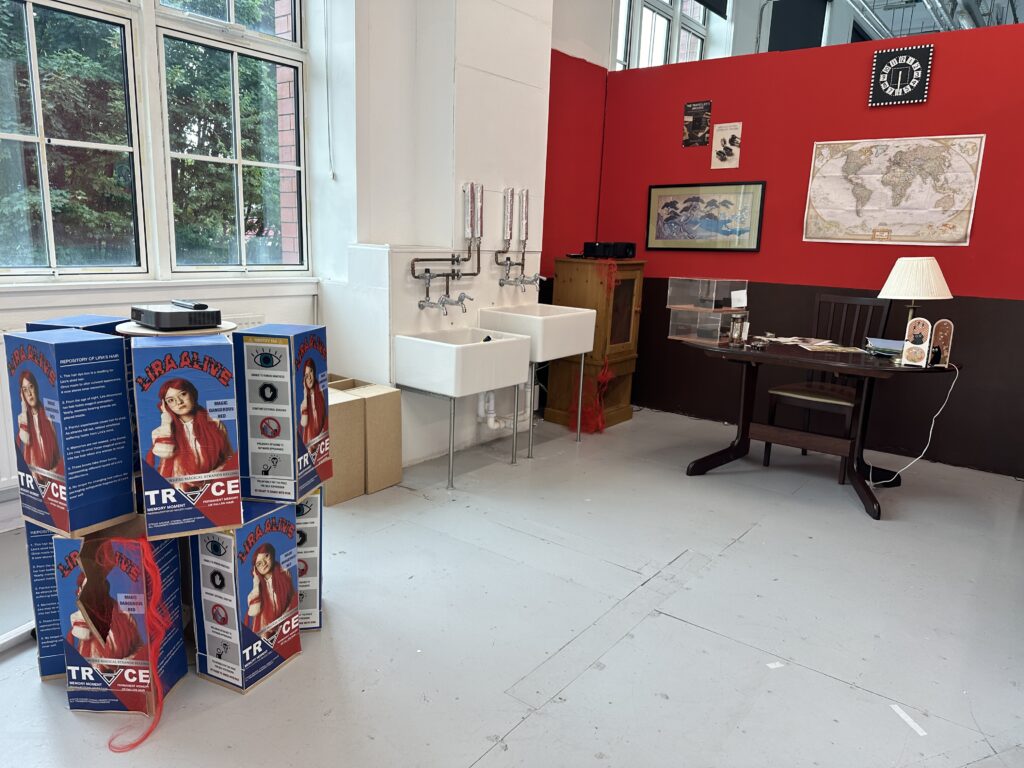
Adopting a fragmented narrative structure, every artwork functions as a discrete memory fragment carrying layered emotion and contextual meaning. Within Lira’s Fragmented Memory Zone, Lira Alive Hair Dye Box and Memory Weep use intact and ruptured wooden crates, textured sculptural materials and projection to embody repressed, overflowing feelings and visualise unprocessed inner trauma. The Museum Office zone holds Lira’s Self Specimen, Sensory Hair Cabinet, dual‑system composite exhibit labels, the site‑specific spatial installation Lira’s Museum Office, and the revised Haptic Strands. Antique grooming artefacts preserve traces of women’s daily rituals; stereoscopic self‑specimens reveal the divide between concealed identity and inner truth; projected footage materialises the invisible sensory power of Lira’s red hair. Visitors assemble the full character mythology only by navigating and piecing together these fragmented works throughout the space.
Centred on red hair as a haptic core symbol, this project documents marginalised everyday female histories. Mainstream official archives prioritise factual timelines and institutional records yet overlook intimate domestic rituals of self‑adornment that hold rich personal and intergenerational warmth.
I establish a dual‑interpretation system: formal archival labels paired with subjective handwritten annotations. Red hair operates as a haptic medium linking physical objects to intangible residual memory, turning ordinary vintage household artefacts into emotional memory carriers. Ultimately, this work constructs an alternative feminine archive, excavating and visualising quiet, long‑forgotten ordinary memories excluded from dominant official historical narratives.
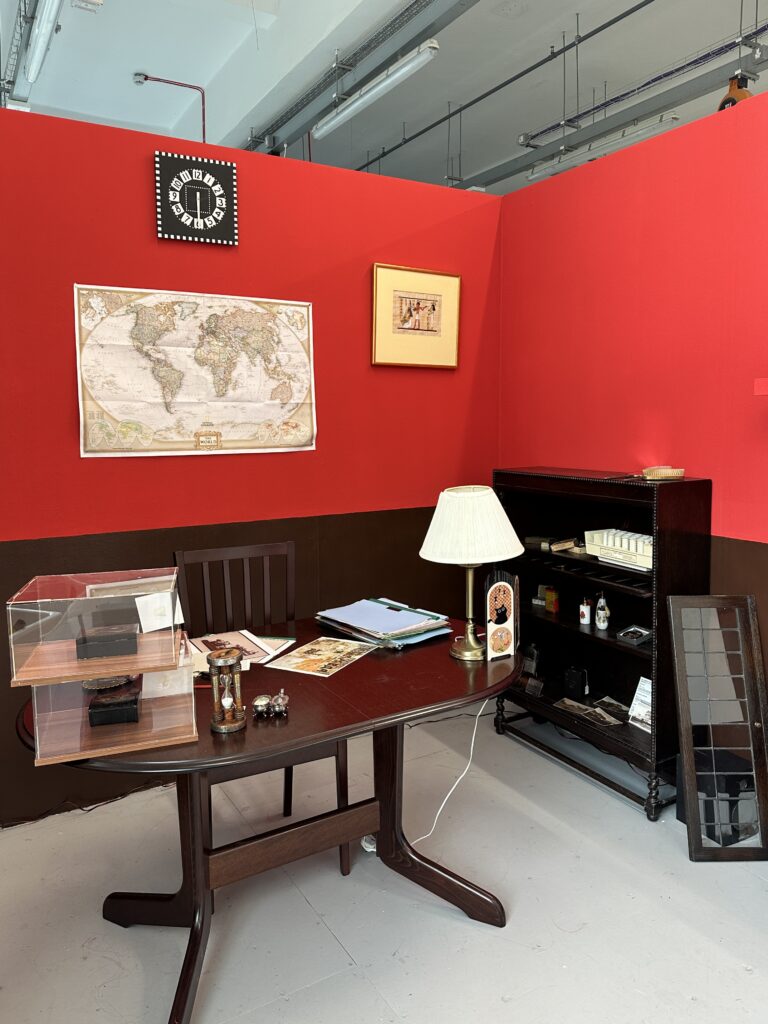
Archive Relics: Domestic Grooming Artefacts
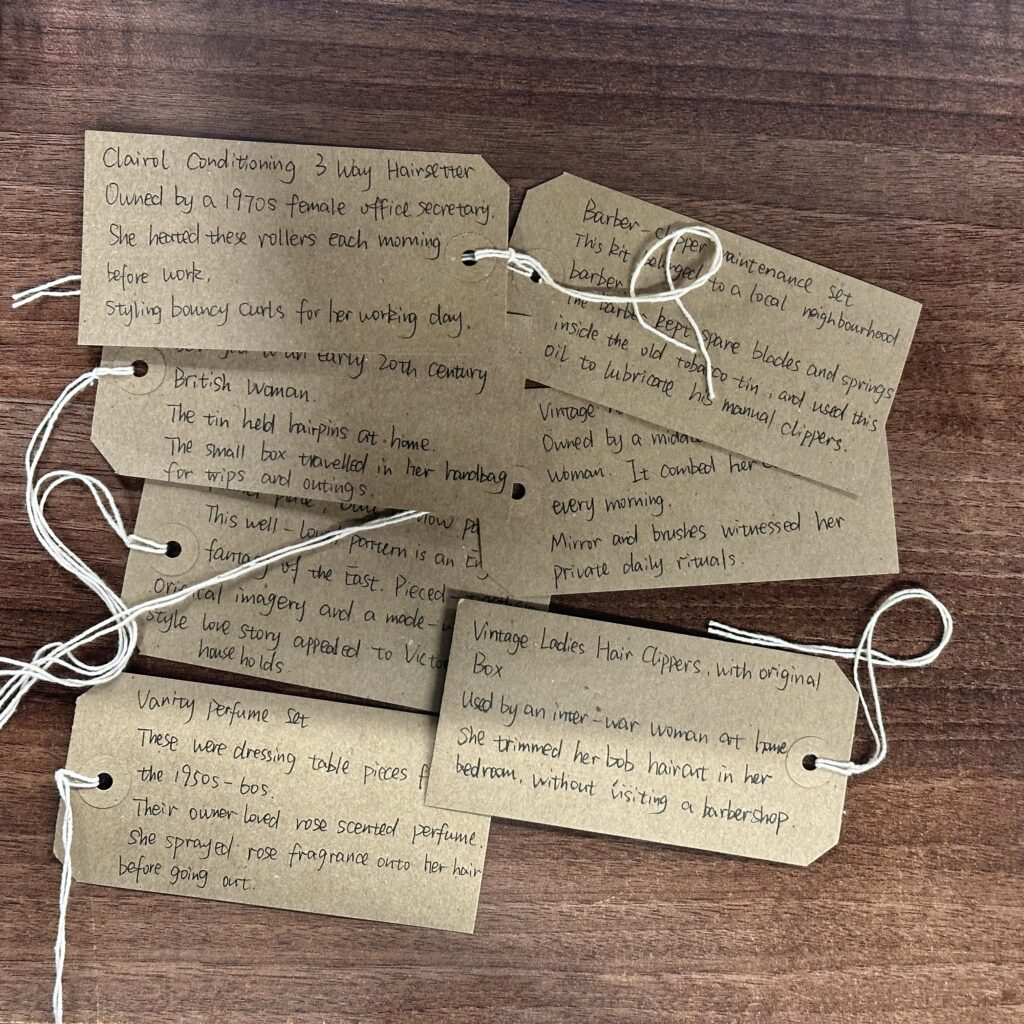
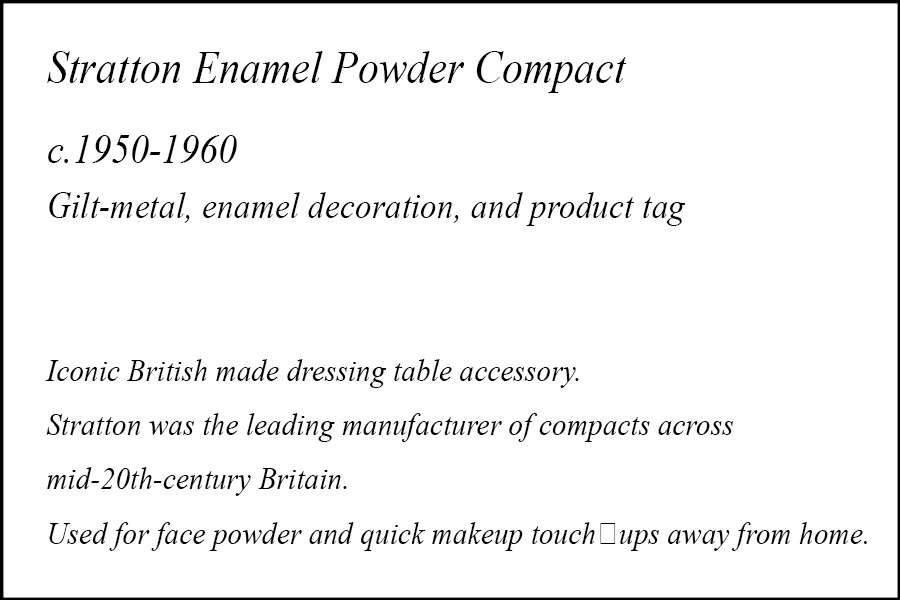
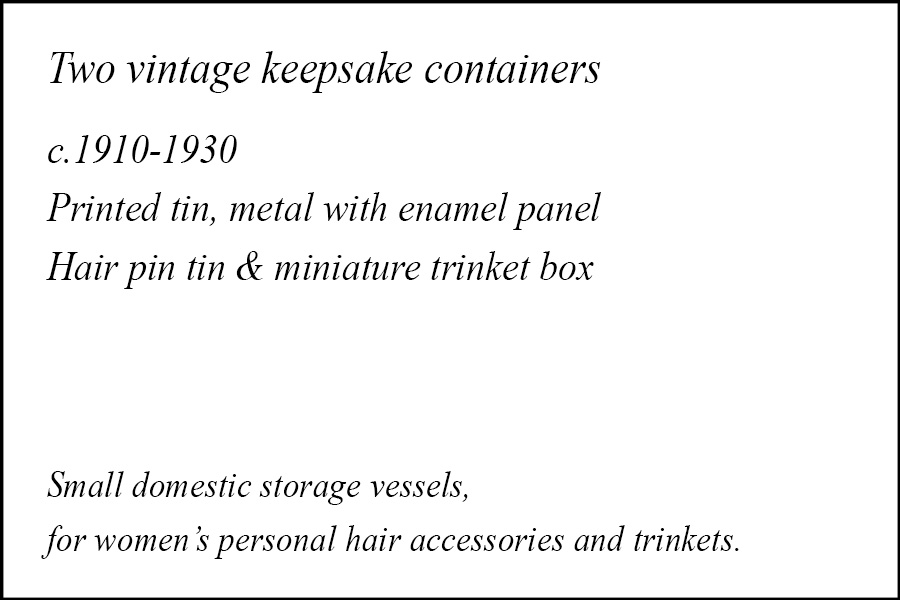
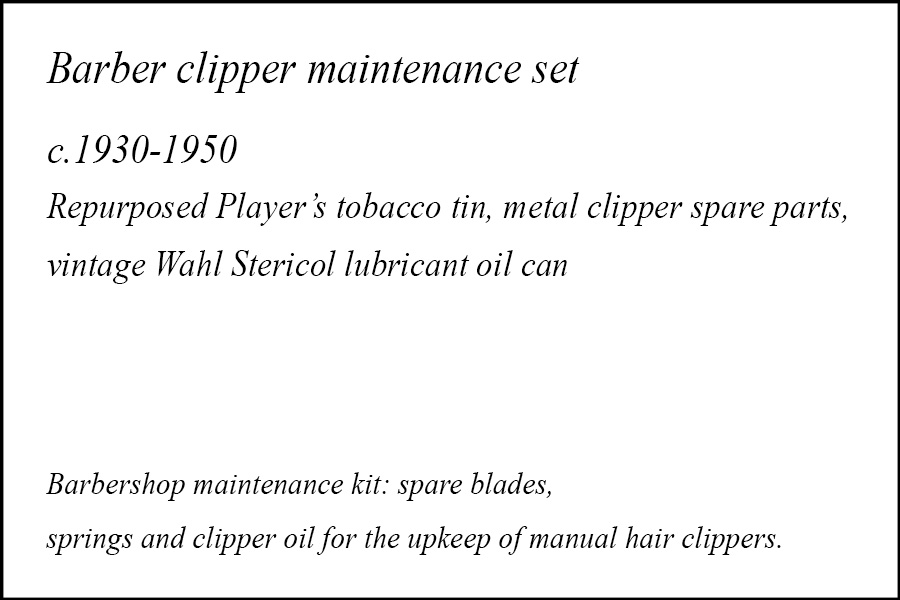
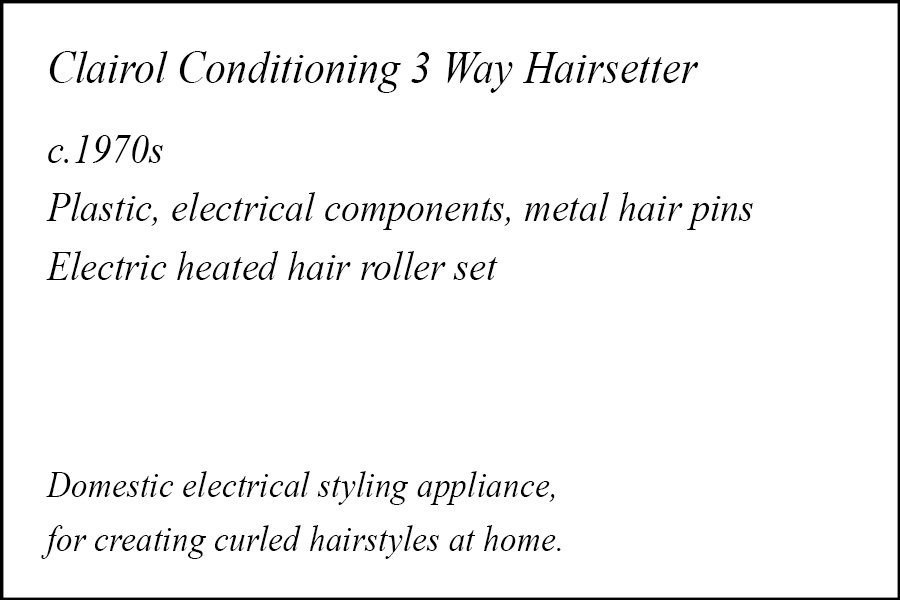
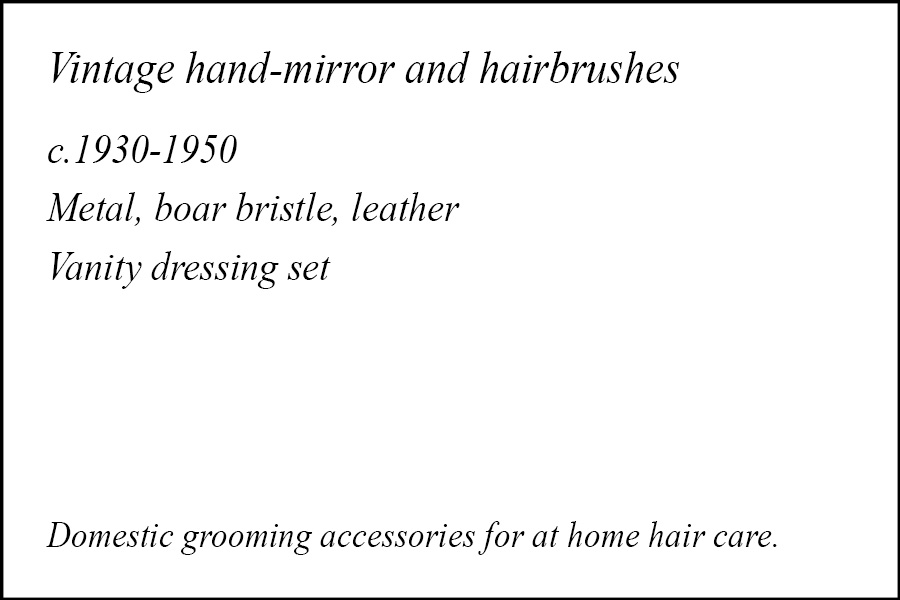
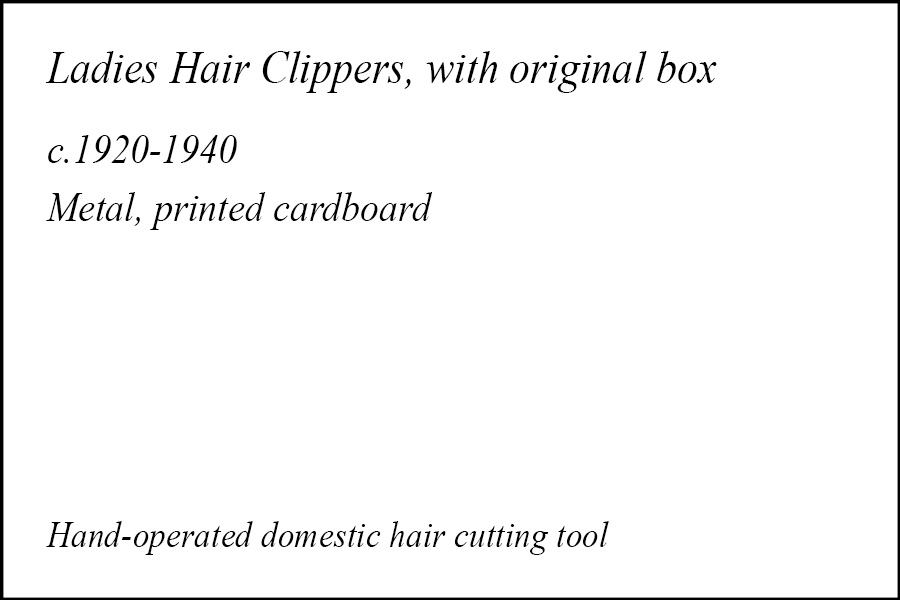
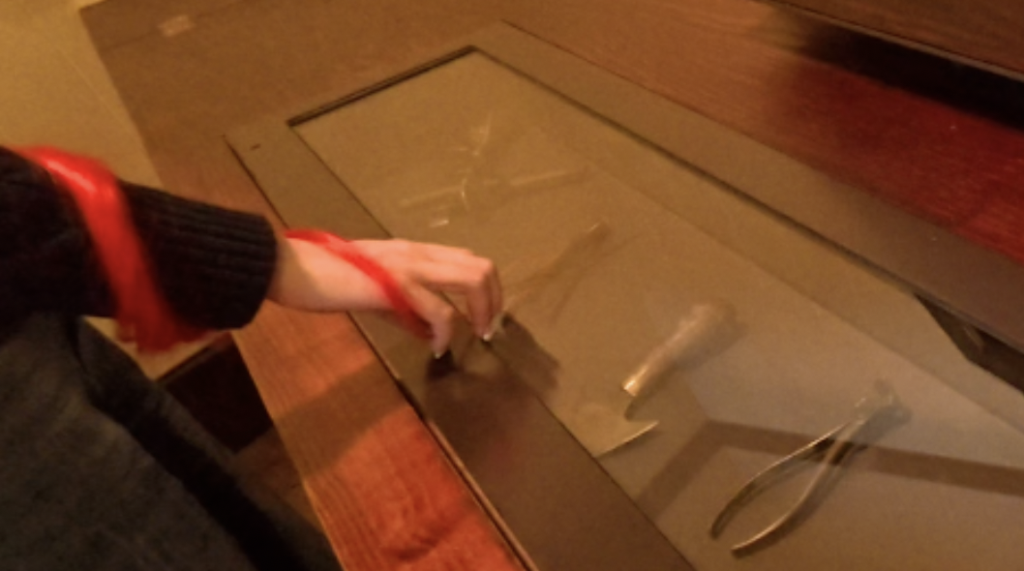
All retro hairstyles, grooming tools, fragrances, and storage items of old objects have been integrated as the core research collection of the Lira Museum’s office. Each item is accompanied by standardized and rigorous museum exhibition labels, while also incorporating handwritten modifications, annotations, and notes, simulating the subjective memory interpretations left by private researchers on public archives. The objective museum collection archives are juxtaposed with private emotional annotations, distinguishing between the cold official historical records and the hair-felted, overlooked female private daily narratives that are ignored by mainstream history.
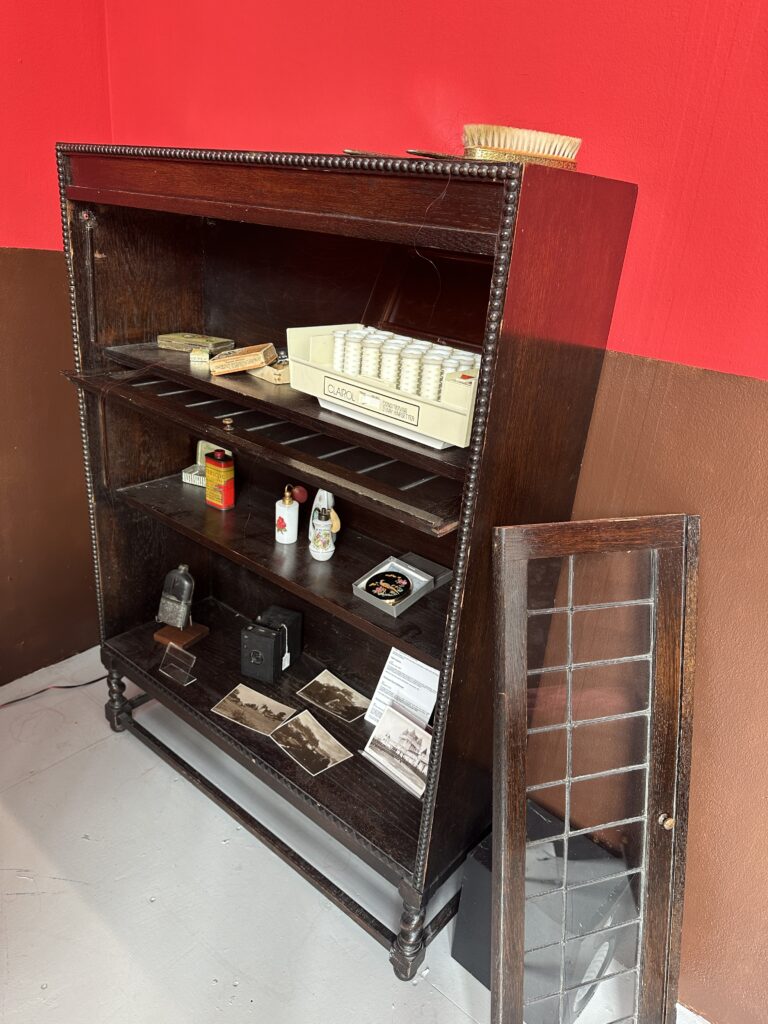
Detail view of composite dual‑system exhibit labels, 2026, printed paper, two‑part label design.
Haptic Strands
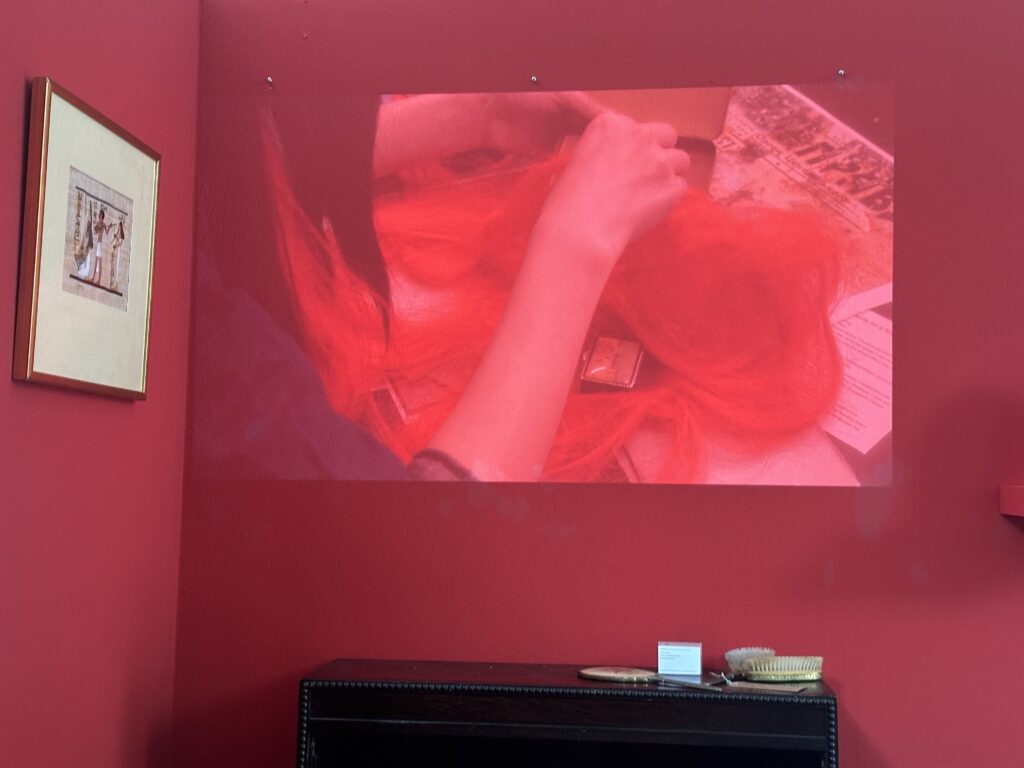
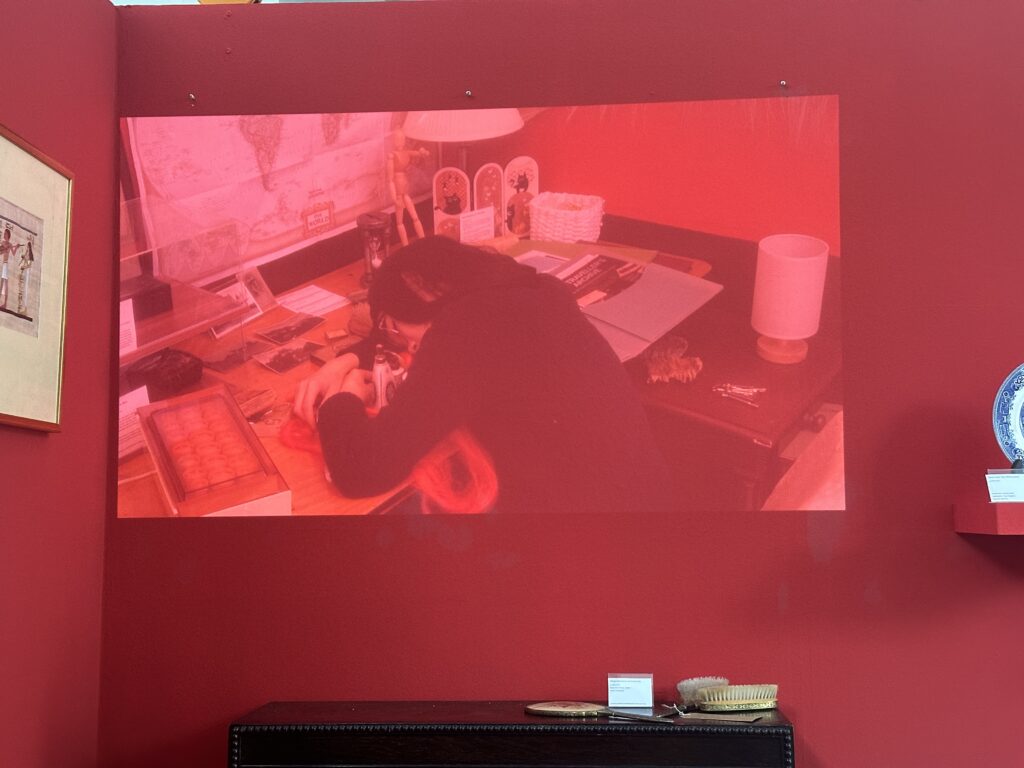
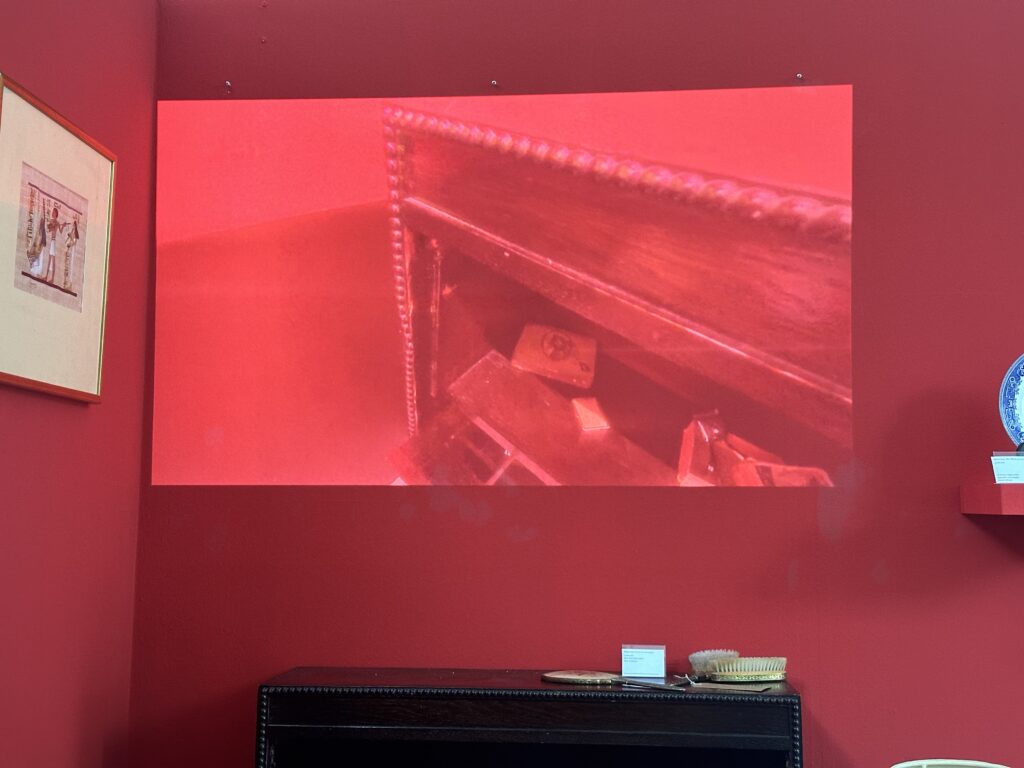
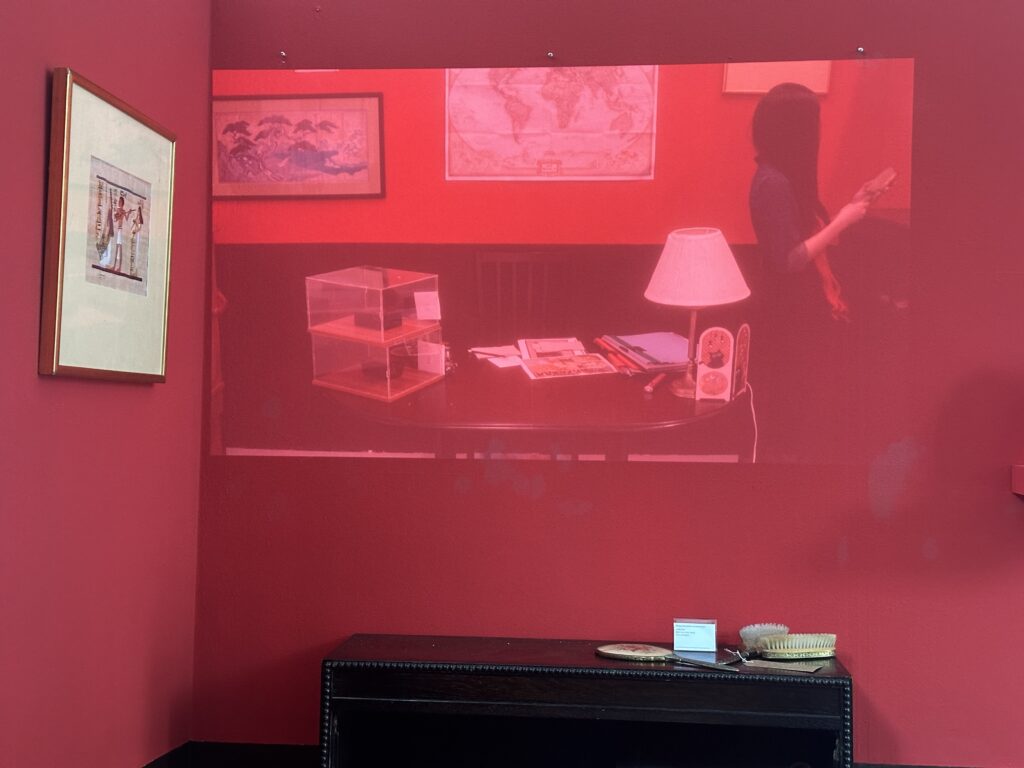
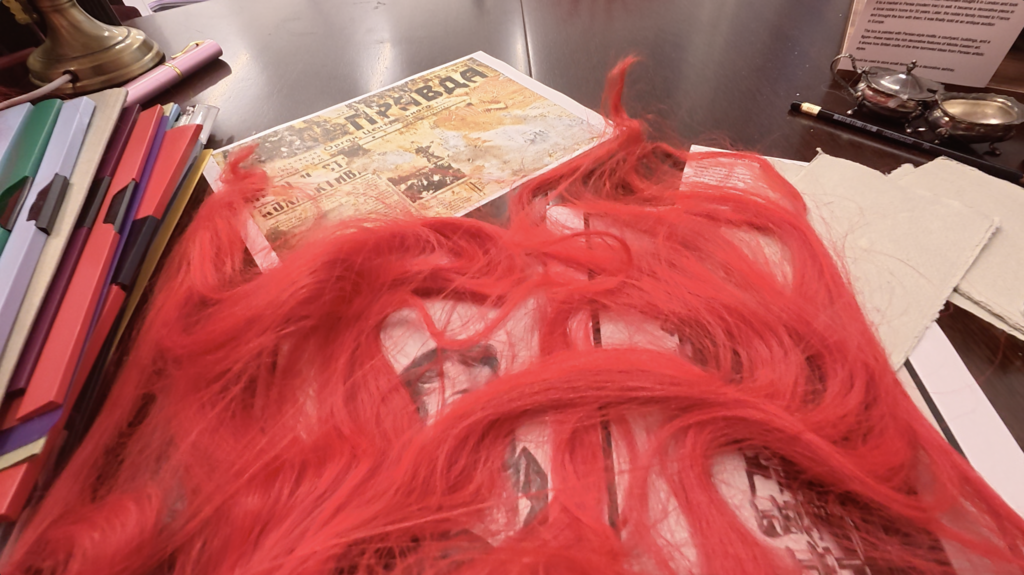
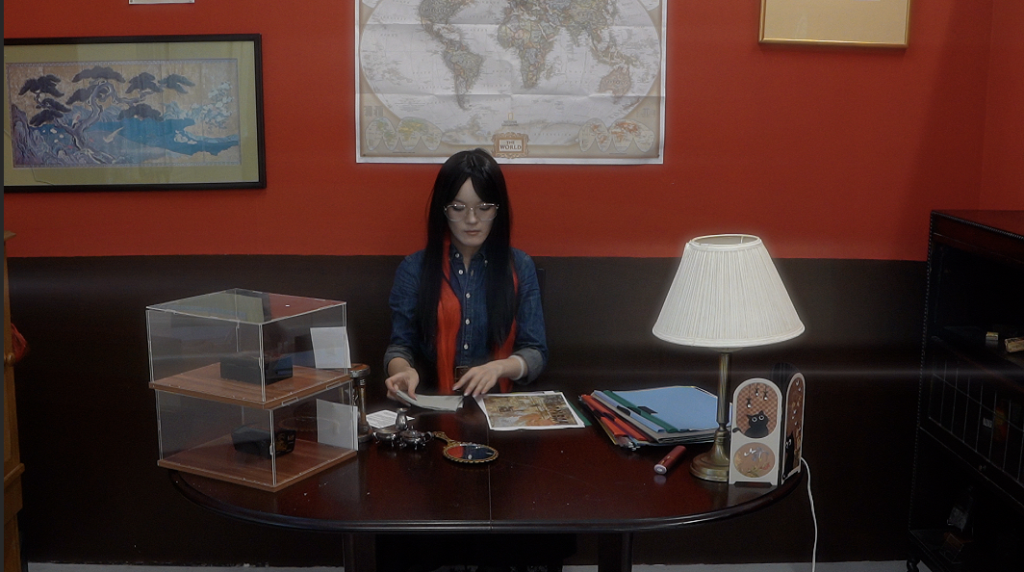
Projected moving imagery narrates Lira’s daily bond with her sensory hair, and how strands perceive hidden memories within antique objects.
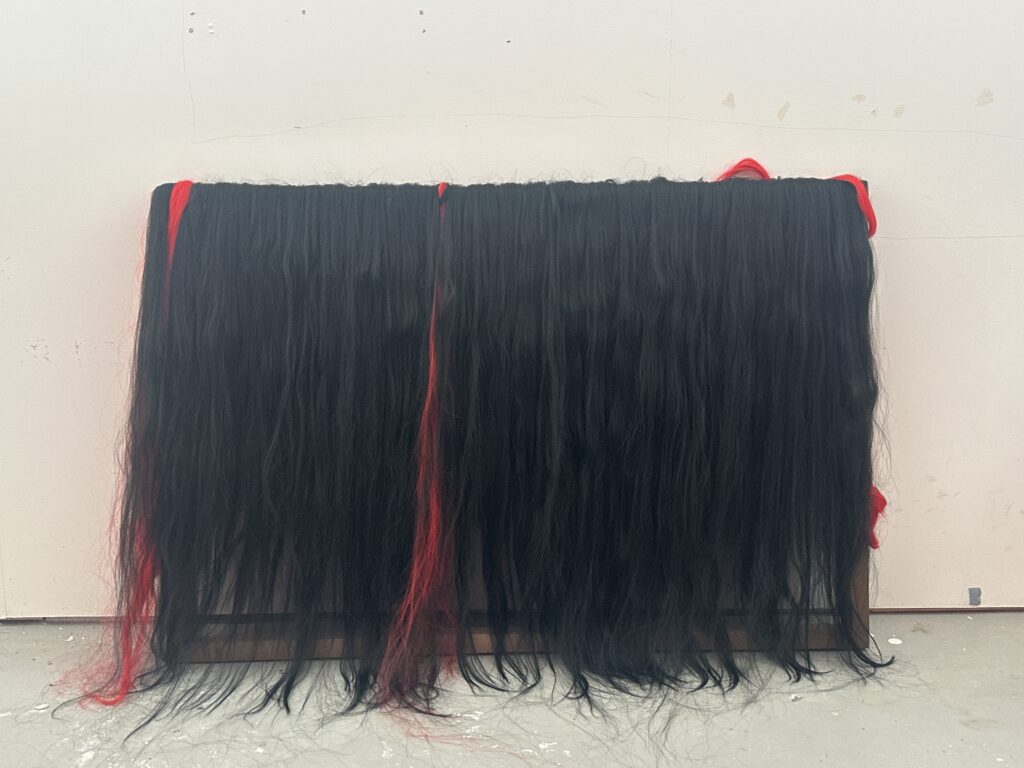
Installation view, Haptic Strands (new version), 2026, fabric, hair, digital projection.
Lira’s Self Specimen
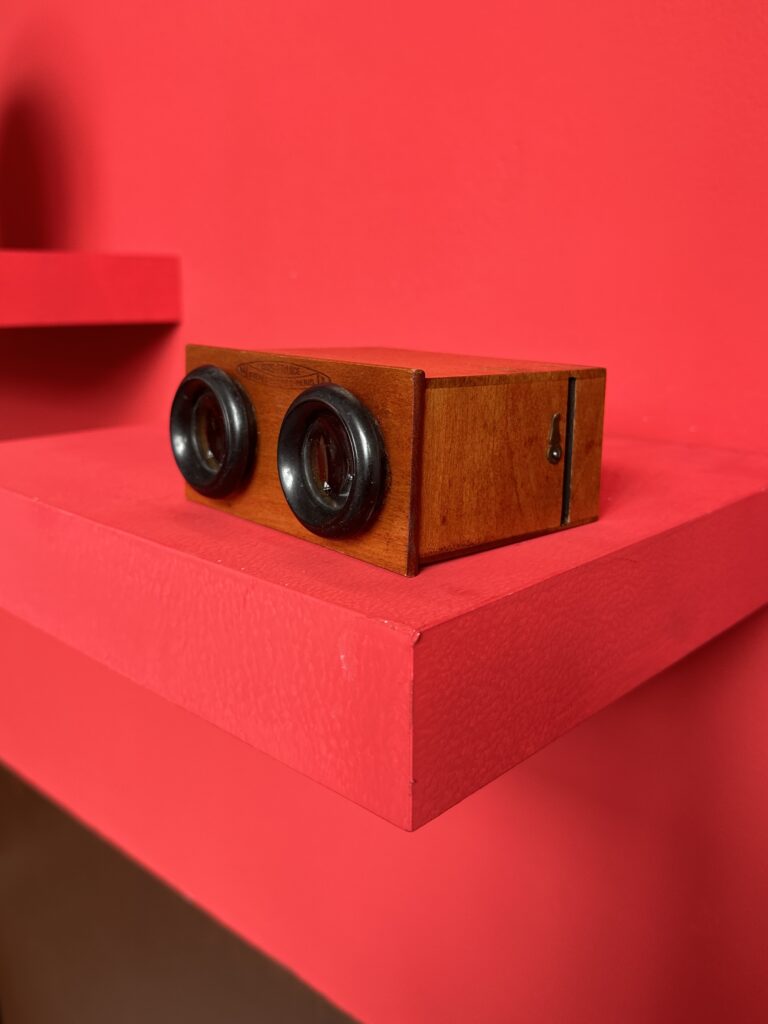
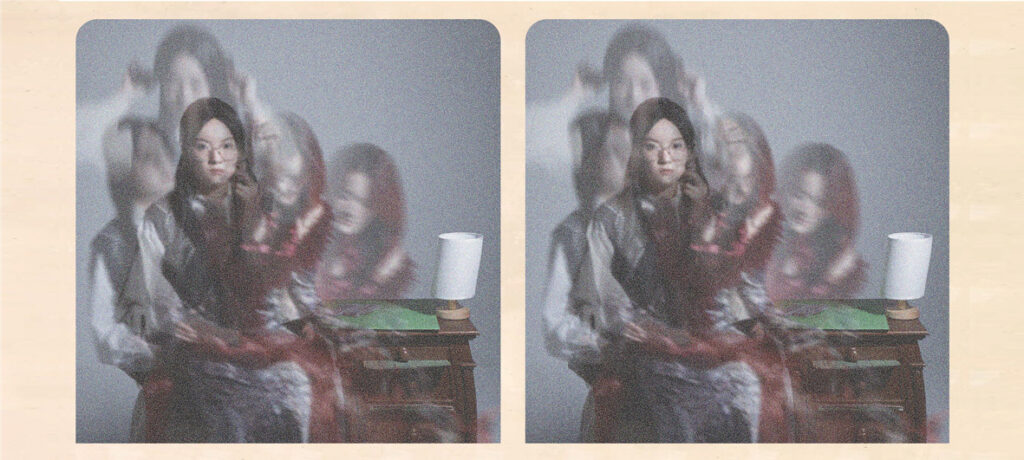
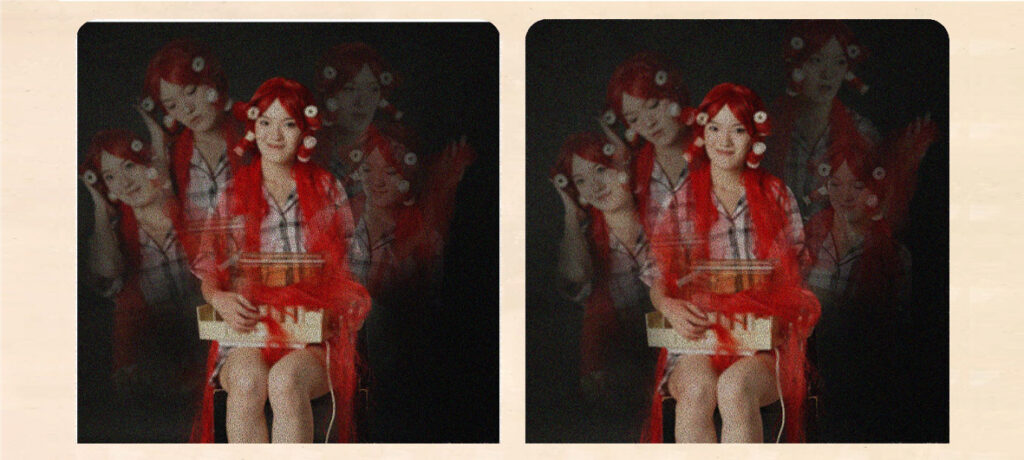
Hand‑held stereoscopic card, 2 by 3 inch. A sharp portrait of Lira’s magical red hair is presented as a tangible self specimen. Designed to be viewed through a stereoscope device, the work merges 19th century optical media with contemporary self portraiture, treating hair as physical evidence of inner identity. The stereoscope is considered part of the complete work.
Sensory Hair Cabinet
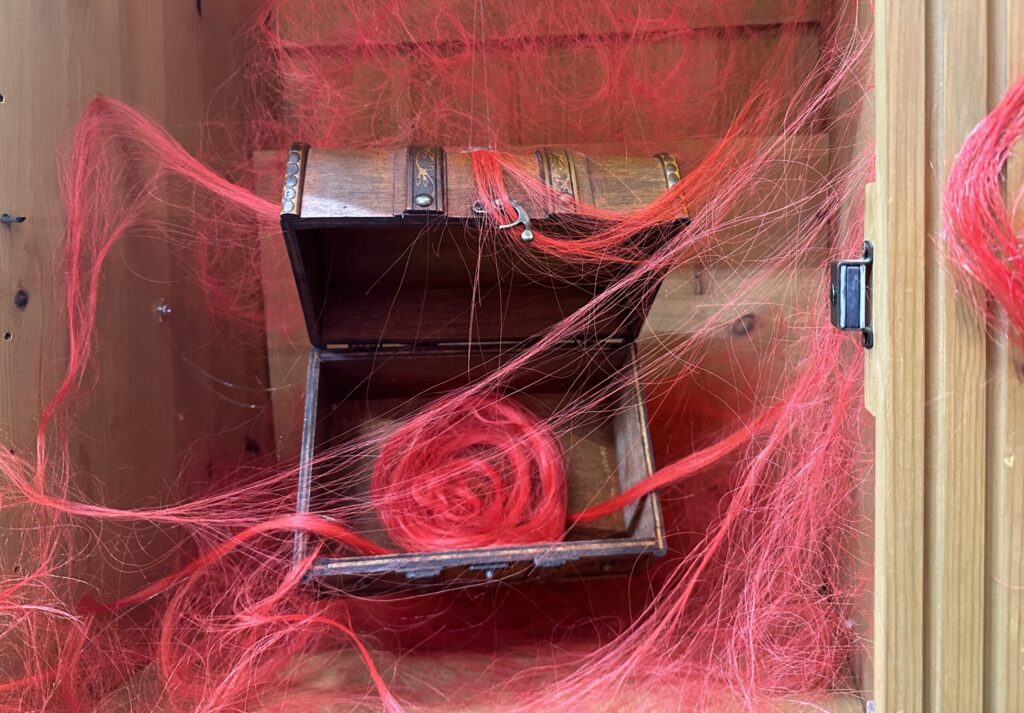
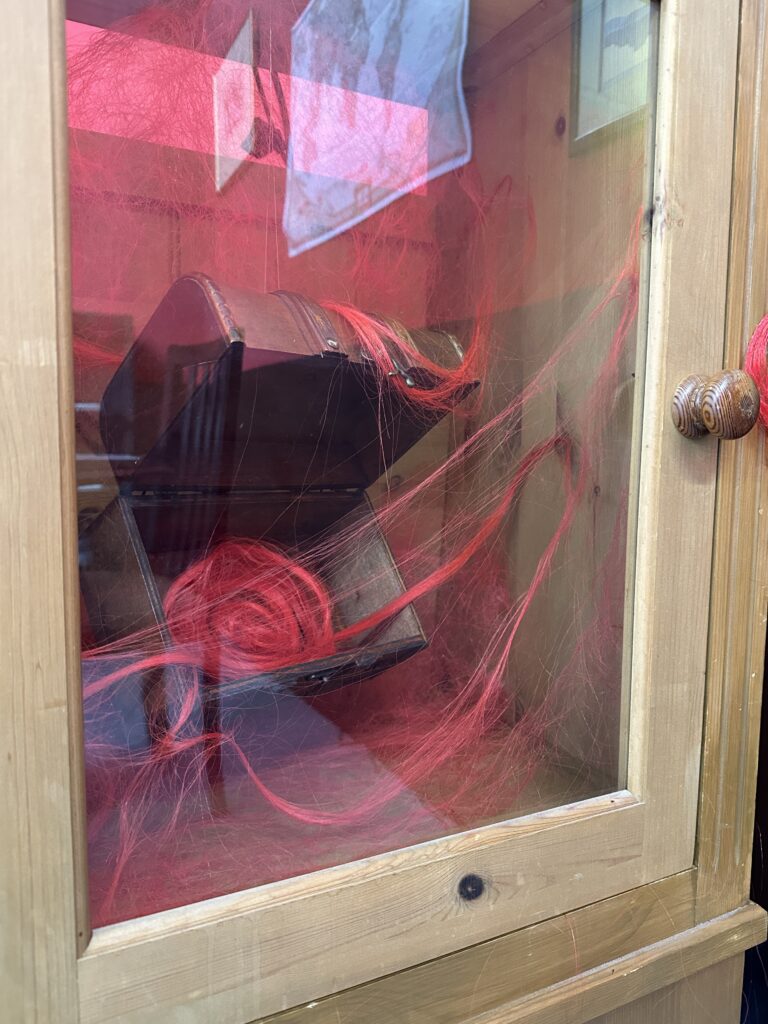
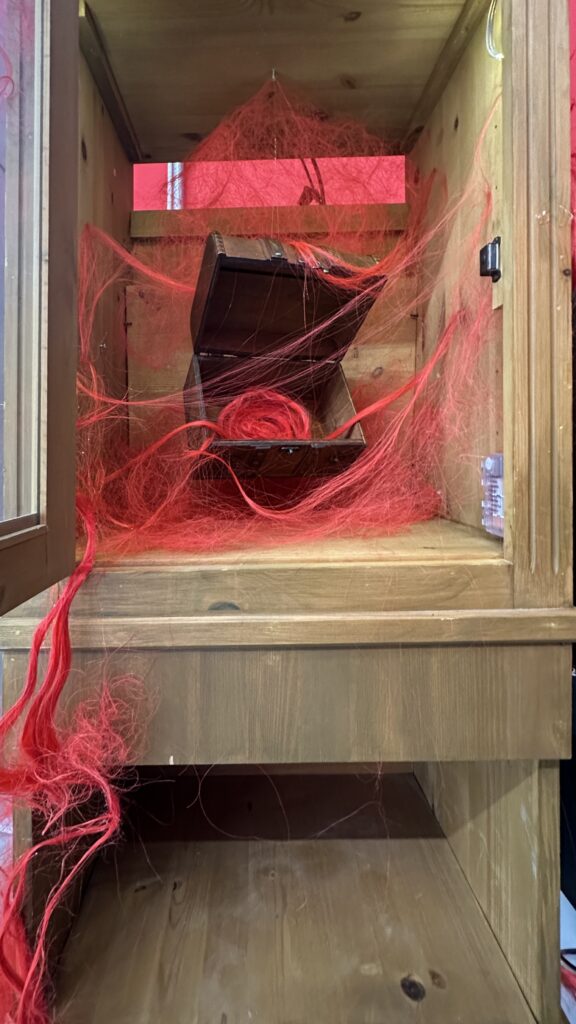
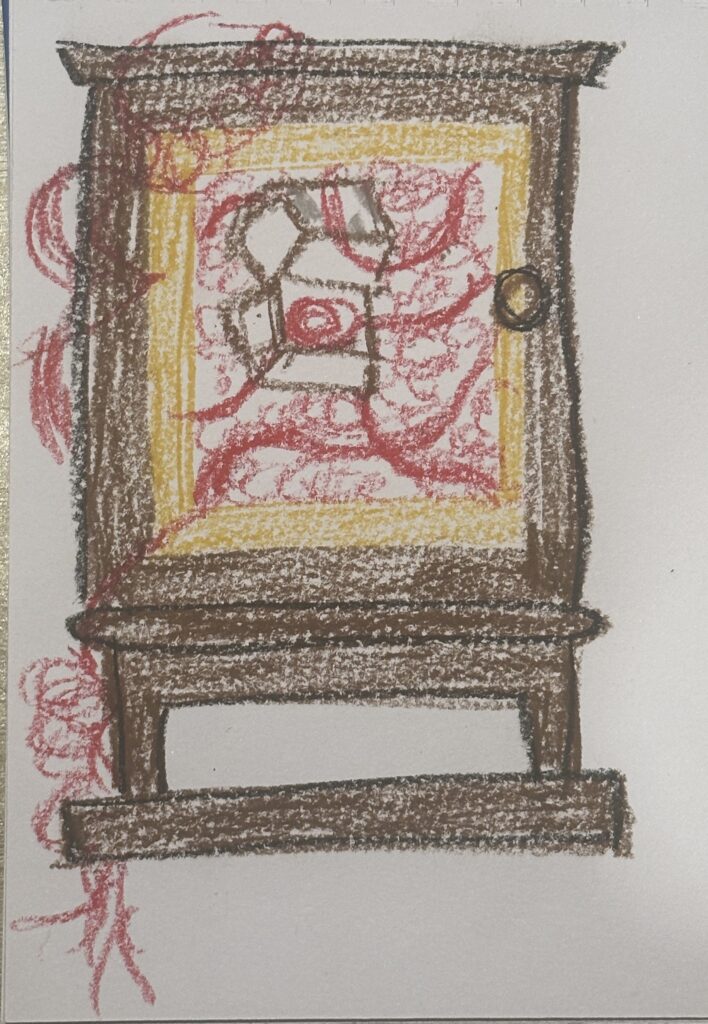
The old-style storage cabinet was originally a storage container for antique grooming items. The entire cabinet is completely covered by red hair, and the hair strands are set as a sensory system with the ability to perceive. The hair strands adhere to the surface of the cabinet and penetrate the gaps inside, symbolizing that the red hair can penetrate the surface of the objects and capture all the past memories carried by the antiques in the cabinet. The physical installation concretizes the core setting of “hair strands perceive the stories of old things” in the script, creating a visual entity for memory perception.
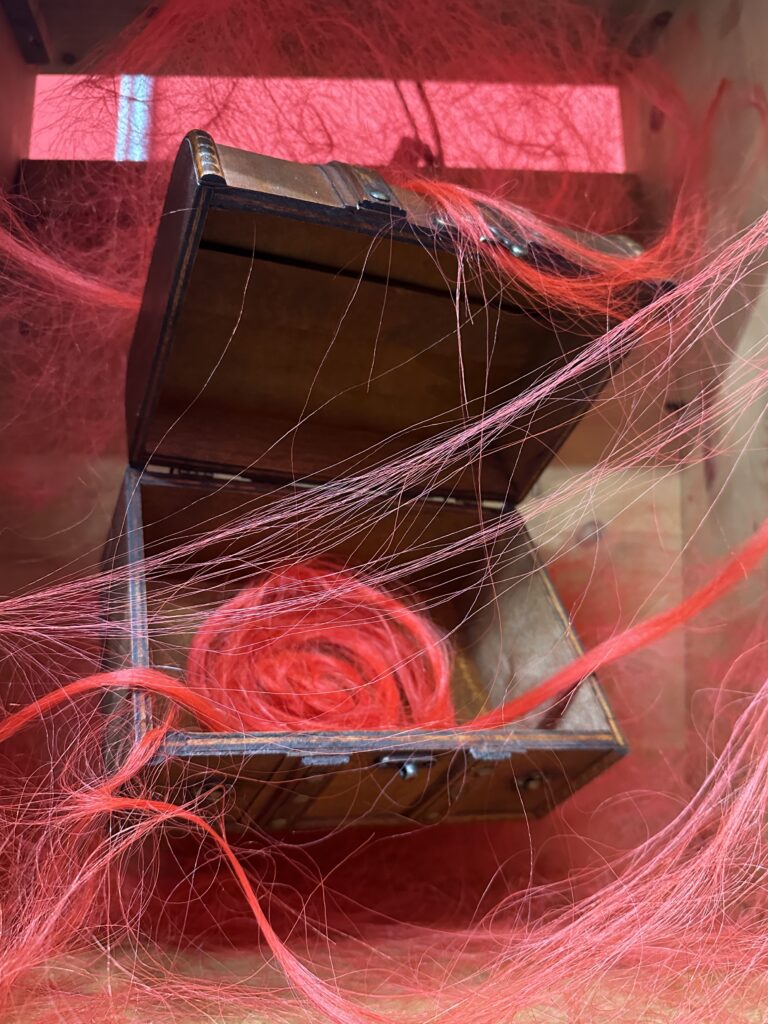
Installation view, Sensory Hair Cabinet, 2026, wooden storage cabinet, synthetic red hair, mixed-media installation
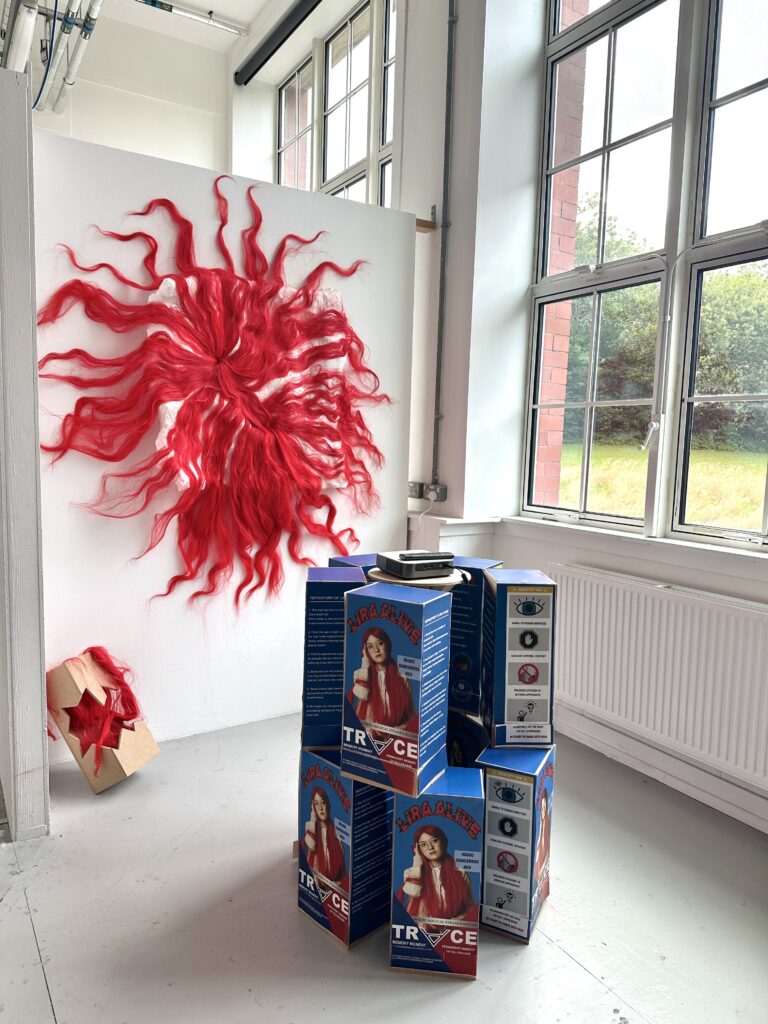
Lira Alive Hair Dye Box
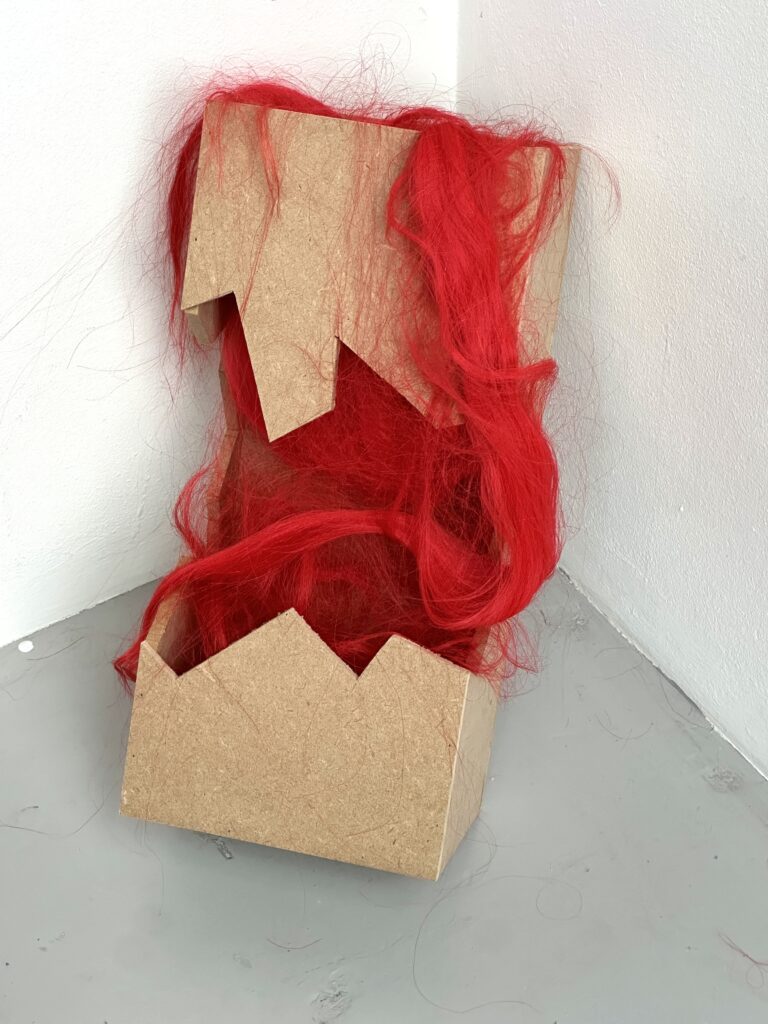
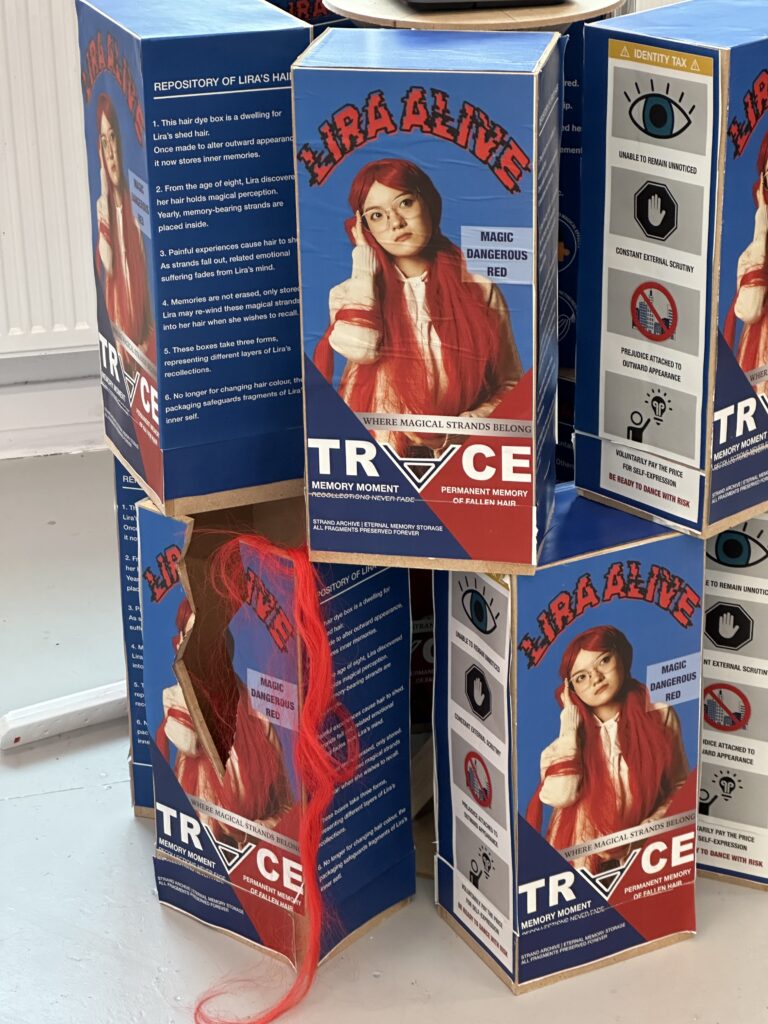
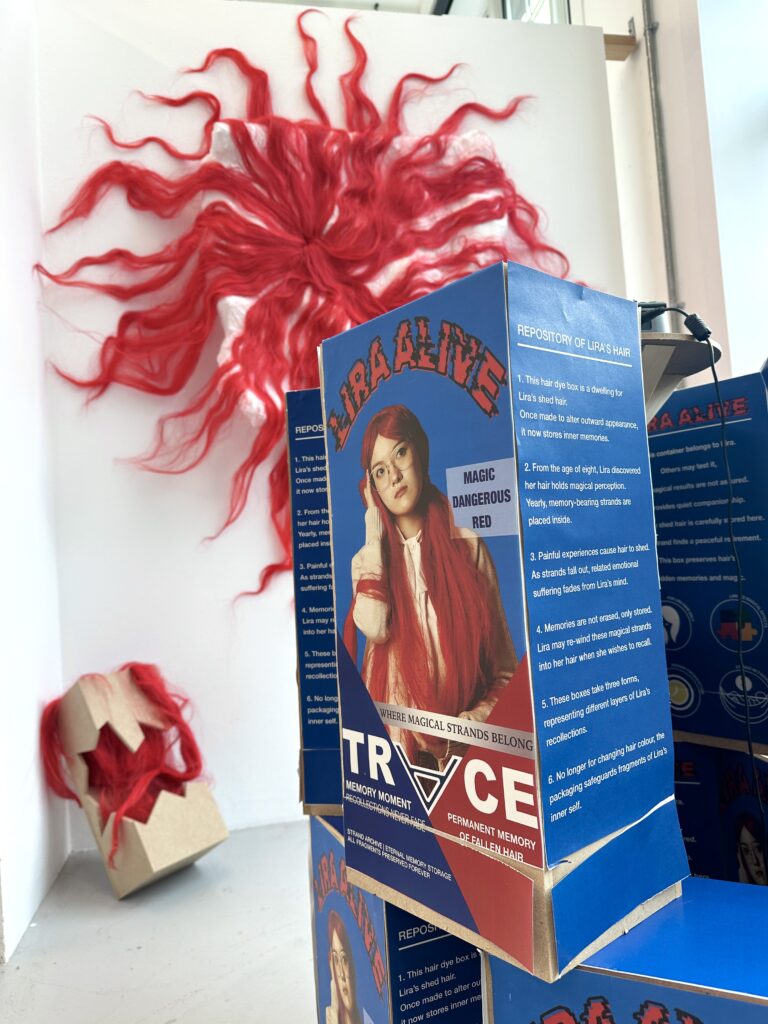
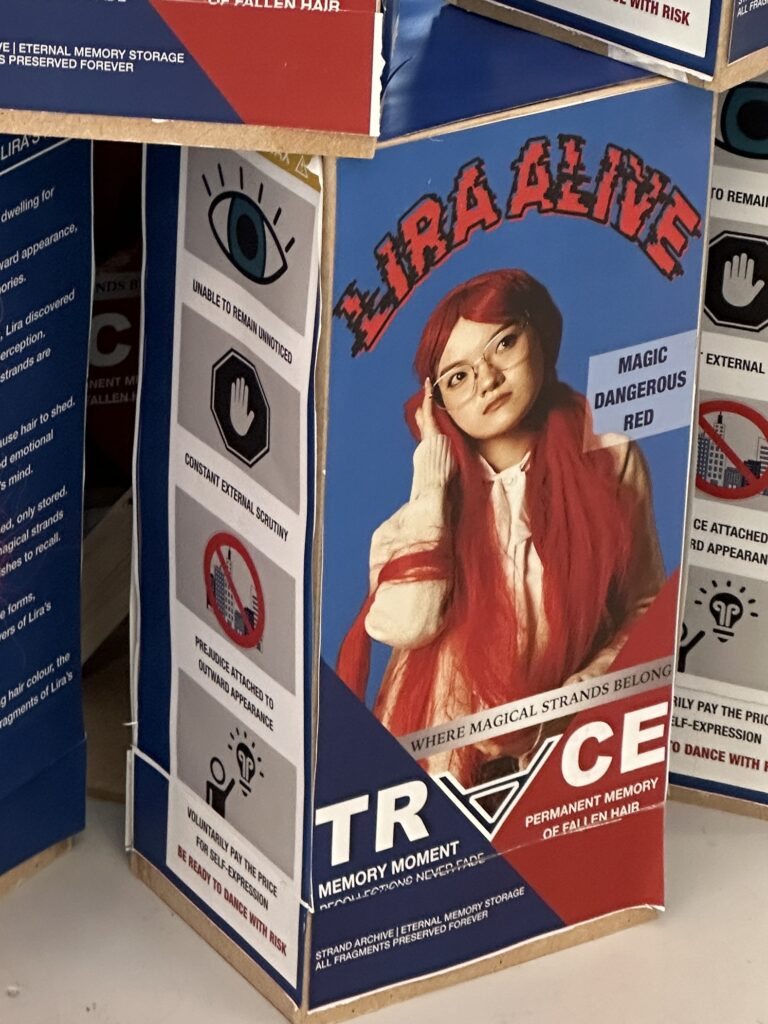
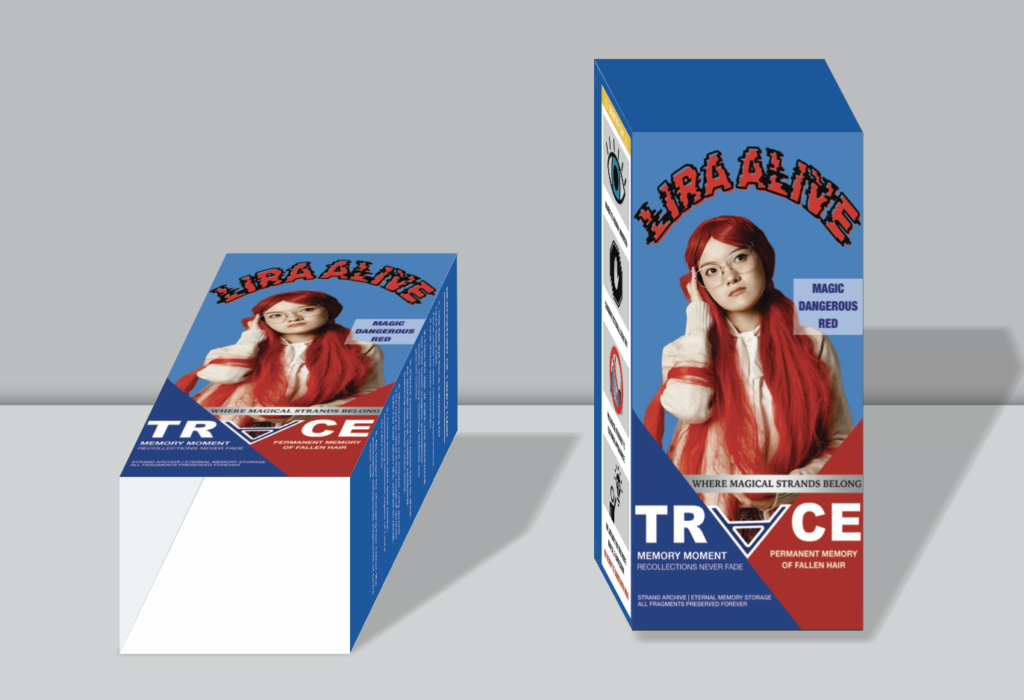
Constructed from MDF wooden crates with printed paper facades. Eleven boxes form the installation: ten complete printed units and one broken crate with hair emerging from its opening. Part of Lira’s Haptic Memory Archive, this work treats the hair dye box as a memory container that holds fragmented, discontinuous memories.
Memory Weep
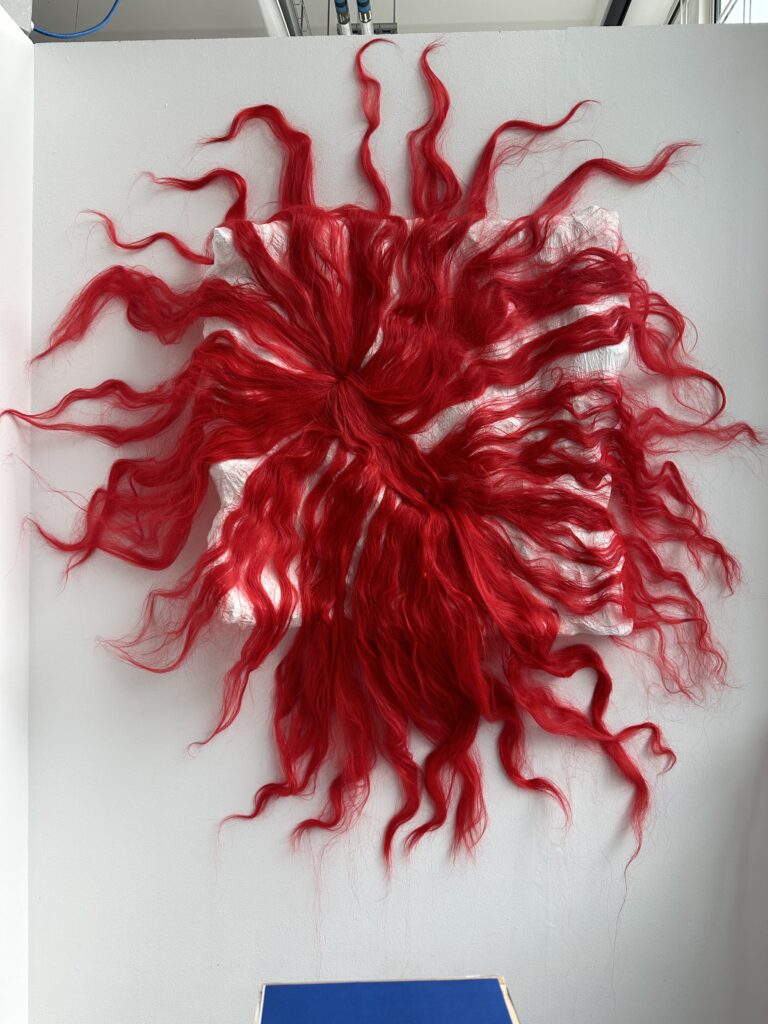
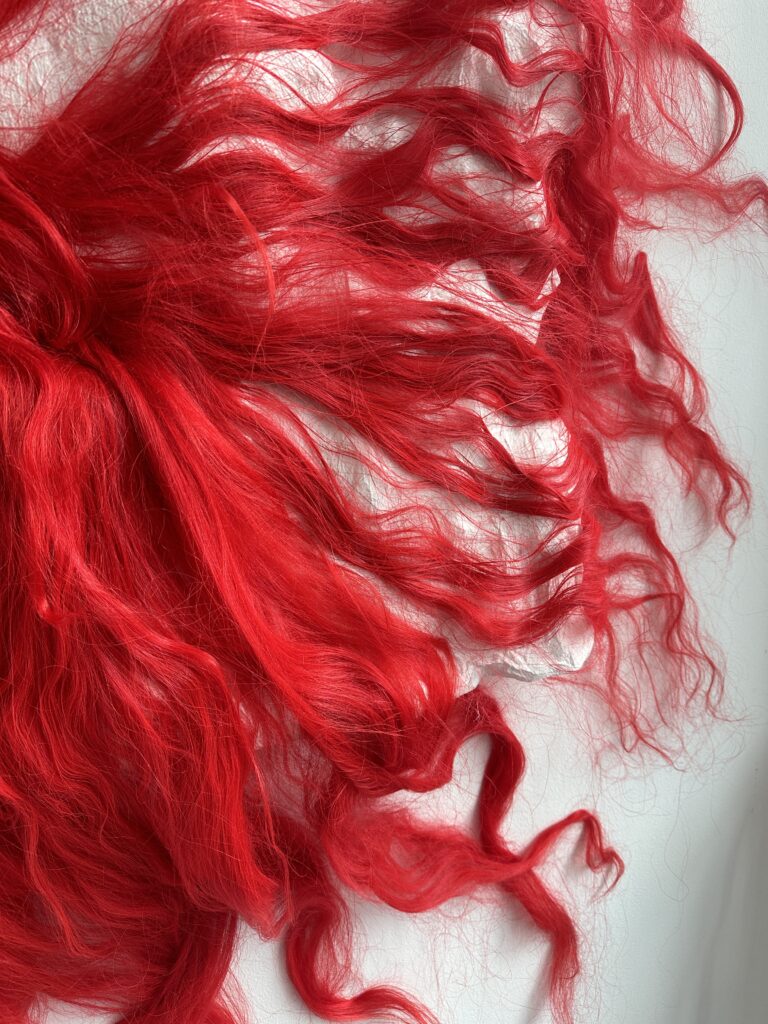
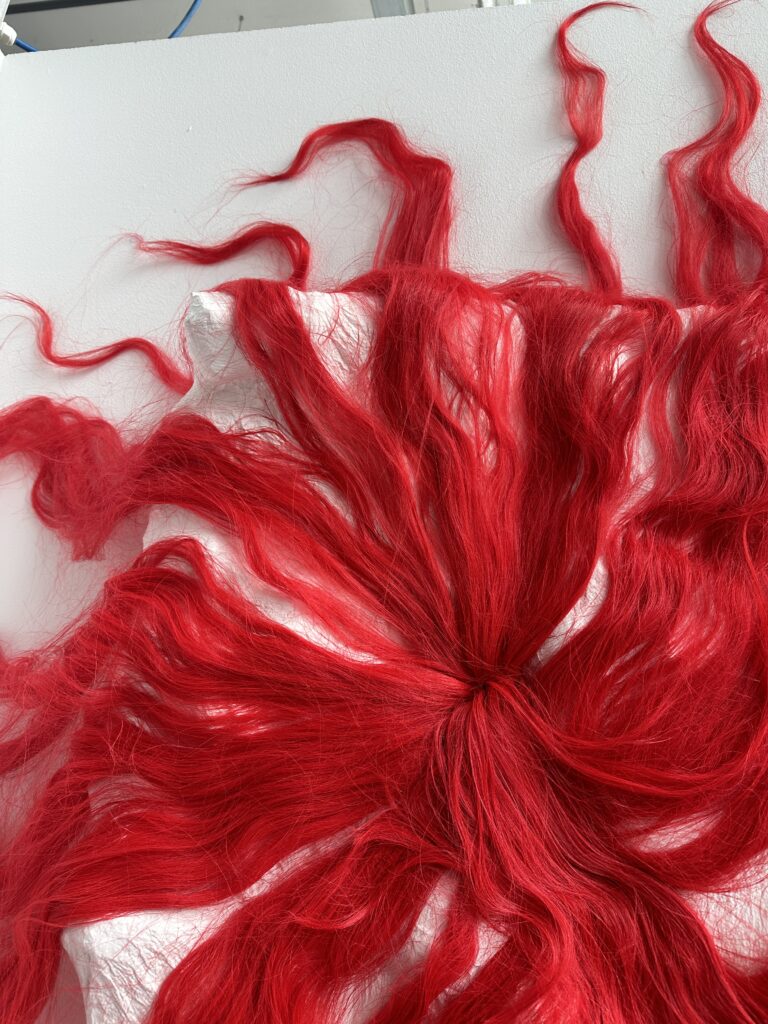
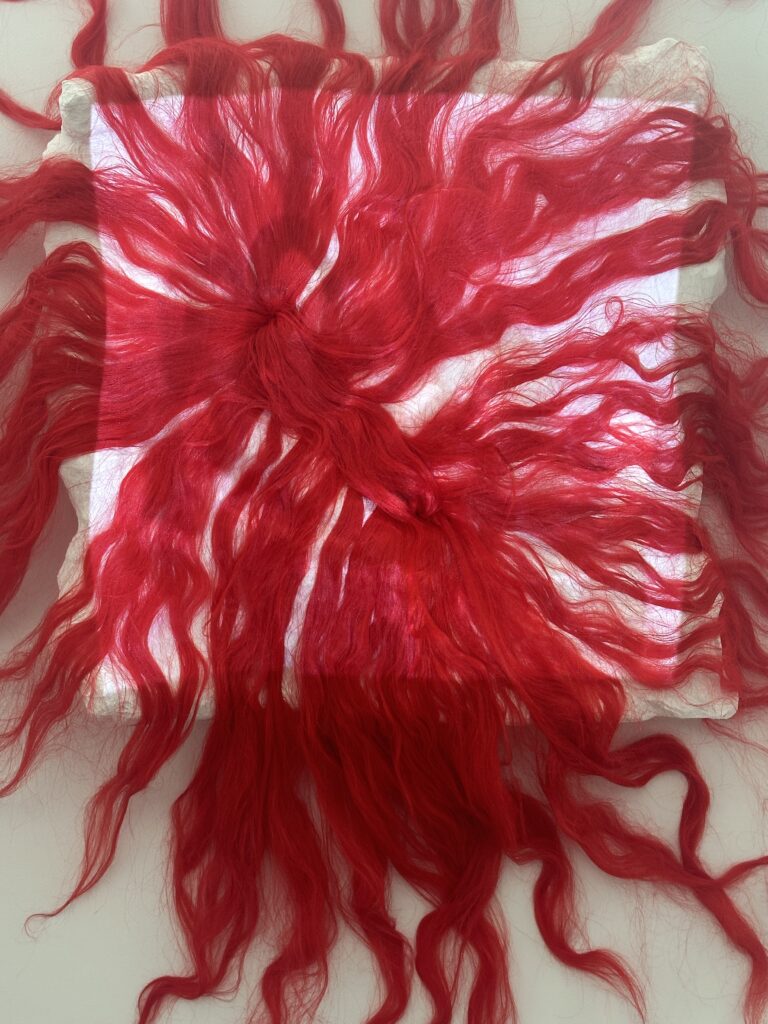
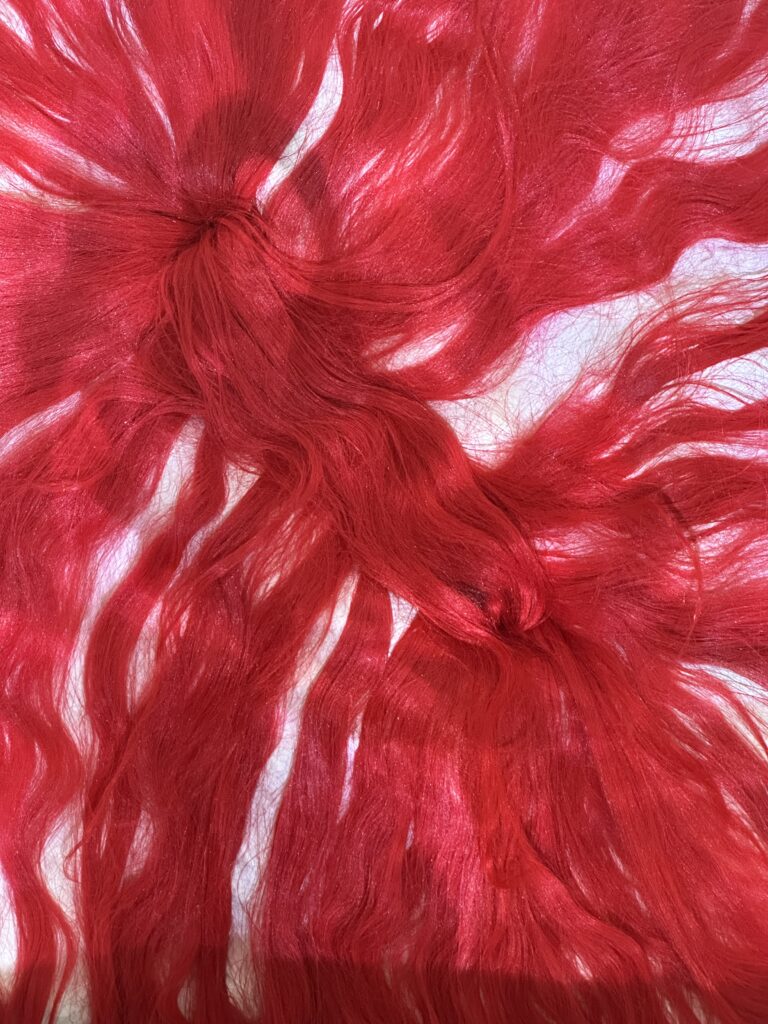
Composite sculptural installation built with expanding foam, plaster bandage and clustered hair. A raw un‑papered wooden crate sits beneath the sculptural form, holding tangled hair mass. Linked to Lira’s Haptic Memory Archive, it visualises repressed, overflowing private memory that cannot be contained within neat archival boxes.