The Constructed Interior : Light as a Spatial Material
A room is usually understood through what is physically there — its walls, openings, surfaces and objects. But what happens when none of these change, and the room still feels different?
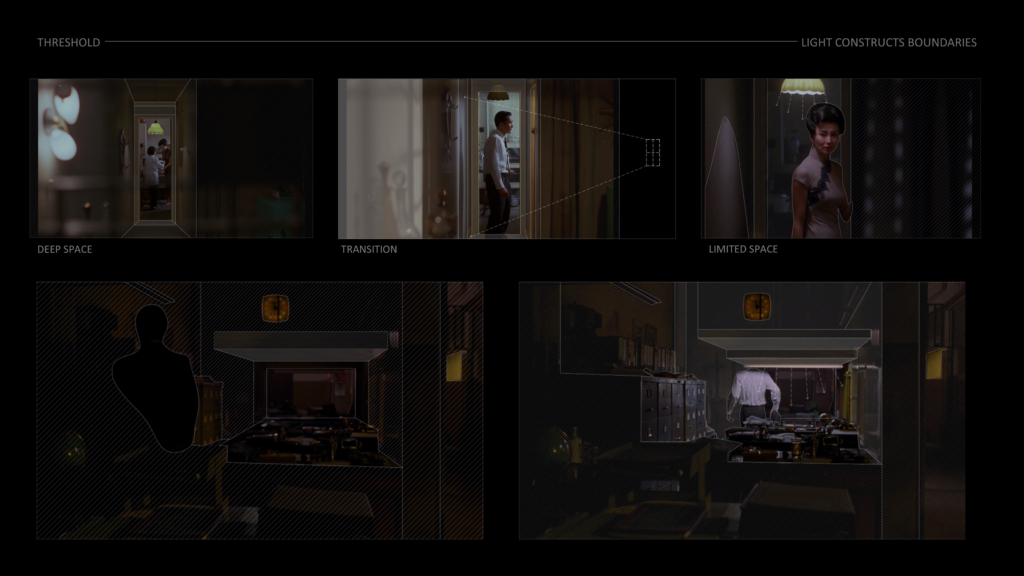
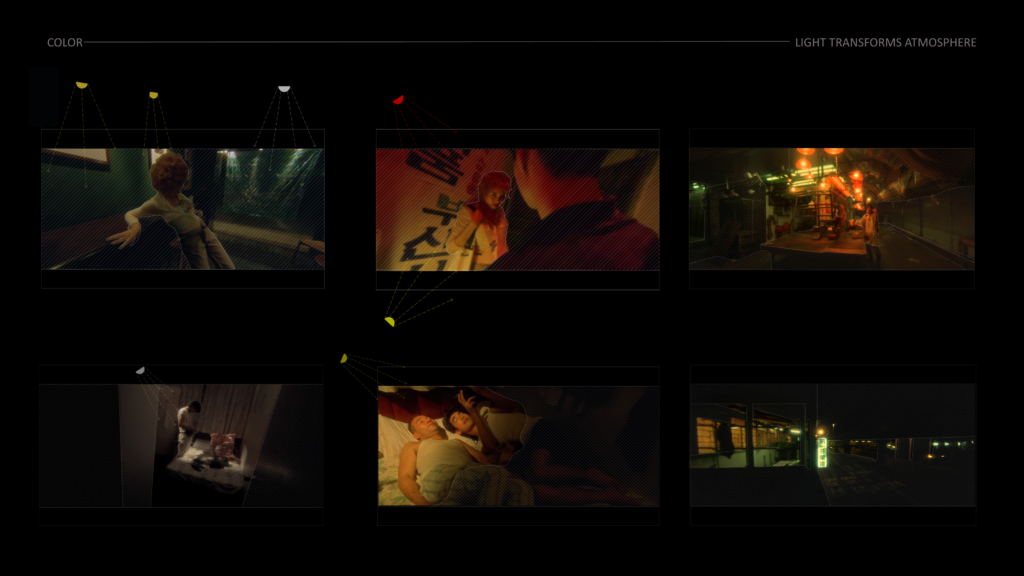
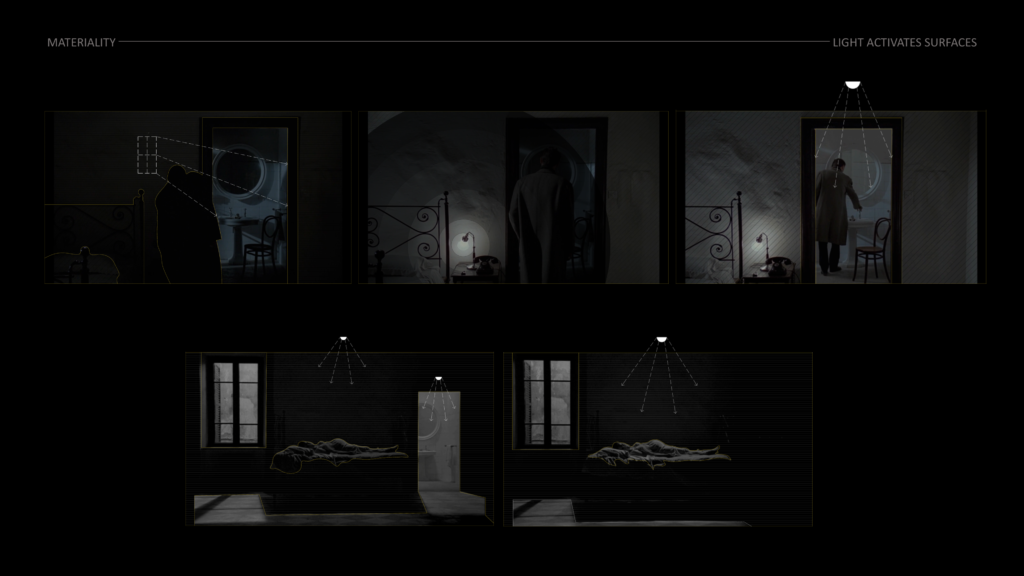
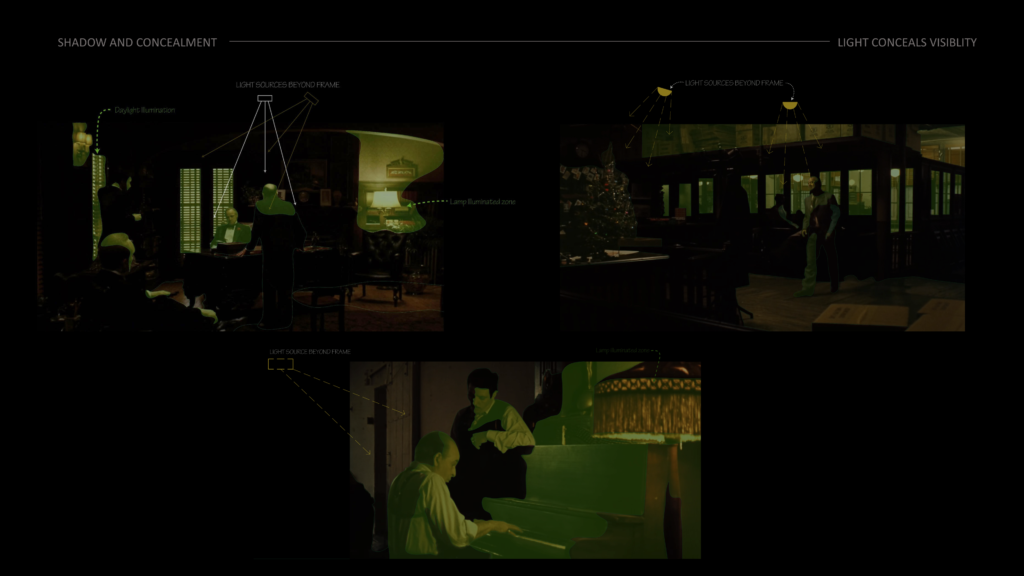
The Constructed Interior is a thesis exploring light not simply as something that illuminates space, but as something that can change how we perceive it. A boundary can shift, a material can appear different, darkness can conceal, and light can decide what we notice first. The architecture remains the same, but our reading of it changes.
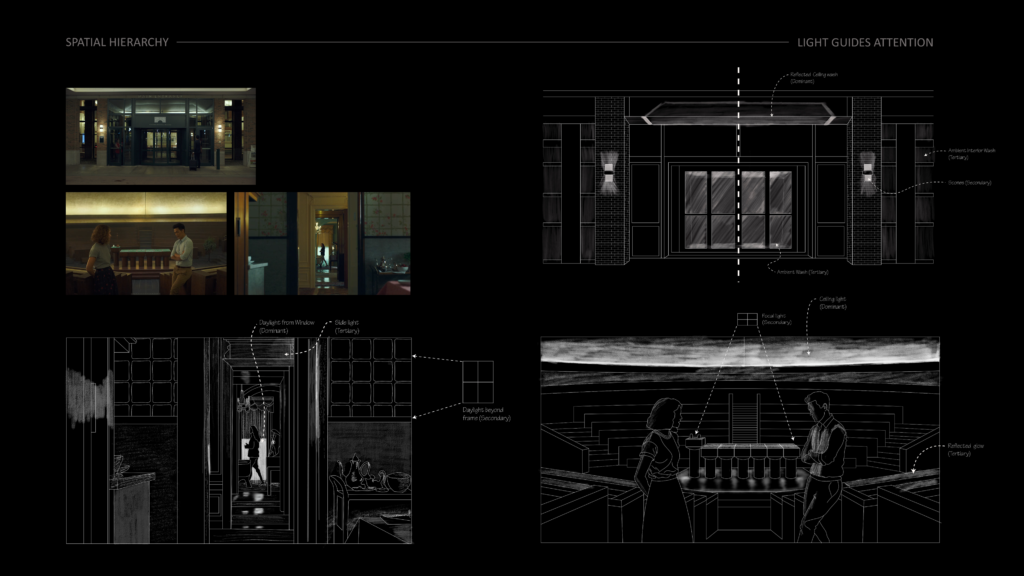
Cinema became a way of studying this relationship because it shows how the same space can change through different conditions of light. Selected scenes were studied through five lenses identified through my theoretical research — threshold, colour, materiality, shadow and concealment, and spatial hierarchy — asking not simply how is this scene lit?, but what is the light actually doing to the space?
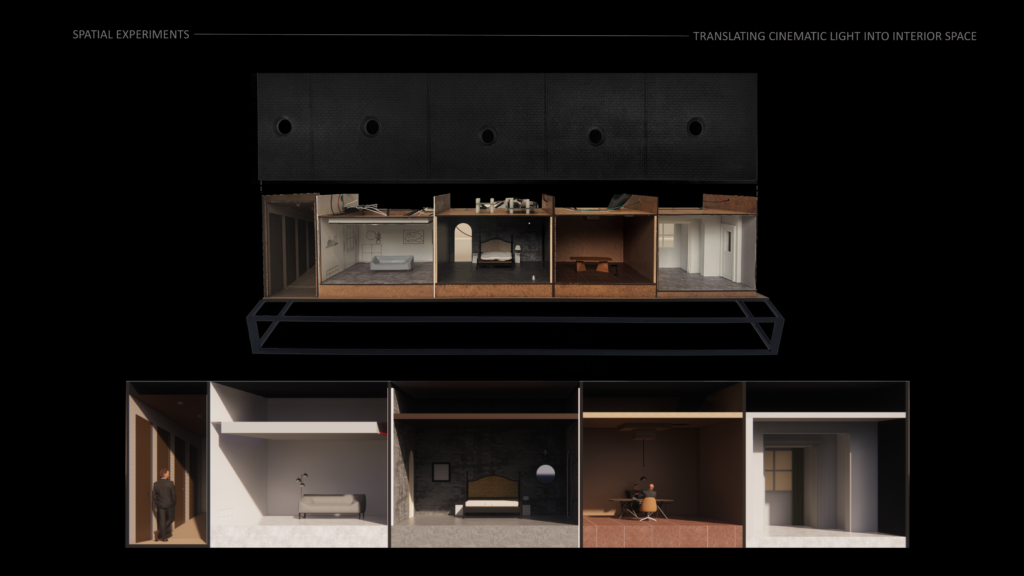
From these observations, I developed a framework for thinking about light in interior design. The aim is not to copy cinematic lighting, but to understand its spatial effects and explore how they can be applied to interiors. The physical model that follows tests some of these ideas within a domestic space.
It shifts the starting point for designing with light: from where should the light go? to what do I want the light to do?