Repairing the High Street: Reinterpreting Shared Space as a Tool for Urban Regeneration in Byres Road South, Glasgow
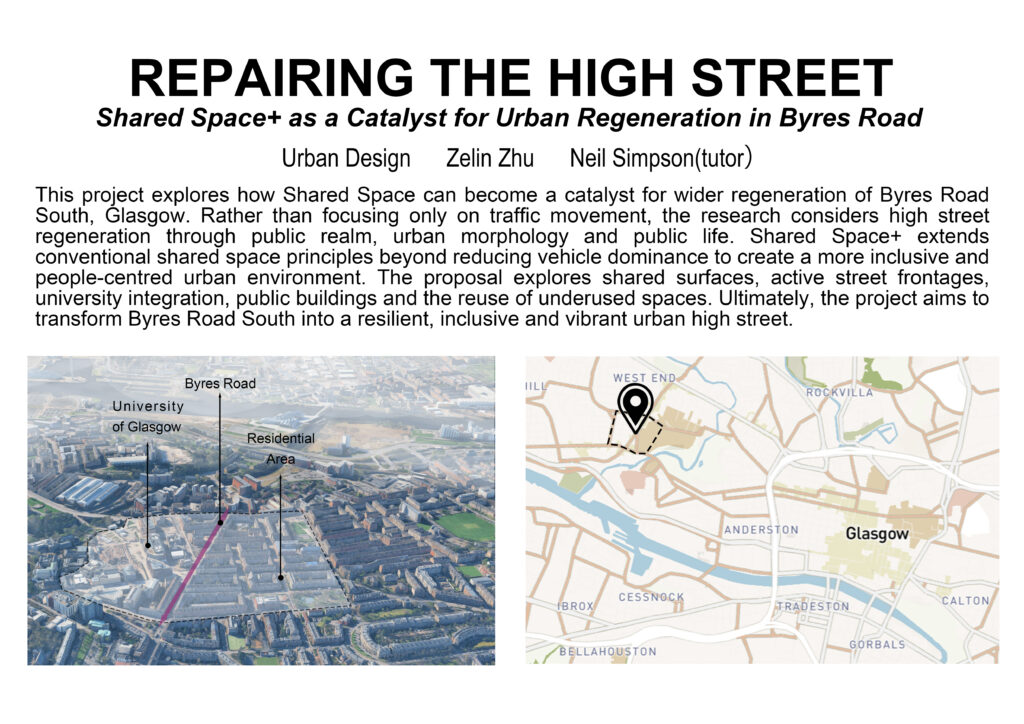
This project explores how Shared Space can be reinterpreted as a tool for the wider regeneration of Byres Road South in Glasgow. The research asks how the area can become a more vibrant urban high street through shared space principles, university integration and public realm transformation. Rather than considering the high street only as a movement corridor, the project understands it as an important part of everyday urban life, where movement, commercial activity, learning and social interaction can coexist.
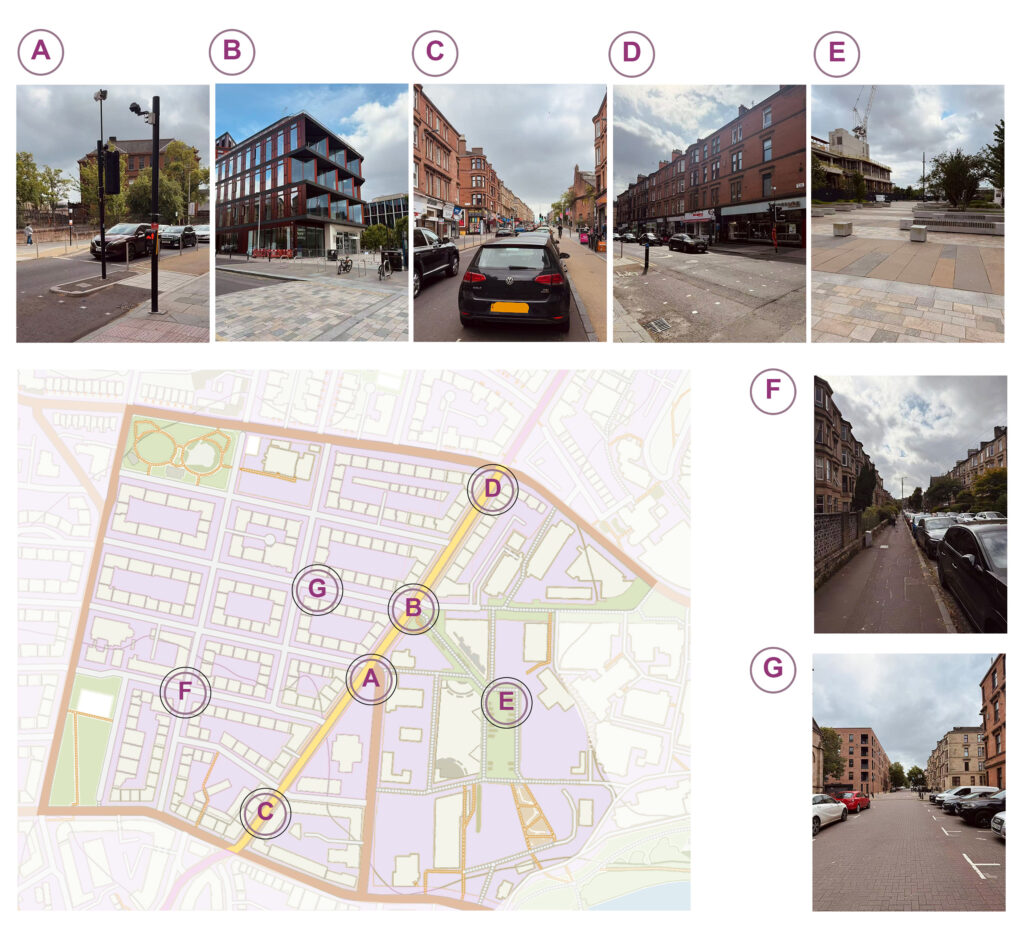
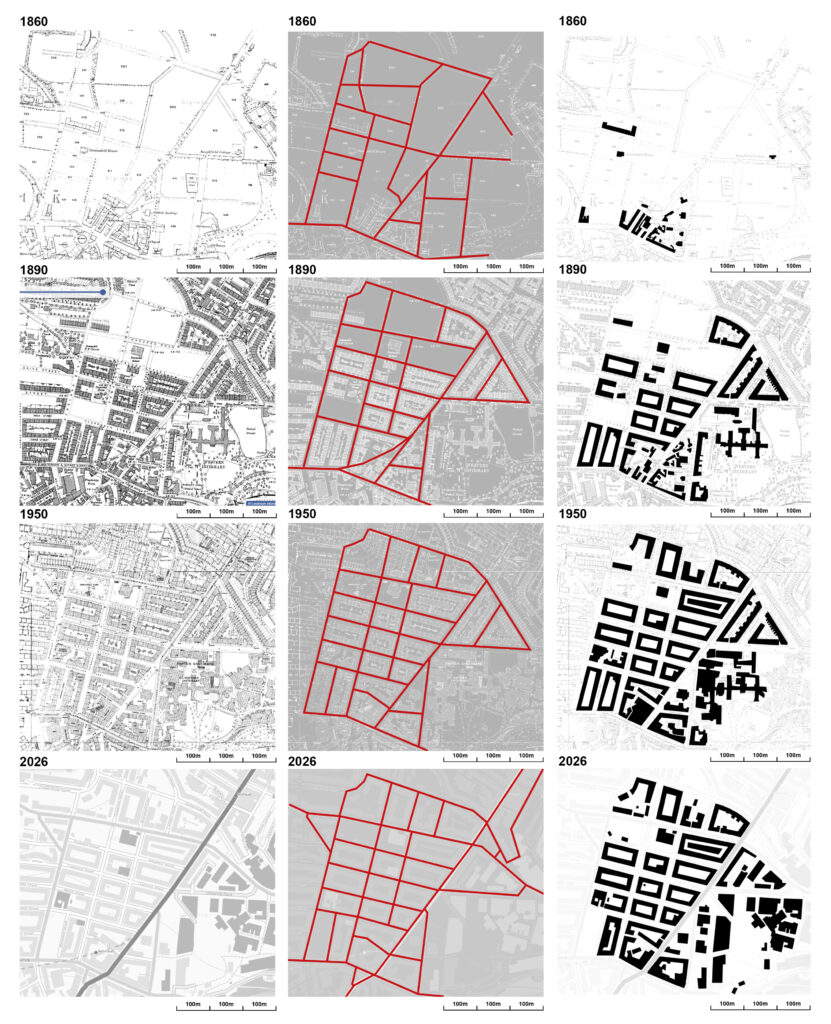
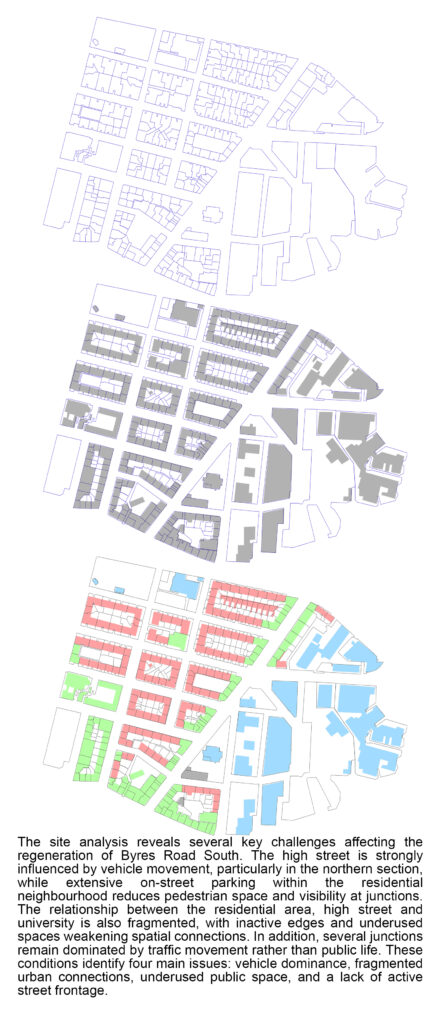
The research is structured around five key concepts: High Street Regeneration, Shared Space, Public Realm, Urban Morphology and Public Life. Site analysis examines the historical development of the street network and built form, together with existing plot patterns, land uses, traffic conditions and pedestrian experience. The analysis identifies several interconnected problems. Byres Road remains strongly influenced by vehicle movement, while extensive on-street parking and traffic within surrounding residential streets reduce pedestrian space and visibility. The university edge is also spatially fragmented from the high street, with differences in building scale and land use creating a weak relationship between the University of Glasgow and the surrounding neighbourhood. Meanwhile, several underused spaces provide opportunities for new public activities and development.
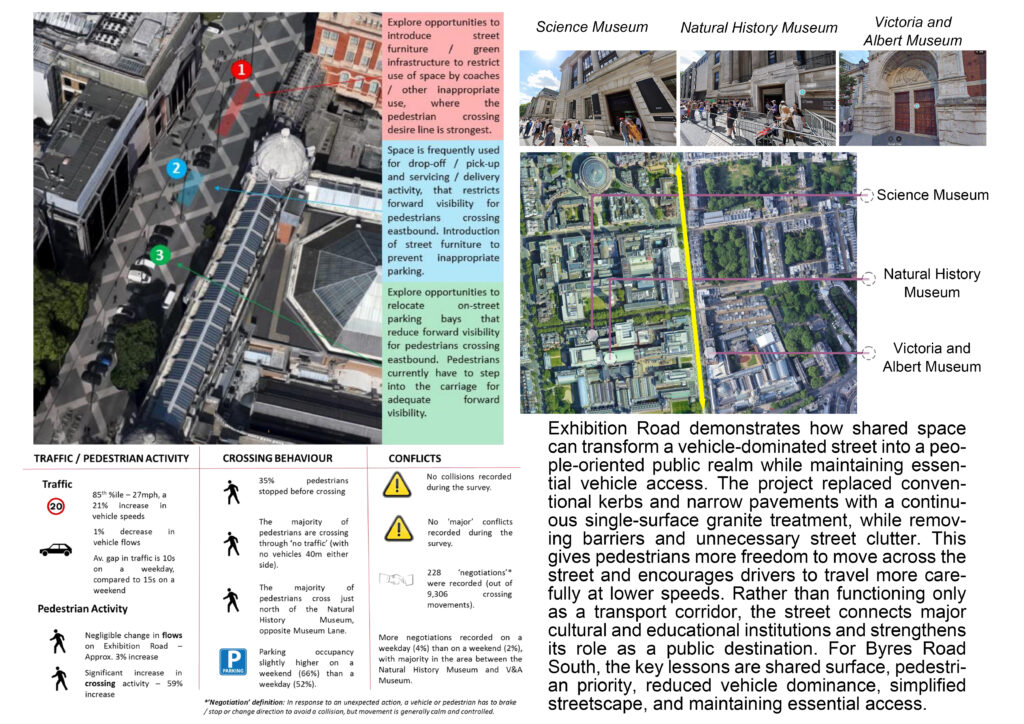
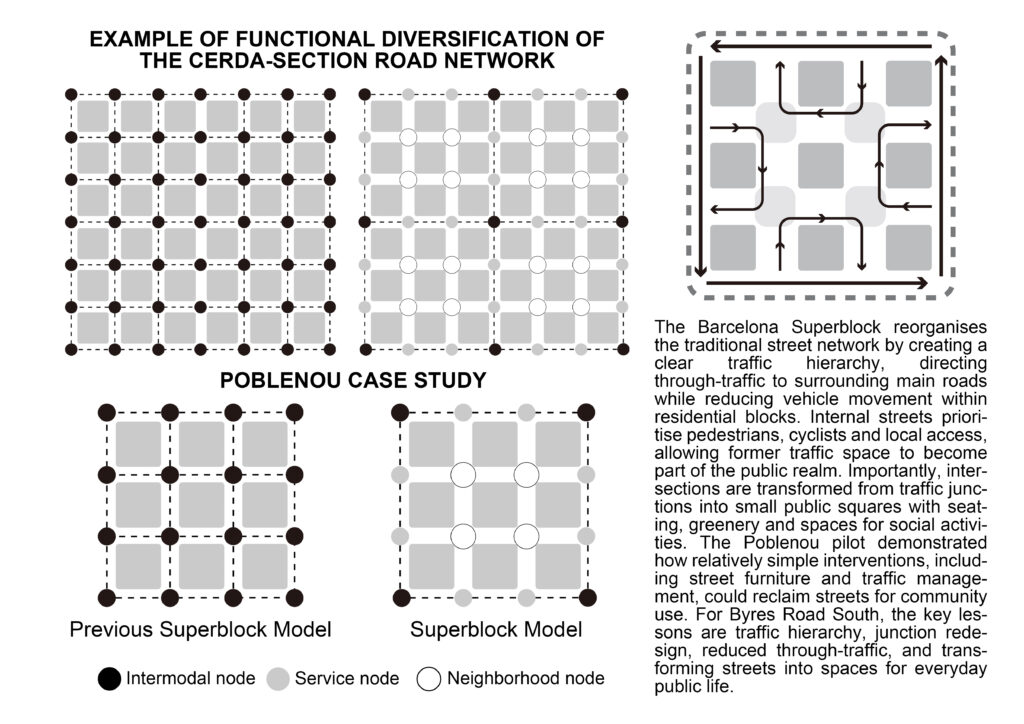
Shared Space is therefore investigated not simply as a traffic design solution, but as part of a wider regeneration approach. Case studies provide different lessons for this process. Exhibition Road in London demonstrates how shared surfaces, pedestrian priority and reduced street clutter can rebalance the relationship between vehicles and pedestrians while maintaining necessary access. The Barcelona Superblock demonstrates how traffic hierarchy and junction transformation can reduce through-traffic within residential areas and reclaim street space for public life. These principles are interpreted according to the specific urban conditions of Byres Road South.
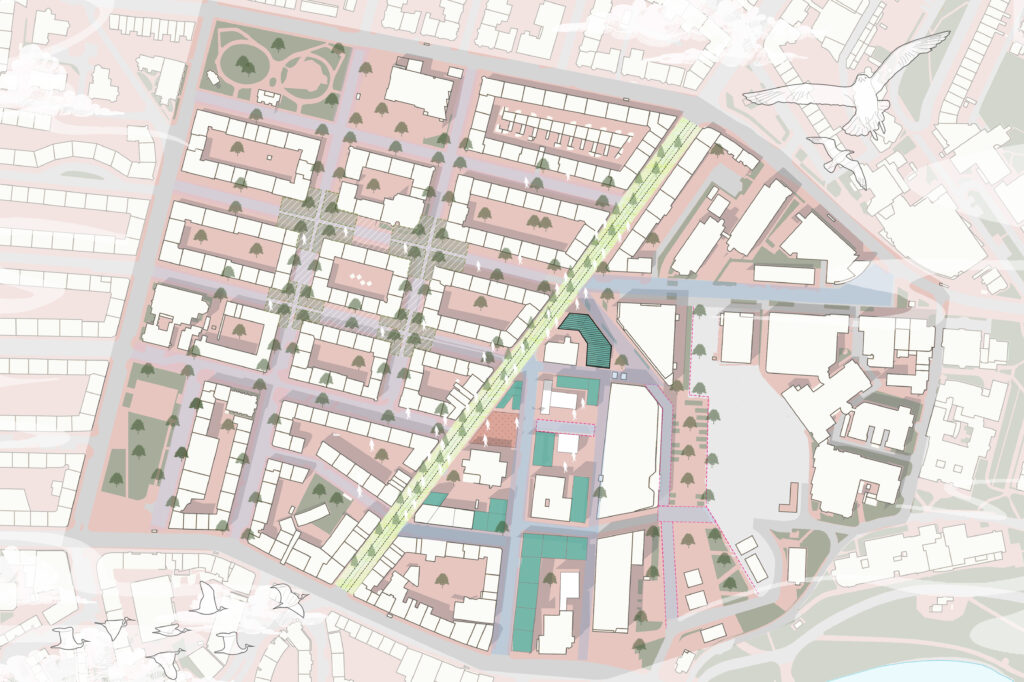
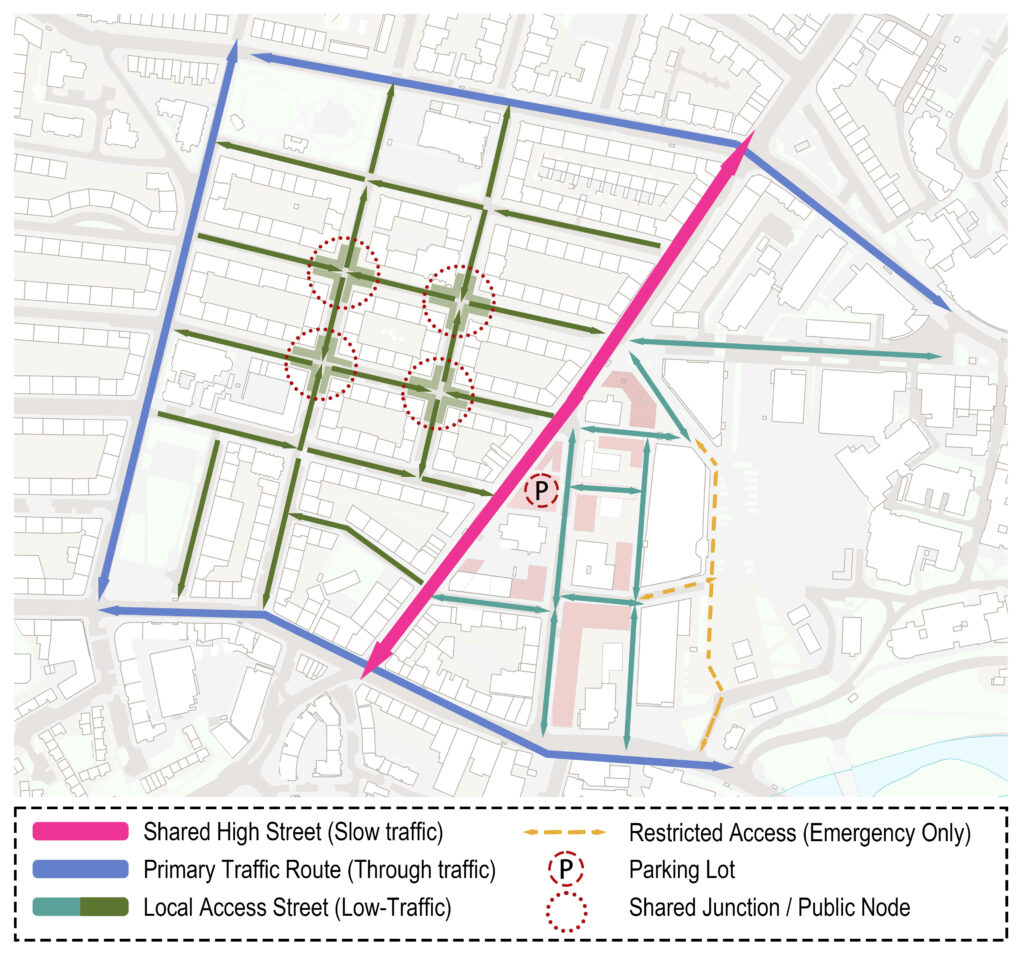
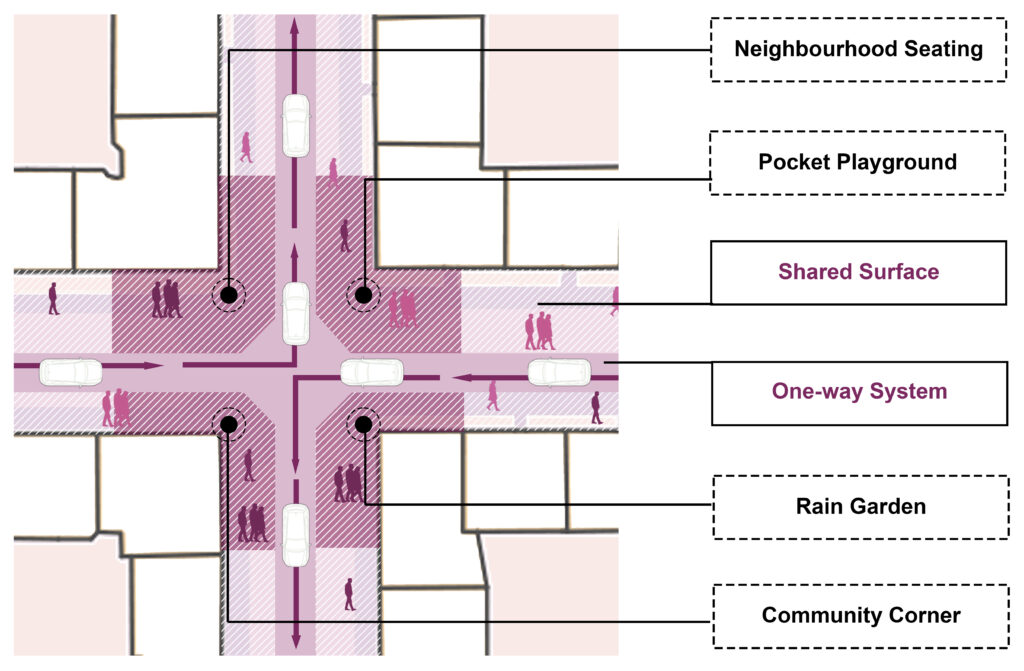
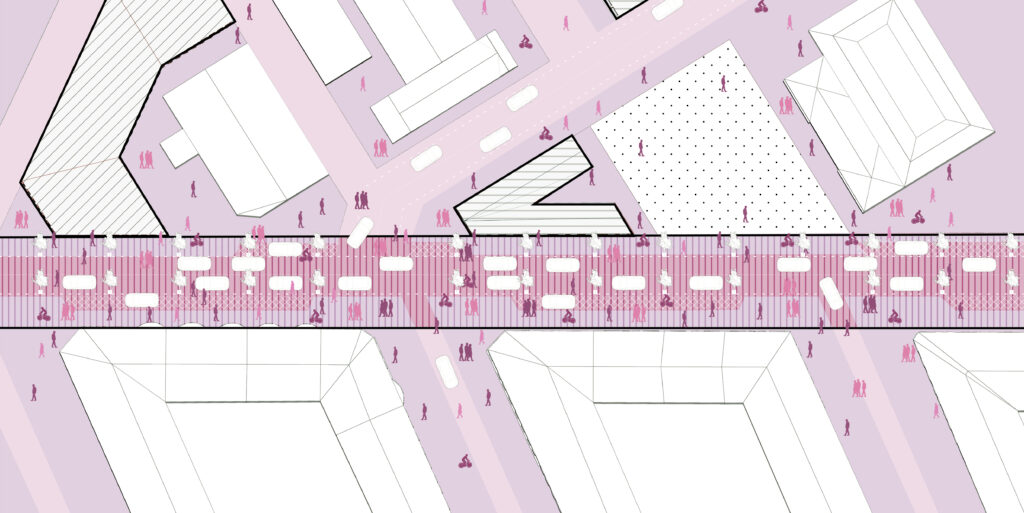
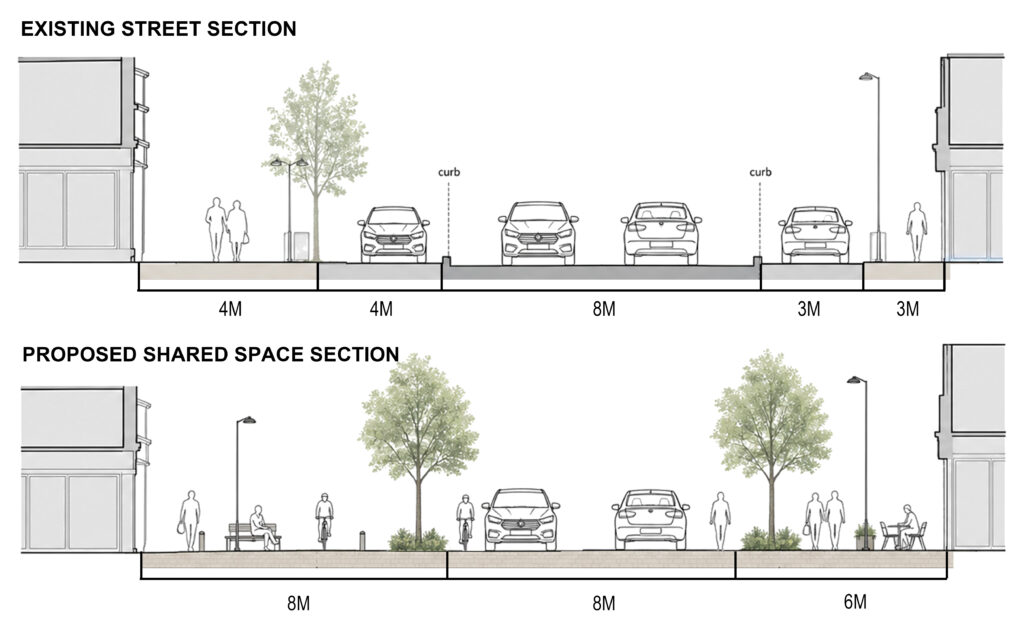
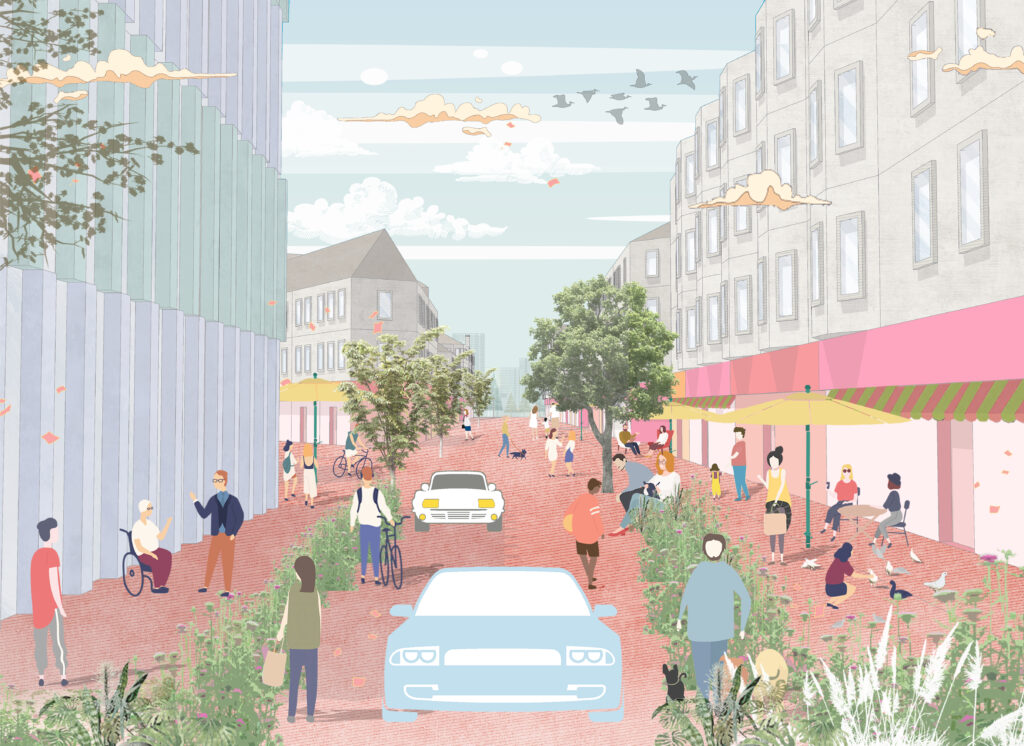
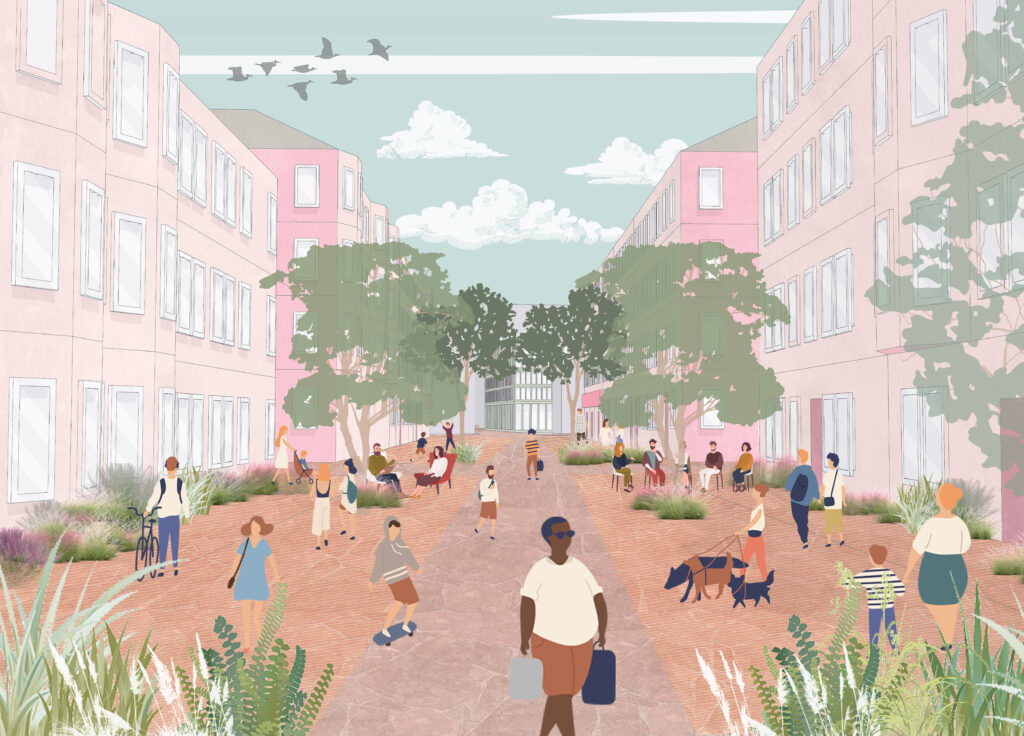
The design proposal develops these ideas across different scales. At the street scale, Byres Road is transformed into a pedestrian-priority shared street where slower vehicle movement, removing the curbs, continuous paving of the road surface, planting and active frontages support a more comfortable public environment. Within the surrounding residential neighbourhood, a reorganised traffic hierarchy discourages unnecessary through-traffic while maintaining local and emergency access. Selected junctions are transformed into small neighbourhood spaces incorporating seating, planting, play areas and rain gardens.
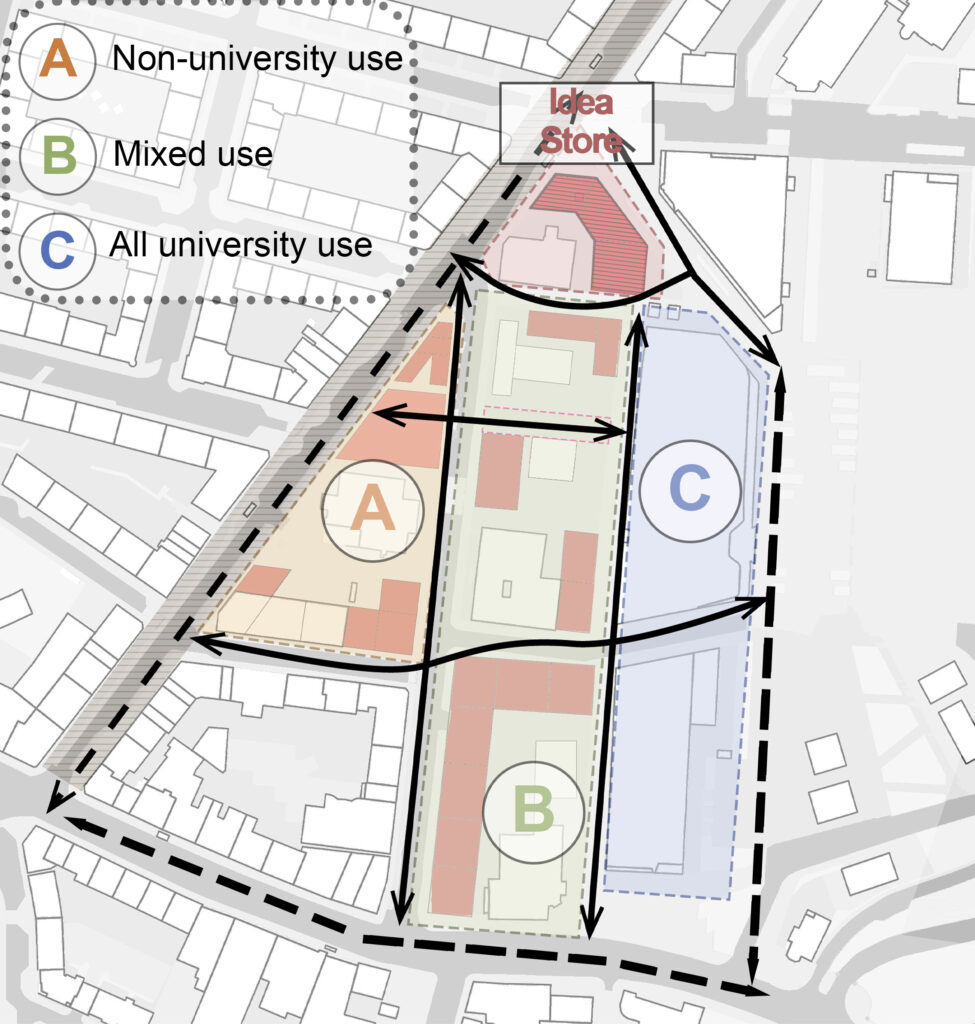
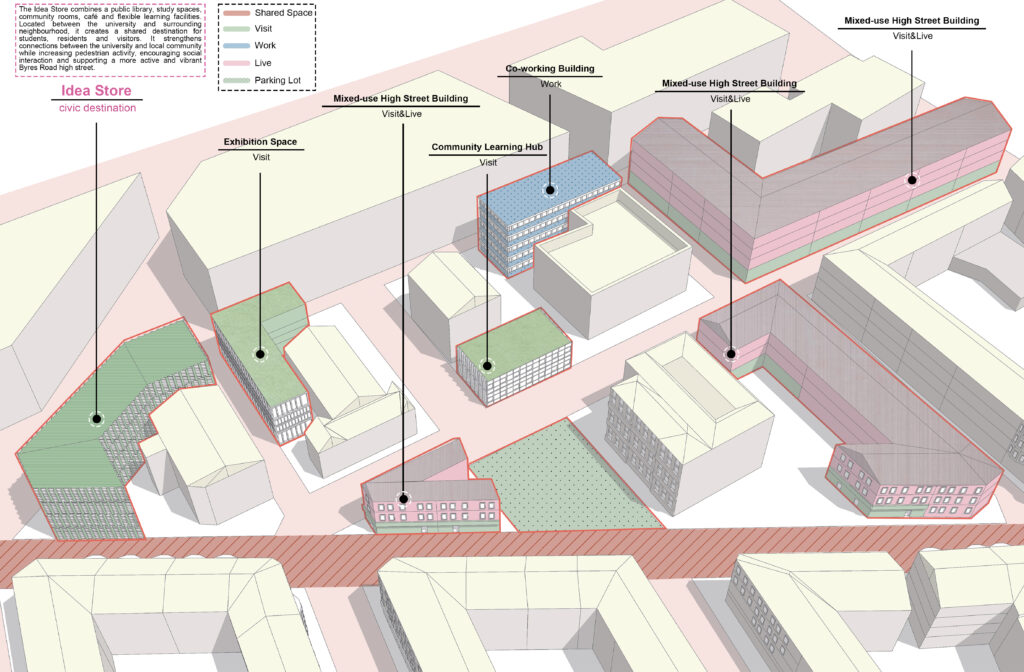
At the urban scale, the proposal strengthens the relationship between the university, high street and surrounding community through new development and public space. The eastern part of the site is organised as a transition between non-university, mixed-use and university areas, supported by new mixed-use buildings and active frontages. An Idea Store forms a key civic destination, bringing together learning, community and social activities for students, residents and visitors.
The project proposes that repairing Byres Road South requires more than changing its traffic system. By combining Shared Space with public realm transformation, urban morphology and university integration, the proposal seeks to transform a vehicle-dominated corridor into a connected, inclusive and vibrant high street that supports everyday public life.