
How Do Drugs Work? Dissertation Project
How Do Drugs Work? Gamifying Receptor-Ligand Interactions is a pharmacology-based project that focuses on receptor-ligand molecular interactions. Pharmacology tutors at the University of Glasgow discovered that many students struggle with this threshold concept. The main goal of this project was to develop a game prototype that would allow students to gain a better understanding and appreciation of the 3D shape of ligands and their receptor binding sites. In the end, the game prototype became embedded in an application. Creating this application involved two phases of development. The first phase involved developing the game mechanism itself embedded in a simple application. Pilot testing was done to inform further refinements to the application and game. The second phase of development was based on the pilot testing outcomes and resulted in the addition of a learning module on G-Protein Coupled Receptors (GPCRs), the beta-2 adrenergic receptor, and one of its ligands, propranolol.
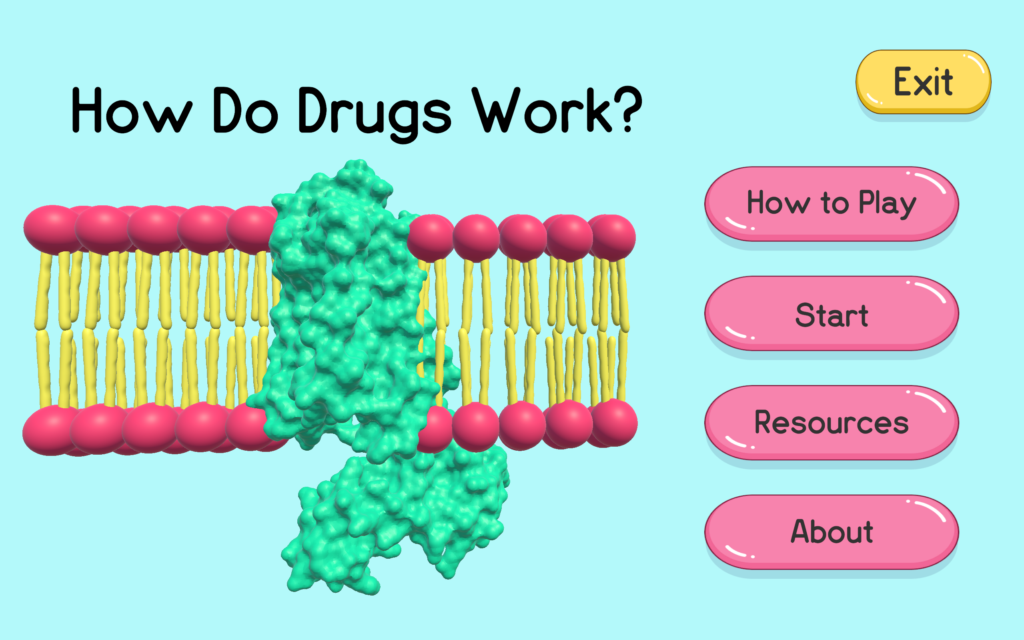
This is the main menu page for the How Do Drugs Work? Application
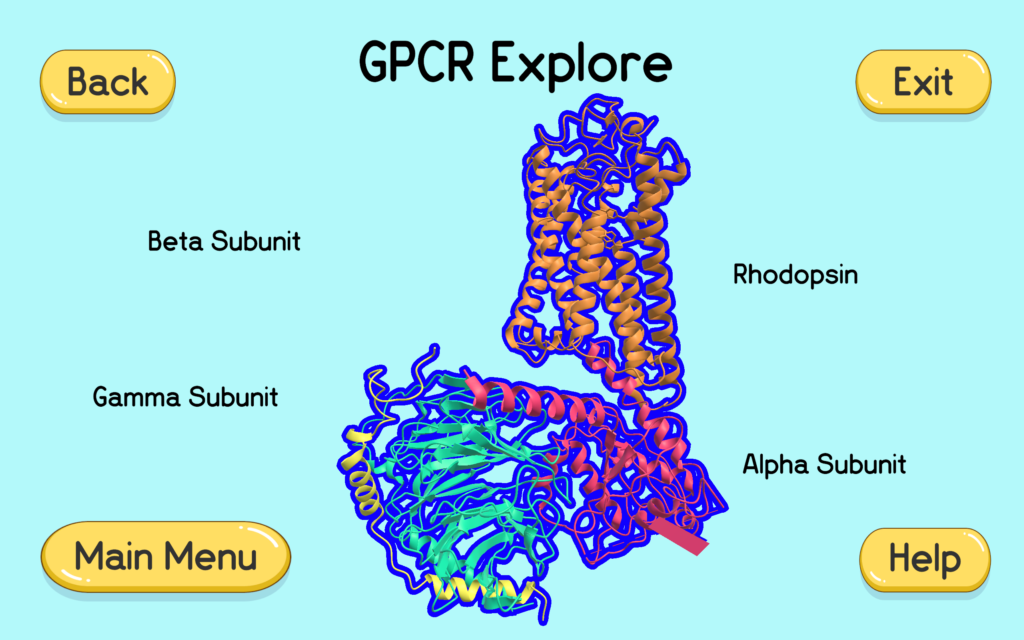
This scene allows the user to rotate and identify different subunits of the GPCR model.
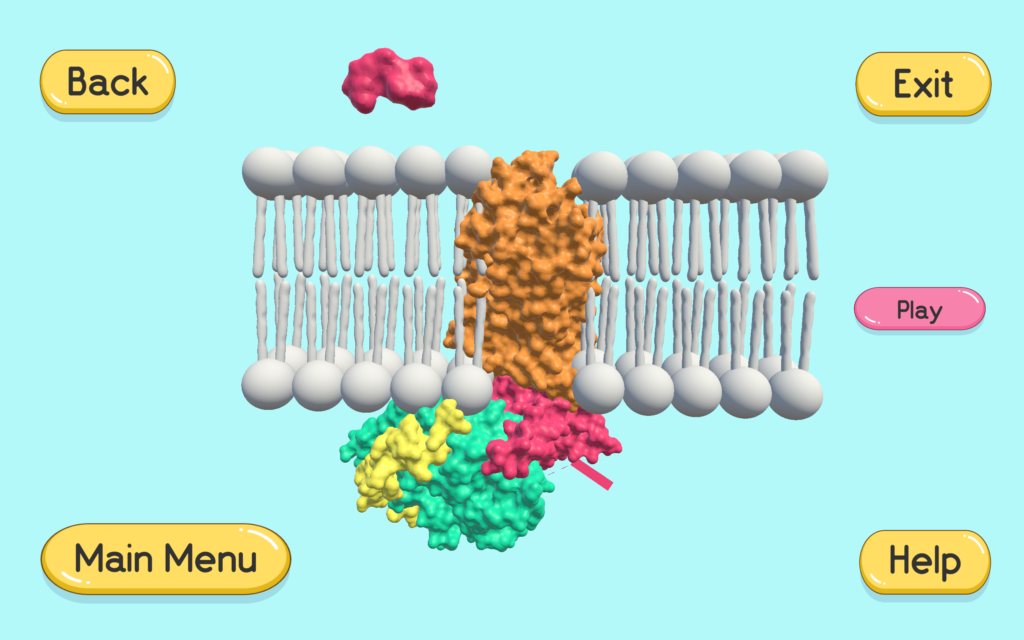
This scene contains an animation of what happens when a ligand (11-cis-retinal) binds to a rhodopsin GPCR.
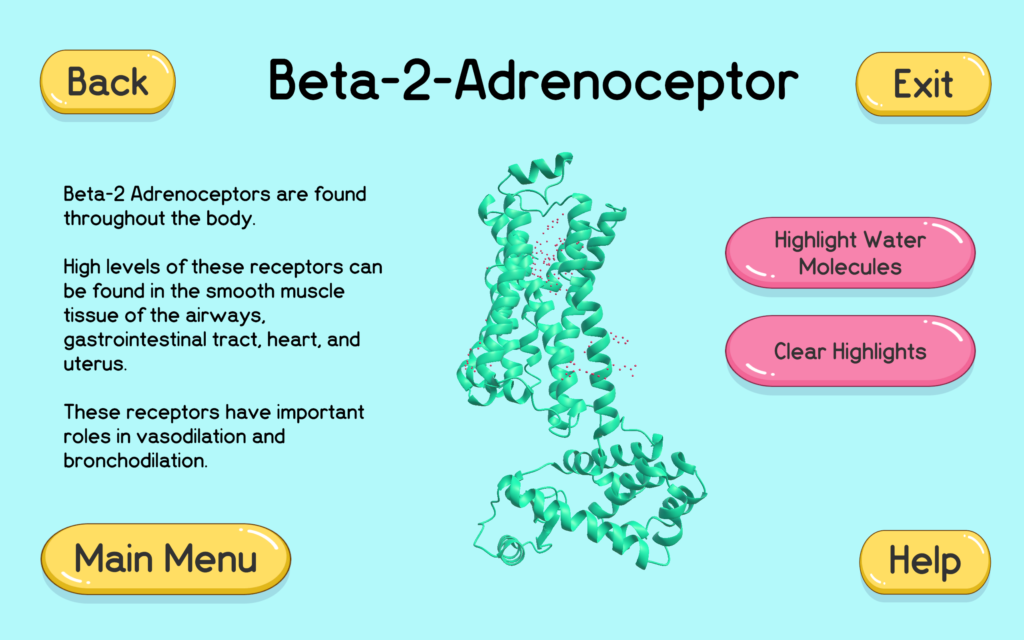
This scene allows the user to learn more about the beta-2 adrenergic receptor (also known as beta-2 adrenoceptor) and where water molecules are located relative to it.
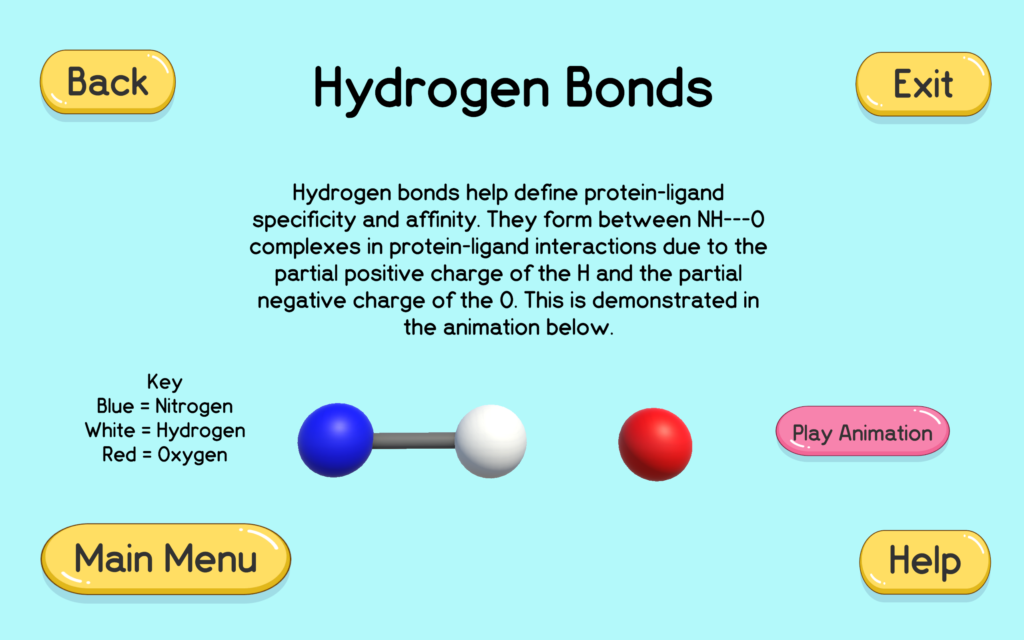
This is one of the four scenes that teaches the user about some of the chemical bonds and interactions that exist between receptors and ligands.
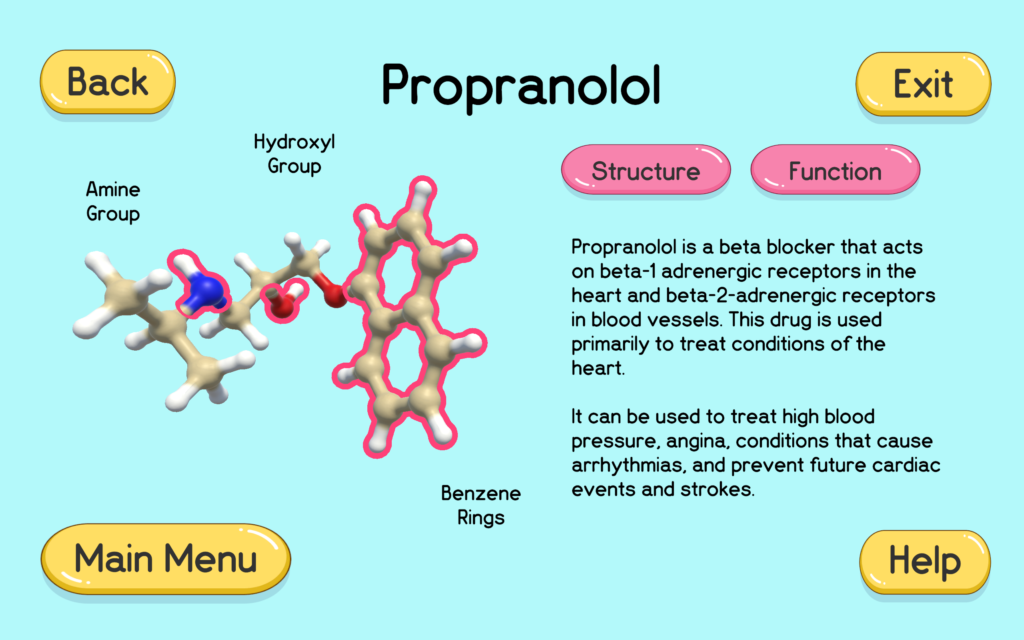
This scene allows the user to learn more about the structure and function of propranolol.
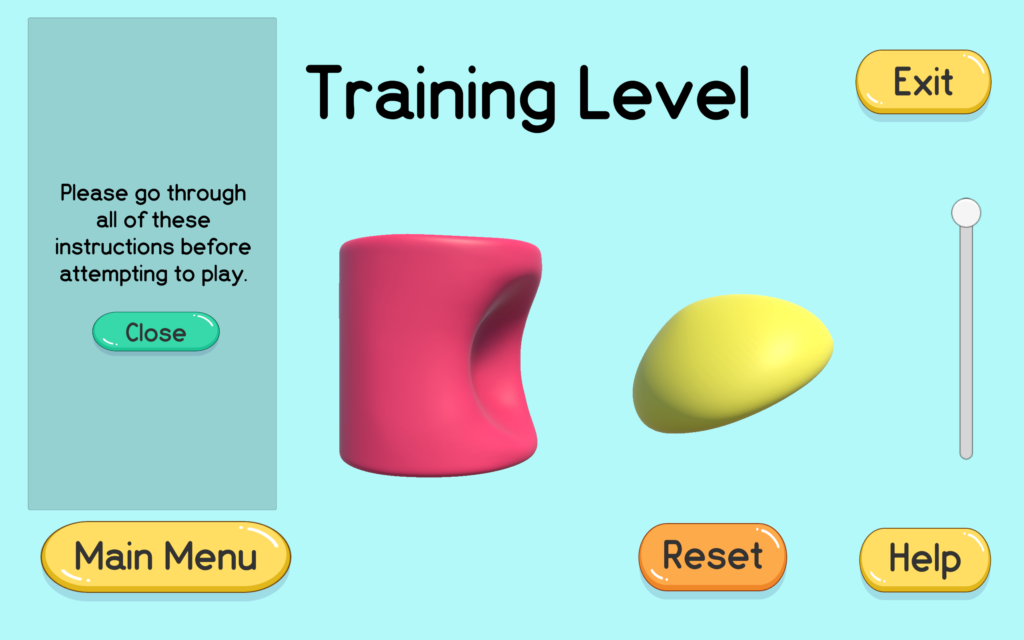
This scene allows the user to practice using the game mechanics without a timer before entering the first game level.
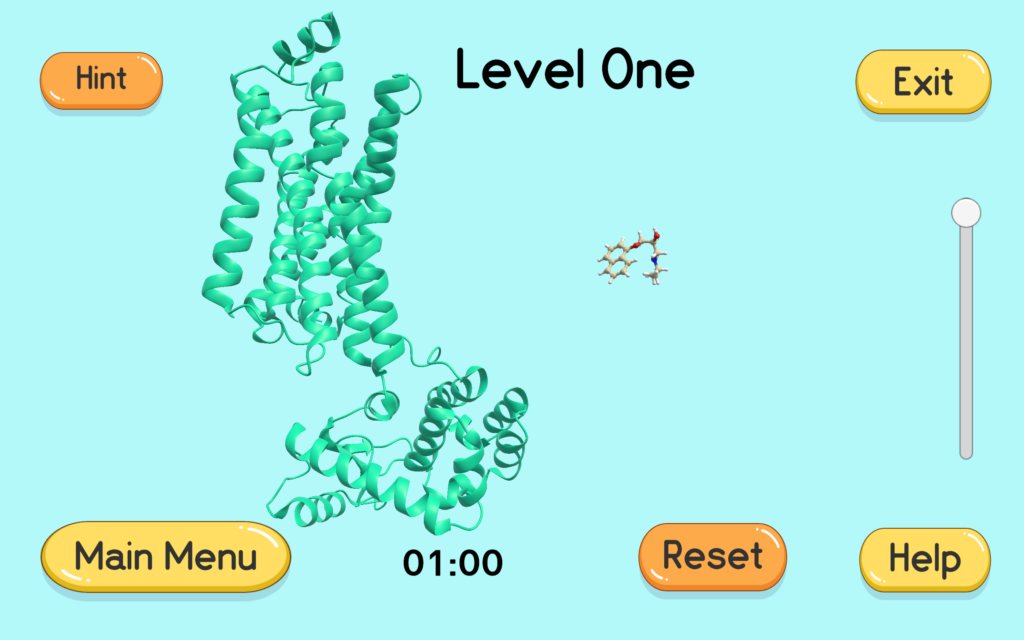
This scene is the first game level where the user must properly orient the ligand (propranolol) and place it in the correct binding site in the beta-2 adrenoceptor.