Healing the Waterfront: Biophilic Regenerationof Glas-gow’s Post-industrial Riverfront
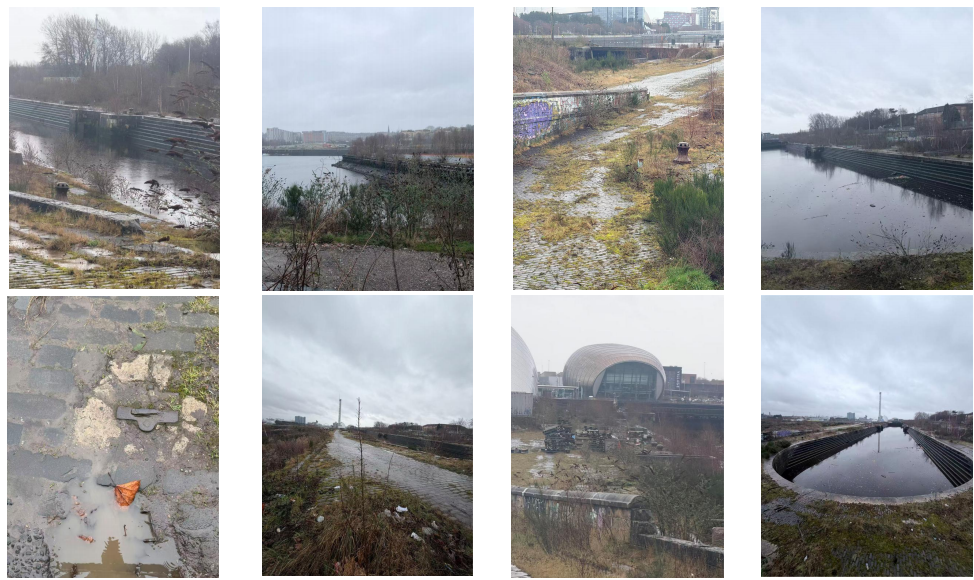
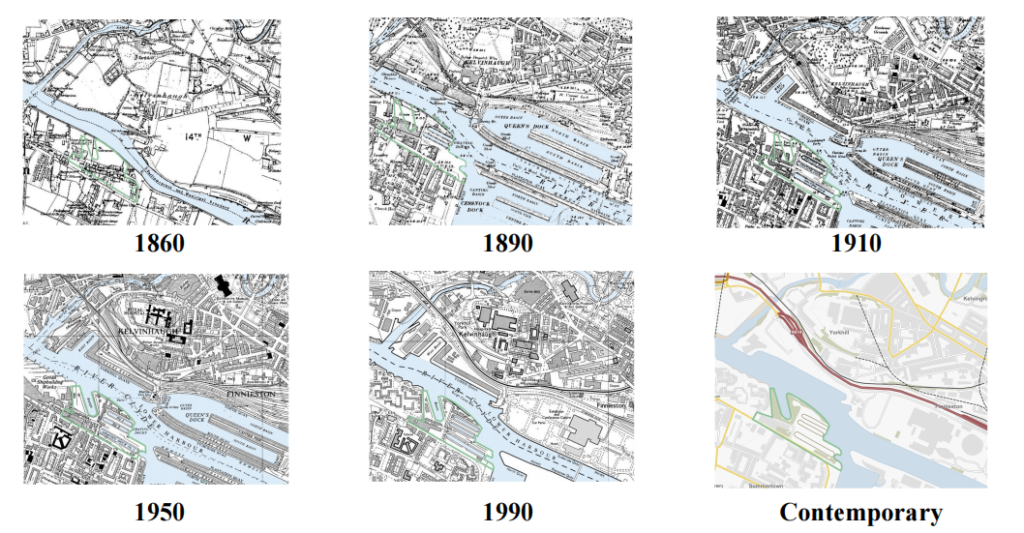
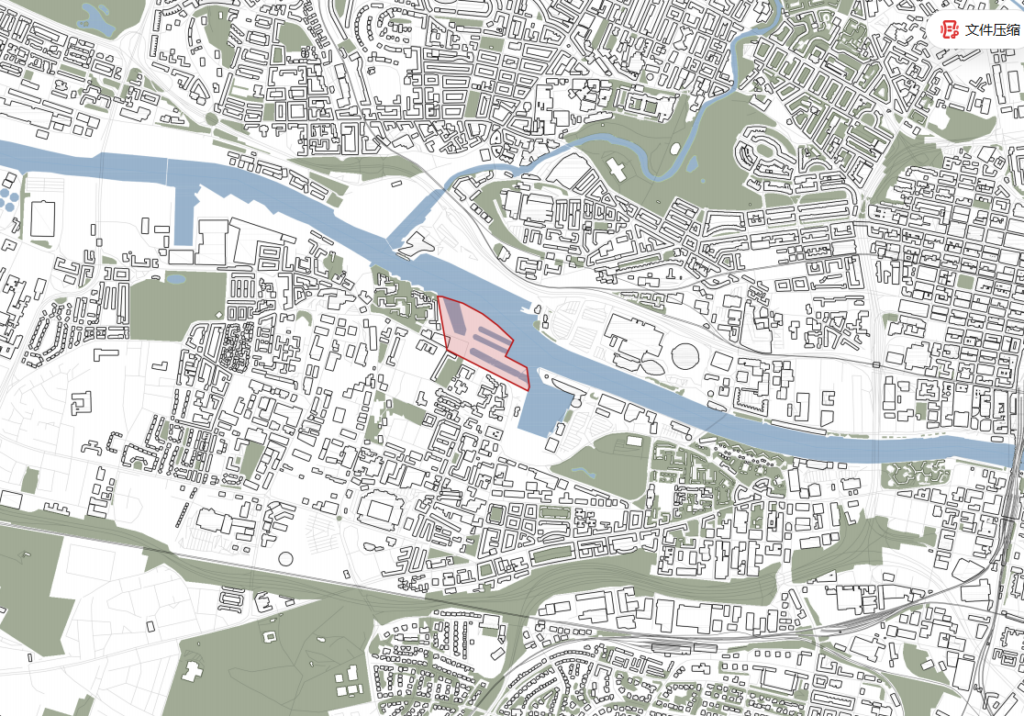
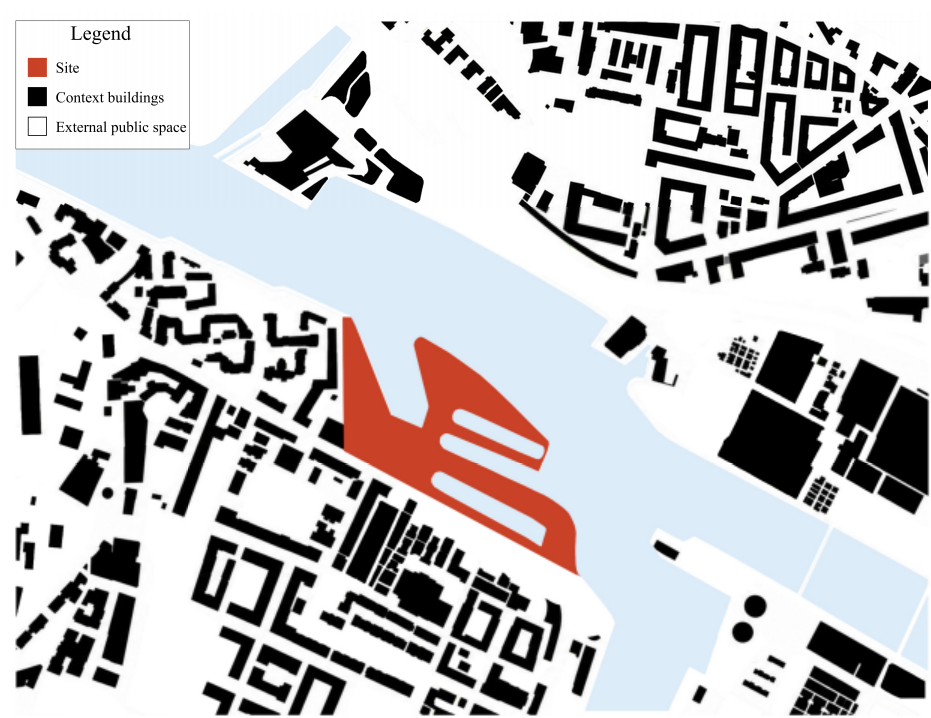
This project regenerates Govan Graving Docks in Glasgow, addressing its long-term abandonment, dis-connected waterfront, ecological degradation, and underused industrial heritage. Once an important part of Glasgow’s shipbuilding industry, the site still contains strong traces of its industrial past. How-ever, today it is largely separated from surrounding communities and lacks accessible public spac-es along the River Clyde. Guided by the principles of Biophilic Urbanism, the proposal aims to trans-form this post-industrial site into an ecological, inclusive, healthy, and accessible waterfront landscape.
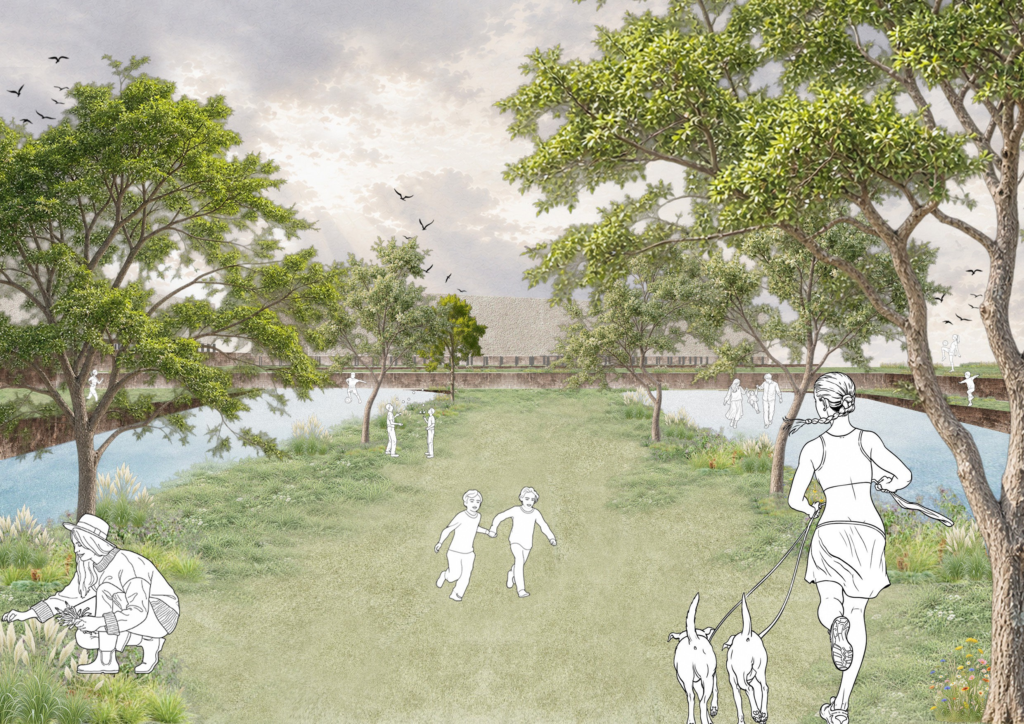
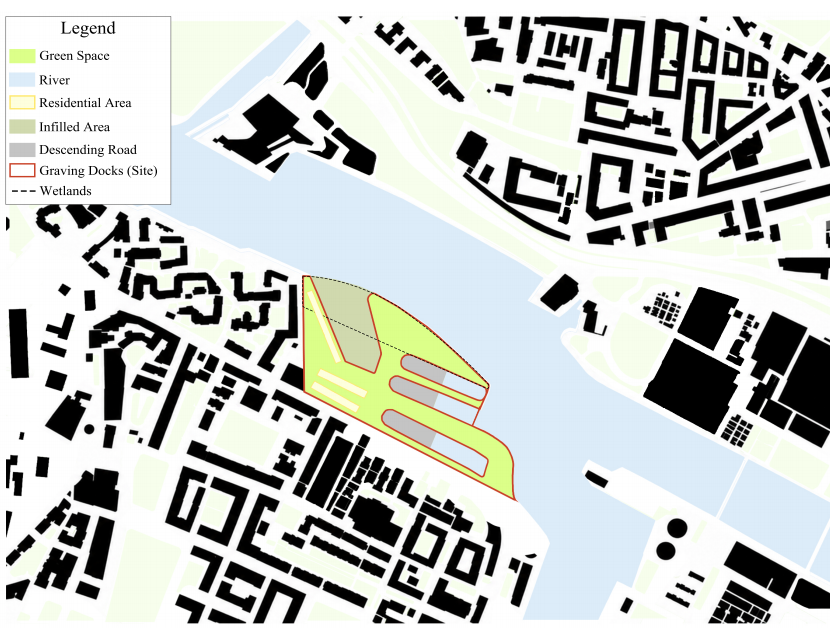
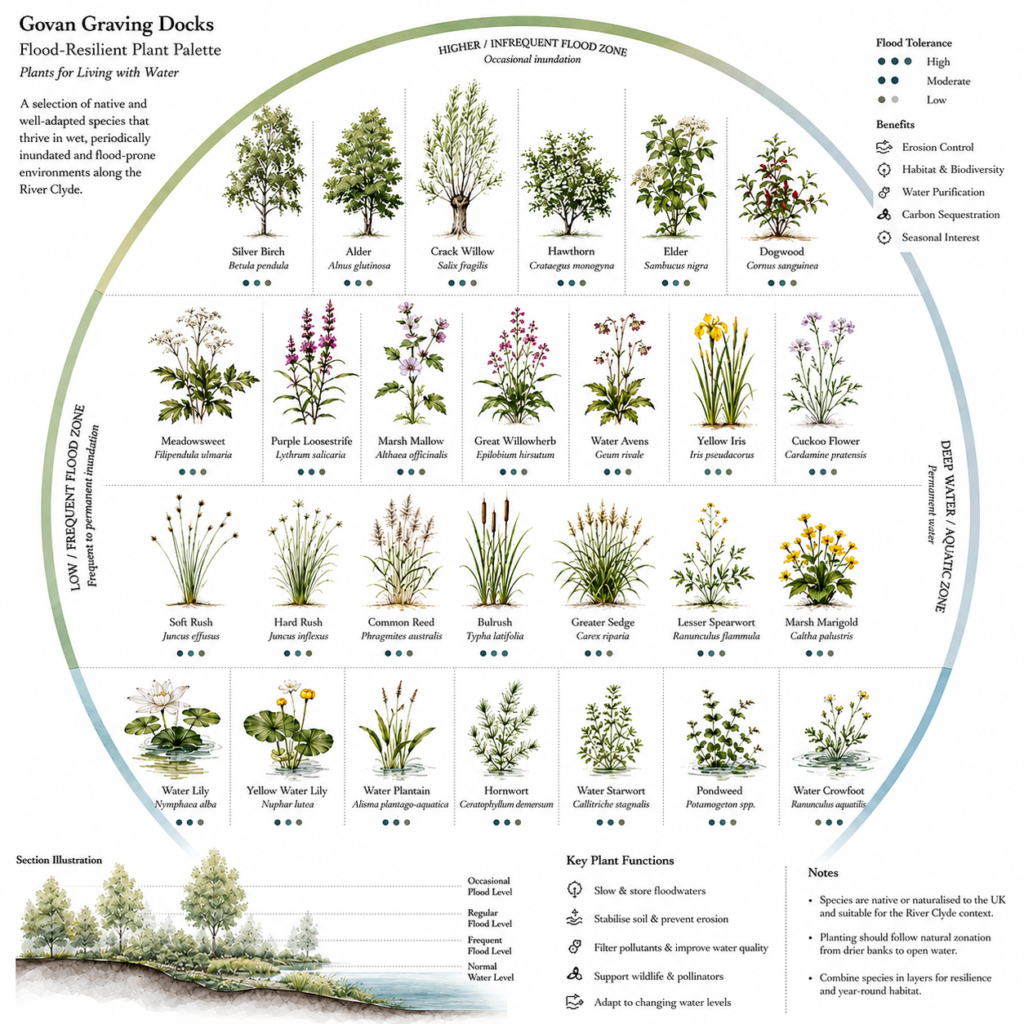
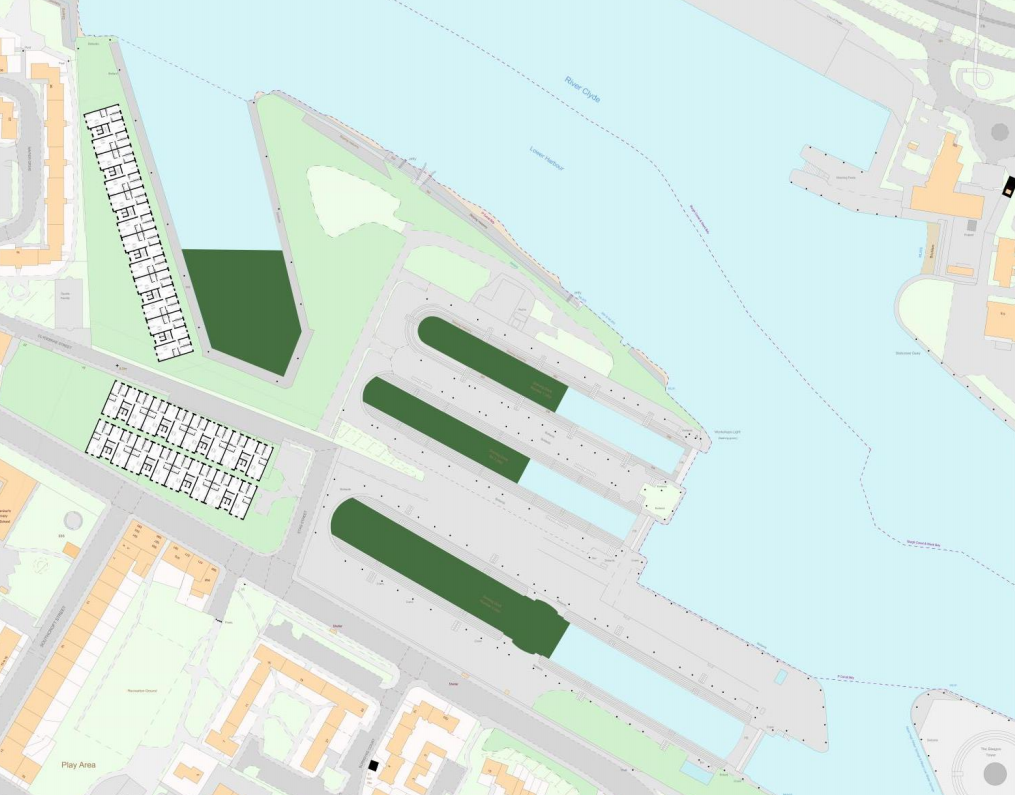
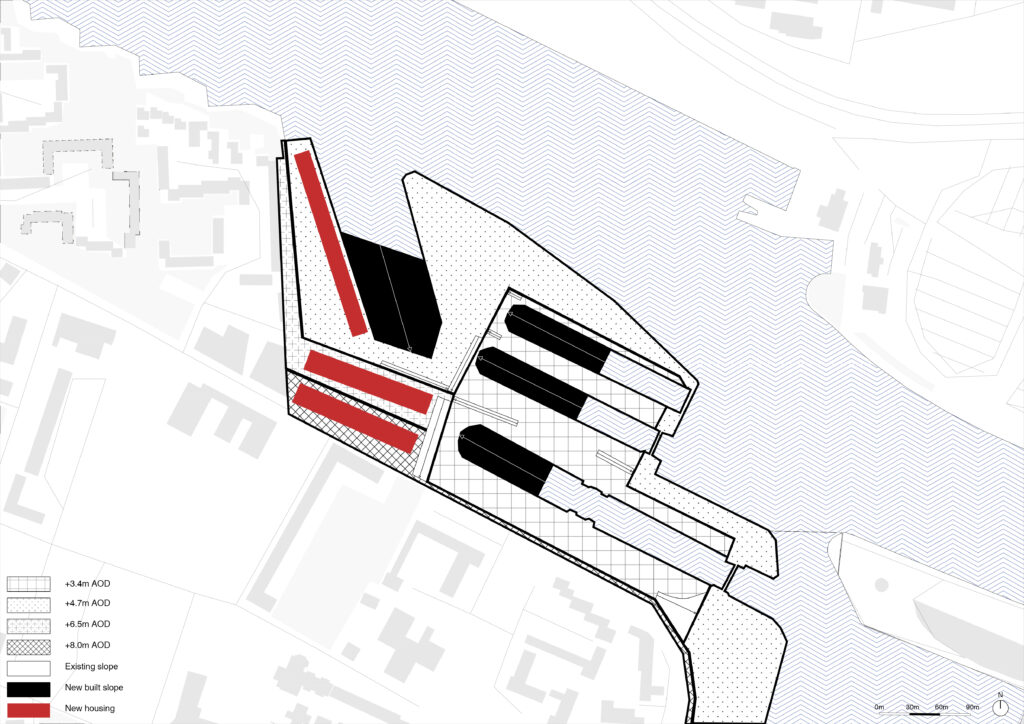
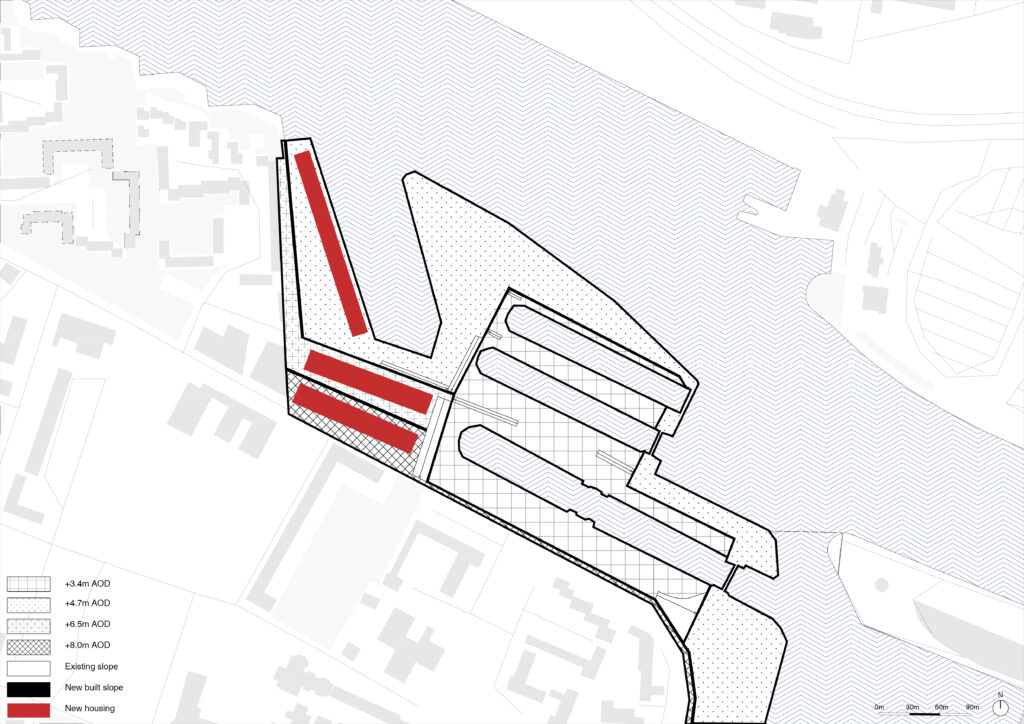
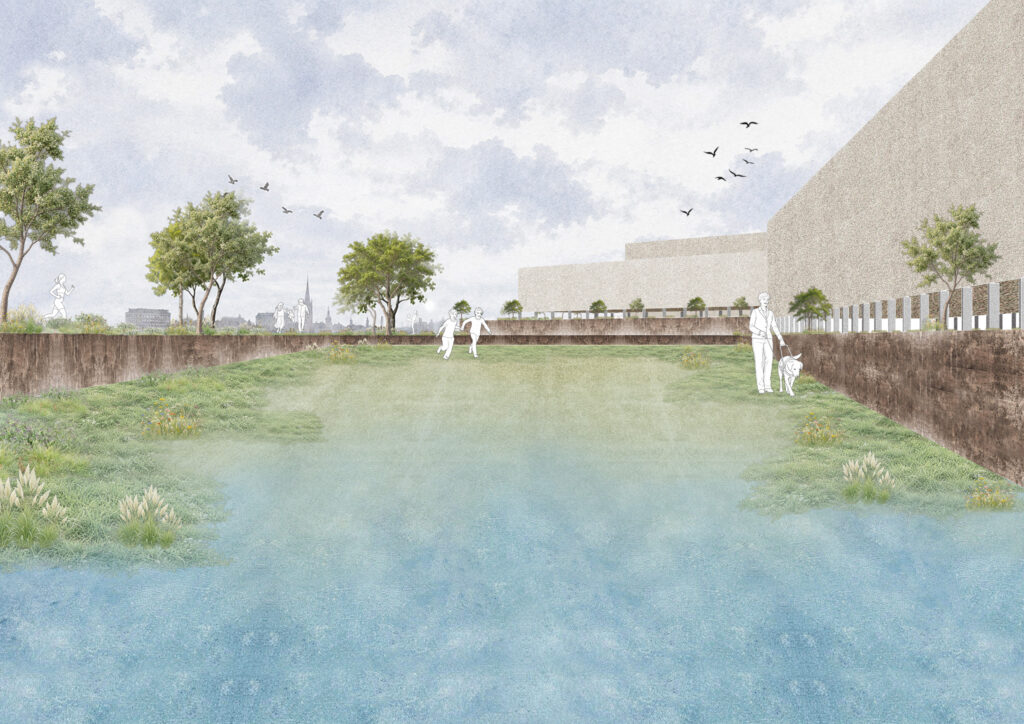
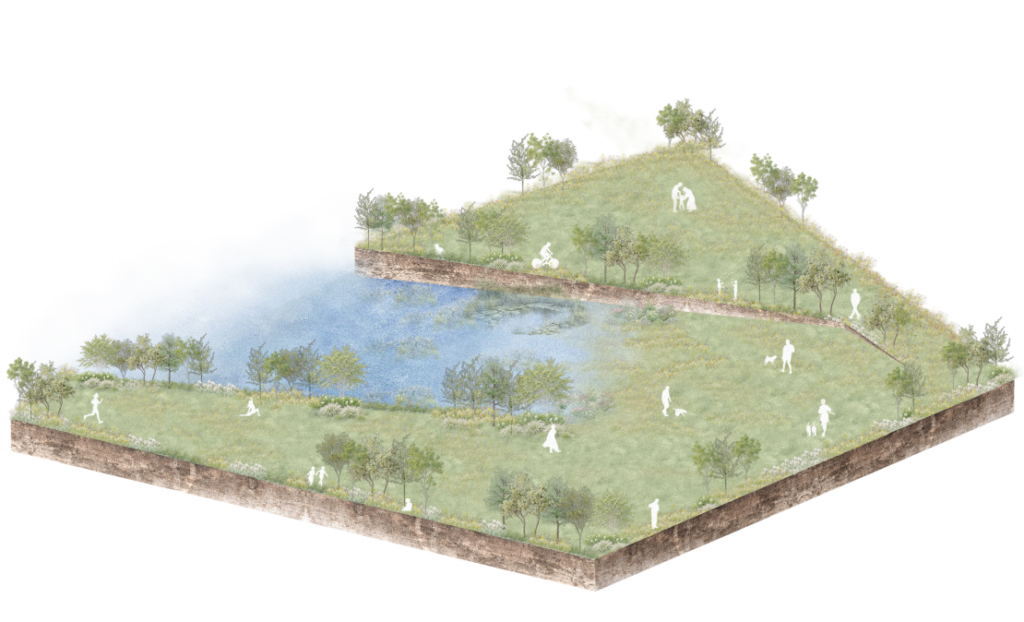
The three historic dry docks and existing industrial remains are preserved as important parts of the site’s cultural identity. Instead of removing these structures, the design gives them new ecological and public functions. Hard waterfront edges are softened and naturalised through wetlands, rain gar-dens, native planting, and gently sloping landscapes. These interventions respond to daily tidal chang-es, help manage stormwater and future flood risks, and create new habitats for plants and wildlife.
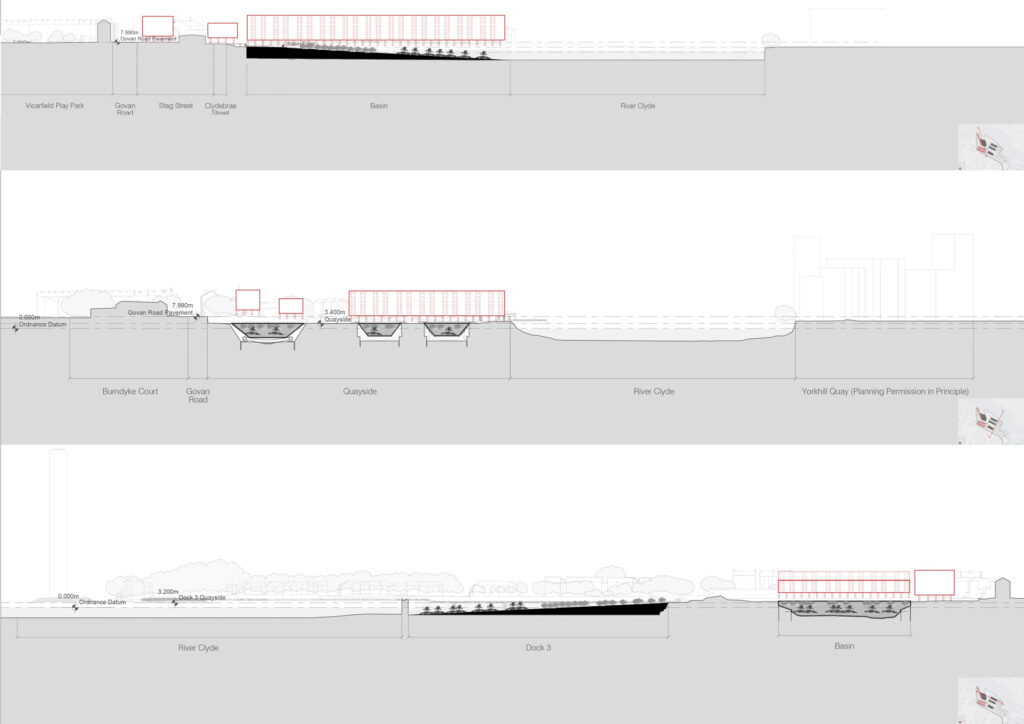
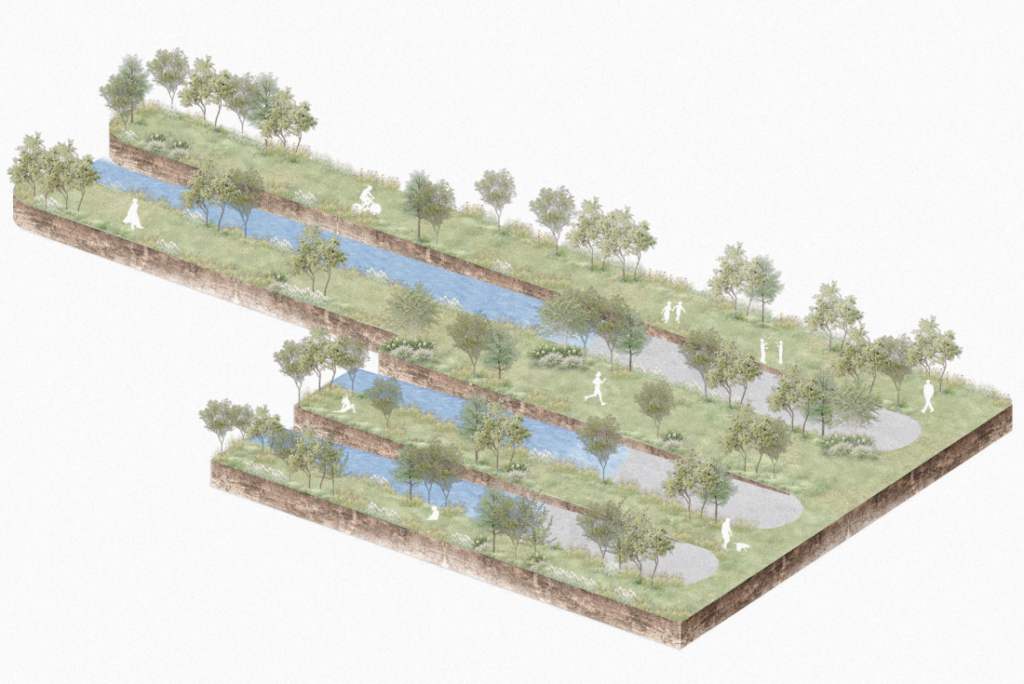
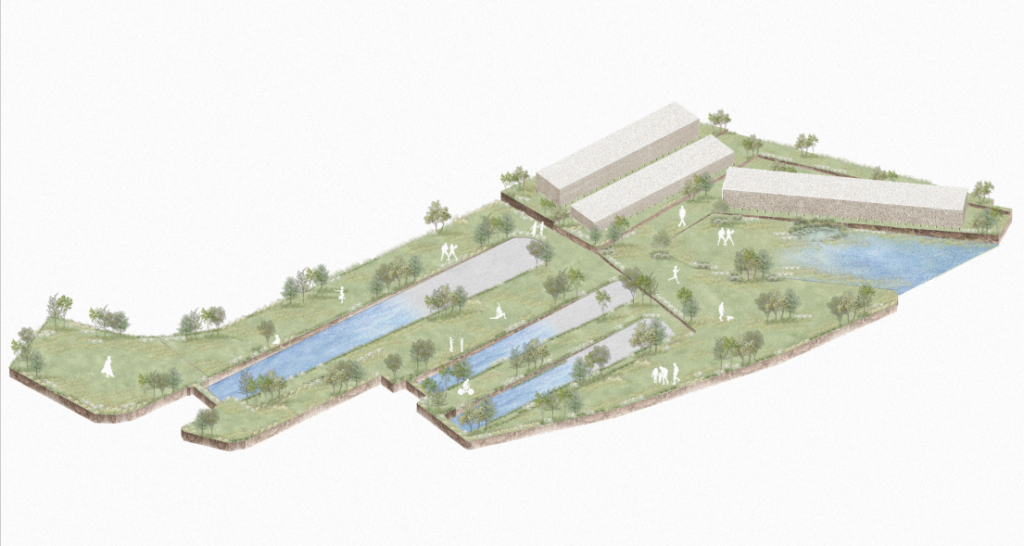
Water is retained within the three docks, allowing them to become part of the changing waterfront land-scape. Planted dock steps, viewing platforms, and sunken seating areas allow people to experience the relationship between water, vegetation, and industrial structures at different levels. Some lower areas can be temporarily flooded during high tides, while higher spaces remain available for everyday activities.
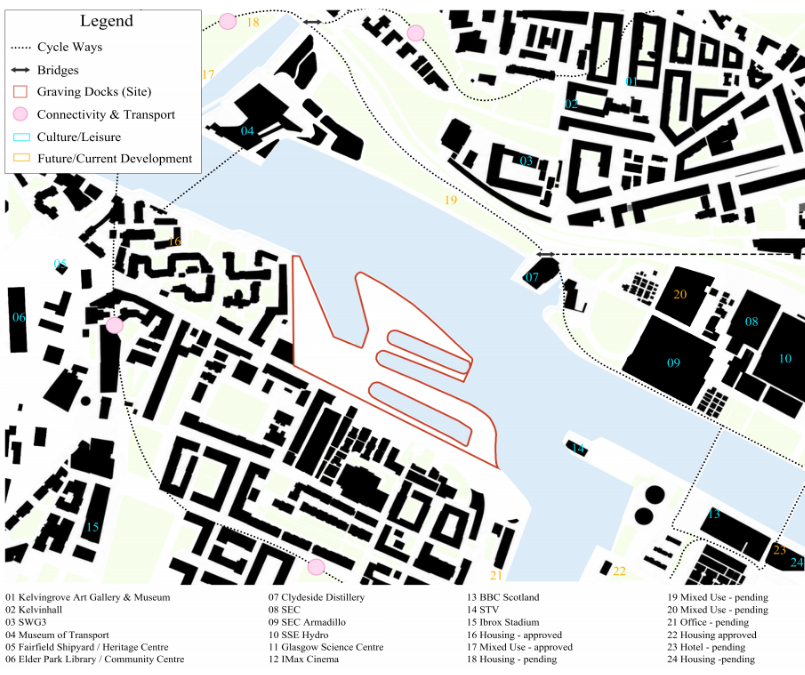
A continuous pedestrian and cycling network reconnects the docks with surrounding neighbour-hoods and public spaces. Open lawns, waterfront paths, viewpoints, seating areas, and flexible gather-ing spaces provide opportunities for walking, cycling, resting, social interaction, and contact with nature.
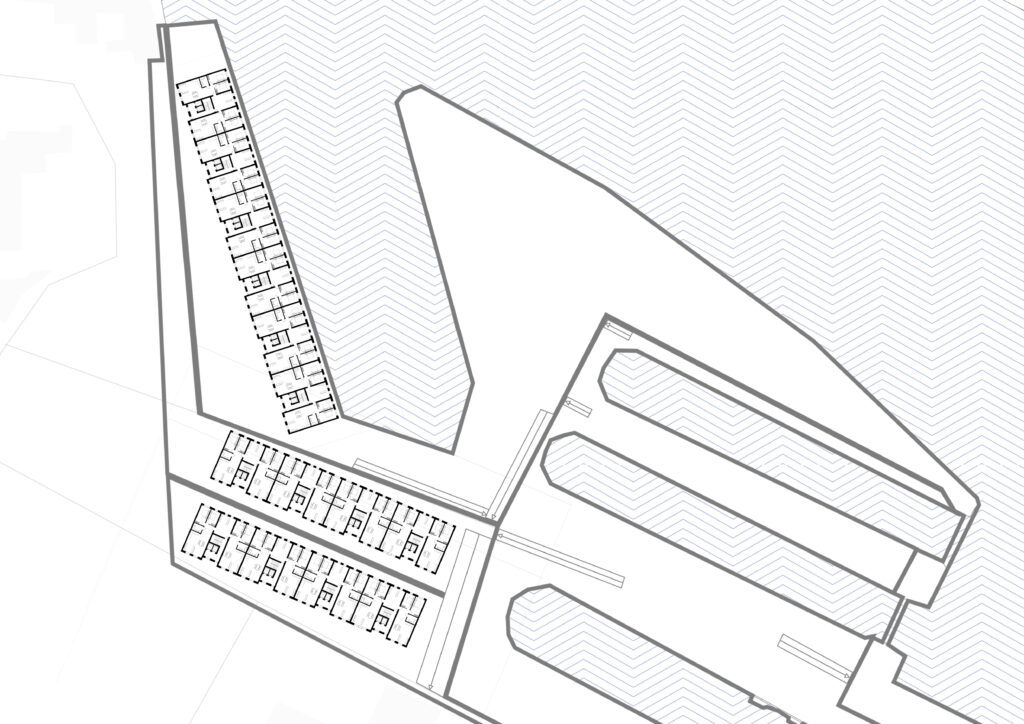
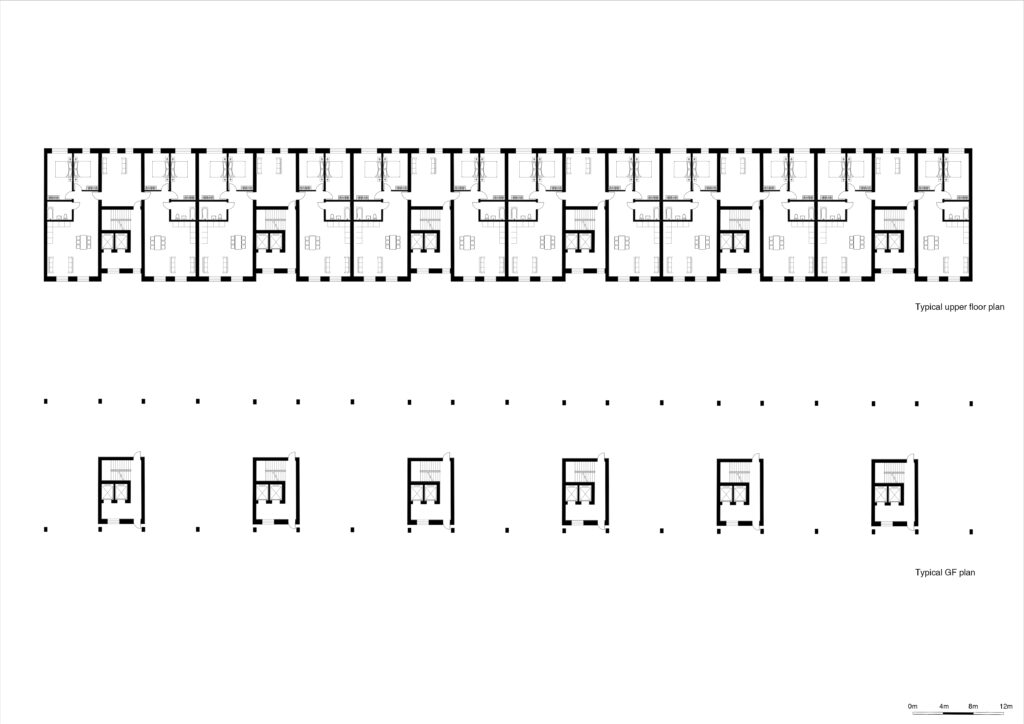
To strengthen the connection between people and nature, new housing is introduced on the west-ern side of the site, allowing residents to live closer to the waterfront landscape. The ground floor of the housing is raised and left open. This space can be used for residents’ daily activities, creating a tran-sition between the residential buildings and the surrounding landscape. At the same time, the raised residential floors provide a flood-adaptive strategy. During high tides or temporary flooding, water can pass through the open ground level without directly affecting the main residential spaces above.
By integrating ecological restoration, industrial heritage conservation, climate adaptation, hous-ing, and public wellbeing, the proposal creates a resilient waterfront landscape that responds to en-vironmental change while preserving the unique identity of Govan Graving Docks. It provides a sus-tainable vision for bringing Glasgow’s post-industrial waterfront back into everyday urban life.