
Control — Book Design
Control is an editorial publication exploring how rule-based graphic systems can translate selected aspects of compulsive behaviour into experiences of control, repetition and instability.
Structured across five sections — Control, Doubt, Repeat, Overload and Aftermath — the publication begins with a stable system of grids, hierarchy and repeated structures. These rules are progressively altered through changes in scale, spacing, position, overlap and accumulation, allowing instability to develop from within an established system rather than appearing as a separate visual effect.
Repetition operates through both typography and physical interaction. In the Repeat section, tracing paper allows information from previous pages to remain partially visible, so that turning each page reveals, overlaps and accumulates another layer of information.
The final 76-page A5 publication combines laser printing, textured specialty paper, tracing paper, ring binding and transparent acrylic covers. These material and production decisions extend the editorial system beyond the printed page, connecting structure, repetition and page-turning to the physical experience of the publication.
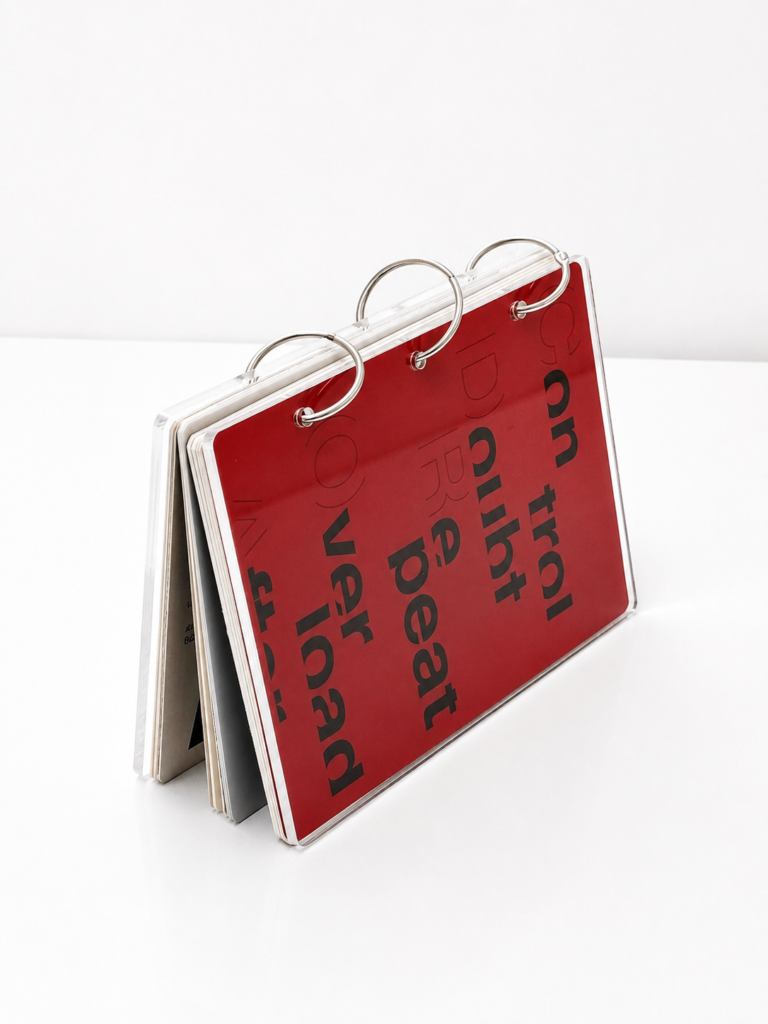
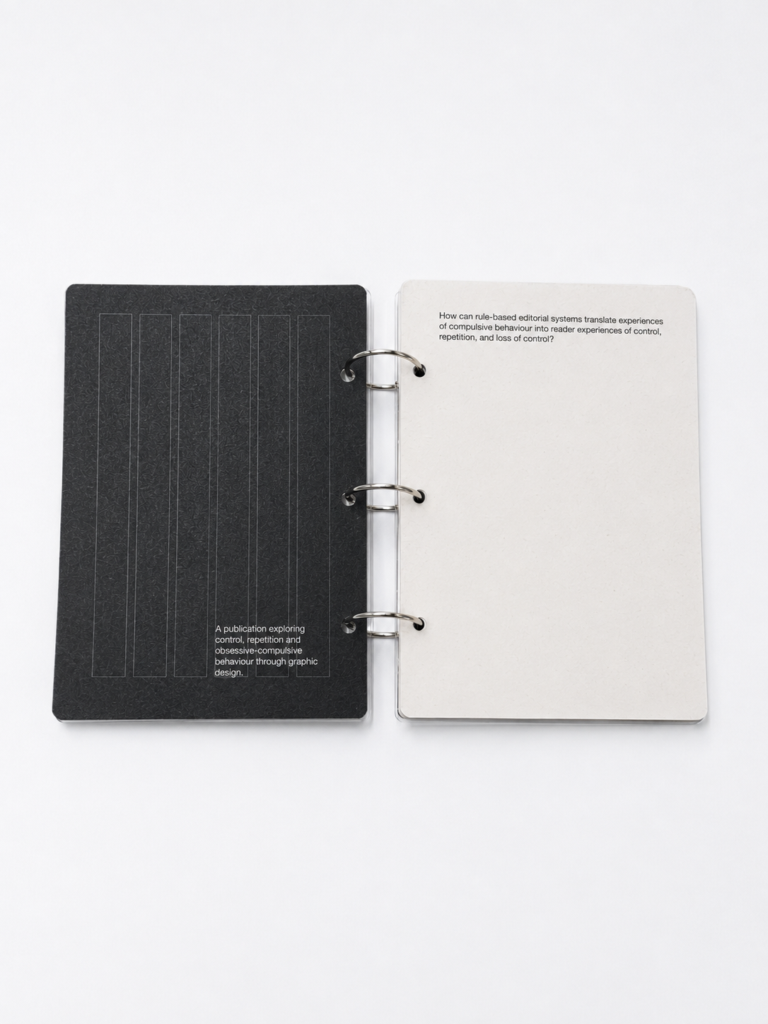
The publication asks how rule-based editorial systems can translate compulsive behaviour into experiences of control, repetition and loss of control.
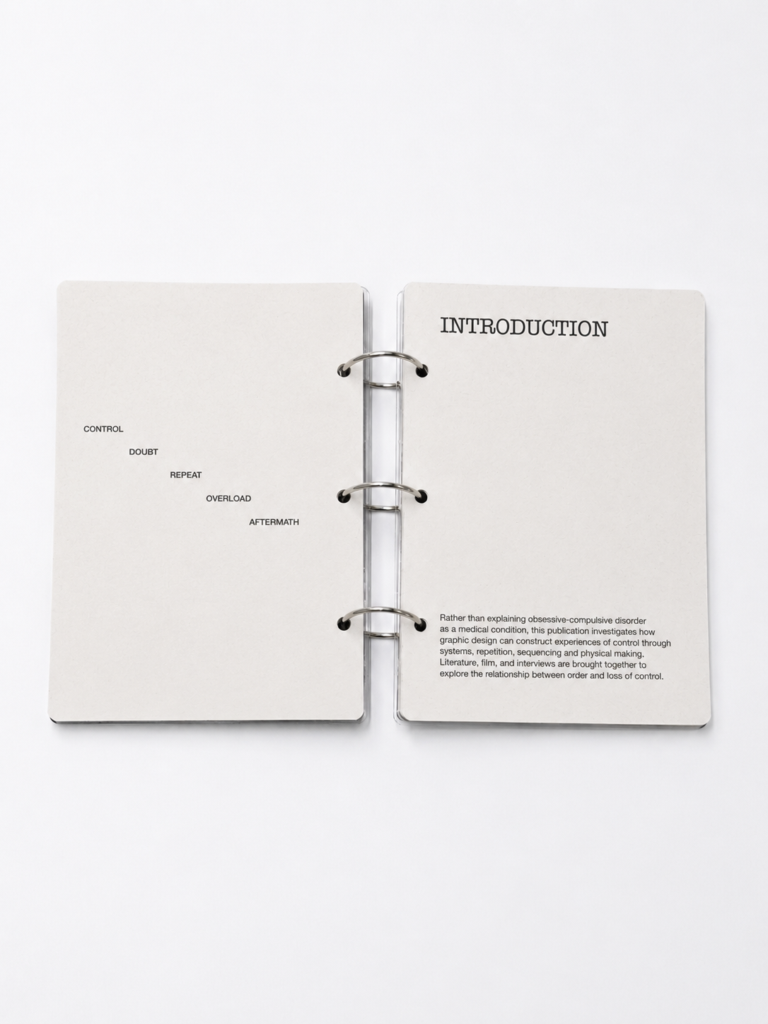
The publication is structured through five states—Control, Doubt, Repeat, Overload and Aftermath—using graphic systems to move progressively between order and instability.
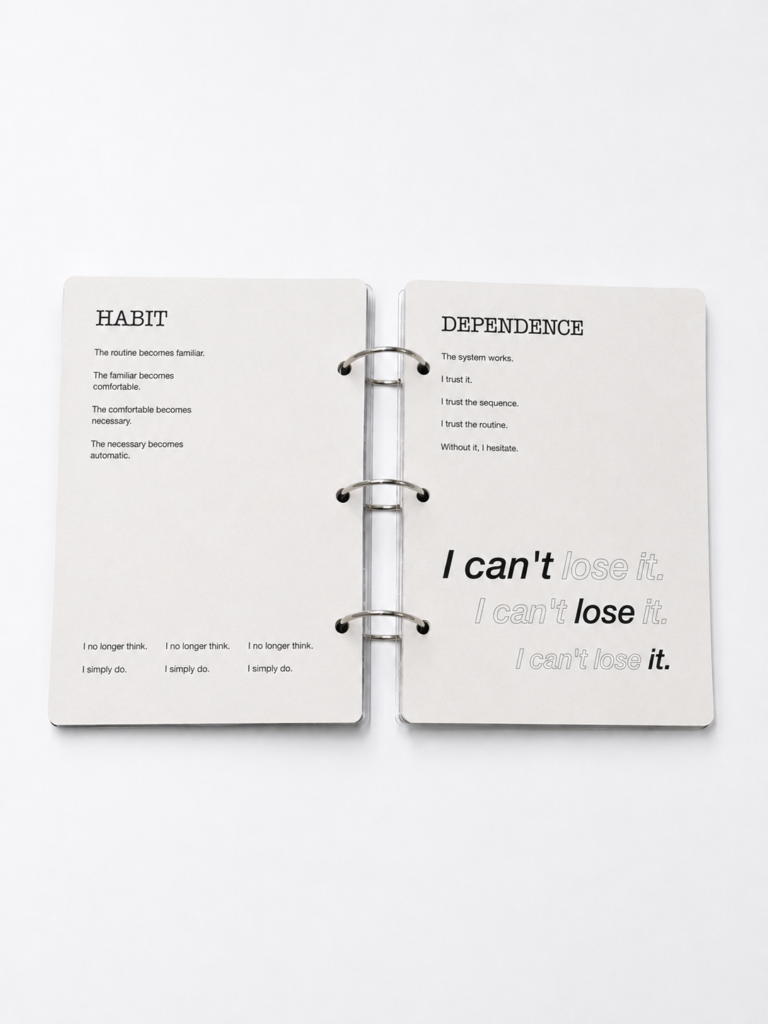
Repetition begins as a stable routine. Through restrained typography and recurring statements, familiar actions gradually shift from habit into dependence.
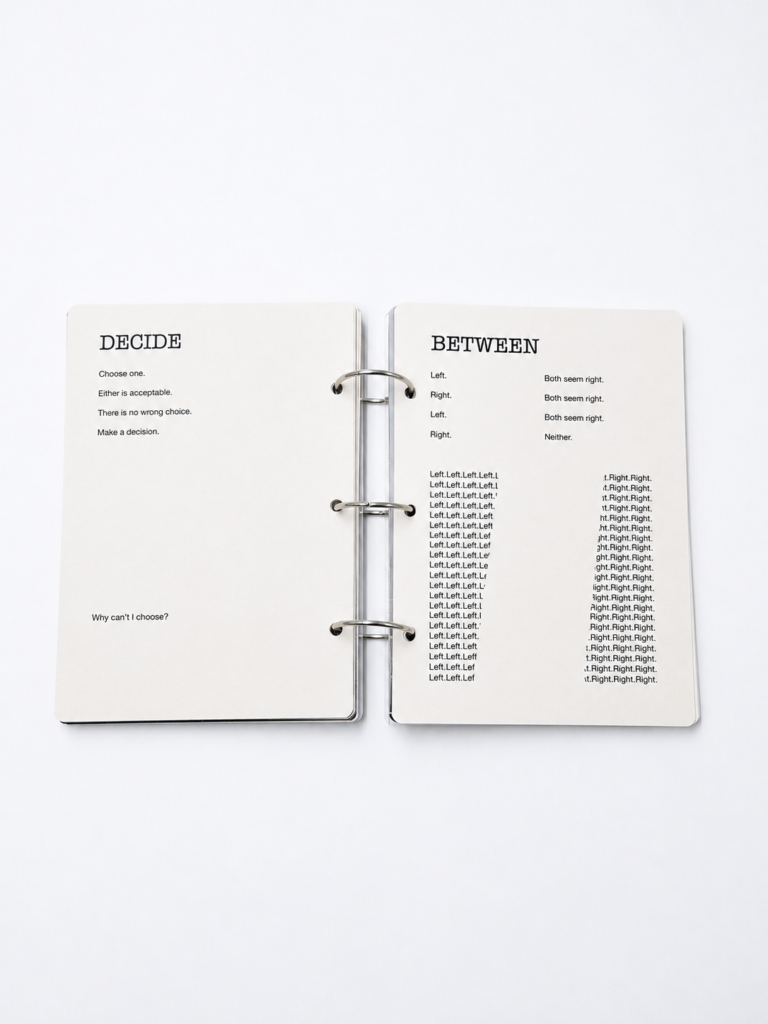
A simple instruction to choose becomes increasingly difficult as equivalent options multiply, turning decision-making into hesitation and repetition.
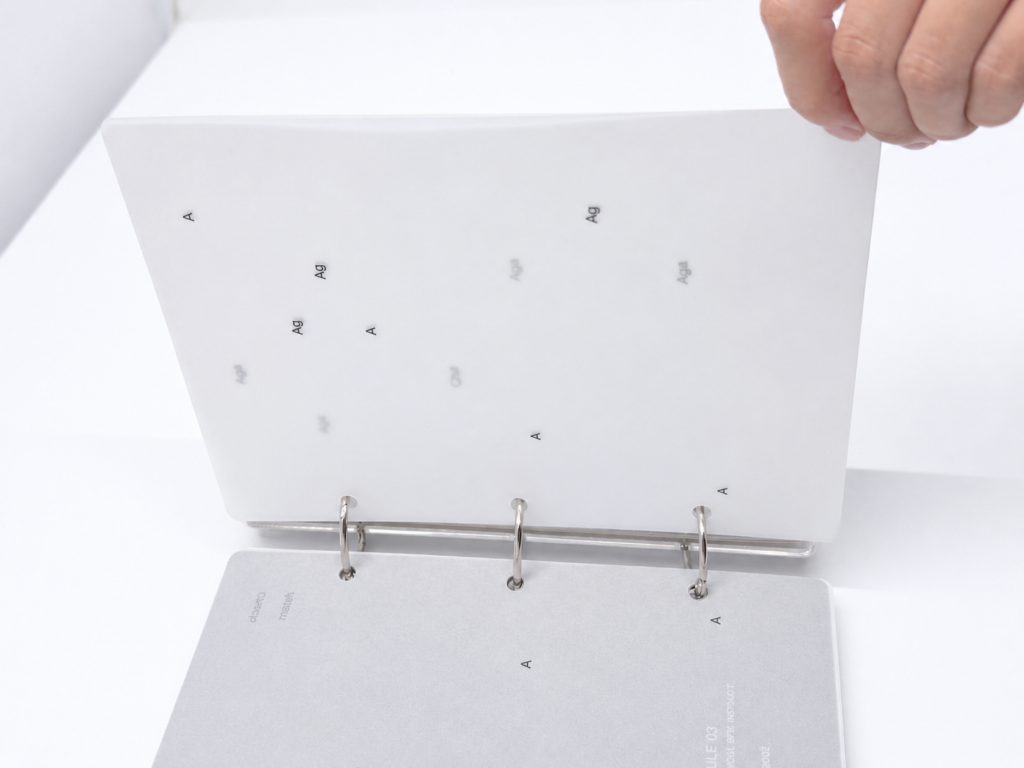
Translucent pages allow fragments from different layers to coexist, making repetition accumulate physically as the reader turns the publication.
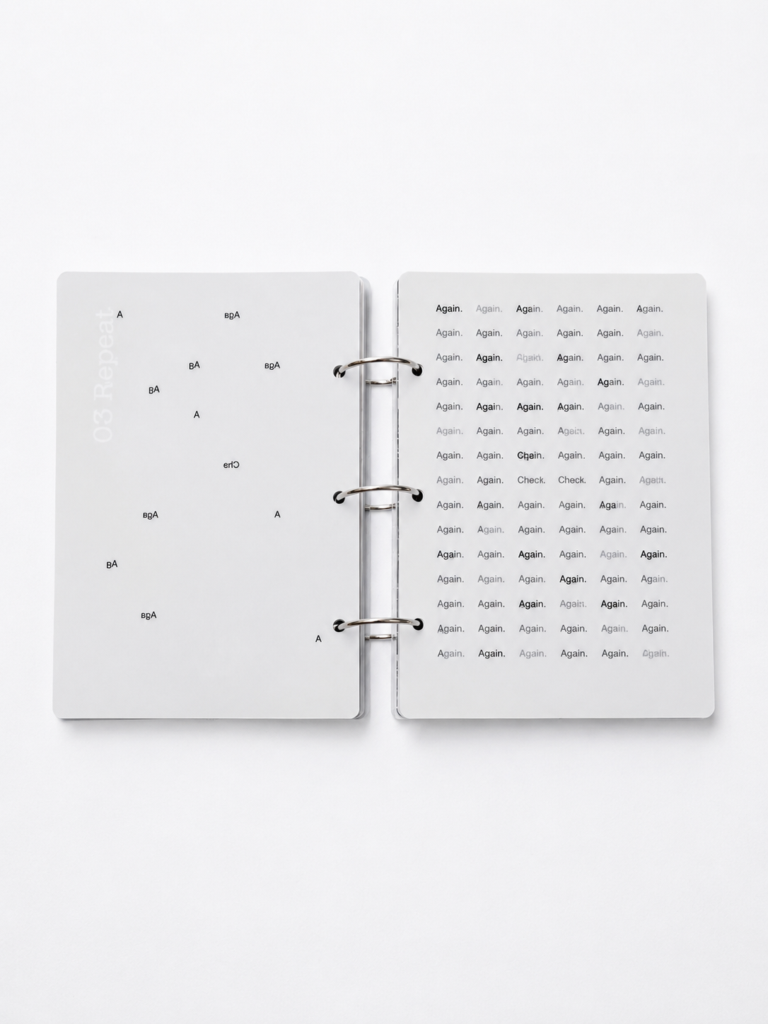
Repetition moves from isolated fragments into a systematic field. Variations in position, weight and legibility interrupt the apparent consistency of the sequence.
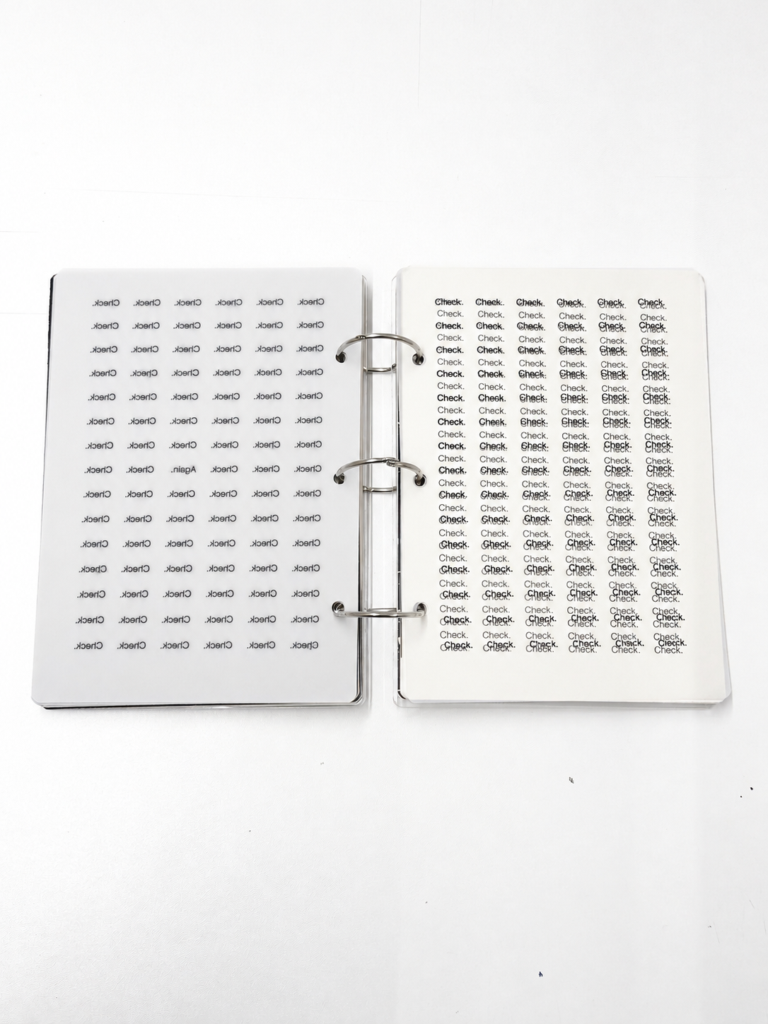
The act of checking is repeated until confirmation no longer produces certainty. Overprinting and inversion make the system progressively harder to read.
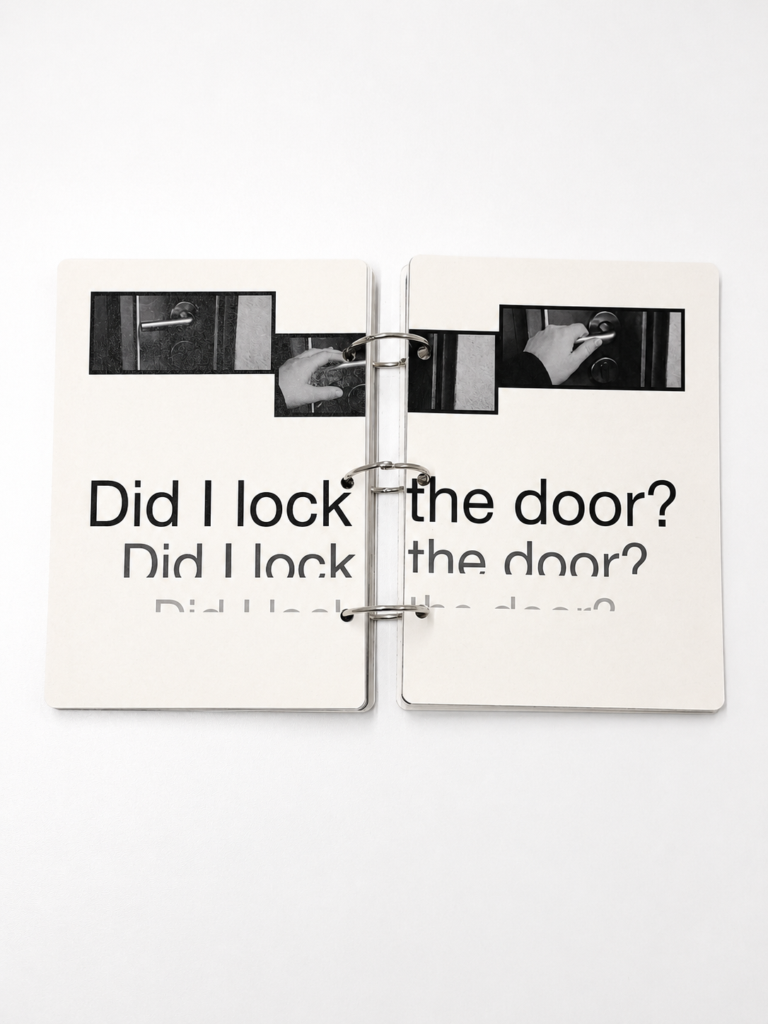
A familiar act of checking becomes a recurring question. Repetition transforms a single doubt into an unresolved visual loop.
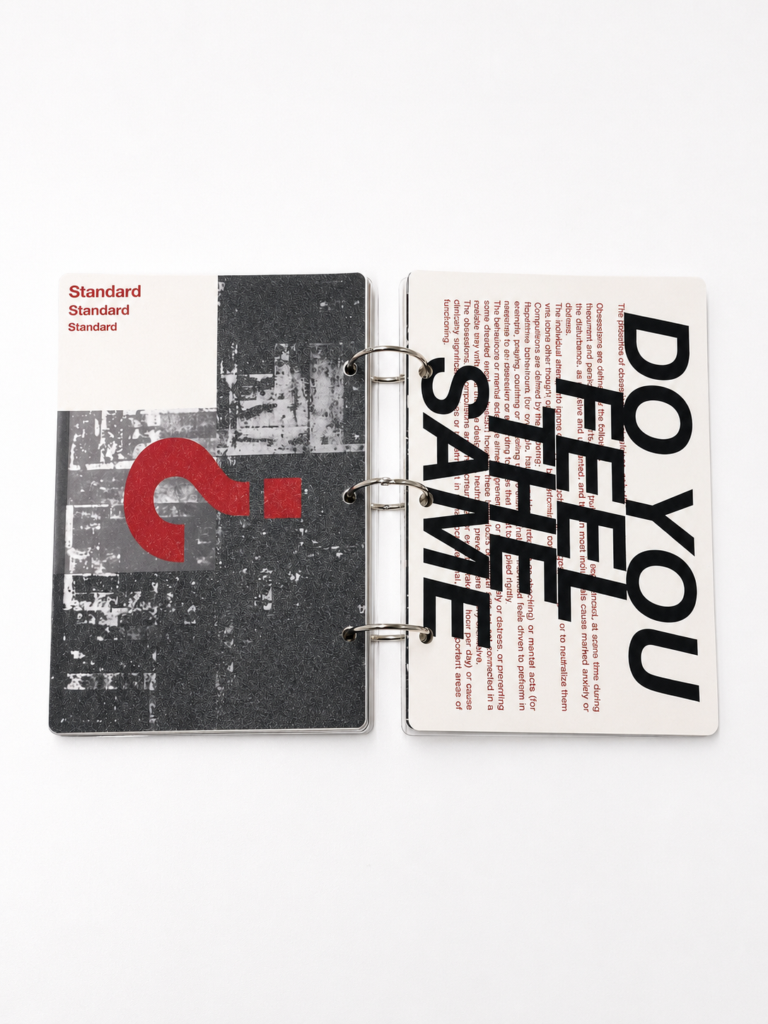
Scale, rotation, layering and competing typographic systems disrupt the earlier visual order, marking the transition toward overload.
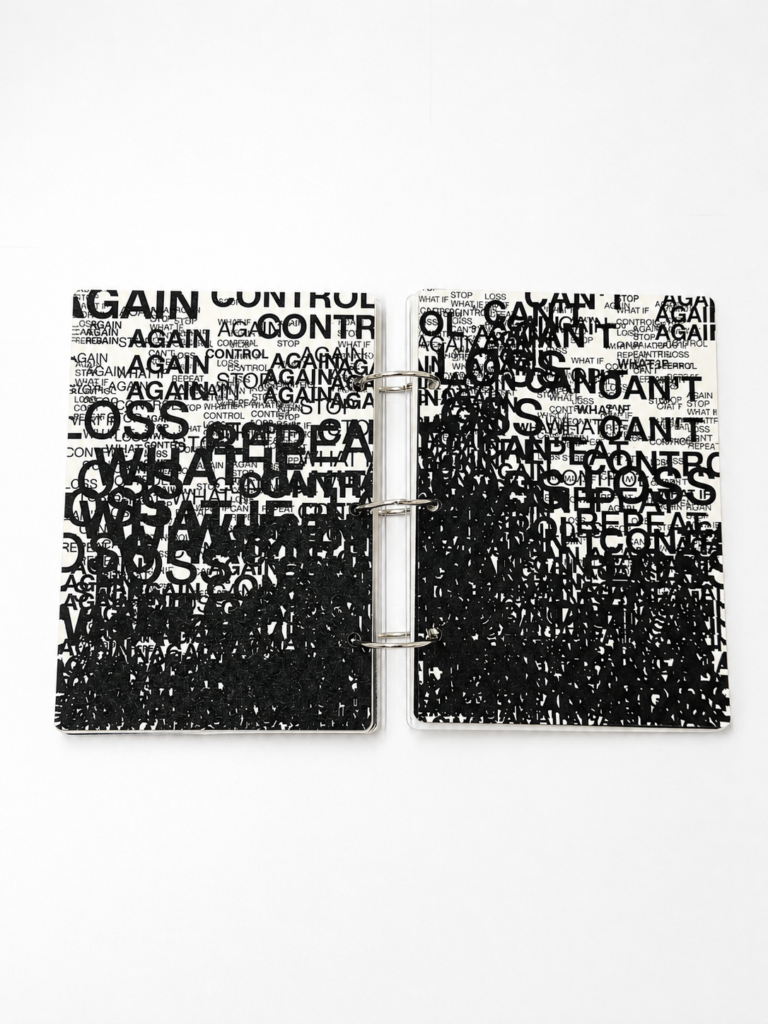
Repeated words accumulate until individual messages become difficult to distinguish. The system designed to create order begins to produce visual noise.
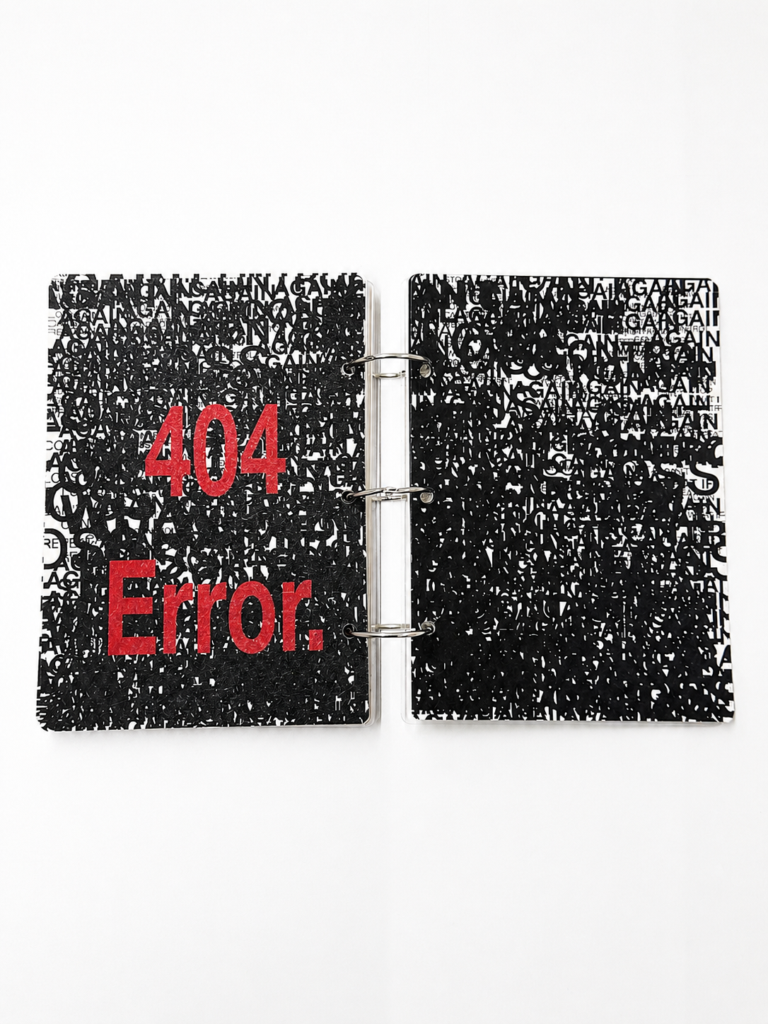
At the point of overload, repetition becomes failure. The visual system reaches a state in which information remains present but can no longer function clearly.
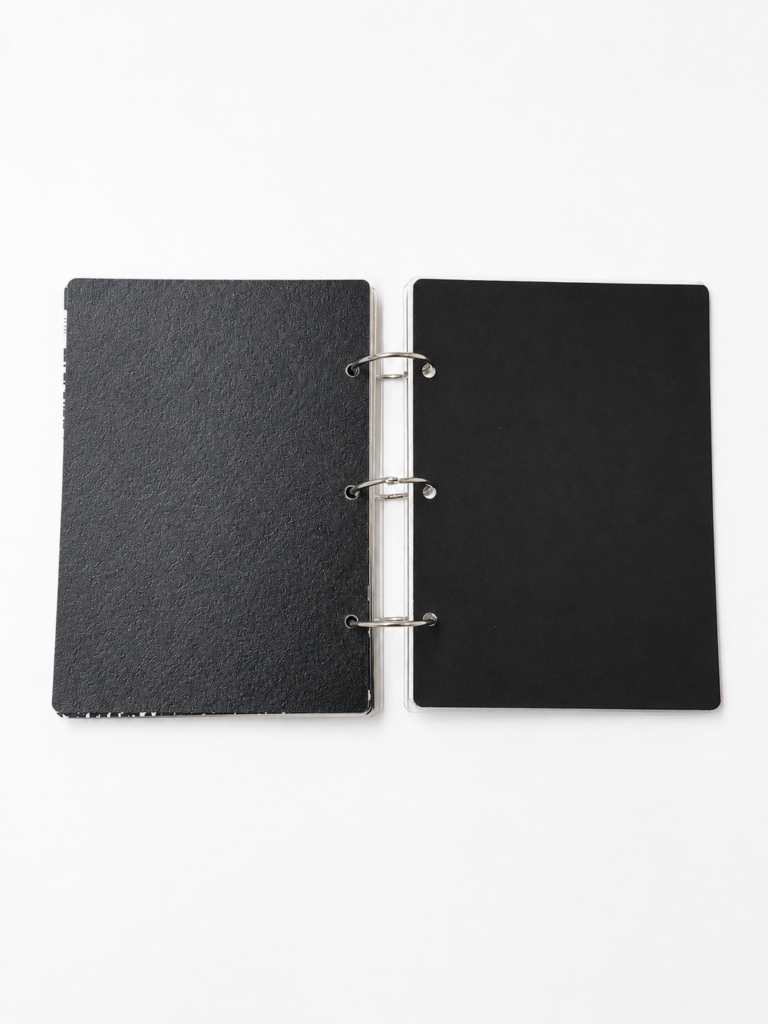
The dense accumulation abruptly gives way to black pages, creating a pause between visual overload and the final state of the publication.
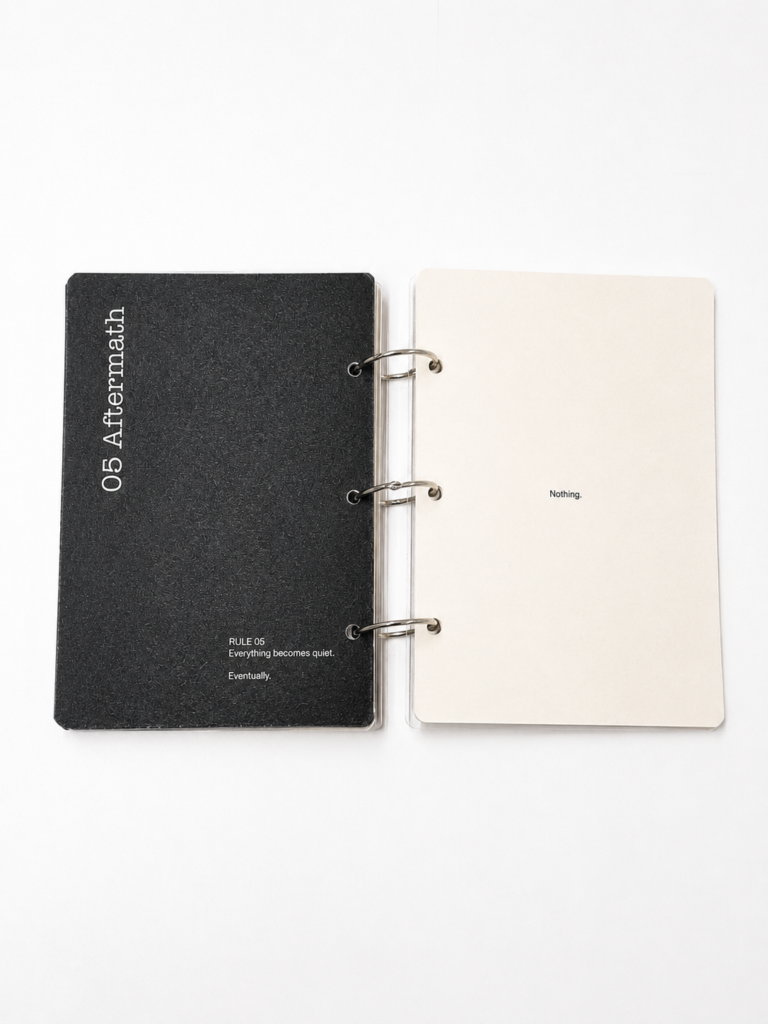
After accumulation, checking and repetition, the system becomes quiet. The final page reduces the publication to a single word: “Nothing.”