
Choreography Of Care
Choreography of Care investigates how interior design can support end-of-life at home by reconsidering the spatial relationships that form around the bed. As mobility becomes increasingly limited, the bed shifts from being a singular piece of furniture to the centre of domestic life — a place where care, conversation, companionship and everyday rituals continue to unfold.
Through historical research, visits to hospice and Maggie’s Centre environments, autoethnographic observation, sound studies, movement mapping, and speculative model-making, the project examines the domestic interior from a horizontal perspective. This shift revealed that the experience of home is shaped not only by objects and atmosphere, but by the proximity and presence of other people.
The final proposition rethinks conventional bedroom arrangements through a series of sitting conditions organised around different acts of care — accommodating the companion, visitor, family member, carer and working occupant. By bringing these relationships closer to the level of the person in bed, the project challenges the vertical hierarchy between the mobile and immobile body.
Rather than treating end-of-life care solely as a question of accessibility or medical provision, Choreography of Care proposes the interior as a relational framework — one capable of sustaining intimacy, participation and the ordinary relationships that give a home its meaning.
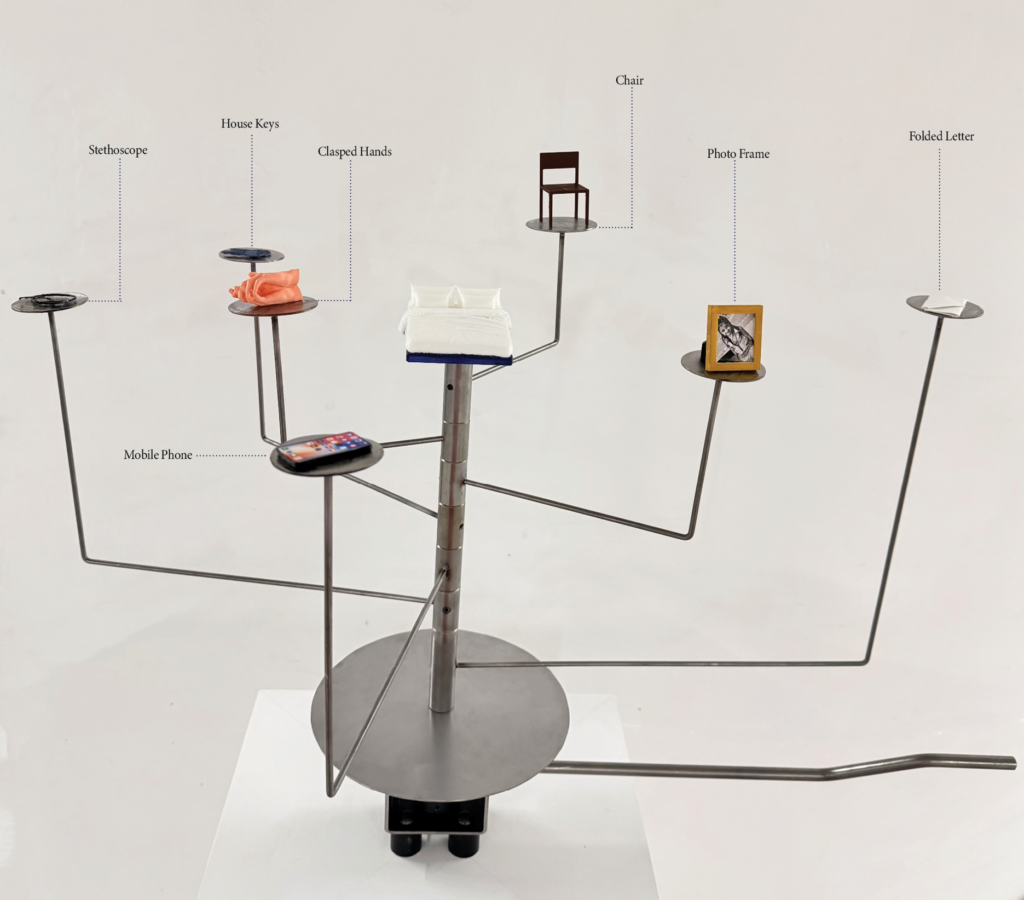
A speculative model mapping the relationships, objects and acts of care that orbit the bed at end of life.
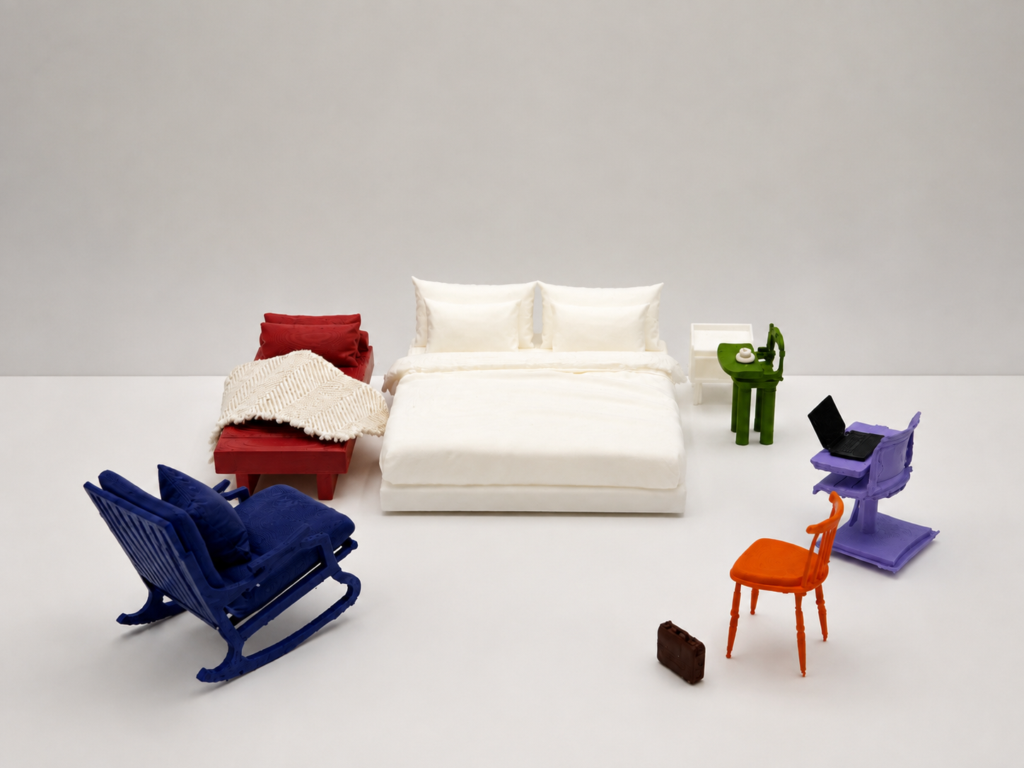
A speculative model exploring how different forms of sitting can support relationships and acts of care around the bed at end of life.
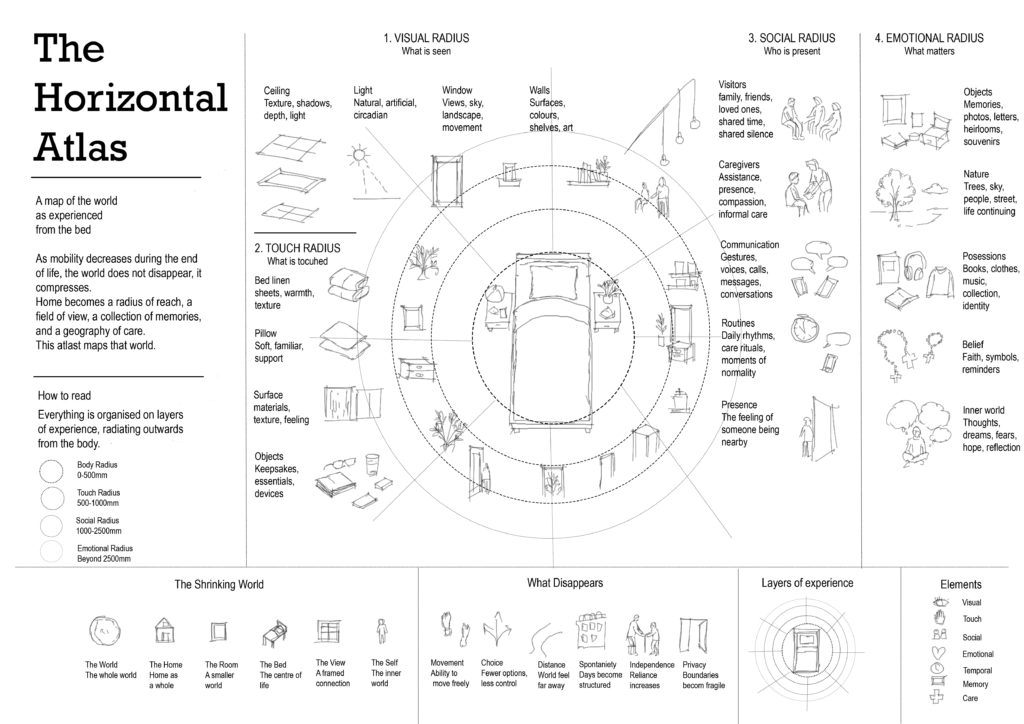
Mapping how the experience of home changes when the body shifts from an upright to a horizontal position.