
Belonging After Displacement
Belonging After Displacement explores how interior design can support the rebuilding of belonging after forced migration. The project responds to displacement not only as the loss of a physical home, but as a disruption of memory, routine, identity, and social connection.
Rather than proposing belonging as a condition that can be produced through form alone, the project considers how spatial environments can create opportunities for participation, recognition, and shared experience. Food, storytelling, sensory memory, and everyday rituals become spatial tools through which people can contribute to and gradually shape the environment around them.
The design develops across a community kitchen, shared dining space, storytelling lounge, creative workshop, and an evolving Growing Memory Partition. These elements are conceived not as fixed installations, but as frameworks that can accumulate memories, recipes, stories, and contributions over time.
The project positions interior design as a social and relational practice, asking how space can support agency, cultural memory, and the gradual reconstruction of relationships with place and community after displacement.
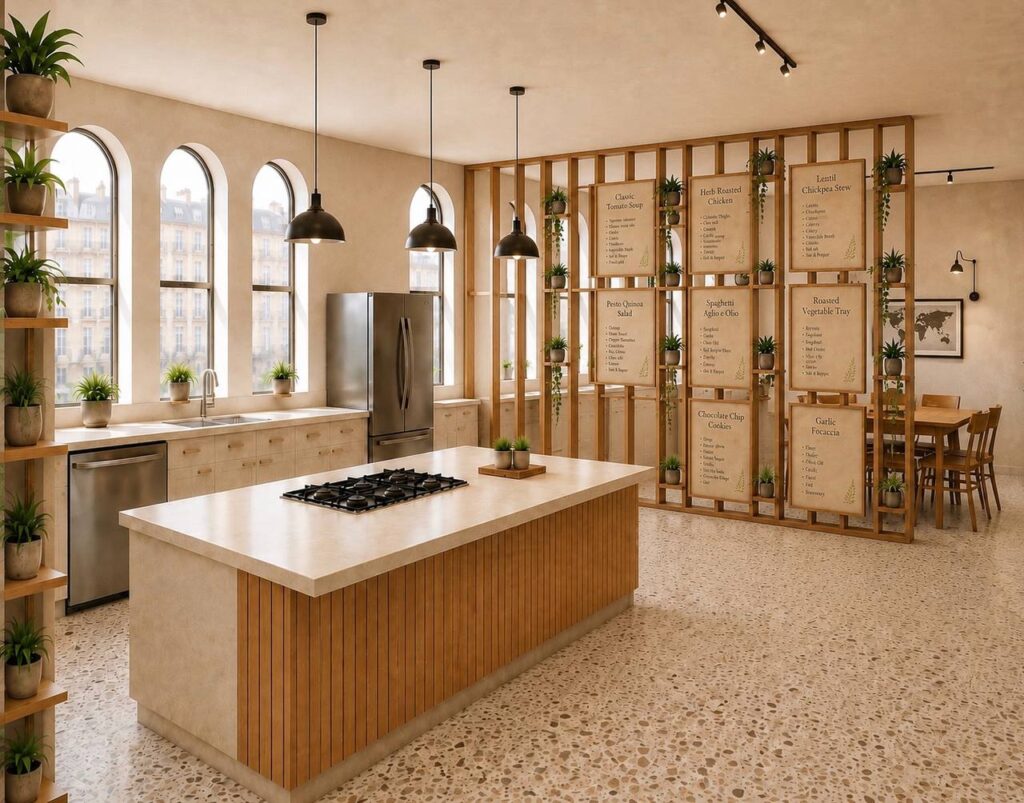
The Community Kitchen and Shared Dining Area support belonging through shared cooking, eating, and cultural exchange. Refugee participants can prepare traditional recipes, create new dishes, and contribute recipes to the Growing Memory Partition.
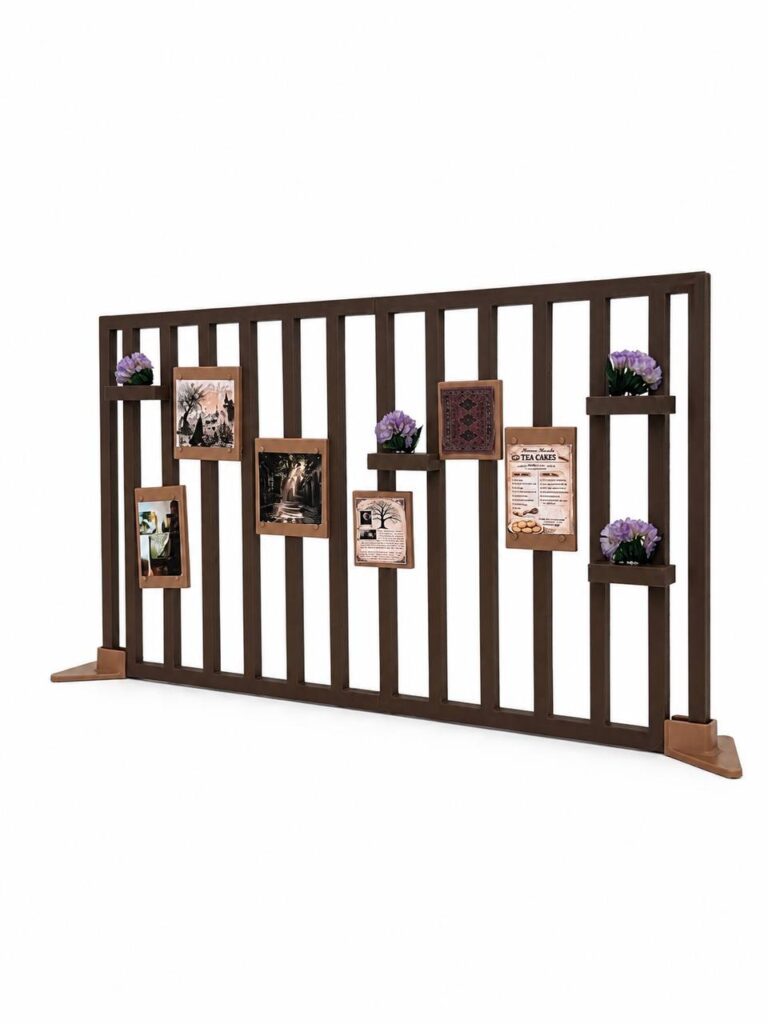
The physical model demonstrates the modular structure, removable contribution panels, integrated shelves, and the way the Growing Memory Partition can gradually evolve through participant contributions.
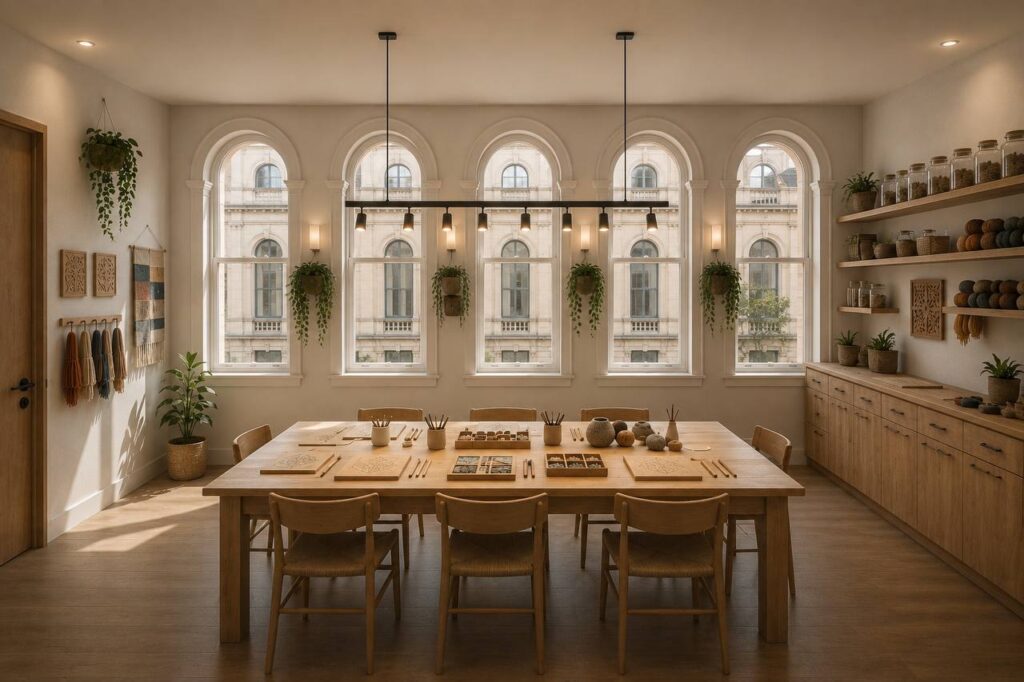
The Creative Workshop Studio allows refugees to prepare contributions for the Growing Memory Partition through writing, drawing, photographs, textile pieces, and other personal or cultural content.
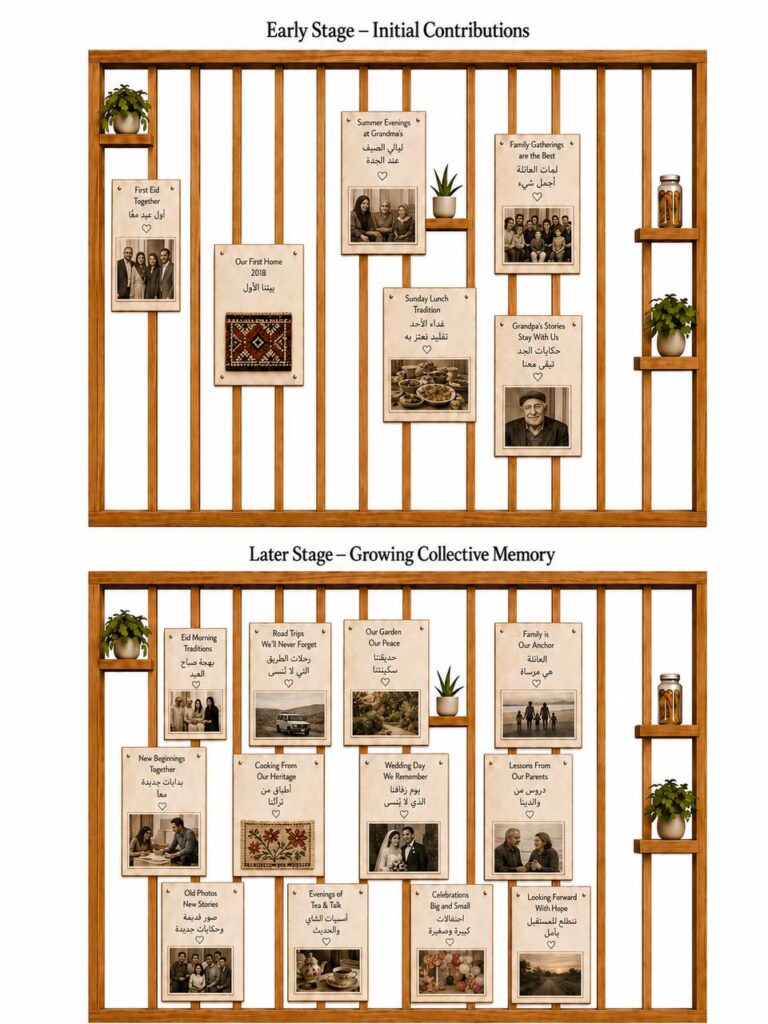
The memory-facing side of the Growing Memory Partition displays personal and cultural contributions including family photographs, handwritten memories, multilingual statements, drawings, textile fragments, and images associated with home, family, and significant places.
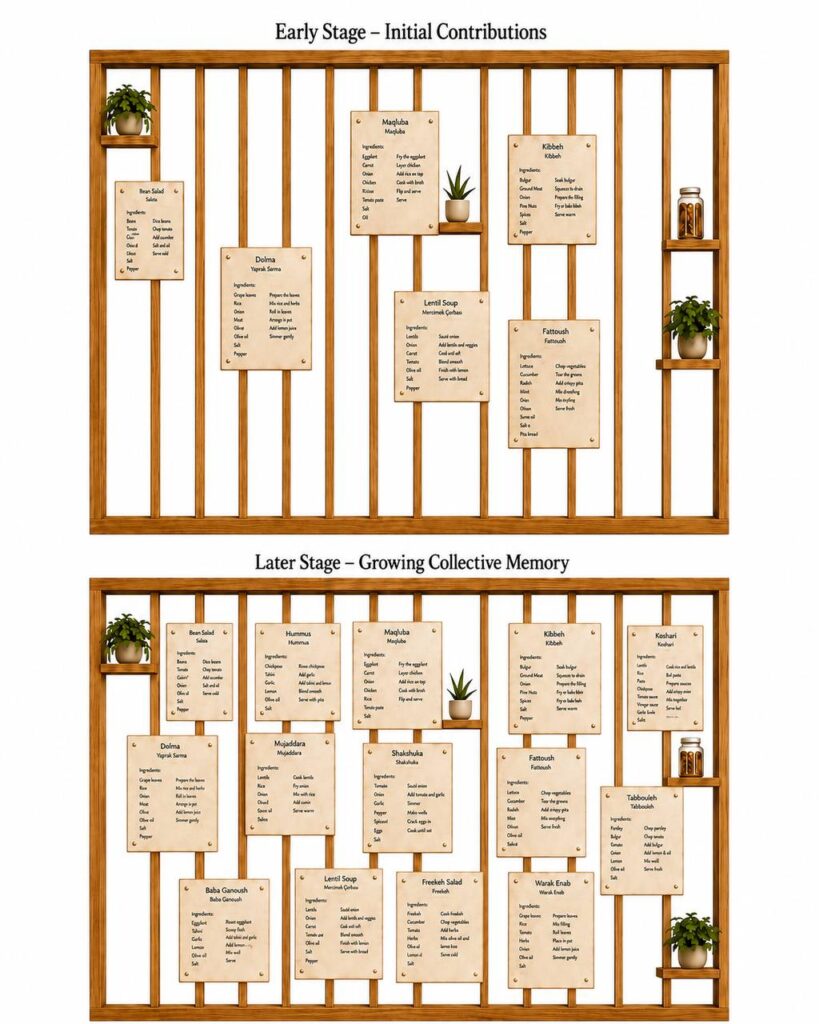
The kitchen-facing side of the Growing Memory Partition displays traditional and culturally significant recipes contributed by refugee participants, allowing recipes and culinary knowledge to become part of the evolving identity of the interior.
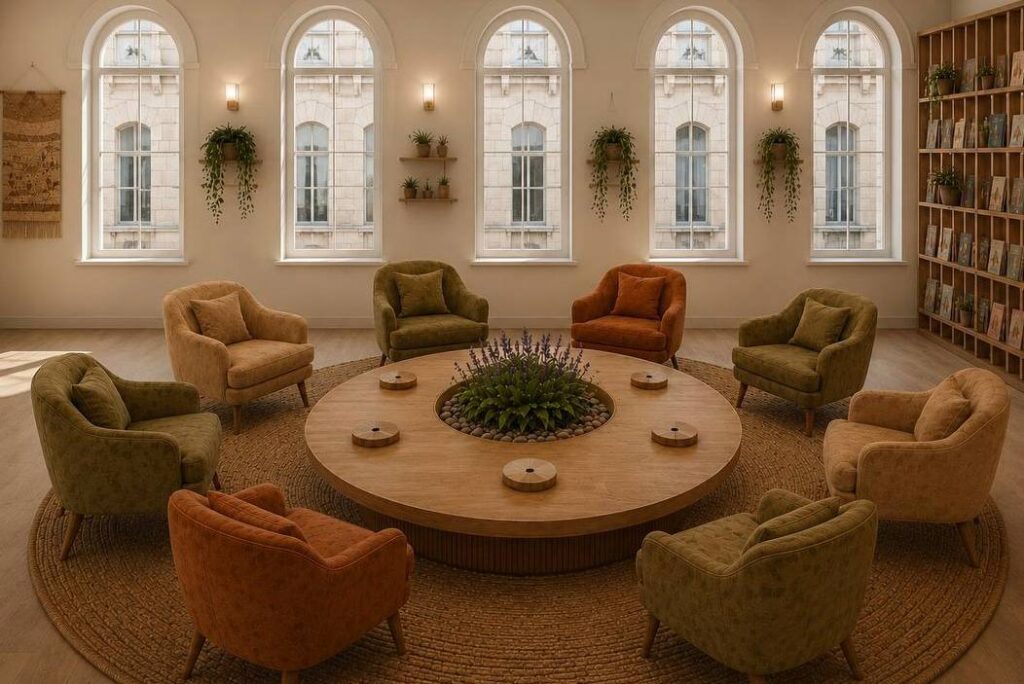
The Storytelling Lounge uses the Memory Smell Table as a participatory tool for storytelling and cultural exchange. Concealed compartments within the table contain culturally and personally meaningful natural scents such as coffee beans, cardamom, cinnamon, dried roses, za’atar, lavender, and Damask jasmine. Participants can open the compartments, smell the materials, and reflect on the memories and emotions they evoke, using scent as a prompt for autobiographical storytelling, conversation, and shared understanding.