Architecture Before History: Re-reading Authority at Glasgow’s Gallery of Modern Art
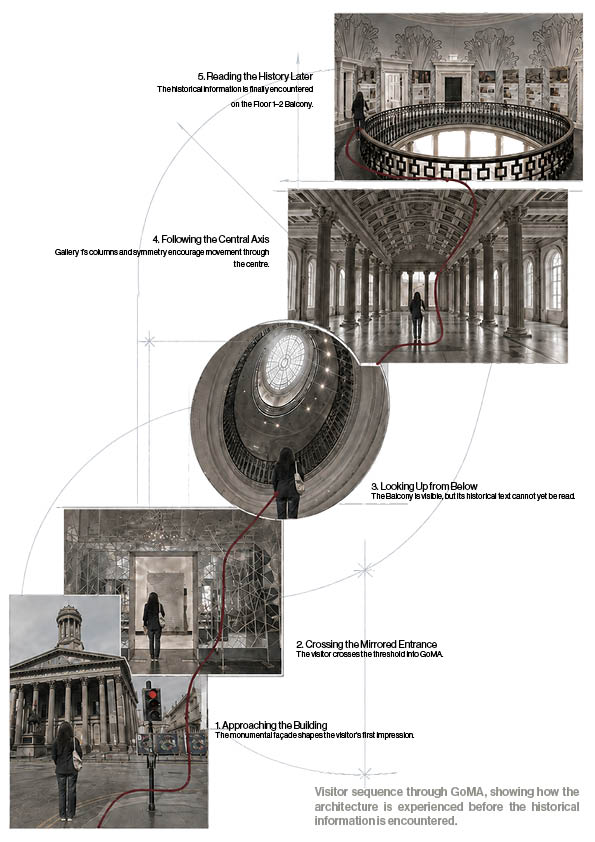
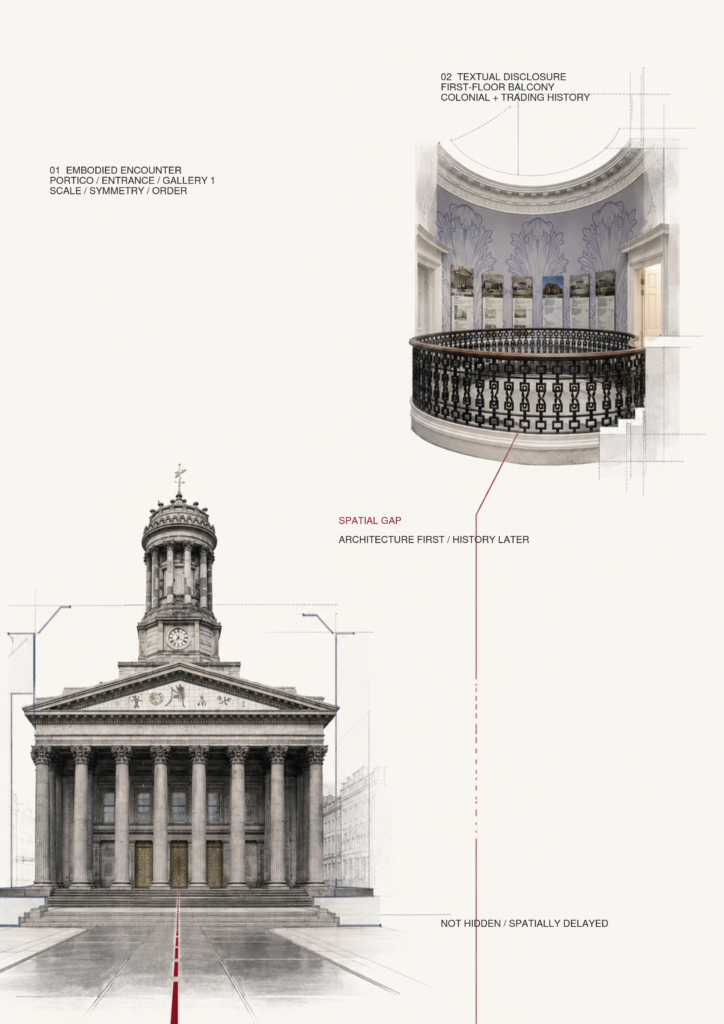
Glasgow’s Gallery of Modern Art (GoMA) occupies a building that was originally constructed as a merchant’s townhouse and later transformed into the Royal Exchange. Its monumental portico, repeated columns, symmetry and central axis can make the building appear formal, powerful and difficult to question. Visitors experience these architectural qualities before encountering information about the building’s connections to colonial trade on the first-floor balcony.
Counter-Authority asks how interior design can help visitors notice this possible sense of authority and connect their bodily experience of the building with its colonial history.
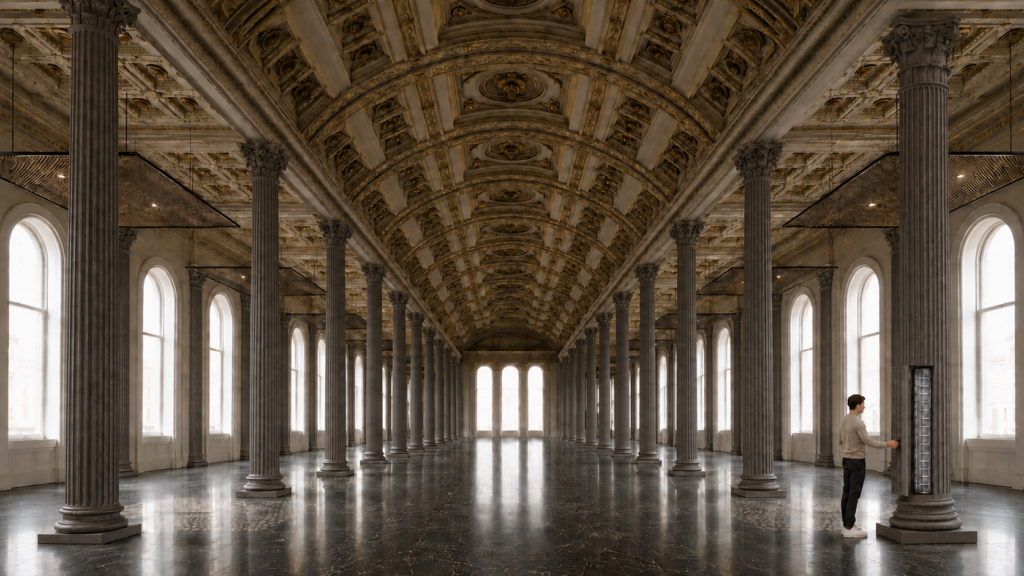
The proposal introduces three reversible interventions. Counter-Column transforms selected columns from apparently solid symbols into openable structures that reveal different historical layers. Counter-Axis suspends woven-metal mesh at a lower height in alternating side bays of Gallery 1. The central route remains open, while visitors are offered different scales, views and routes through the gallery. Counter-Archive brings historical information into closer spatial contact with the architecture of the balcony.
The project does not attempt to remove GoMA’s monumental character or force visitors to follow one interpretation. Instead, it creates moments of interruption, choice and re-reading, allowing the building’s architectural authority and historical context to be experienced together.