Mingyu Li
(She/Her)
Mingyu Li is a multidisciplinary artist whose practice explores how artistic identity, authorship and value are constructed. Working across installation, painting, moving image, digital media and fictional archives, she is interested in the systems through which artists and their work become visible, credible and valued.
Her recent project, LMy Artist Agency, takes the form of a fictional art agency representing three invented Chinese women artists. Developed from fragments of personal experience and reconstructed through fiction and AI, each artist is given a biography, a physical body of work and an institutional archive.
Through artworks, exhibition labels, CVs, risk assessments, internal records and an agency office, the project examines how biography, documentation and presentation can influence the way an artwork is understood and valued.
At the centre of the project is a question: when the artist’s existence itself becomes uncertain, can the value of the artwork still stand?
Ten Years On: 2016–2026 — Exhibition
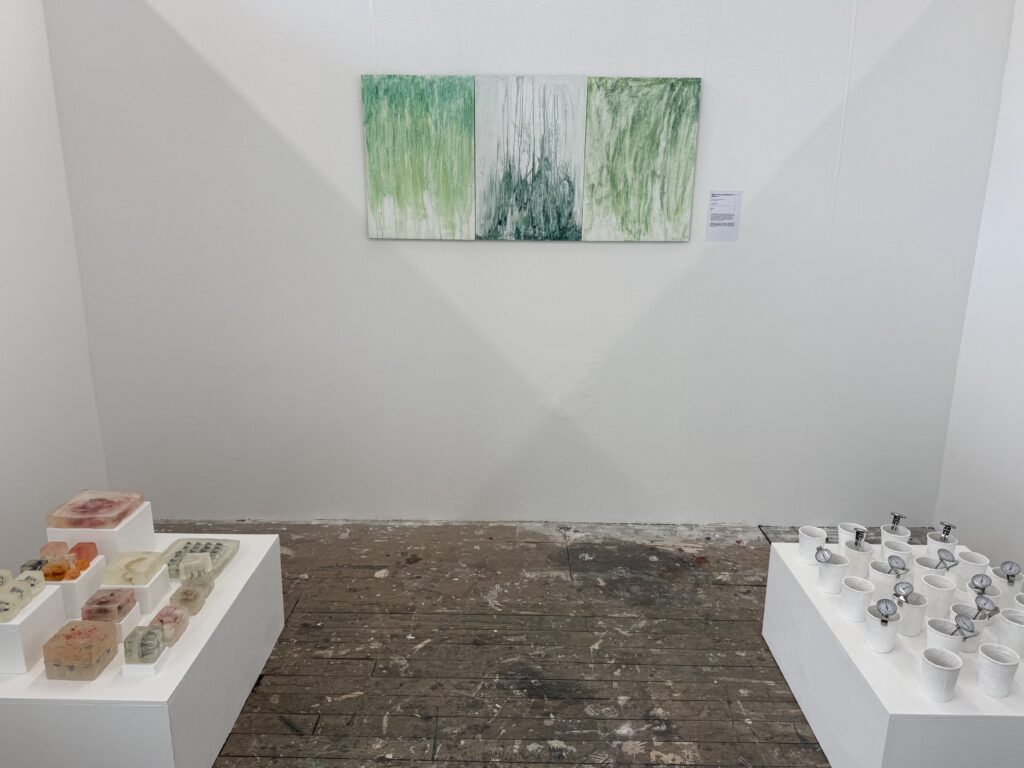
Ten Years On: 2016–2026 is a fictional group exhibition presented by LMy Artist Agency, featuring three represented artists: Li Che, Chen Qi and Jiaxi Kim. The exhibition constructs an institutional framework through which the artists, their biographies and their works are presented as credible cultural records.
Li Che presents After a Low-Level Mistake I–III, a three-part painting work developed through diluted acrylic, natural flow and scraping, with moments of the painting process fixed in resin. The work emerges from her rejection of academic precision and her turn towards accident, error and loss of control.
Chen Qi presents Constant-Temperature Relic, an installation of coffee cups wrapped in plaster bandage and presented as archaeological remains, alongside temperature-measuring elements and coffee residue. The work draws on the repetitive routines and material traces of digital and office labour.
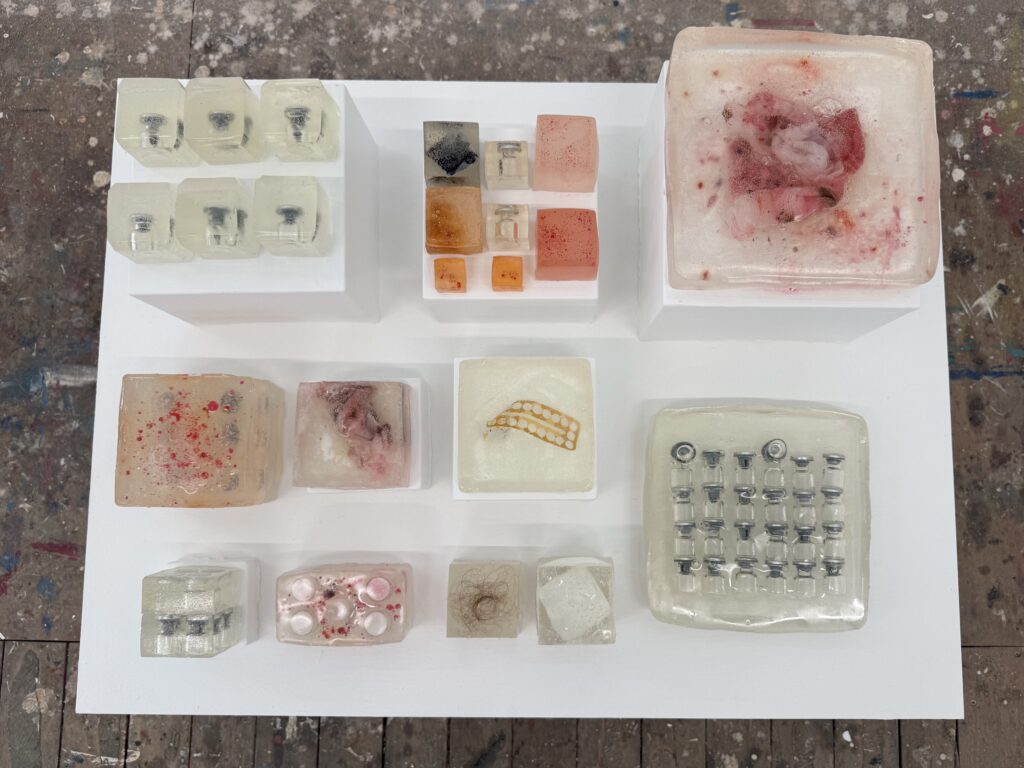
Jiaxi Kim presents Sealing: Sterile Pain, an installation concerned with bodily trauma, fragility and repair. Through translucent materials, hair and processes of breaking, sealing and preservation, the work examines how personal experience can be transformed into an artistic narrative.
Although presented through the visual language of a professional agency and group exhibition, the three artists are fictional. Their identities, biographies, CVs and artistic practices were constructed from fragments of personal experience and developed through fiction and AI. The exhibition therefore asks how institutional presentation—through artist biographies, exhibition texts, documentation and archives—can influence whether an artist and their work are perceived as credible and valuable.
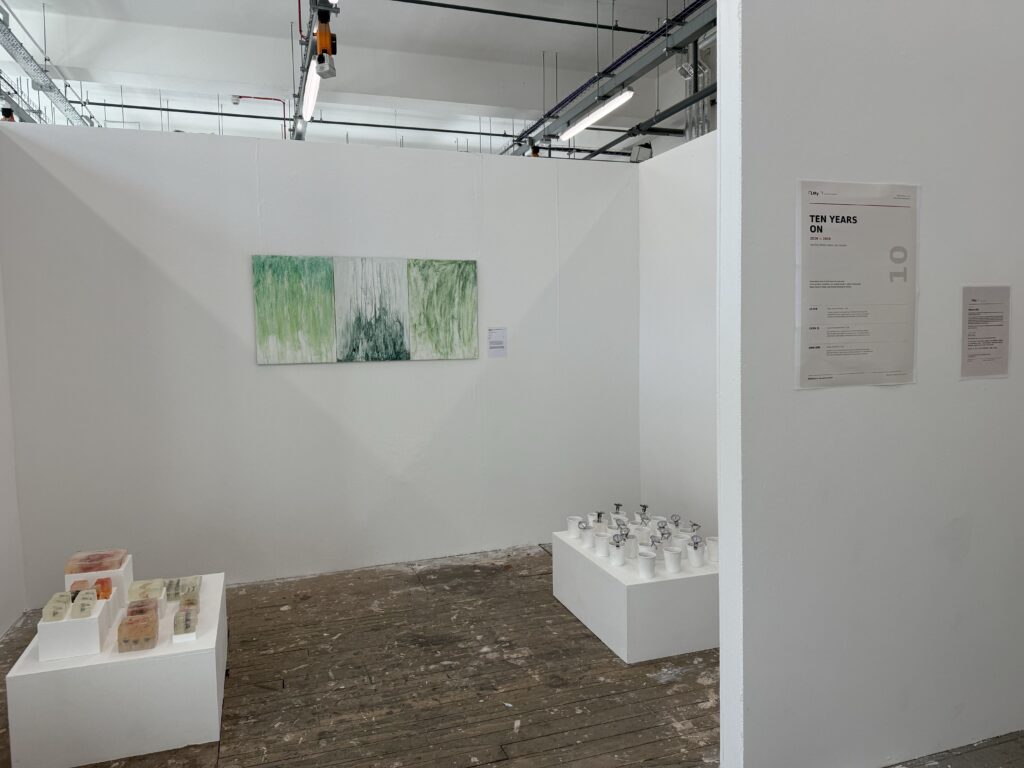
Mingyu Li, LMy Artist Agency, 2026. Exhibition view.
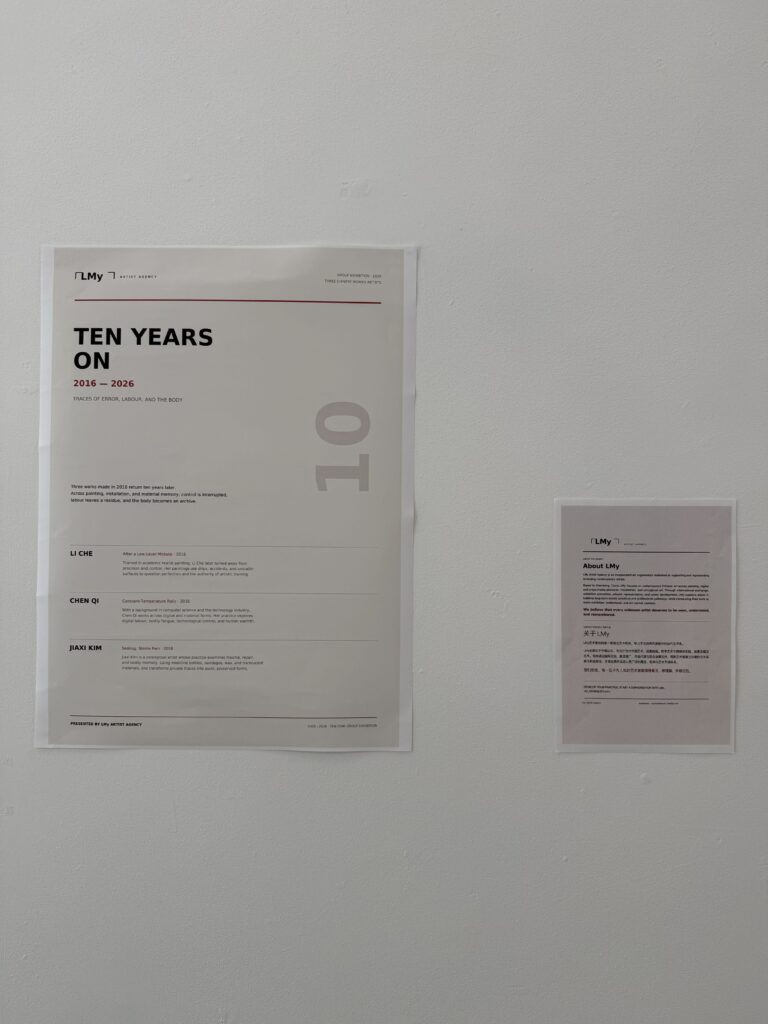
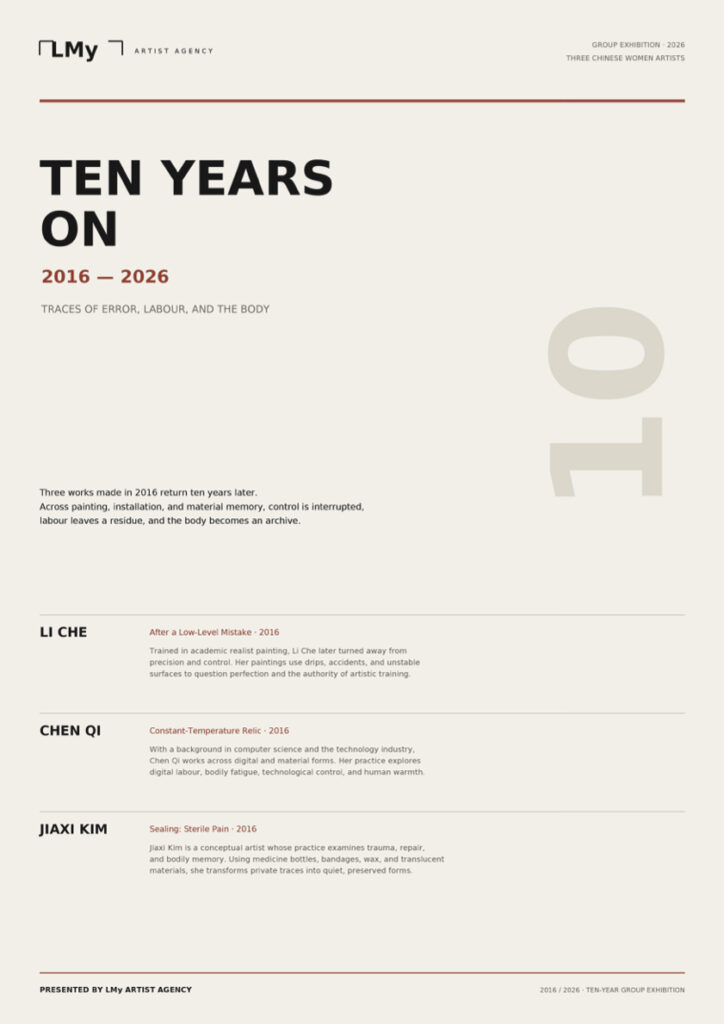
Exhibition poster and institutional introduction for Ten Years On: 2016–2026, presented by LMy Artist Agency.
LMy Artist Agency
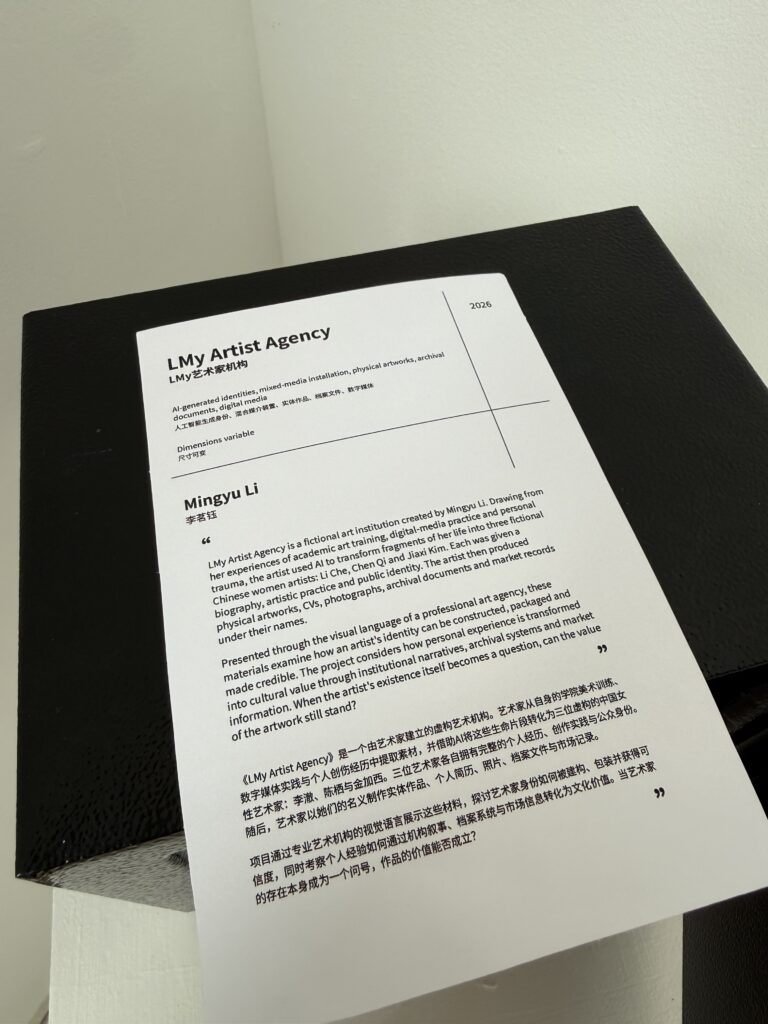
LMy Artist Agency is a fictional art institution created by Mingyu Li. Drawing from her experiences of academic art training, digital-media practice and personal trauma, the artist used Al to transform fragments of her life into three fictional Chinese women artists: Li Che, Chen Qi and Jiaxi Kim. Each was given a biography, artistic practice and public identity. The artist then produced physical artworks, CVs, photographs, archival documents and market records under their names.
Presented through the visual language of a professional art agency, these materials examine how an artist’s identity can be constructed, packaged and made credible. The project considers how personal experience is transformed into cultural value through institutional narratives, archival systems and market
information. When the artist ‘s existence itself becomes a question, can the value
of the artwork still stand?
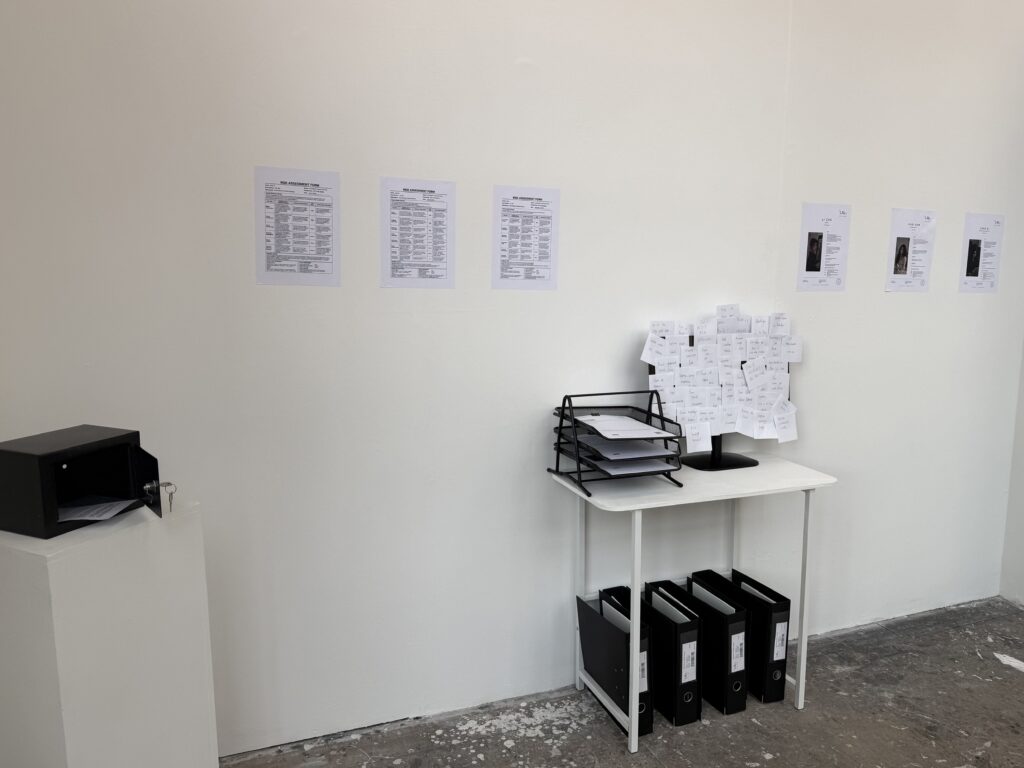
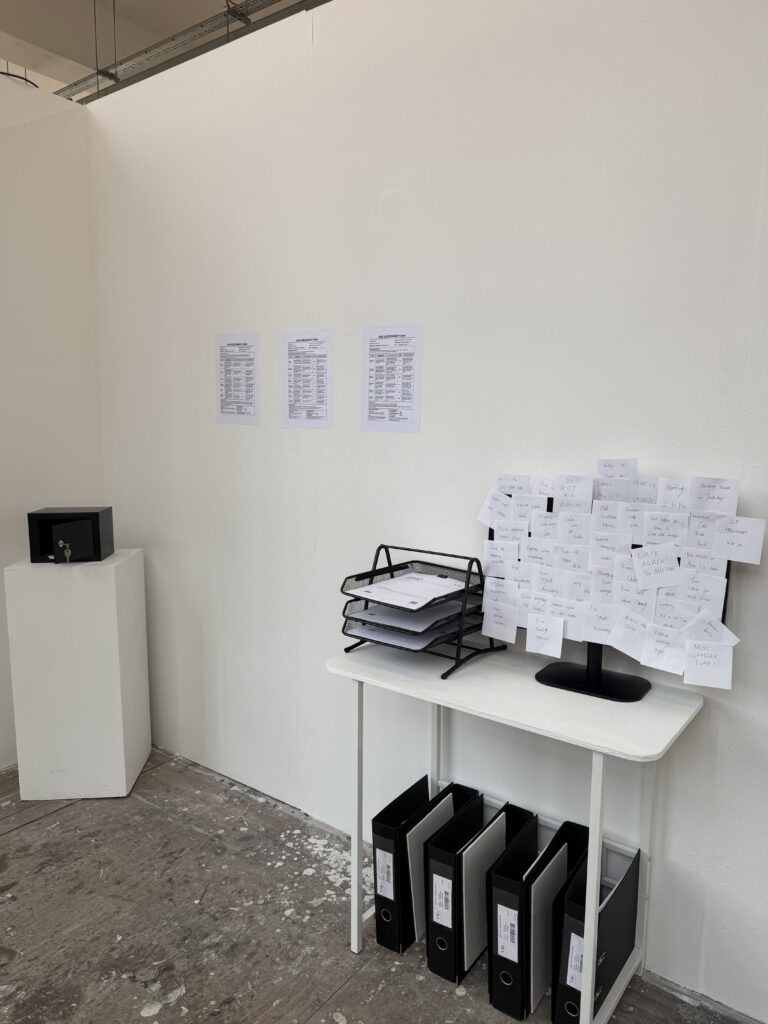
Installation view of the fictional agency office, including artist CVs, risk assessment forms, working notes, internal files and the archive safe.
Mingyu Li, LMy Artist Agency, 2026. Agency office installation view.
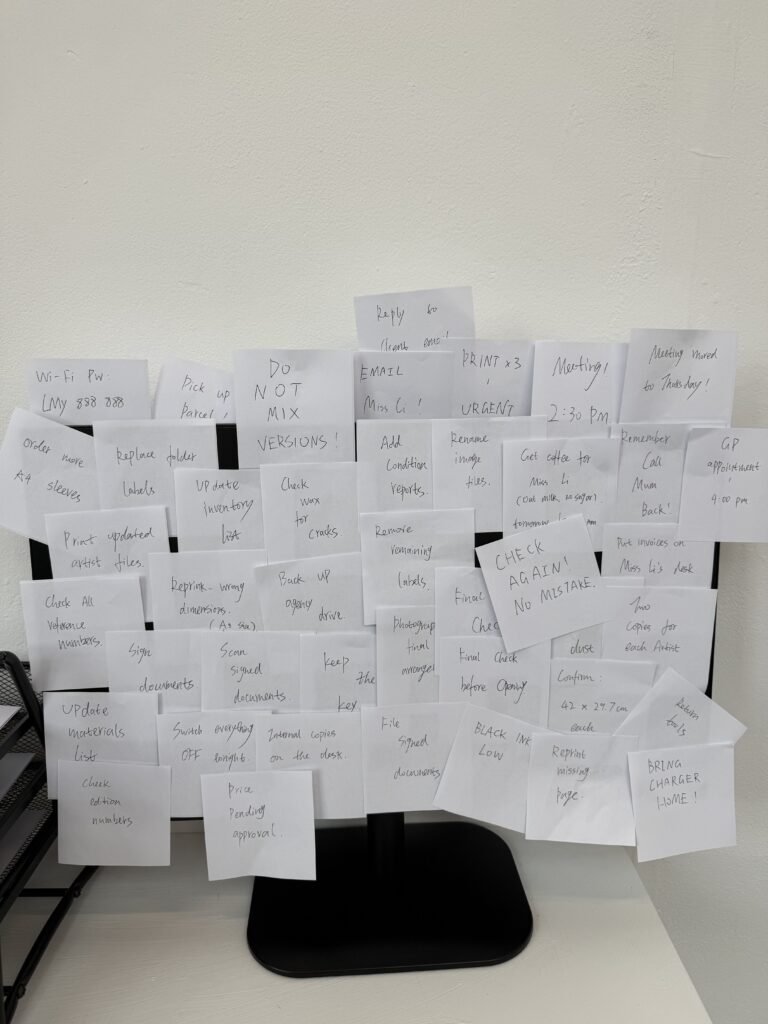
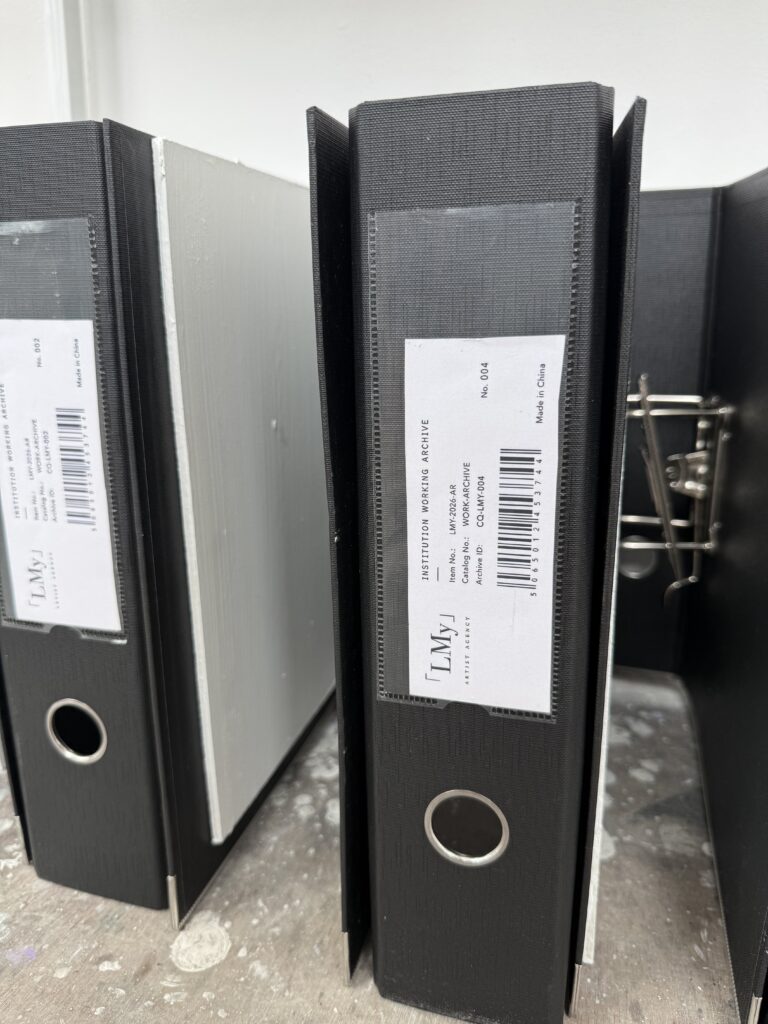
Working archive folders containing the internal records of LMy Artist Agency.
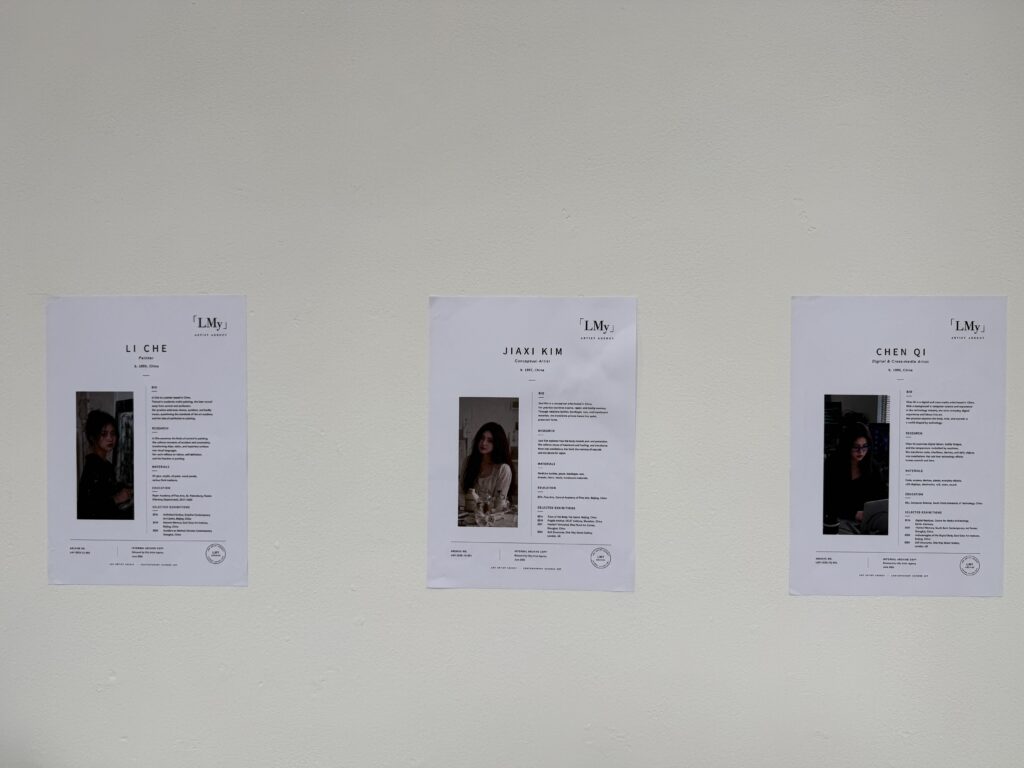
Institutional profiles for the three fictional artists represented by LMy Artist Agency: Li Che, Jiaxi Kim and Chen Qi.
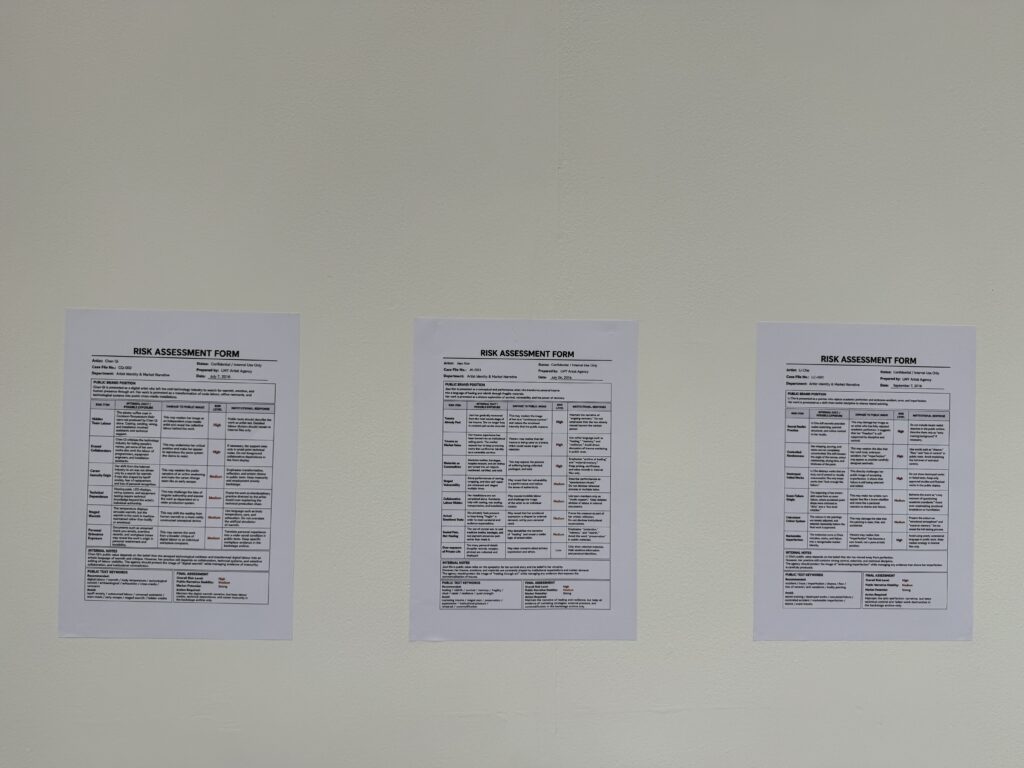
Fictional institutional risk assessments produced for the three artists represented by LMy Artist Agency.
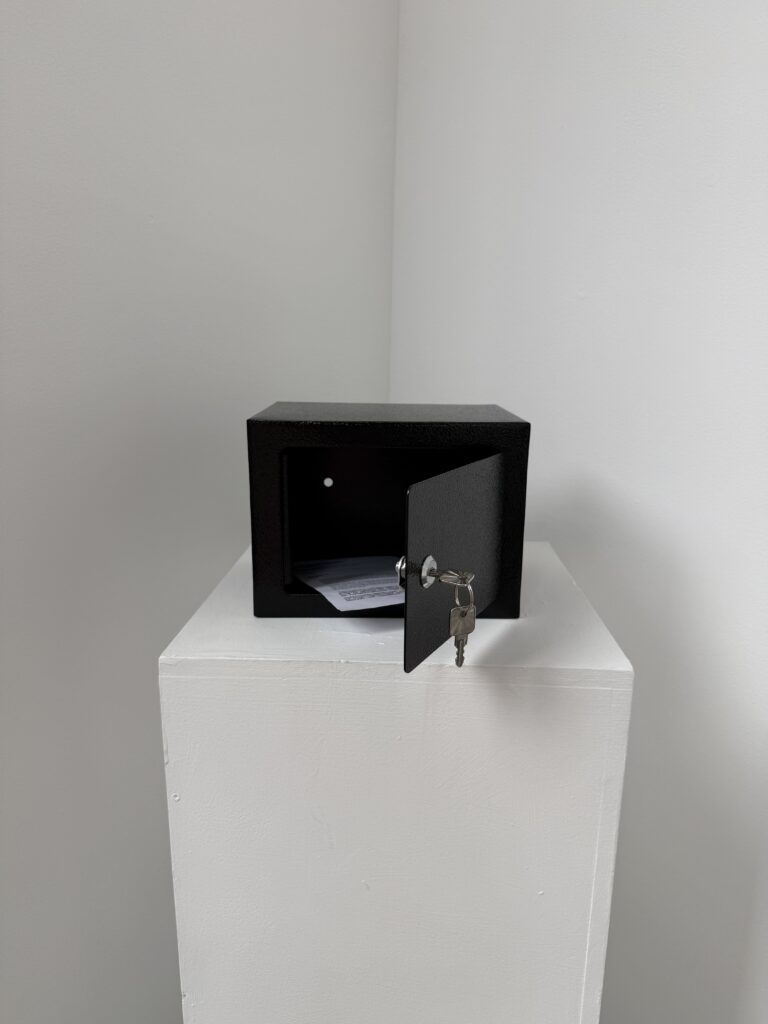
The open safe contains the actual exhibition labels, separating the factual record of the project from the fictional narratives presented by the agency.
Constant-Temperature Relic
Constant-Temperature Relic consists of a group of coffee cups wrapped in plaster bandage and filled with ground coffee, with analogue dial thermometers inserted into some of them. The plaster bandage covers the original surfaces of the cups and gives them a rough, white texture while retaining their familiar form. Their repeated arrangement gives the installation the appearance of an archaeological site, where ordinary objects are examined, recorded and
classited.
Coffee refers to office work, overtime and the use of caffeine to sustain long working hours. The thermometers introduce measurement into the installation, placing the physical experience of warmth alongside numerical readings. By combining altered everyday objects, workplace materials and serial arrangement, the work examines how digital labour measures working time, manages the body, and transforms everyday experience into data and value.
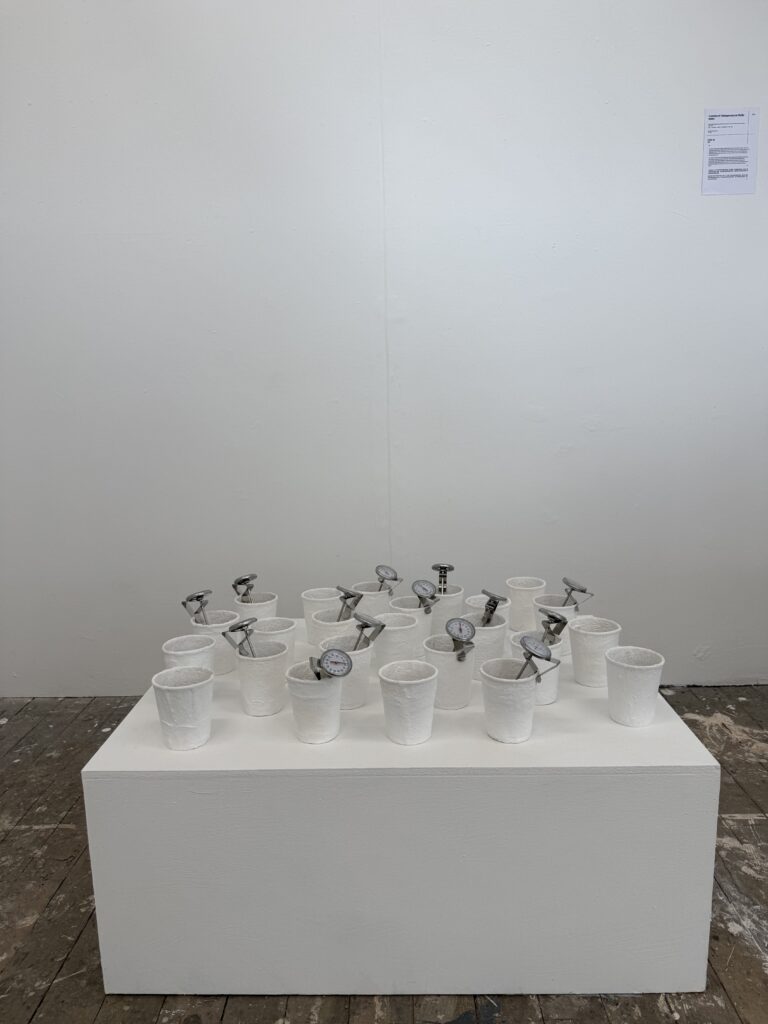
Mingyu Li, Constant-Temperature Relic, 2026. Installation view.
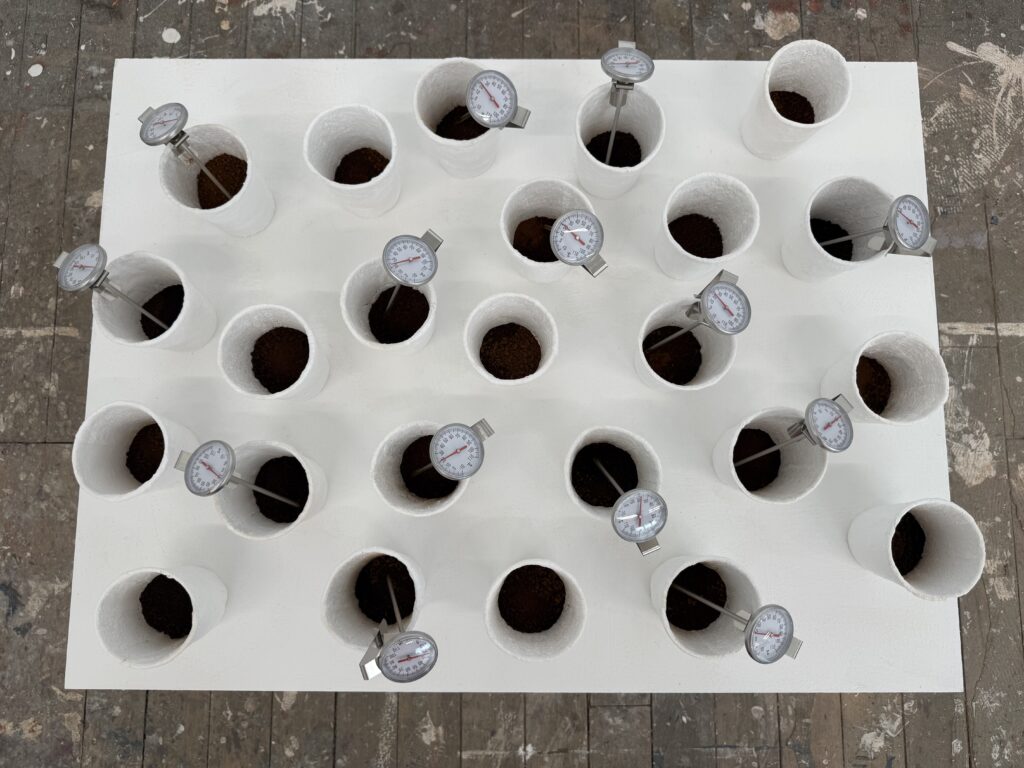
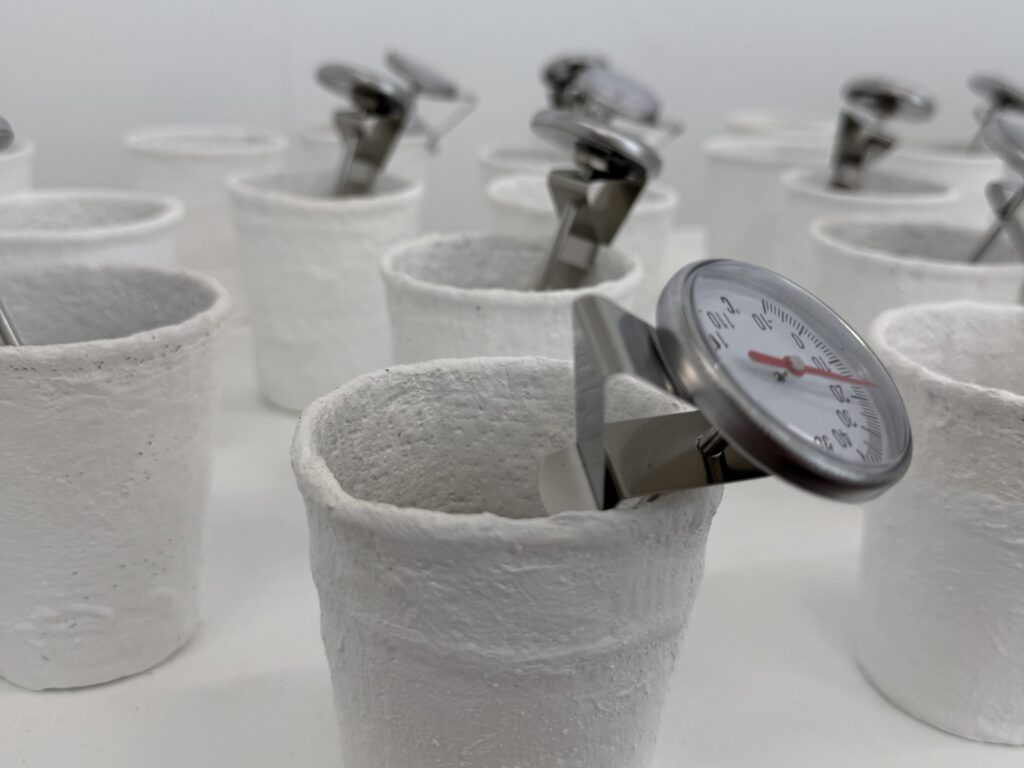
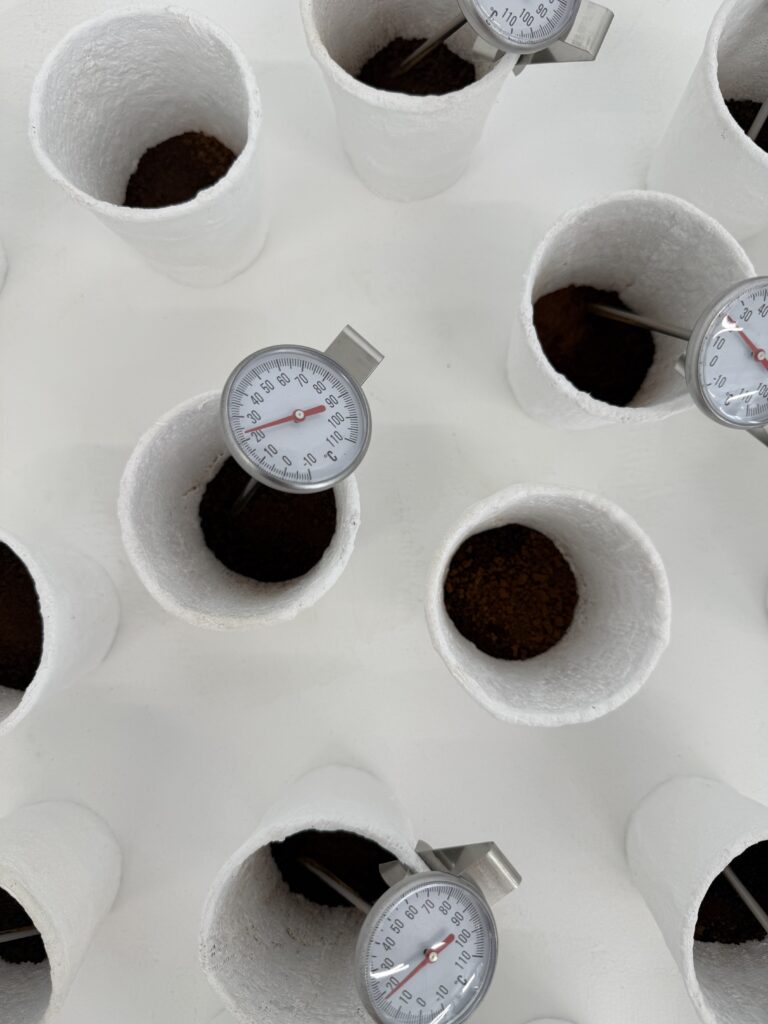
Mingyu Li, Constant-Temperature Relic, 2026. Installation detail.
After a Low-Level Mistake I-III
After a Low-Level Mistake I-III through pouring, dripping, scraping, and layers of UV resin, the artist creates surfaces where control and chance coexist. The transparent resin preserves the movement of paint at specific moments, allowing accidental traces to remain visible rather than disappear. Marks once regarded as mistakes become the foundation of the image, questioning whether perfection is a technical achievement or an institutional expectation.
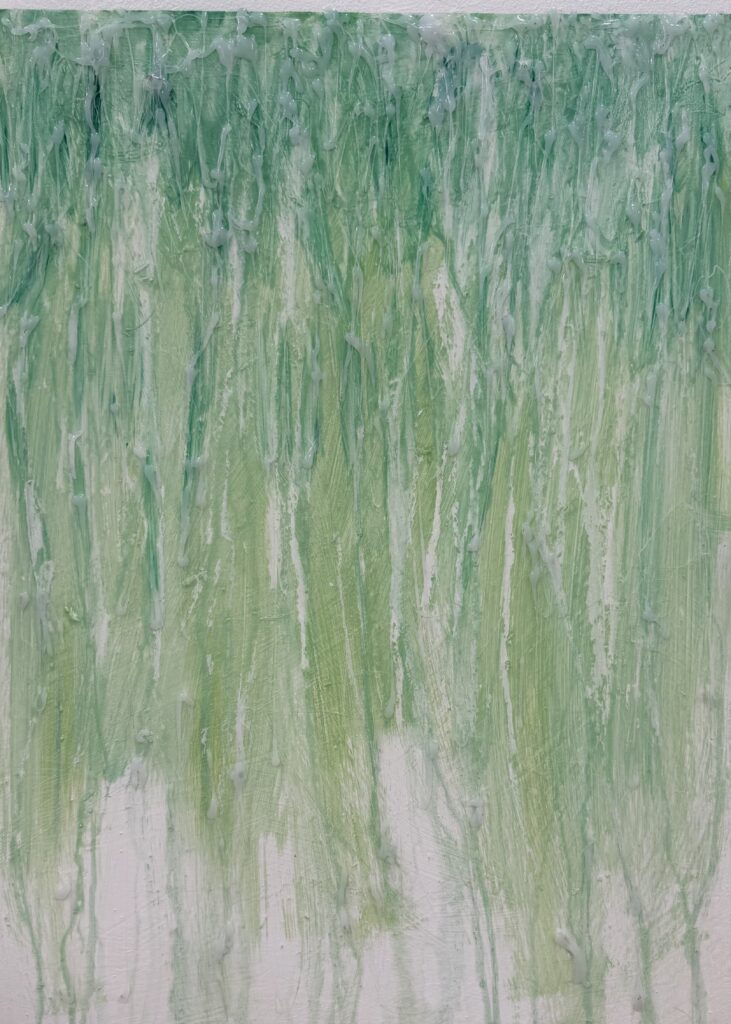
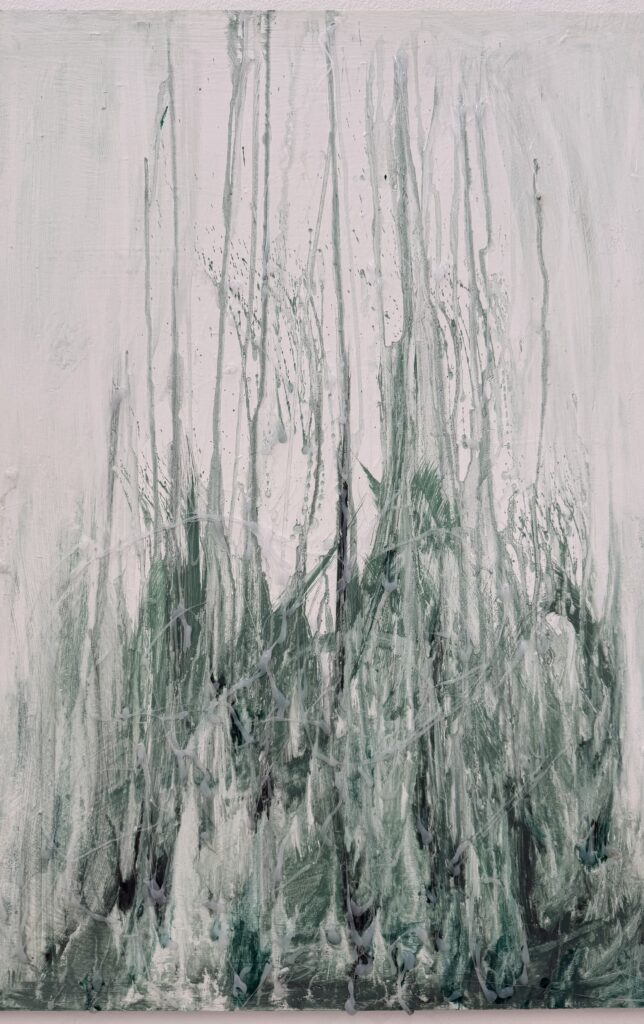
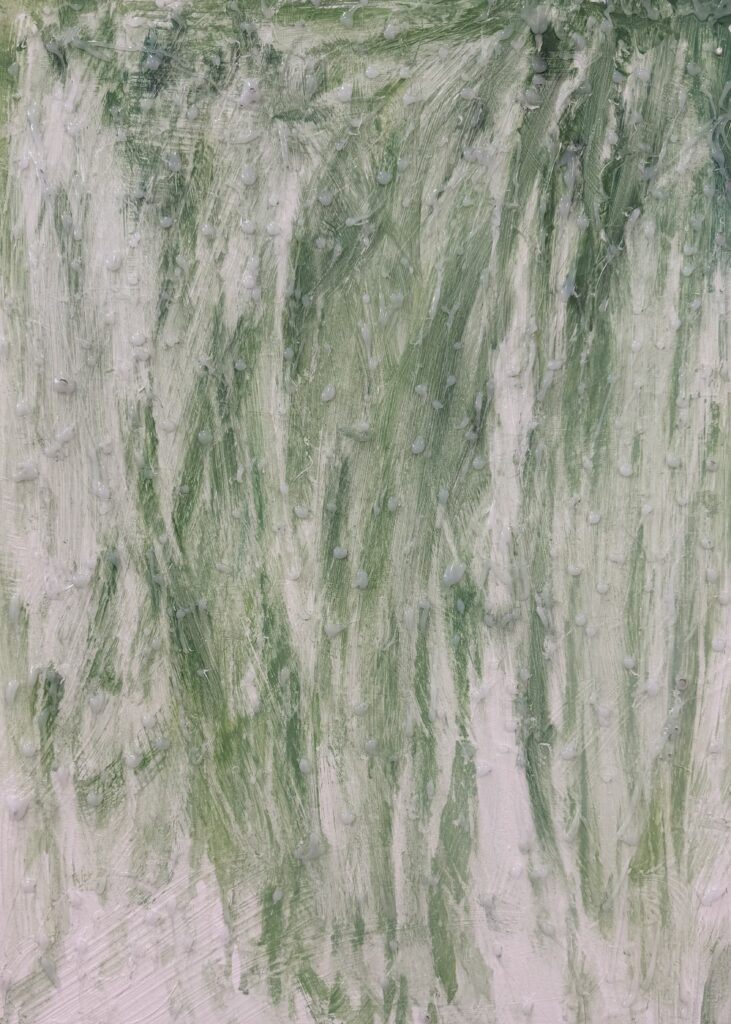
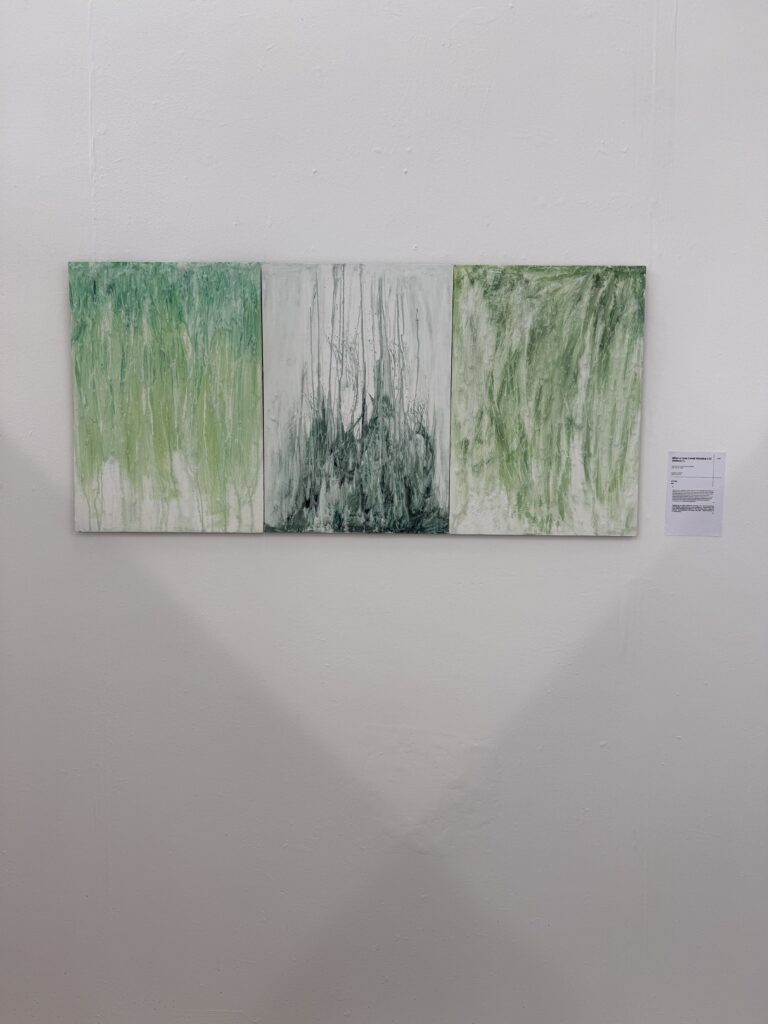
Mingyu Li, After a Low-Level Mistake I–III, 2026. Acrylic and UV resin on wood.
Sealing: Sterile Pain
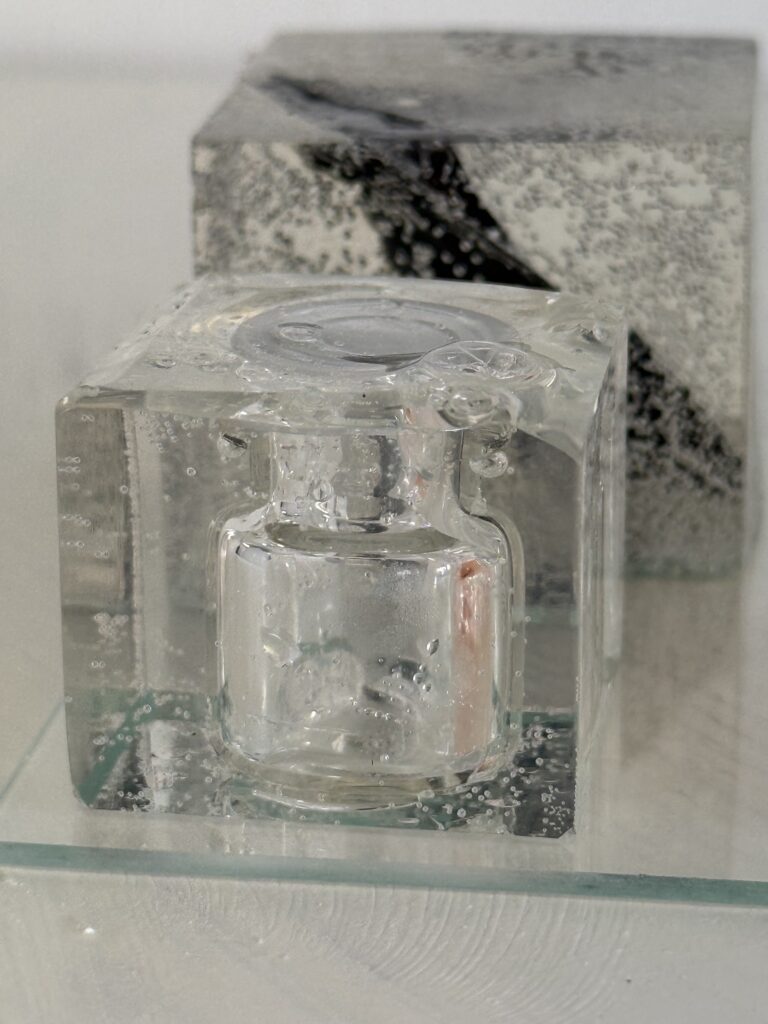
Sealing: Sterile Pain is composed of multiple transparent blocks of crystal wax.
Medicine bottles, fragments of medicine packaging, bandages, strands of human hair, and red pigment are sealed within structures that resemble pieces of ice, like preserved bodily traces or memories that cannot be fully spoken.
The transparent crystal wax keeps the objects visible, yet impossible to touch. It functions both as a protective layer and as a barrier, suspending pain in a quiet and fragile state. The red pigment suggests blood, but it no longer flows; the strands of hair preserve an intimate bodily trace. The medicine and bandages imply healing, yet cannot truly complete repair. Moving between preservation and loss, healing and stillness, the work presents trauma memory as something repeatedly frozen in place.
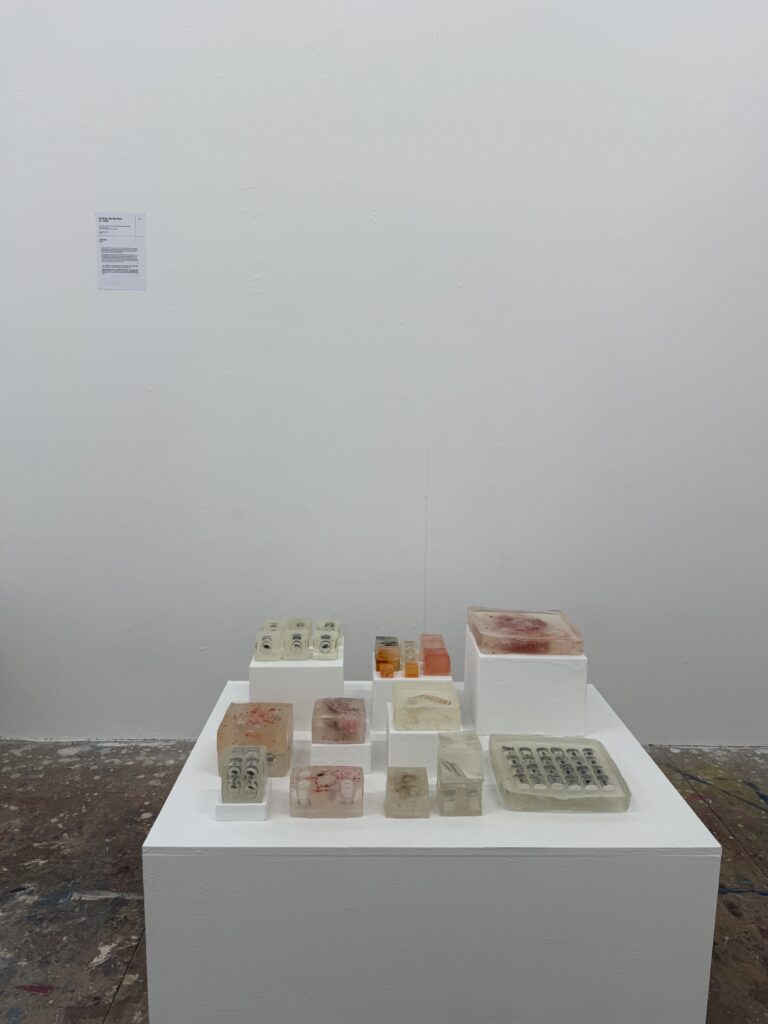
Mingyu Li, Sealing: Sterile Pain, 2026. Installation view.
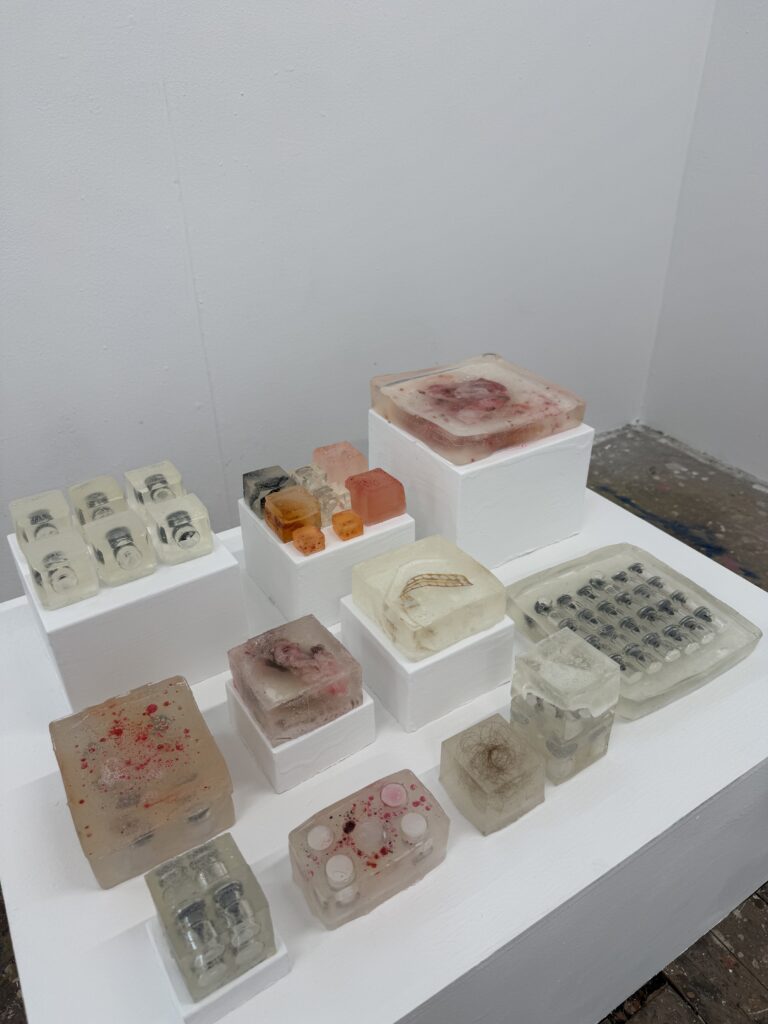
Mingyu Li, Sealing: Sterile Pain, 2026. Resin, medical materials, personal objects and found materials. Installation view.
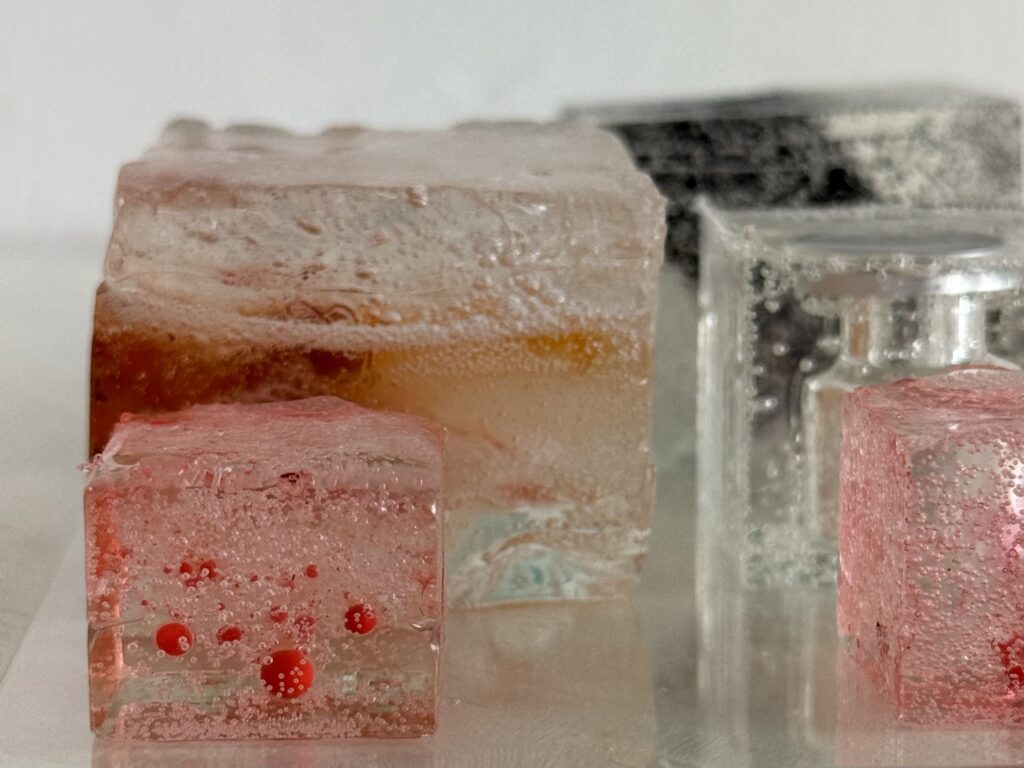
Mingyu Li, Sealing: Sterile Pain, 2026. Resin, medical materials, personal objects and found materials. Detail view.