Maeve Callister-Wafer
(She/Her)
Maeve Callister-Wafer is an artist who works across sound and visual arts. Her work often surrounds her native language of Manx Gaelic and looks to explore the connections between land, language and memory.
Sweet Long Sighs
Sweet Long Sighs is an audiovisual composition made using composition, field recordings and archival recordings of Irish, Manx and Scottish Gaelic speakers collected by the Irish Folklore Commission between 1935 and 1971.
The commission’s archive, now held within the National Folklore Collection, played a vital role in the preservation of Goidelic folklore, heritage and language, with the collection now an important resource in cultural revival. This audio-visual composition uses the sound theories of Brandon LaBelle and François Bonnet to think about how the mediation of the archival voice across space, technology and time enables and disrupts connection and memory.
Using ambisonics to place the listener inside an acoustic space to revoice and recontextualise the voice recordings of the archive. By placing and treating the archival voice recordings according to their non-semantic register, we can explore how the content the Commission didn’t intend to capture such sighs, laughter, clicks and hisses can allow us to connect with a body, place and time we no longer have access to.
The project takes its title from T.E. Brown’s poem ‘To the future Manx Poet’:
“Old Manx is waning,
She’s dying in the tholthan. Lift the latch,
Enter, and kneel beside the bed, and catch
The sweet long sighs”
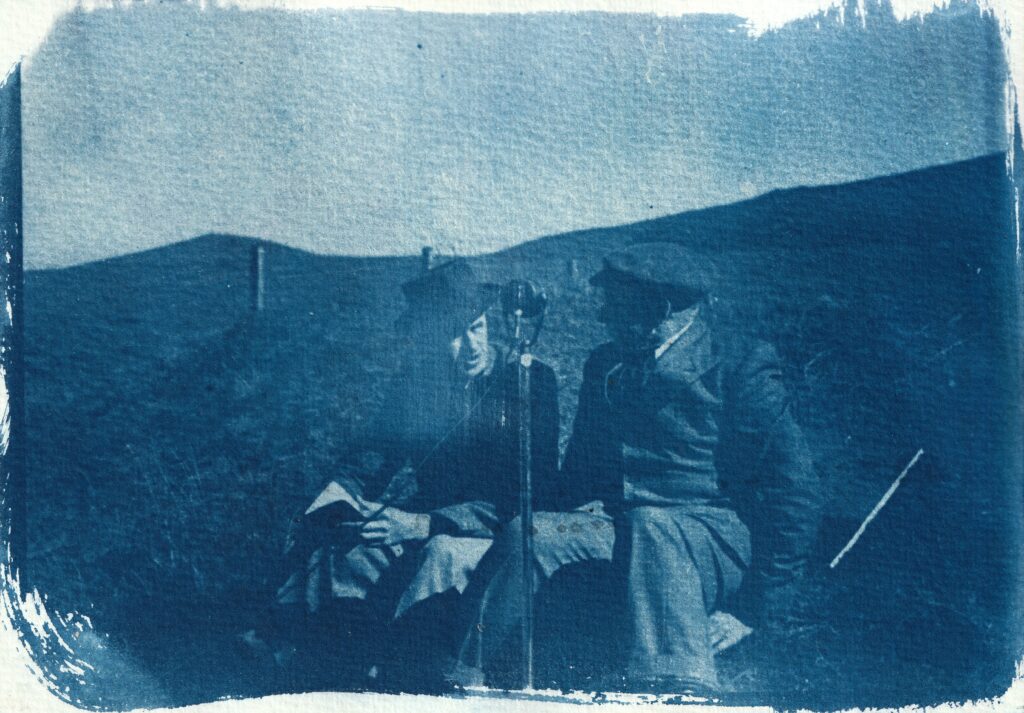
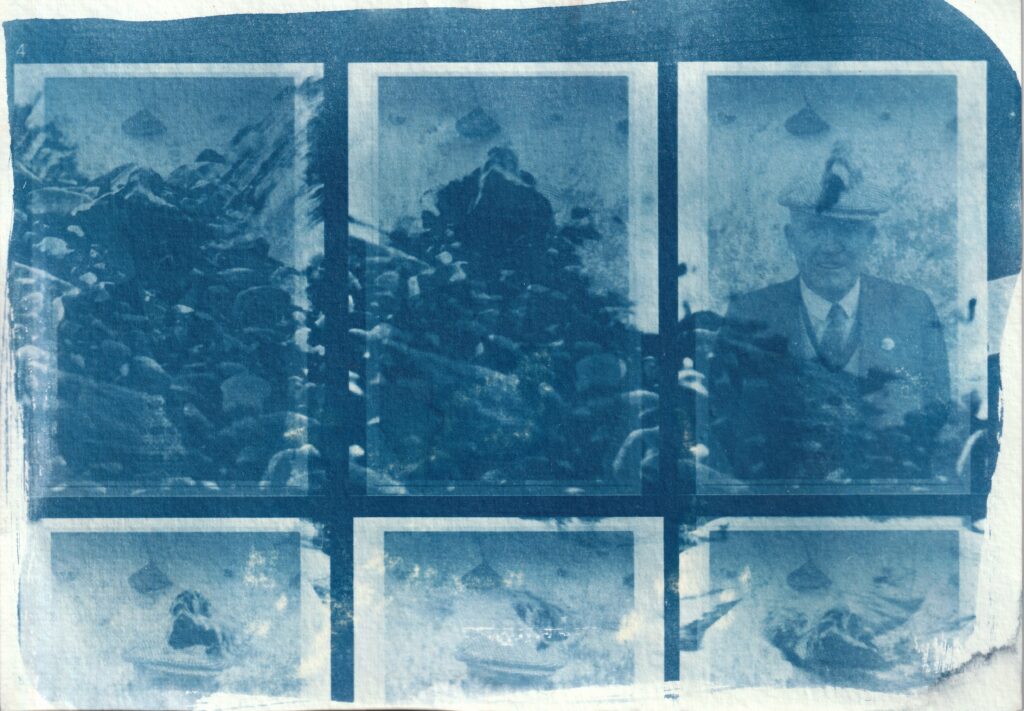
Cyanotype based on a photograph taken by folklorist Caoimhín ó Danachair
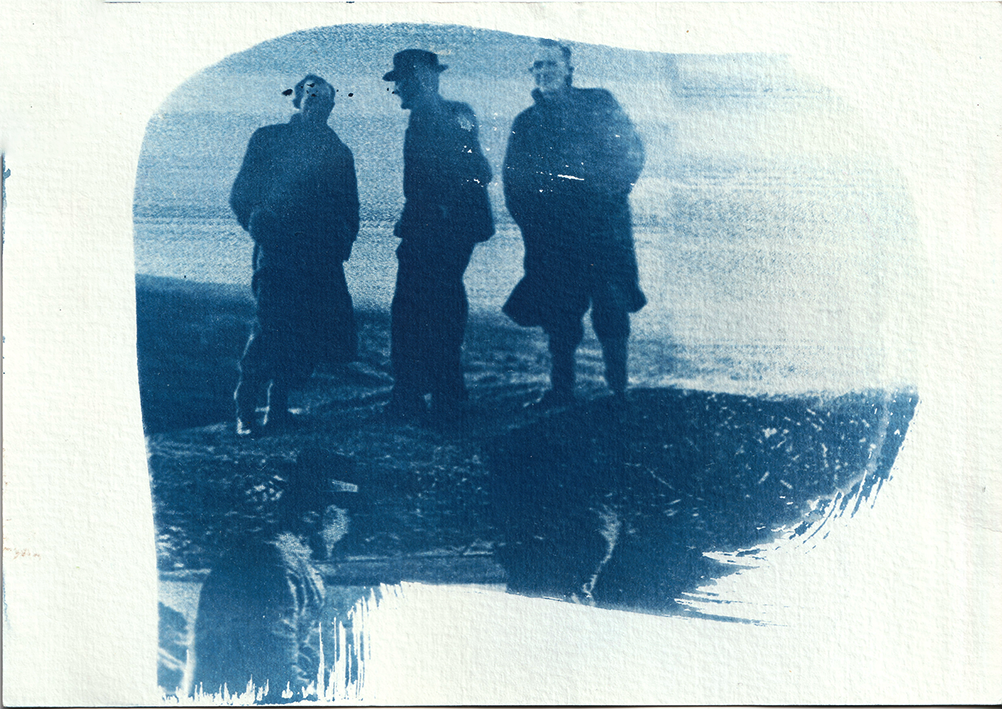
Cyanotype based on Photograph of informants in Donegal taken by Caoimhín Ó Danachair in 1948
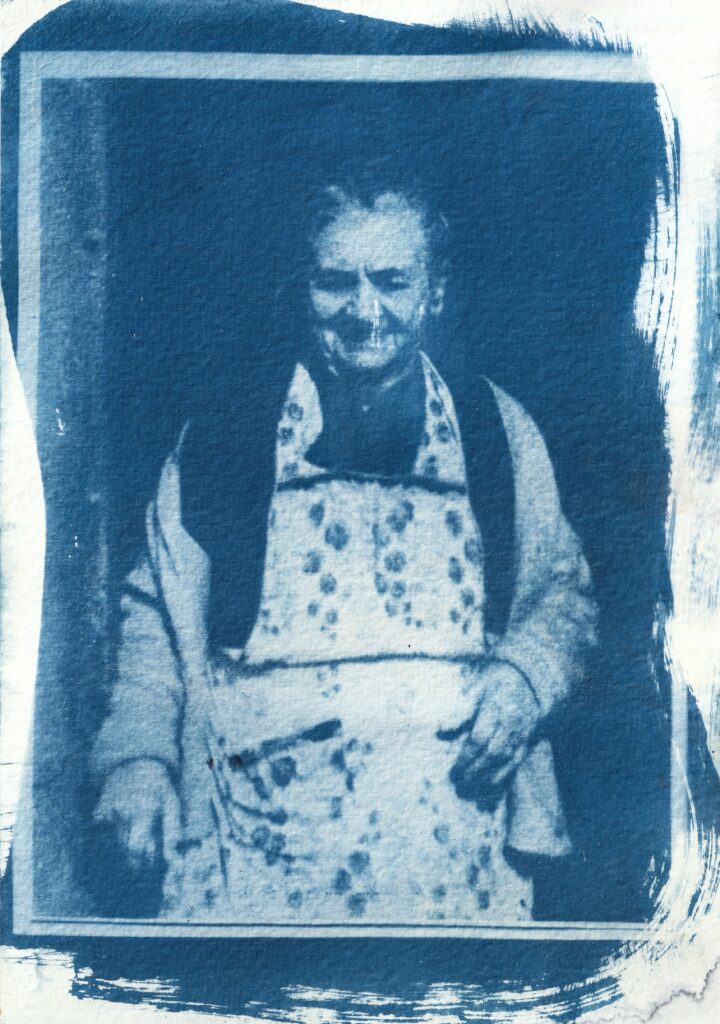
Cyanotype based on photography taken by Caoimhín ó Danachair in 1948.
Cyanotype based on Photograph of Ned Maddrell, who was the last native Manx speaker before his death in 1975. Taken in 1948 by Coaimhín ó Danachair.
Yn Arbyl
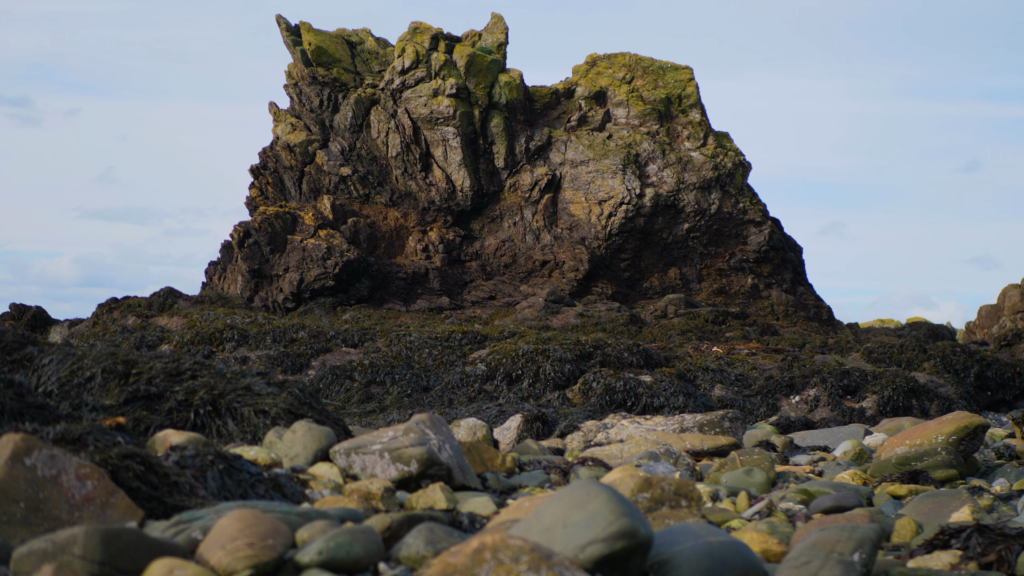
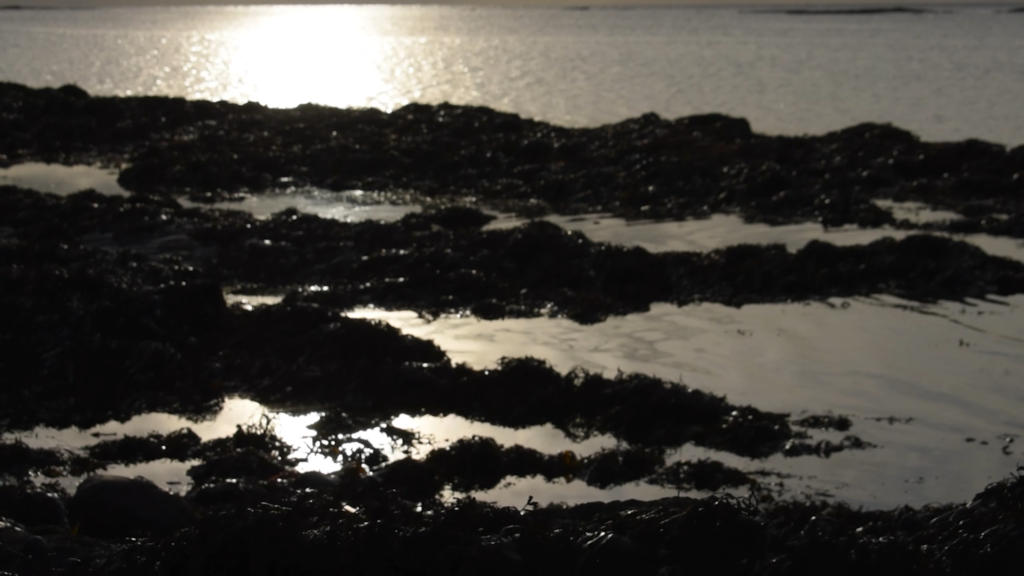
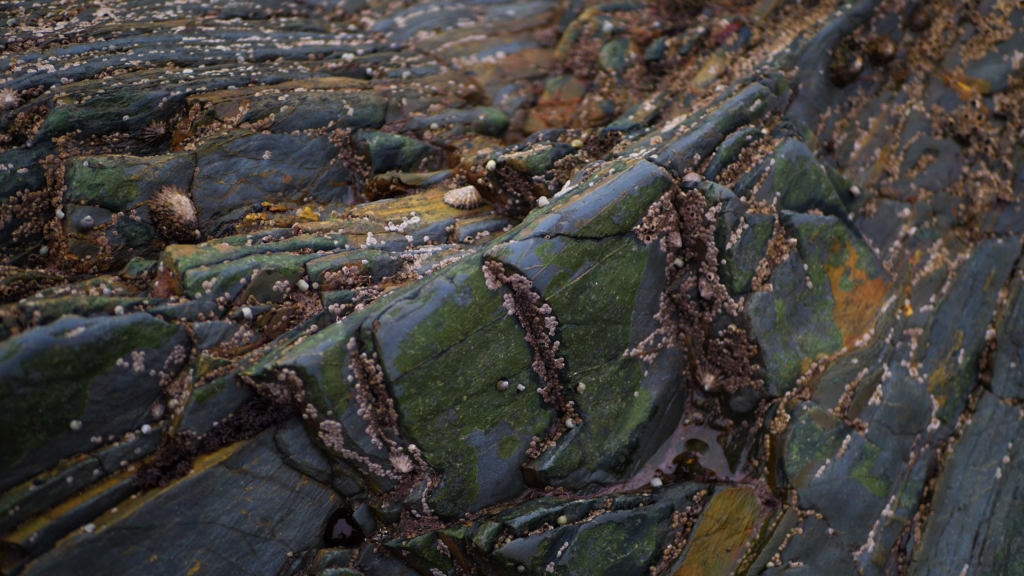
Yn Arbyl is a film made using field recordings of nature, composition and archival Manx recordings of voice, music and song.
The film captures Niarbyl Bay, a significant place for folklore and the preservation of Manx language and culture in the Isle of Man. While filming there, I was able to take in the sights and sounds of the bay and think about how they might have changed or remained the same. An oyster catcher’s call or the familiar contour of the coastline, like language, music and stories, can be a common ground with those who came before us. With Yn Arbyl, I explore this link with the past through sound and land.
Dobberan son çhengey ny mayrey
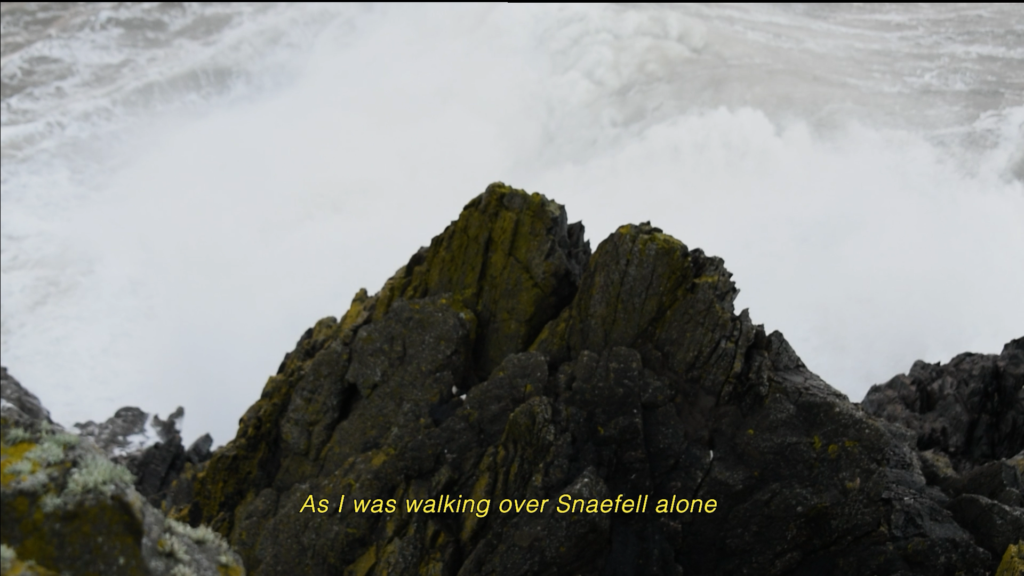
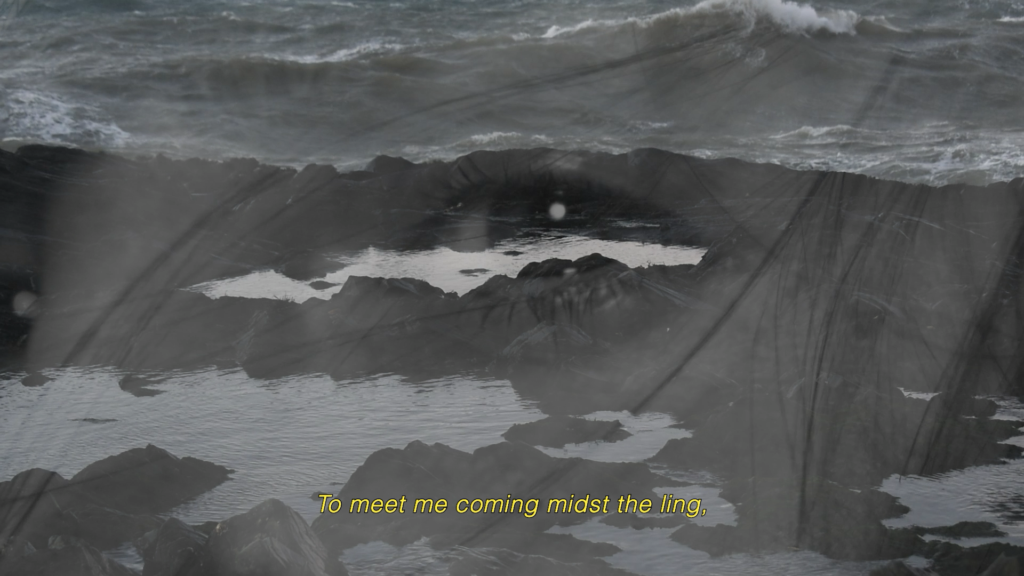
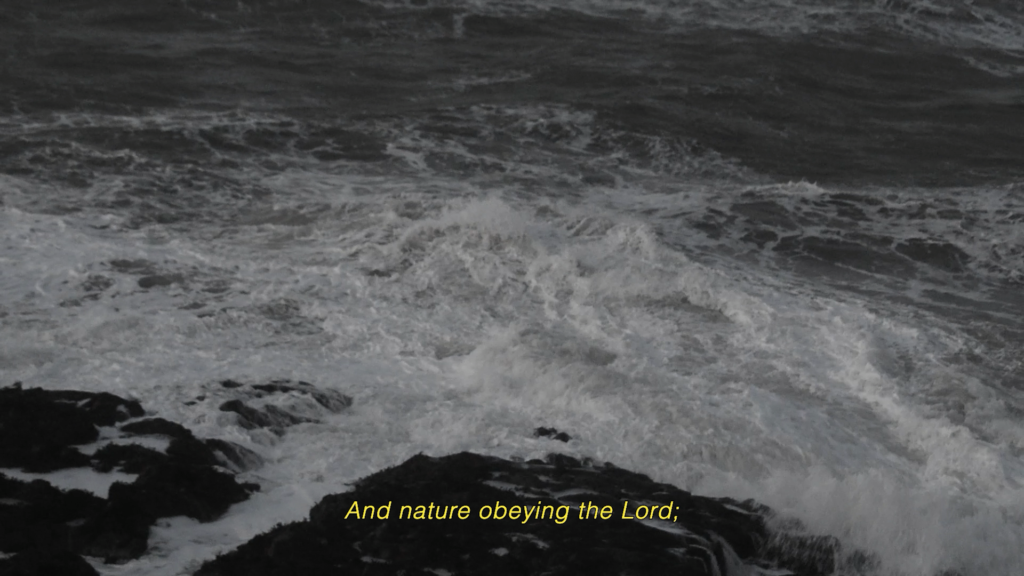
Dobberan son Çhengey Ny Mayrey is a short film based on a Manx language poem written around
1840 by William Kinnish.
‘Dobberan son Çhengey Ny Mayrey Ellan Vannin’, which translates to ‘Mourning over the Mother Tongue of Mann’ tells the story of a man who, while wandering the hills in the twilight hours,
comes across a frenzied old woman in tattered clothes. She reveals she is the ghost of the Manx language; now abandoned by the Manx people, she was once young and never wanting. The English and the rich, making way for her neglect, she laments for the days she ruled over Mann. Finally, with her age, she surrenders, “For behold how grey my head is” (Moore, 1896, p.142).
I have adapted this poem into a short film because its words provide really clear, interesting imagery while also leaving
so much room for visual and sonic exploration. Originally a twenty-one stanza poem, I have condensed the poem into seven stanzas, which I felt still communicated the story.
Talk to the Gulls!
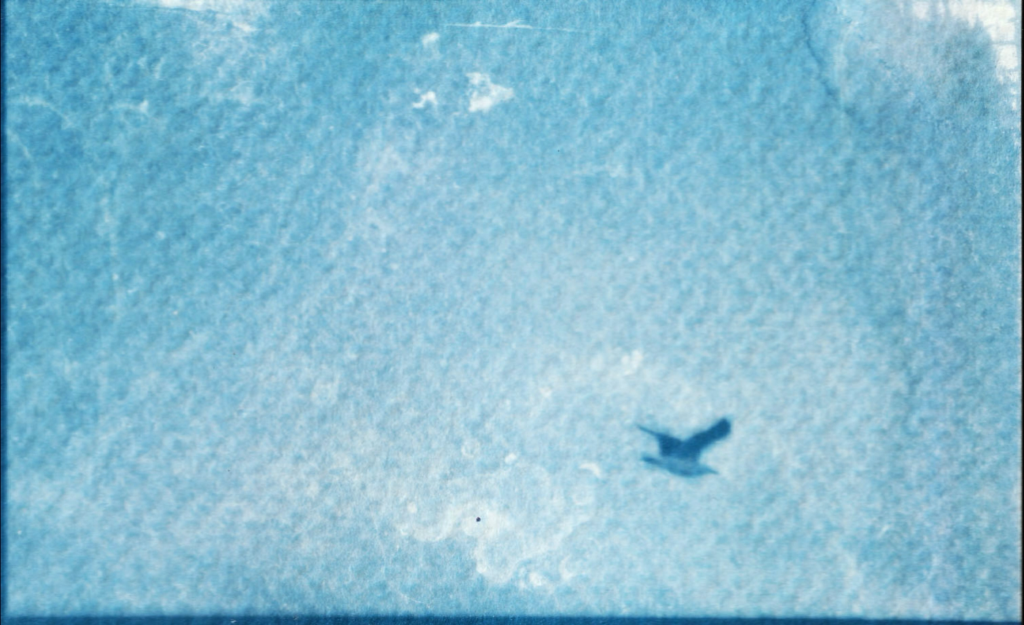
Talk to the Gulls! is a generative audiovisual composition which includes cyanotype animations, composition and field recordings.
The project takes inspiration from Richard Bach’s book Jonathan Livingston Seagull and the photography of Russell Munson. Munson captures in-motion flight in a way which illustrates the simple allegorical and spiritual nature of the book, especially as the book continues to identify the body as an ephemeral, transitionary form.
“Remember what we were saying about one’s body being nothing more than thought itself?”
The work takes its name from a phrase in W.H. Gill’s 1934 book Manx Dialect, Words & Phrases: ‘Talk to the birds! is the last resource of an incurable chatterbox who can get nobody else to listen. “Talk? That one ‘ud talk to the gulls!”‘