Isha Girish Pasad
I am a spatial and experience designer with a background in Public Space Design and a current focus on Creative Urban Practices. My work explores the relationship between people, space, atmosphere and experience, with a particular interest in how design can influence the way people move through, perceive and connect with their surroundings.
My experience spans spatial design, public space, architectural visualisation, design research and experience design. I have worked across different scales, from developing spatial concepts and urban interventions to creating detailed digital environments, visualisations and physical models. My approach combines research, observation, experimentation and visual storytelling to develop design responses that are both considered and experiential.
I work with tools including SketchUp, V-Ray, AutoCAD, Adobe Photoshop and InDesign, alongside physical model-making, photography, mapping and participatory design methods. I am also developing my skills in Rhino, Grasshopper and other computational design workflows.
Through my academic and professional experience, I have developed a particular interest in designing spaces that encourage curiosity, interaction and meaningful experiences. I enjoy working between research and making, using experimentation to understand a problem and then translating those insights into spatial proposals.
My work is driven by a simple question: how can design make people notice, experience and connect with a place differently?
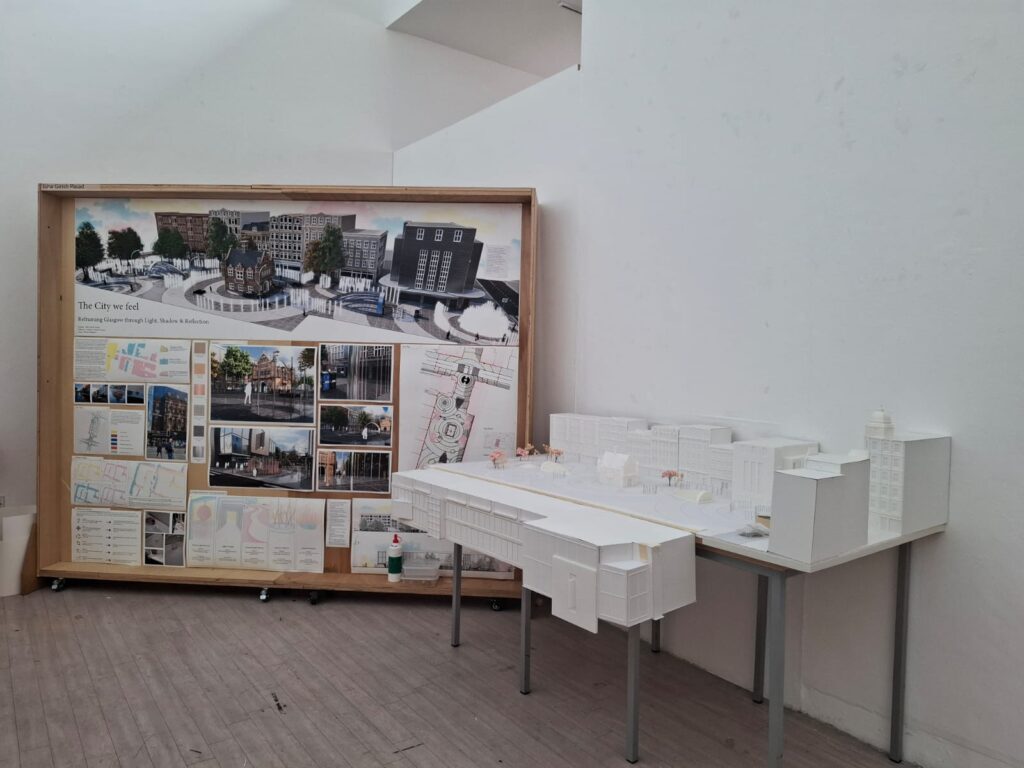
The City We Feel
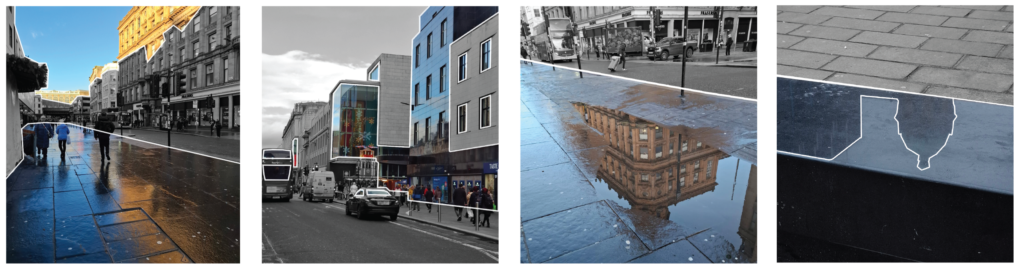
What makes us notice a city? Is it the buildings, the way light touches them, the rain that leaves reflections behind, or the shadows that shift as the day moves?
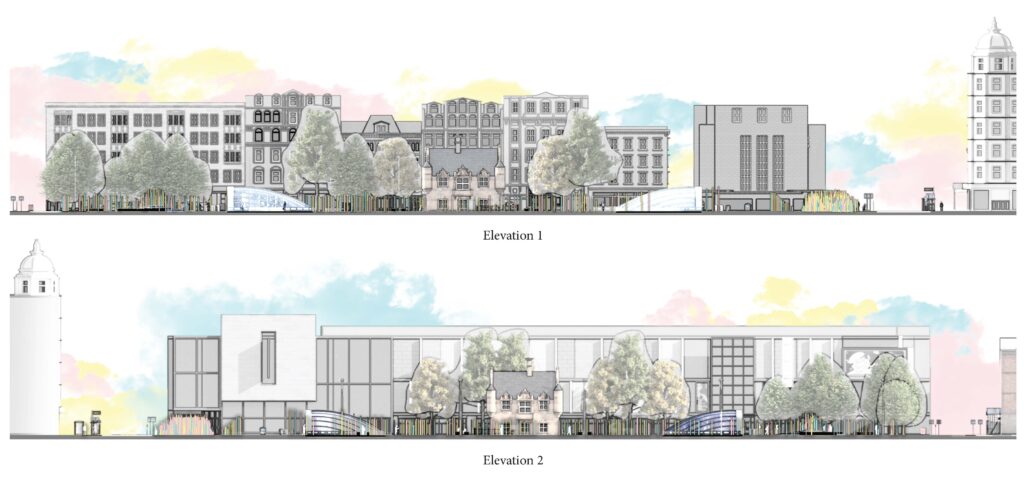
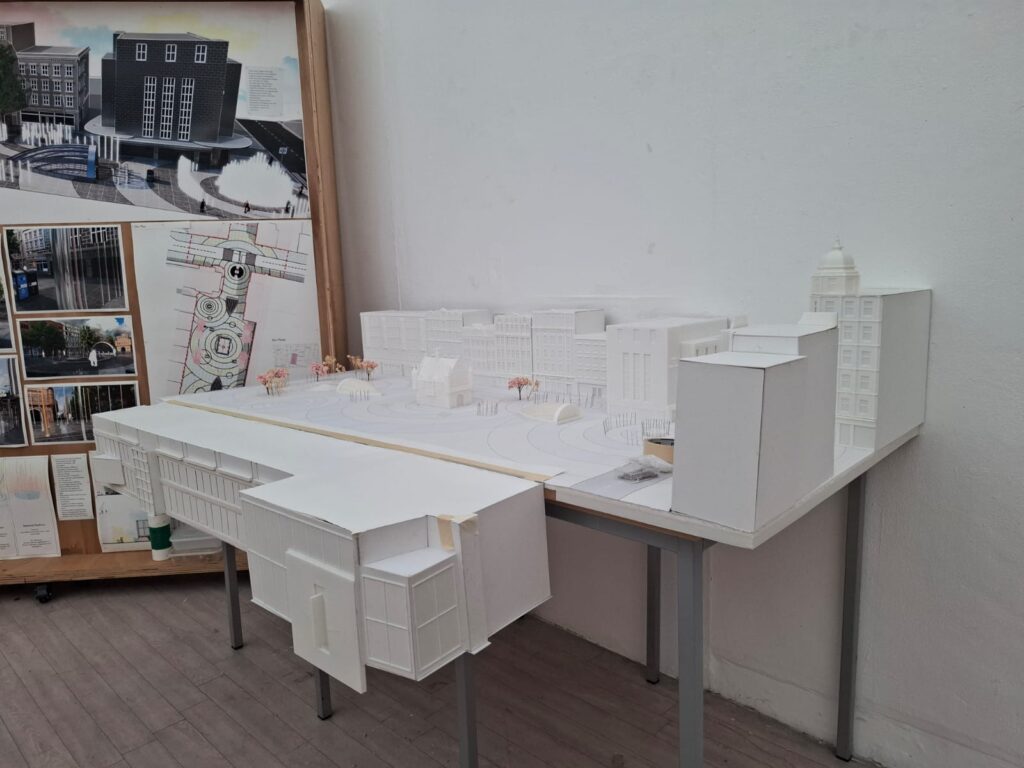
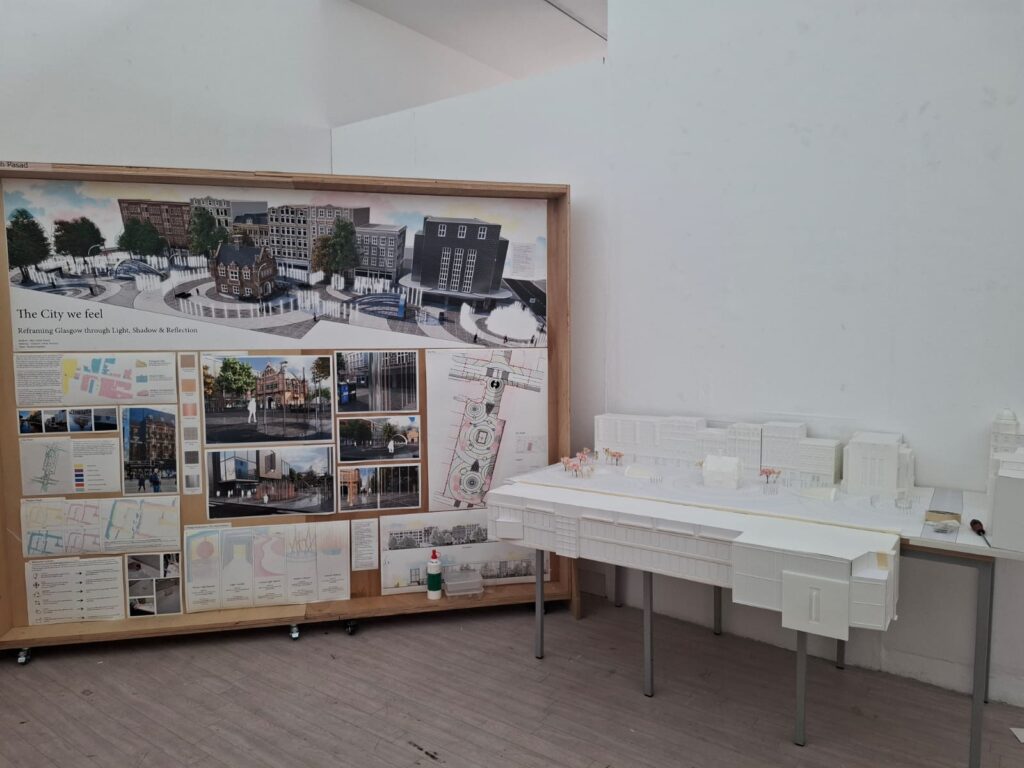
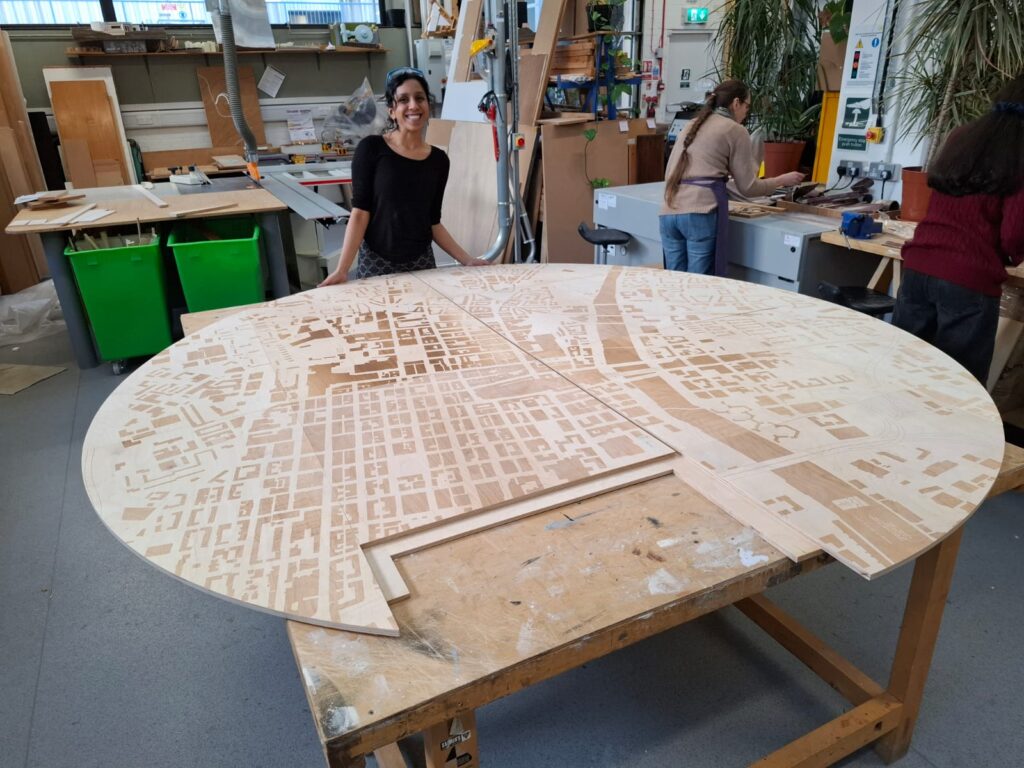
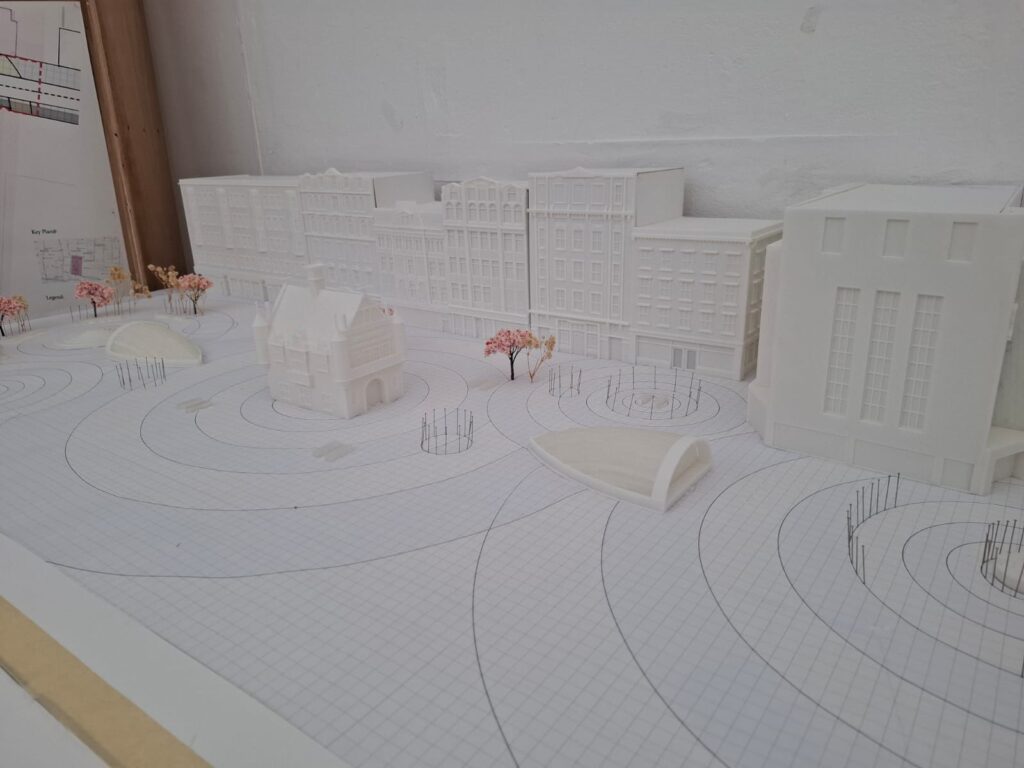
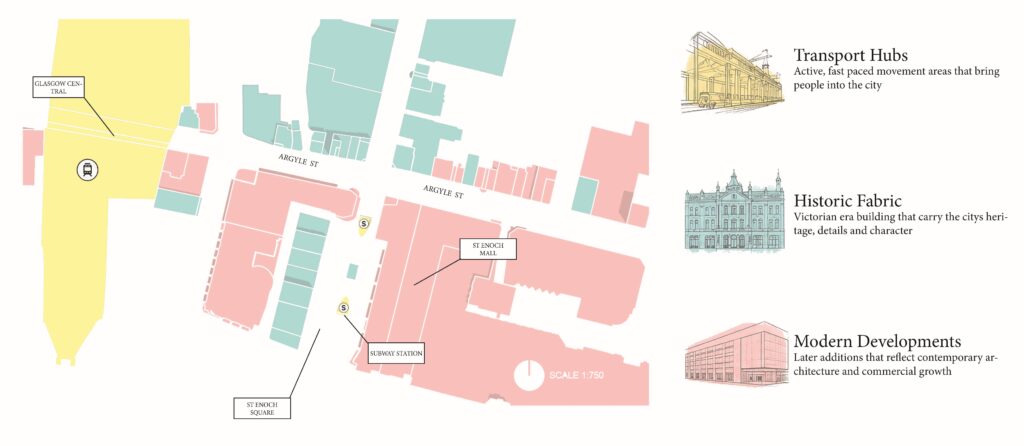
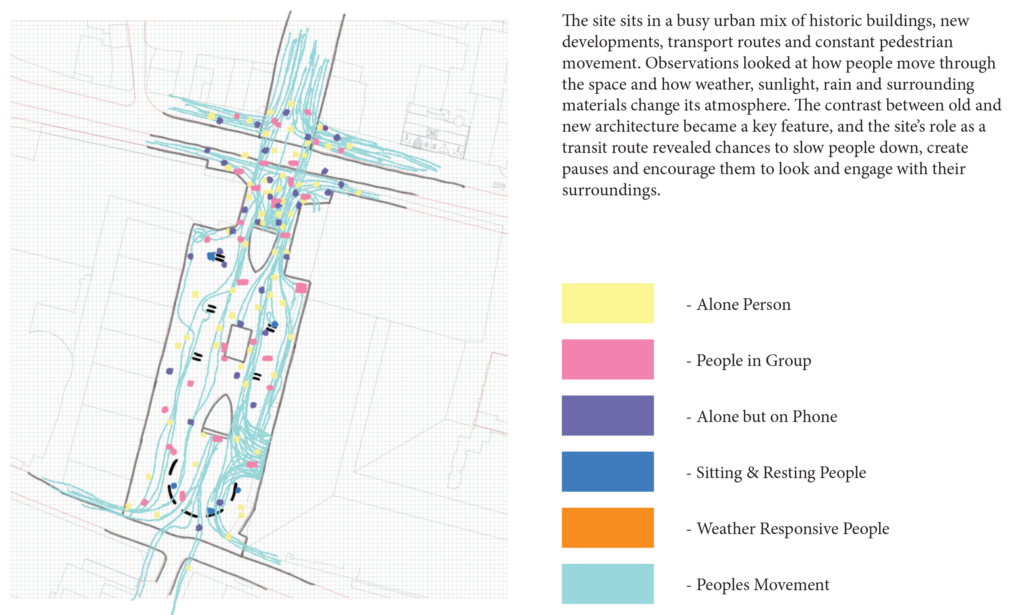
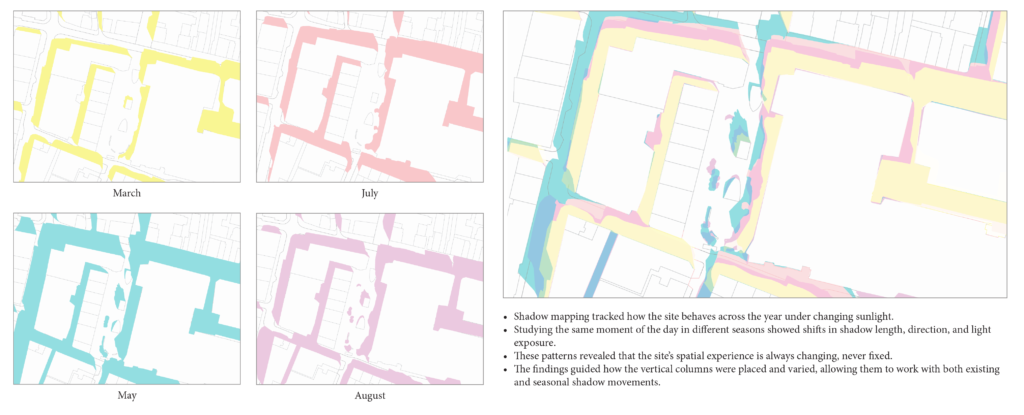
Living in Glasgow made me more aware of how weather, light and atmosphere constantly reshape the same place. These small moments are everywhere, yet most people miss them as they move through the city. The City We Feel explores how light, shadow and reflection can become design tools that invite people to pause, observe and connect with their surroundings. Through site observations, shadow mapping, material exploration, spatial experiments and user participation, the project investigates how subtle changes can reveal hidden qualities within everyday urban spaces.
The project suggests that public space can be more than a route from one point to another. By creating moments that respond to changing light and weather, the design encourages people to slow down and experience familiar places differently. Views shift, routes become more engaging, and everyday atmospheric conditions become part of the experience. Instead of simply passing through the site, people are encouraged to pause, notice and develop a deeper connection with their surroundings.
Aligned with the Creative Urban Practices pathway, the project asks how atmosphere can be designed rather than simply experienced. The outcome is an exploration of how small spatial interventions can encourage people to experience Glasgow not only as a city they move through, but as a city they feel.
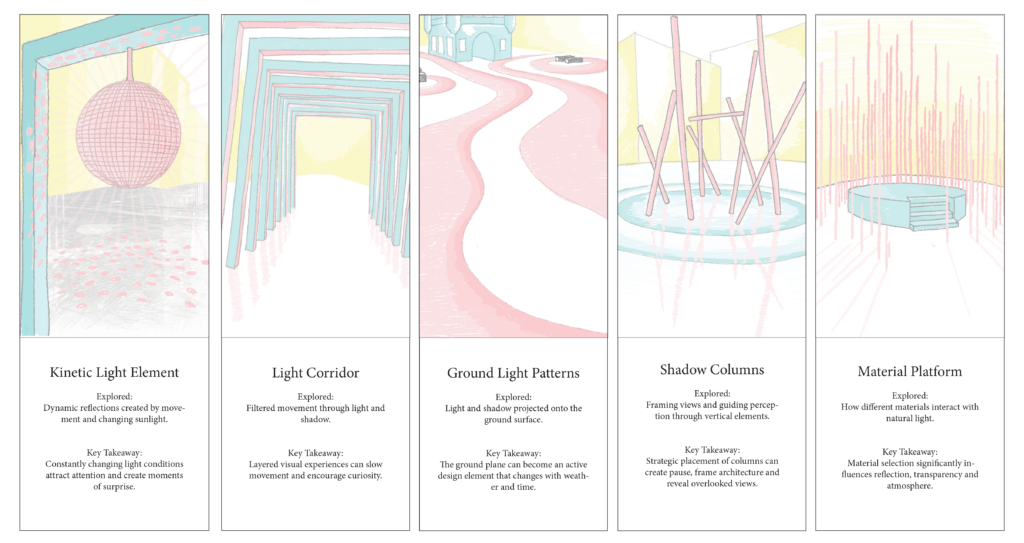
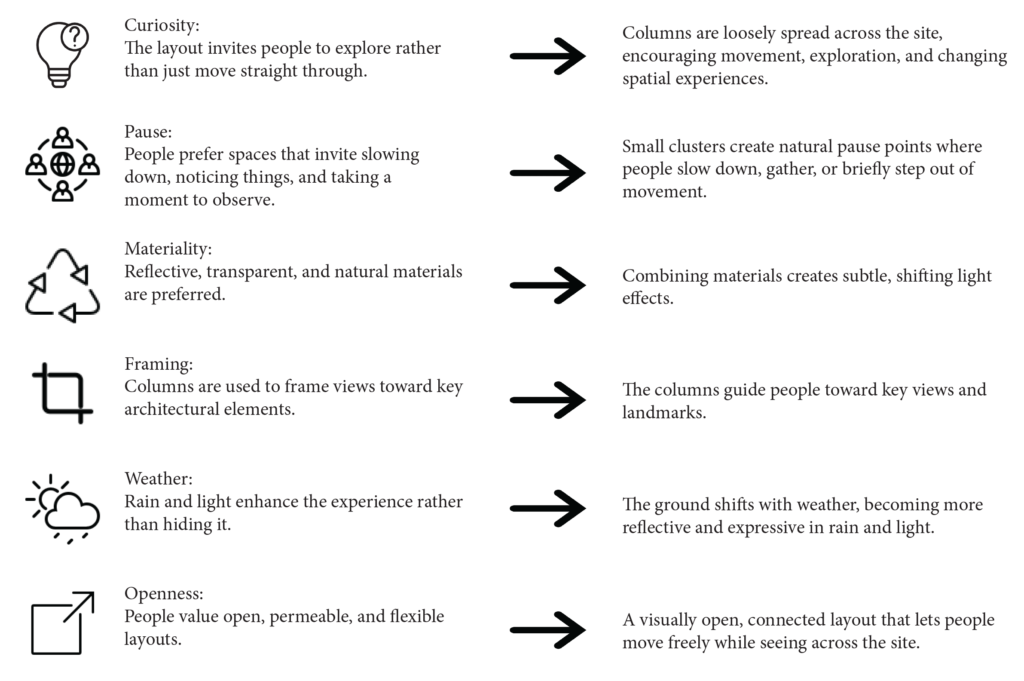
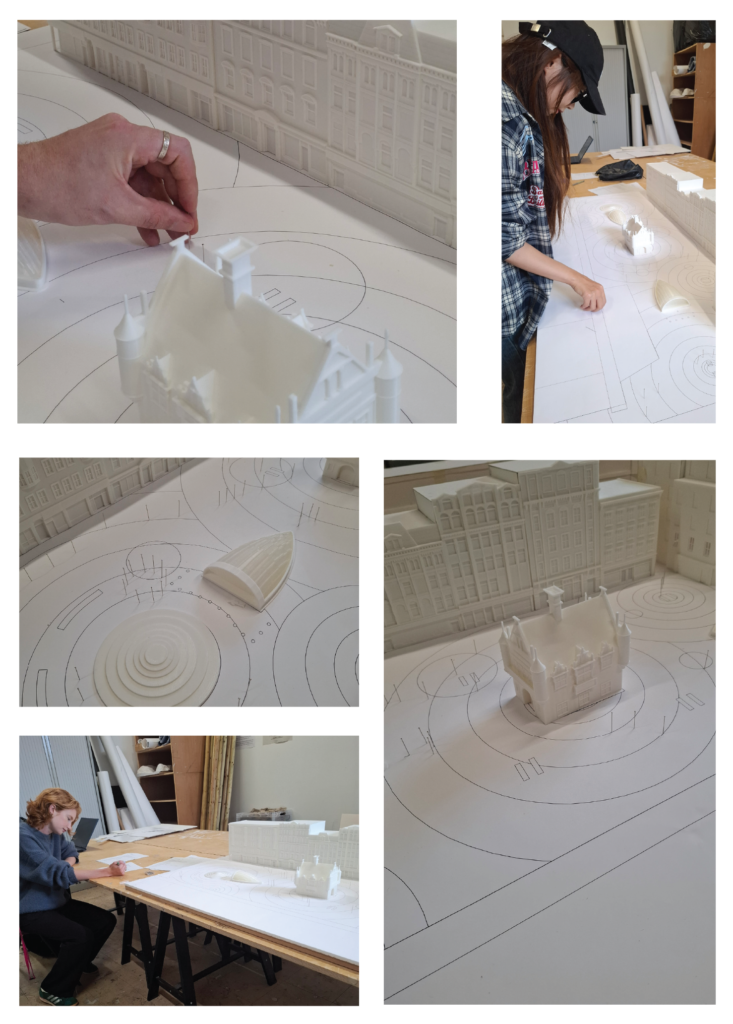
The City We Feel is a spatial design project exploring how light, shadow, reflection and weather can shape the way people experience Glasgow's urban spaces. The walkthrough presents the final design proposal from a pedestrian perspective, showing how the intervention creates changing moments of movement, pause, curiosity and discovery. The arrangement of vertical columns and ripple-inspired ground patterns responds to the movement of people while allowing light, shadow, rain and reflections to continually transform the experience of the space. The project was developed through site observation, shadow mapping, material exploration, spatial interventions and participatory model testing, exploring how subtle changes can encourage people to notice and experience a familiar urban environment differently. Project: The City We Feel Pathway: Creative Urban Practices Location: Glasgow, UK Medium: SketchUp + V-Ray Walkthrough Visualisation
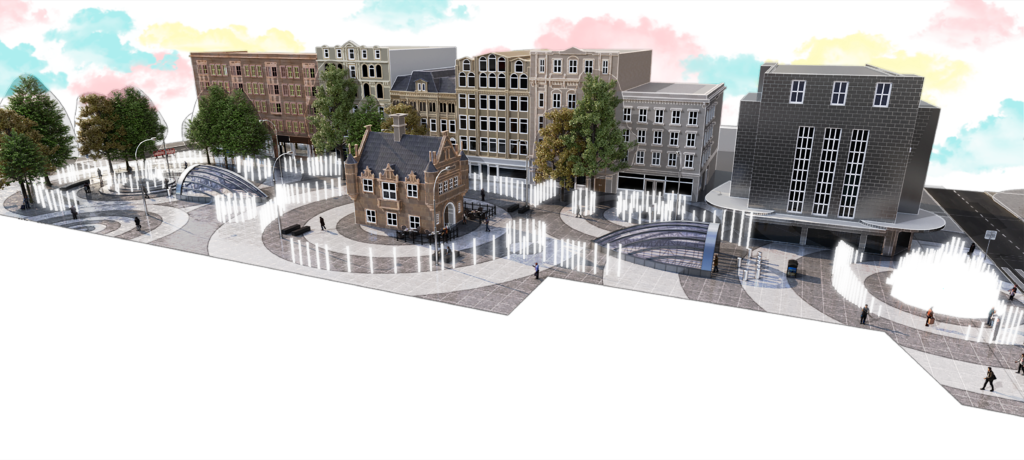
An overall view of the proposed intervention, showing the new field of vertical columns and ripple-inspired surfaces integrated within the existing urban context.
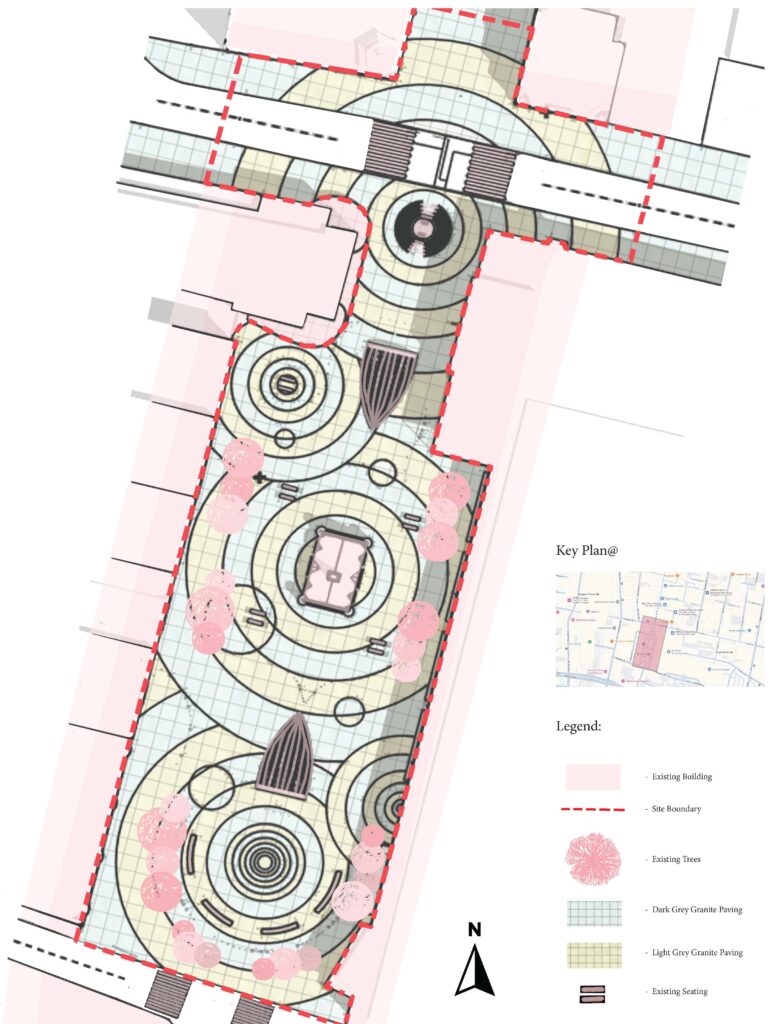
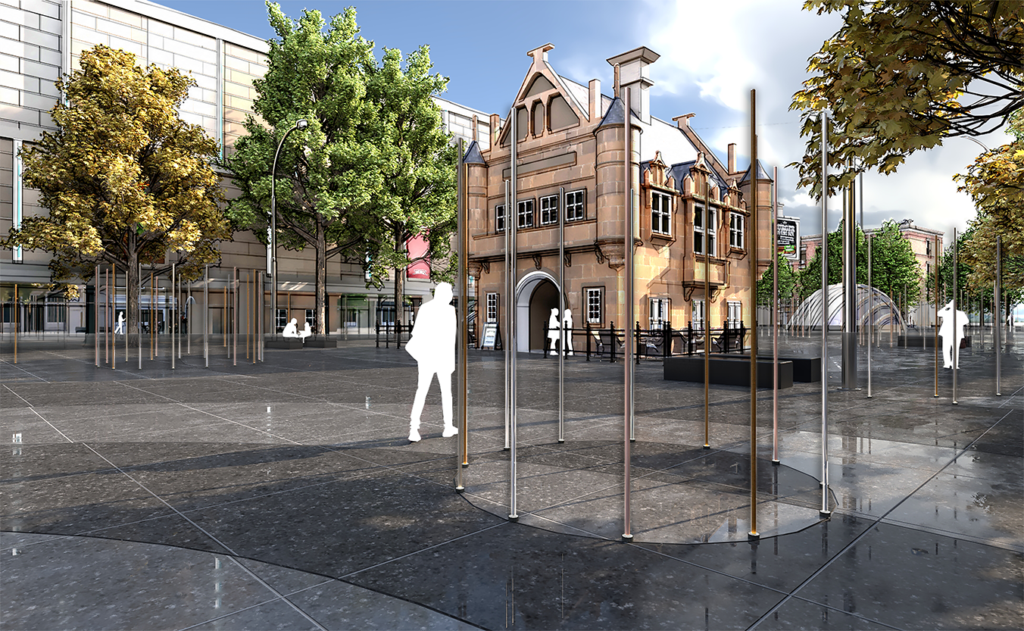
A pedestrian-level view exploring how the columns frame movement, views and moments of pause around the existing historic building.
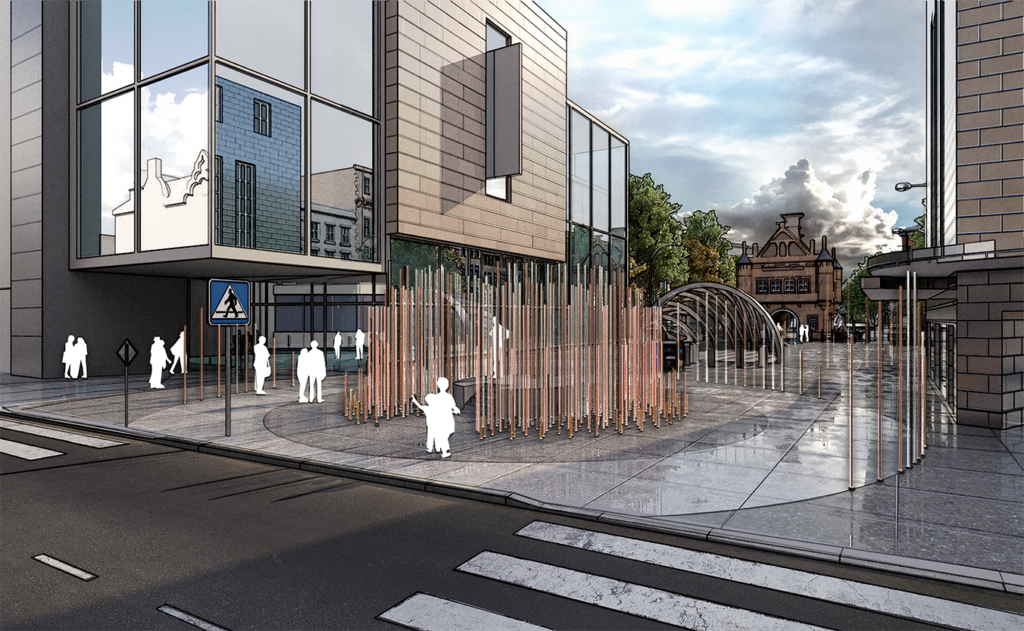
A street-level view showing how the intervention extends the experience of the square towards the surrounding streets and buildings.