
Hiu Fai Cheung
I am a multidisciplinary designer with a background in architecture and immersive technology. My practice explores the relationship between spatial design, virtual reality, and human experience.
With experience in architectural design, 3D environments, Unity development, and VR, I am interested in using immersive technologies to explore new ways of experiencing and understanding space. My work particularly focuses on spatial learning, emotional engagement, and experiential design.
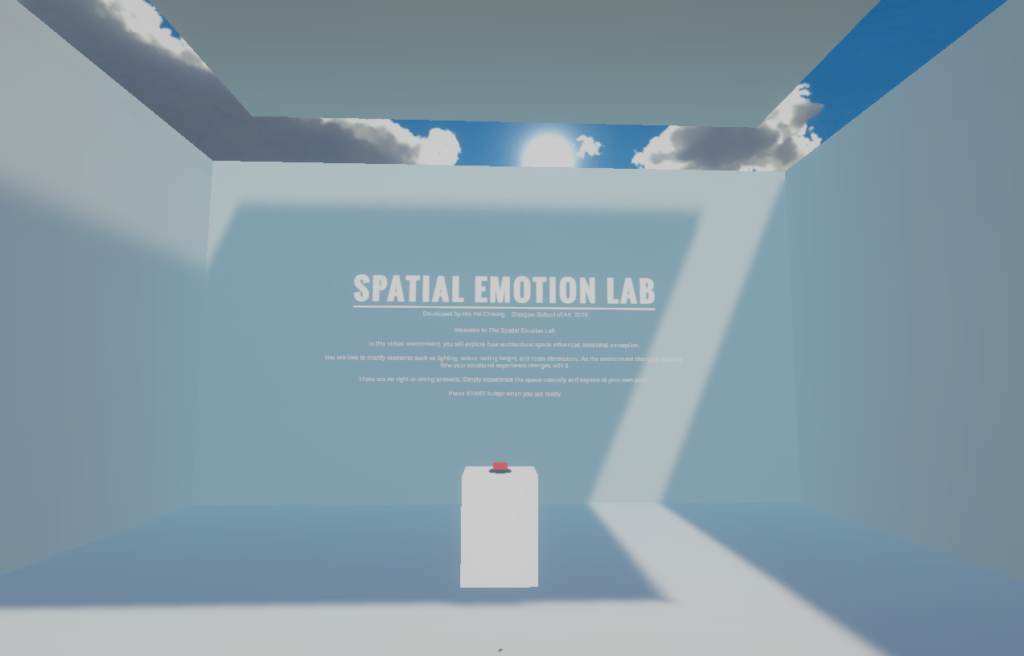
Spatial Emotion Lab
Spatial Emotion Lab is an immersive virtual reality experience that explores how architectural elements can influence our emotional perception of space. Developed as my MSc project in Serious Games and Virtual Reality at The Glasgow School of Art, the project brings together my background in architecture with immersive and interactive technology.
The experience focuses on three key architectural elements: lighting, colour, and spatial dimensions. Users move through a series of virtual environments where these elements change in real time, allowing them to directly compare how different spatial conditions affect their emotions and perception.
The experience gradually moves from guided exploration to active experimentation. Users first compare predefined emotional spaces, then explore different architectural configurations, before creating and adjusting their own environment using interactive controls.
Through this project, I explore how VR can make spatial and emotional qualities more immediate and experiential, and how immersive interaction can support a deeper understanding of the relationship between architectural design and human experience.
Opening environment of Spatial Emotion Lab, an immersive VR experience exploring the relationship between architectural space and emotional perception.
A five-minute presentation introducing the concept, development, VR experience, and evaluation of Spatial Emotion Lab.
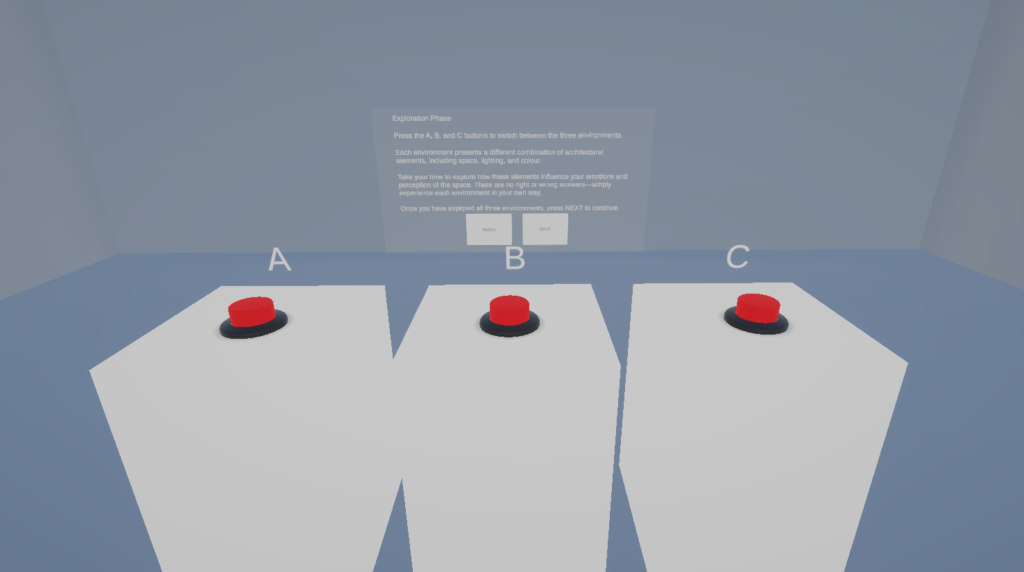
Users switch between three predefined environments in real time to compare how changes in lighting, colour, and spatial dimensions influence their emotional perception of the space.
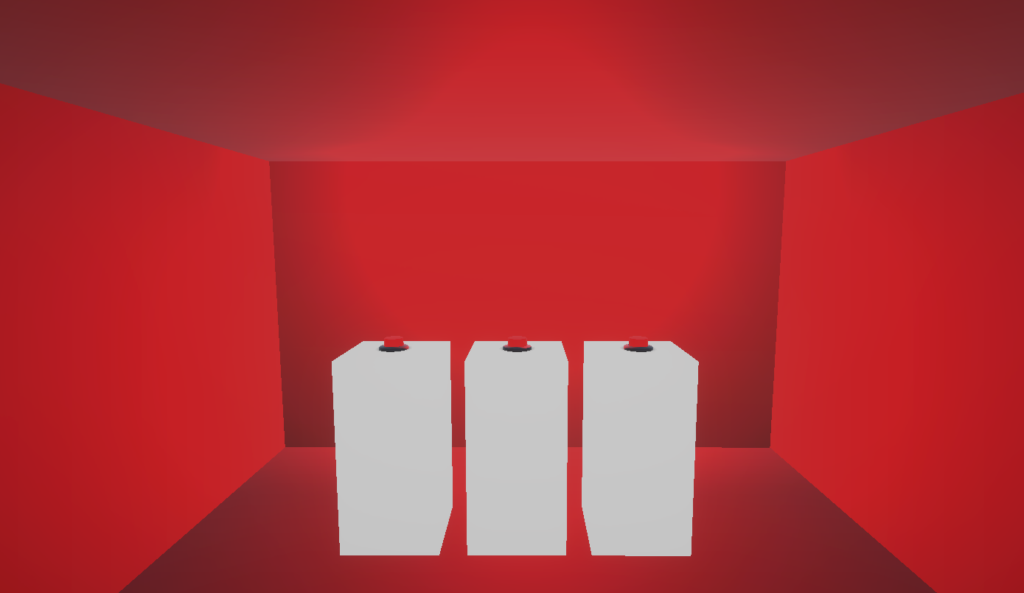
One of three predefined environments used to explore how changes in colour, lighting, and spatial dimensions can produce different emotional responses.
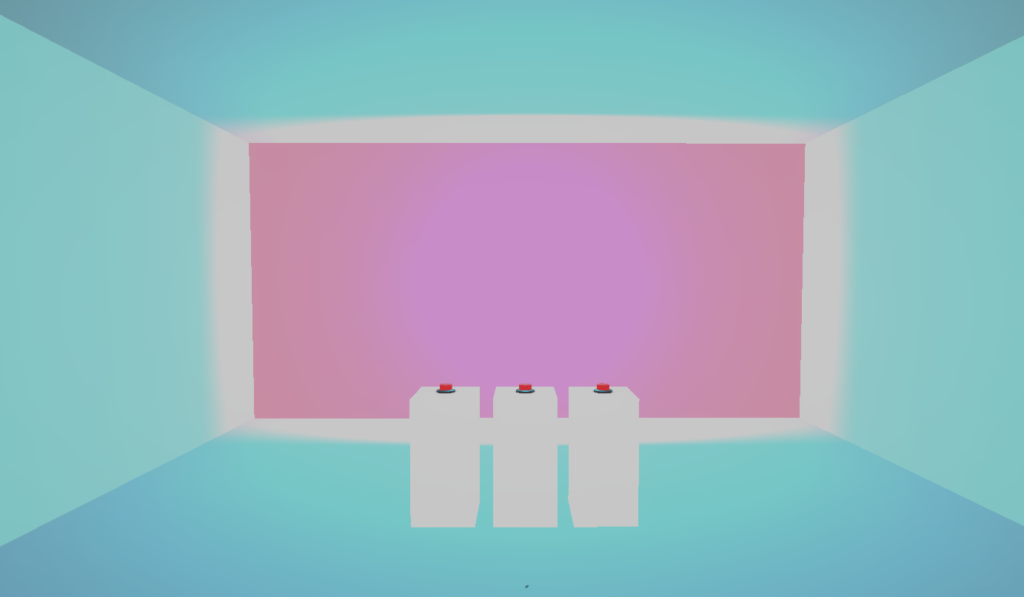
A contrasting predefined environment that allows users to directly compare how different combinations of architectural elements influence the atmosphere and perception of the same virtual space.
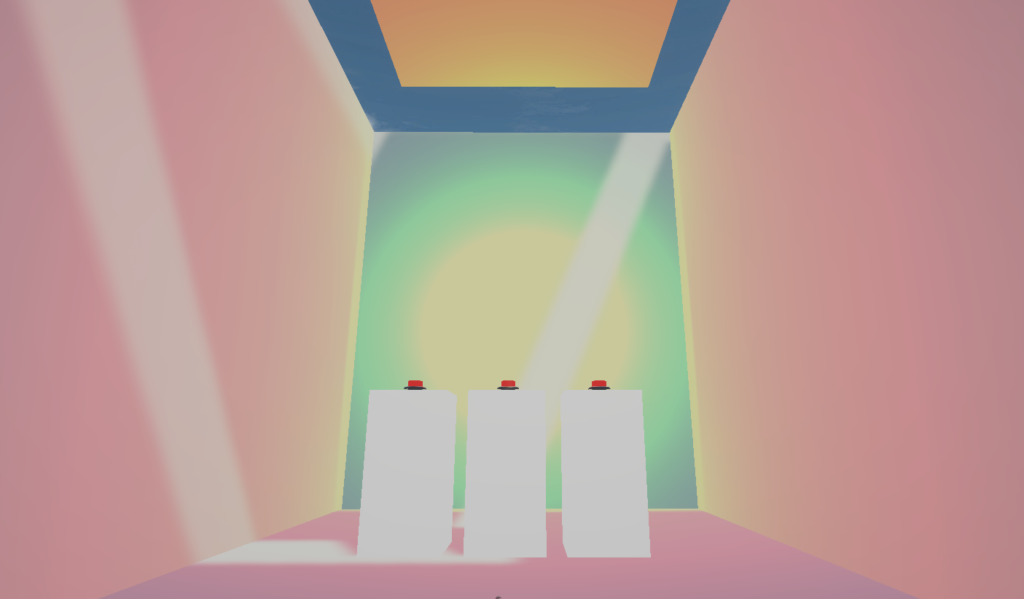
One of the predefined environments in Experience 1, demonstrating how colour, lighting, and spatial dimensions are combined to create a distinct spatial and emotional atmosphere.
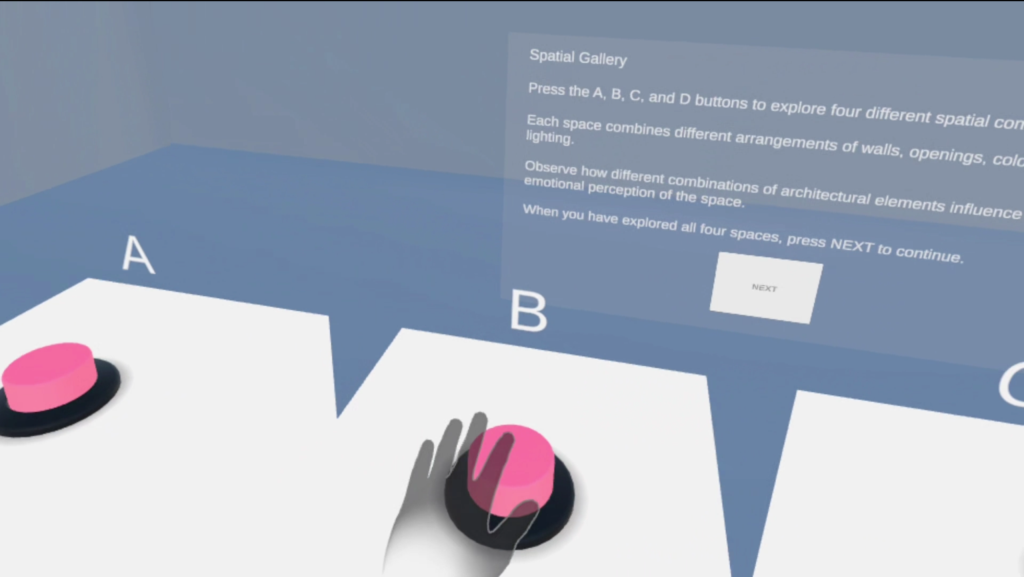
Users explore a series of architectural environments with different wall arrangements, openings, colours, and lighting conditions, allowing them to experience and compare how different combinations of architectural elements shape spatial perception and emotional response.
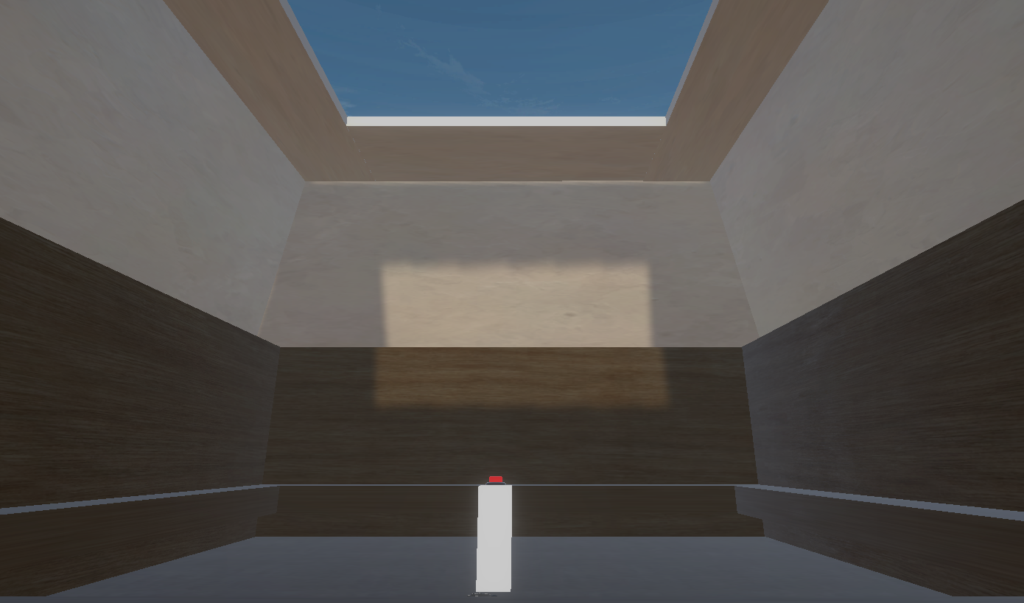
The first environment in Experience 2 introduces a different combination of wall layout, material, ceiling opening, and natural light, encouraging users to explore how these architectural elements shape their perception and emotional experience of the space.
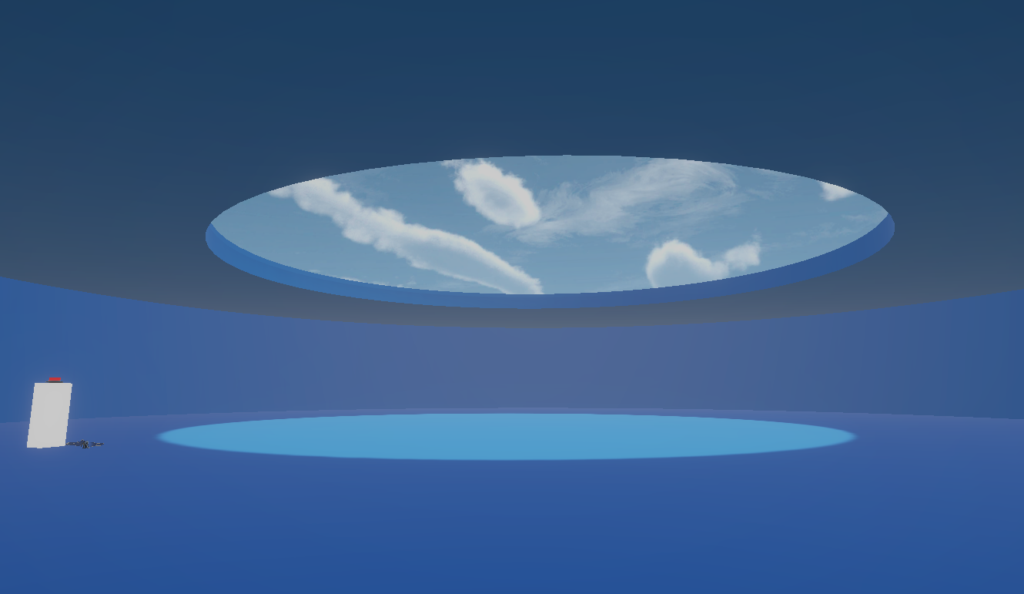
One of four architectural environments in Experience 2, combining a circular ceiling opening, blue surfaces, and natural light to explore how different architectural elements influence spatial atmosphere and emotional perception.
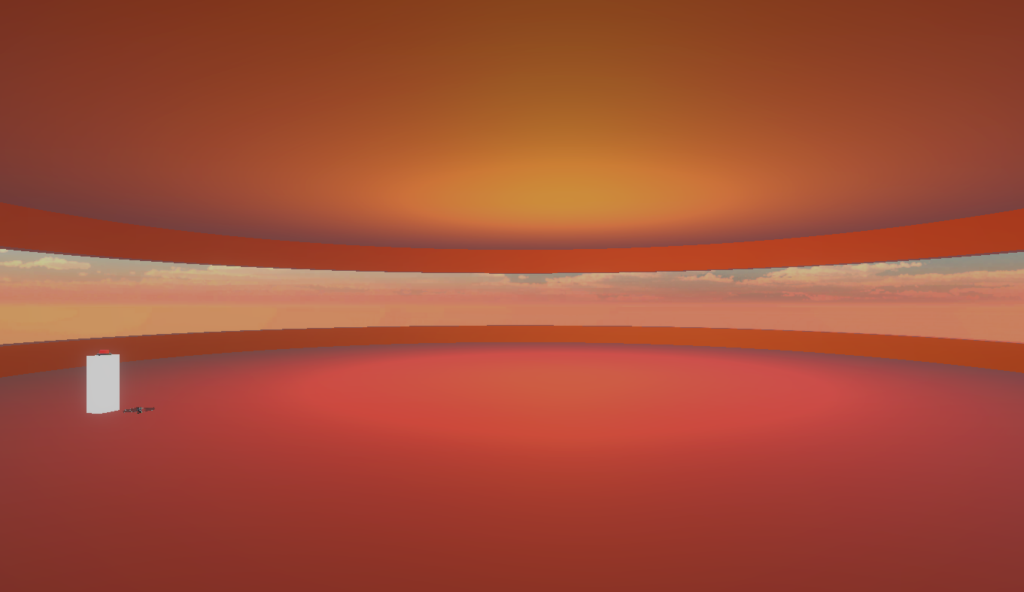
One of four architectural environments in Experience 2, using warm colours, horizontal openings, and a more expansive spatial configuration to explore how different combinations of architectural elements influence emotional and spatial perception.
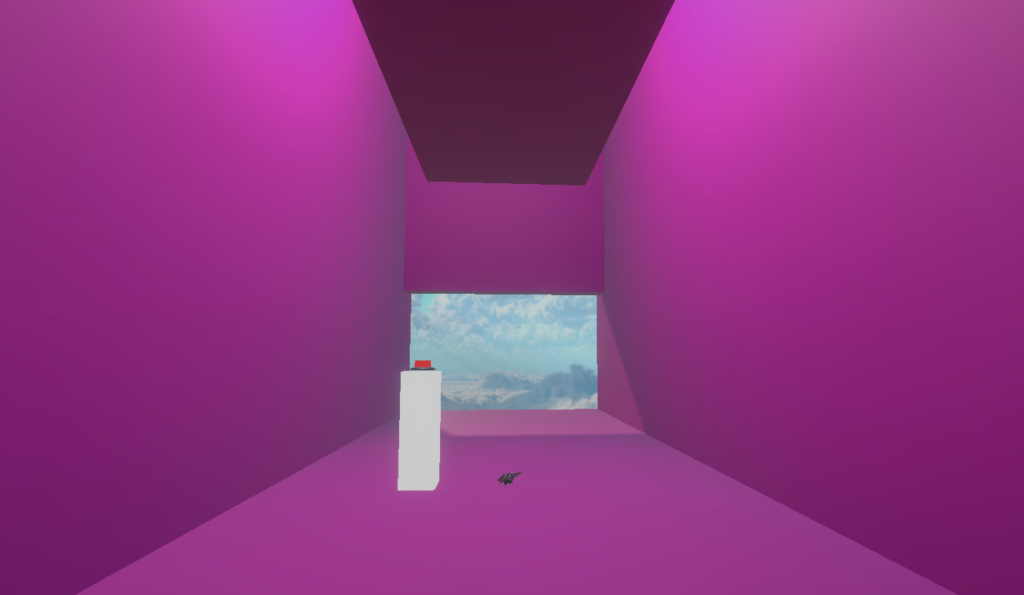
One of four architectural environments in Experience 2, combining a large wall opening, strong colour, and an enclosed spatial form to explore how different architectural configurations can shape emotional and spatial experience.
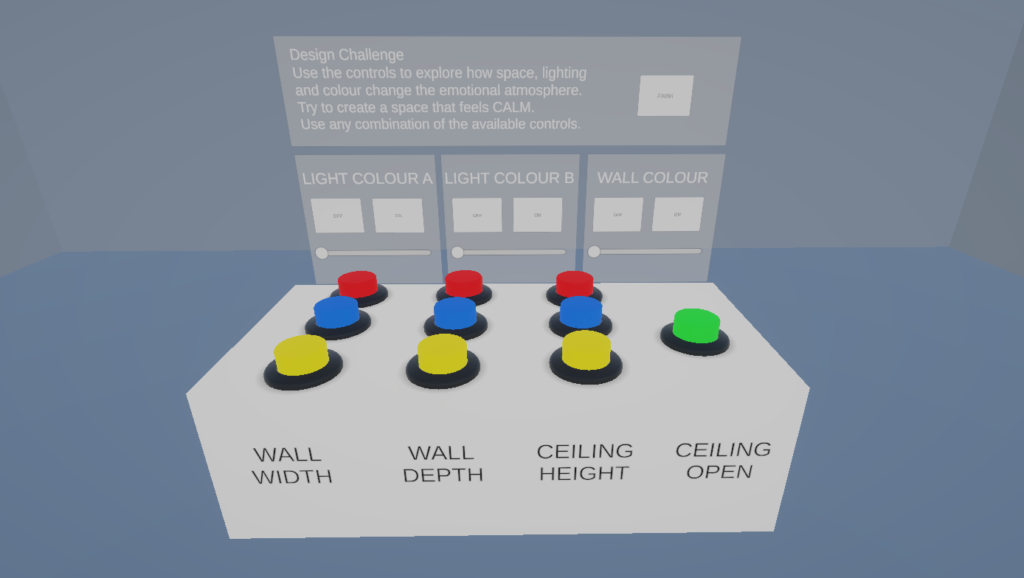
In the final experience, users can actively experiment with architectural elements by adjusting wall colour, lighting, room dimensions, ceiling height, and openings in real time, allowing them to create different spatial combinations and observe how these changes affect their emotional experience.
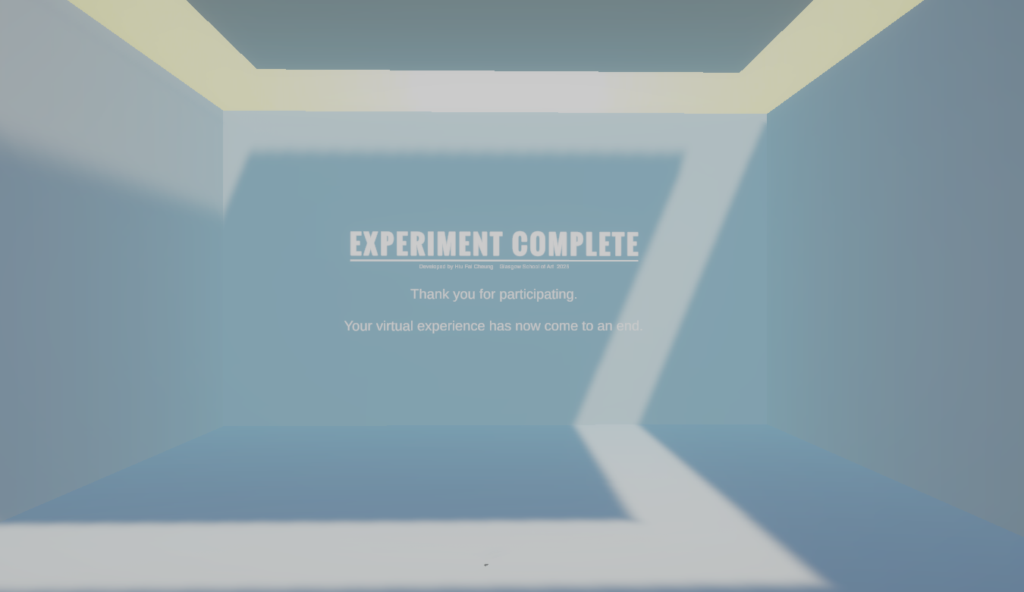
The experience concludes after users have explored and experimented with different architectural elements, encouraging them to reflect on how spatial design can influence emotional perception.