Elias Botero Garcia
(He/Him)
Professional with seven years of experience designing and leading sustainable development initiatives in collaboration with the private sector, government, and NGOs. My work has focused on strengthening livelihoods through biodiversity conservation, cultural heritage, and community-based tourism in protected areas across Colombia, working with institutions such as the Ministry of Environment, National Natural Parks, and the Colombian Association for Responsible Tourism, among others.
I have experience in team leadership, strategic planning, project structuring, ecotourism management, and creative methodologies, complemented by strong skills in quantitative, data-driven methods for decision-making and the design of projects, programes, and methodologies.
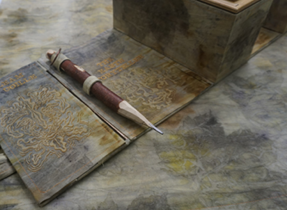
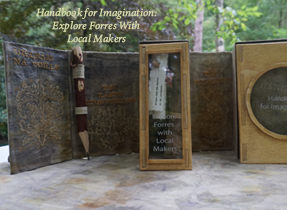
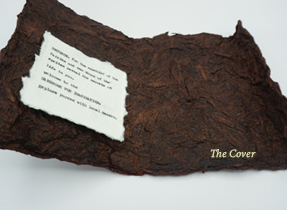
Handbook for Imagination Explore Forres With Local Makers
Collaborators
- Katinka Senara – Character design and illustration for the “Handbook for Imagination: Explore Forres with Local Makers”.
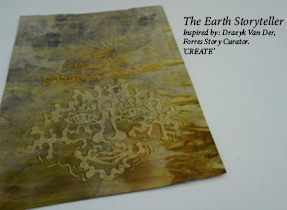
Ailsa Kay – Design of envelopes used for the “Letters to the Future” workshop with artisans and artists from Forres. - Draeyk Van Der – Contribution of stories and knowledge to the creation of the character “The Earth Storyteller”.
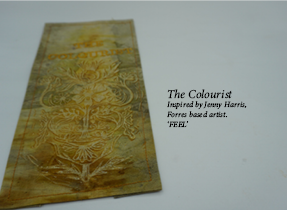
- Jenny Harris -Contribution of stories and knowledge to the development of the character “Climate Colourist” .
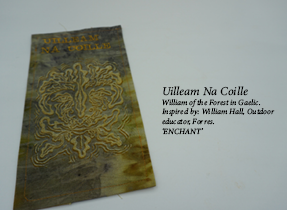
- William R. Hall – Contribution of stories and knowledge to the creation of the character “Uilleam Na Coille”.
A Social Innovation Project
In Scotland, 43% of 407 monitored species showed a moderate or strong decline over the last decade (NatureScot, 2023), a 50% drop in traditional practices over the past 50 years (Creative & Cultural Skills,
2015), and a rise in mental health issues such as eco-anxiety (Scottish Government, 2024). As Félix Guattari (1989) argues, the ecological crisis is an environmental, social, and mental crisis rooted in how we, as a society, produce future desire. We don’t need to be mathematicians to know that any unsustainable system will eventually collapse. Difficult times may lie ahead for humanity, but we will find a way through.
I am convinced that the answer lies in our direct relationship with the land, the river, the forest and natural materials. As a species, we must look to the past, reconnecting with our traditions, practices, and knowledge to restore a more balanced relationship with the landscape. Today, the disappearance of species and the destruction of key ecosystems seems to matter little to people; it is a crisis that is not personally experienced (Hulme, 2009), as we tend to view global warming as an abstract, global phenomenon. It’s a crisis that is neither experienced nor felt (Abram, 2013). In the course of my research into the ecological crisis, I found it’s presentation to be completely disconnected from the realities of local communities.
Given the complexity of the problem, my desk research focused on analyzing philosophical perspectives regarding how to address this crisis, specifically examining how art, children’s education, and artistic expression serve as key tools for shaping futures that are imagined, felt, and rooted in a specific place. The field research focused on understanding how, through creative practices and arts-based education, we can create tools to engage children and young people in Forres in the conservation of their natural heritage. To this end, my primary research centred on building strong ties with local artists in Forres to analyse local capabilities and opportunities for creating creative education strategies.
Seeking local solutions to global challenges
I conducted a social innovation exercise called “Letters to the Future,” inviting local artists and craftspeople to envision a sustainable future; this participatory action research workshop allowed me to
gain insight into leadership dynamics, capabilities, and the potential for stronger community engagement. As a result of the “Letter to the Future” workshop, I found that the town’s artists and artisans possess significant capacity for environmental leadership and serve as a key pillar of the social fabric; crucially, their creative and artistic abilities hold great potential for driving environmental education
initiatives in Forres.
To identify my innovation opportunity I wanted to analyse deeper how creative and artistic strategies are implemented to confront the ecological crisis, therefore I interviewed Louise Reynolds—Project Lead for the UNESCO Biosphere Communities Project (North Devon)—to understand how to engage children and young people in addressing the current ecological crisis. I also interviewed William R. Hall, an environmental educator from Moray, whose insights were crucial to understanding the tools and methodologies for involving youth in nature conservation through play, myth, and creativity.
This research process enabled me to identify my innovation opportunity— How might we create arts-based and place-based educational tools that use local stories, living heritage, and creative practices to help children in Forres reconnect with nature and imagine sustainable futures?
Solutions inspired by imagination, myths, and local artists.
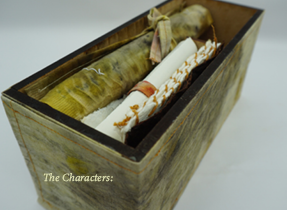
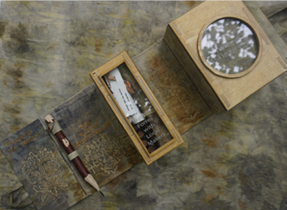
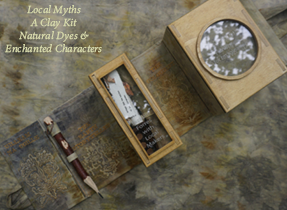
As the final outcome of my master’s project, I developed a tool-kit featuring a “Handbook for a Sustainable Future: An Aid for Imagination”. It includes characters such as “The Colourist” (inspired by local artist Jenny Harris)—the guardian of Forres’ natural dyes, who invites people to experience the world through painting and colour; “The Earth Storyteller” (inspired by local artist Draeyk Van Der)—a mythical forest being who guards Celtic mythological treasures and secrets on Forres’s High Street;
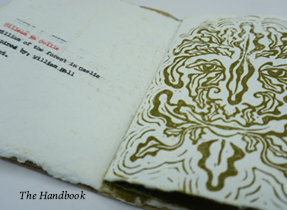
and “Uilleam Na Coille” (inspired by environmental educator William Hall)—a giant oak who teaches how to converse with trees and animals through myths and legends.
The creative tool-kit is an invitation to play and experiment; it features activities led by mythical characters who invite you to play with clay to craft Celtic objects, create myths and legends to better understand the forest sages and the trees, and to draw, play, write, and experiment to realign the next generation’s future desires, ones that are imagined, felt, and rooted in a specific place.
The project “Handbook for Imagination: Explore Forres with Local Makers” is part of the Rural Lab constellation at the Glasgow School of Art’s Highlands and Islands campus. It is an invitation to build from the local level—an approach where art and crafting carries not merely aesthetic connotations, but rather transformative ones.