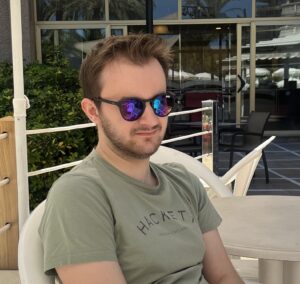
Cameron Wiggan
(He/Him)
Hi, my name is Cameron Wiggan. I am a Masters Student on the Serious Games and VR at Glasgow School of Art Course.
I have had a great interest in gaming and computers throughout my entire life. I can even pinpoint the exact moment this happened, the Christmas I got my Nintendo DS. which I still own to this day, although a bit more battered and bruised.
It has been a joy learning how to create the type of experiences, for others that I love to play myself. Learning a variety of skills to take me further in my career. During my time at university I have become a generalist programmer with skills in gameplay and graphics as well as object orientated programming, data structures and algorithms.With an in depth knowledge of C++,C#, Unity, Unreal Engine 5, SFML, HLSL and DirectX.
After graduating university I have continued to grow and develop my skills as part of a team of fellow graduates working on a group project in our spare time which has allowed me to develop my skills in both C# and Unity development. That project ended up being Car(D) Crash which is a deck builder themed around cyberpunk street racing with some unique twists to the genre.
Starting in September of 2025 I began to work towards a MSc in Serious Games and Virtual Reality at the Glasgow School of Arts School of Innovation and Technology. The course focuses on external reality technologies as well as games and their applications in entertainment and their use as a more serious tool for education and change.
During my time at GSA I have developed my skills in programming and game development but have gained new invalulable skills for my work going forward. Such as Project leadership using Agile, audio programming using FMOD aswell as audio editing skills using reaper and adobe audition, skills in 3D modelling in Maya and Substance Painter, new game design skills using serious game design frameworks such as Triadic Game Design and LM-GM for both video and board games, board game rules creation and writing and finally external reality technologies such as Augmented reality, virtual reality, mobile development and other external reality input devices such as leap motion.
In my spare time I still love playing games and do so frequently, with some of my favourites being Hades, Red Dead Redemption 2 and BloodBorne. I also often enjoy watching science-fiction and Horror films and love playing Board games along with Table-top role-playing games.
Usage of Serious Games in Construction Training for Net-Zero Skills
This dissertation investigates the possible usage of serious games in construction training for net-zero skills to help fight the ongoing climate crisis. With the construction sector producing nearly 40% of all total C02 emissions globally. It has never been more important for the sector as a whole to adopt cleaner and more sustainable practices such as net-zero construction. In order to create the opportunities that allow those in the industry to gain skills in net-zero construction to bring about this radical change. The industry must take better advantage of digital tools to create the best educational environment and develop alternative educational materials.
This study proposes that a serious game designed to educate and skill boost these learners can provide an invaluable teaching aid. By Adhering to serious game design methodologies like Triadic game design. The developed application makes use of these design methodologies to enhance the learning of the player through game mechanics, where the player retrofits an Edinburgh town house to reach energy usage goals.
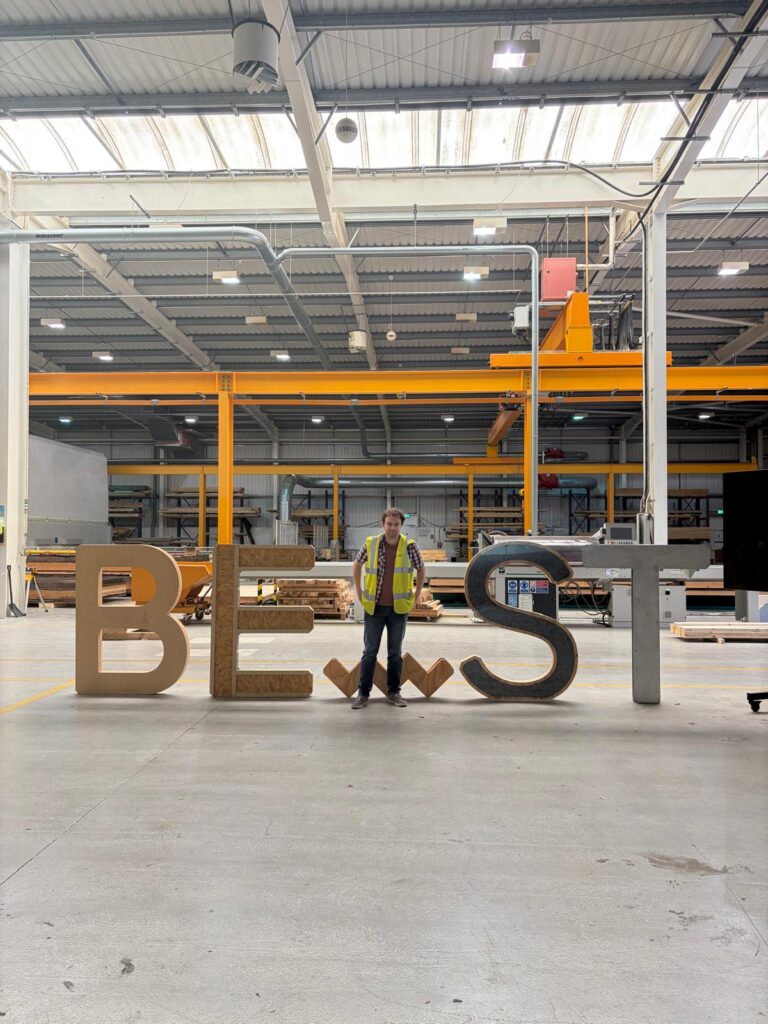
Working closely with my contact and external supervisor at BE-ST and diving as deep into the subject as I could I Conceptualized, designed and developed the game prototype Insulation Situation to help in the teaching of those on BE-ST’s low carbon passport course on the importance of balancing the main factors of Heat, air and moisture and passivhaus practices.
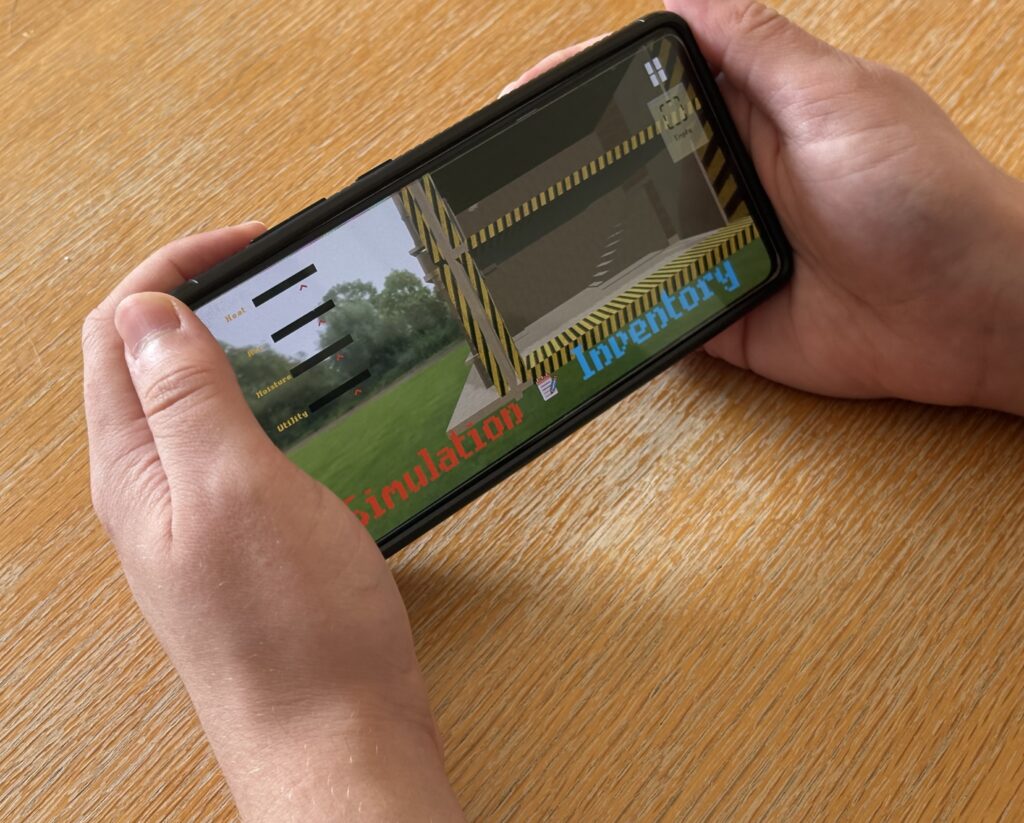
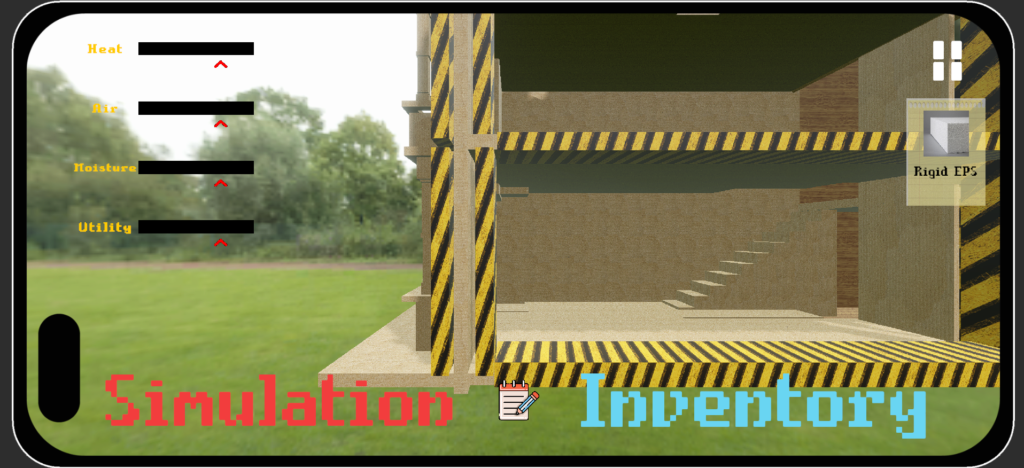
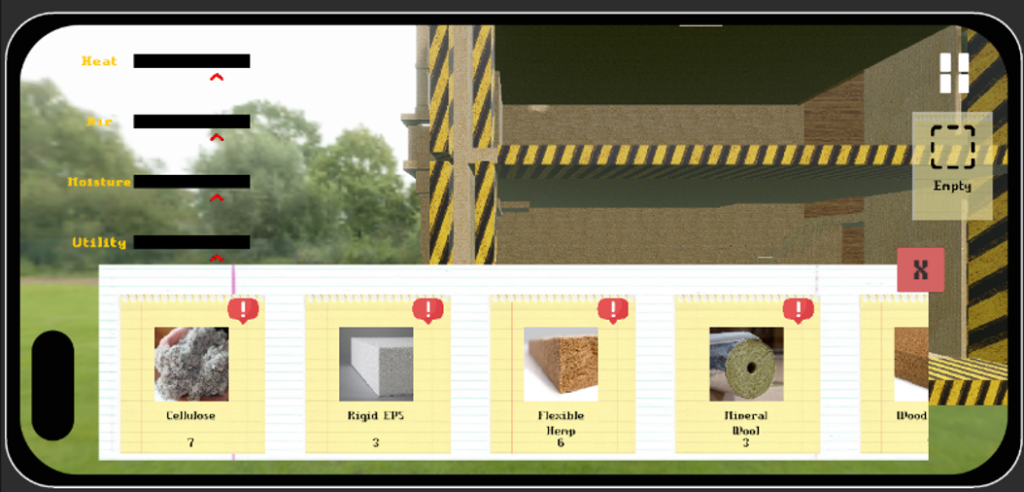
Insulation situation tasks the player with retrofitting a Victorian Edinburgh townhouse as well as the new timber extension with brand new insulation. The job of the player is to properly design and fit each wall,roof and floor with brand new insulation. Watching where resources can be used and how they affect the overall performance of the house in order to save the home own as much money as possible
This was then tested by professionals within the sector to determine its usability and its teaching performance through a survey answered by six participants. With answers being measured through the use of the Likert scale.
The findings produced suggest that a serious game developed using these methodologies can have a positive impact on the learning of the subject for the player. With participants reporting a high level of positive engagement and overall satisfaction with the project and its content. Supporting the further study and usage of serious games within the field to better educate learners and workers in these invaluable skills and knowledge within an ever-changing industry.
Brief presentation on my masters dissertation
Logic Gate
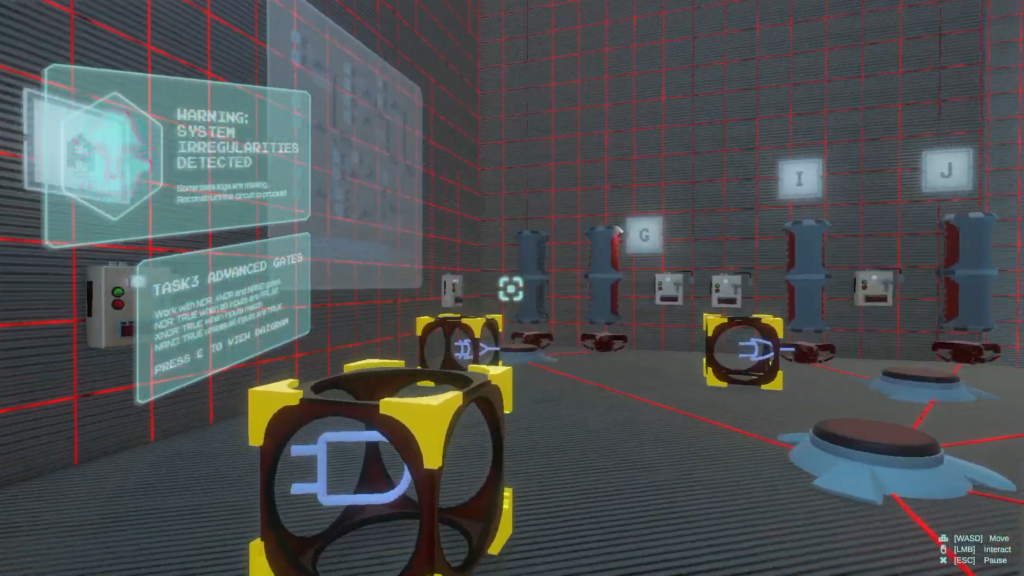
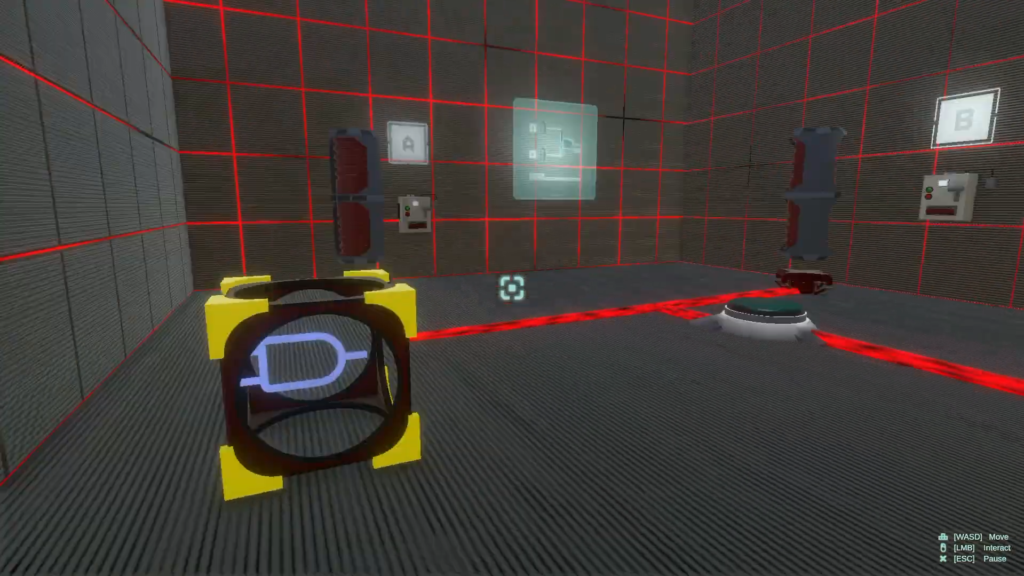
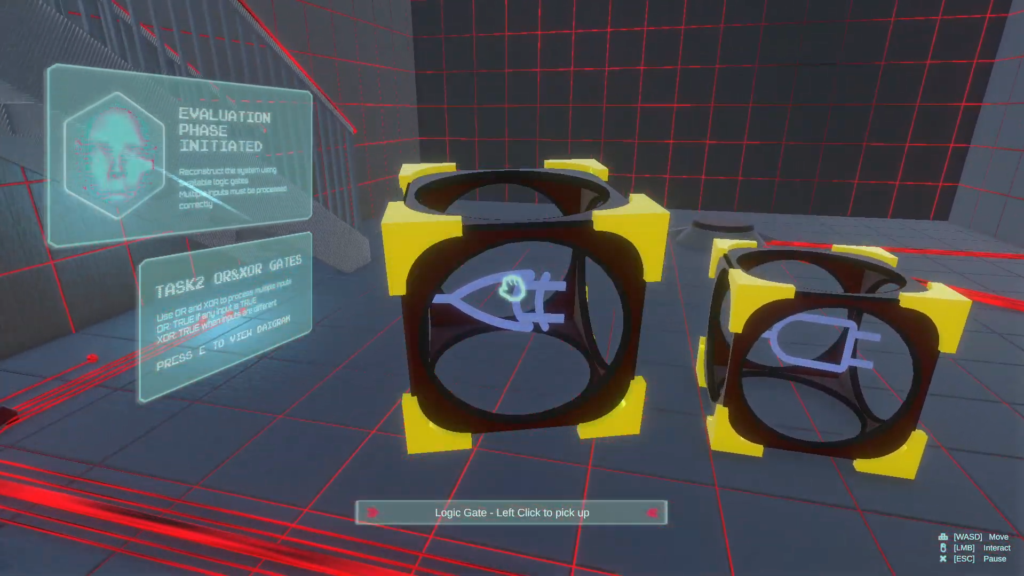
As a part of the master’s course we were tasked of creating a short, serious game designed to educate and teach the player in a specific subject as a part of a team. We eventually settled on a first-person puzzle game designed to engage children aged 11 to 14 in logic gates which are core concept in low-level computing. In the game the player takes the role of a digital robot being put through virtual challenges where they have to solve logic circuits to complete the game. With the aim of the game to educate the player in the subject of logic gates which are a core fundamental in low level computing.
During this project I was appointed project lead as well as game programming lead. I had never led a project before so this was an incredible challenge along with developing a flexible yet solid puzzle mechanic that needed to stay consistent but could also be updated, edited and added to if need be. Which presented a huge challenge. Which I am very proud of. Team memebers on the project included Lisa Nicholson, Xueling Sun, Alwalid Almansour and Xuran Hong aswell as myself.
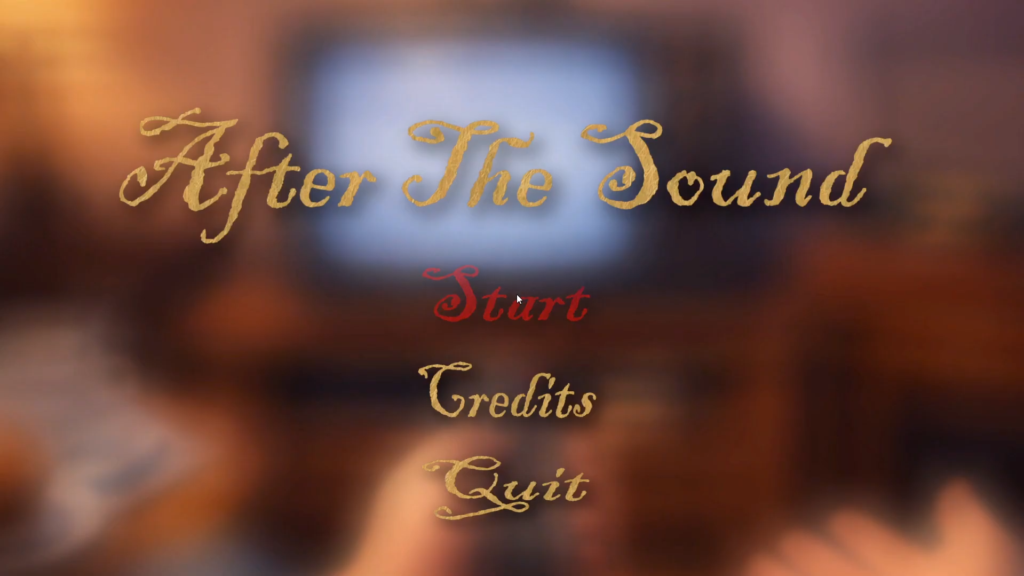
After the Sound
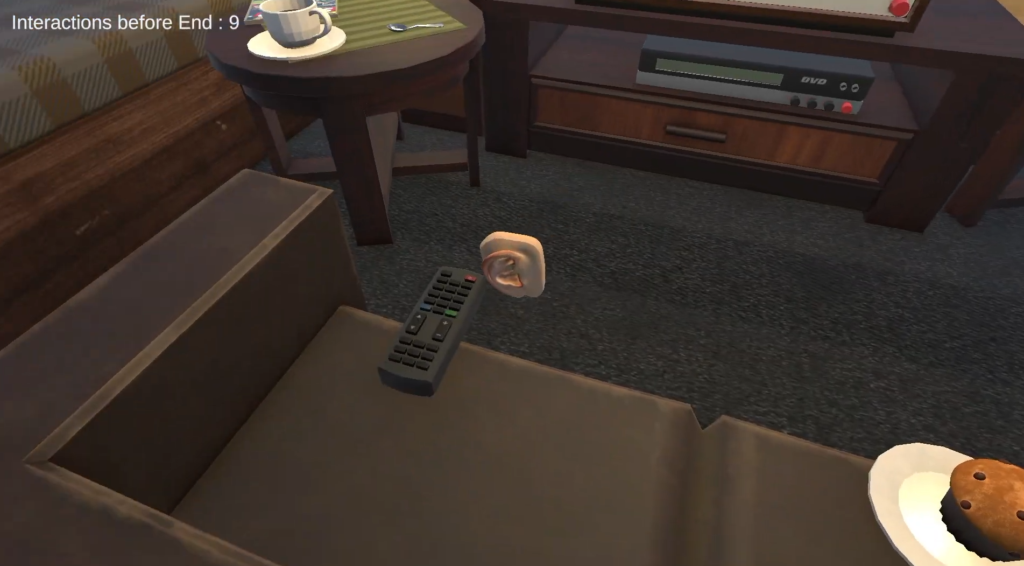
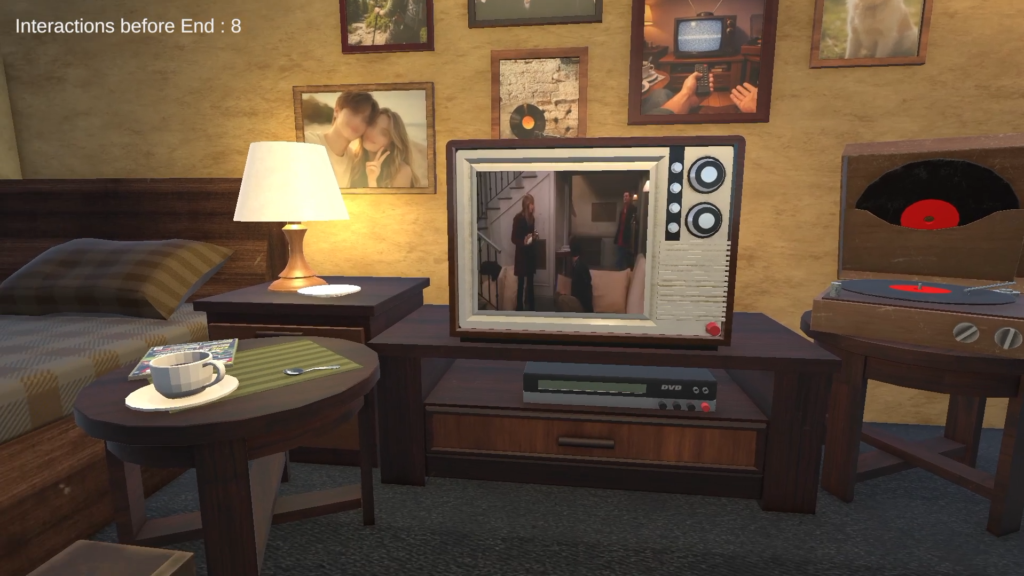
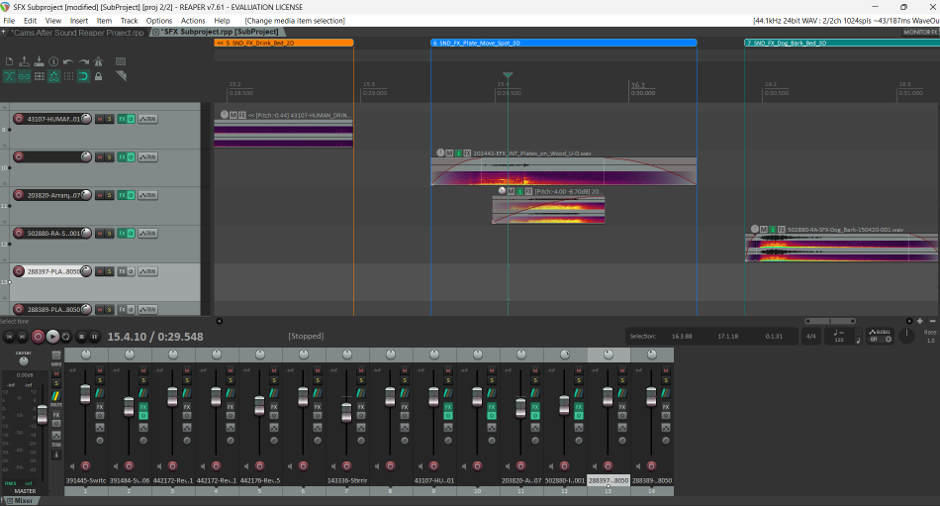
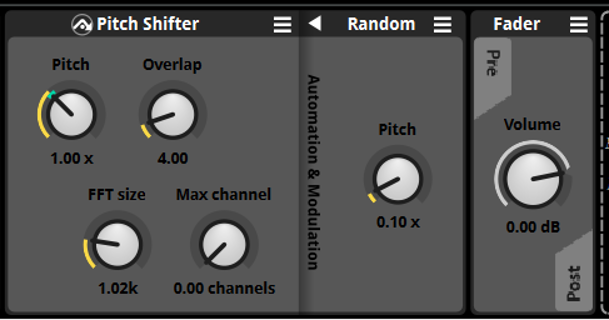
As a part of my audio for games elective me and Wei He were tasked with creating a short demo for a game that entirely relied on audio and music. From that my collaborator Wei He suggested doing an emotionally charged short point and click describing the life of someone after a breakup and them subsequently moving on. This project was developed using Unity, FMOD for In-game audio and reaper for all audio editing.
While I took on the role of games programmer and audio programmer. Wei took on the role of main designer and artist. With us both sharing the role of audio production. This was a challenging project as I had never worked with audio before but by the end I was familiar with the terminology and best practices and look forward to taking these skills with me into the future.
Fire Hazard
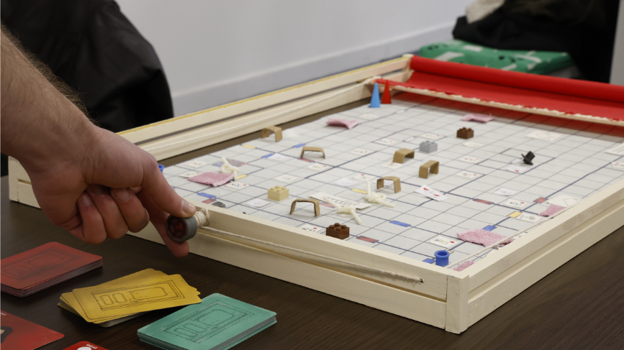
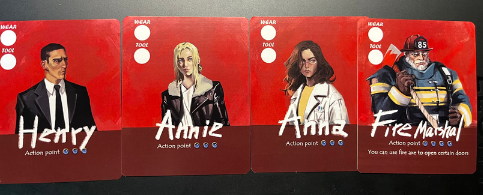
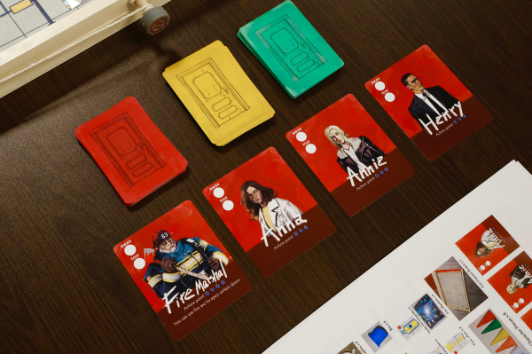
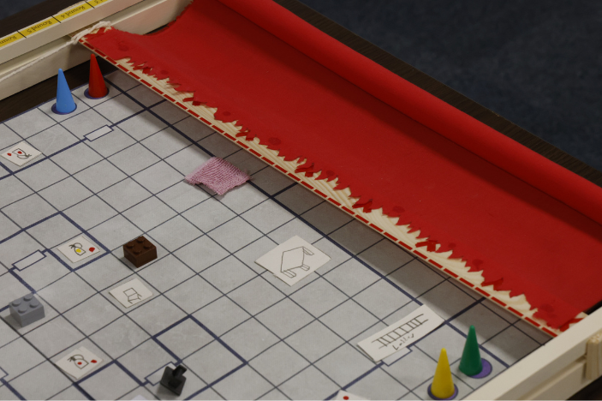
As part of a group serious games design module me and my team put together the board game Fire Hazard. Fire Hazard is a Cooperative board game designed for four players to help educate players in fire safety awareness and encourage teamwork and cooperation between players created for my serious games design module. The players all take the roles of office workers at Conglomerate Inc. Their boss Mr. Curmudgeon is an incredibly stingy man who does not care for those “Safety Rules” leaving objects about the office, never feeling the need to clean up or put in any form of mitigations against fire incidents. Only on boarding one of you as the Fire Marshal as a legal requirement more than anything else! In Mr. Curmudgeon’s mind “It always happens to someone else!”. Well! today the players are that someone else. A fire has broken out in the office. The Players must work together to escape the building together. If any player is covered by the flames they will need to be rescued by the fire department and the players will fail to escape together and have lost the game
The office environment is represented through the use of a square grid. Which is populated with everyday objects left carelessly around the office. These obstacles, such as furniture and cables will hinder players attempts to escape by blocking pathways and doors. Players can collect beneficial fire safety equipment which can be used to bypass events triggered by certain doors. Every round the fire consumes more and more of the grid. Moving further and further towards the exit pursuing the players. The game takes about 25 to 30 minutes to complete with the main method of player interaction being cooperation. With all players needing to escape the building to win the game. If any player is left behind everyone automatically loses the game. Players can cooperate in the game by coordinating their exit.
For example, there are blockages to hallways and doors from discarded rubbish and furniture. Players can help each other by removing any debris blocking the path and clearing the way for a fellow player who may be falling behind. The need for players to overcome events presented by the event cards, which are drawn upon inspecting a coloured door. These cards can require a number of tools or multiple resources used by players throughout the game. These provide the opportunity to aid fellow players by passing and retrieving needed items or offering to split the resources between two players to open a door. Encouraging players to discuss and plan their turns and work together as a team. Along with adhering to the need for all players to escape the fire for the game to be won this, also ensures that players goals are always aligned and there is no chance of any ‘Bad Faith’ play. For example, leaving behind or blocking the exit for fellow players. This also aligns with the learning by encouraging players to stay together as a group which is encouraged in the case of a real fire.
This project was put together by myself, Sara Dabrowska, Ben Davis, Liwei (Gabriel) Ye and Alwalid Alamasour.
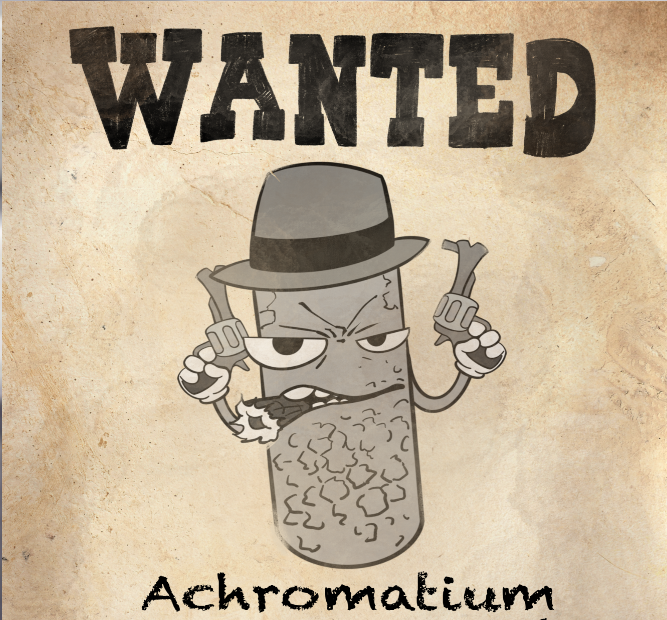
Big Bacteria – OSM26 Collaboration
As a part of my course for one of our first submissions we were tasked with building a small serious game in unity over the course of a couple of weeks. As a part of that we were given the option to create a project based on the research of one of the attending scientists at the Ocean Sciences Meetings 2026 in Glasgow.
For this we chose to base our work on the research by Danny Ionescu and Mina Bizic. Their research centers on the study of macro bacteria, Bacteria that can reach up to 7cm in size as single celled organisms. We were fortunate enough to be able to get in contact with Danny and Mina and organize a meeting with Danny and later a quick in person meeting at the event with Mina. They were both incredibly informative and really enthusiastic about our ideas, and we were really thankful for them taking time out their schedules to speak and work with us on this project.
One of the properties of the organisms discussed at the meeting is that unlike other single celled organisms these creatures do not clone themselves in a binary format. Instead they split into different versions of themselves, by dividing up their proteins and chromosomes in an unequal fashion. Resulting in cells with completely different proteins and chromosomes. We decided to take this idea and expand it into our game.
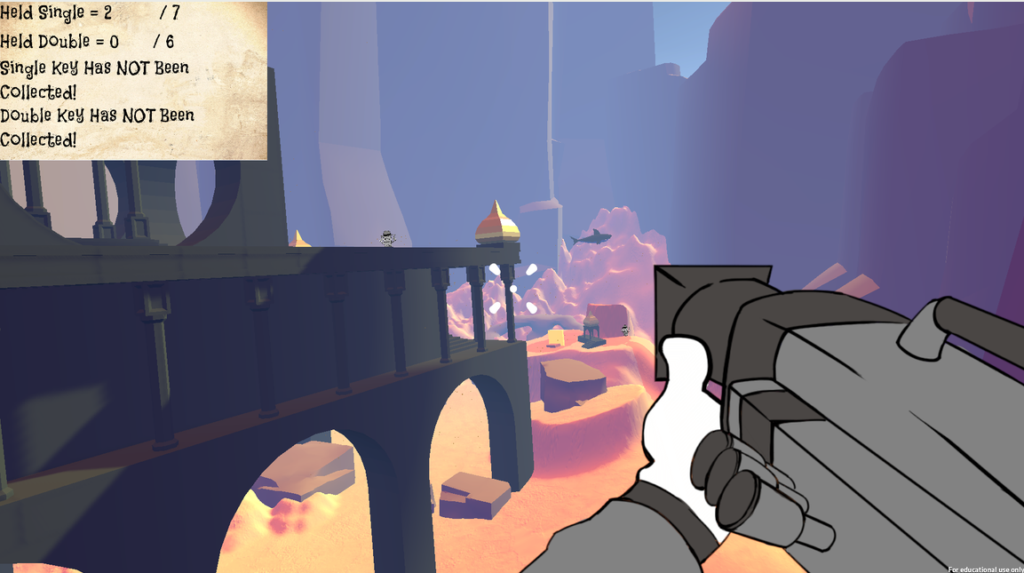
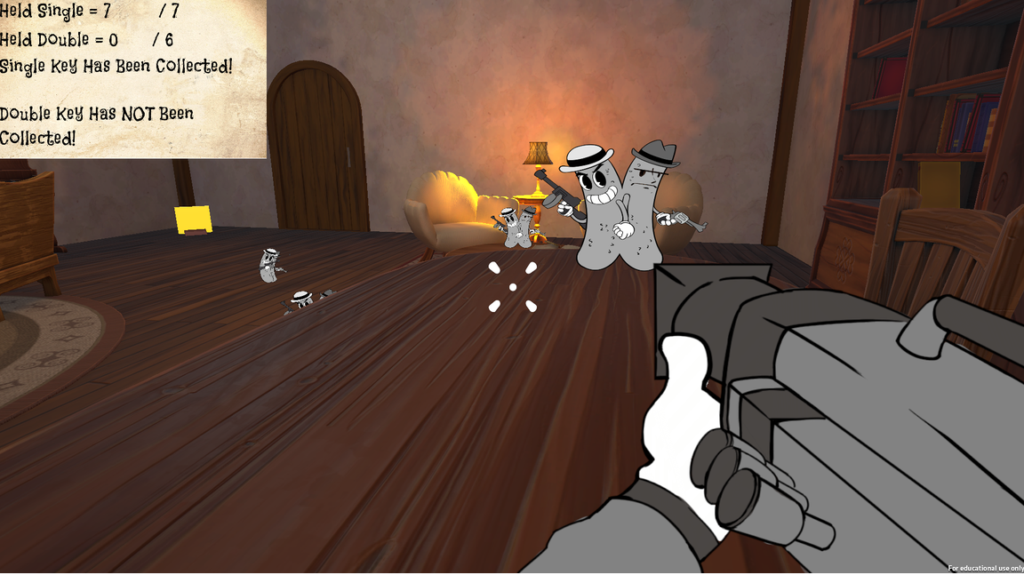
The idea for our game was first-person collectathon platformer where the player would take the role of a person shrunk down to the size of the bacteria(The bacteria is still relatively small to us) and make use of a unique scientific device to hook onto them and reel them in. With the main goal of the game to catch every bacterium within each area. With the main gameplay loop taking inspiration from games such as the Ape Escape franchise where the collectables act as individual creatures that need to be captured in order to move from one area to the next. Along with Slime rancher taking inspiration from the vacuum catching mechanic for the main game.
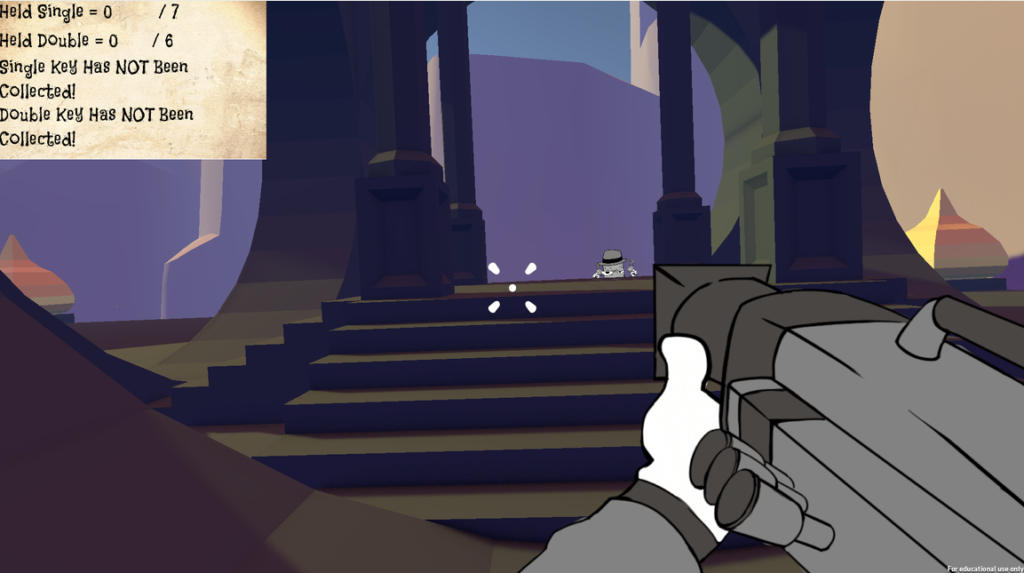
With the project also making use of a more non-traditional 3D art style. Using 2D sprites in a 3D space that are set to always rotate towards the player. The inspiration for this was from the upcoming game Mouse P.I. for Hire and the Original Doom from 1993. We decided to pursue this in order to achieve a unique aesthetic for our project to help us stand out and help draw players towards the game.
The team members on this project included me, Liwei (Gabriel) Ye and Alwalid Alamasour.