Alice Jaanus
(she/her)
I am a designer-researcher working at the intersection of trauma-informed services, feminist practice and using creative participatory methods. I have expertise in engaging with complex social issues within community settings to design fairer and more inclusive services. My practice explores how tactile tools and visual mapping can turn complex systemic research into practical, real-world interventions.
“I should not be fighting the services as well as the abuse”: Addressing Economic Abuse
Economic abuse often takes place in the context of intimate partner violence and involves controlling partner’s or ex-partner’s finances as well as things money can’t buy. It is a form of domestic abuse, that is gendered and rooted in inequalities. It keeps women and children trapped as systems that are meant to enable recovery are reinforcing harm, with public service debt collection being especially punitive. Additionally, due to a lack of education early signs of controlling behaviour are often missed, making young people particularly vulnerable.
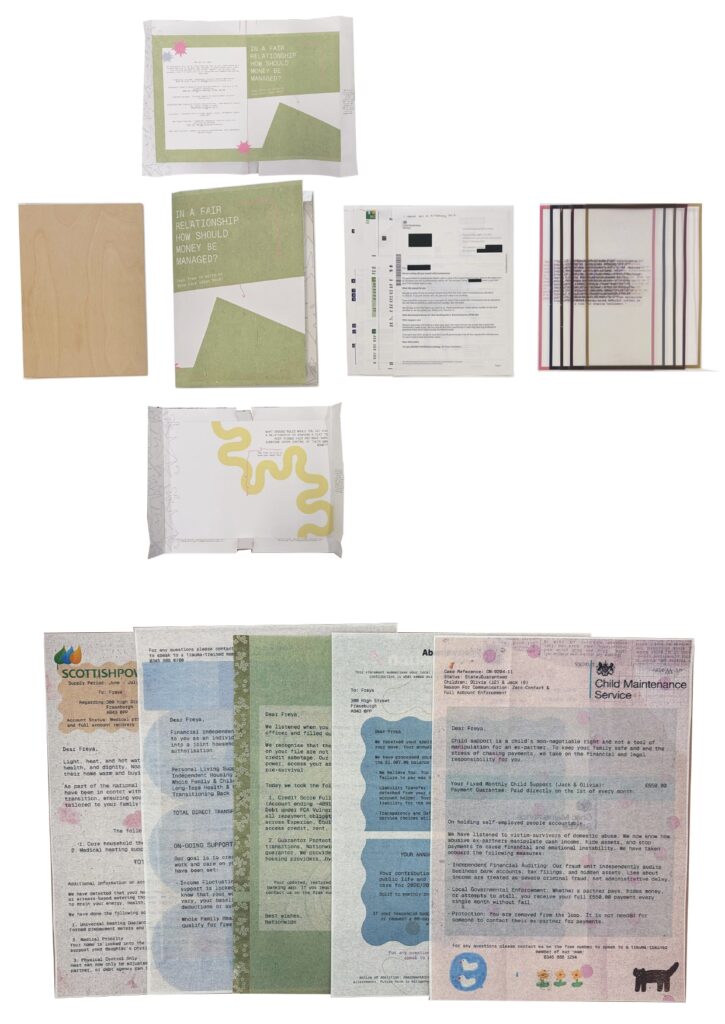
The project addresses these challenges through an intersectional approach and co-design with expert stakeholders using creative methods. The first outcome is a tactile toolkit around real life documents aimed at building young people’s financial literacy and understanding of controlling behaviour. The second outcome addresses the punitive nature of public debt by rewriting the same documents from a feminist and trauma-informed lens.
The project concludes with a call for action as direct recommendations moving forward. The educational toolkit calls for educational leads to equip young people to recognise economic abuse. This should be done by allocating time to deliver proactive and trauma-informed activities on financial literacy, life skills and healthy relationships. The rewritten public sector documents are calling for local authority financial decision makers to commit to testing a case-by-case approach. This should be done by improved communication between services and embedding a human centred approach.
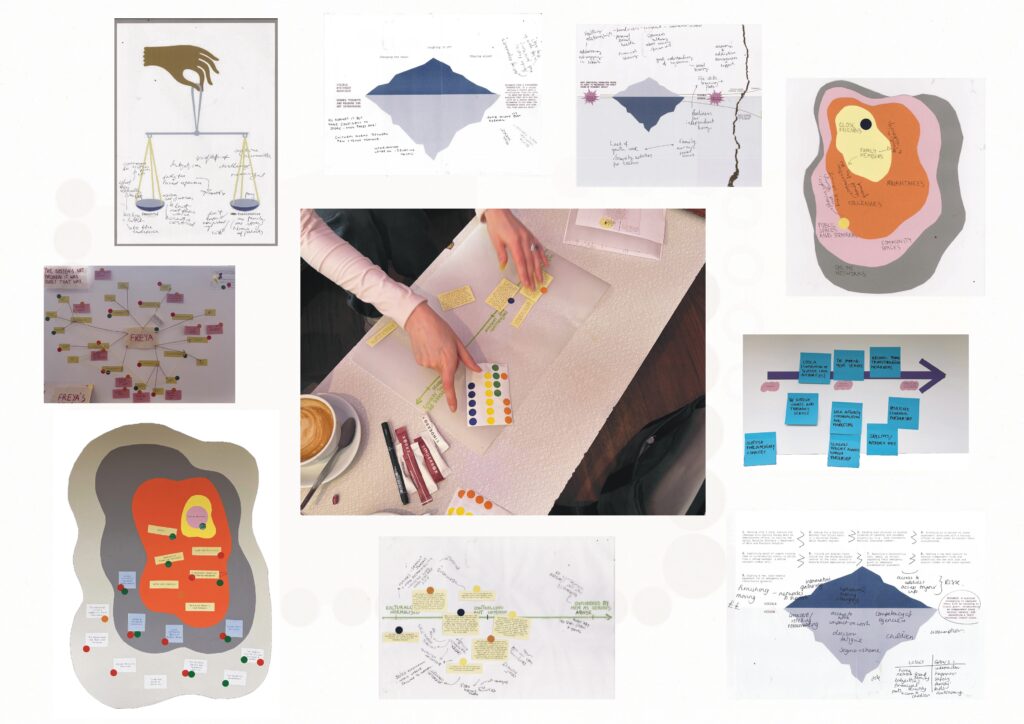
Central to the project has been co-designing with expert stakeholders. Often this took place using creative methods of engagement. Additionally, co-design and feedback were seen as a constants rather than as one-off activities.
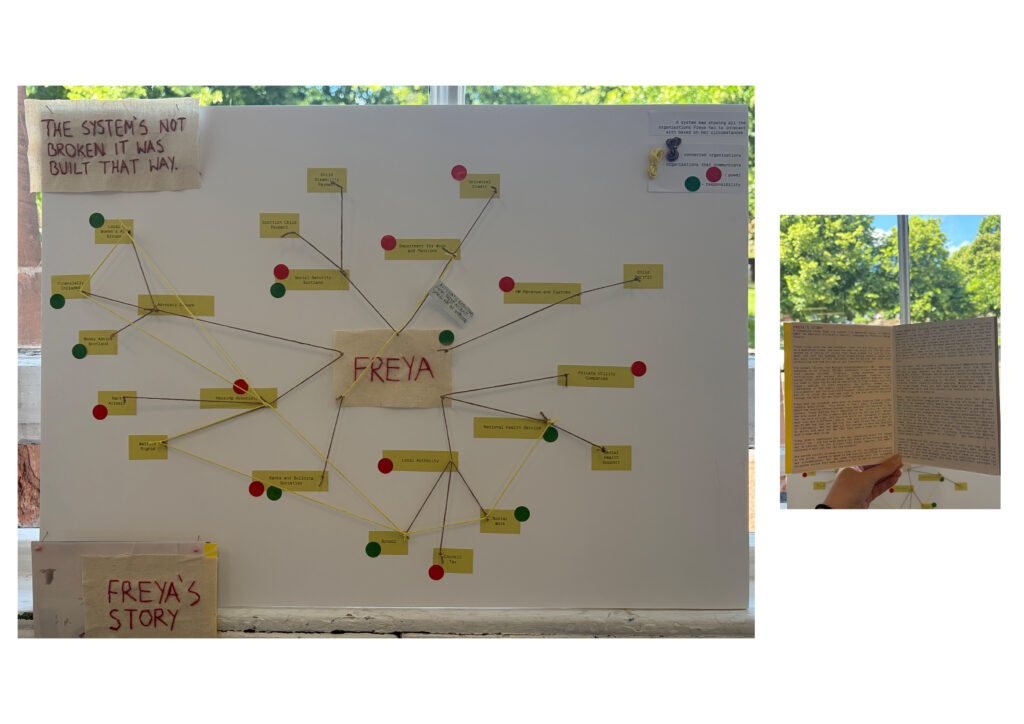
A composite story of a victim-survivor ‘Freya’ has been translated into a tactile system map as an act of feminist practice. Freya is a mother of two trying the leave an abusive partner, who keeps facing disbelief and re-traumatising services. What her story demonstrates is that the system is fragmented. Not because it is broken but because it was built that way.
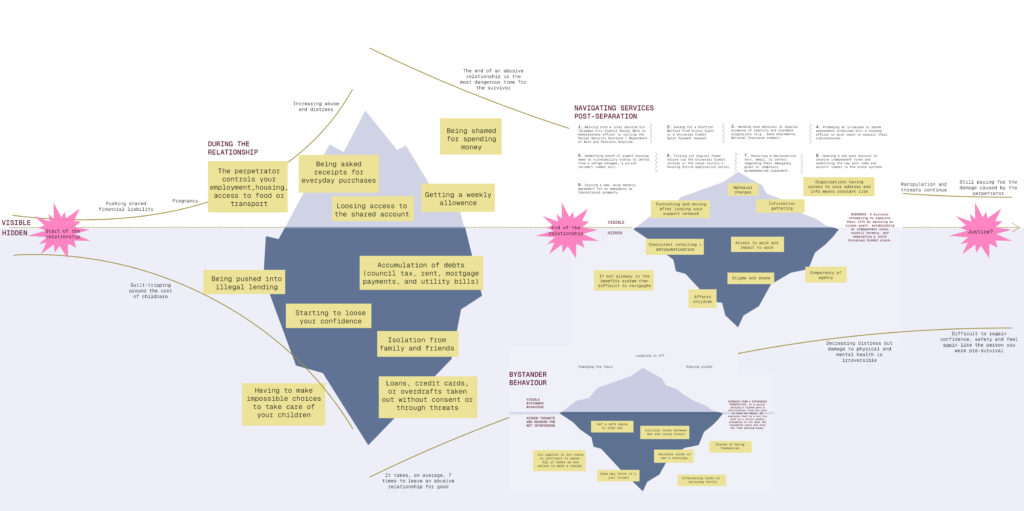
The series of iceberg diagrams has been co-created with stakeholders. It synthesises the research into the hidden and visible journey of a victim-survivor.
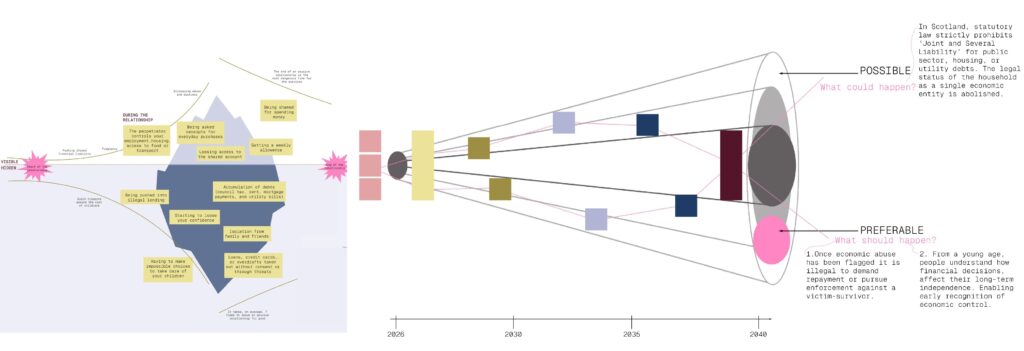
The project uses future thinking to set positive future scenarios and work backwards in order to understand the change that needs to be created.
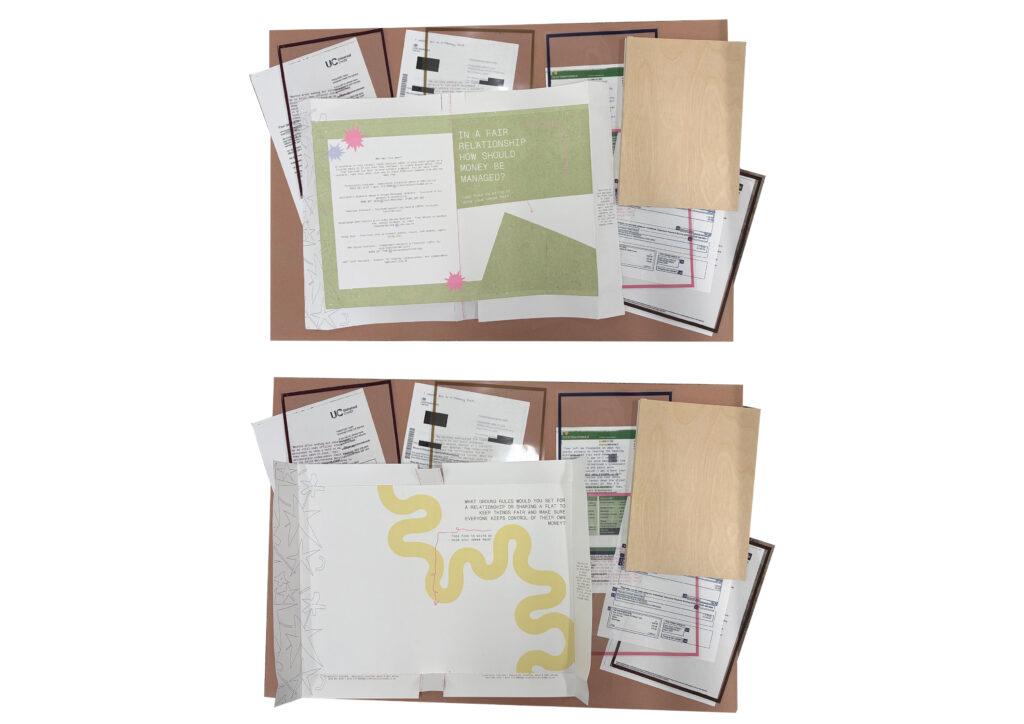
The educational toolkit has been created for young people transitioning into independent living. Initially it is proposed to be implemented in a youth work setting for facilitated exploration and group discussions.
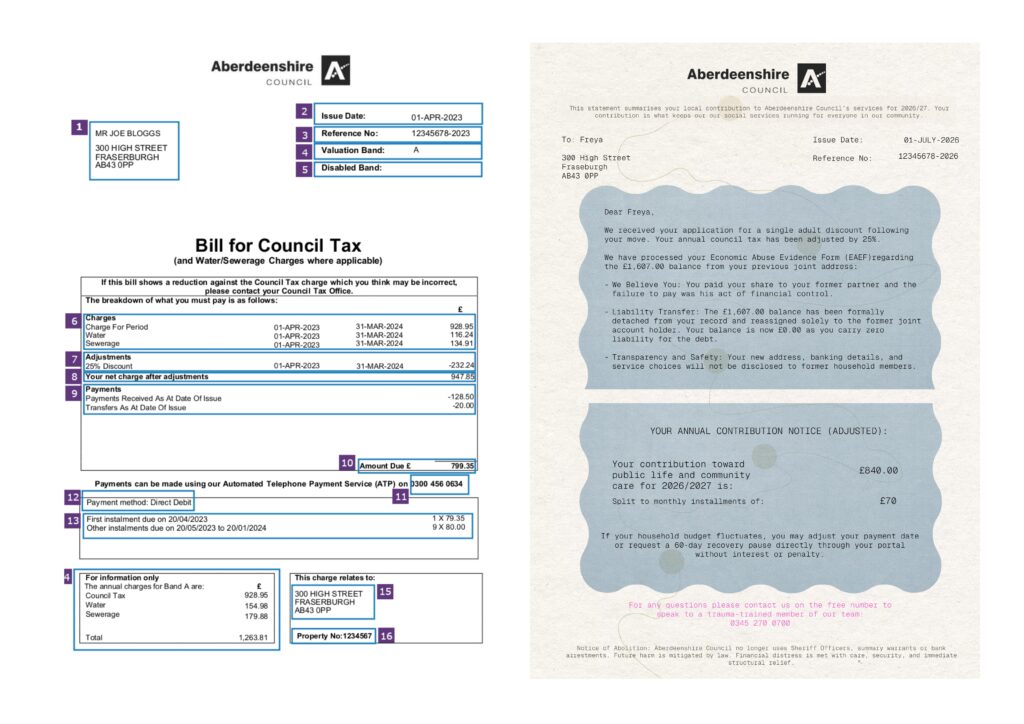
To act as mandates of what could be, the rewritten documents clearly communicate what is happening and why, have calm positive affirmations and offer flexibility for the payments on an individual basis. Colourful and tactile materiality has been chosen to reject the current systemic rigidness.
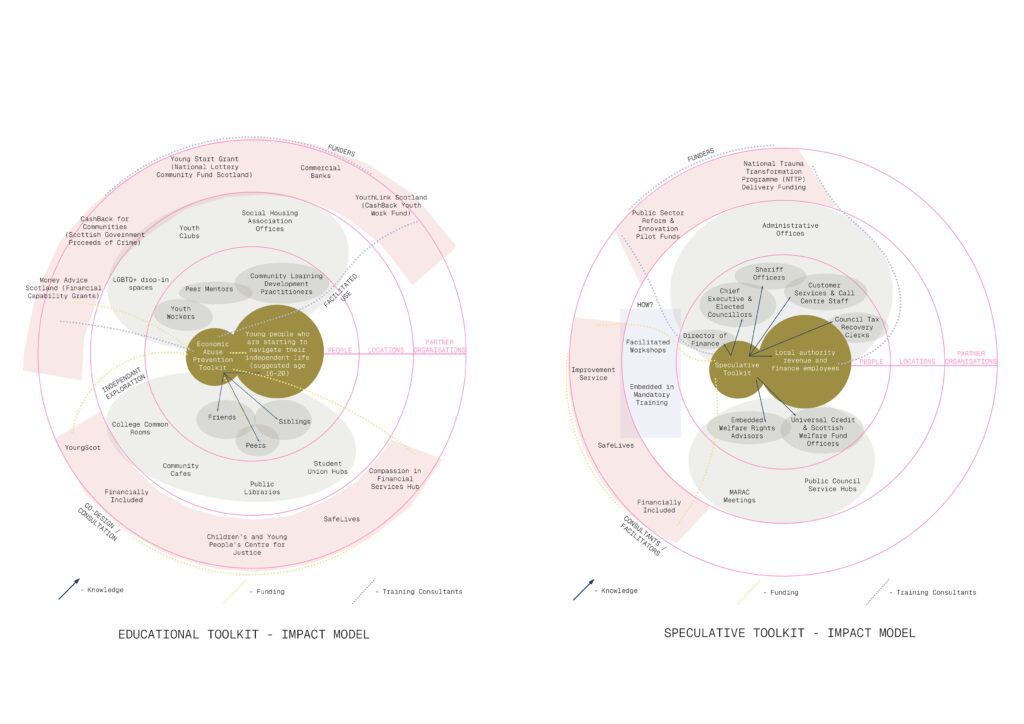
The educational toolkit would first be implemented in a youth club setting. However, it could also bring value to Promise Scotland, Women’s Aid, Citizen Advice Scotland, oversea students or people who have lost a spouse. The rewritten documents are proposed to be used by public sector financial decision makers in a workshop setting. They bring value by offering a new feminist and trauma-informed alternative in a Scottish context.
Educational toolkit for young people (top) and rewritten public sector documents (bottom).
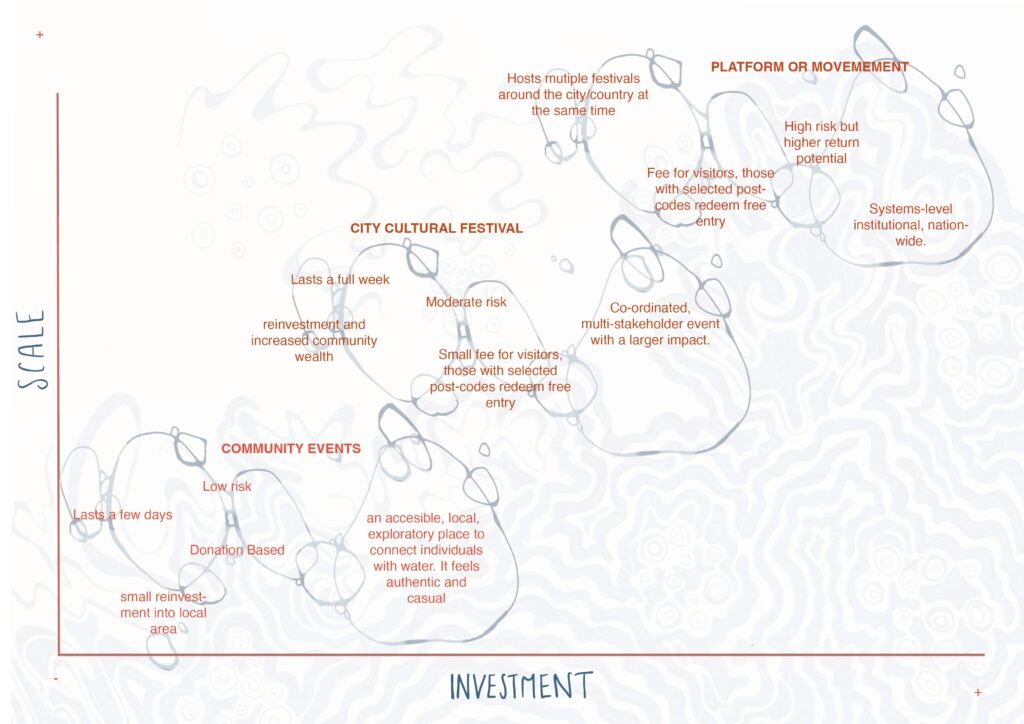
Uisge – The Hydro Commons Festival
This project is a collaboration between Alice Jaanus, Andrea Corona Anaya, Clarisse Jean Pierre Towler and Jugal Gajjar.
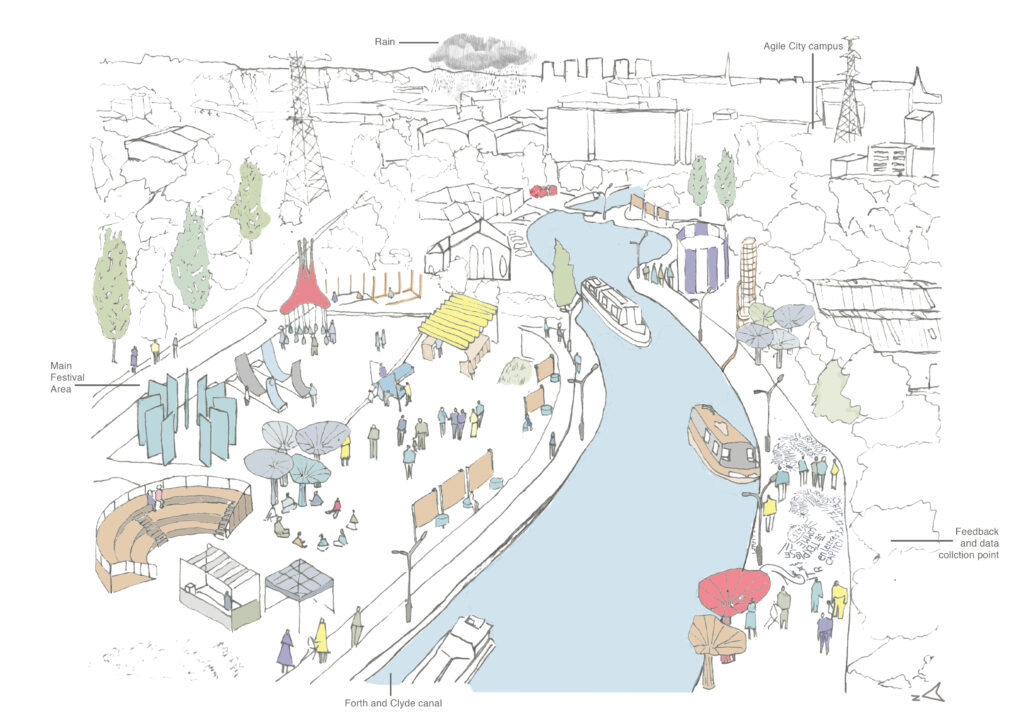
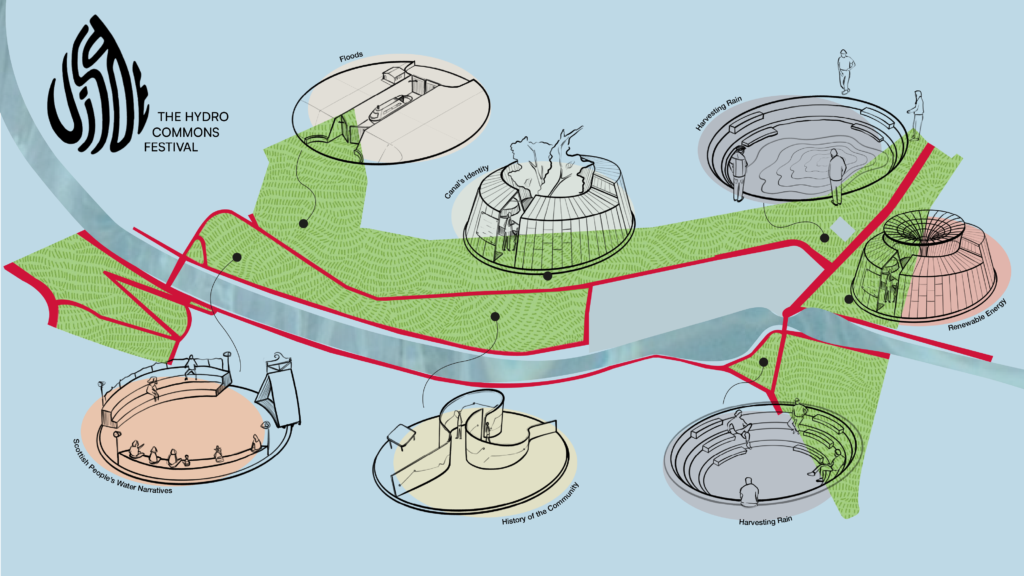
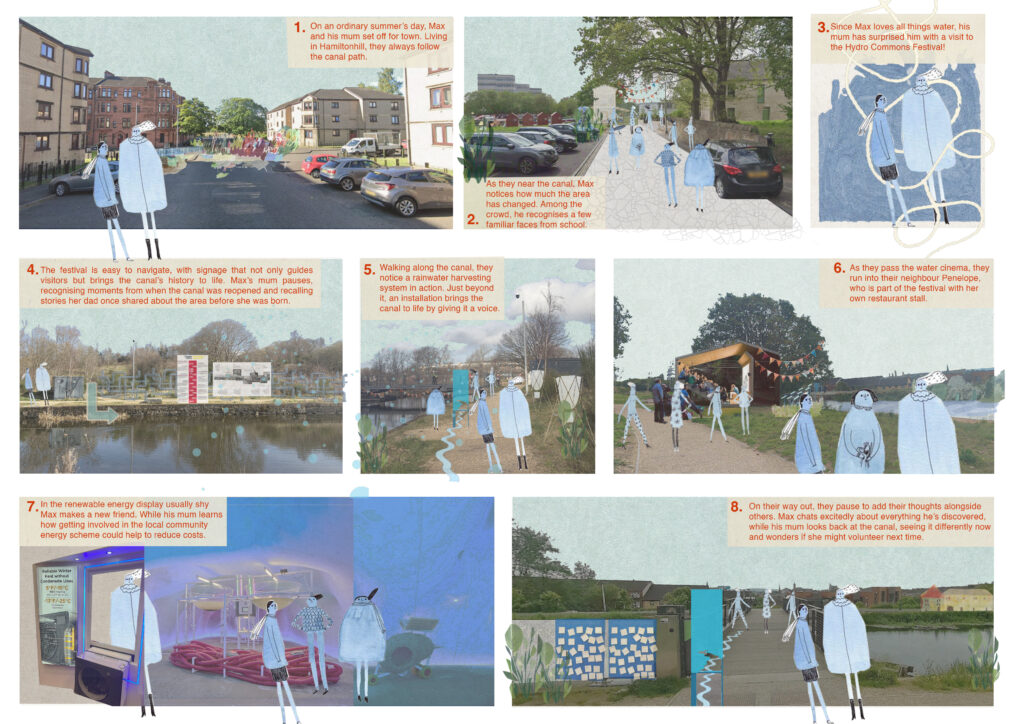
Uisge: The Hydro Commons Festival is a temporary design intervention that aims to transform the Spiers Lock community’s
relationship with water. The project is based on the brief ‘Living Museum: The Regenerative Place‘ for the client Agile City, a north Glasgow based organisation that consists of Civic House, Civic Street and the Glue Factory. By connecting to Agile City’s objectives, the festival takes a holistic approach to community energy and explores how water can be reframed as a shared resource in joyful way.