
Keming Zhou
I am an MSc Serious Games & Virtual Reality student at The Glasgow School of Art. My work focuses on immersive and interactive experiences, particularly in the context of cultural heritage. I am interested in using VR, digital storytelling and 3D interaction to explore new ways of presenting archaeological objects and connecting them with their historical contexts.
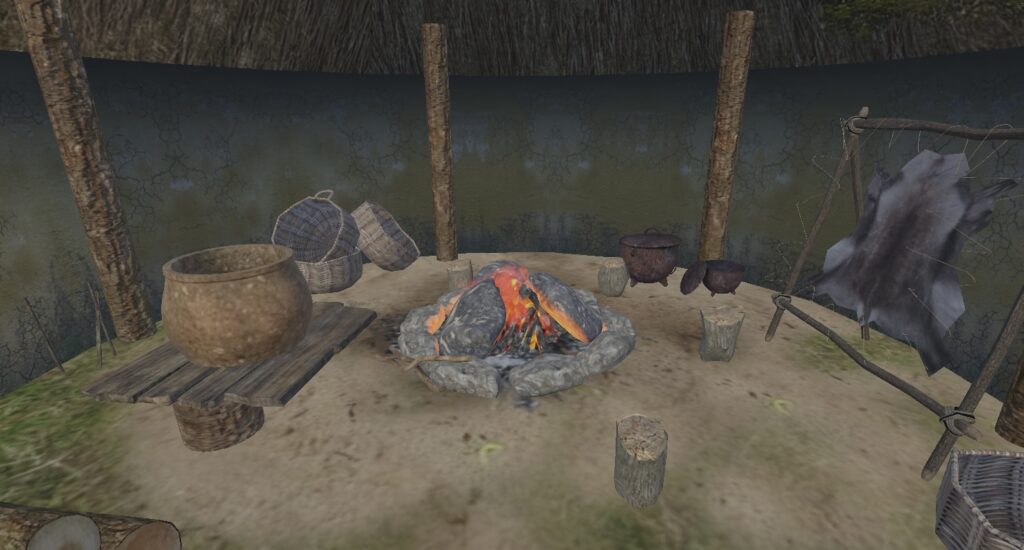
Multimedia Interactive Storytelling for Loch Tay Crannog Pottery Object Biography
This project explores how multimedia interactive storytelling can communicate the object biography of prehistoric pottery fragments from Loch Tay Crannog. Using object biography as the central framework, the project considers different stages of the pottery’s long-term history and how archaeological evidence can be connected with possible past-use contexts.
The final outcome is a VR cultural heritage prototype developed in Unity for Meta Quest Pro. Users begin with surviving pottery fragments in a museum-style environment, where they can examine the objects and access archaeological information. The central fragment then leads into “Using the Pottery”, where direct interaction with a complete pot, a hearth and visual changes to charred residue connect possible past use with evidence preserved on the surviving fragments. The prototype focuses on this past-use stage rather than presenting the complete object biography.
The prototype was evaluated through two stages of formative user evaluation with 15 participants. Stage One feedback informed revisions to interaction guidance, task flow and narrative continuity, while the updated version was evaluated by a new group in Stage Two. Across both stages, the historical use scene and direct interaction with the pottery received the most consistent positive feedback.
Overall, the project suggests that communicating an object biography through multimedia interactive storytelling depends on the purposeful combination of different media around the archaeological object, its evidence and the narrative goal.
A five-minute presentation introducing the project, VR prototype, user evaluation and key findings.
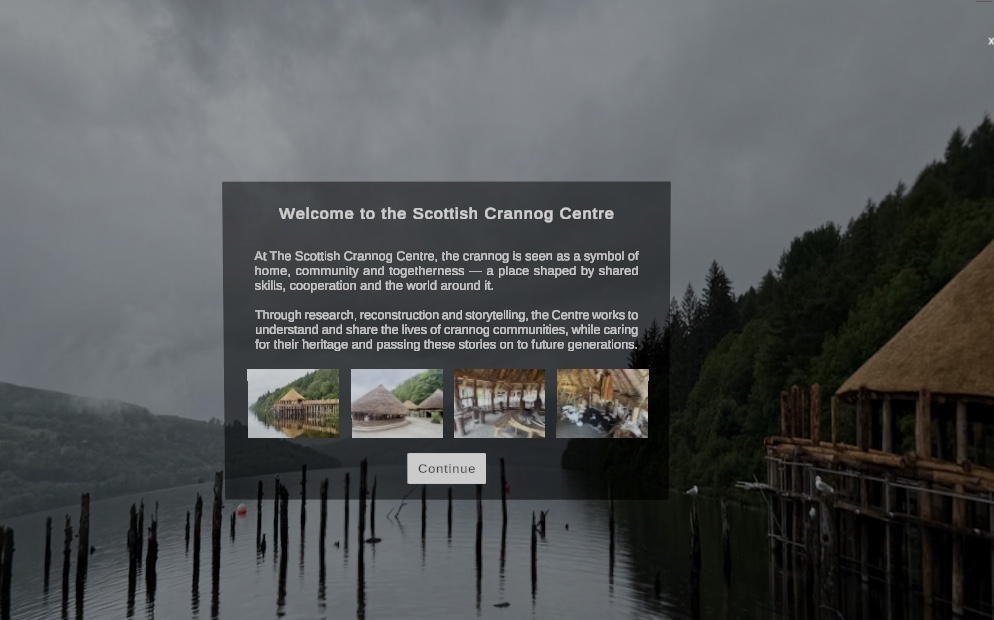
The opening scene introduces The Scottish Crannog Centre before users begin the main VR experience.
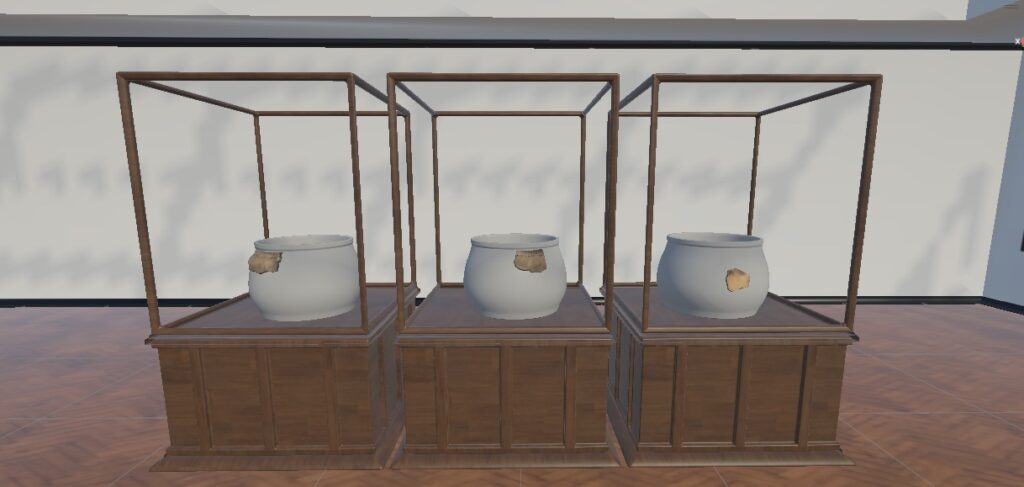
The museum-style environment presents three prehistoric pottery fragments for close observation and interaction.
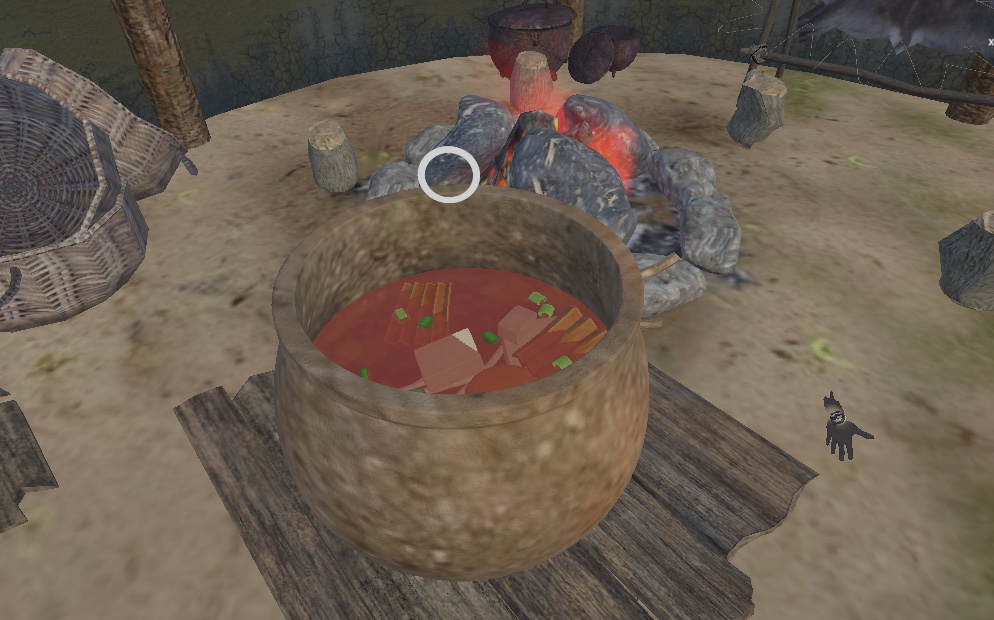
The historical use scene places the complete pottery within a possible past-use context around the hearth.
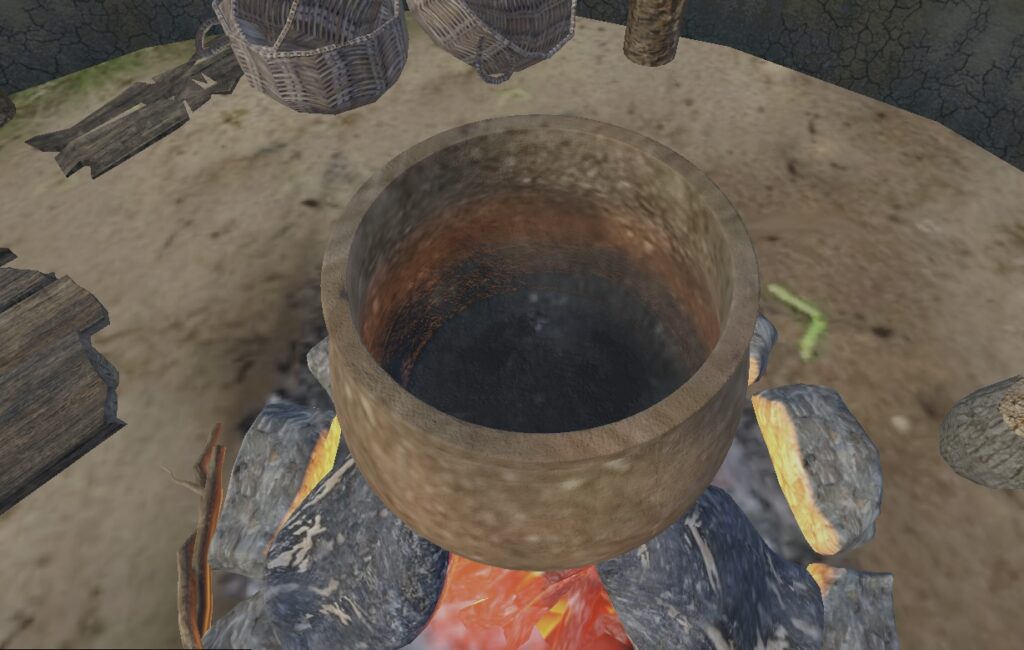
The pottery-use interaction reveals charred residue inside the vessel, connecting a possible past-use activity with the archaeological evidence documented on the surviving pottery.