

Yi Yang
(Gloria)
I am a graphic designer, specializing in publishing design and how graphic language can subtly influence daily behavior. My creations usually start with familiar visual elements – arrows, logos, interfaces, and warning symbols – and explore how they guide attention, actions, and decisions. Through research-driven experiments, I transform these observations into publications and visual narratives. I do not view design as a neutral container for information transmission, but rather explore how design itself guides, regulates, accelerates or interrupts the reader’s behavior.
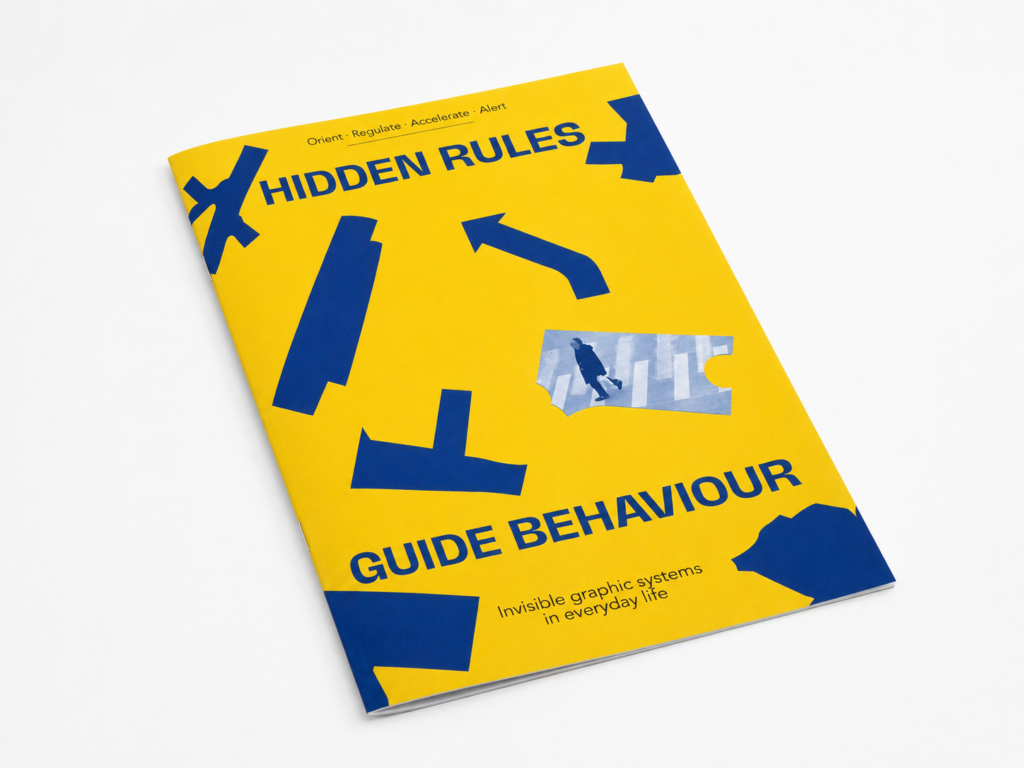
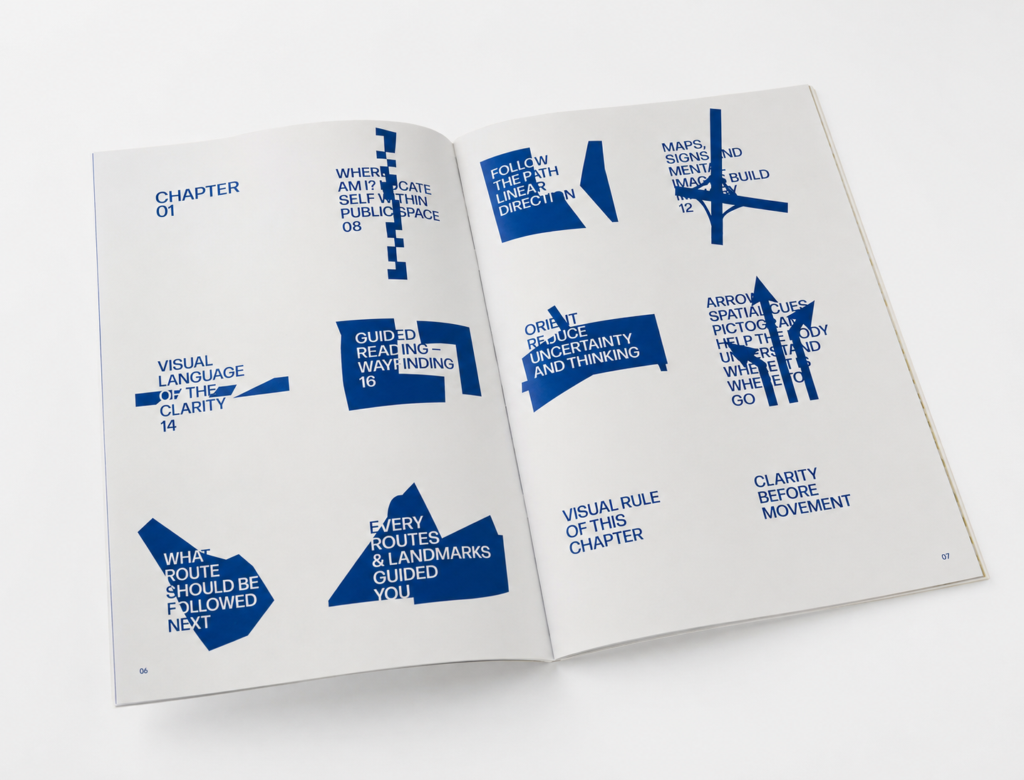
Invisible Instructions: How Everyday Graphic Systems Guide Behaviour
Invisible Instructions is a 64-page experimental publication exploring how everyday graphic systems influence movement, attention, pace, and decision-making. The project examines familiar instructions—including arrows, wayfinding systems, boundaries, interface prompts, and warning signs—through four behavioural categories: Orient, Regulate, Accelerate, and Alert.
Each chapter uses a different visual language. Stable grids and directional sequences guide the reader; frames and enclosed spaces create restriction; repetition and progress indicators produce urgency; and red-black contrast with disrupted typography generates interruption.
Developed through visual research, classification, experimentation, and reader testing, the book does more than document instructional graphics. Its typography, colour, rhythm, sequence, and physical structure make the reader experience the behavioural effects being discussed. The project reveals that graphic instructions are not neutral: depending on their context, they can guide, protect, persuade, restrict, and control.
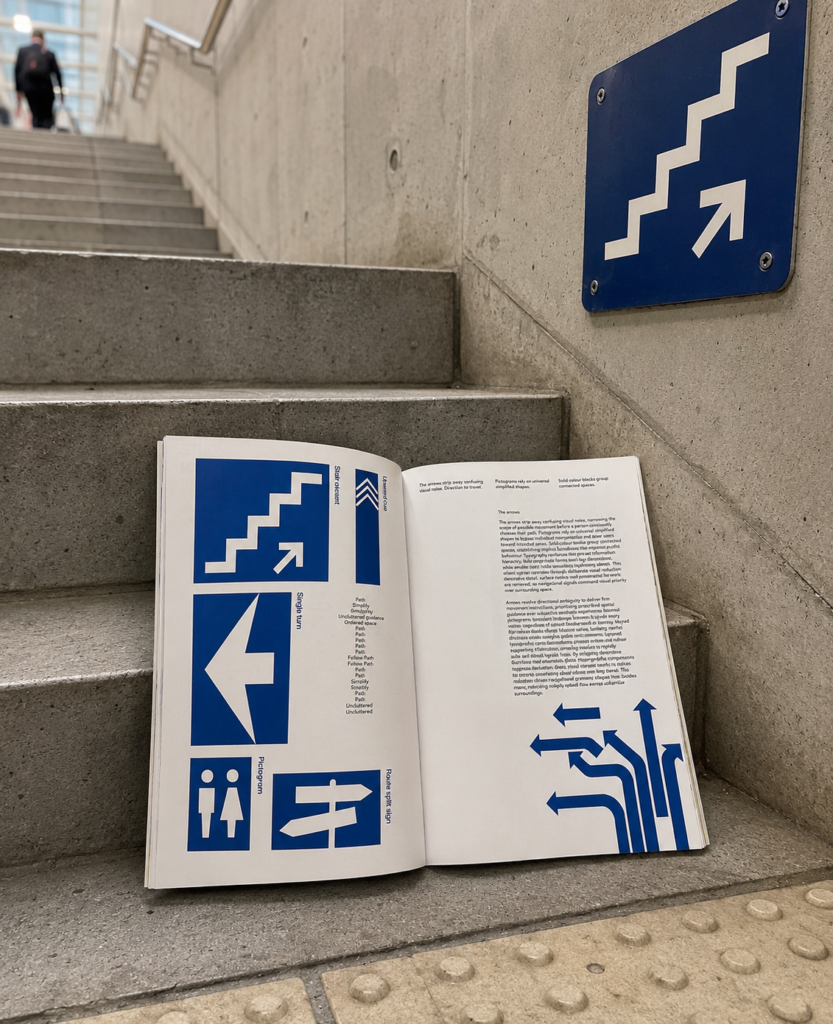
Orient explores how wayfinding systems reduce uncertainty and guide movement. Stable grids, route lines, directional arrows, and clear information sequences create a calm and ordered reading experience.
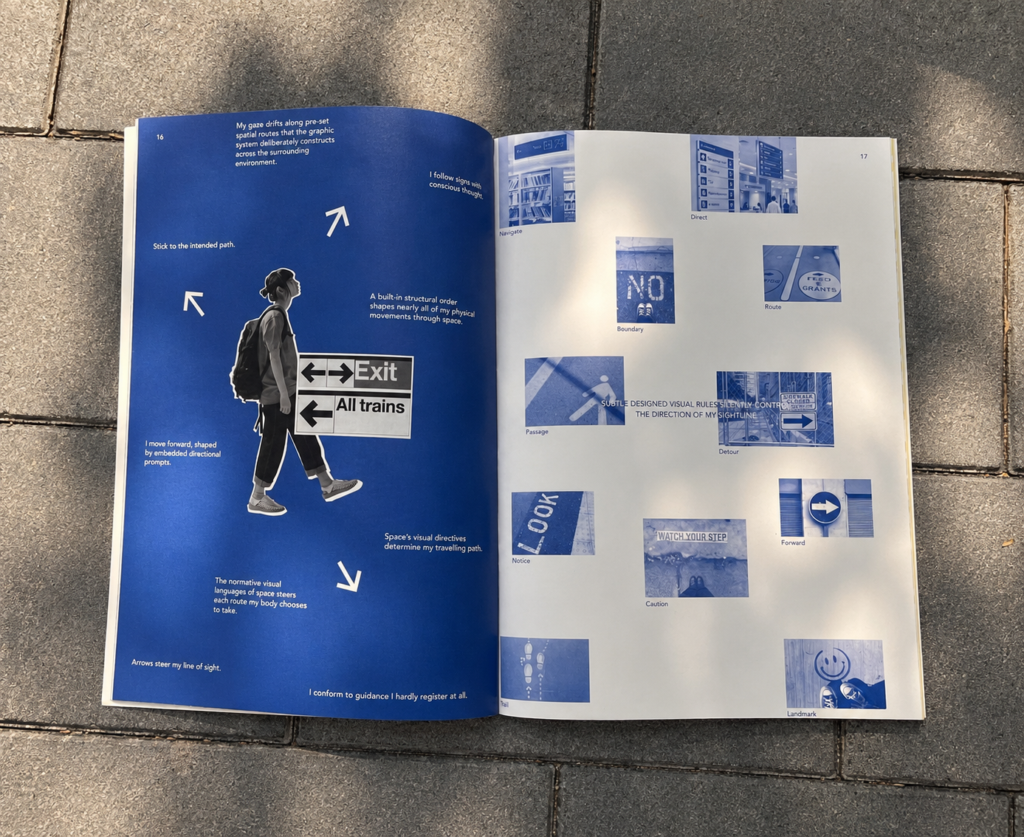
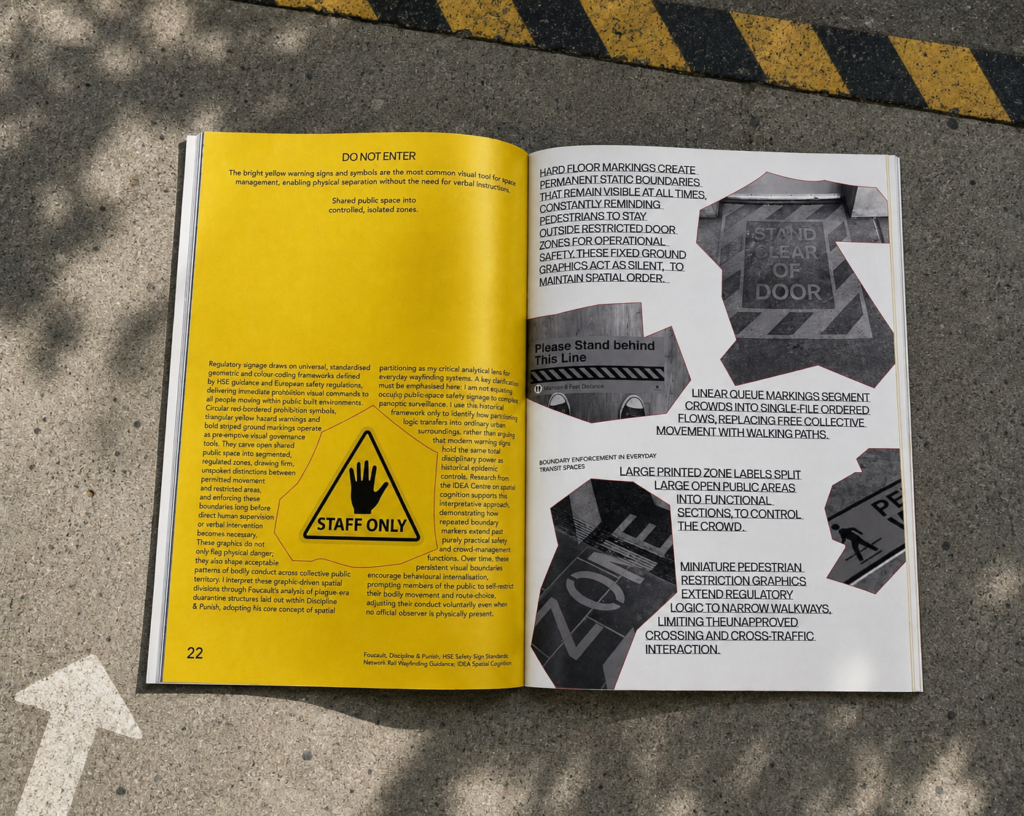
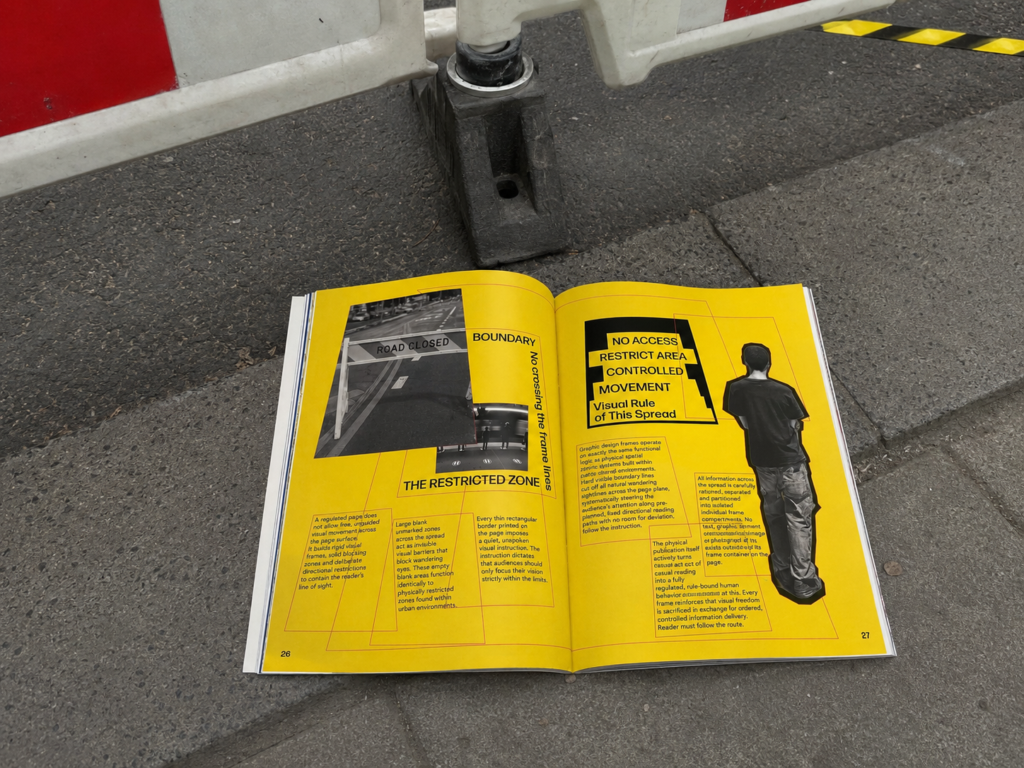
Regulate examines how boundaries, prohibitions, and repeated commands organise behaviour. Frames, enclosed spaces, and restricted reading areas make the reader feel visually controlled.
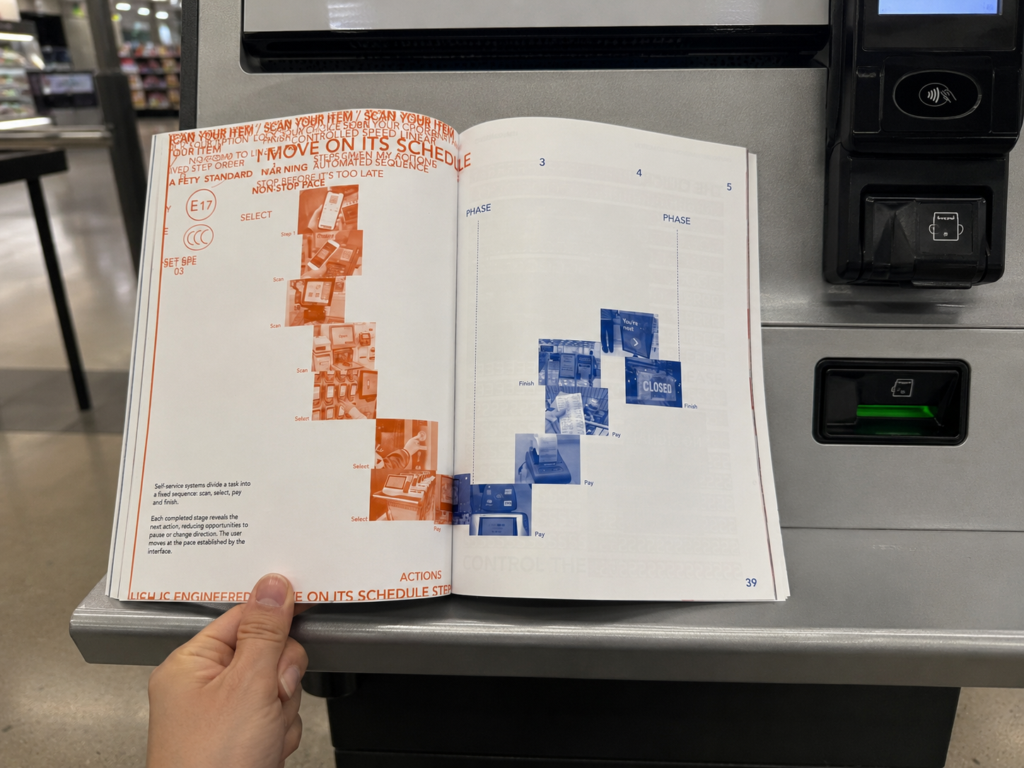
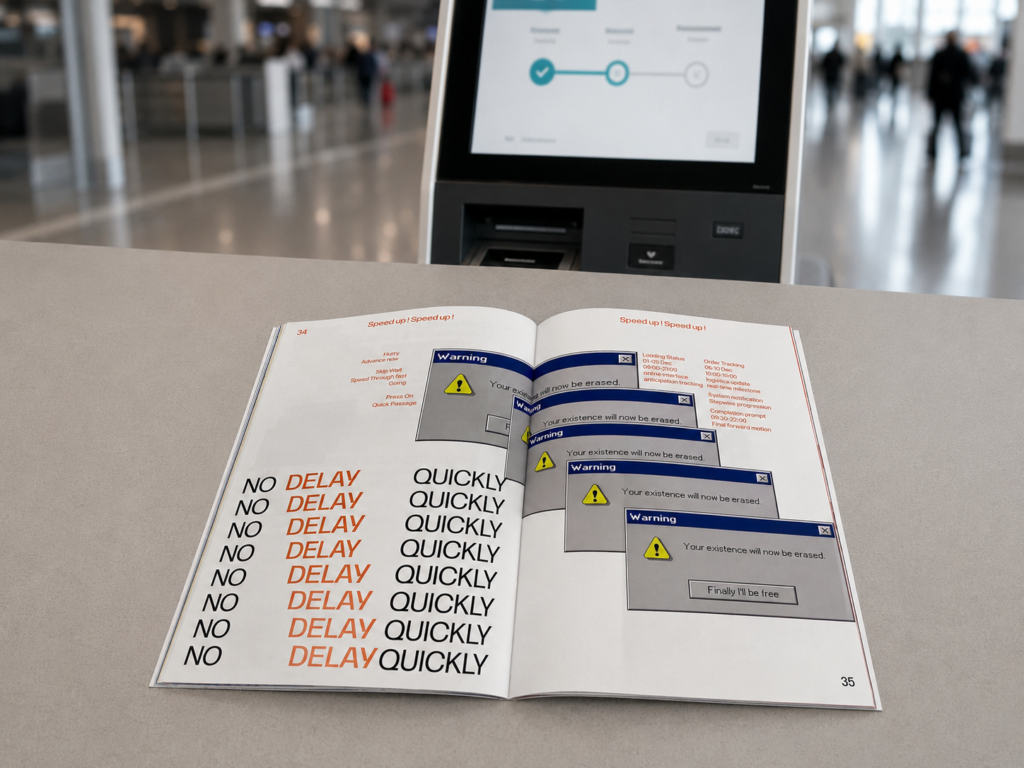
Accelerate investigates how interfaces reduce hesitation and encourage immediate action. Repeated prompts, progress indicators, countdowns, and compressed layouts create urgency and pull the reader forward.
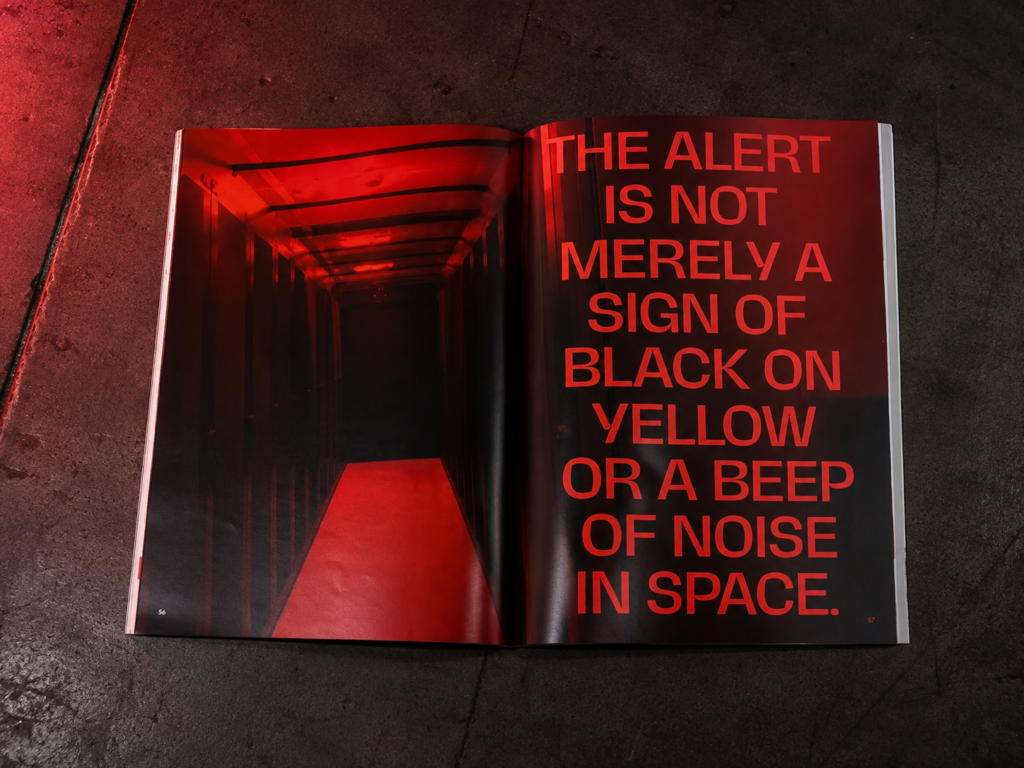
Alert explores how warning systems interrupt normal movement and make risk immediately visible. Red-and-black contrast, triangular forms, abrupt scale changes, and disrupted typography create a heightened state of awareness.
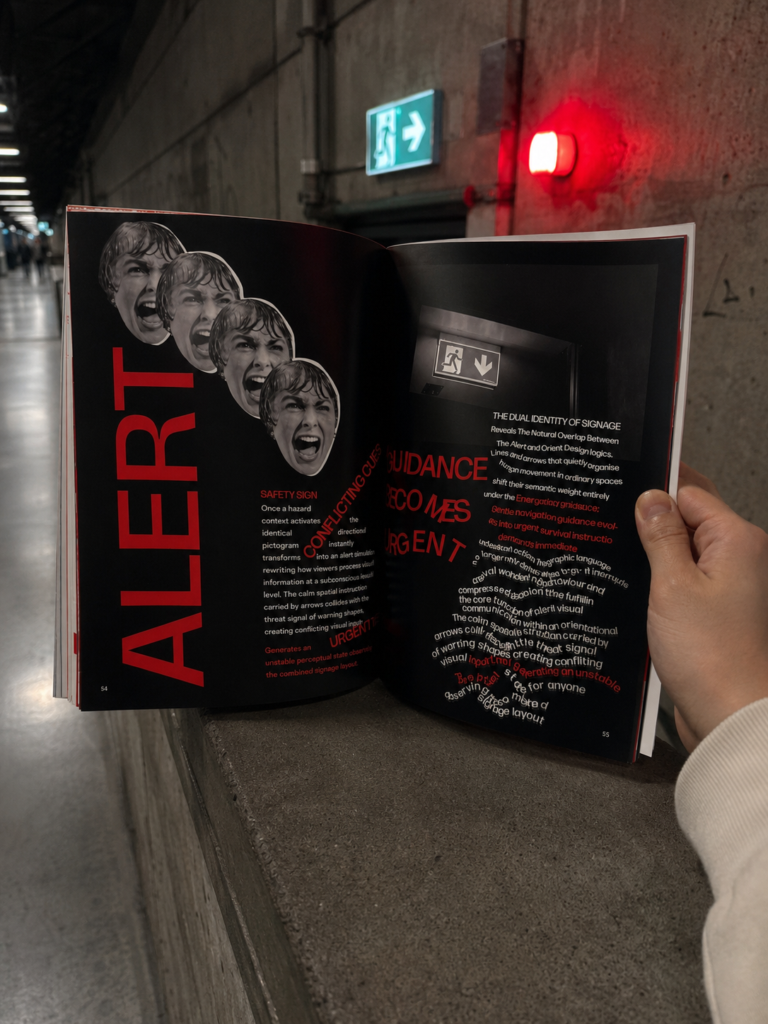
The four categories operate as analytical tools rather than fixed definitions. Everyday graphic systems can orient, regulate, accelerate, and alert at the same time. By placing the publication back into the public environments that informed it, the project reveals the hidden relationship between visual instruction and everyday behaviour.