

Xiaoyue Wang
(She)
School of Design
/ MDes Graphic Design/Illustration/Photography
/ Xiaoyue Wang
/ EVERY GRAIN IN THE BOWL
EVERY GRAIN IN THE BOWL
- This project is inspired by my grandmother and the stories she shared with me while I was growing up. From time to time, she would talk about her past and her life as a farmer. She spent nearly forty years working on the land, from the age of sixteen until her fifties. Most of her life was spent in rice fields and the surrounding mountains. Around the beginning of the new millennium, she moved to the city to help care for her grandchildren, but even today she still returns to her village from time to time to look after a small piece of farmland of her own.
- I come from southern China, where rice farming is a central part of everyday life. Every year, June and October mark the harvest seasons. During those months, I often saw a wooden hand-powered rice hulling machine in the village. It would release golden rice husks from one side and clean white rice grains from the other. The village square was often covered with golden rice laid out to dry. Dogs would run and jump across it, while villagers used simple tools to beat and turn the grain. As a child, I found this scene warm and conforting, although I did not fully understand the labour behind it.
- Today, my family lives in large cities and we rarely return to the countryside. Many of my childhood memories have gradually become unclear. However, whenever I see rice, I am reminded of my grandmother’s years of hard work and the stories she told meabout a life that was both difficult and joyful.
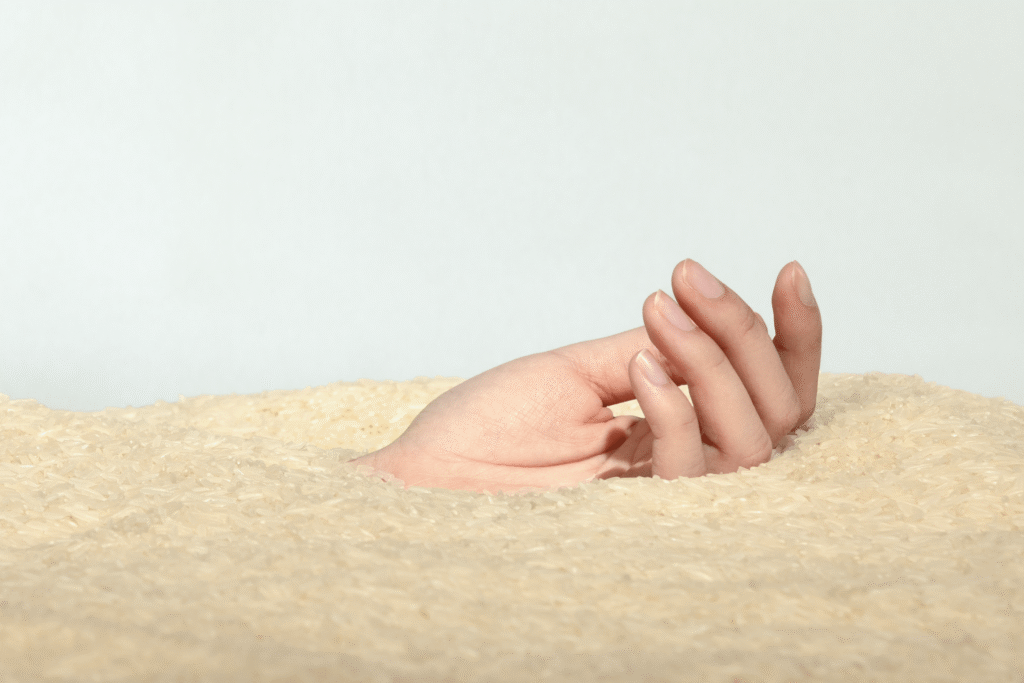
Every Grain in the Bowl explores my relationship with rice and my family heritage. Growing up in southern China, rice has always been part of my everyday life. Through images of rice, my body, and memories shared by my grandmother, I reflect on my family’s rural roots and the changing relationship between people and the countryside. As more people leave rural areas and move to cities, I consider how this shift changes our connection to rural life, family history, and the places we come from.
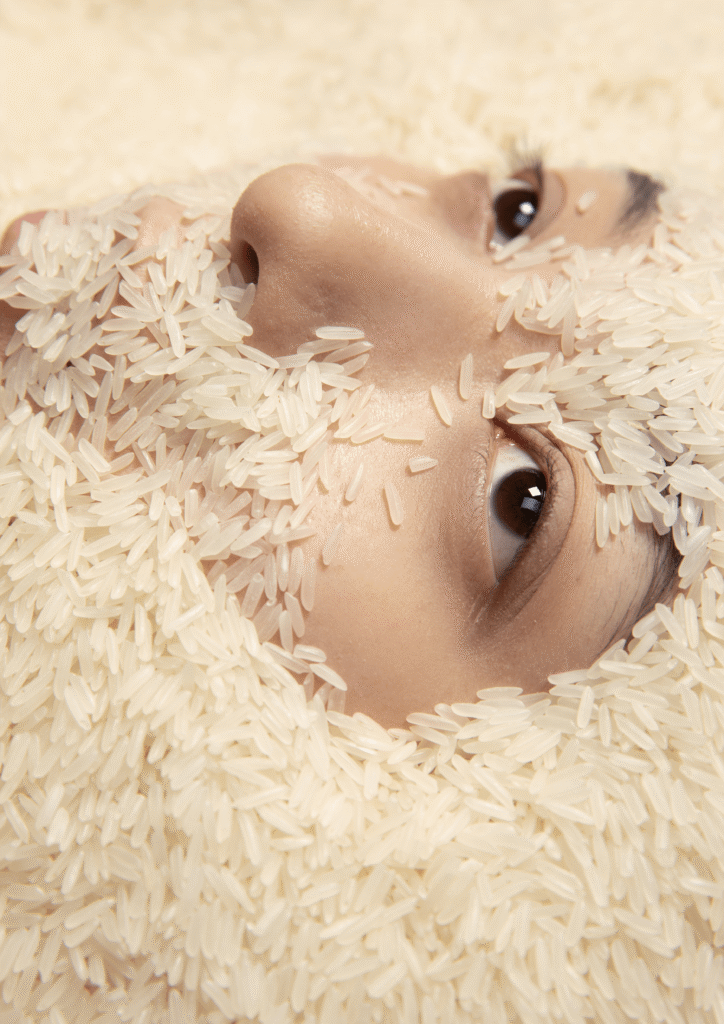
My Face
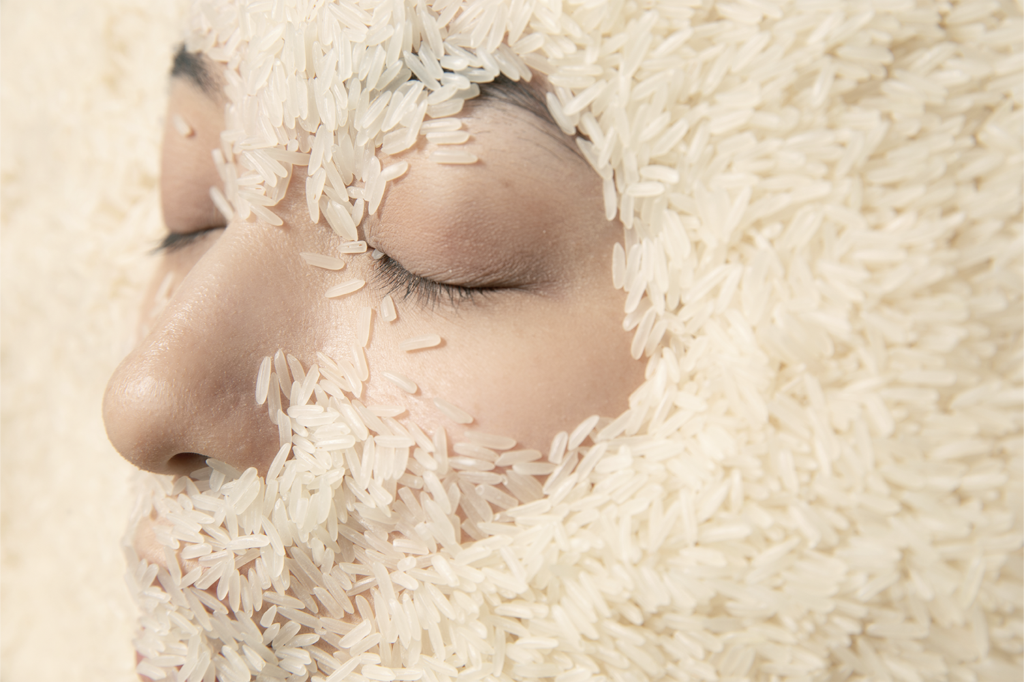
My Face
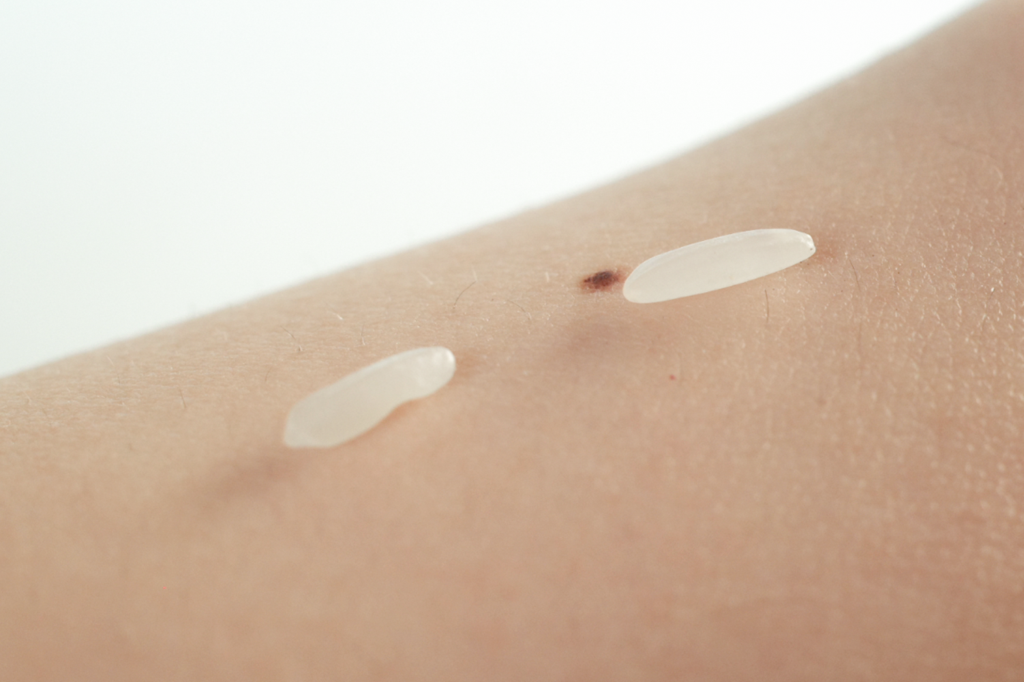
You And I
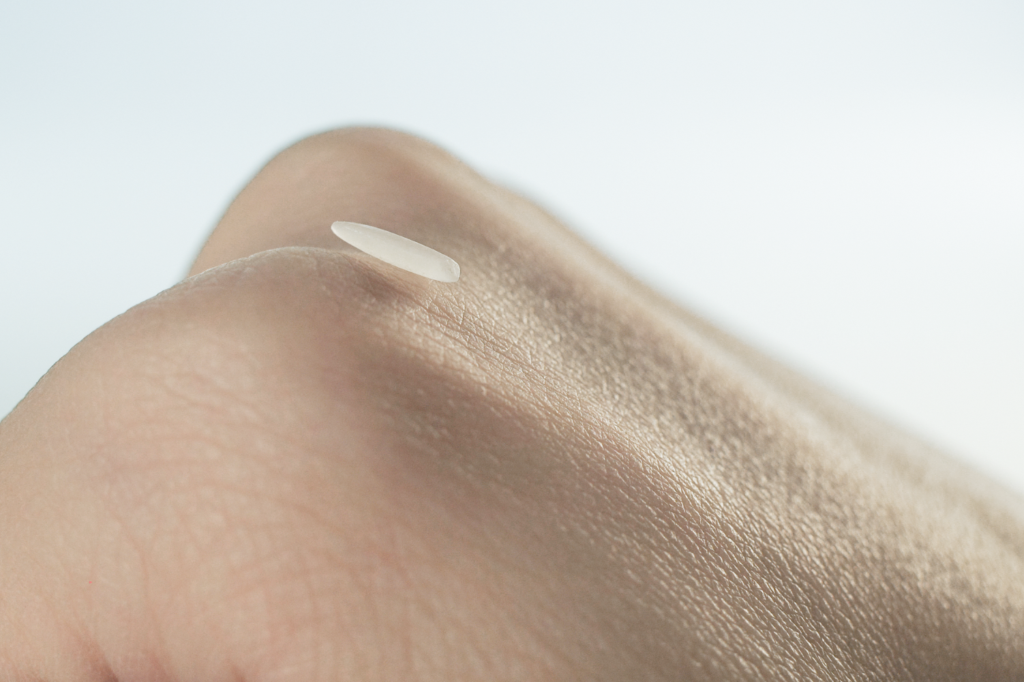
One Grain

One Grain