
Kaiyi Tang
(she/her)
I am Kaiyi Tang, a graphic designer based between Shanghai and London. My cross-cultural experience has shaped my interest in gender, psychology, digital culture, and public issues across different social contexts. My practice spans branding, editorial design, information visualisation, mapping, and visual storytelling, using visual communication to organise complex information and reveal connections between personal experiences and wider social structures. Moving forward, I hope to explore how design can encourage understanding, empathy, and broader social dialogue.
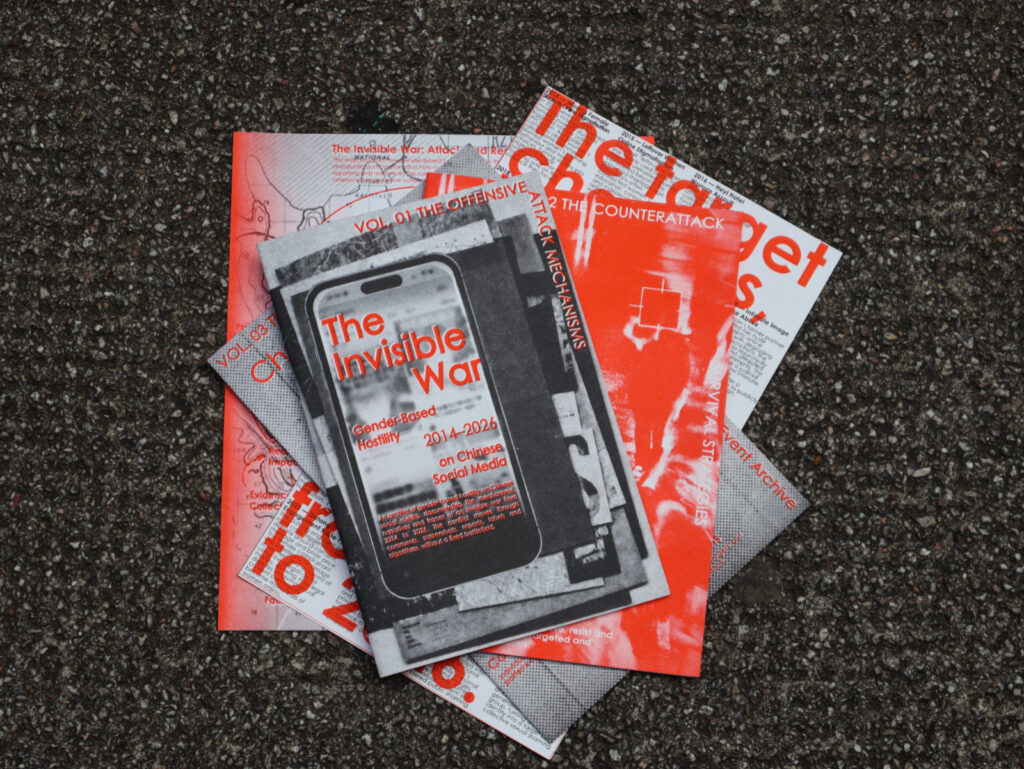
The Invisible War Gender-Based Hostility on Chinese Social Media
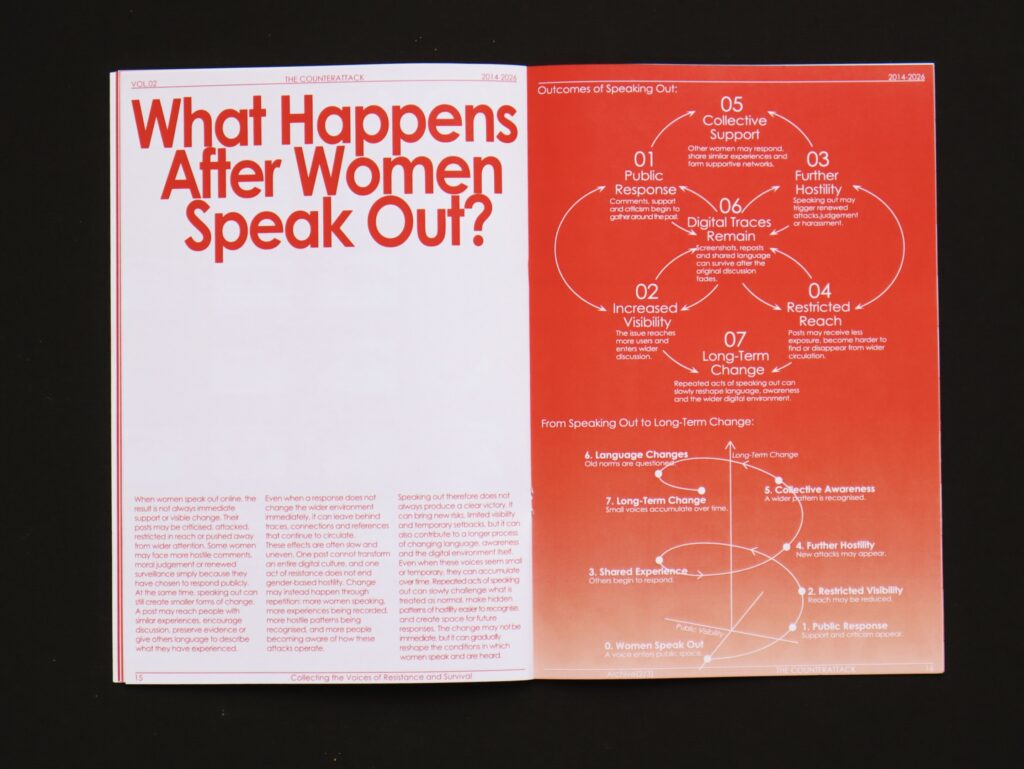
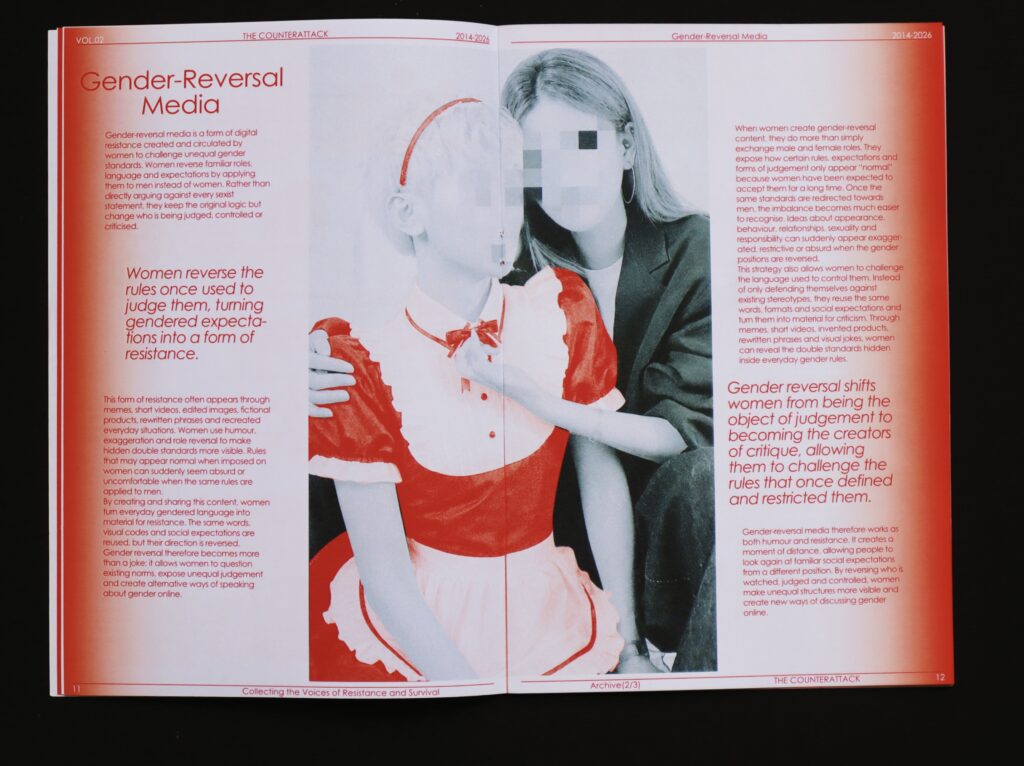
The project consists of three connected books. The Offensive investigates how hostile narratives are constructed and amplified. The Counterattack examines women’s responses, including speaking out, preserving evidence, mutual support, satire, platform migration and continued visibility. The War Chronicle places incidents from different years into a chronological archive, showing how targets change while similar mechanisms continue to reappear.
Using case research, classification, system mapping and archival analysis, the project transforms unstable online material into a traceable visual record. The metaphor of an invisible war connects platforms, rumours, public participation and women’s survival without suggesting that every response is direct confrontation. Rather than claiming to provide a complete or neutral history, the project acknowledges that archives are shaped by selection, missing information and interpretation. It asks how graphic design can preserve digital traces, connect overlooked experiences and encourage reflection on gendered power, platform politics and collective online behaviour for wider audiences.
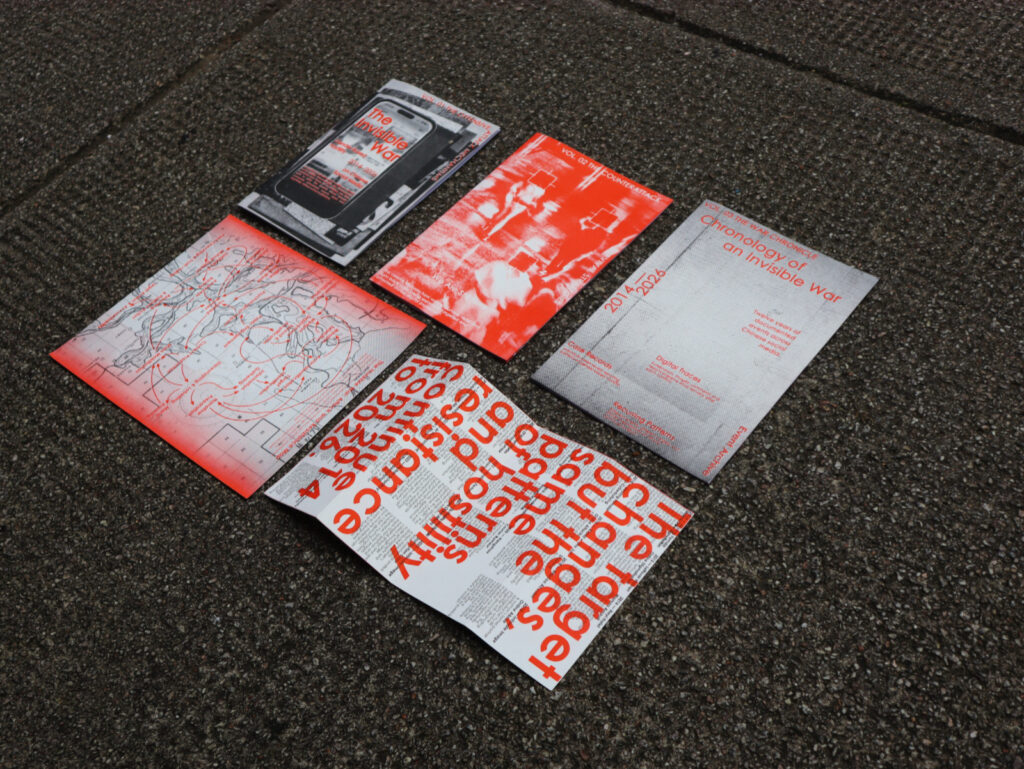
The three books and supporting printed materials form a connected visual archive of attacks, resistance, platform survival and the repetition of online gender conflict over time.
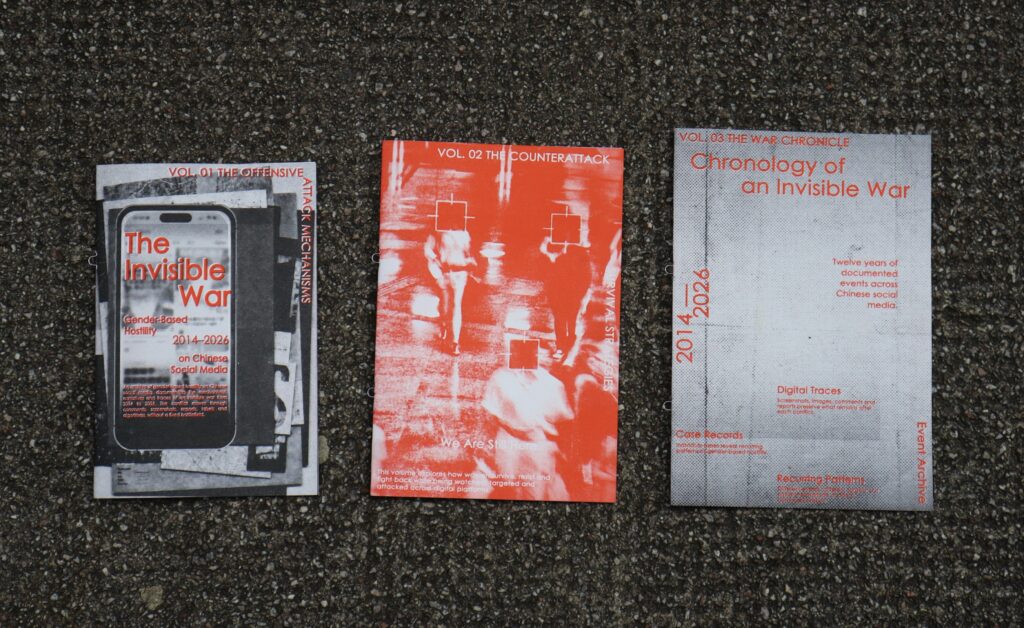
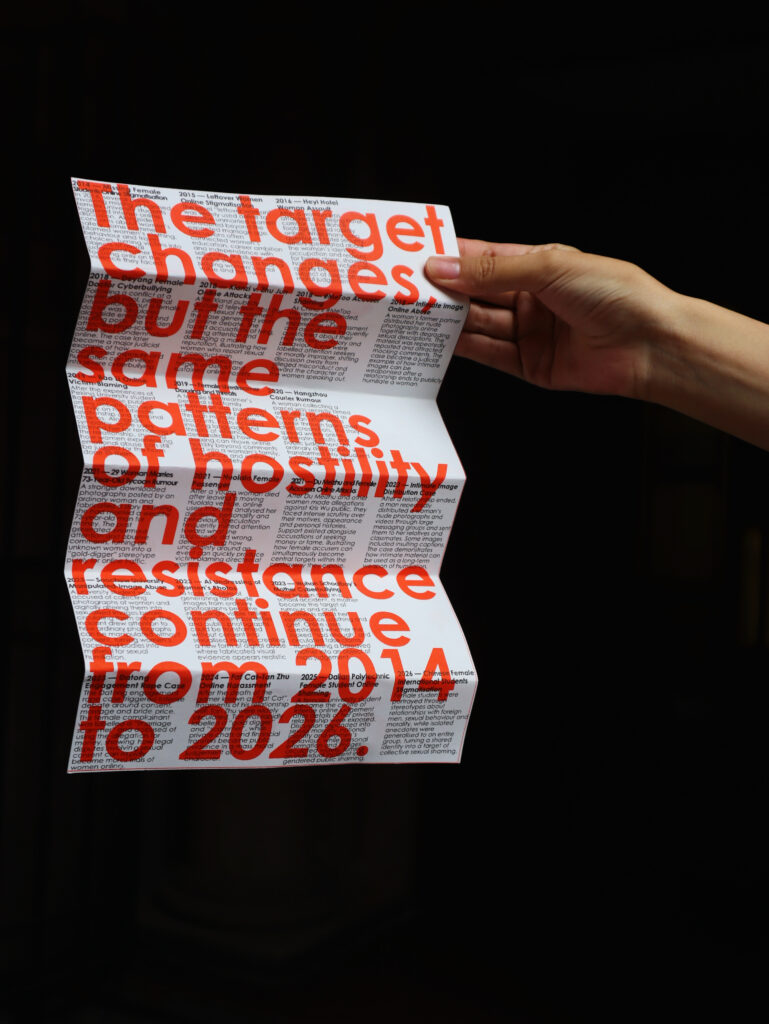
This work documents cases of online violence, public shaming, and gender discrimination against women from 2014 to 2026, revealing the ongoing nature of digital harm.
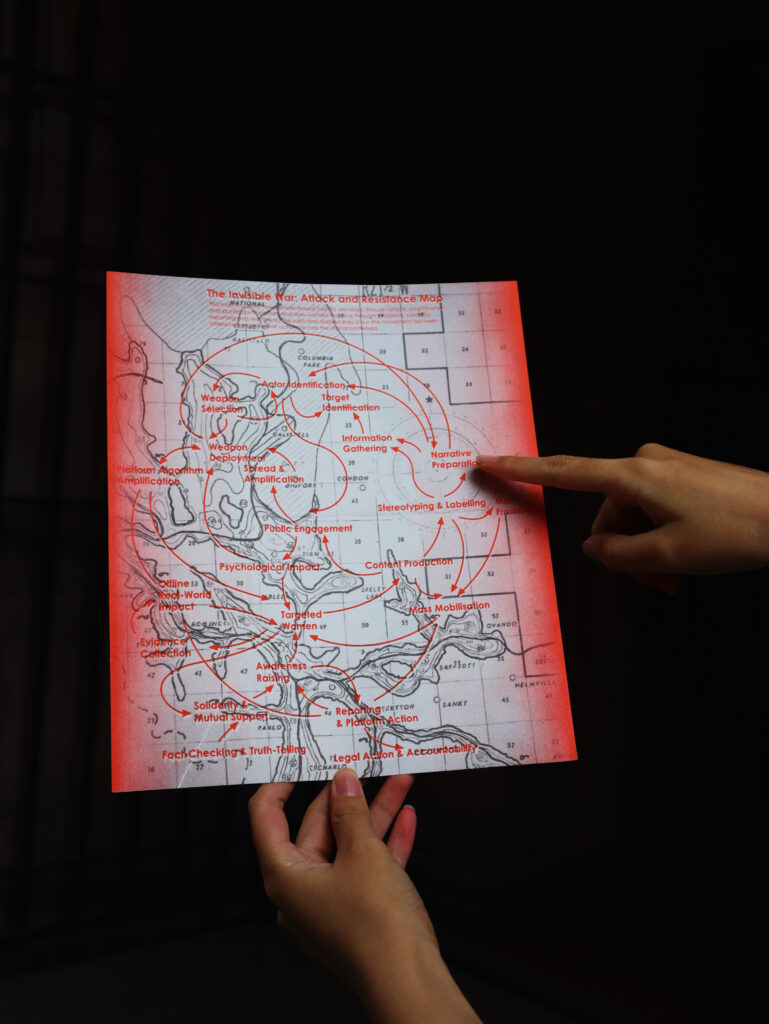
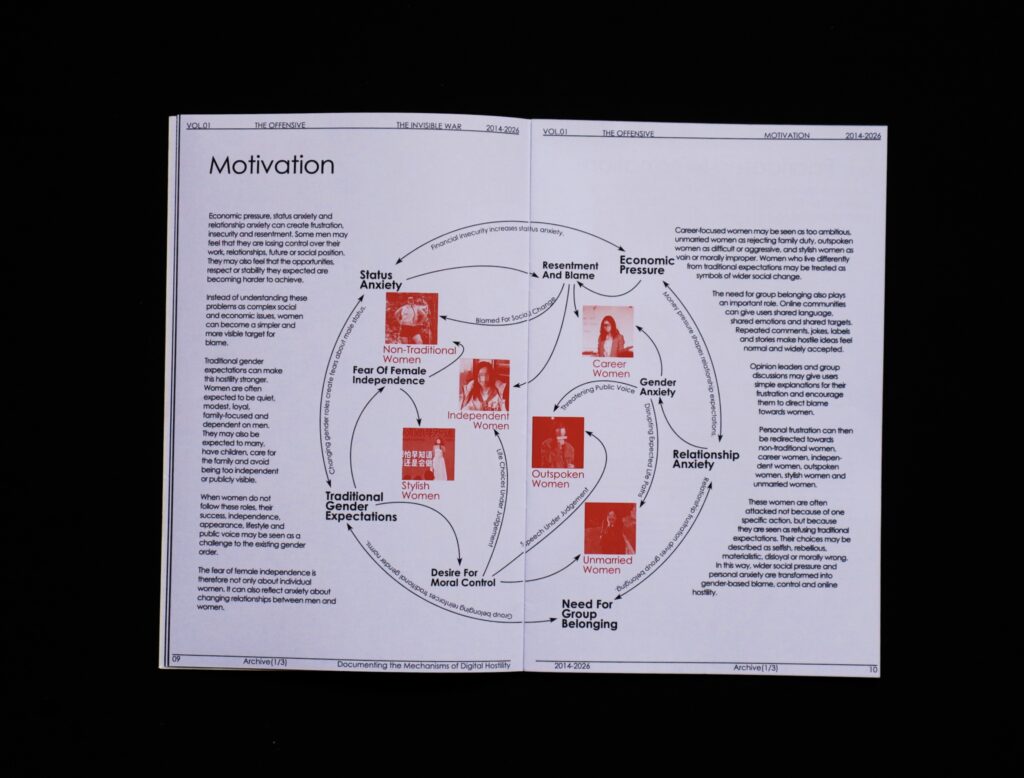
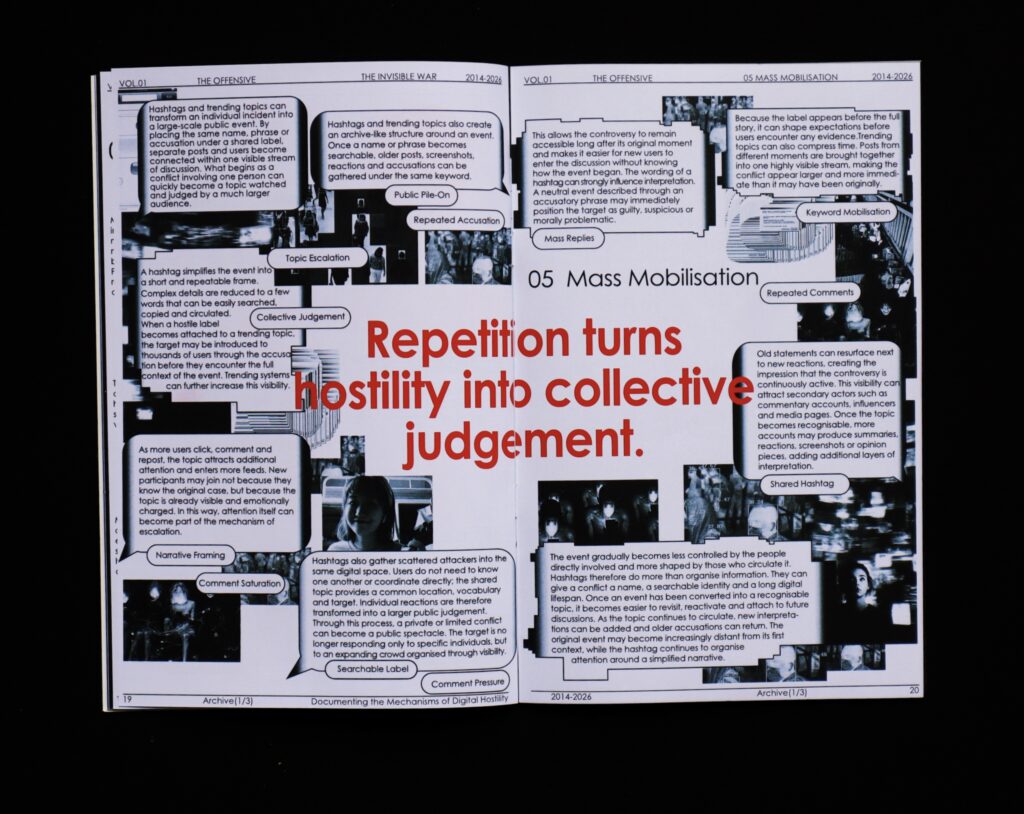
This work transforms online gender-based violence into an “Attack and Resistance Map.” Its arrows connect actor identification, information gathering, content production, platform amplification, public engagement, and real-world harm, showing how online abuse develops and expands. It also maps paths of resistance—including reporting, mutual support, fact-checking, and legal action—through which women regain support and agency.
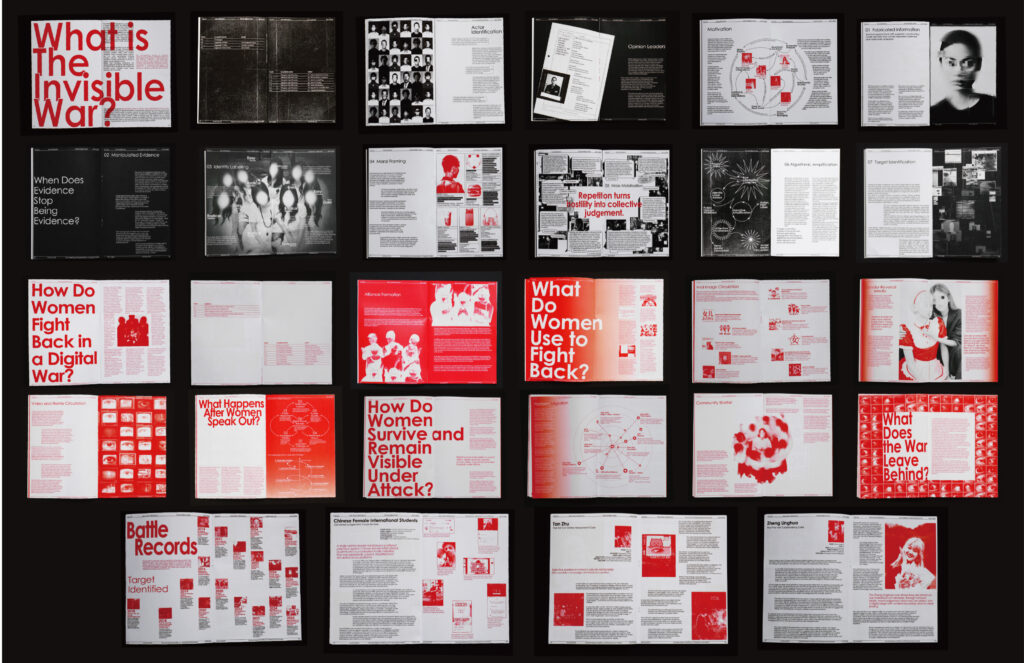
Interior spreads from The Invisible War, showing the final visual and content system across the three books. The pages include attack mechanisms, identity labelling, moral judgement, mass mobilisation, algorithmic amplification, women’s responses, mutual support, gender reversal, platform migration, and case records from different years. Through black and red, archival numbering, diagrams, timelines, and case pages, the project organises attack, response, survival, and long-term impact into a system that can be read and compared.