
Kexuan Shi
(Jade)
MRI
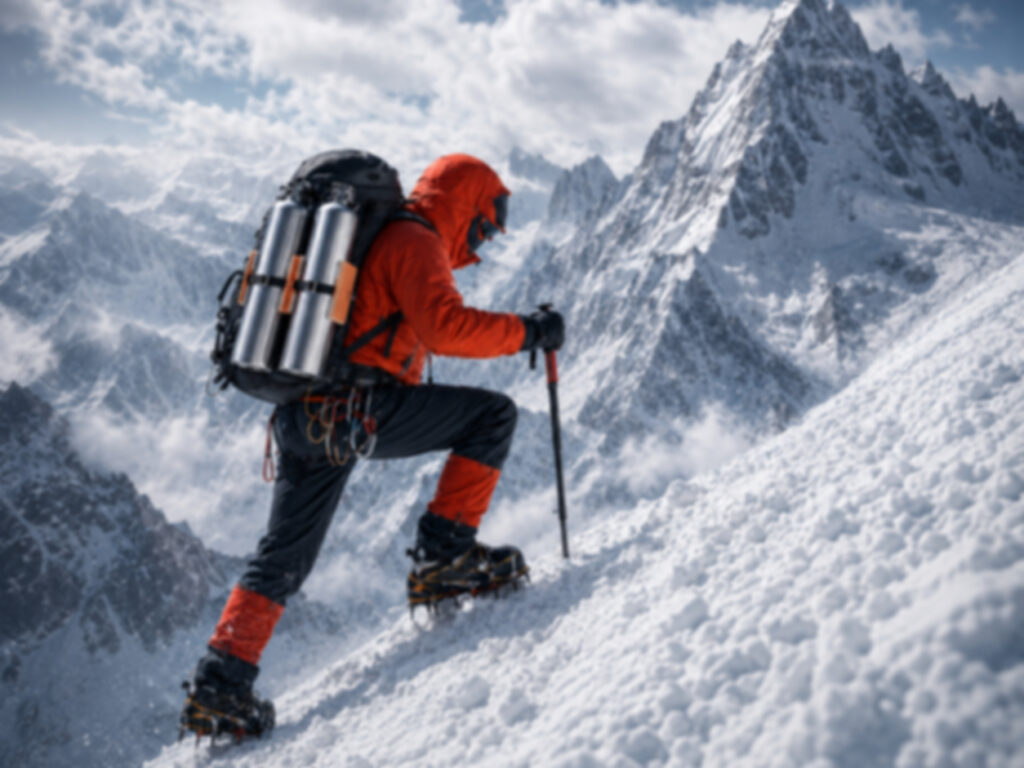
This project focuses on the manual recovery and transportation of used oxygen cylinders in high-altitude environments such as Mount Everest. Because roads and waste-management facilities are limited, discarded cylinders often need to be collected and carried down manually by Sherpa workers. Unlike ordinary waste, oxygen cylinders are rigid, fixed in size and difficult to compress, while current methods mainly rely on ropes, webbing or backpack straps, often requiring repeated adjustment during loading.
The project used literature, documentaries, scenario simulation and prototype testing to understand the recovery process and identify key problems. The design focus gradually shifted from simply increasing carrying capacity to improving cylinder positioning, securing, module connection and compatibility with existing backpacks.
The final concept uses a modular system in which each module holds one oxygen cylinder. Multiple modules can be connected through a side locking structure and attached to an existing backpack using rear straps. The design aims to improve carrying stability, reduce reliance on temporary rope tying, and make loading and removal more efficient. Material selection, load calculations and finite element analysis were also used to support the key structural decisions.
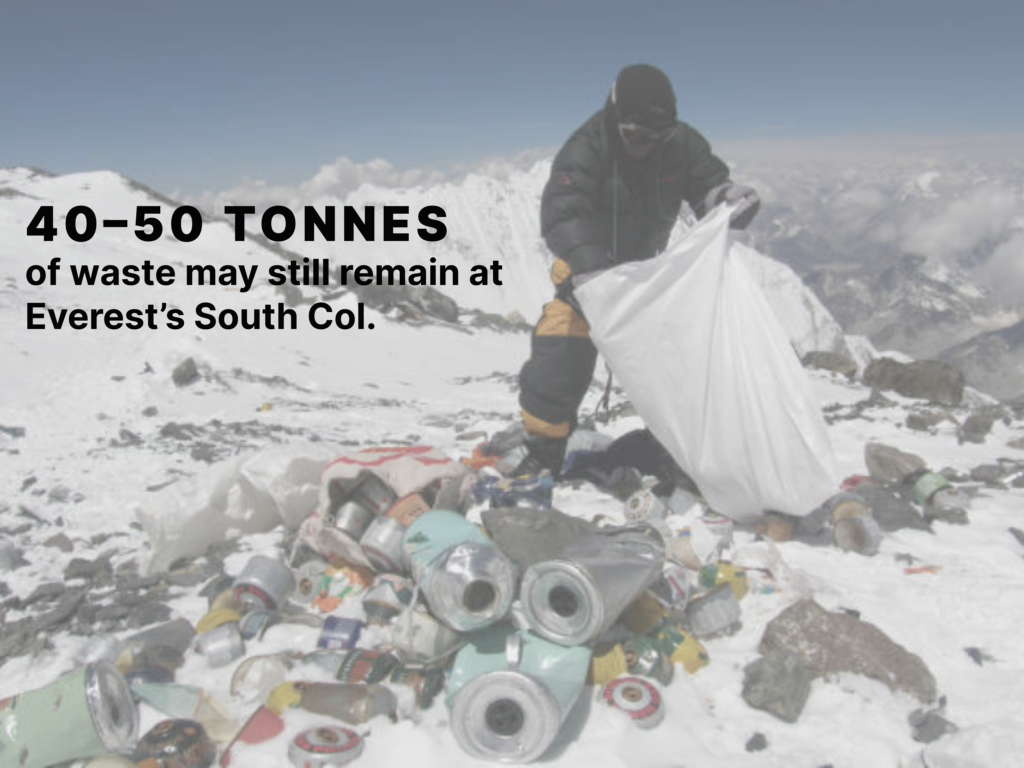
Mount Everest faces a growing waste problem, with 40–50 tonnes of rubbish estimated to remain at South Col. Empty oxygen cylinders are especially difficult to collect and carry down.
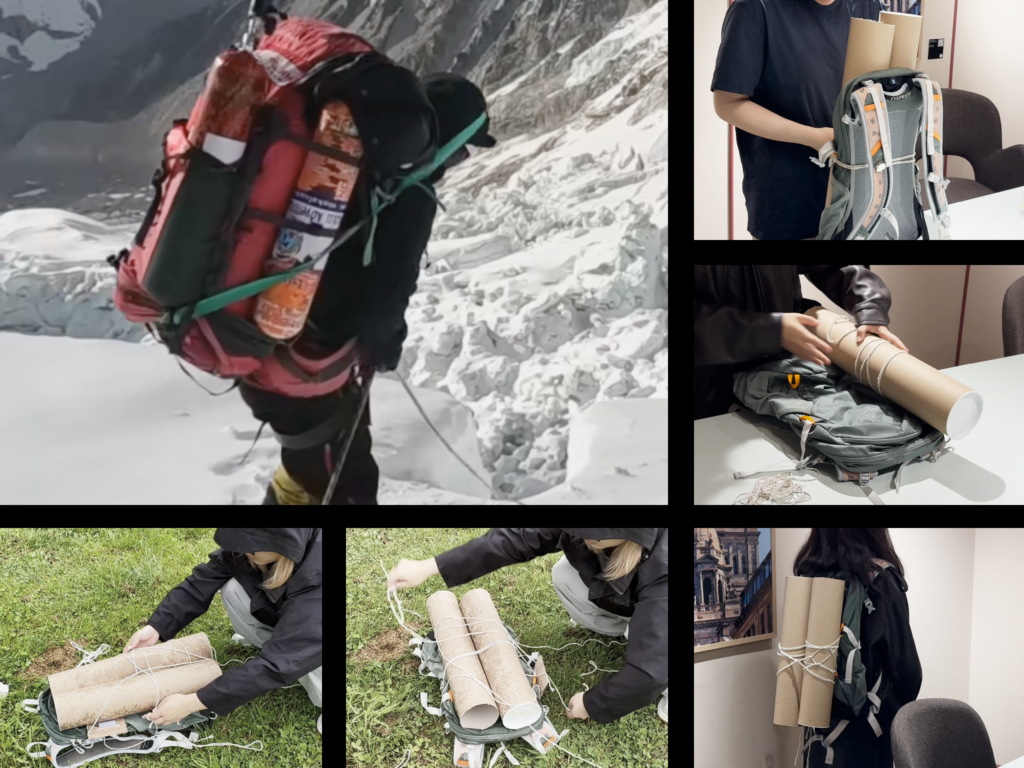
Empty oxygen cylinders are often tied directly to backpacks using ropes or straps, making them difficult to organise and secure. This unstable arrangement limits carrying capacity and reduces collection efficiency.
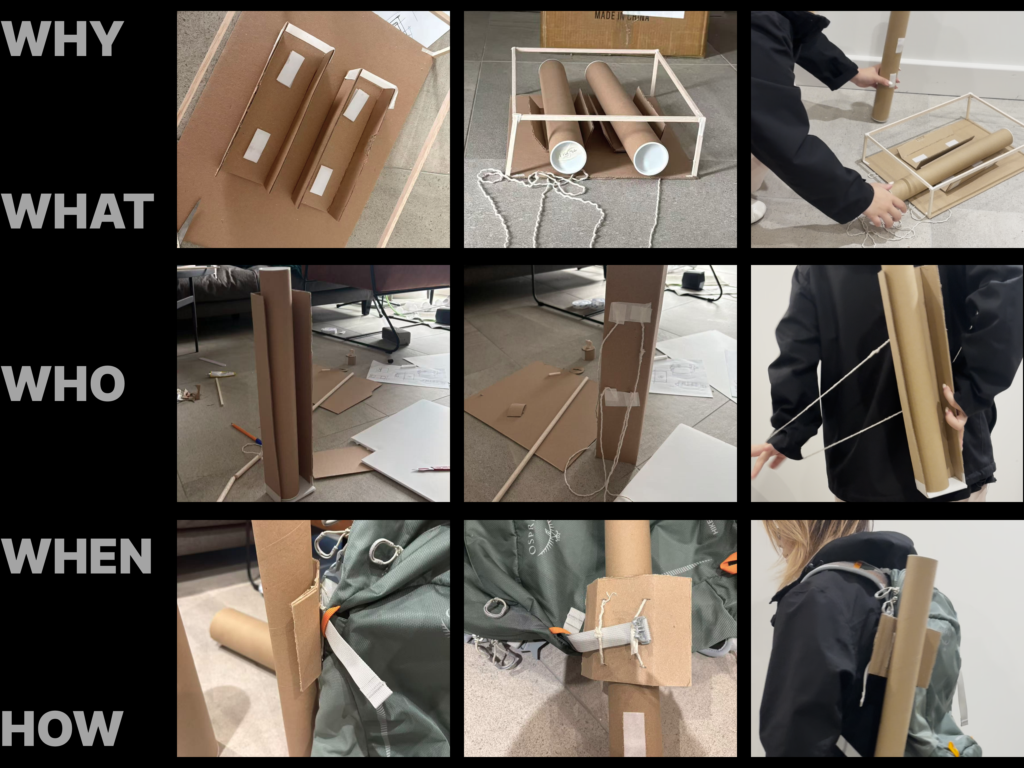
The design aims to improve the efficiency and stability of collecting and carrying empty oxygen cylinders in high-altitude environments. Early prototypes explored how cylinders could be positioned, grouped, secured and attached to an existing backpack, helping define the final modular carrying system.
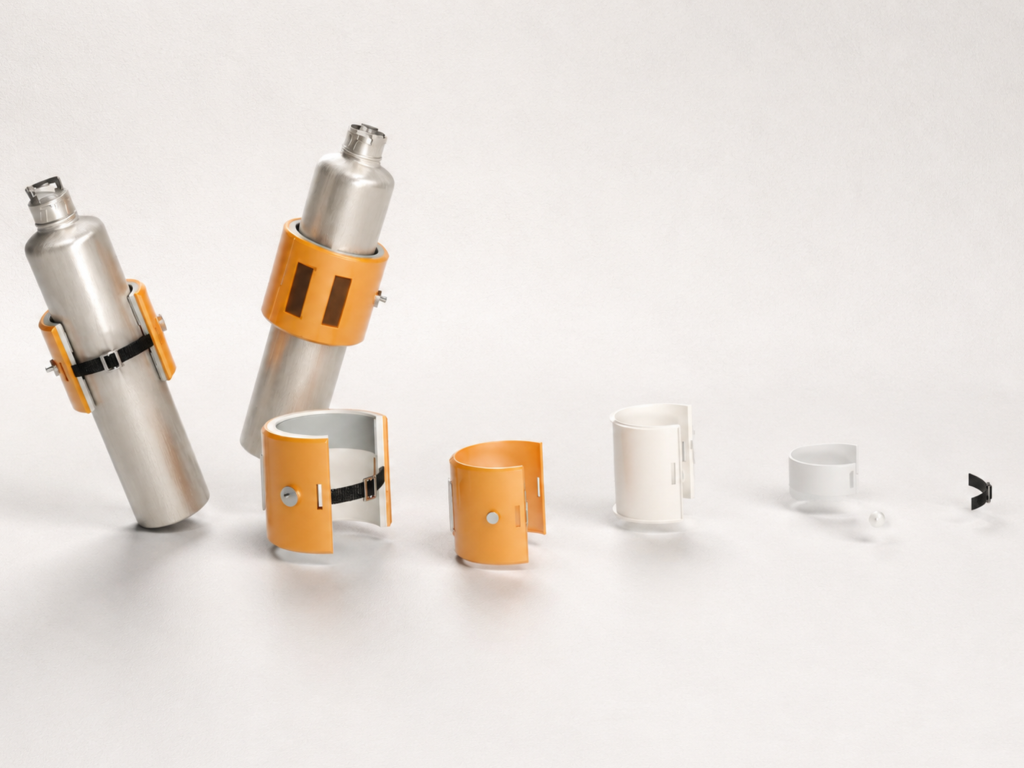
The product uses a modular structure to secure individual oxygen cylinders and connect multiple units together. Each module can also be attached to an existing backpack, creating a more stable and flexible carrying system.
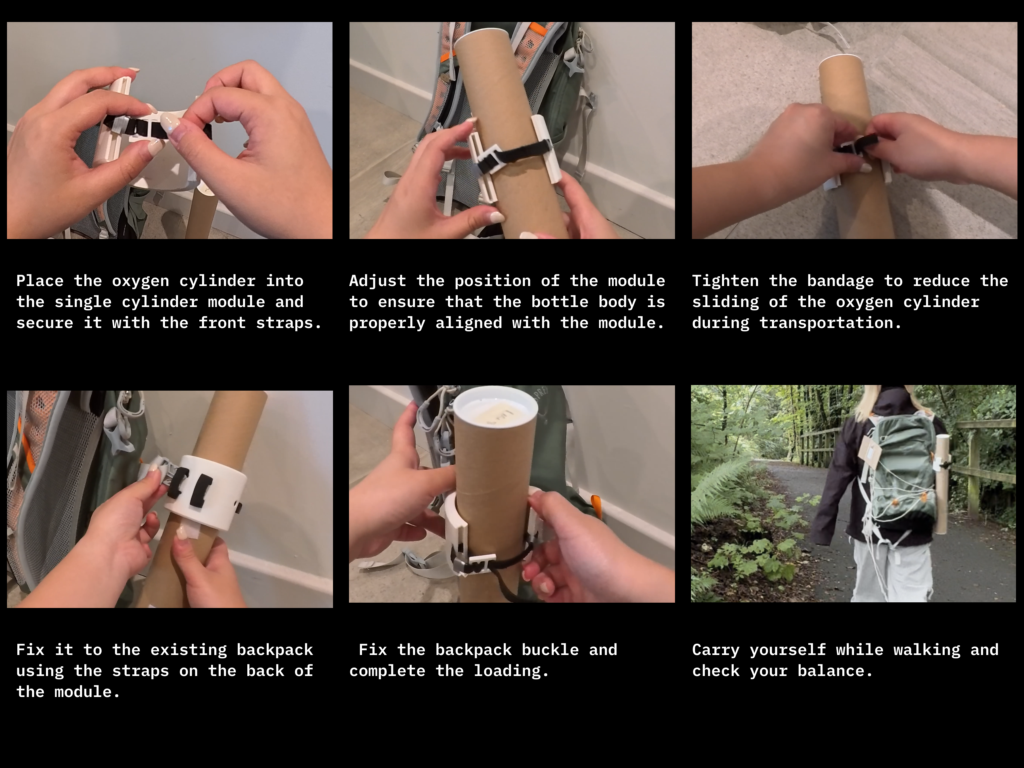
The system follows a simple loading process, from securing the oxygen cylinder in the module to attaching it to the backpack and carrying it during use. The modular structure helps make each step clearer and more stable.