
Isabella Sheridan-Moore
(she/her)
Isabella Sheridan-Moore is a creative producer and curator originally from so-called Australia, now based in Glaschu/Glasgow, Alba/Scotland. With a practice situated across and within the intersections of mediums (contemporary art, music, film, performance, dance and theatre), Isabella views curation to be a movement-based practice which facilitates the co-authorship of knowledge and memories through the bringing together of co-conspirators: people, places, and spaces.
With an academic background in interrogating anthropology, and a current focus on developing acknowledgement as curatorial method, Isabella is concerned with how curation can at once be a process of, and catalyst to retrace and disentangle taught narratives that propagate personal and collective processes of being and becoming. In recognising curation’s role in authoring the taught narratives that this research is concerned with, Isabella seeks to establish a generative curatorial practice which acknowledges the memories and knowledges of people not only physically in the room, but the lineages of people, places, and spaces that led them there.
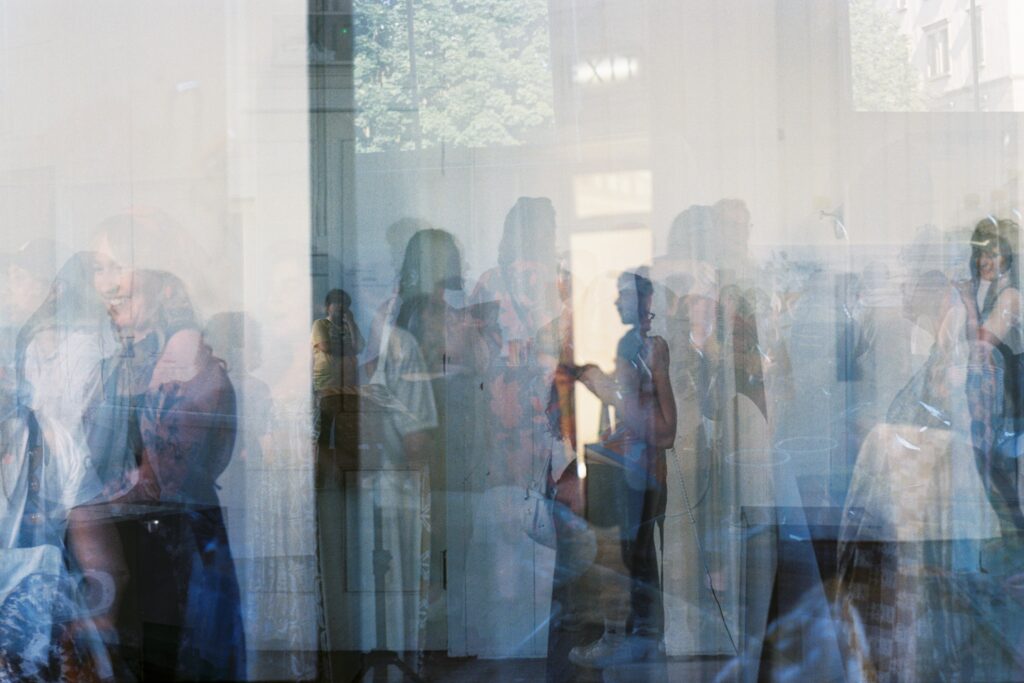
“mum sends me a note, with some cuttings, and other things she’s remembered”
“mum sends me a note, with some cuttings, and other things she’s remembered” was the first public unfolding of Isabella’s ongoing research Cuttings – the development of acknowledgement as curatorial method.
Hosting obuyile by Thulani Rachia (Shangaan-Zulu/so-called South Africa/UK) and /ˈmeɪtriɑːk/ by Hayden Ryan (Yuin-Walbanja/so-called Australia), the exhibition of performance, experimental sound, durational composition, moving image, and garments, brought together two international artists whose works had not previously met, and invited audiences to retrace our collective memories, and acknowledge what – and who – we may not know.
The works of Rachia and Ryan acknowledge and contend with the colonial violence embedded within and reproduced by public infrastructures – and resuscitate the voices and memories that have been silenced. The space of an old school, currently undergoing restoration, reinforced the artists’ respective interventions in taught narratives, and their own restoration of their ancestors’ voices within public infrastructures and collective memories.
The project’s curatorial statement:
As we gather within a school – the public infrastructure to which the canals of knowledge, and rivers of memory merge within and against[1] – we are invited to return to what has been buried.
Both Thulani Rachia (Zulu/so-called South Africa/UK), and Hayden Ryan (Yuin-Walbanja/so-called Australia) invite us to correspond with the cuttings of knowledge and memories that have been sent to us, and to acknowledge the voices the ongoing colonial project attempts to bury. Their works are an invitation to remember and reckon with what, and who we may not know.
Rachia’s iterative work obuyile (2021 – ongoing) is one that was birthed from correspondence. With its foundations in melodies and harmonies vocalised by Rachia in response to cities marked by colonial violence across Scotland and Europe, and its crystallisation formed by a dream received by an ancestor – Rachia invites audiences to reconfigure, re-position, and retrace ourselves within these violent urban landscapes. The 7-day installation, an unfolding from a live performance in St Giles, “materialises time” and memory – offering an alternative cartography for us to track the coordinates that make us so.[2] This work is an excavation of dreams laid to rest within these walls.[3]
Ryan’s /’meitria:k/ (2026) urges us to literally pick up the phone to six mothers and daughters in his family. To acknowledge that “those voices, and those histories are there, and have always been there, no matter how much colonialism tries to bury” them.[4] At the beginning of the work we hear a matriarch reminisce about trams circling roads near her school. As we listen, we are circling within the public infrastructure that made, and makes these voices unfamiliar. Ryan brings forth layers of conversations to make sure they are known.
Both artists return us to points where time and memory merge. Instigating reckonings with our pasts, whilst erecting a future through the excavation of voices buried.[5]
As we gather, we arrive at a point of merging from our knowledge of the roads[6], and the memories that once belonged to our grandmothers, mothers, and friends. This exhibition hopes to invite you to retrace and correspond with the notes, the cuttings, and other things remembered, that were sent to us.[7]
About the Artists:
Thulani Rachia (Shangaan-Zulu/so-called South Africa/UK) is an artist who works across performance, choreography, music composition, and moving image, with training in performance and architecture. The current Cavendish Art Science Fellow at the University of Cambridge, Rachia’s work responds to growing up within the spatial legacies of apartheid and built environments that structure social hierarchies – reimagining spaces and materials marked by harm, and opening possibilities for thinking otherwise. Rachia’s work has been exhibited nationally and internationally, including São Paulo-Arte; Bluecoat, Liverpool, Artists’ Moving Image Festival (AMIF); Subsolo Laboratório de Arte, São Paulo; Glasgow International Festival of Contemporary Art; and Edinburgh Art Festival.
Hayden Ryan is a Yuin-Walbanja sound artist and scholar. His sound work explores Indigenous identities, histories, and relationships with place through immersive installations. His current PhD research investigates how sonic practice and acoustic space influence ways of understanding the environment, history, law, and positionality within Indigenous cultures – blending signal-processing, (psycho)acoustics and spatial audio with Indigenous research methods to encapsulate the nuances between First Peoples and sound. Having recently worked with Raven Chacon for Naarm’s (Melbourne) RISING Festival, Ryan’s work has been making waves internationally. His work has been hosted in New York, and he was the 2025 Helsinki International Artist Programme Resident. This was the first time Ryan’s work was hosted in Scotland, and the UK.
[1] “the canals of knowledge, and rivers of memory” is a line that takes deep inspiration from the work of Emilio Carballido, and Toni Morrison.
[2] Artist interview, Thulani Rachia and Isabella Sheridan-Moore (June 2026).
[3] Rachia is led by a speculative enquiry asks “Siwaguba kanjani amaphupho ethu agqitjwe kulezindonga?”:“how do we excavate the dreams laid to rest in these walls?”
[4] Artist interview, Hayden Ryan and Isabella Sheridan-Moore (May 2026).
[5] These lines respond to the words of Etel Adnan, held within Night. A text that was lent to me by my mentor, Professor Omar Kholeif.
[6] This line draws inspiration from Etel Ednan, and Emilio Carballido – the latter, I encountered through the work of Diana Taylor.
[7] These words, and the title of this project, are those of Dr Amanda Thomson’s, in her book belonging. This text is a founding source of this curatorial research.
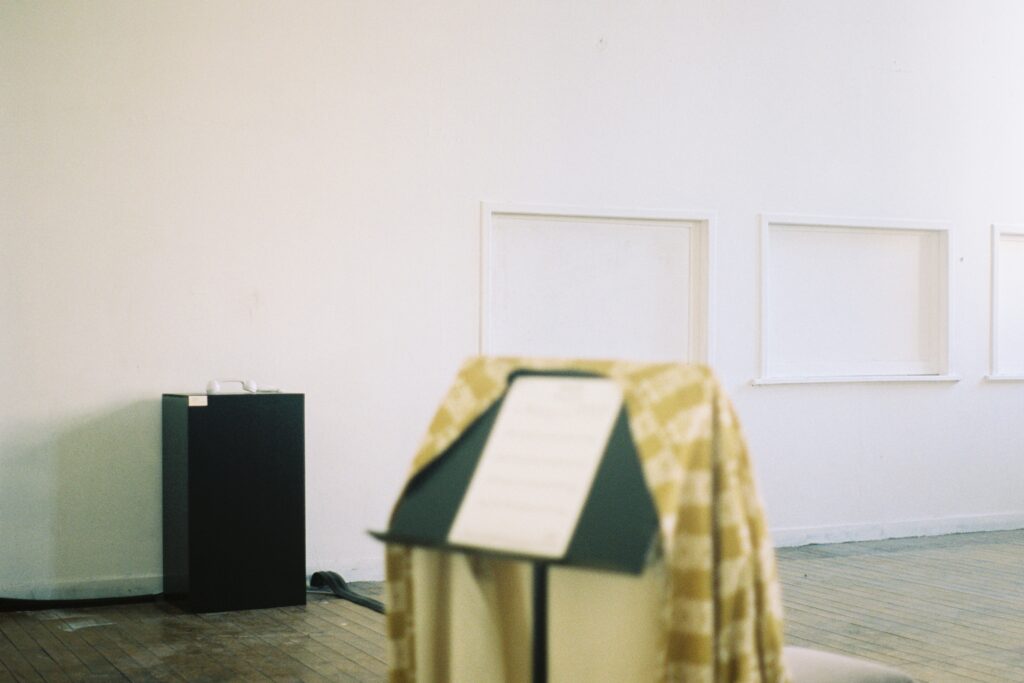
'/ˈmeɪtriɑːk/' by Hayden Ryan (2026), and 'obuyile' by Thulani Rachia (2021 - ongoing) in "mum sends me a note, with some cuttings, and other things she's remembered" (July 2026). Image Credit: Miriam Ali
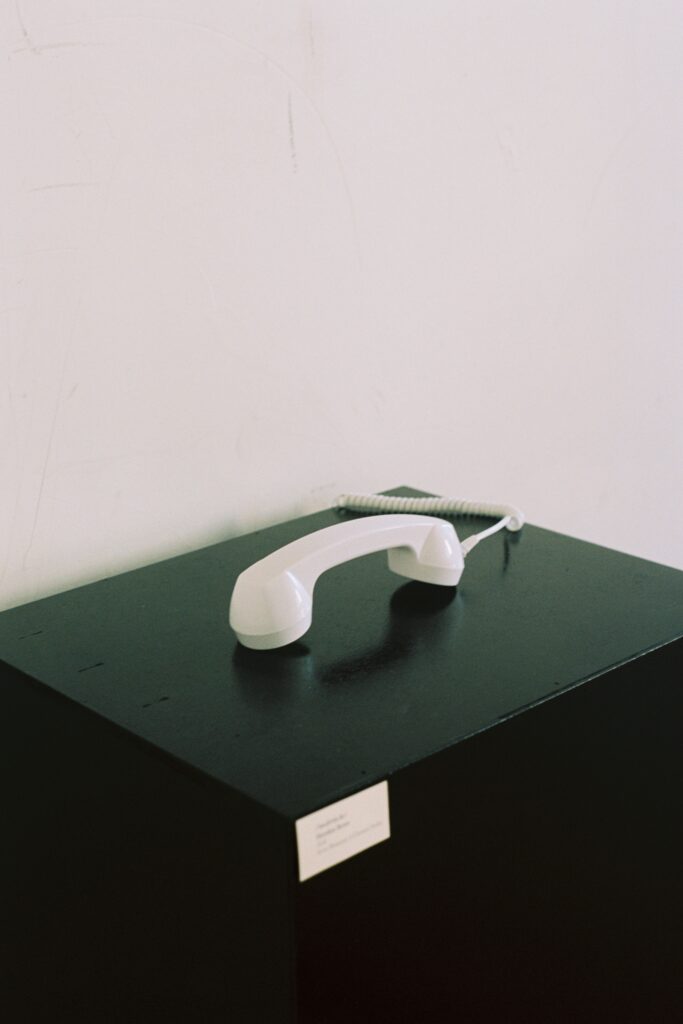
/ˈmeɪtriɑːk/ by Hayden Ryan (2026). Image Credit: Miriam Ali
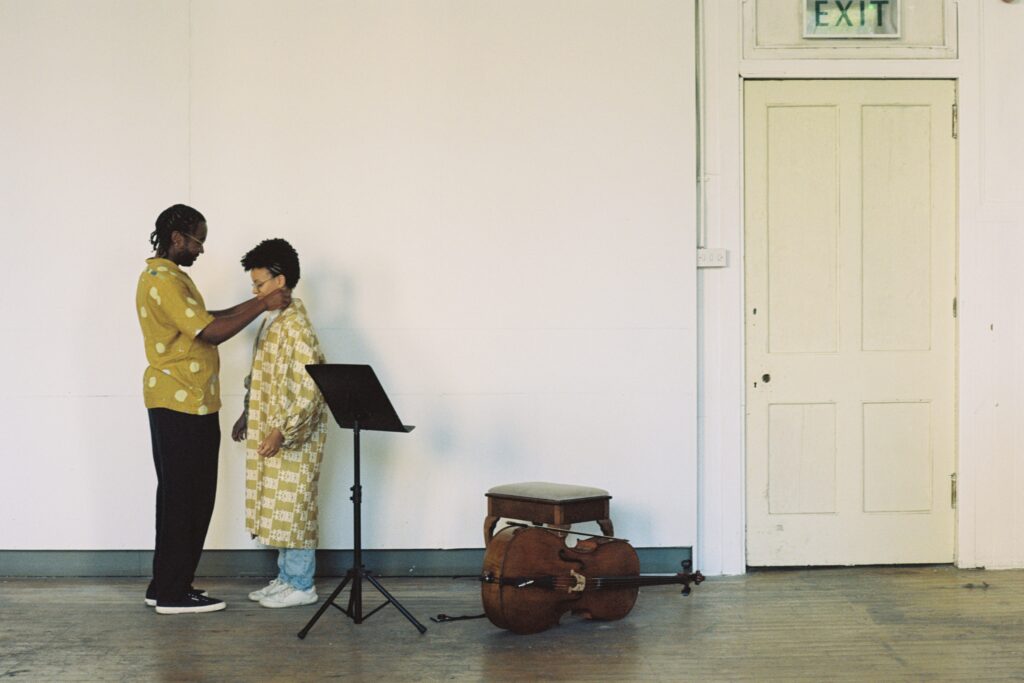
Thulani Rachia and Simone Seales, during a live performance of 'obuyile' at "mum sends me a note, with some cuttings, and other things she's remembered" (July 2026). Image Credit: Miriam Ali
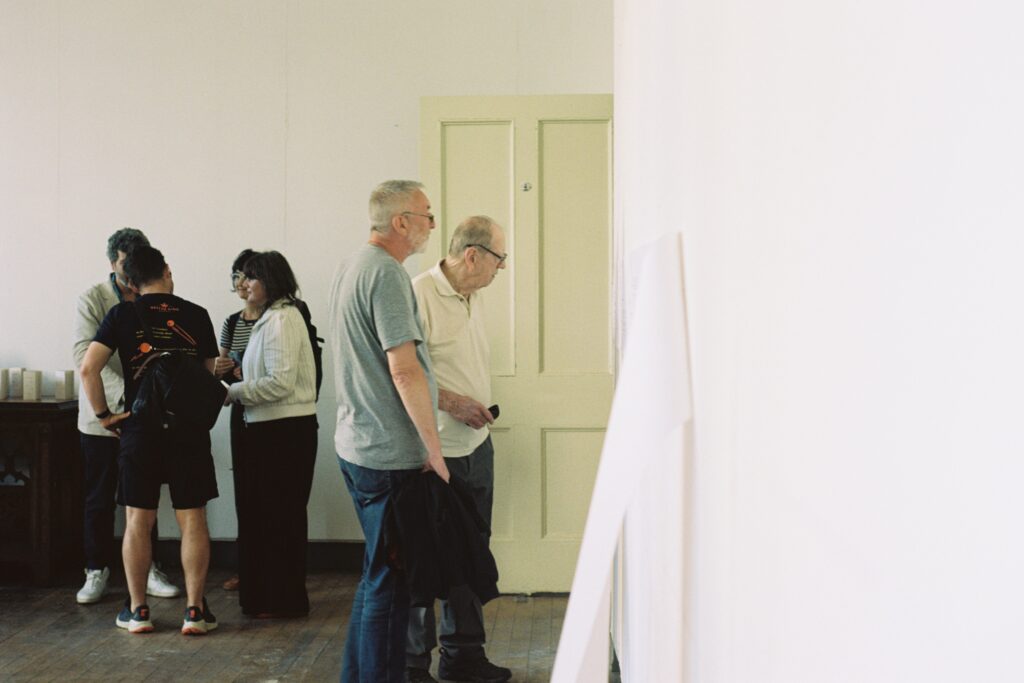
Audience members reading a scroll essay - the first iteration of this project - written by Isabella Sheridan-Moore. Image Credit: Miriam Ali
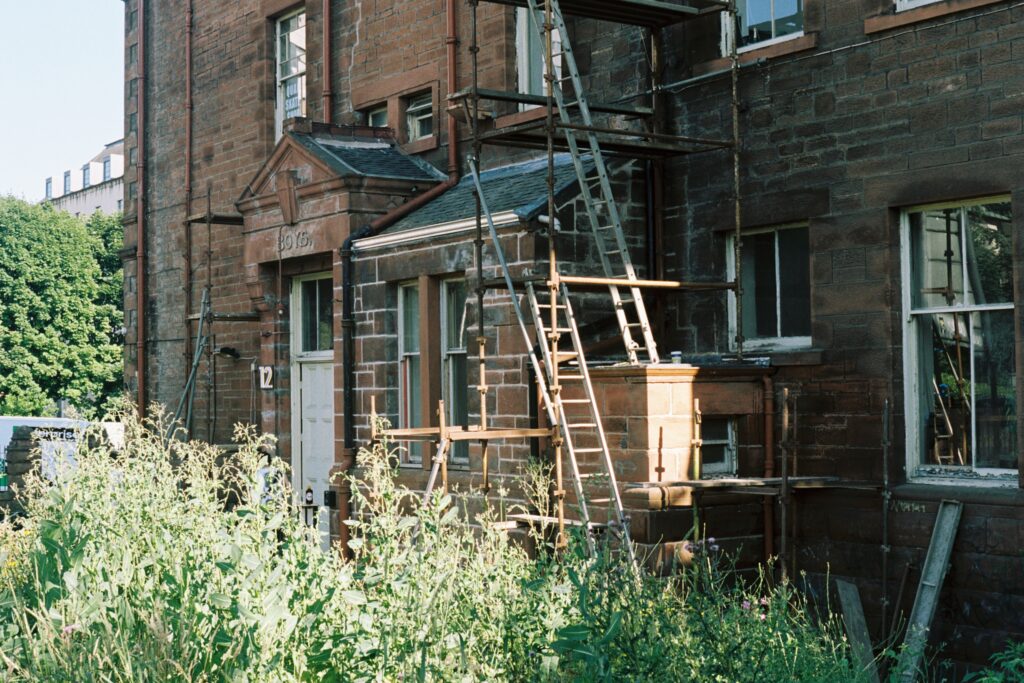
Restoration works at the venue, End Studios - The Old School, 12 Washington Street, Glasgow. Image Credit: Miriam Ali
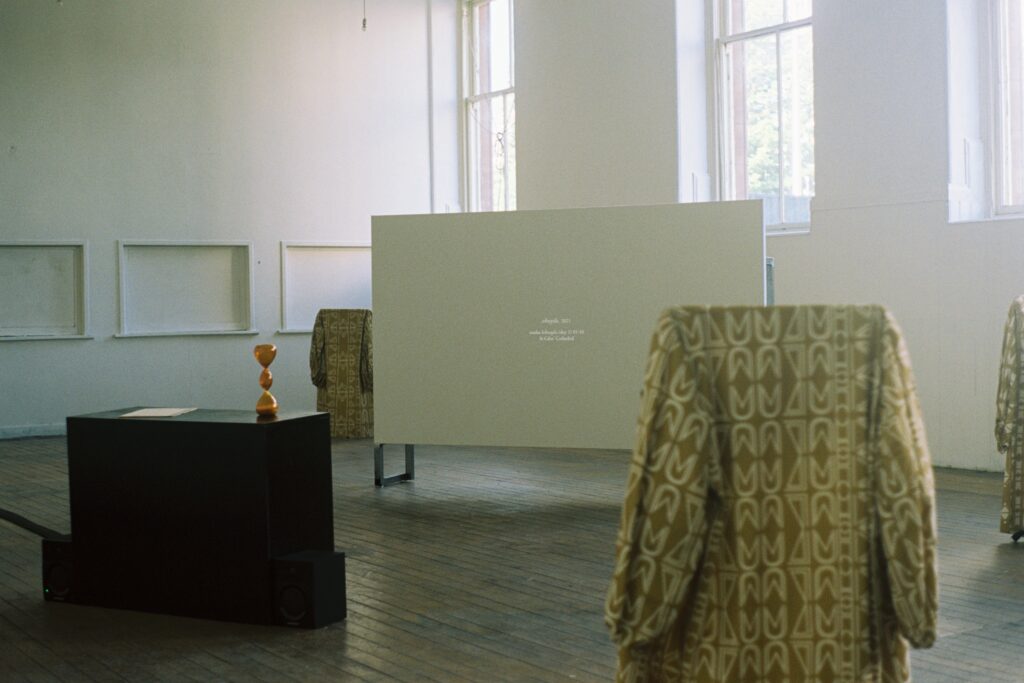
obuyile (2021 - ongoing) by Thulani Rachia. The steel structure that the moving image component was projected on was made by Glasgow-based artist, Ruby Stewart. Image Credit: Miriam Ali
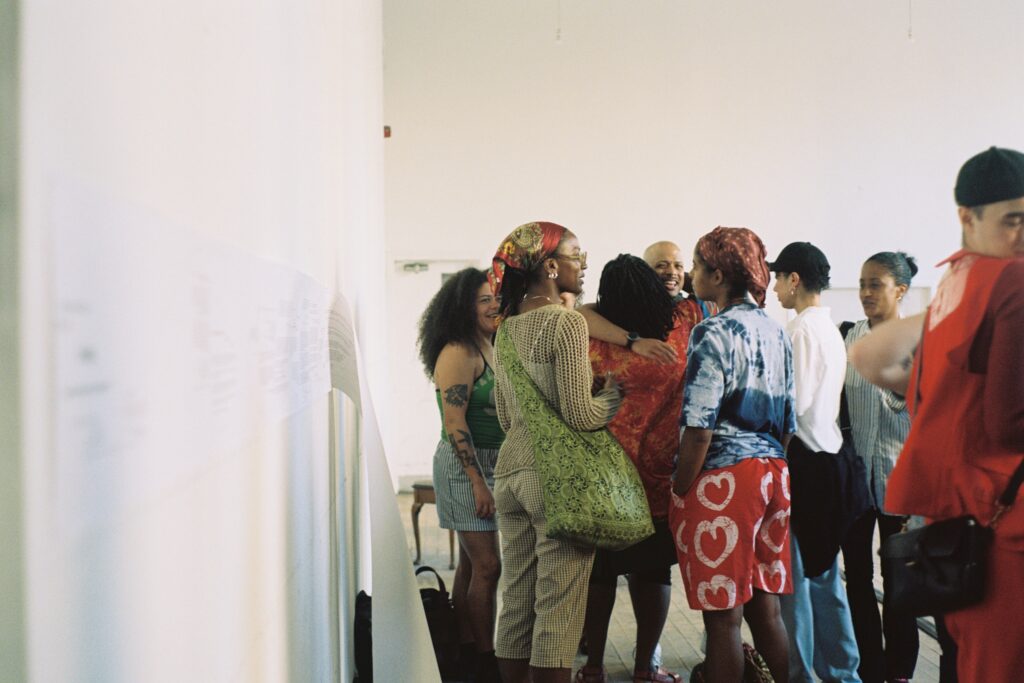
Opening night. Image Credit: Miriam Ali
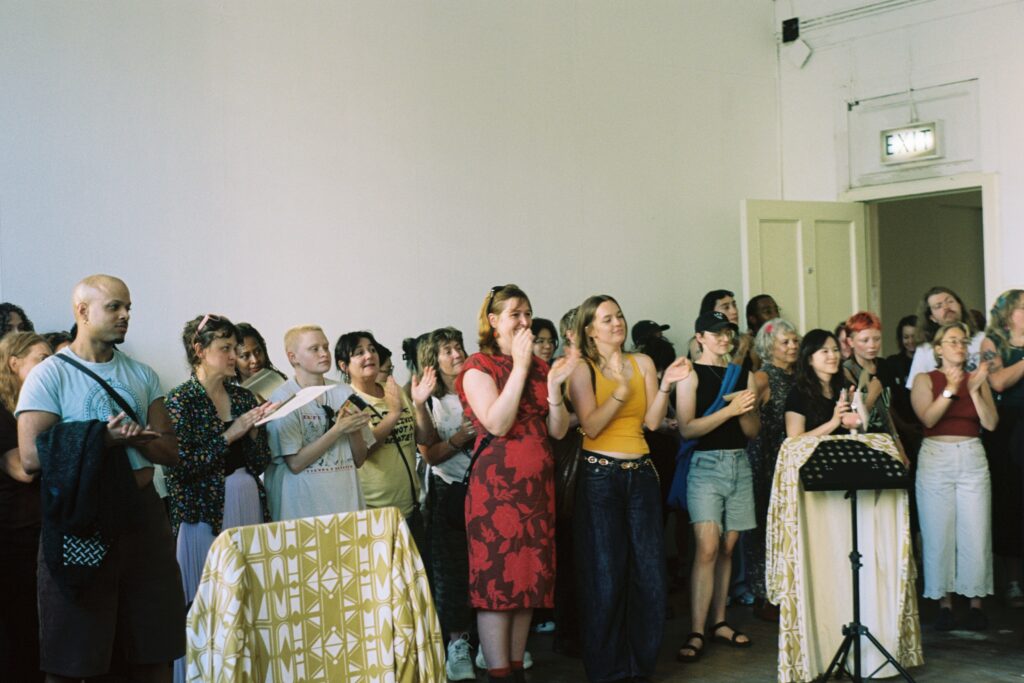
Opening night. Image Credit: Miriam Ali
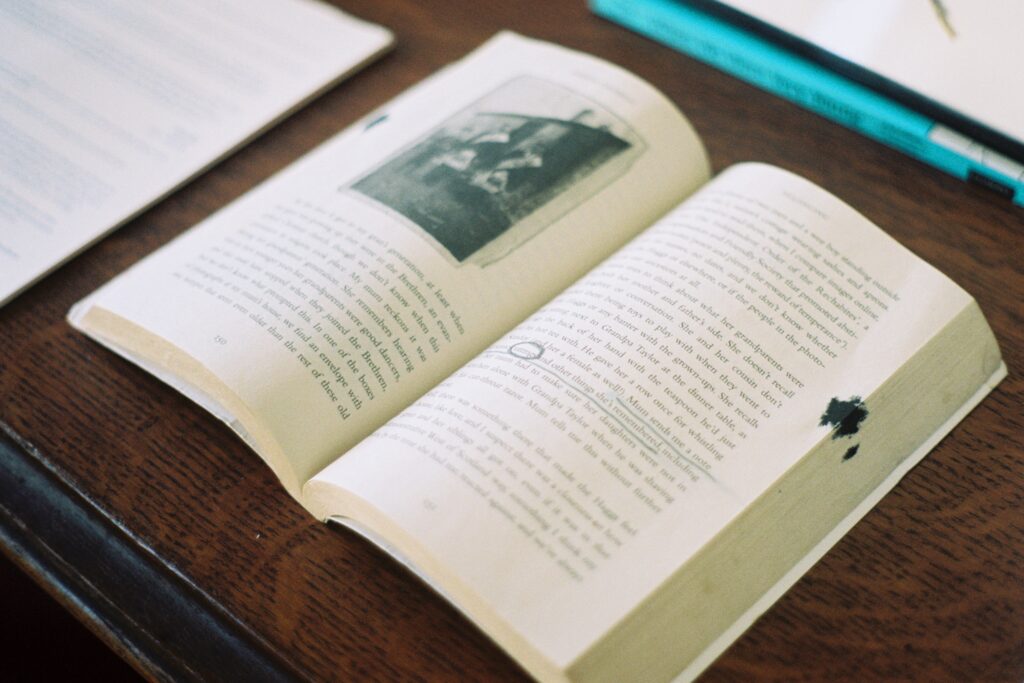
Dr Amanda Thomson's book 'belonging: Natural Histories of Place, Identity, and Home' - where the project borrows its' name, and the catalyst to the framing of Isabella's research.
Artworks
obuyile (2021 – ongoing) by Thulani Rachia:
Unfolding over seven days, obuyile (“the one who returns”, isiZulu) invites audiences to explore methods of healing through sound, rest, and counter architectures, through motions of return each day.
An installation piece weaving together composition, moving image, and textile, the work emerged from an ancestral dream received by Thulani.
The cello composition, initially performed by four cellists in St Giles Cathedral and commissioned by Edinburgh Art Festival, has its foundations in melodies and harmonies recorded by Thulani as he walked the streets of cities marked by colonial violence across Scotland and Europe. An intuitive process of walking, retracing, and remapping to ground himself in new environments, that led to the melodies of memories we hear today. The seven-day duration is an acknowledgement of Frederick Douglass, who whilst in Edinburgh, taught himself a hymn from home on a fiddle over the course of a week – an act he described as a form of healing.
Thulani’s translation of isiZulu into textile, inscribe and encode his mother tongue into the material. The construction of these garments by Asia Przytarska, erects an architecture of sanctuary – enlivening Thulani’s coordinates to navigate built environments stained by colonialism. The architectures that have absorbed and generated; buried and propagated our personal and collective memories. Architectures of erasure.
Through garments which provide an architecture of sanctuary and a composition enlivened by breath and rest, Rachia’s installation enacts and provides a counter-cartography to navigate the architectures that archive colonial violence.
This counter-cartography invites audiences to retrace the coordinates that made them so.
/’meitria:k/ (2026) by Hayden Ryan:
/’meitria:k/. is an experimental sound work centring ancestry, the transmission of kindred structures and matriarchal leadership through the use of archival sound recordings and images.
The piece was inspired by the legacy of Hayden’s great-great grandmother, Muriel Pearl Stewart OA, who was the first Aboriginal woman to become a Justice of the Peace in New South Wales. For 45 years, Muriel volunteered at La Perouse School and was responsible for the construction of the local kindergarten. She was a founding member of the Foundation of Aboriginal Affairs, the Aboriginal Medical Service, the National Aboriginal Advisory Council and the Woman Justices Association.
In 1983, she received an Order of Australia for service to Aboriginal welfare.
Tracing the voices of six successive mothers and daughters /’meitria:k/. accentuates how the voices of Aboriginal women are more than semantic artifacts, which carry cultural and political identities, phonetic textures and contours, and intergenerational knowledge. Audience members experience the work through a telephone handset while immersed in an ambient soundscape. Within this sonic environment, the partially obscured voices of six women emerge – voices that may be unfamiliar to most listeners, yet immediately recognisable to their relatives and close friends.
Through the handset, listeners are invited to (re)connect with these women as they speak about their identities and lived experiences. The telephone operates as both a practical and symbolic device: a conduit for intimacy, memory, and presence. For the descendants of Muriel and May in particular, /’meitria:k/. evokes a sense of nostalgia and kinship, reanimating voices not heard through a telephone since their passing and reinforcing our lineage as Yuin people.
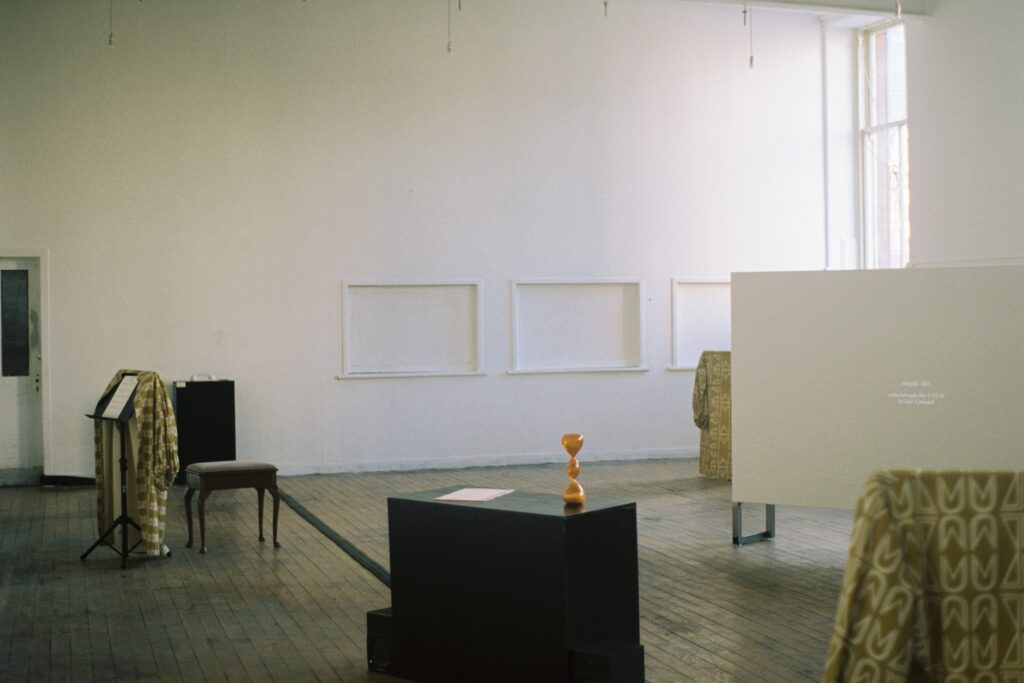
'/ˈmeɪtriɑːk/' by Hayden Ryan (2026), and 'obuyile' by Thulani Rachia (2021 - ongoing) in "mum sends me a note, with some cuttings, and other things she's remembered" (July 2026). Image Credit: Miriam Ali