
Rhythms of Occupation
Rhythms of Occupation explores how an interior can be understood not only through its physical boundaries, materials and objects, but through the changing patterns of occupation that unfold within it over time. People arrive and leave, conversations overlap, movements repeat, activities are interrupted, and moments of intensity give way to periods of quiet. While the architecture may remain relatively stable, the way an interior is occupied is continually changing.
The project began with a personal interest in music, memory and place, particularly the ability of music to recall a person, a moment and a space. This gradually shifted the research from remembered spaces towards the everyday occupation of a presently experienced interior. Drawing on Henri Lefebvre’s concept of rhythmanalysis, rhythm became a way of recognising repetition, variation, overlap, interruption and interval within everyday spatial experience.
My studio at The Glasgow School of Art became the primary site of investigation. I repeatedly recorded the journey from the corridor into the studio at different times of the day, listening to how the same interior changed between morning, afternoon and evening. Rather than focusing on individual sounds, I began listening to the relationships between them and what they revealed about movement, activity, interaction and absence.
These recordings were then taken through a process of translation. Everyday sounds from the studio were extracted and reorganised into three musical compositions representing different conditions of occupation. The compositions were subsequently translated through visual experimentation, before their recurring rhythmic relationships were explored through material and physical form.
The resulting artefact brings three conditions together as a layered assembly of hand-worked brass plates held in relation through a shared structural system. It does not attempt to provide a literal representation of the studio or of its sound. Instead, it represents one physical outcome of a process moving from interior occupation to listening, recording, music, visualisation and finally making.
Ultimately, Rhythms of Occupation proposes listening as another method of reading an interior. By attending to rhythm and temporality, the project considers how interior design might engage not only with what a space physically contains, but with the changing patterns of people, activities and movements through which it is continuously lived.
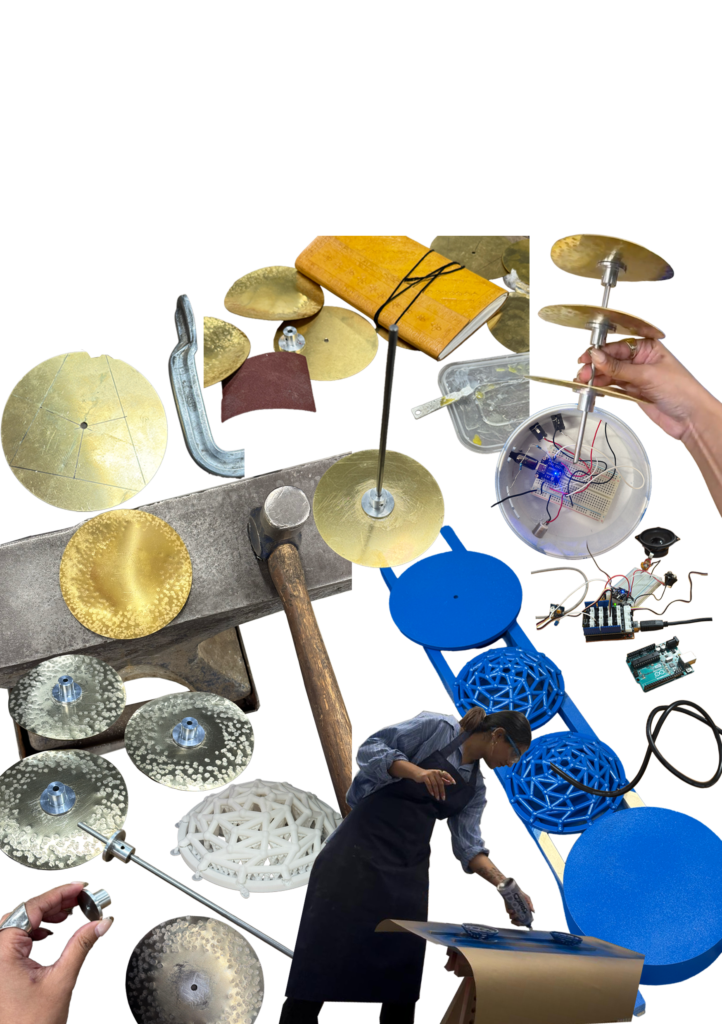
A series of images curated showcasing the process of making of the Artefact

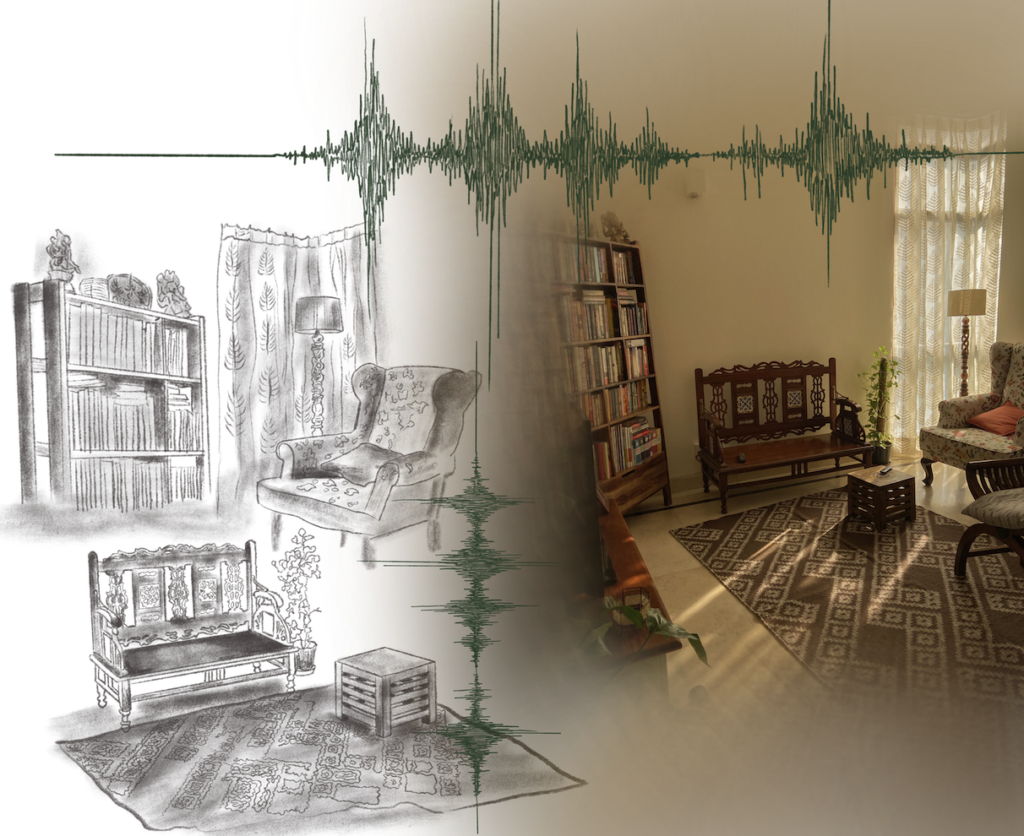
The whole project began with the inspection of how songs trigger memories of spaces and moments
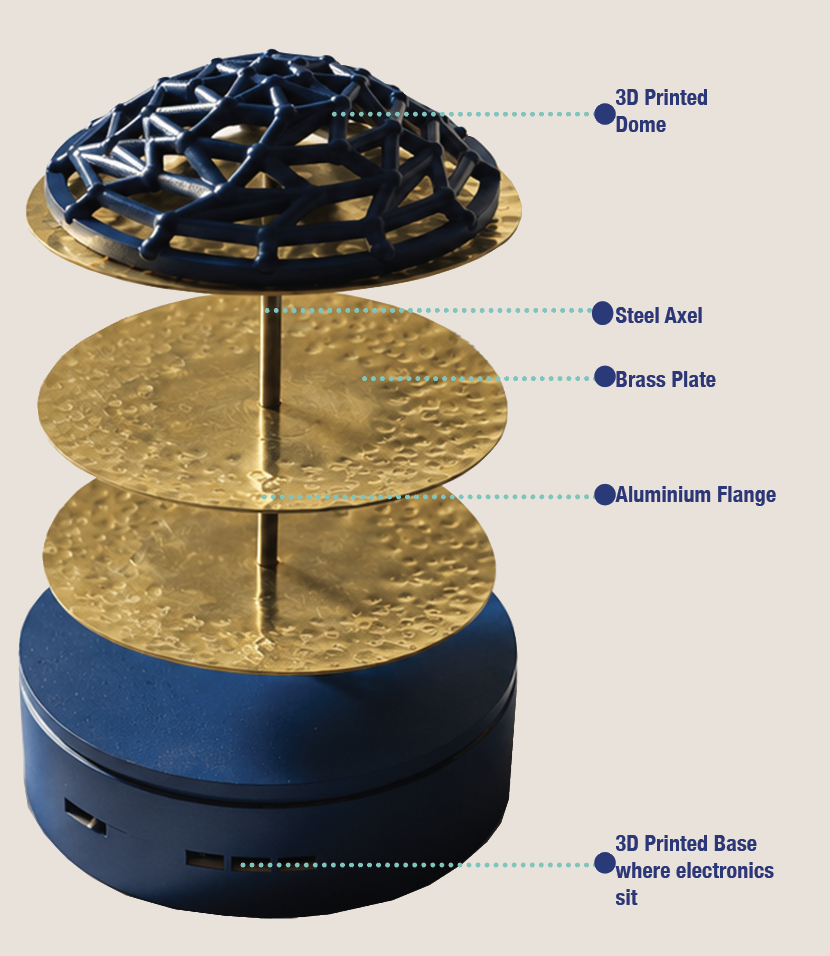
Final curated artefact that translates space to music