
Meng Luo
I am a graphic designer whose practice explores visual communication, editorial systems and the relationship between digital culture and everyday behaviour.
My work often combines research, found imagery, publication design and material experimentation to translate abstract or difficult-to-see experiences into visual systems. I am particularly interested in how interfaces, screens and contemporary media shape attention, perception and habitual behaviour.
My current practice investigates these ideas through graphic classification, editorial structures and physical interaction.
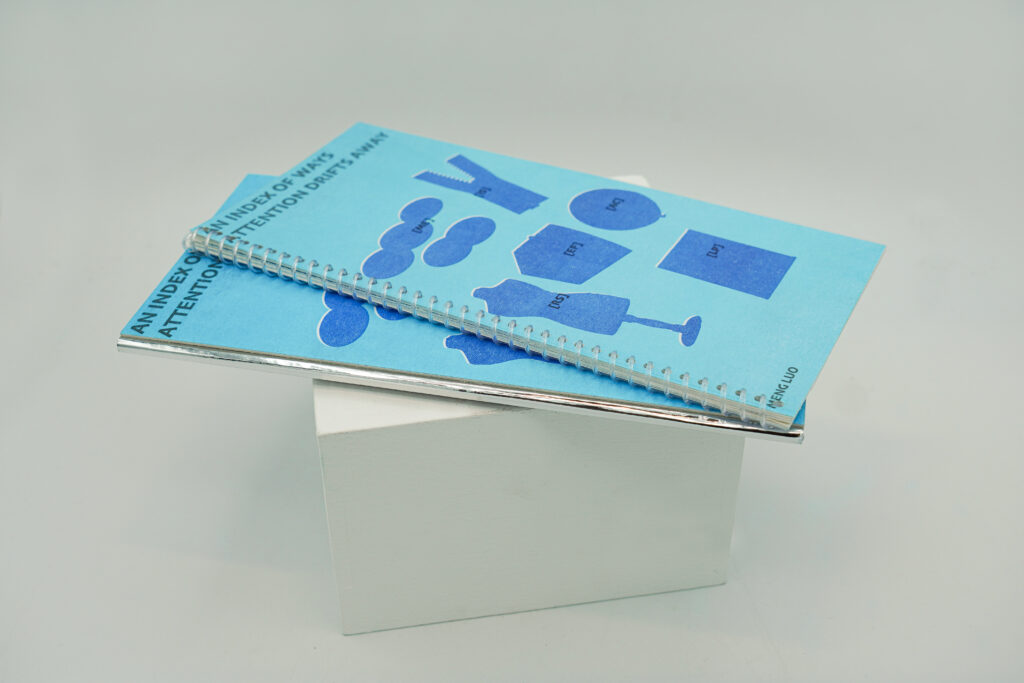
An Index of Ways Attention Drifts Away
An Index of Ways Attention Drifts Away is a graphic investigation into how smartphone use shapes everyday attention.
Presented as a pseudo-encyclopaedia, the project identifies and classifies recurring moments in which attention drifts away from the immediate physical environment. These behaviours are organised into six families: Luminous Pull, Interruptive Signal, Endless Feed, Reflective Surface, Automatic Checking, and Missing Environment.
Rather than treating distraction as a single condition, the Index examines its different visual, behavioural and spatial forms. Found imagery, photographic observation, editorial systems and material interventions are used to give otherwise fleeting states of attention a visible form.
The final outcome consists of two bound versions of the Index alongside a participatory Attention Drift Stamp Card. Physical interventions within the publication translate each family into a different reading experience, including transparency, reflection, interruption, unfolding and obscured information.
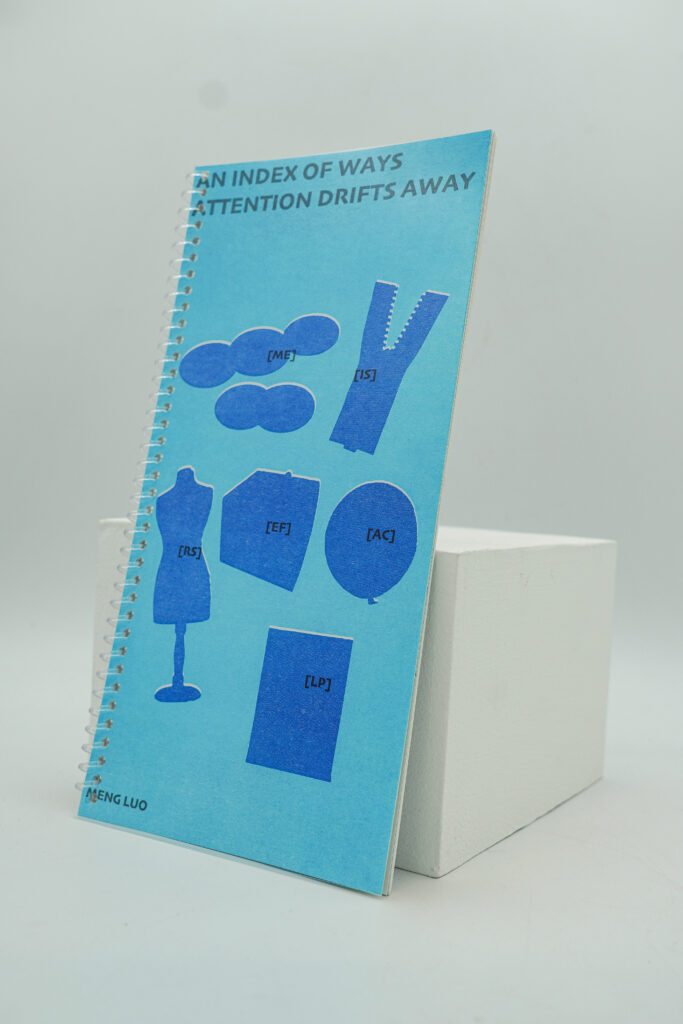
An Index of Ways Attention Drifts Away, 2026. A pseudo-encyclopaedia that classifies recurring forms of attention drift associated with everyday smartphone use.
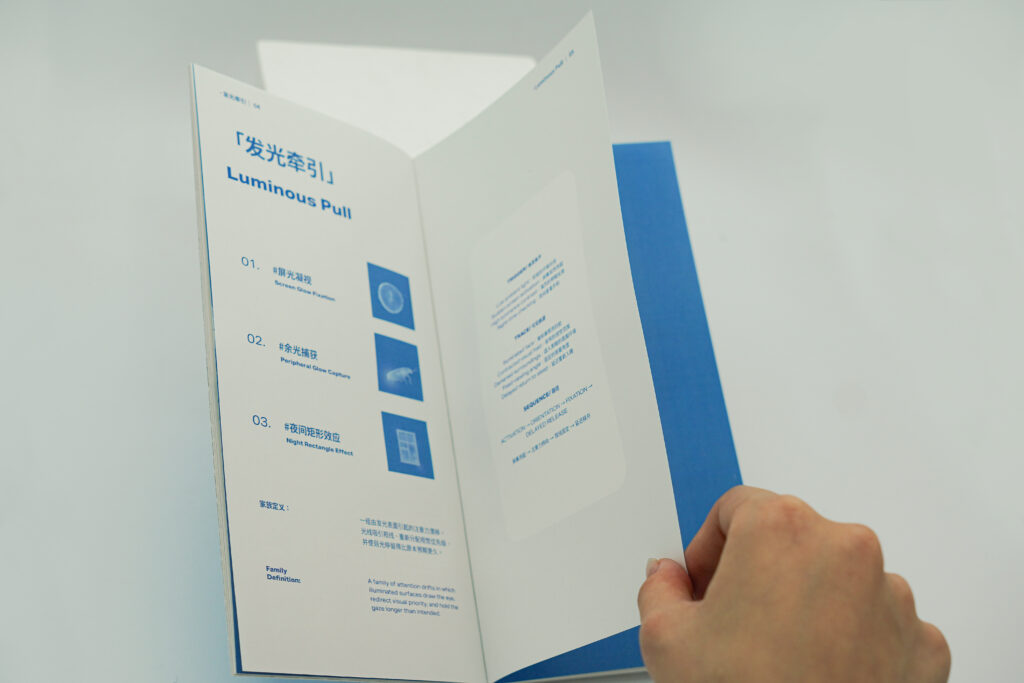
The Luminous Pull family uses layered and translucent material to translate the visual attraction of illuminated screens into a physical reading experience.
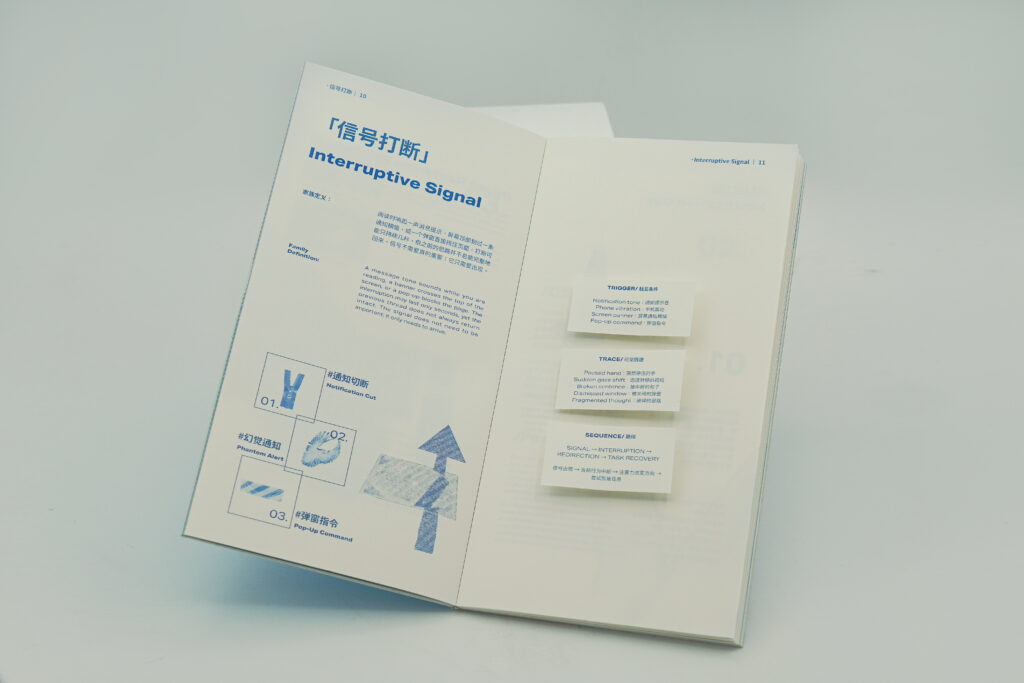
Interruptive Signal examines moments when notifications, alerts and incoming signals suddenly redirect attention. Raised annotations physically interrupt the surface of the page.
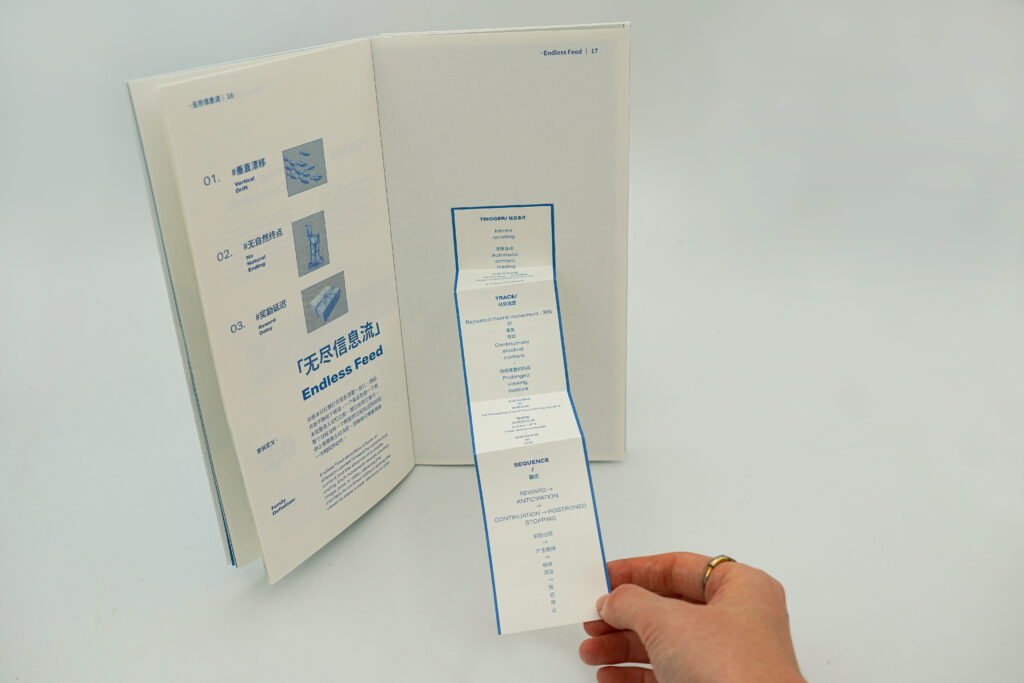
Endless Feed translates continuous scrolling into a long unfolding annotation that extends beyond the page, physically delaying the point at which the information ends.
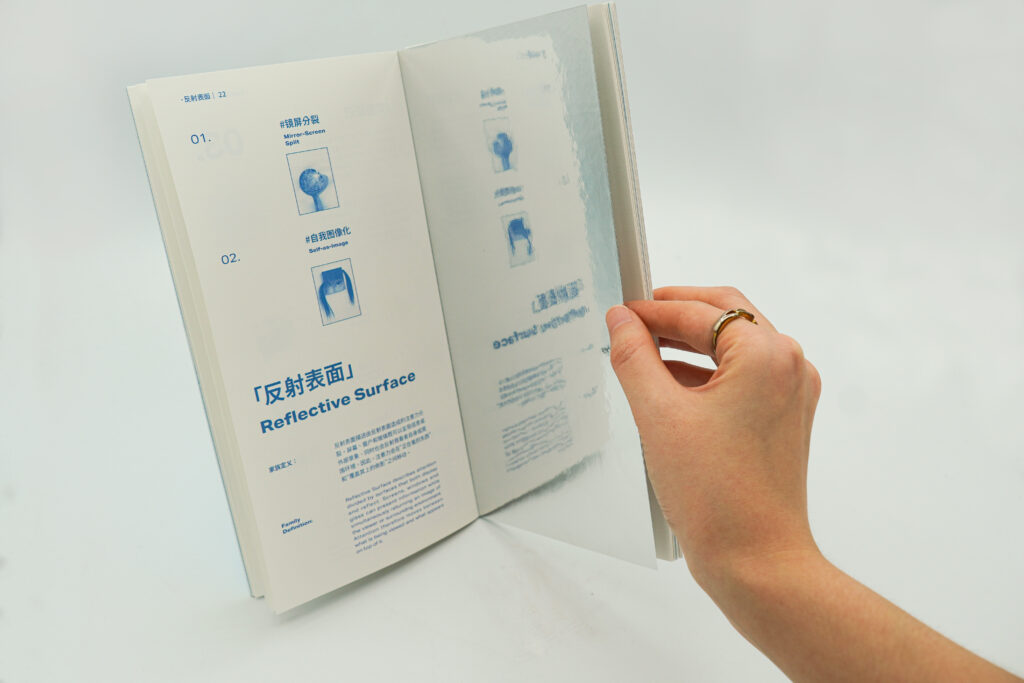
Reflective Surface uses a mirror-like reflective layer to create overlapping visual information, echoing moments when screens operate simultaneously as interfaces and reflective surfaces.
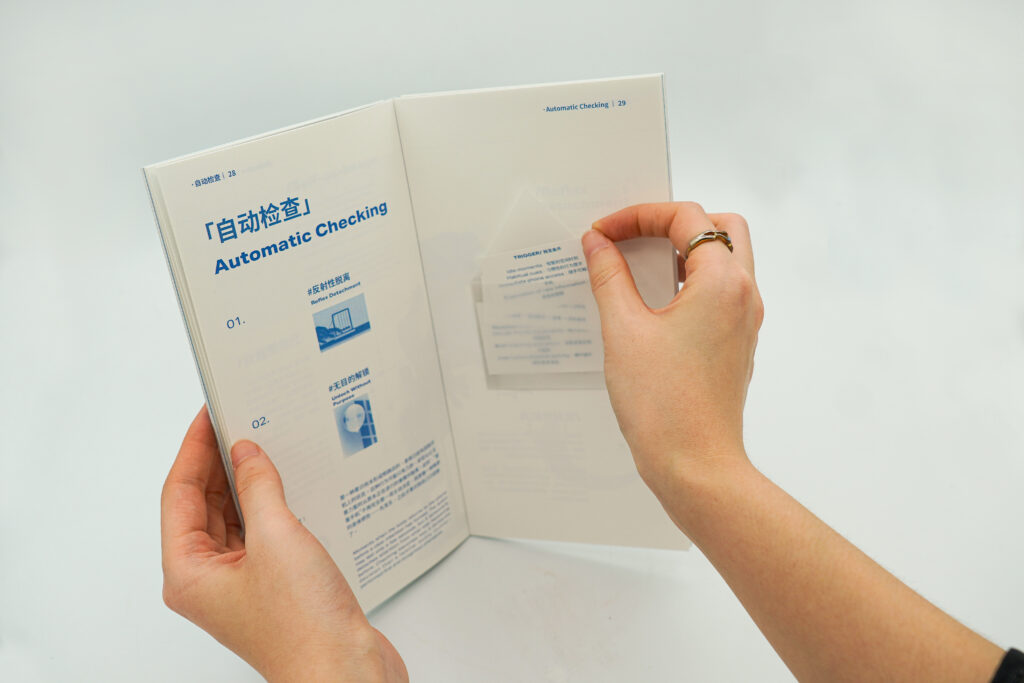
Automatic Checking examines habitual actions in which the body reaches for or checks a phone before a clear intention has formed. A movable transparent annotation introduces repetition and physical interaction into the page.
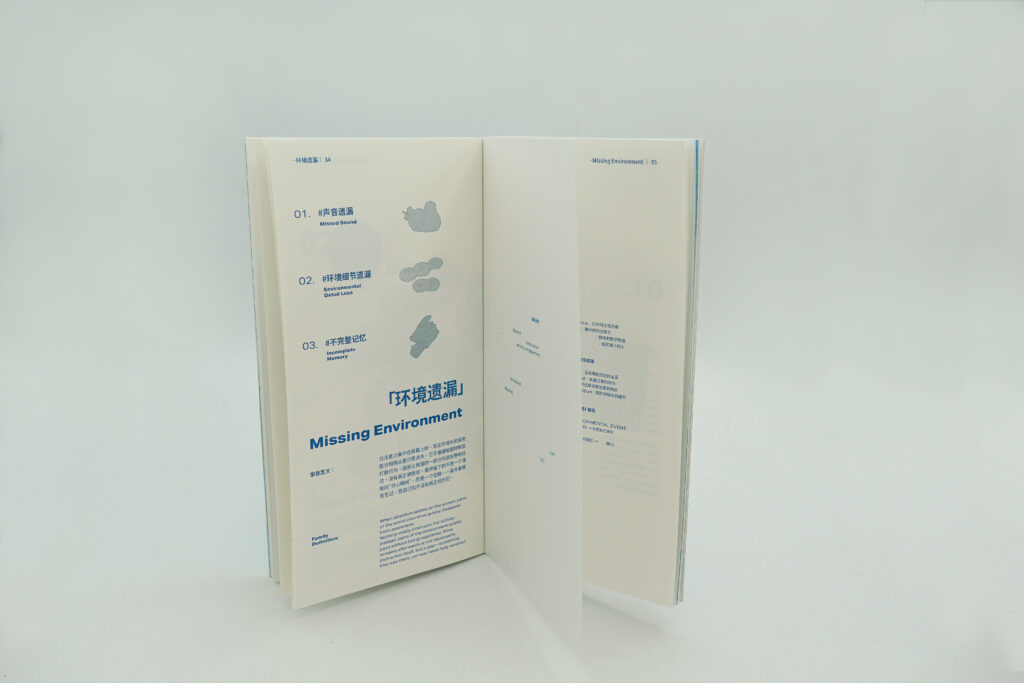
Missing Environment explores moments when sounds, visual details or parts of an experience are overlooked while attention is directed elsewhere. Translucent layers physically obscure information within the publication.
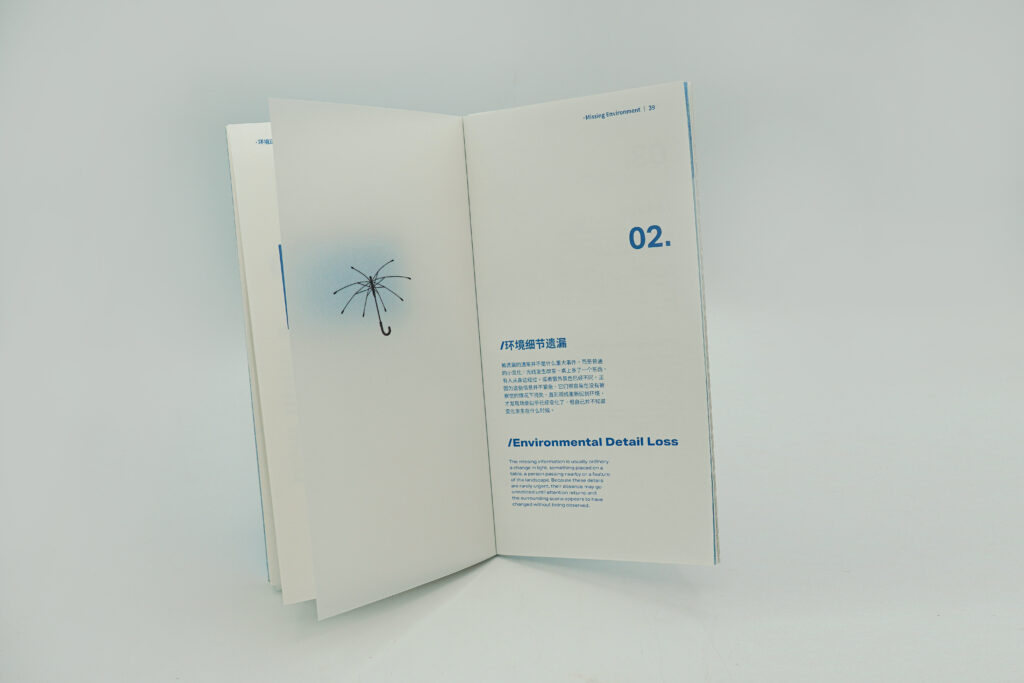
Environmental Detail Loss describes small changes or details in the surrounding environment that go unnoticed when attention is elsewhere.
The front covers of two bound editions of An Index of Ways Attention Drifts Away, showing two material interpretations of the same publication system.
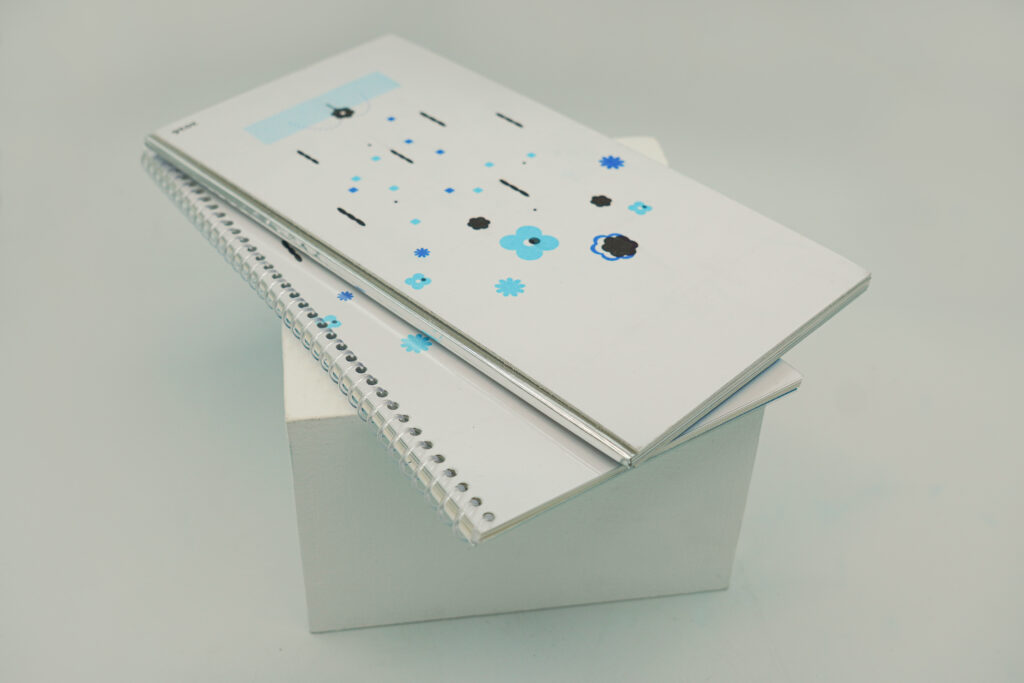
The back covers of the two final editions, continuing the shared visual system across different material and binding approaches.
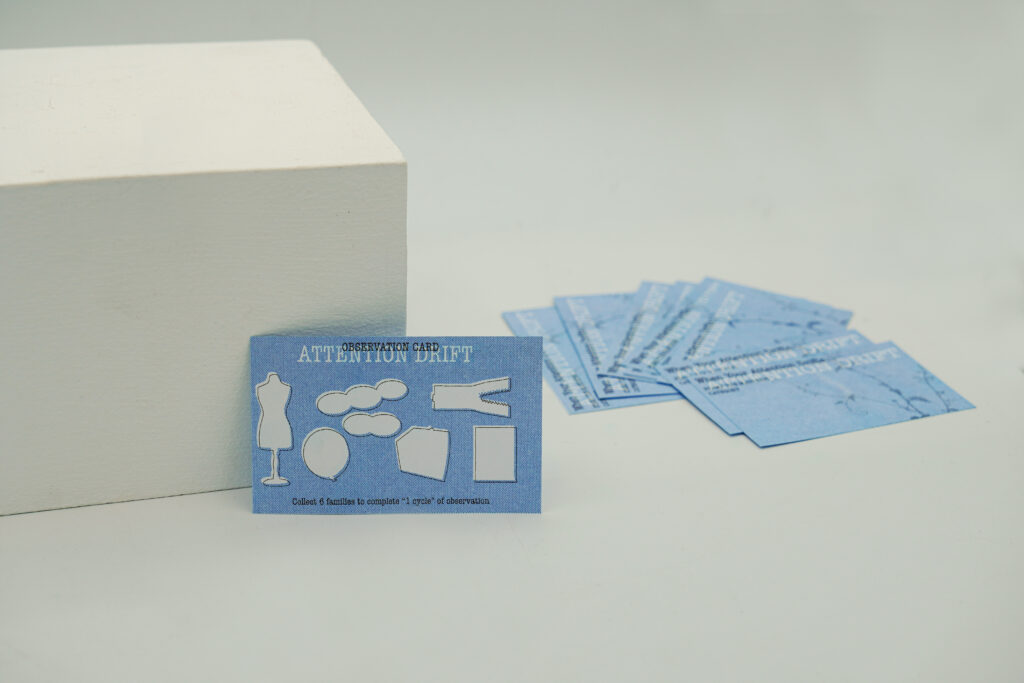
The Attention Drift Observation Card extends the Index into a participatory tool. Users collect six family marks to complete one cycle of observing their own moments of attention drift.
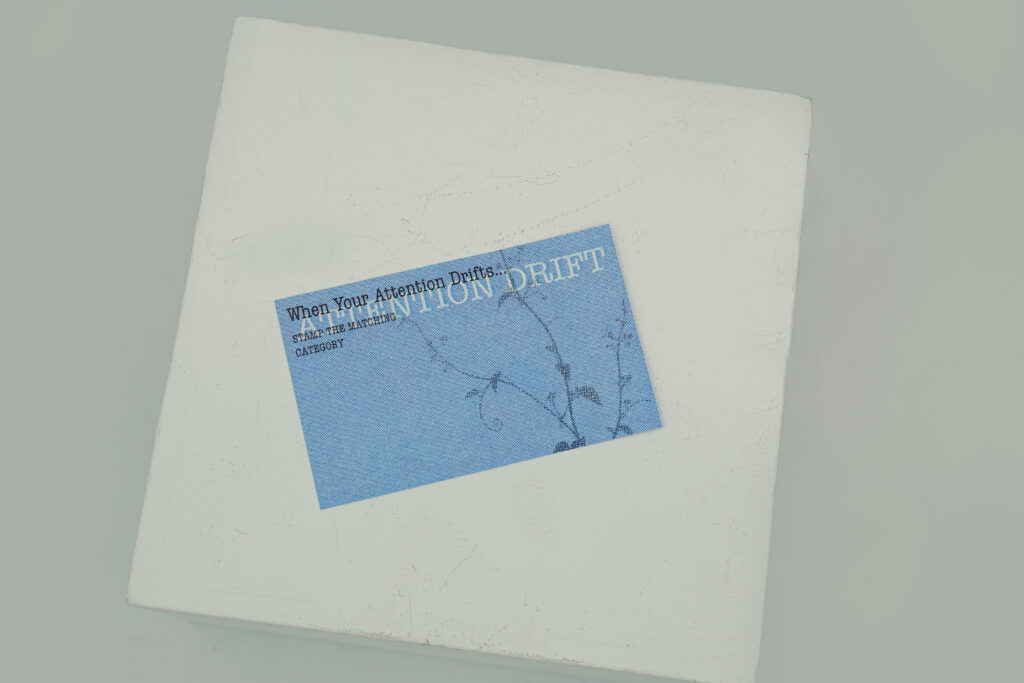
The reverse of the Attention Drift Observation Card introduces the participatory instruction: when attention drifts, the user records the matching category.