
After Utility
After Utility explores how interior design can move beyond human-centred ideas of use, ownership and control. Situated within an abandoned dovecote in Firhill, Glasgow, the project questions what happens to spaces and species once they are no longer considered useful to people. Rather than treating abandonment as absence, the project reframes it as a withdrawal of care and asks whether stepping back can itself become an act of care.
Through repeated site visits, sensory observation, walking, sound recording, thermal imaging and material experiments, the dovecote was studied as an active ecological condition already shared by birds, weather, moisture, vegetation and human movement. These investigations revealed that occupation is constantly shifting, particularly as non-human activity becomes more visible when human presence reduces.
The final proposal transforms the interior into an evolving habitat for robins, blackbirds and pigeons. Nesting cavities, open perches, sheep wool, straw, rainwater and accumulated organic matter create conditions that birds can adapt and reshape over time, rather than prescribing a fixed way of inhabiting the space. Humans remain outside as observers, challenging the assumption that every interior must remain accessible, visible and controlled by us.
Ultimately, After Utility proposes withdrawal as a form of design: creating the conditions for non-human life to occupy, alter and make the interior on its own terms.
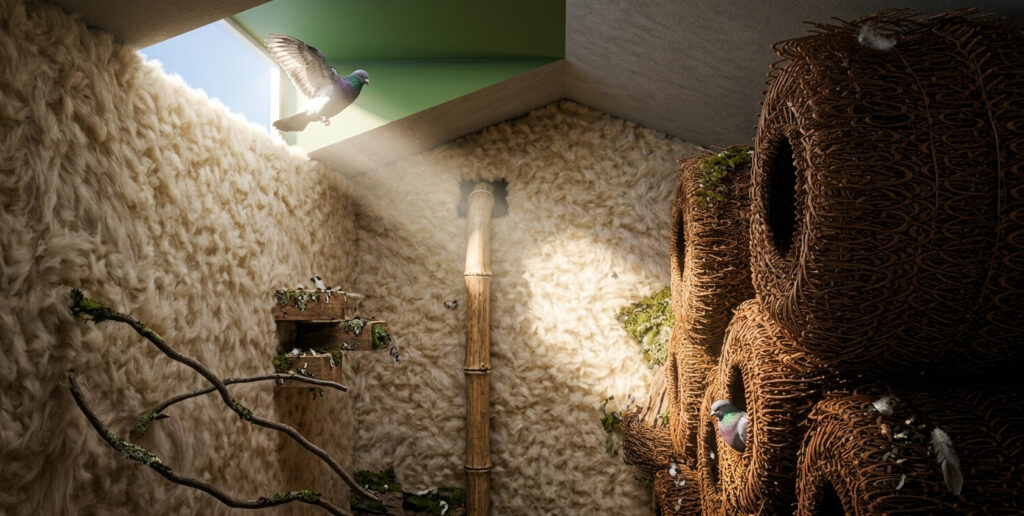
An evolving interior of nesting, perching and shelter, designed to support non-human occupation with minimal human intervention.
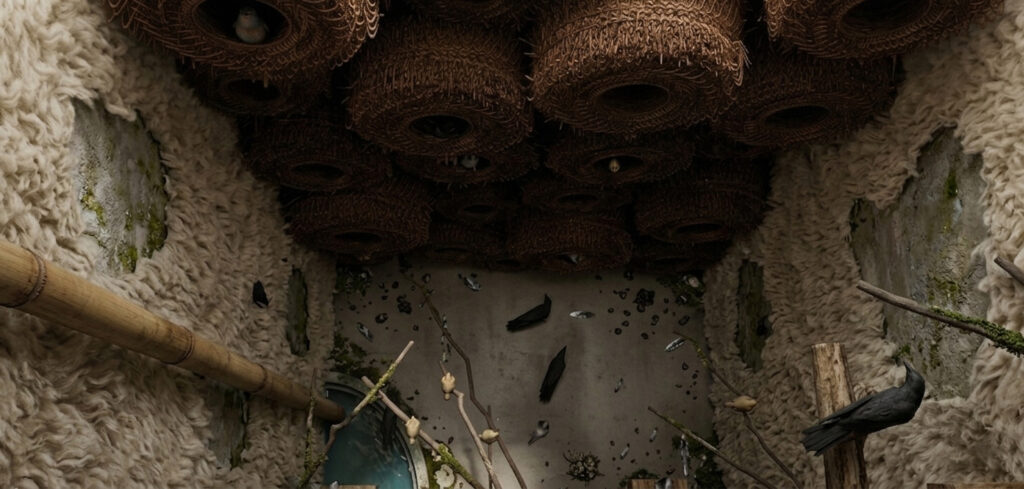
A view of the dovecote’s layered nesting and perching conditions, allowing birds to occupy and move through the interior at different heights.
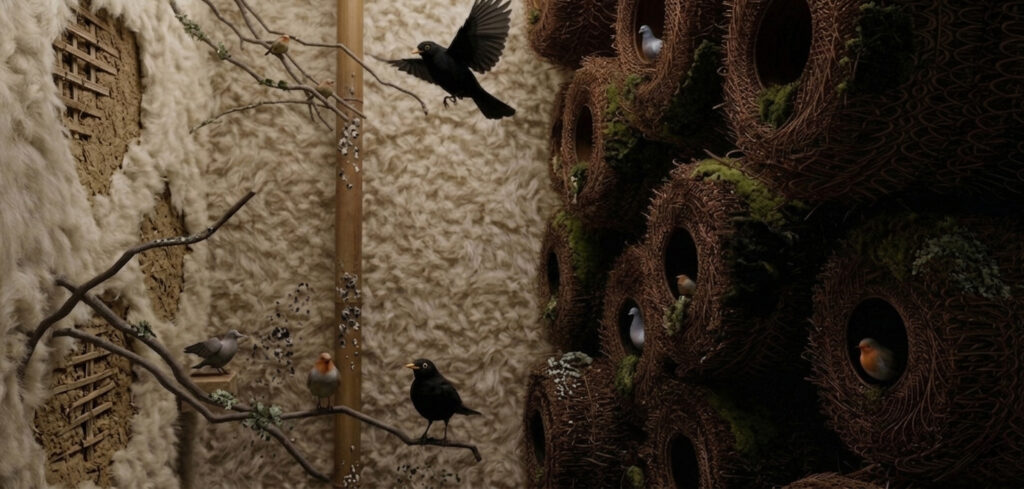
A layered habitat where nesting cavities and open perches support different forms of avian occupation, movement and coexistence.
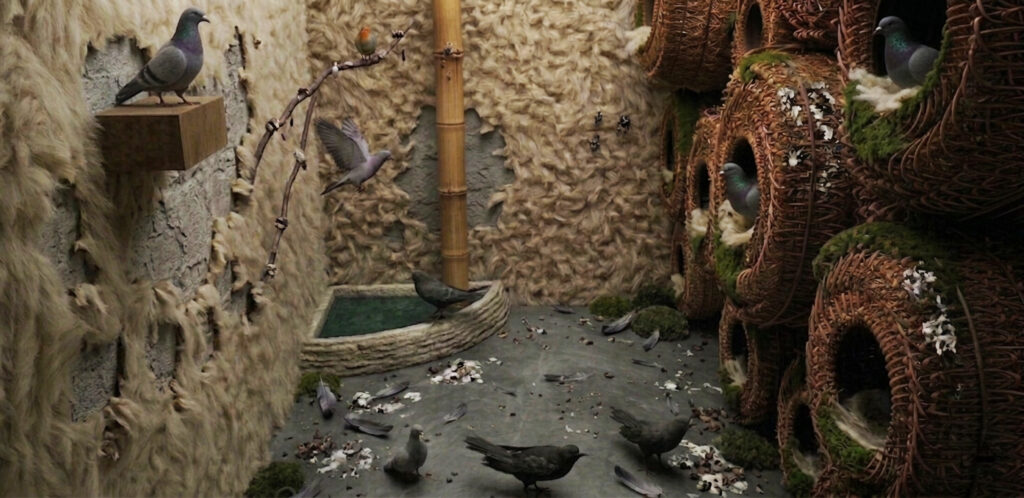
The lower interior becomes an active ecological layer where water, organic matter, nesting and movement accumulate and reshape the space over time.
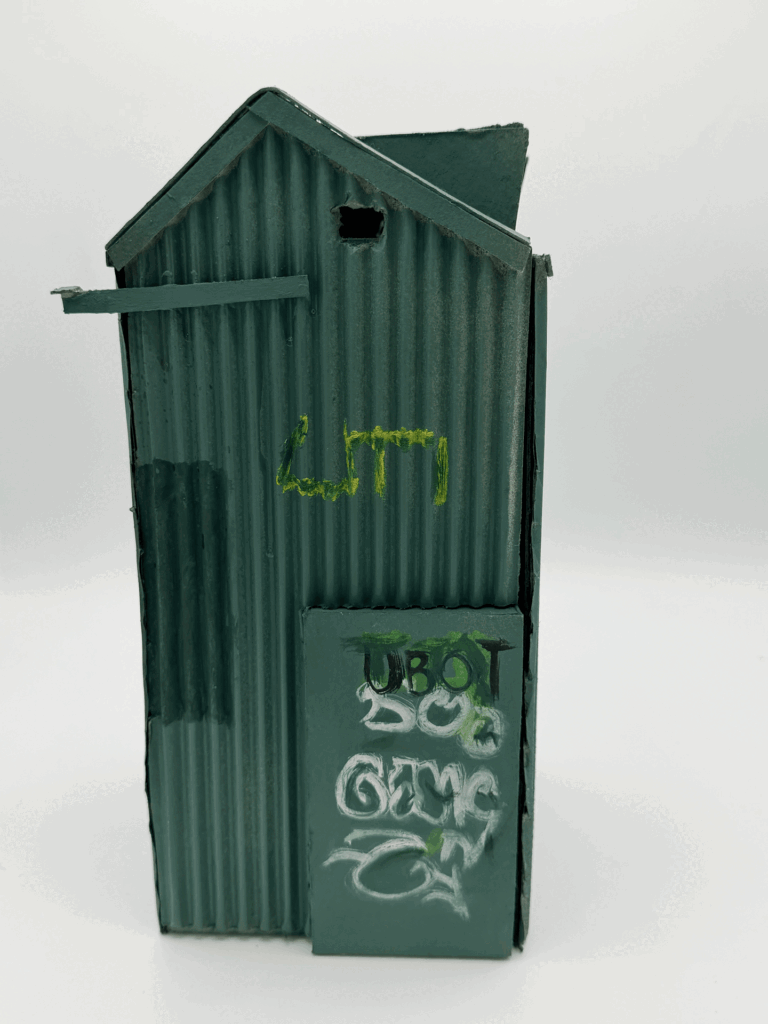
A physical model exploring the dovecote as a non-human interior, translating the project’s material, spatial and ecological ideas through hands-on making.