

Yanyu Li
Yanyu Li is a graphic designer whose practice explores the relationship between visual communication, technology and everyday experience. Her work often uses information design, moving image and rule-based experimentation to examine how digital systems shape what people see and trust. Her postgraduate project, Digital Nature, investigates how machine-vision interfaces classify nature and create an appearance of certainty through labels, grids and confidence scores. She is interested in critical graphic design and in making the hidden rules, limits and assumptions of technological systems more visible.
Digital Nature
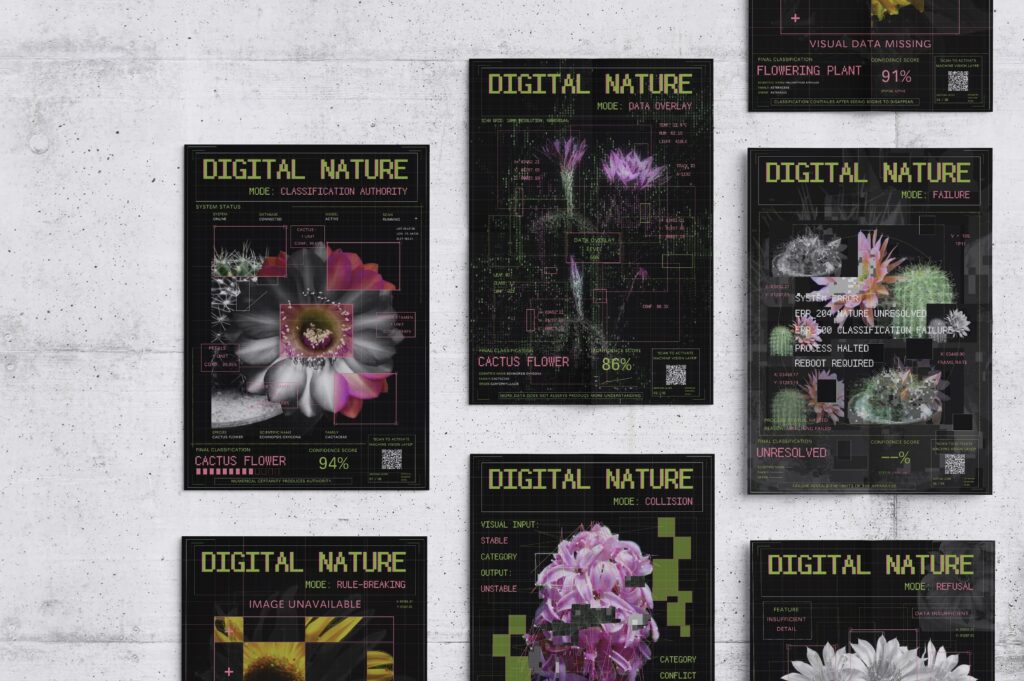
Digital Nature explores how machine-vision interfaces shape the way nature is seen, classified and trusted. The project asks how graphic design makes automated classification appear objective, even when a system is uncertain.
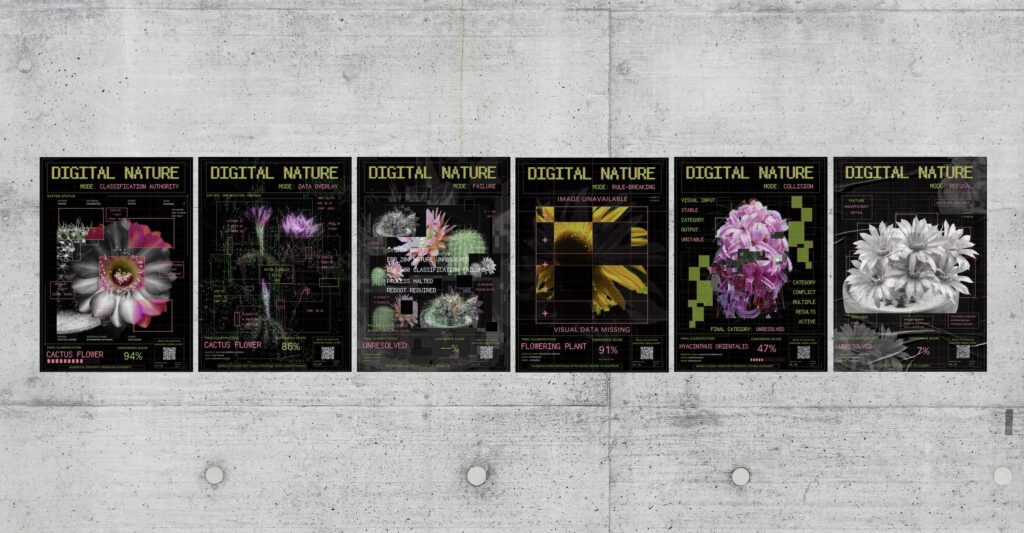
The final outcome consists of six A3 printed posters and six motion posters. Each design presents a different system condition: Classification Authority, Data Overlay, Failure, Rule-breaking, State Collision and Refusal. The series uses grids, labels, bounding boxes, diagnostic messages and confidence scores to show how visual hierarchy can create an appearance of technical authority.
The project developed through 48 controlled poster experiments. Each experiment changed one variable, such as data density, image visibility, confidence level or system status. This process moved the work beyond a general digital aesthetic and helped each graphic element communicate a specific idea.
QR codes connect the printed posters to their motion versions. Viewers use their own devices to activate the machine-vision layer and see each system unfold over time.
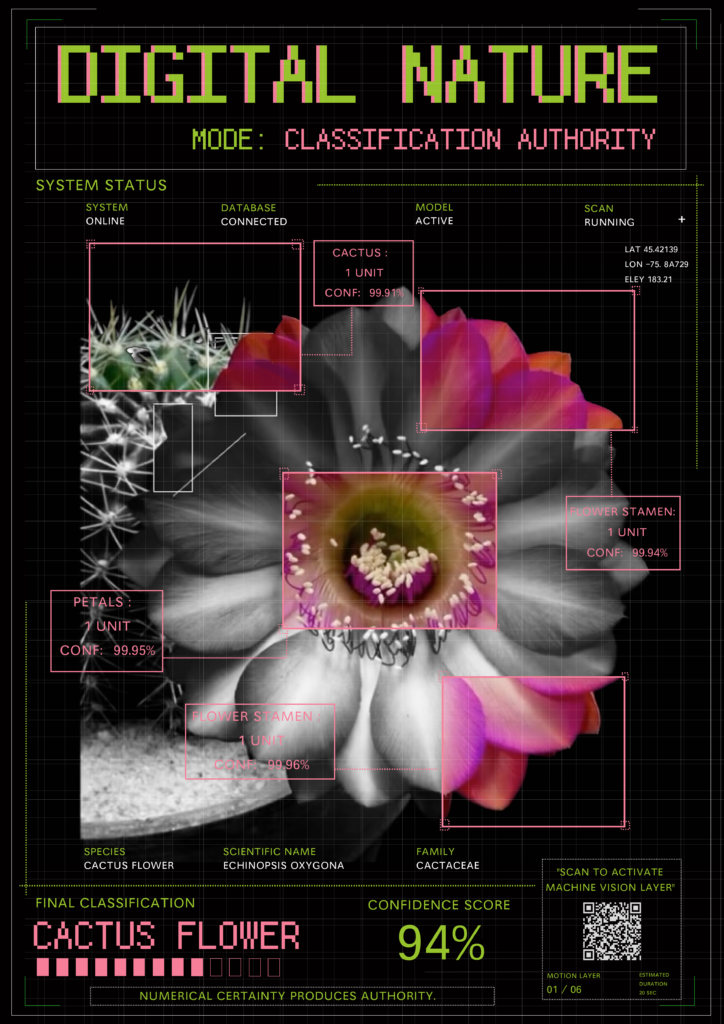
A fully operational classification interface uses labels, bounding boxes and a 94% confidence score to present the result as stable and trustworthy.
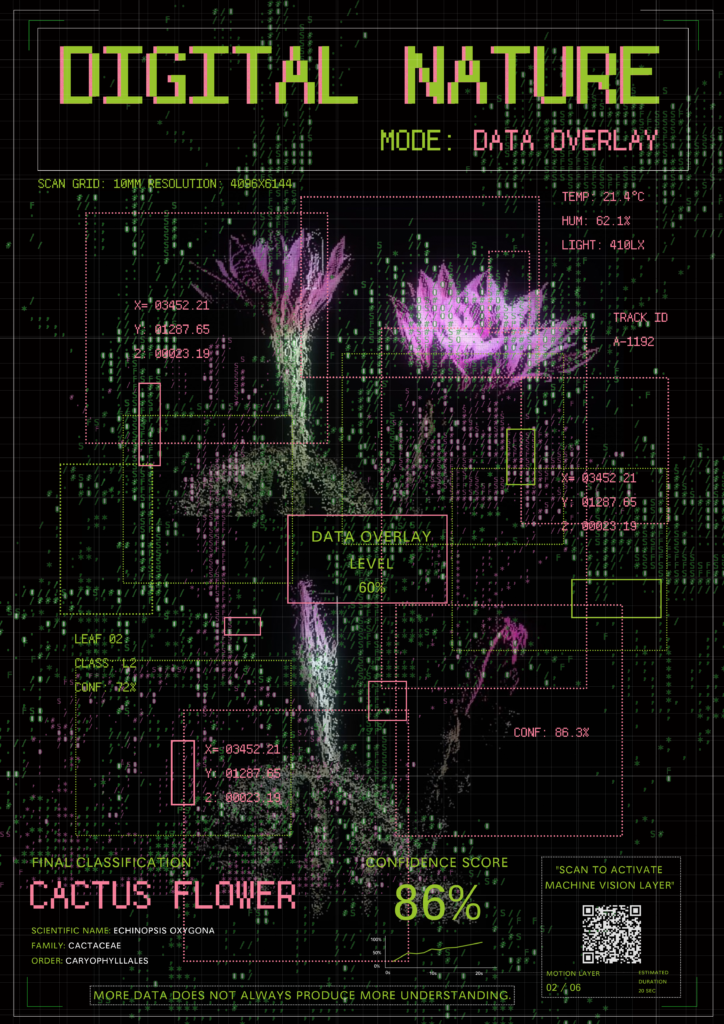
Layers of data gradually compete with the plant image. The poster asks when information stops explaining and starts obstructing.
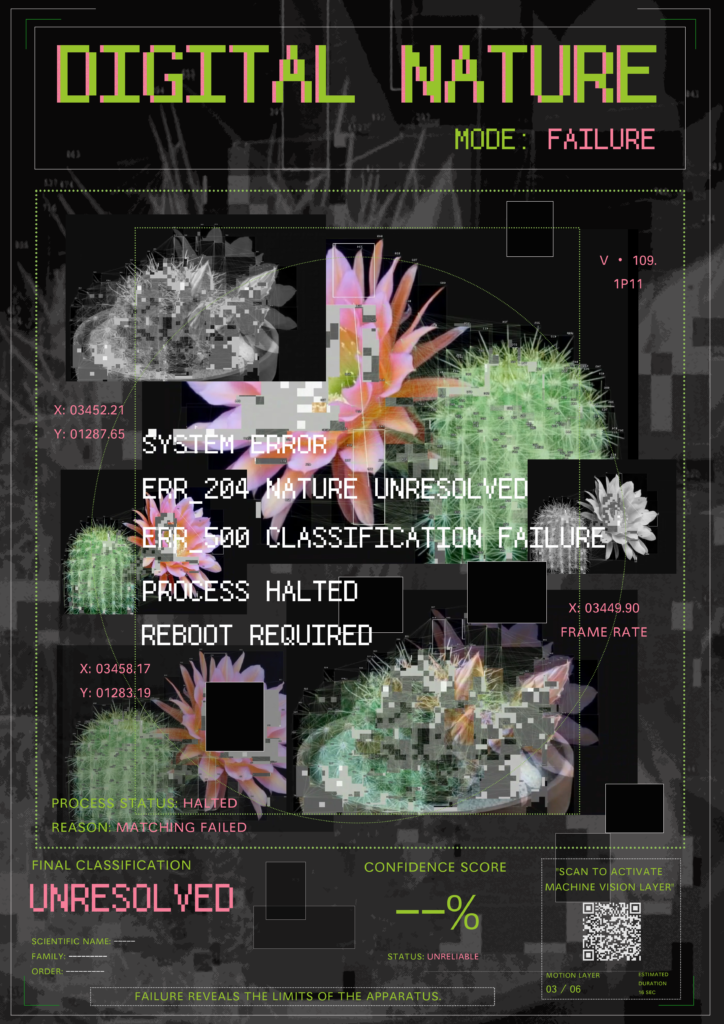
Error messages, missing confidence and incomplete taxonomy expose the limits of the classification system.
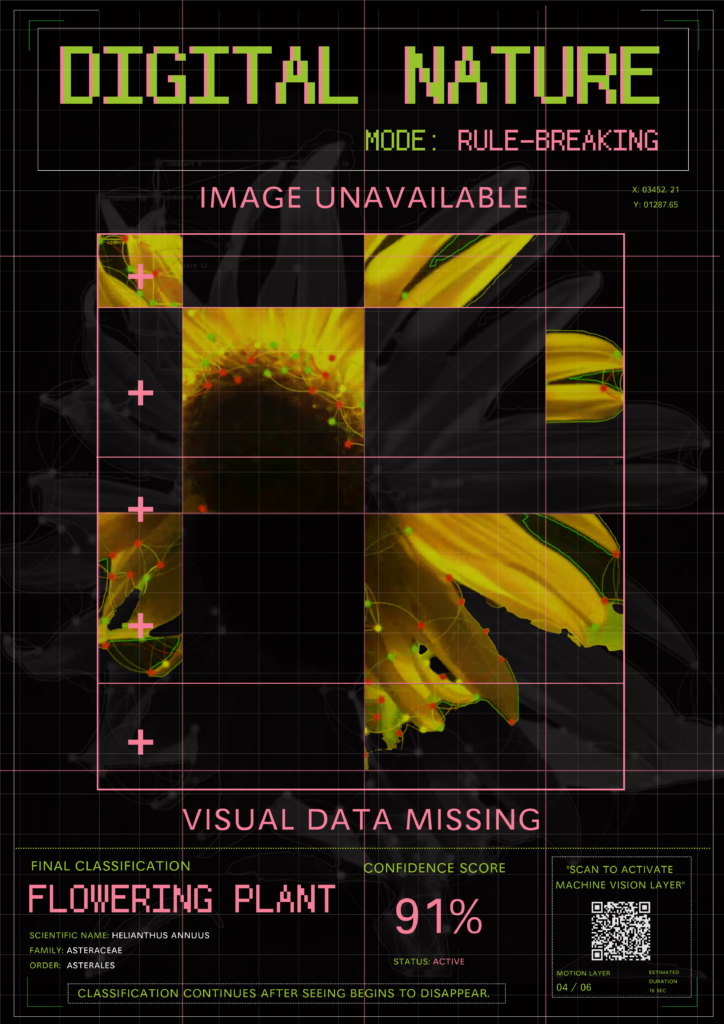
The plant image becomes unavailable, but its category and 91% confidence remain. Classification continues after visual evidence disappears.
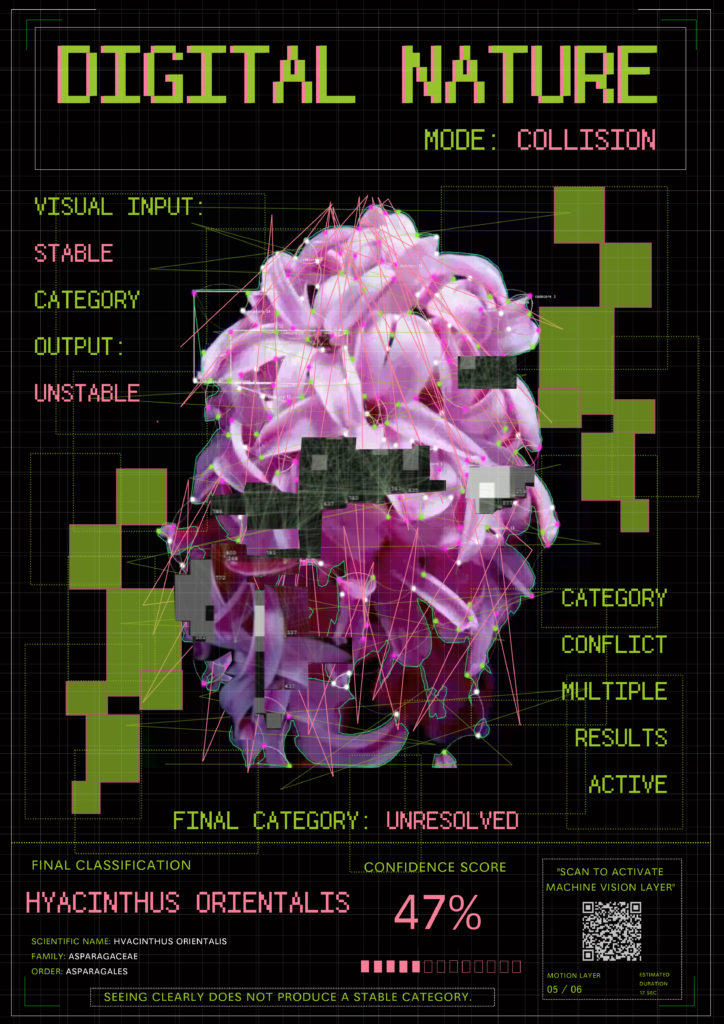
A clear visual input produces several competing classifications. The system remains active, but the final category becomes unstable.
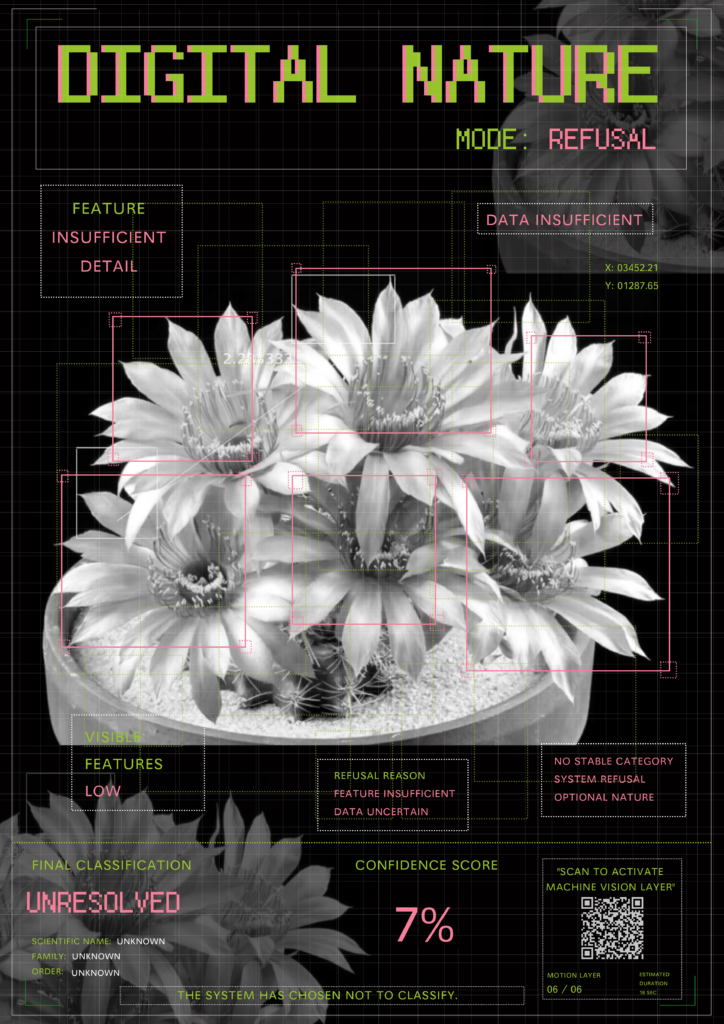
The apparatus continues scanning but does not produce a stable category. Refusal is presented as an alternative to false certainty.
The animation shows how scanning lines, detection boxes, labels and confidence scores build a stable and authoritative classification.
Layers of moving data gradually cover the plant image, showing how more information can reduce visual clarity rather than improve understanding.
The classification process breaks down through fragmented images, missing data and error messages, revealing the limits of the system.
The visual evidence gradually disappears while the category and confidence score remain, questioning why the system continues to appear certain.
Multiple readings and conflicting labels appear at the same time, showing how a clear image can still produce an unstable classification.
The system continues to scan the plant but does not produce a stable category, presenting refusal as an alternative to false certainty.