Mufan Li
I am currently studying Architectural Studies at the Mackintosh School of Architecture, The Glasgow School of Art, following the Creative Urban Practices pathway. My work explores architecture, cities, and new ways of understanding and shaping urban life.
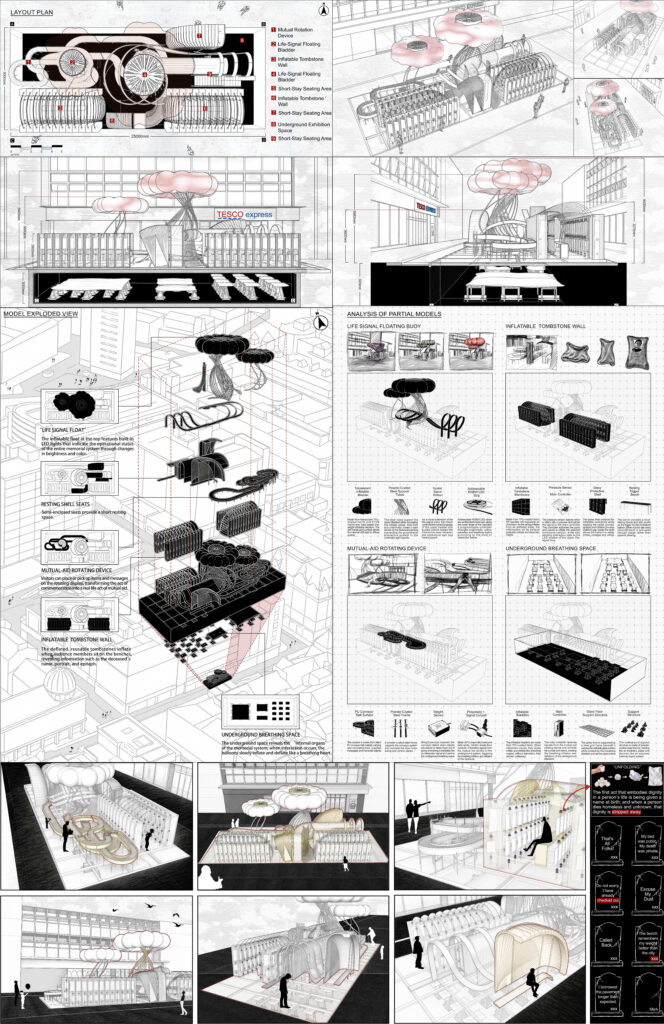
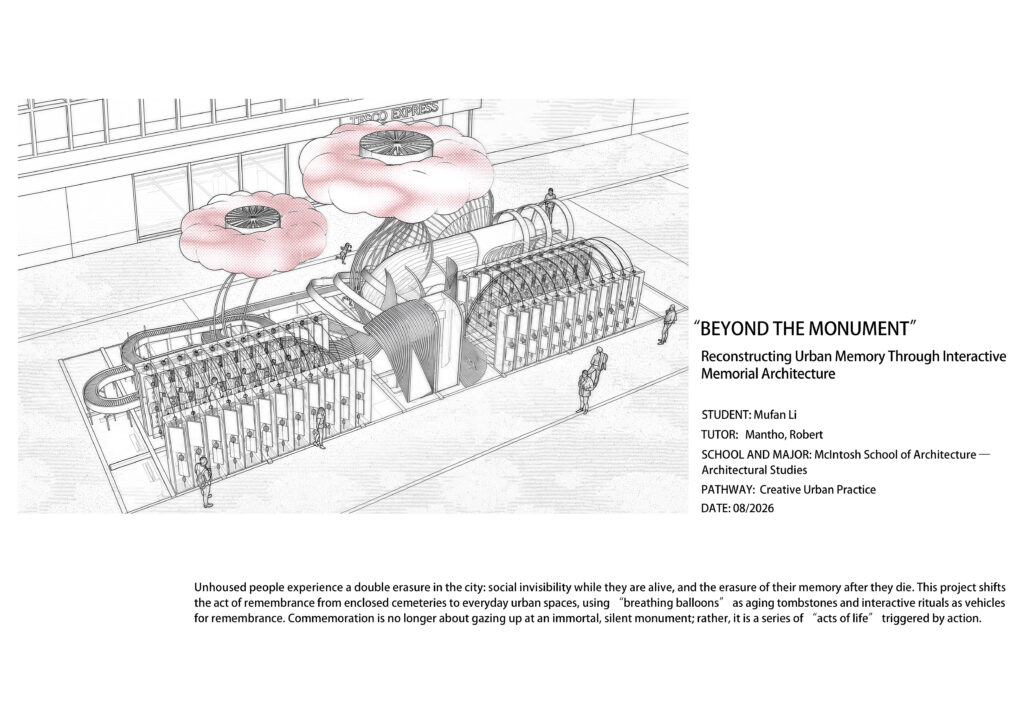
“Beyond the Monument”——Reconstructing Urban Memory Through Interactive Memorial Architecture
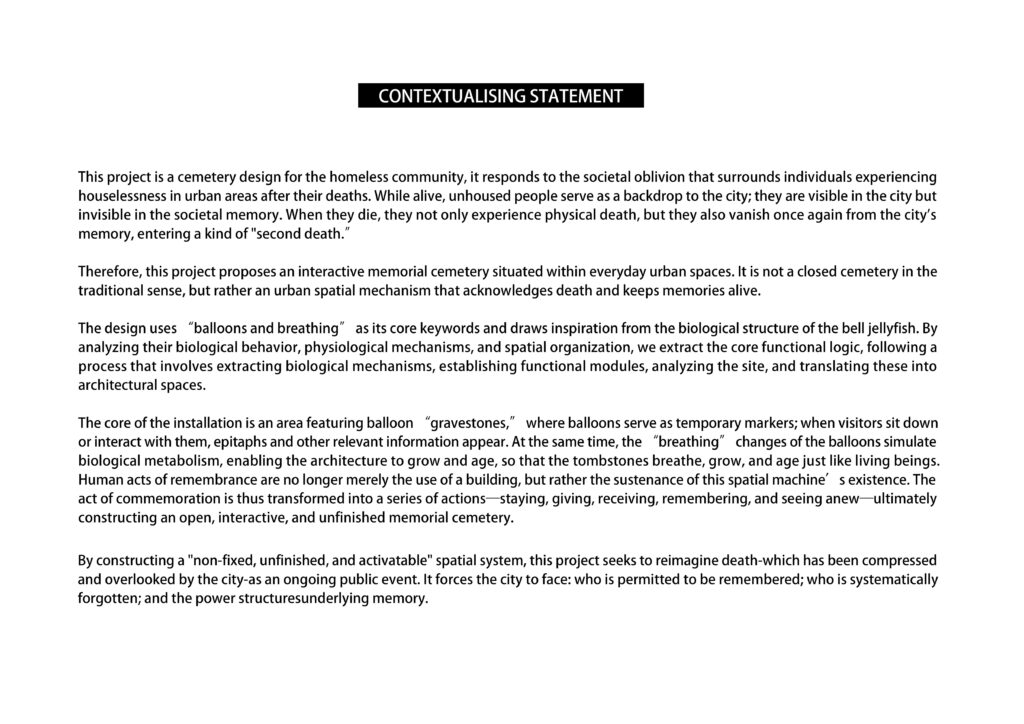
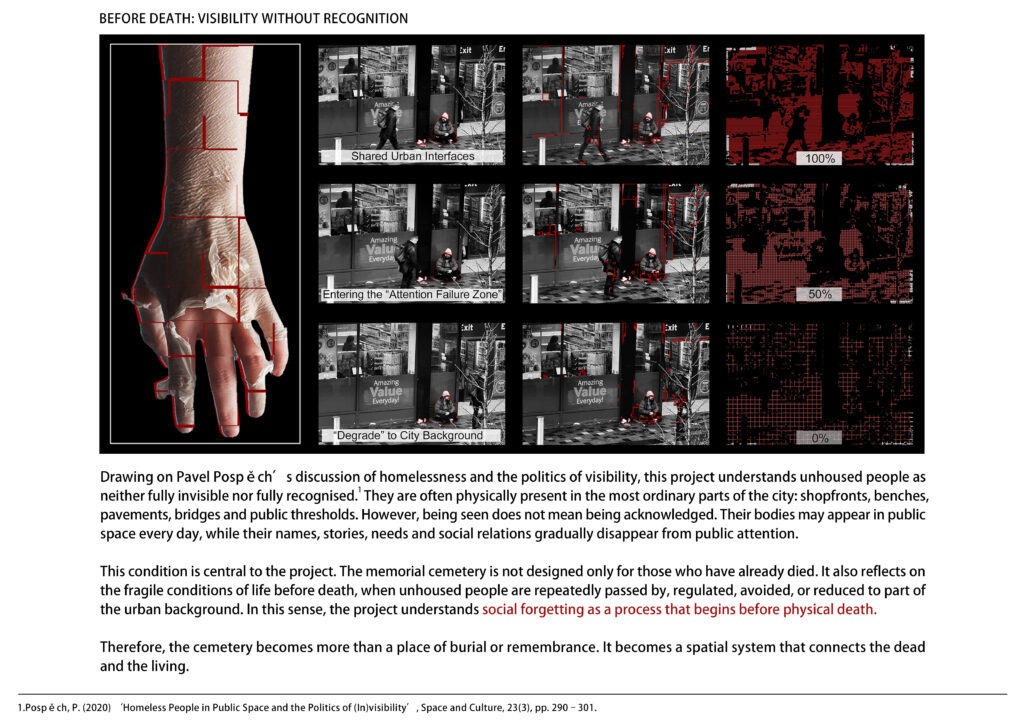
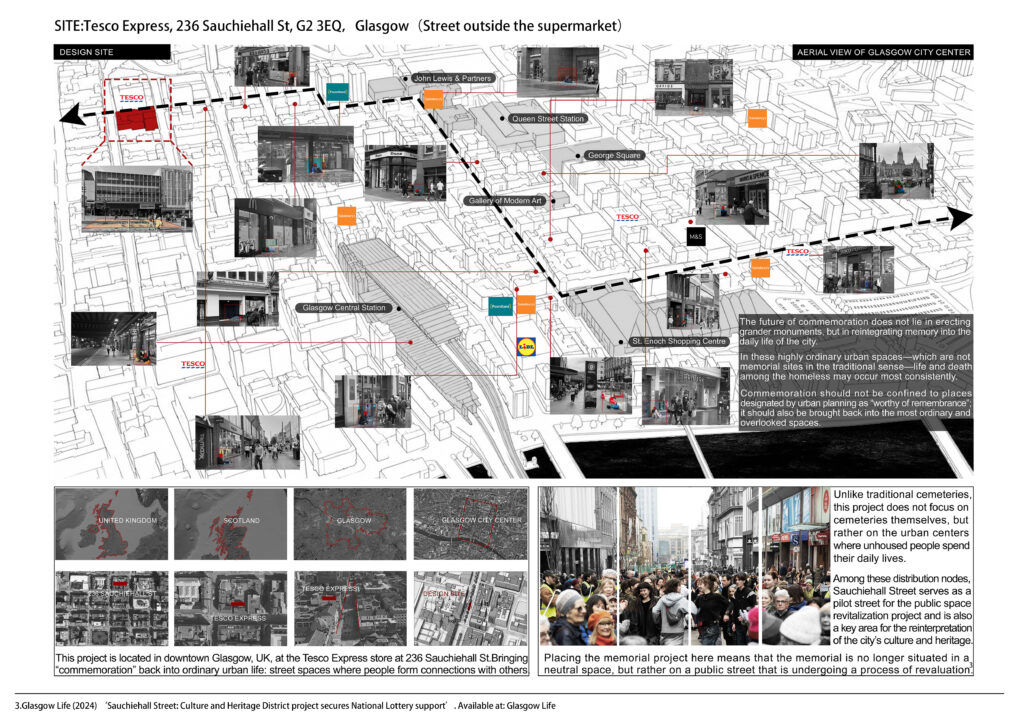
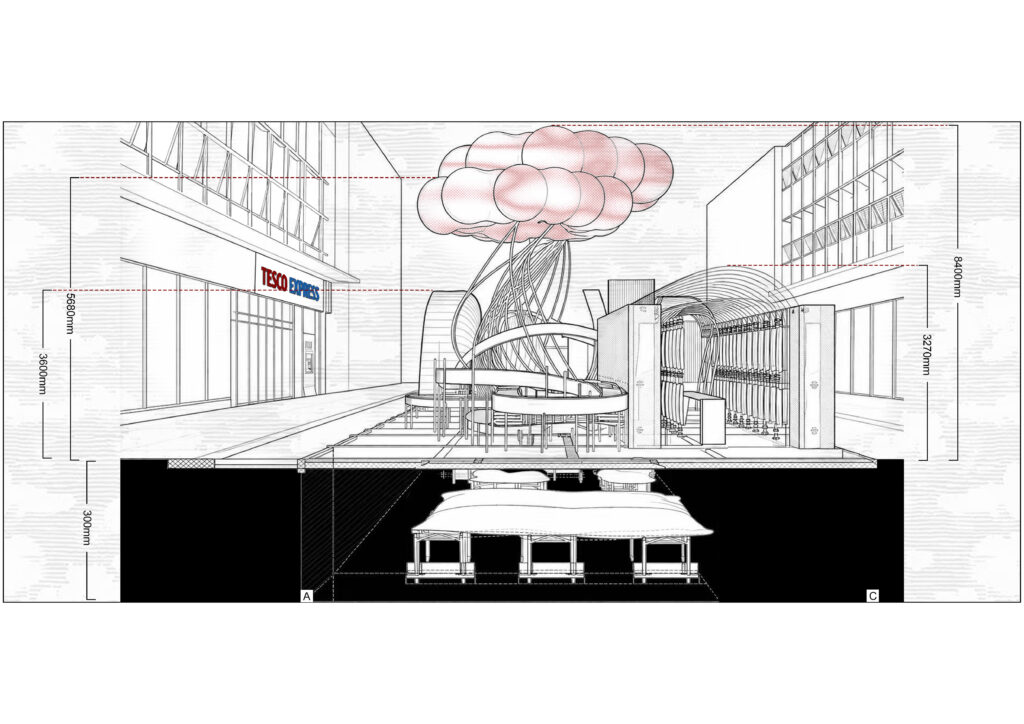
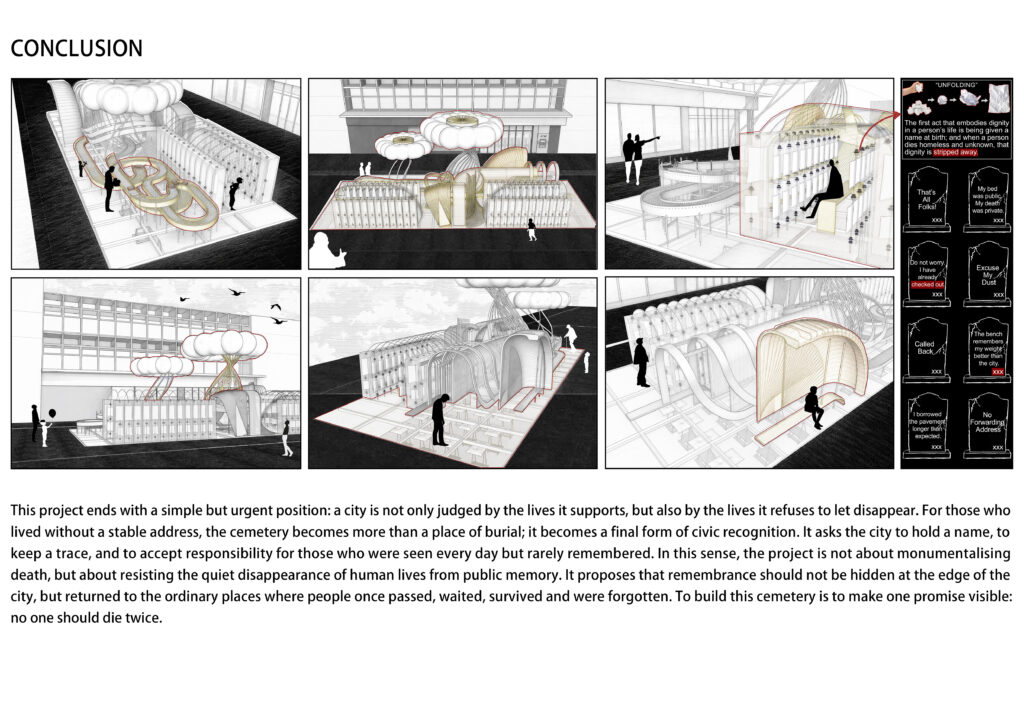
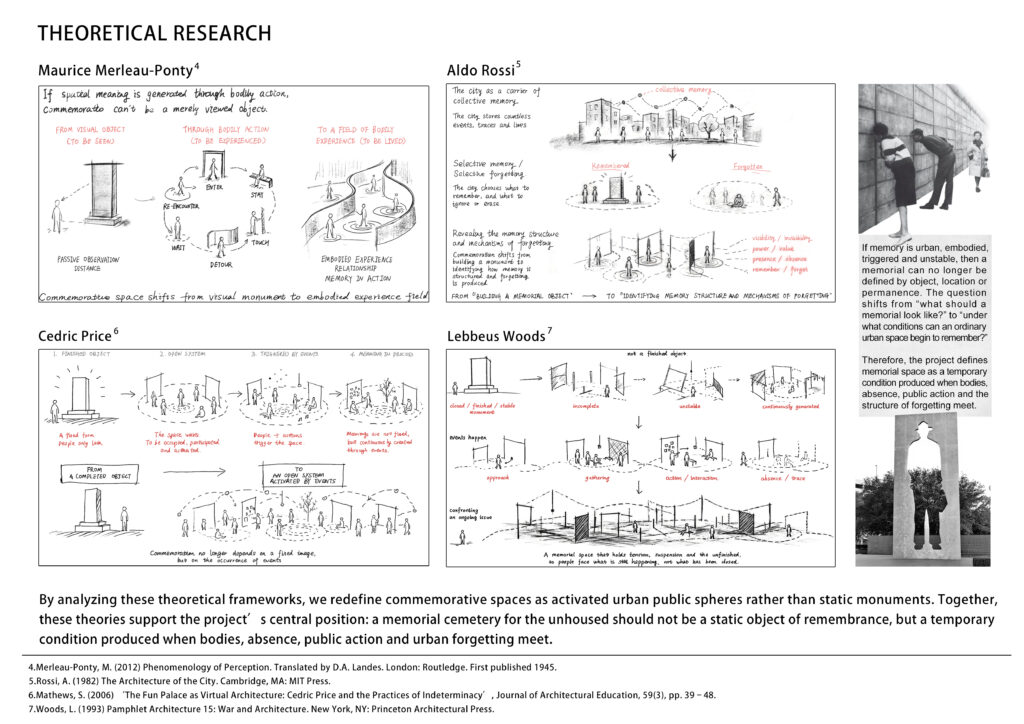
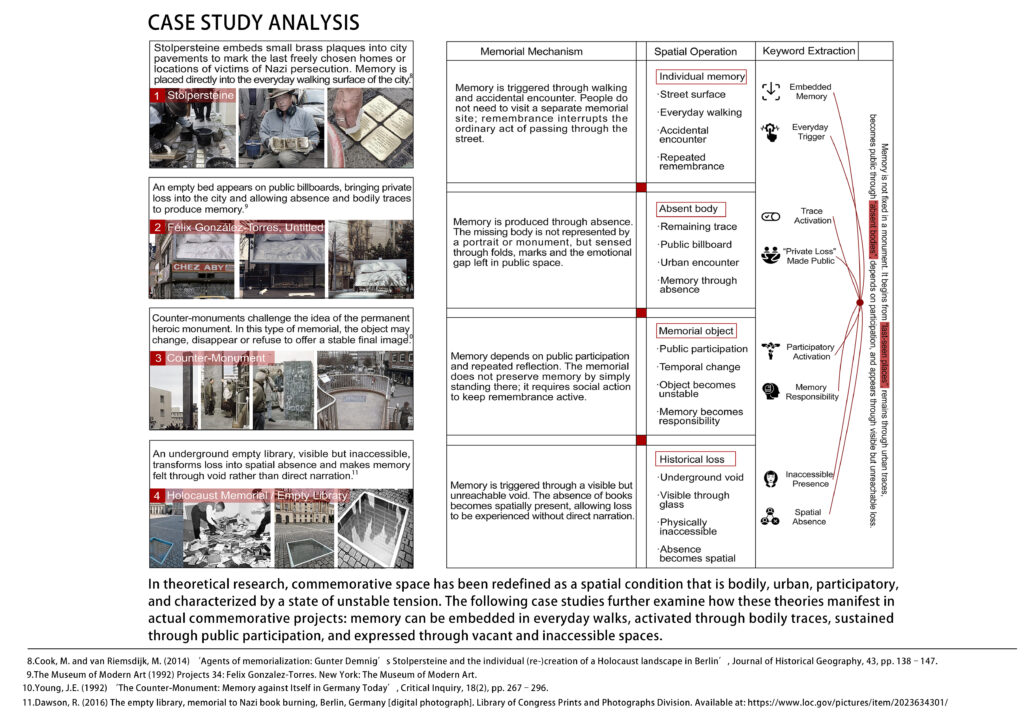
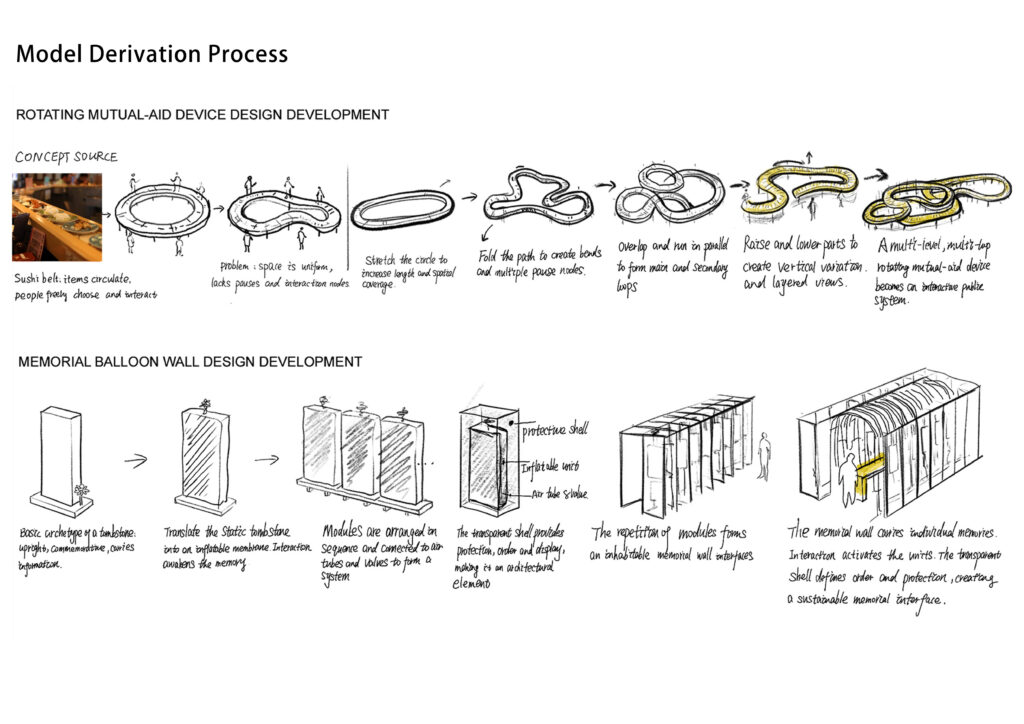
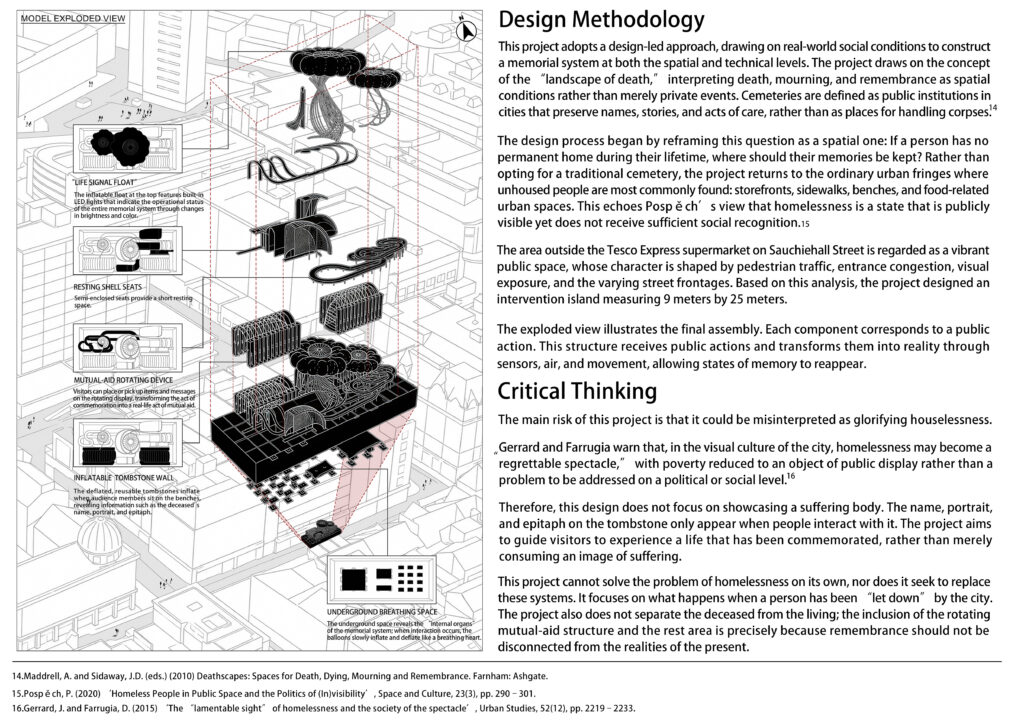
This project is a cemetery design for the homeless community, it responds to the societal oblivion that surrounds individuals experiencing homelessness in urban areas after their deaths. While alive, unhoused people serve as a backdrop to the city; they are visible in the city but invisible in the societal memory. When they die, they not only experience physical death, but they also vanish once again from the city’s memory, entering a kind of “second death.” Therefore, this project proposes an interactive memorial cemetery situated within everyday urban spaces. It is not a closed cemetery in the traditional sense, but rather an urban spatial mechanism that acknowledges death and keeps memories alive.
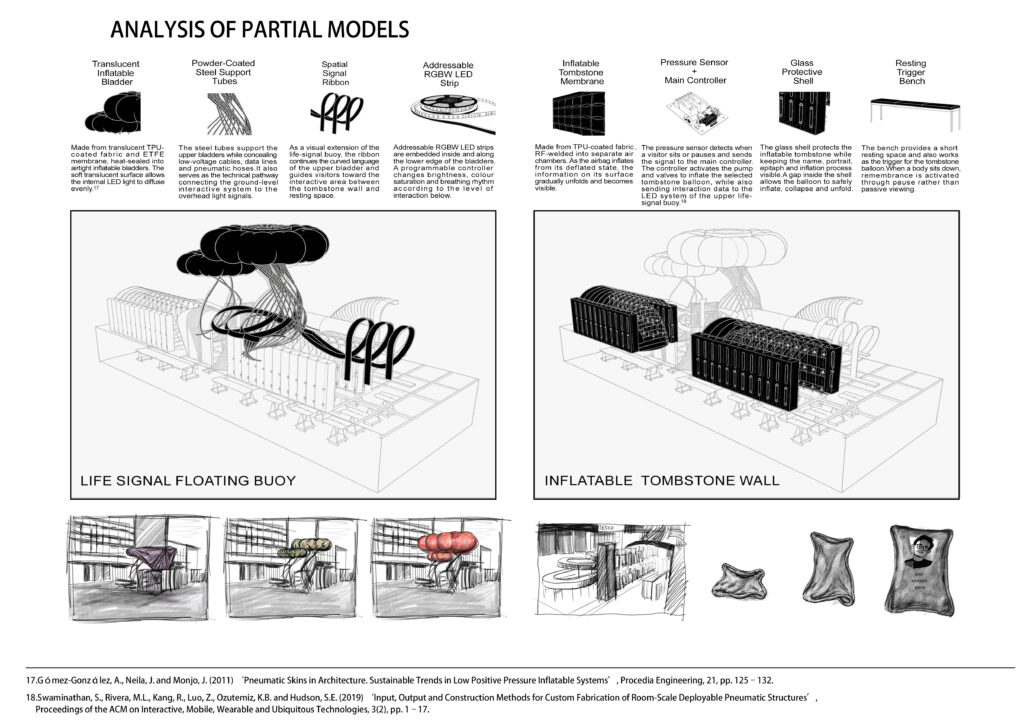
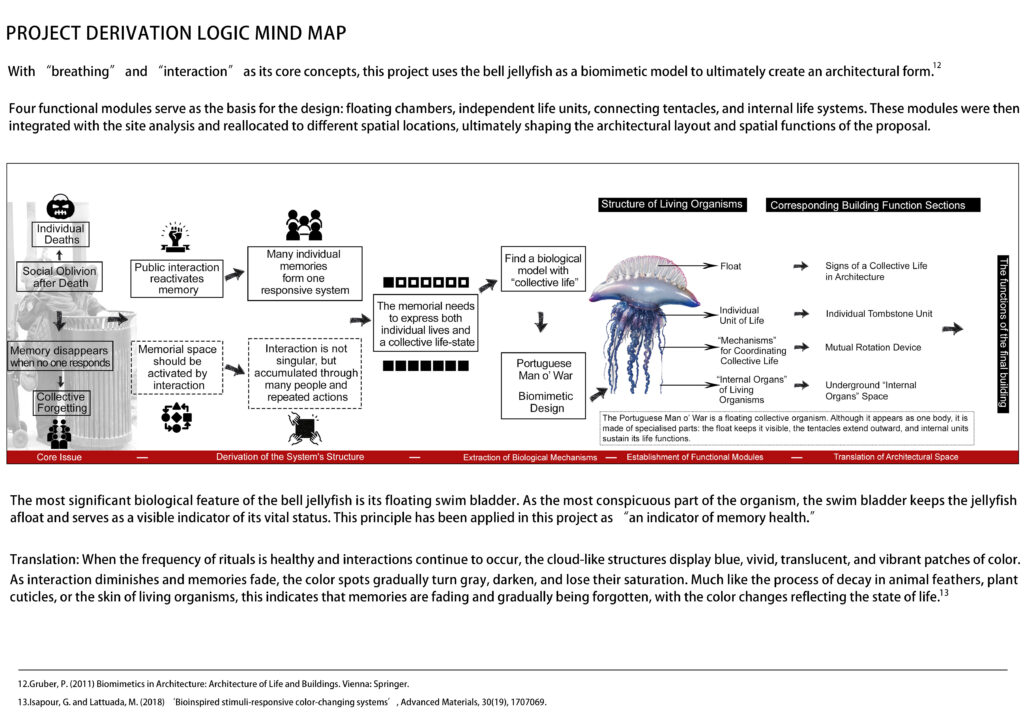
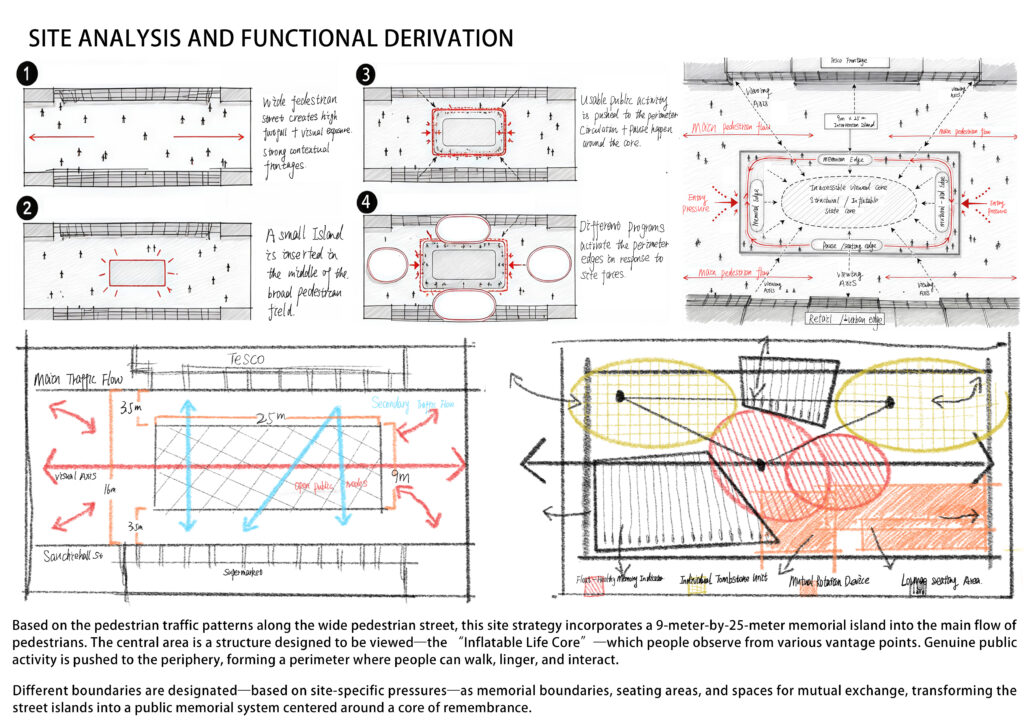
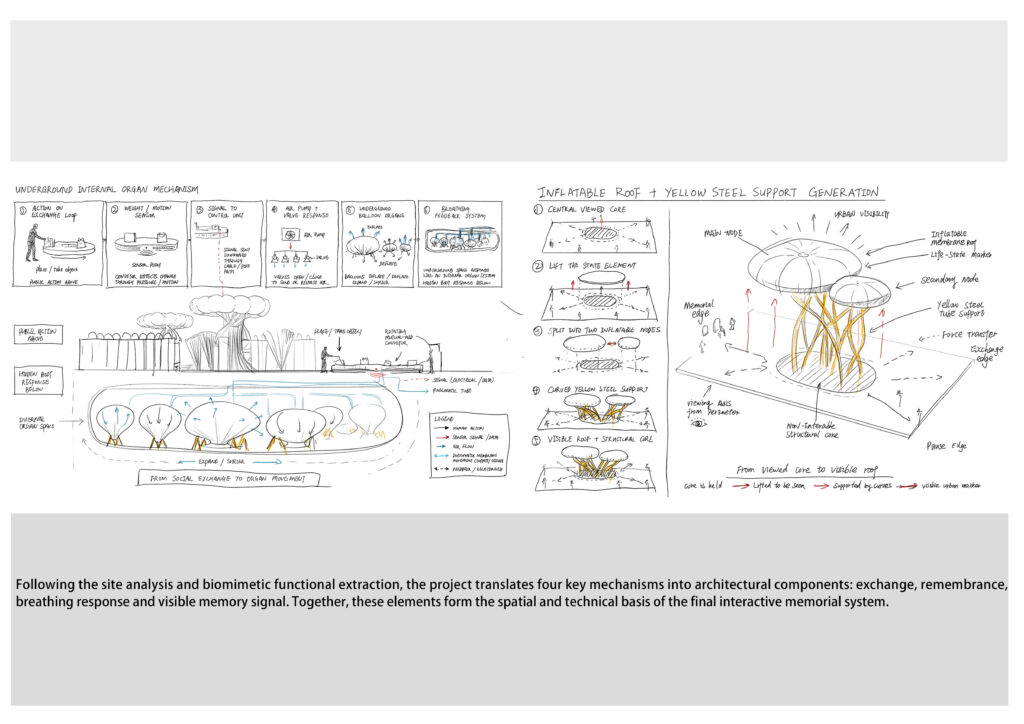
The design uses “balloons and breathing” as its core keywords and draws inspiration from the biological structure of the bell jellyfish. By analyzing their biological behavior, physiological mechanisms, and spatial organization, we extract the core functional logic, following a process that involves extracting biological mechanisms, establishing functional modules, analyzing the site, and translating these into architectural spaces.
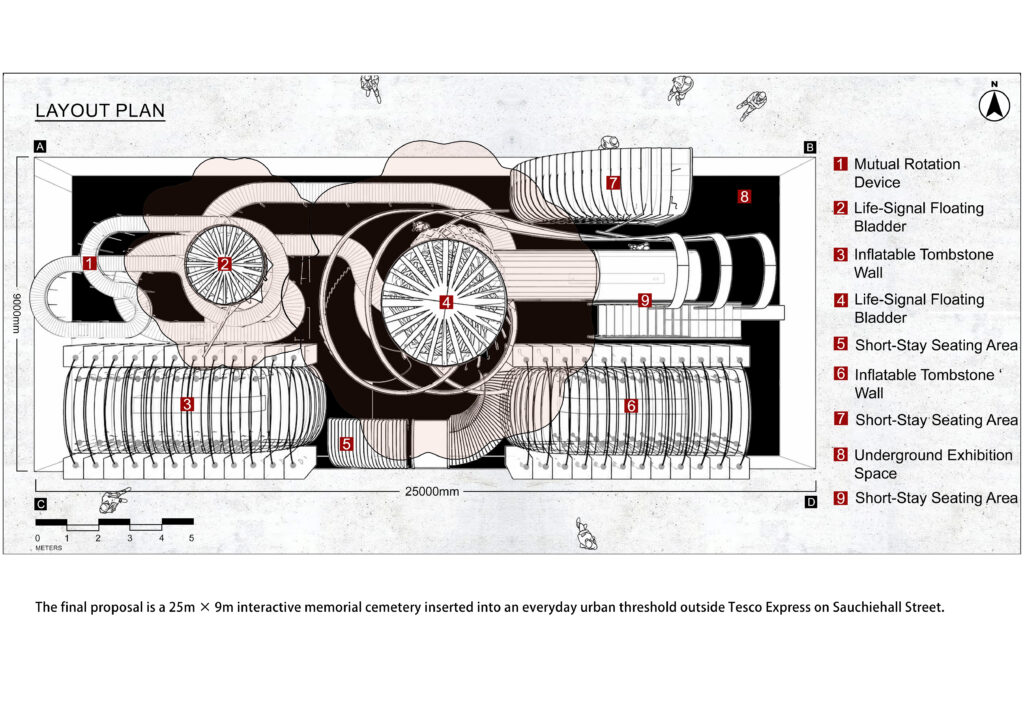
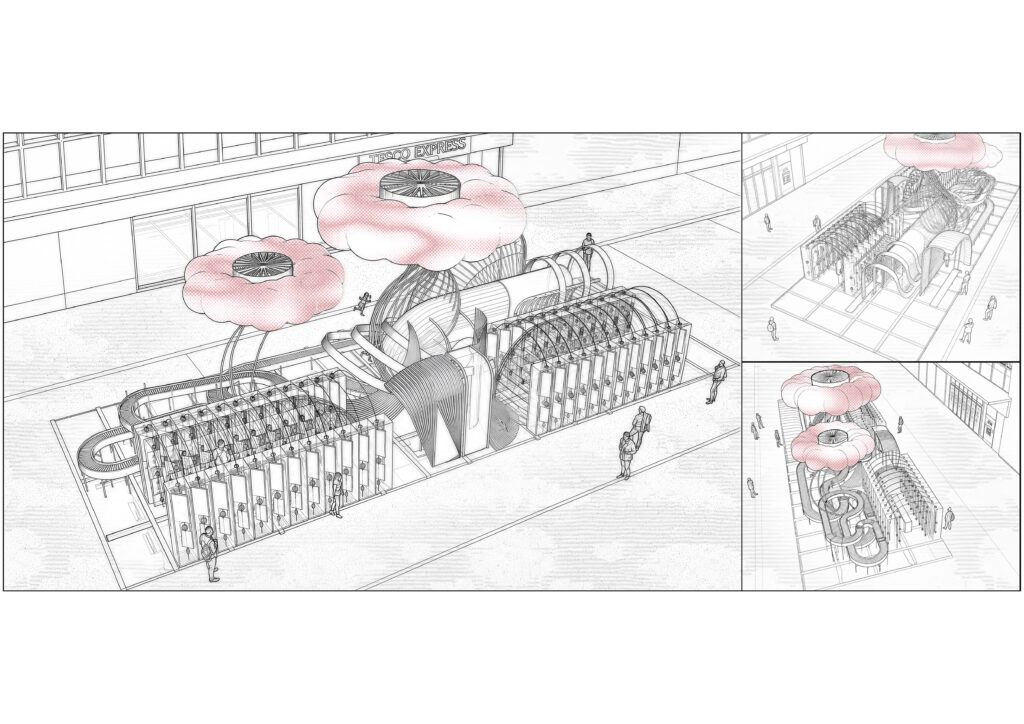
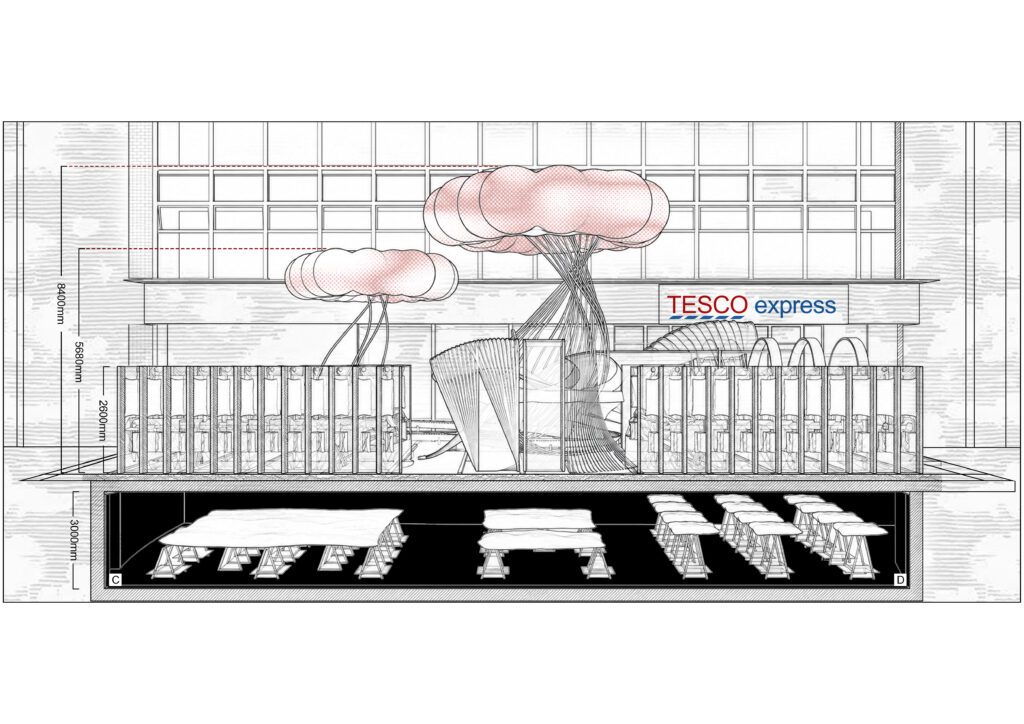
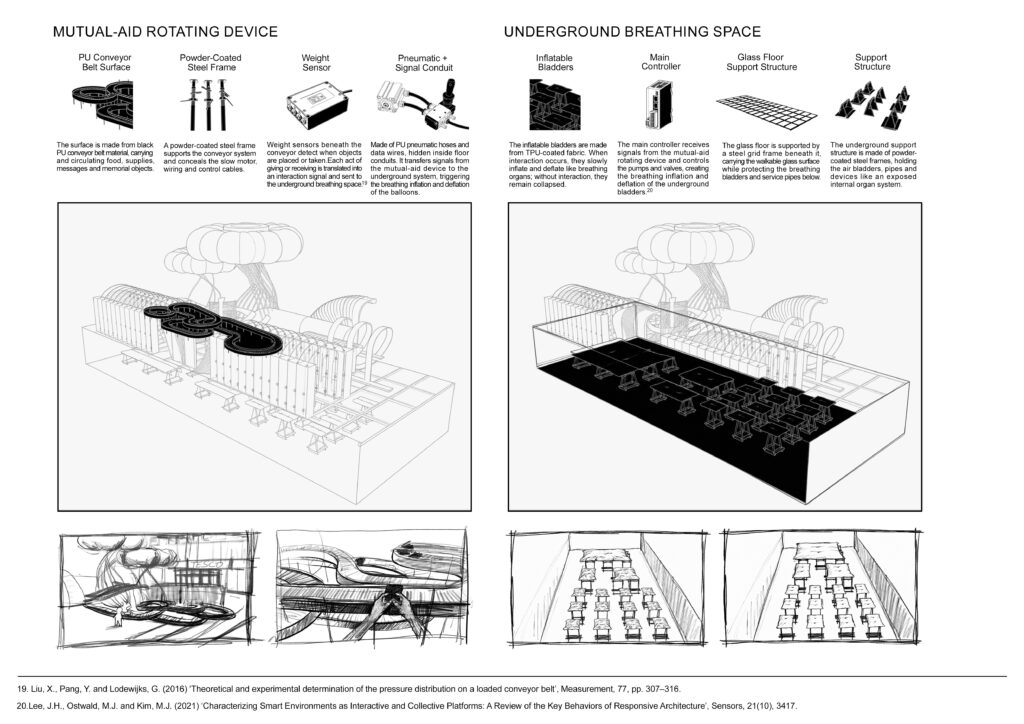
The core of the installation is an area featuring balloon “gravestones,” where balloons serve as temporary markers; when visitors sit down or interact with them, epitaphs and other relevant information appear. At the same time, the “breathing” changes of the balloons simulate biological metabolism, enabling the architecture to grow and age, so that the tombstones breathe, grow, and age just like living beings. Human acts of remembrance are no longer merely the use of a building, but rather the sustenance of this spatial machine’s existence. The act of commemoration is thus transformed into a series of actions—staying, giving, receiving, remembering, and seeing anew—ultimately constructing an open, interactive, and unfinished memorial cemetery.