

Hsin-Ying Chou
(She/Her)
Chou
Hsin-Ying Chou (b.2002)
Biography
Born in Taiwan and trained in industrial design, she is currently engaged in contemporary curatorial practice and research. Informed by design thinking, her curatorial approach explores the relationships between people, space, objects, and the environment, translating these interconnections into curatorial strategies and exhibition-making methods. Her research and practice also extend to the relationship between people and the natural environment. She examines how artistic practices can respond to contemporary environmental concerns, and how exhibitions can become platforms for rethinking and re-sensing place, space, and social relations. Working across disciplines, her curatorial practice emphasises experience-oriented approaches, the construction of situated contexts, and the activation of audience subjectivity. She is interested in creating exhibition experiences that encourage perception, participation, and critical reflection.
Alongside her curatorial research, she has developed a broad range of practical skills in design and exhibition production, including graphic and visual design, 3D spatial modelling, exhibition fabrication, and on-site installation. Before pursuing a master’s degree in curatorial practice, she gained further professional experience through an internship in the planning of a local arts festival and through independently coordinating the production and delivery of a photography exhibition. Her interdisciplinary expertise has been recognised through the Young Pin Design Award and a Taiwan invention patent, demonstrating her ability to integrate conceptual development, visual communication, material production, and the practical delivery of exhibitions.
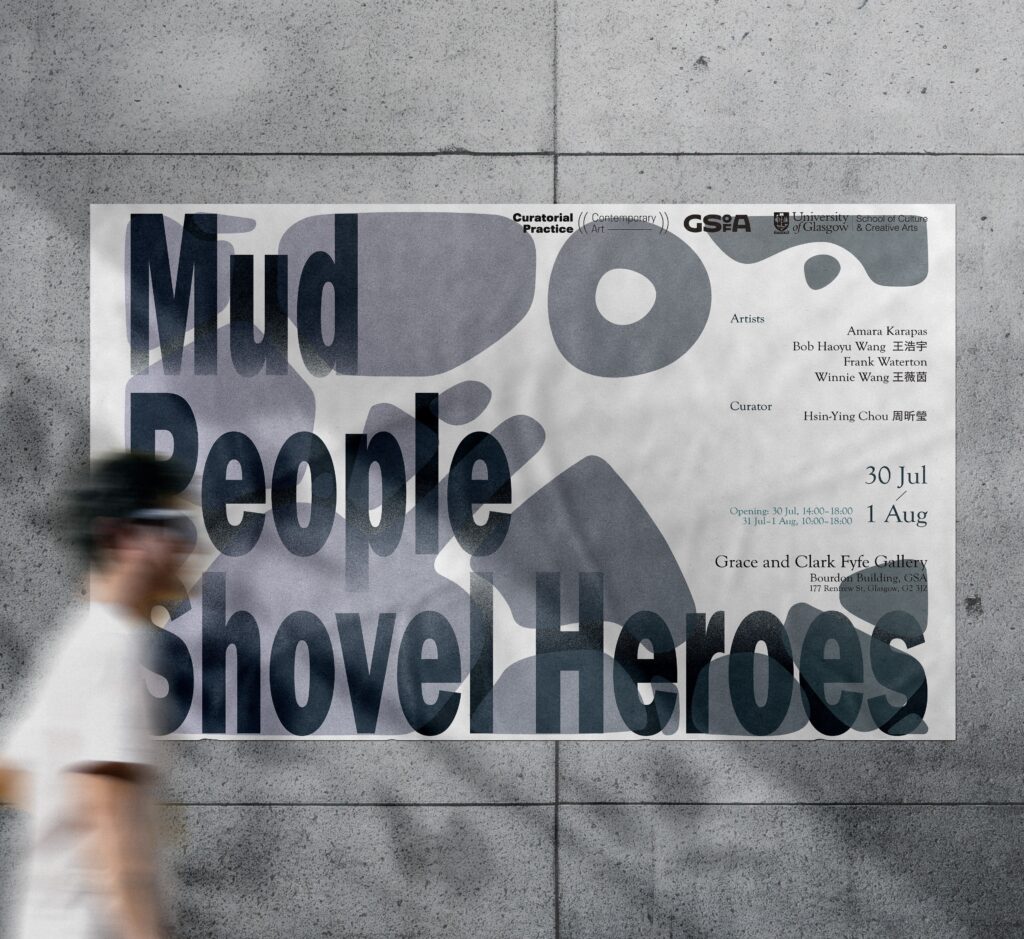
Mud, People, Shovel Heroes
This project emerged from curatorial research into the phenomenon of the “Shovel Heroes” during the 2025 Guangfu flood in Hualien, Taiwan.
September 2025.
Guangfu, Hualien, Taiwan.
The collapse of the Matai’an River barrier lake.
Carrying the unresolved trauma left by the powerful earthquake of the previous year, together with the heavy moisture accumulated by typhoons throughout the summer, the landslide-dammed lake upstream of the Matai’an River eventually breached during torrential rainfall in early autumn. Months of official monitoring failed to translate into timely warnings and preventive action. As a result, an immense surge of floodwater, mud, and debris poured downstream within a matter of moments, submerging the settlements below beneath vast quantities of thick sediment. After the floodwaters receded, the heavy mud hardened around villages and homes. Delayed official coordination, together with a severe shortage of personnel available for mud removal, compounded the difficulties of the post-disaster situation. When the first volunteers entered the mud carrying shovels and rubber boots, their actions rapidly spread through fragmented messages on social media. People from across Taiwan then began travelling spontaneously to the disaster-affected area, forming a collective mobilisation that came to be known as the “Shovel Heroes.”
The fragmented messages circulating on social media spontaneously coalesced into a powerful form of collective action. Through digging, clearing, and collaboration, volunteers responded to environmental change, governmental failure, local needs, and social responsibility. In the process, they generated strong emotional connections and a sense of collective consciousness.The project takes this collective memory of post-disaster recovery as its point of departure and relocates it to Scotland, where it reopens the discussion through an experimental form centred on sensory and embodied experience. It seeks to extend the collective memory of post-disaster recovery into a broader reflection on human beings, the natural environment, and the social and political conditions embedded within their relationship. Through labour, material encounters, and bodily experience, people are able to reconsider their relationship with the land. At the same time, these experiences reveal the structural conditions that shape how communities respond to and remember moments of crisis.
To reconstruct this narrative within a different temporal and geographical context, the project developed a digital network of memory across time, based on first-hand footage, audiovisual documentation, and oral-history interviews with volunteers collected from the public in Taiwan.
Through an asynchronous online platform, fragments of experience, voices, and stories from those who participated directly in the relief effort were brought together. Artists from different cultural and geographical backgrounds were then invited to gather within this space, move through its materials, and leave critical responses. On the digital board, the artists traced connections, entered into dialogue with one another, and interwove their ideas. Beginning from their own experiential and geographical positions, they developed responses through a range of artistic languages, including sound, moving image, and material-based practices.
These fragments of memory from afar, the oral accounts, and the subsequent artistic translations produced by artists working in different contexts eventually intersected and overlapped within the physical exhibition space.
The exhibition extends this transitional memory of an event that once took place in Guangfu, Hualien. Through a dialogue between different temporalities, geographies, and cultural perspectives, it transforms the memory into a contemporary reflection on disaster, embodied labour, and civic resilience.
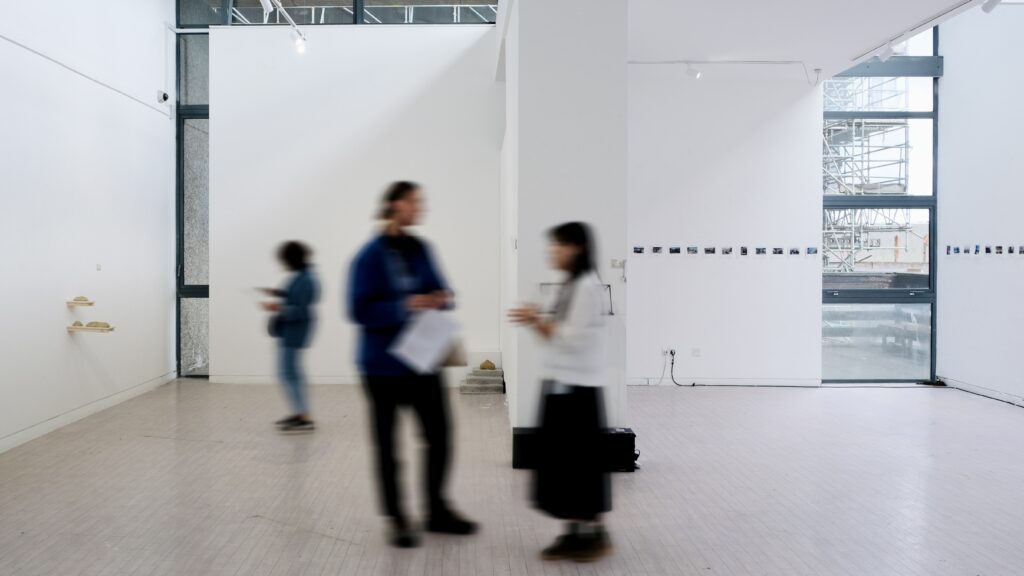
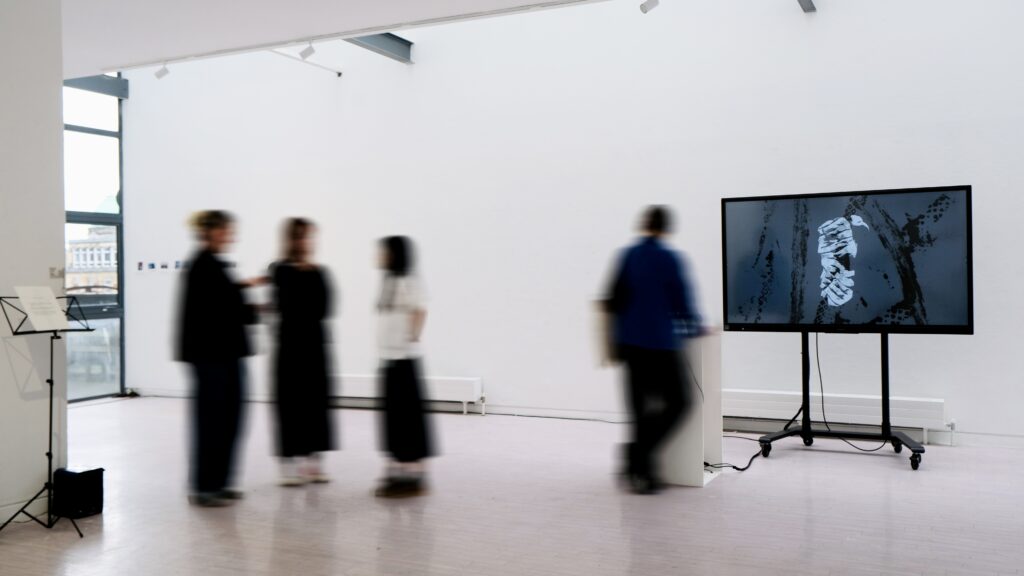
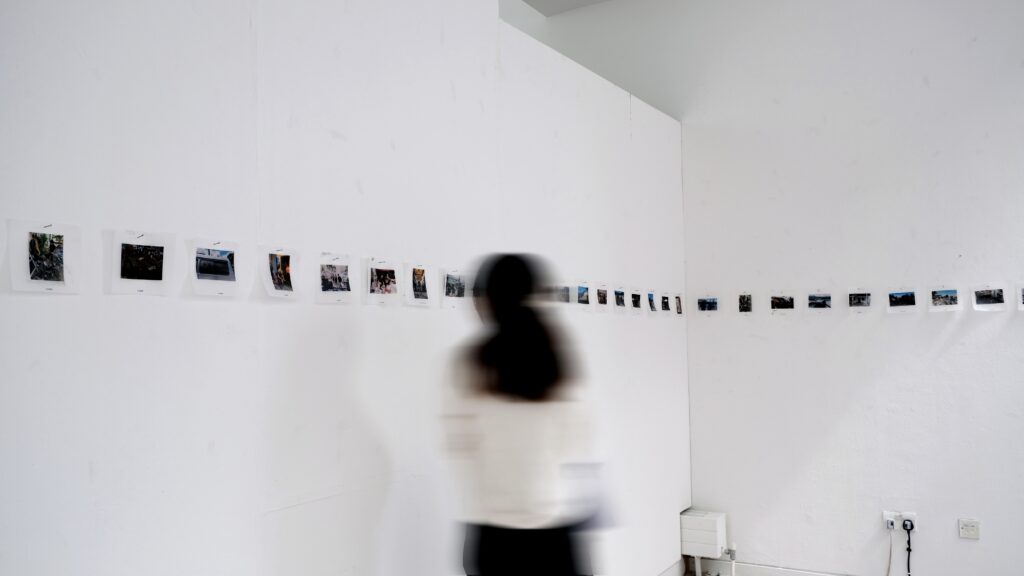
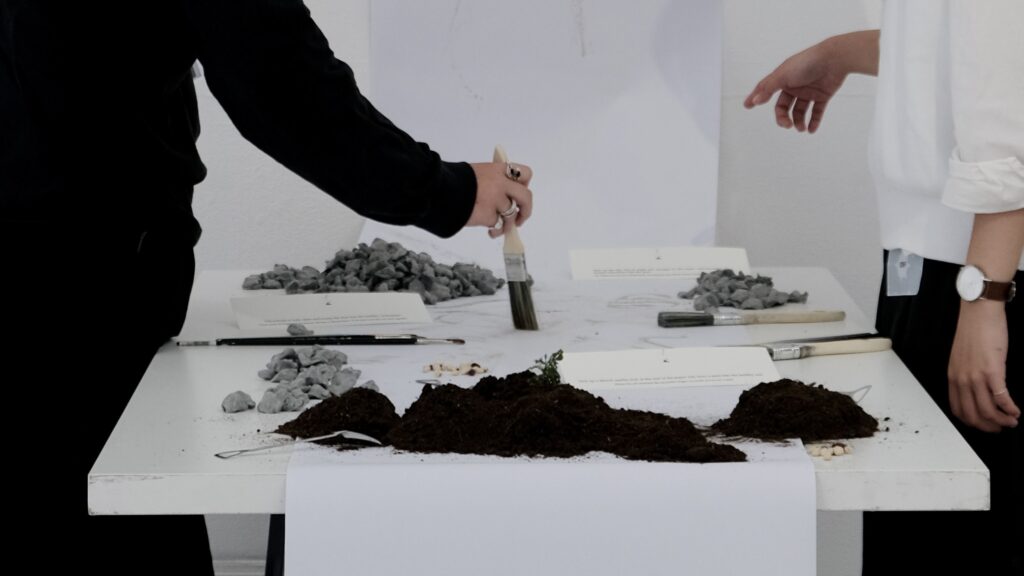
Participatory work that explores how individual and collective acts of care permeate the landscape, transforming into possibilities for spiritual regeneration.
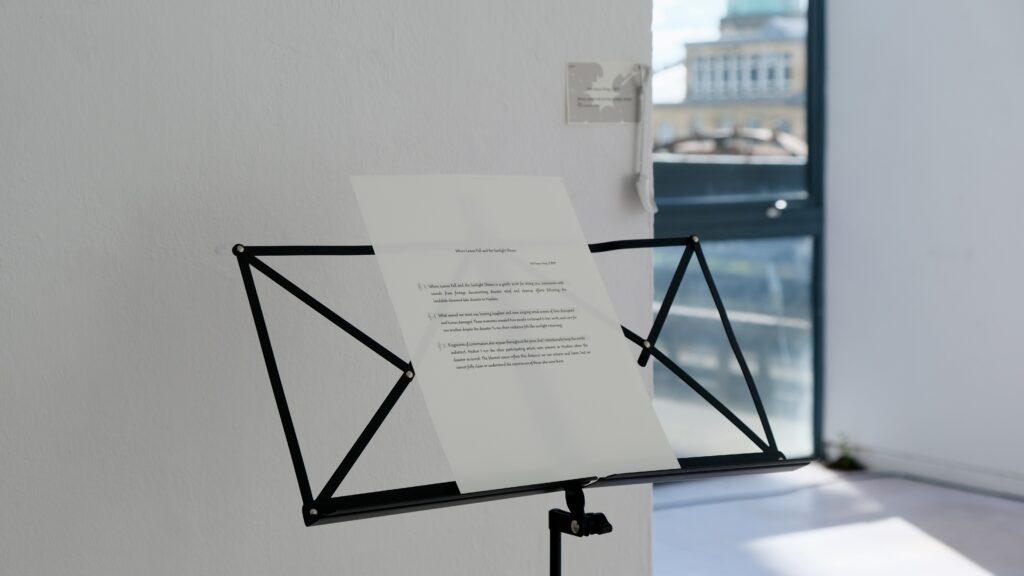
In Where Leaves Fall and the Sunlight Shines, composed for a string trio, the artist creates a gentle yet profound sonic echo of the physical labor and emotional connections formed during the post-disaster recovery following the landslide-dammed lake event in Guangfu.
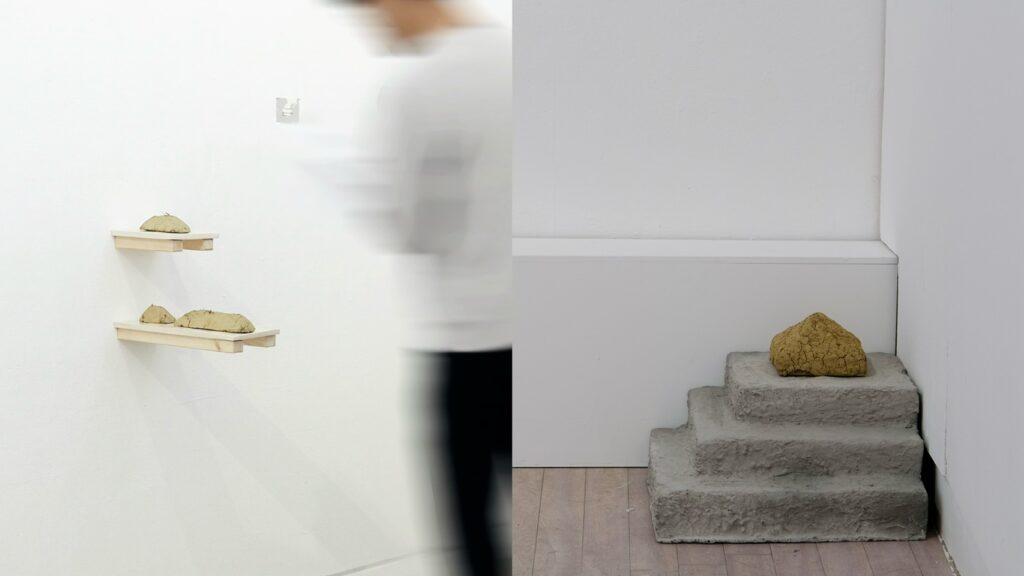
Rooted in a material response to the natural world, Settlement [cont.] and transformations #4 (arachor) address themes of spatial movement, the material essence of place, and human engagement with the land.
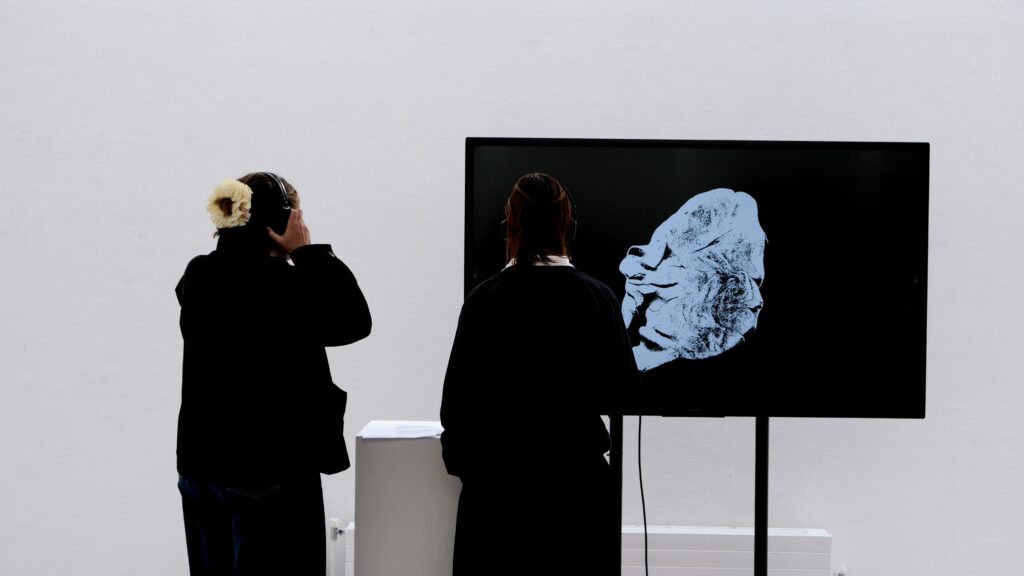
This work explores how acts of care become embedded within the landscape. Inspired by disaster recovery efforts in Taiwan, it reflects on the traces left by human labour and interaction with nature.