陈子元
I am a postgraduate student in Graphic Design at the Glasgow School of Art.
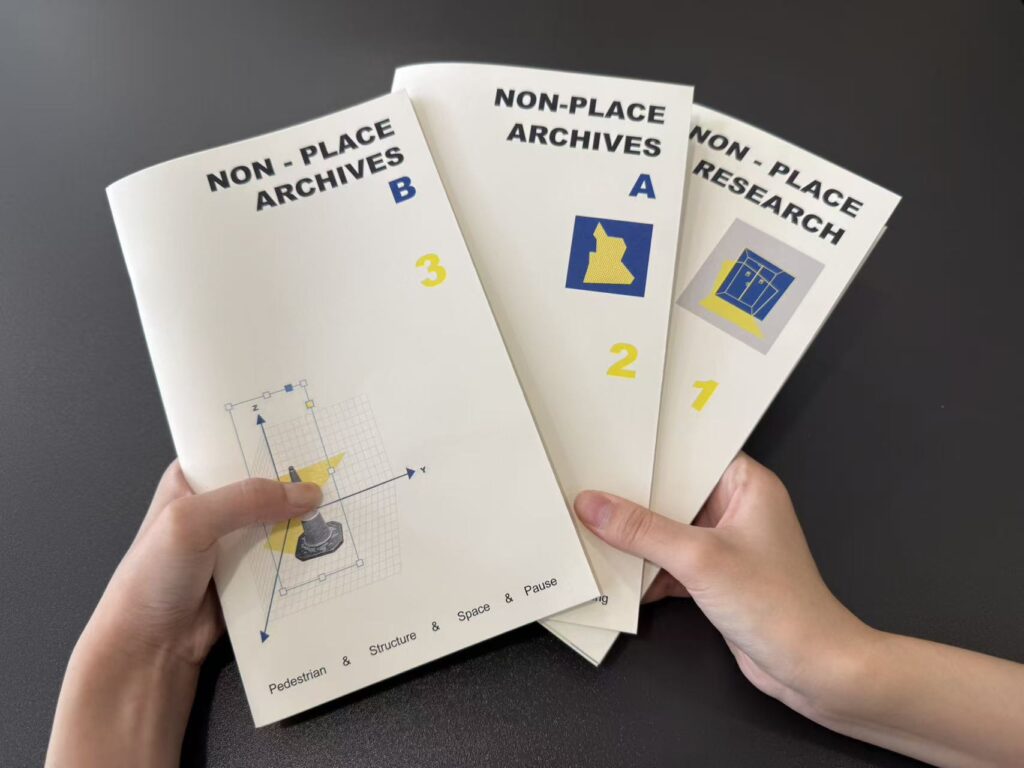
NON-PLACE
Contemporary urban spaces are often designed around movement, circulation and efficiency. Streets, roads, signs and public infrastructure are generally designed to guide people from one place to another. However, in everyday life, people constantly interrupt this movement: stopping at traffic lights, leaning against railings, sitting on steps, waiting beside signs, or temporarily occupying the edges and gaps of the city.
I began to notice that people frequently use spaces that were not originally designed for staying. A railing can become a support, a step can become a seat, and a corner can become a temporary place to wait.
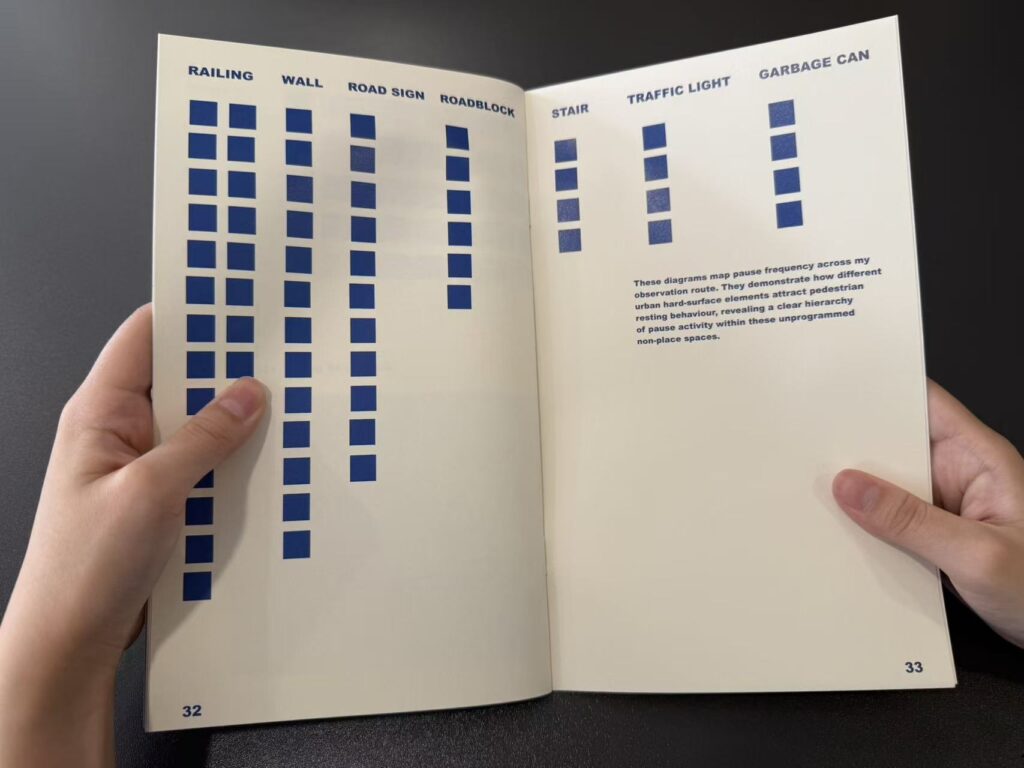
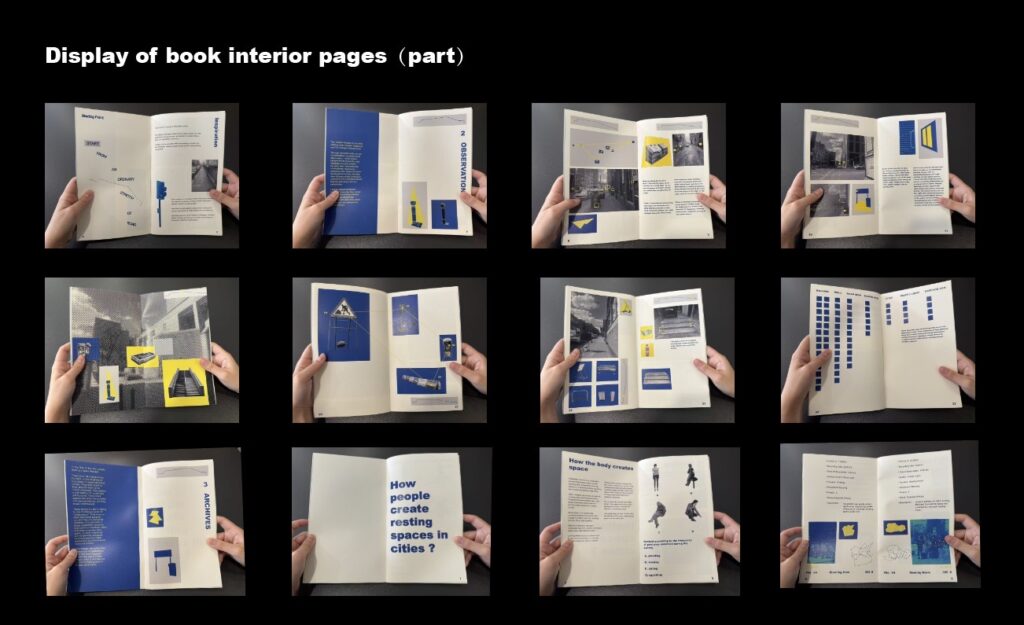
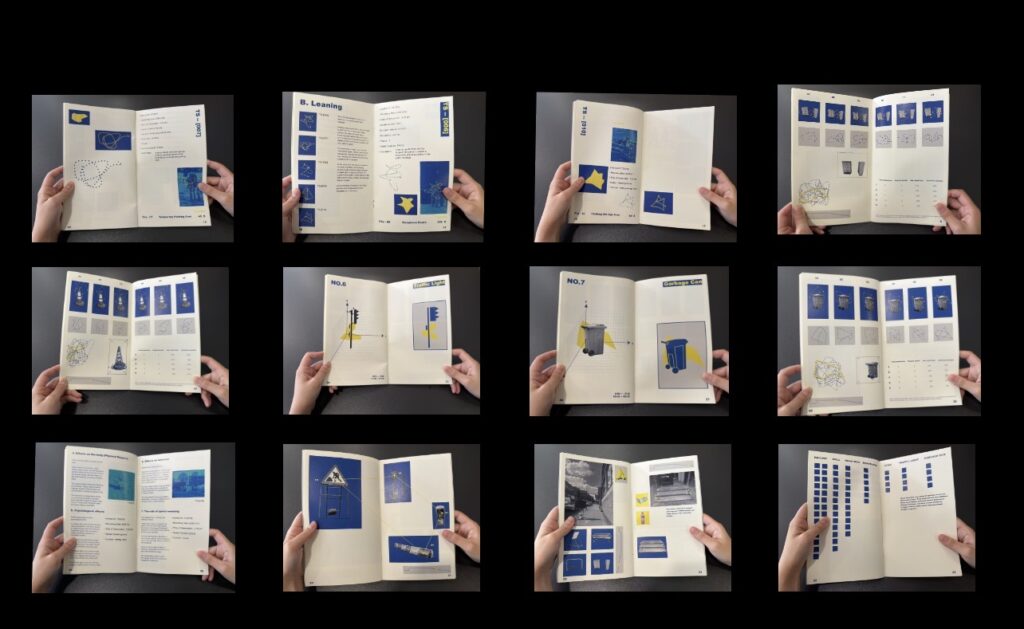
The project developed as a practice-led research process, using walking, photography, classification, archiving, book design and mapping as methods of investigation. Through repeated observation, I documented and gradually developed a visual archive of temporary occupation in the city.
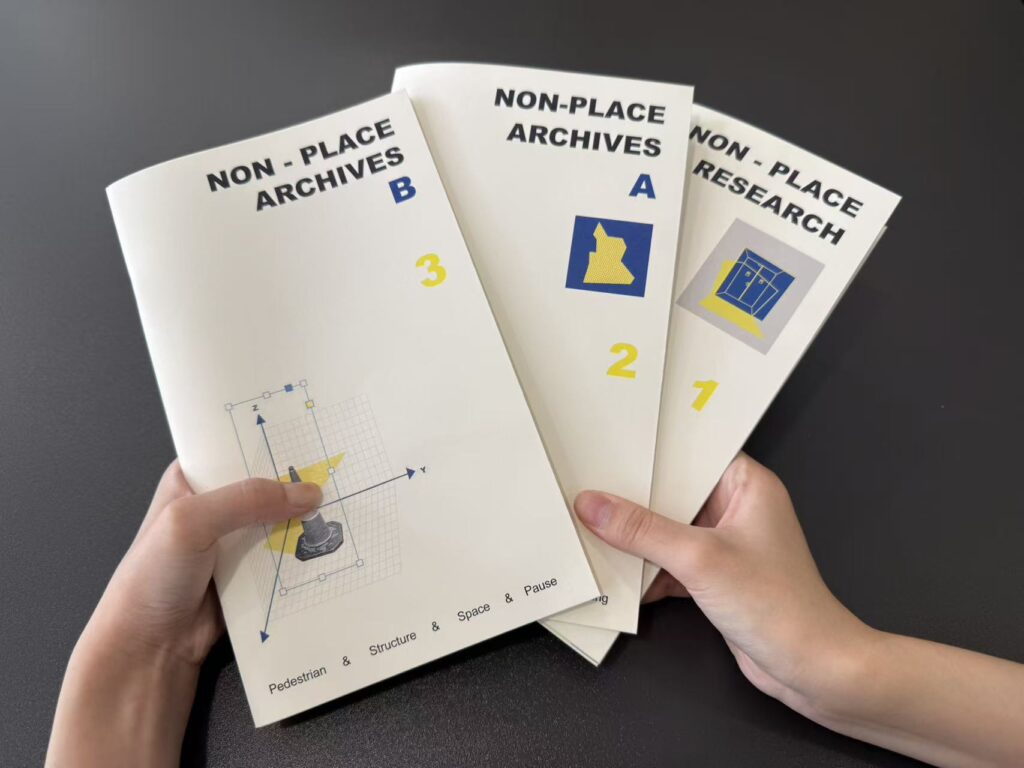
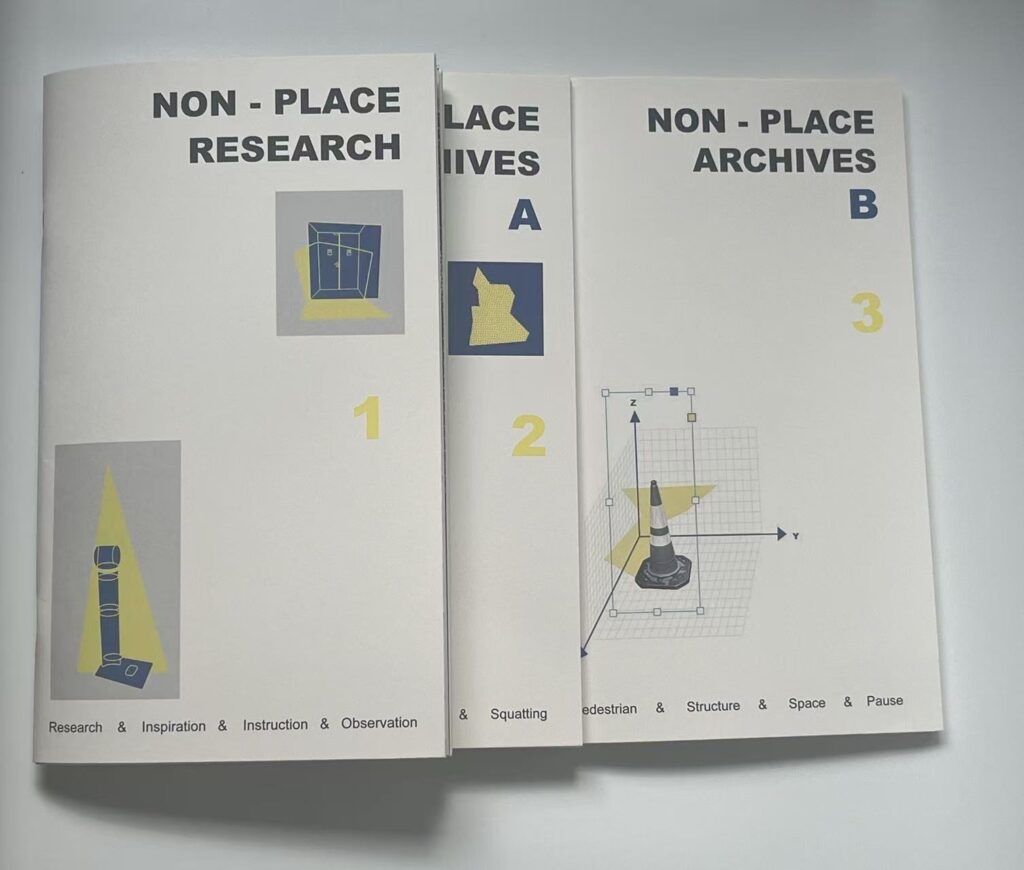
The project was initially conceived as one complete book. As the research developed, however, I realised that the material represented different stages of the same research process. I therefore developed the project into three interconnected publications: Observation, Archive and Relation. Together, they move from observing the city, to understanding the relationship between body and space, and then to recording how the city is used.
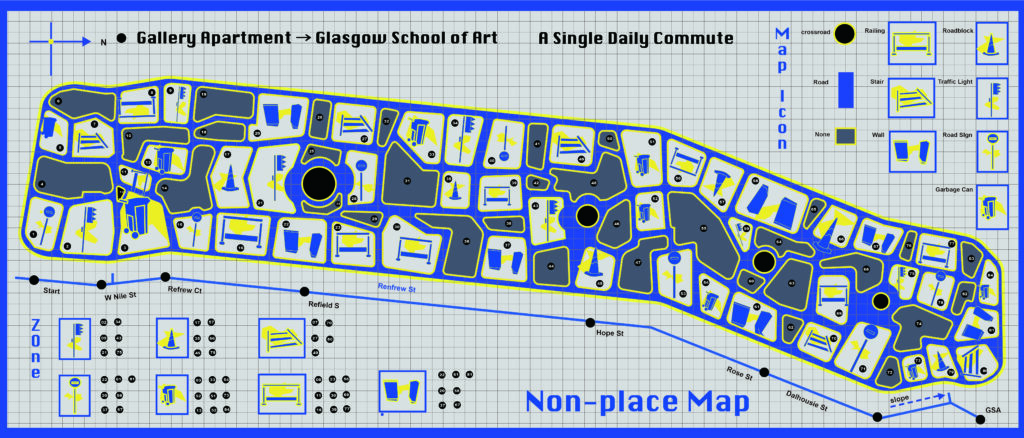
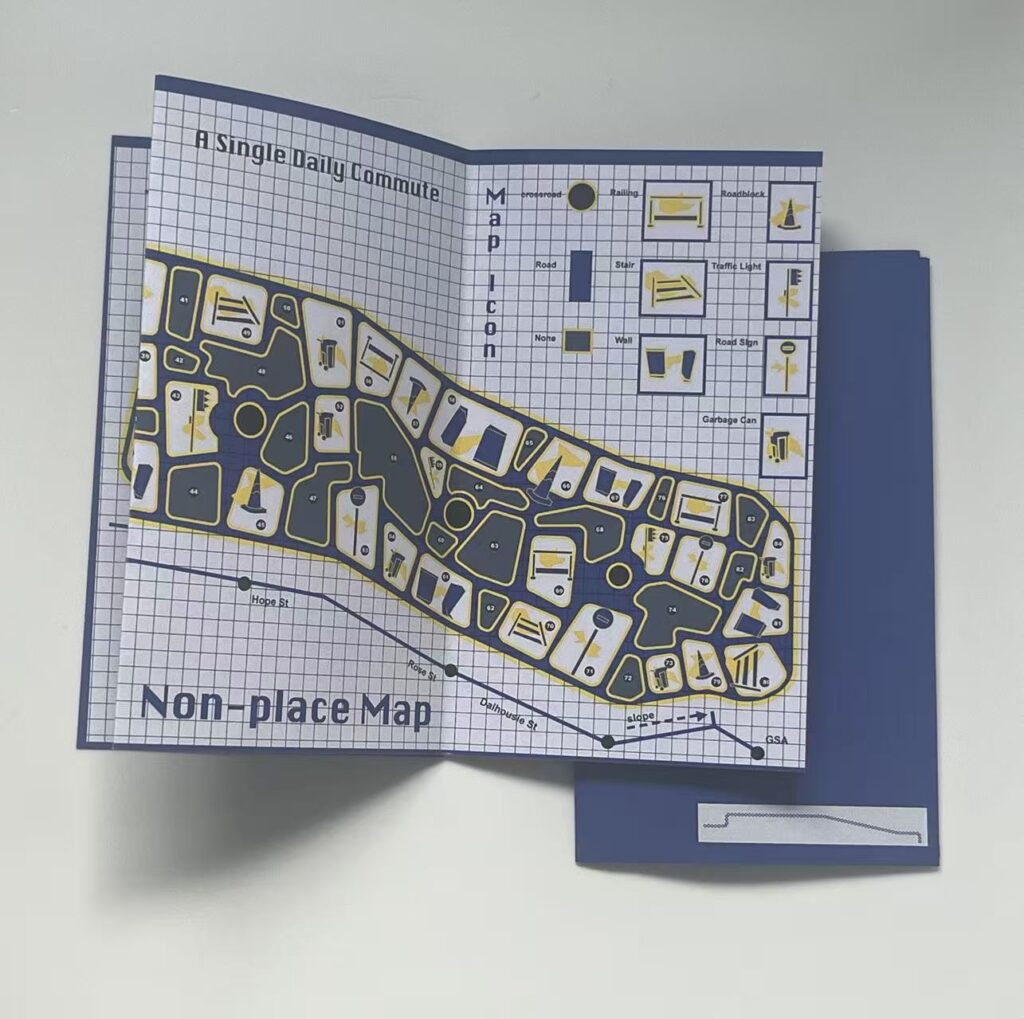
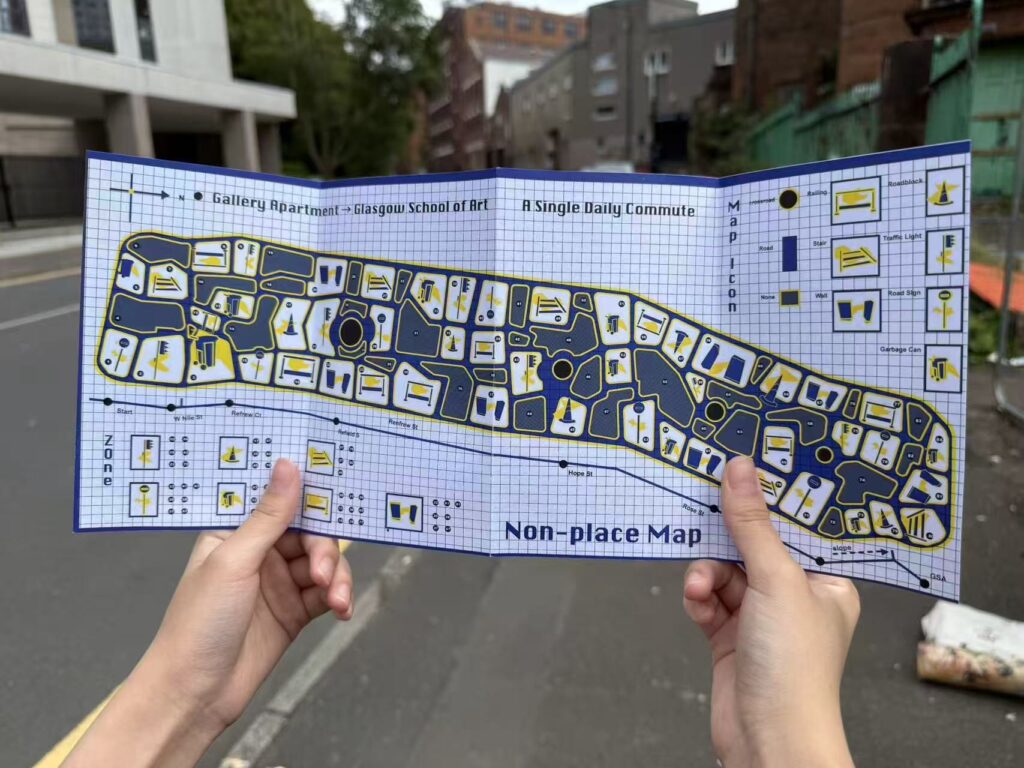
Mapping then became another way to rethink how the city can be represented. I developed a non-traditional map that marks spaces which are often overlooked but are repeatedly used in everyday life.Instead of mapping where the city is, I map how the city is used.
This project proposes another way of seeing the city: rather than being fixed by planning and design, urban space is continuously produced and redefined through everyday human use.