Jianxing Bai
BeSide
An ageing partner living with Alzheimer’s disease
The problem
Every dementia tracker on the market assumes the wearer can operate a device and read what it tells them. That assumption doesn’t hold here: a person with dementia can’t reliably use a smartphone, a smartwatch, or even answer a call. So the interaction has to flip — the wearer does nothing, and someone else receives the information instead.
That someone is a spousal carer. A location dot tells them where, never what’s happening, so the checking never really stops — right at the moment that should be their one chance to rest.
And the trackers that exist aren’t always worn as intended. Around the neck, they mark the wearer as visibly different. Left in a pocket instead, they’re easy to lose — the exact failure they exist to prevent.
Who it’s for
Designed for home-based care and independent living, in the early to mid stages of dementia — where a physically capable spousal carer is managing day-to-day alone.
The design: BeSide
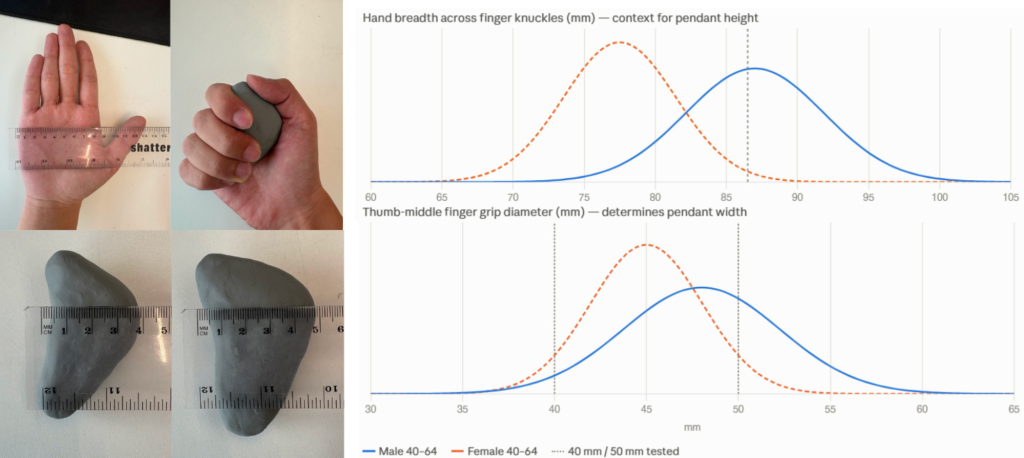
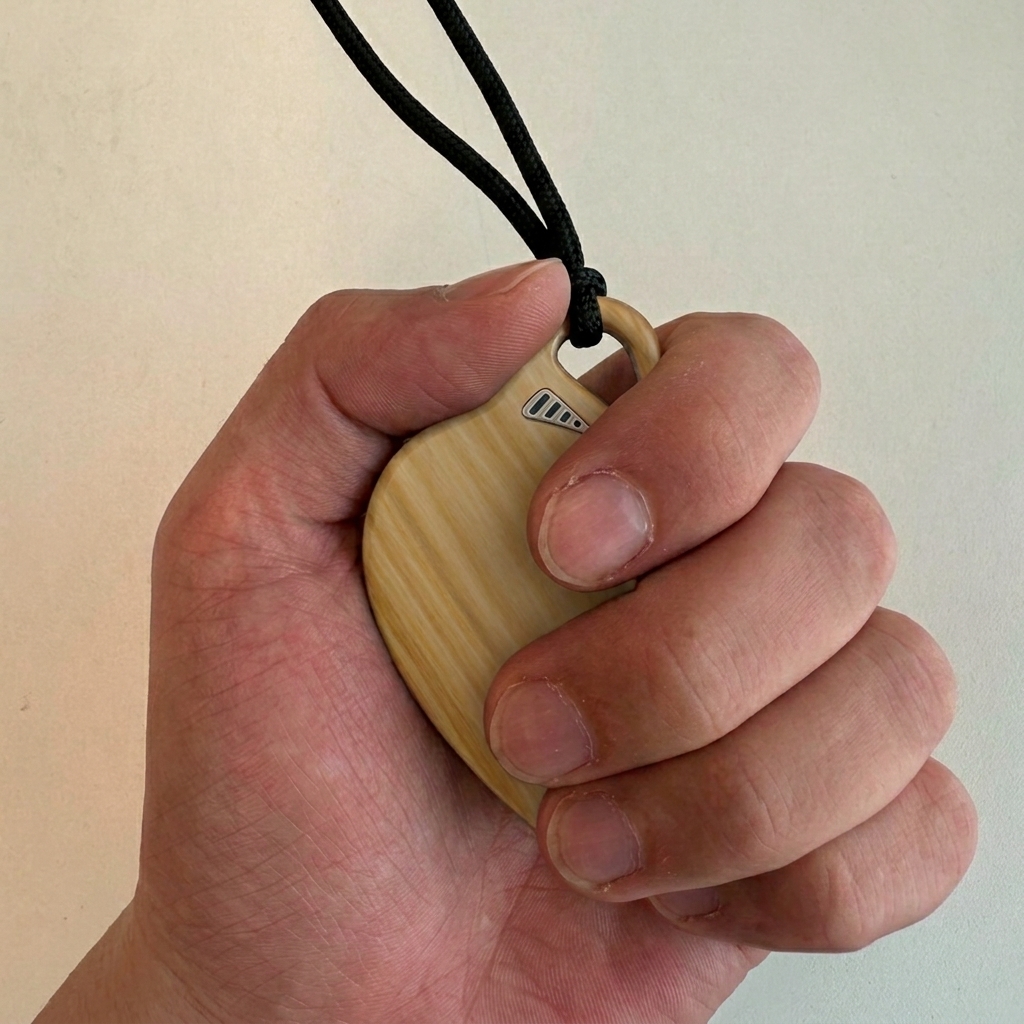
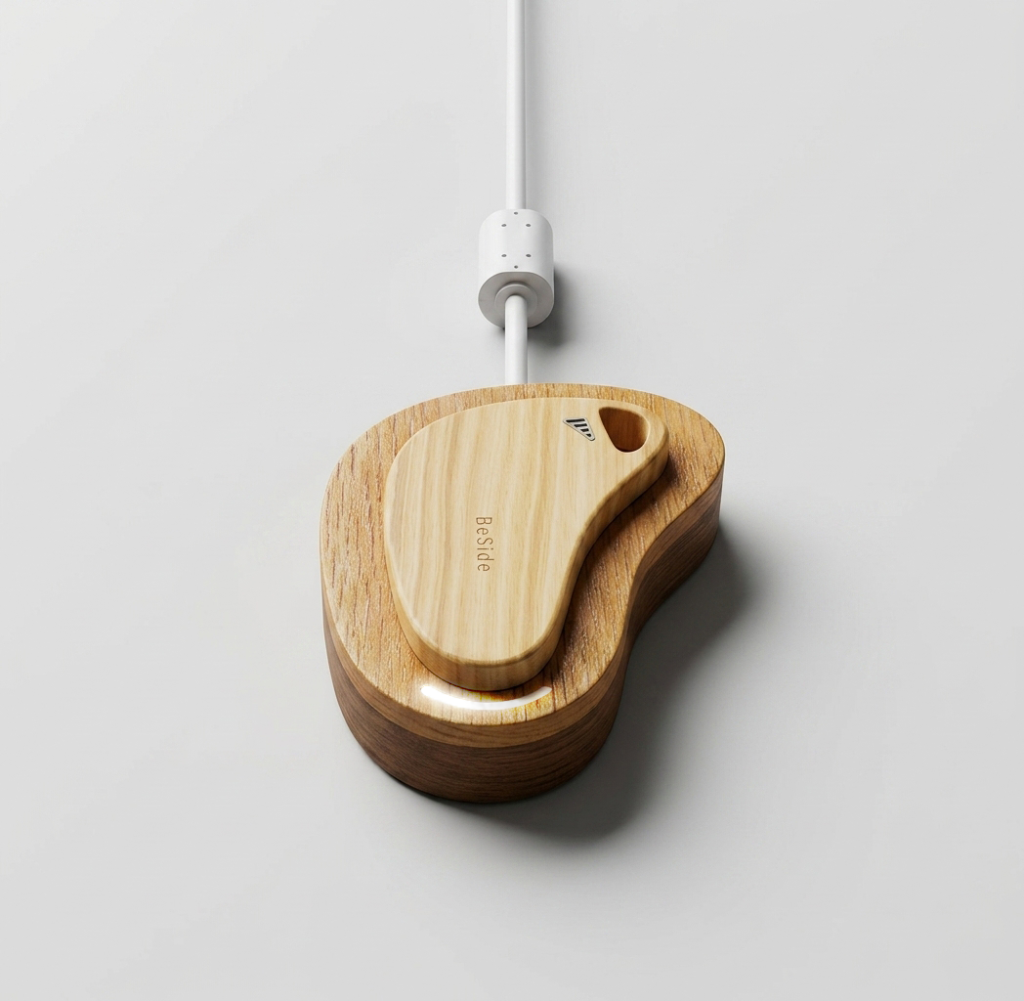
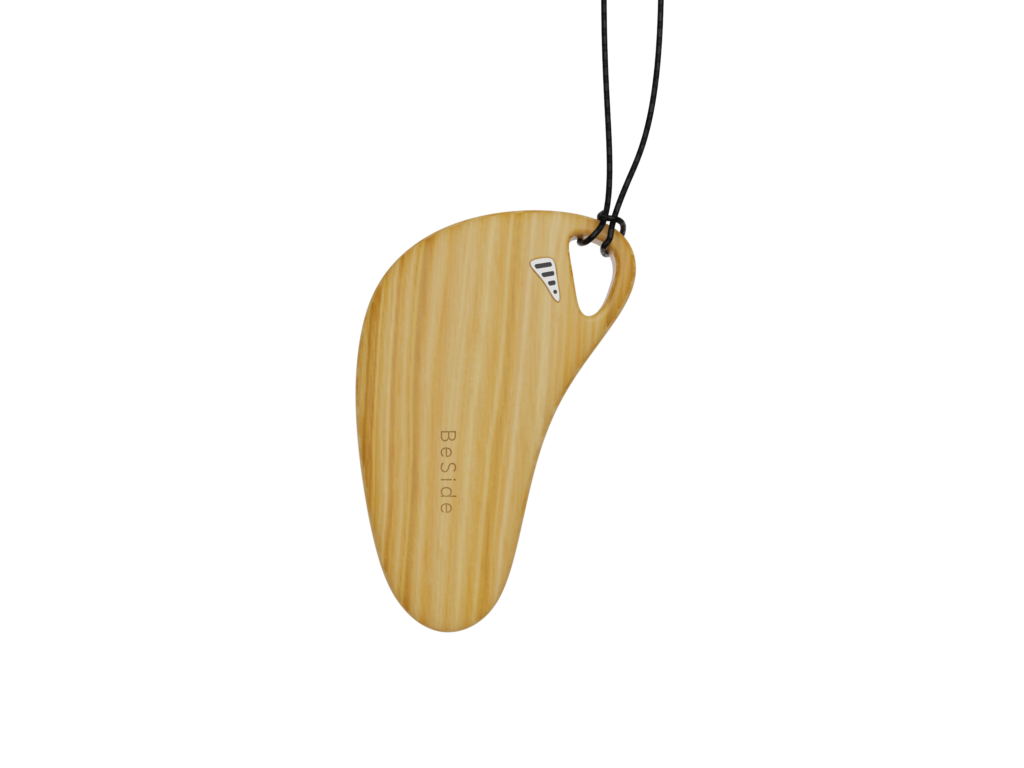
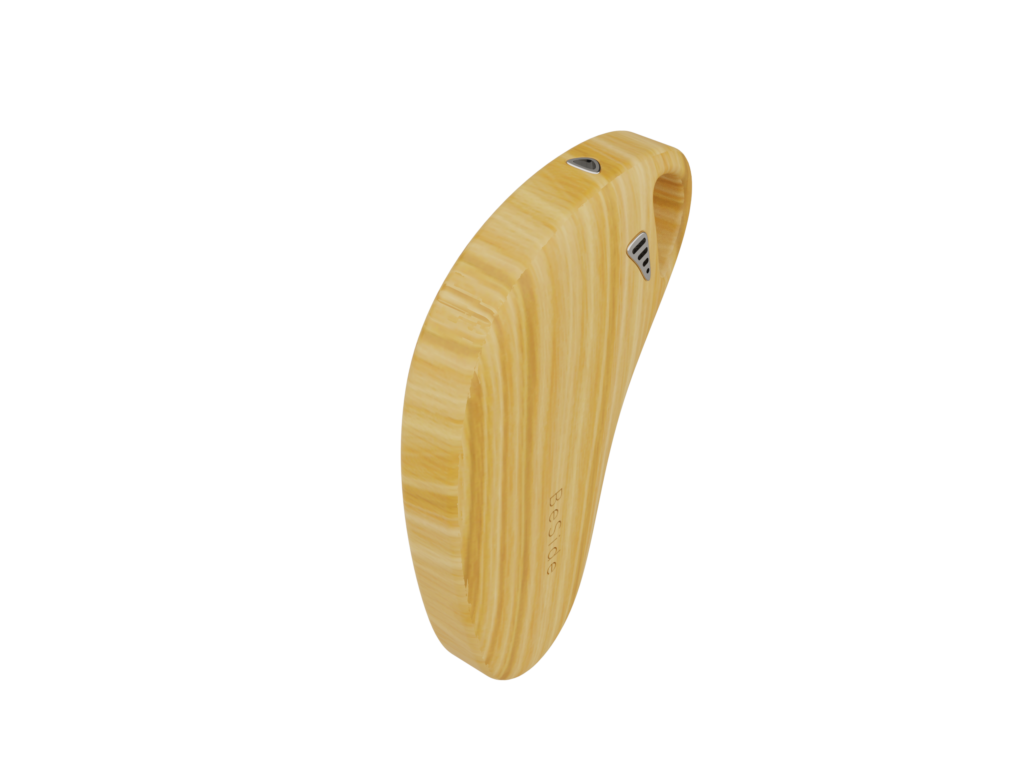
Form. A wooden pendant, worn on a cord, charged wirelessly. No buttons, no screen — it reads as jewellery, not a medical device. The width was set against real anthropometric hand-grip data rather than personal preference, sized to sit comfortably in the hand as well as around the neck — holding it, not just wearing it, is part of the design.
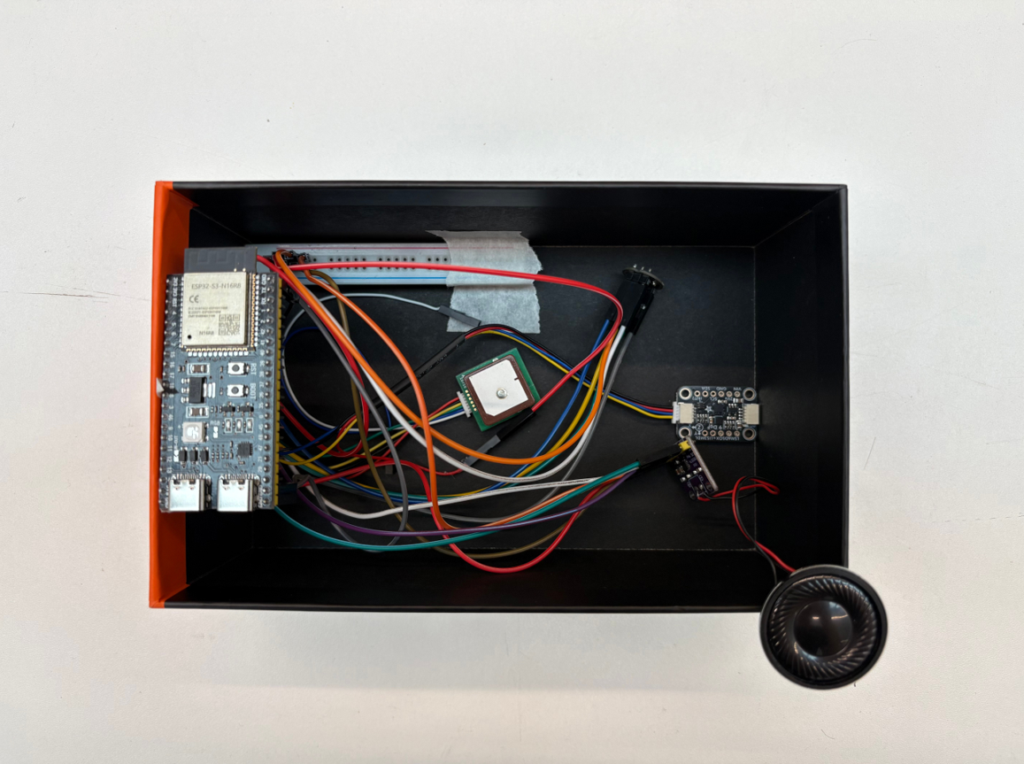
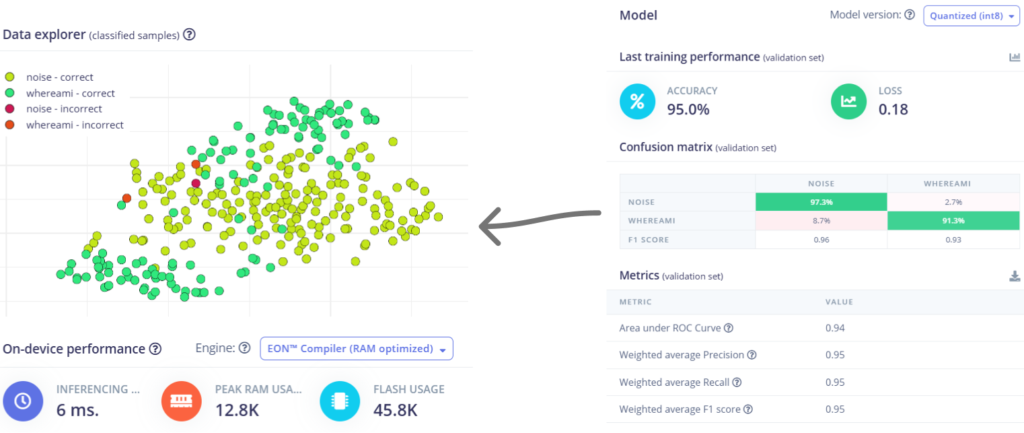
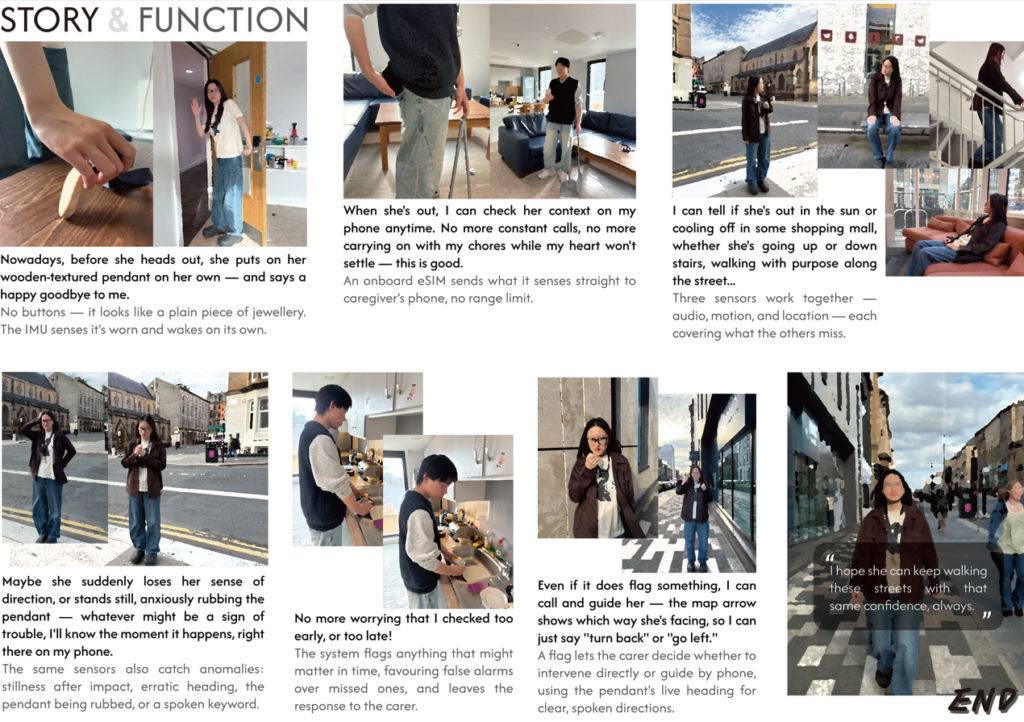
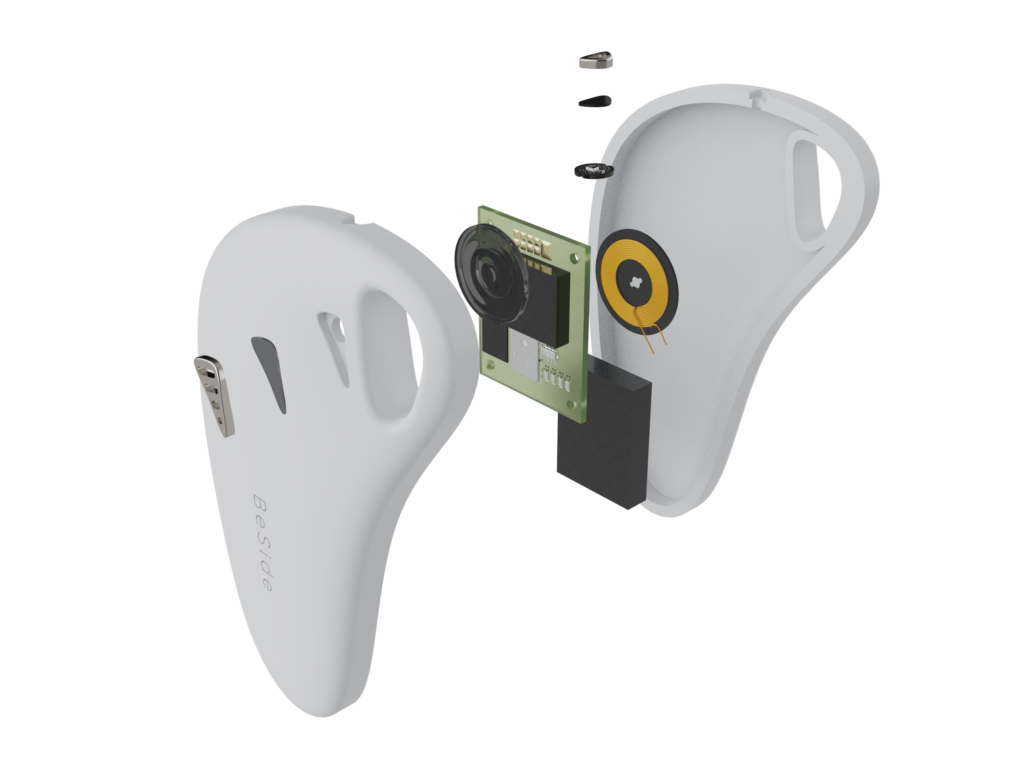
Function. No switch: the IMU senses the pendant is worn and wakes the device on its own. From there, it senses continuously — audio, motion, and location, each covering what the others miss. Audio tells indoor from outdoor, IMU reads posture and picks up falls through the stillness that follows an impact, GPS gives location and, over time, path efficiency — an early read on purposeful walking versus wandering.
Most of this stays as a quiet context state, sent to the carer’s phone over the pendant’s built-in connection, checked whenever they want. Only when something looks potentially concerning does it escalate to a notification — the carer decides whether to call, and the pendant answers automatically on the wearer’s behalf, with a live heading reading turning the call into clear, spoken directions: turn back, go left.
The experience
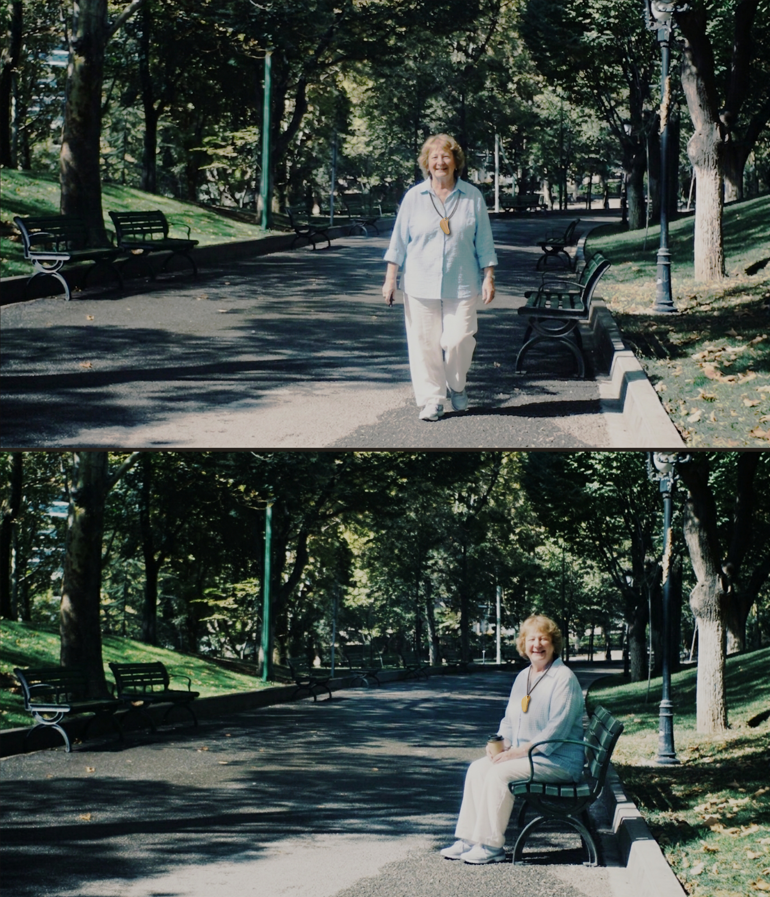
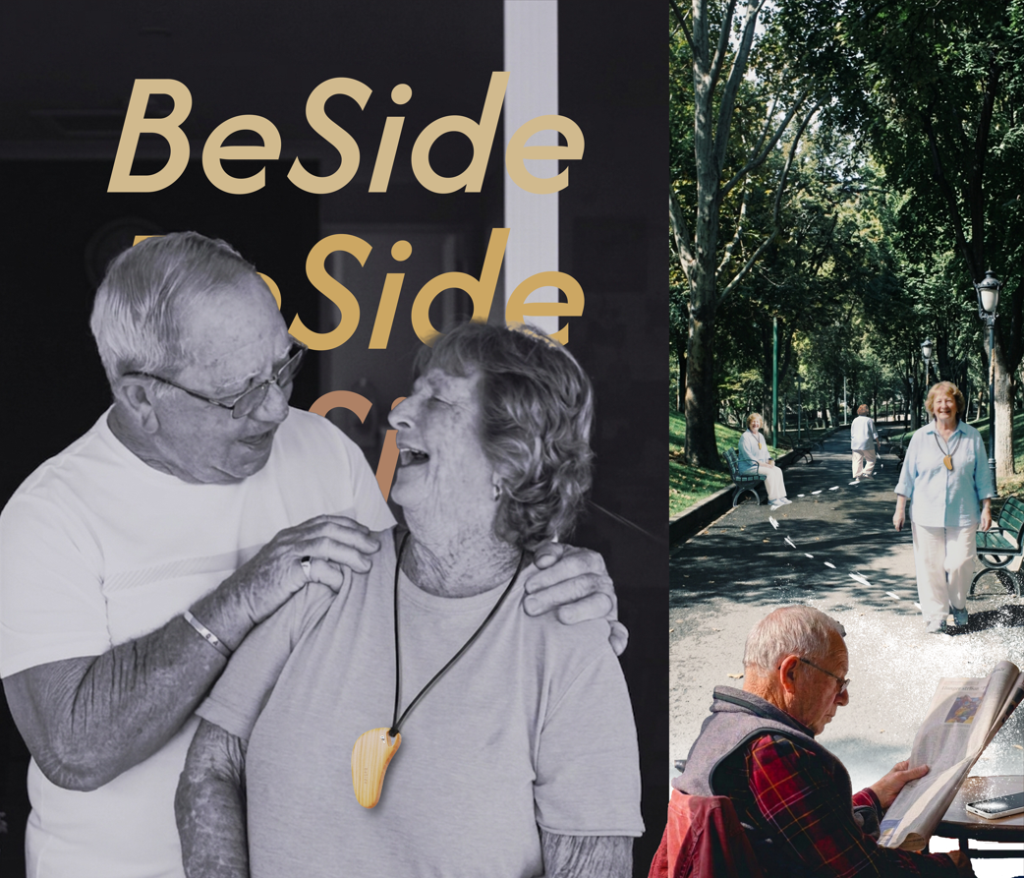
The pendant goes on without a fight now — no reminding, nothing to argue about. The carer checks in only when it’s actually needed, not constantly, not anxiously. If something is genuinely worth knowing, they find out immediately, and can help without needing to be there in person.
The daily walk stays what it always was: a walk, not something that needs watching over someone’s shoulder.