
Julia Römer
(she/her)
Julia Römer has recently completed her PhD at the School of Innovation and Technology at The Glasgow School of Art, working across Participatory Design, Education and Sustainability. Working with primary school learners as co-researchers across Scotland and New Zealand, she studied learners’ experiential understanding of sustainability education through the lens of diaries and design-inspired methodology.
Her thesis is titled “How ‘green’ is my school?” – Co-Researching Primary School Learners’ Experiential Understanding of Sustainability Education.
For her work, Julia has been Specially Commended for The Glasgow School of Art Sustainability Prize (2026).
Engaging with public audiences, this work was also shown through research artefacts at the SGSAH Research Showcase (2025) and presented at conferences and sustainability networks, such as Learning for Sustainability Scotland (2025).
Research interests:
Participatory Design · Sustainability · Education · Children as Co-Researchers · Participatory Research with Children & Young People
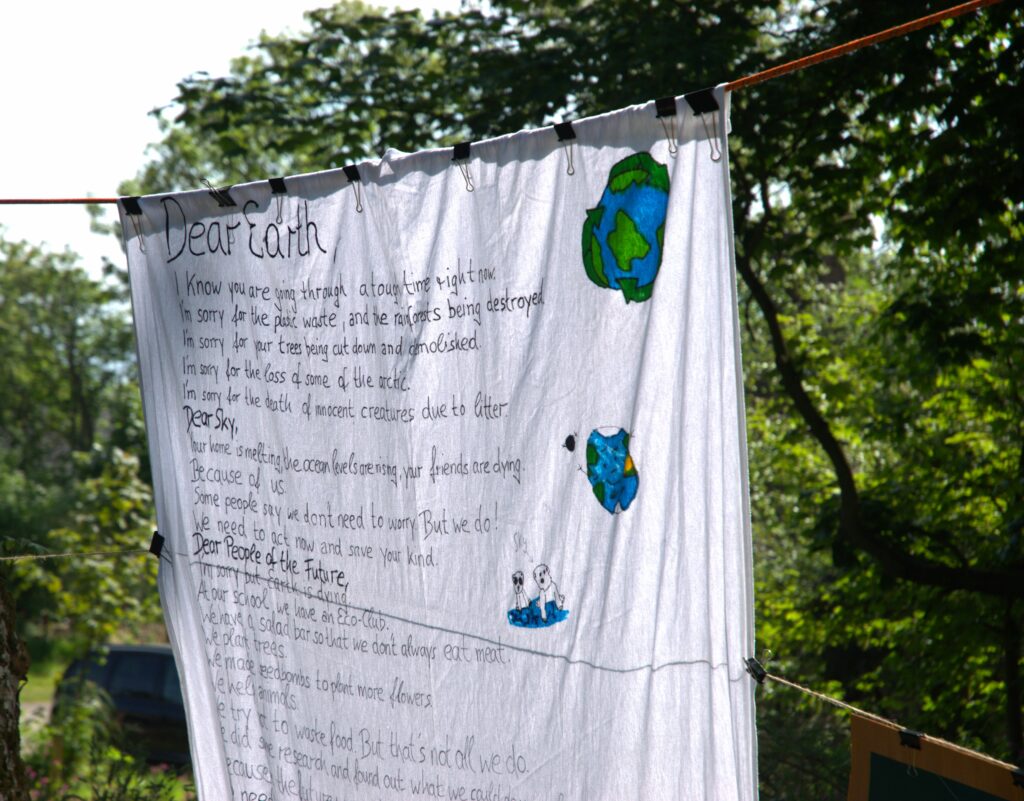
“How ‘green’ is my school?”
Co-Researching Primary School Learners’ Experiential Understanding of Sustainability Education
2022-2025 PhD Research by Julia Römer
Supervisors: Dr Marianne McAra, Dr Maddy Sclater, Dr Paul Smith
Amidst times of climate emergency, this research has explored primary school learners’ experiential understanding of sustainability education through the lens of participatory and design-led approaches. Co-researching with learners together on what they identify and connect with learning for sustainability in their everyday, the research studied learners’ lived experiences across two primary schools in Scotland and New Zealand.
This research asks what happens when we look beyond institutional markers and try to understand sustainability-oriented education from the learner’s perspective.
- What makes a school feel sustainable?
- What do children notice every day?
- Which experiences stay with them?
This learner-led research demonstrates the importance of situated knowledge of sustainability education at primary schools: sustainability is understood through particular places, relationships, cultures, environments and everyday experiences. It moves sustainability education from being understood primarily as an institutional achievement to an experiential and relational practice by centering children’s everyday schooling experiences: what sustainability education looks and feels like, and how learning takes place within a hidden curriculum.
How do children recognise sustainability education when it is already part of their everyday schooling? And what can be learned from its impact?
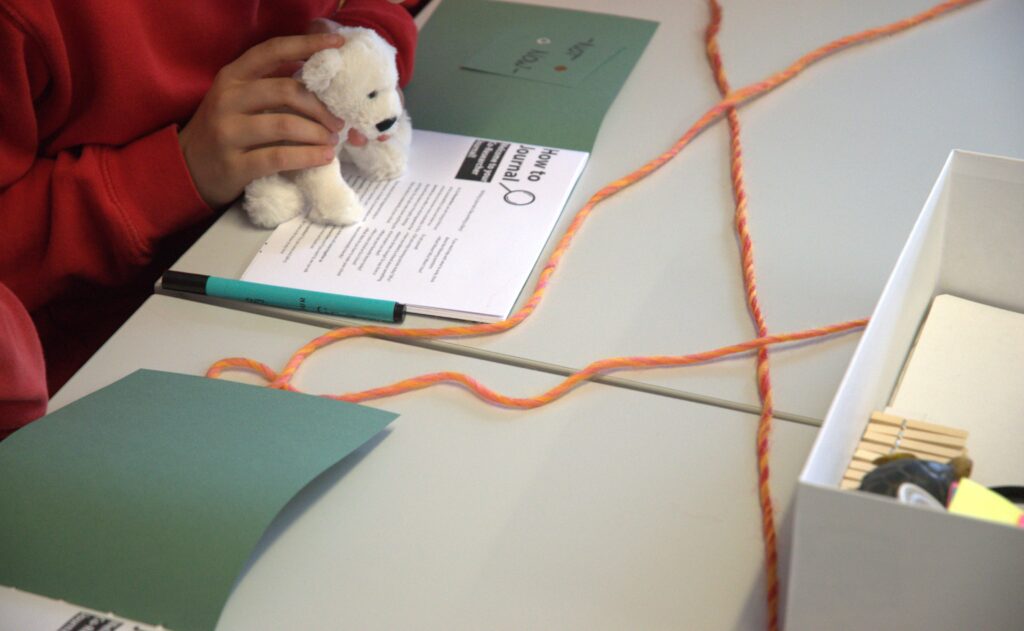
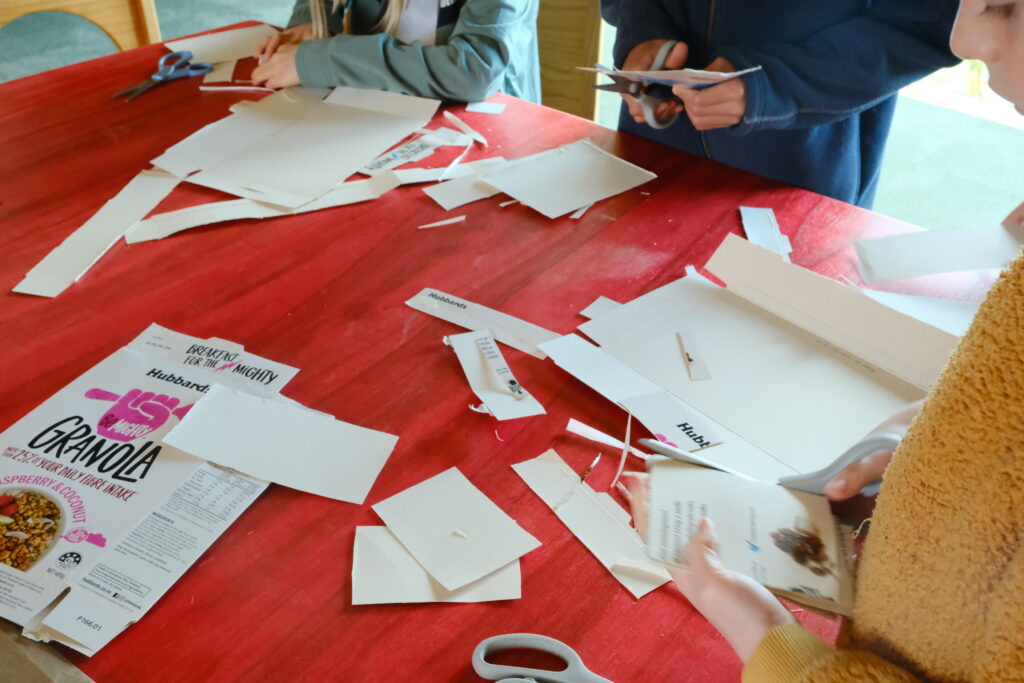
Sustainability education does not happen only when a teacher explicitly introduces climate change, biodiversity or environmental responsibility. The participatory design-inspired methodology enabled through diaries, visual mapping and making an exploration of less-visible experiences from a learner’s perspective. Their observations revealed children’s strong sense of place and belonging: where sustainability is experienced, where it is absent, and where the meanings attached to sustainability education differ between institutional intentions and their very own everyday schooling experience.
Across Scotland and New Zealand
Two primary schools embedding holistic sustainability education — in Scotland and New Zealand — provided the contexts for this research. Their different educational, policy and geographical settings created opportunities to explore how sustainability education is interpreted within particular school communities. In this way, the research could zoom in on the situated and relational nature of sustainability learning: how, when, with whom and where learners encounter it.
A design-led way of asking what a ‘green’ school is like
Rather than measuring sustainability-oriented education solely through policies, programmes, or visible environmental action, this action research asked to look at schools through the learner’s eyes.
It is an invitation to notice the everyday.
To co-research with and listen to pupils.
To recognise learning in the spaces in-between.
And to imagine sustainability education not simply as something taught, but as something lived together.
“So I’m hoping that in you know,
in 40 years time
they might come back.
And they might walk around this very path
and see the impact that they’ve had by planting that tree
and how it’s still there.And they might teach that to their children and help them grow positive to the outdoors,
they’ll pass it on to their children,
and making them see that it is possible.Yeah, a young age can do something.“
(Scottish Teacher)
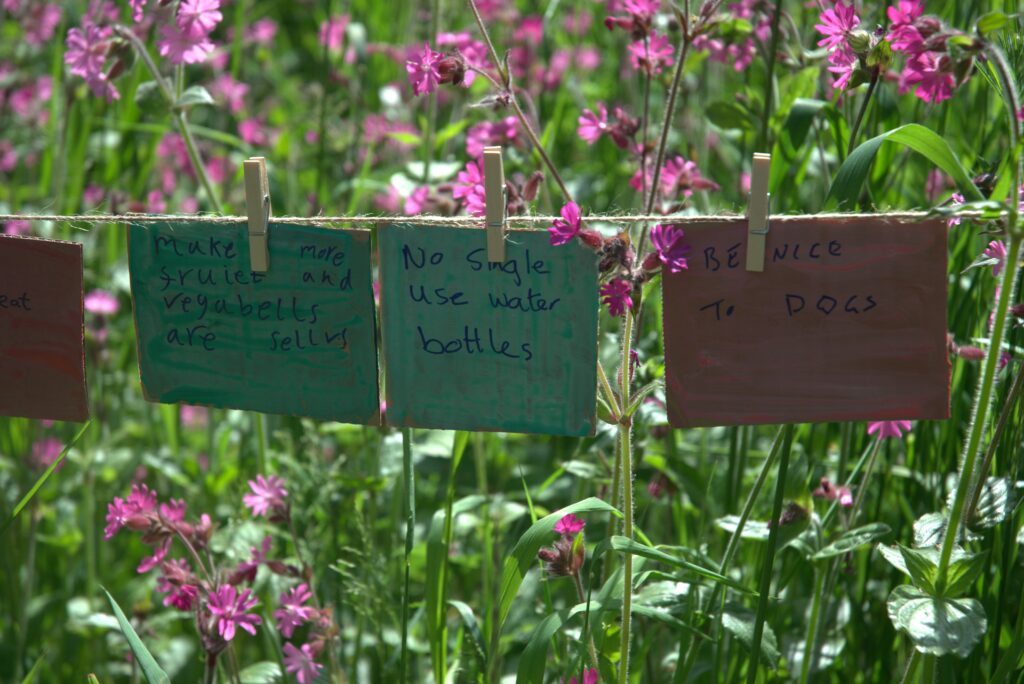
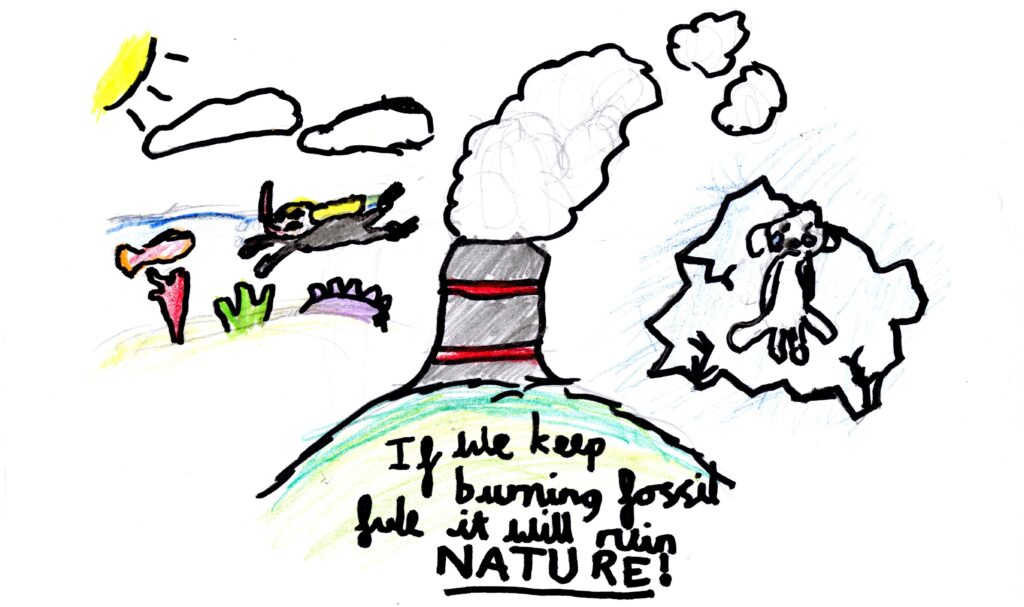
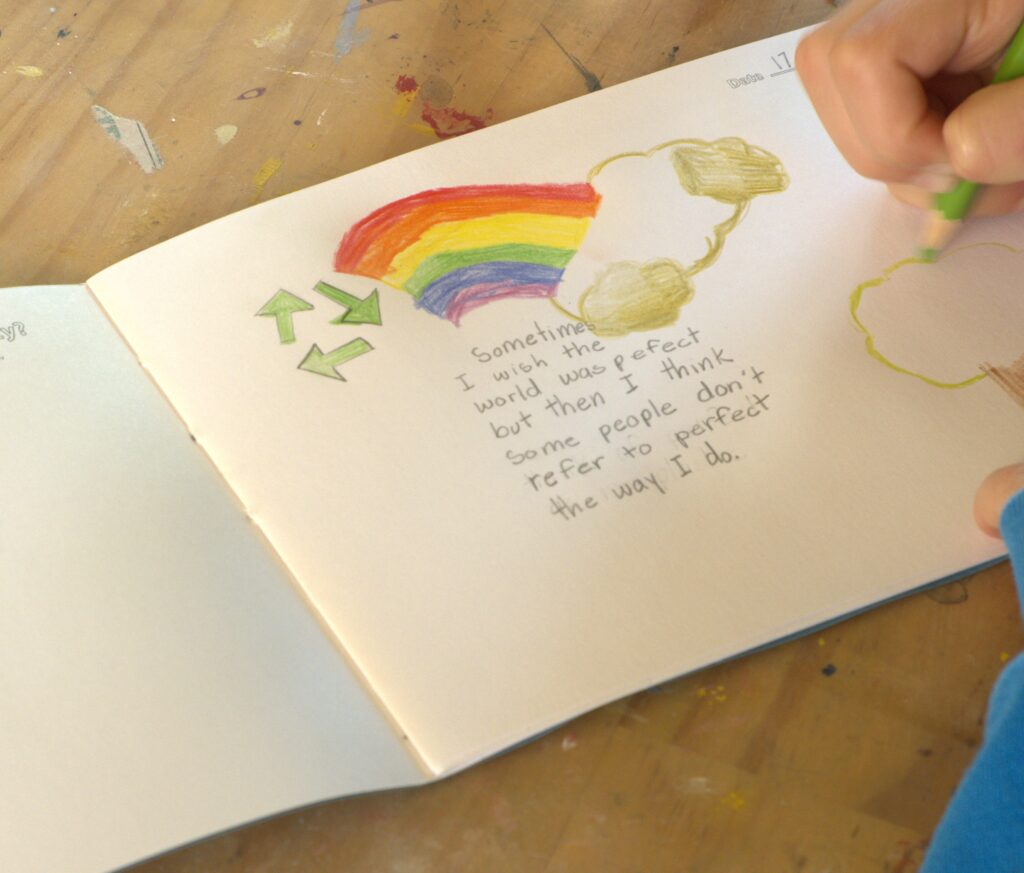
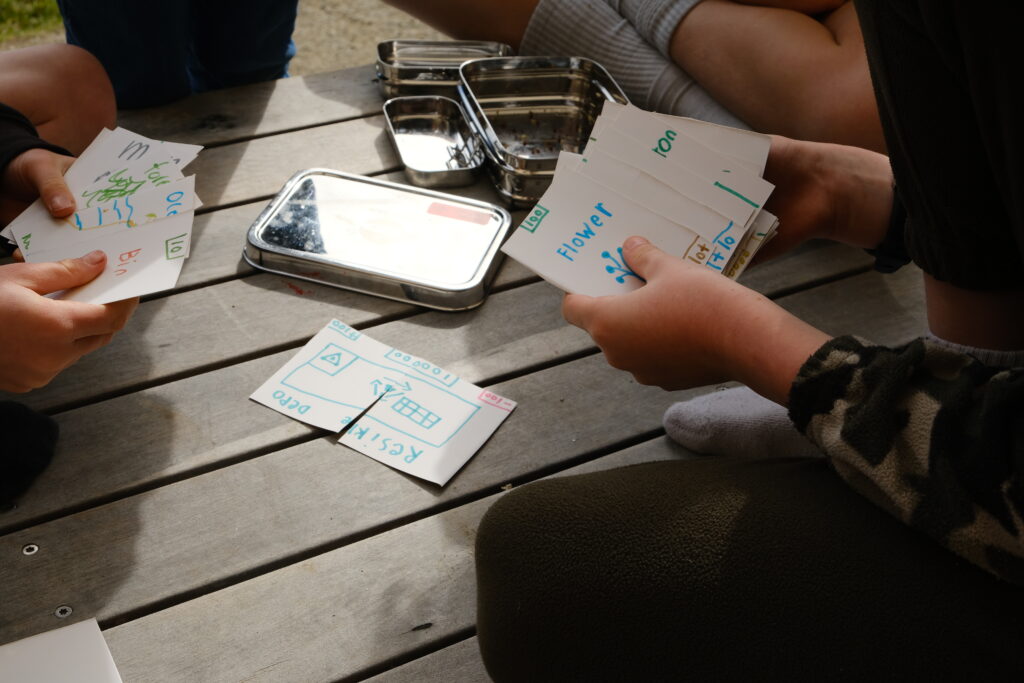
sharing our letter to the earth - written by primary school children