
“mum sends me a note, with some cuttings, and other things she’s remembered”
“mum sends me a note, with some cuttings, and other things she’s remembered” was the first public unfolding of Isabella’s ongoing research Cuttings – the development of acknowledgement as curatorial method.
Hosting obuyile by Thulani Rachia (Shangaan-Zulu/so-called South Africa/UK) and /ˈmeɪtriɑːk/ by Hayden Ryan (Yuin-Walbanja/so-called Australia), the exhibition of performance, experimental sound, durational composition, moving image, and garments, brought together two international artists whose works had not previously met, and invited audiences to retrace our collective memories, and acknowledge what – and who – we may not know.
The works of Rachia and Ryan acknowledge and contend with the colonial violence embedded within and reproduced by public infrastructures – and resuscitate the voices and memories that have been silenced. The space of an old school, currently undergoing restoration, reinforced the artists’ respective interventions in taught narratives, and their own restoration of their ancestors’ voices within public infrastructures and collective memories.
The project’s curatorial statement:
As we gather within a school – the public infrastructure to which the canals of knowledge, and rivers of memory merge within and against[1] – we are invited to return to what has been buried.
Both Thulani Rachia (Zulu/so-called South Africa/UK), and Hayden Ryan (Yuin-Walbanja/so-called Australia) invite us to correspond with the cuttings of knowledge and memories that have been sent to us, and to acknowledge the voices the ongoing colonial project attempts to bury. Their works are an invitation to remember and reckon with what, and who we may not know.
Rachia’s iterative work obuyile (2021 – ongoing) is one that was birthed from correspondence. With its foundations in melodies and harmonies vocalised by Rachia in response to cities marked by colonial violence across Scotland and Europe, and its crystallisation formed by a dream received by an ancestor – Rachia invites audiences to reconfigure, re-position, and retrace ourselves within these violent urban landscapes. The 7-day installation, an unfolding from a live performance in St Giles, “materialises time” and memory – offering an alternative cartography for us to track the coordinates that make us so.[2] This work is an excavation of dreams laid to rest within these walls.[3]
Ryan’s /’meitria:k/ (2026) urges us to literally pick up the phone to six mothers and daughters in his family. To acknowledge that “those voices, and those histories are there, and have always been there, no matter how much colonialism tries to bury” them.[4] At the beginning of the work we hear a matriarch reminisce about trams circling roads near her school. As we listen, we are circling within the public infrastructure that made, and makes these voices unfamiliar. Ryan brings forth layers of conversations to make sure they are known.
Both artists return us to points where time and memory merge. Instigating reckonings with our pasts, whilst erecting a future through the excavation of voices buried.[5]
As we gather, we arrive at a point of merging from our knowledge of the roads[6], and the memories that once belonged to our grandmothers, mothers, and friends. This exhibition hopes to invite you to retrace and correspond with the notes, the cuttings, and other things remembered, that were sent to us.[7]
About the Artists:
Thulani Rachia (Shangaan-Zulu/so-called South Africa/UK) is an artist who works across performance, choreography, music composition, and moving image, with training in performance and architecture. The current Cavendish Art Science Fellow at the University of Cambridge, Rachia’s work responds to growing up within the spatial legacies of apartheid and built environments that structure social hierarchies – reimagining spaces and materials marked by harm, and opening possibilities for thinking otherwise. Rachia’s work has been exhibited nationally and internationally, including São Paulo-Arte; Bluecoat, Liverpool, Artists’ Moving Image Festival (AMIF); Subsolo Laboratório de Arte, São Paulo; Glasgow International Festival of Contemporary Art; and Edinburgh Art Festival.
Hayden Ryan is a Yuin-Walbanja sound artist and scholar. His sound work explores Indigenous identities, histories, and relationships with place through immersive installations. His current PhD research investigates how sonic practice and acoustic space influence ways of understanding the environment, history, law, and positionality within Indigenous cultures – blending signal-processing, (psycho)acoustics and spatial audio with Indigenous research methods to encapsulate the nuances between First Peoples and sound. Having recently worked with Raven Chacon for Naarm’s (Melbourne) RISING Festival, Ryan’s work has been making waves internationally. His work has been hosted in New York, and he was the 2025 Helsinki International Artist Programme Resident. This was the first time Ryan’s work was hosted in Scotland, and the UK.
[1] “the canals of knowledge, and rivers of memory” is a line that takes deep inspiration from the work of Emilio Carballido, and Toni Morrison.
[2] Artist interview, Thulani Rachia and Isabella Sheridan-Moore (June 2026).
[3] Rachia is led by a speculative enquiry asks “Siwaguba kanjani amaphupho ethu agqitjwe kulezindonga?”:“how do we excavate the dreams laid to rest in these walls?”
[4] Artist interview, Hayden Ryan and Isabella Sheridan-Moore (May 2026).
[5] These lines respond to the words of Etel Adnan, held within Night. A text that was lent to me by my mentor, Professor Omar Kholeif.
[6] This line draws inspiration from Etel Ednan, and Emilio Carballido – the latter, I encountered through the work of Diana Taylor.
[7] These words, and the title of this project, are those of Dr Amanda Thomson’s, in her book belonging. This text is a founding source of this curatorial research.
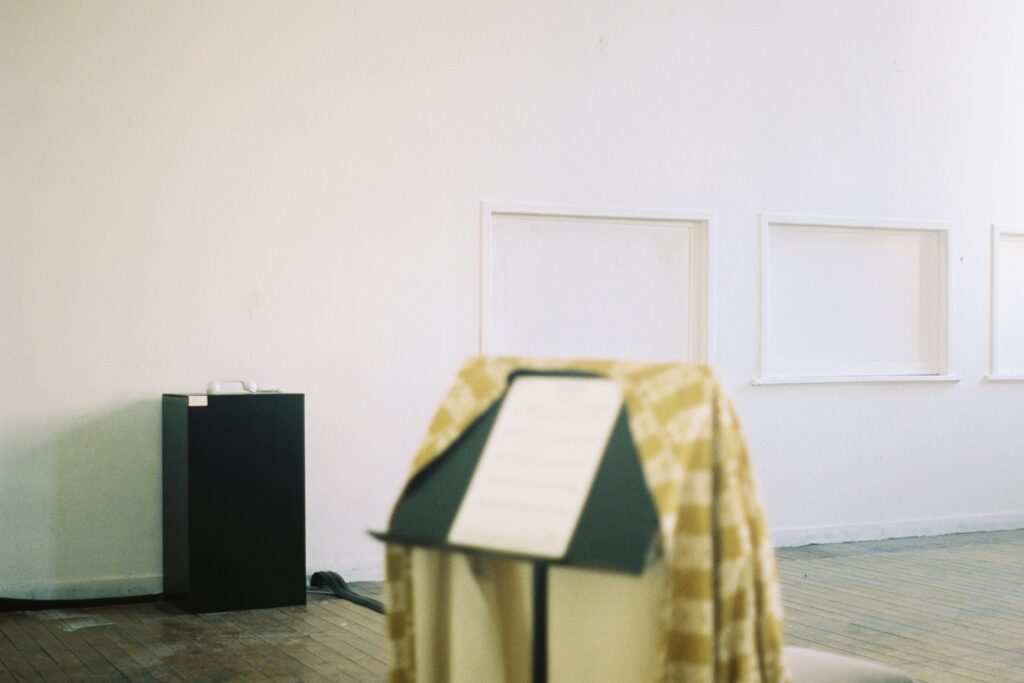
'/ˈmeɪtriɑːk/' by Hayden Ryan (2026), and 'obuyile' by Thulani Rachia (2021 - ongoing) in "mum sends me a note, with some cuttings, and other things she's remembered" (July 2026). Image Credit: Miriam Ali
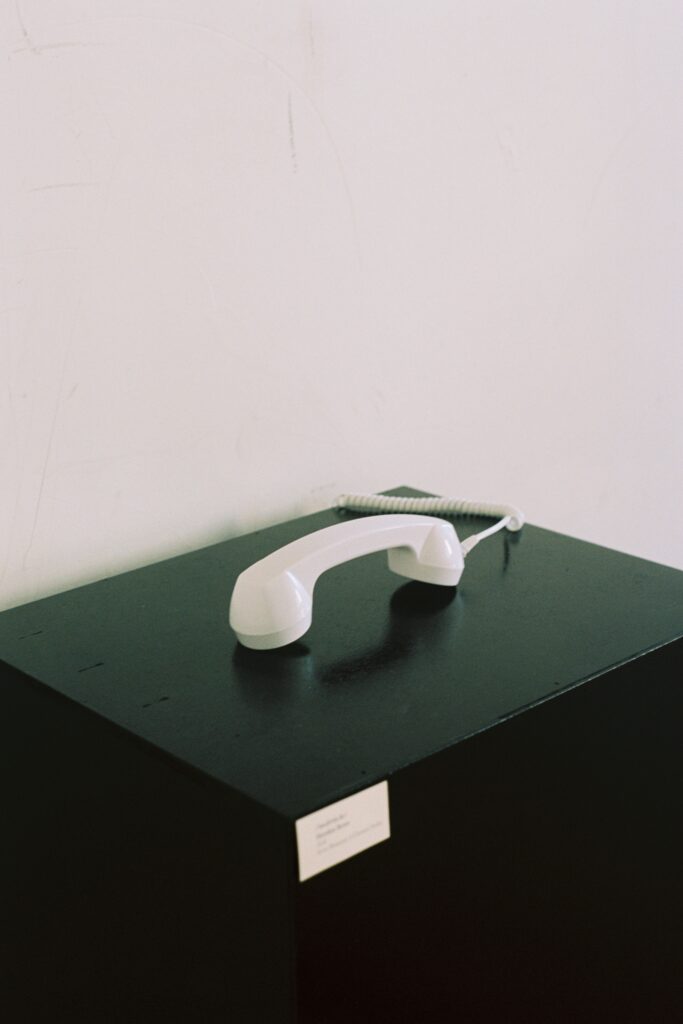
/ˈmeɪtriɑːk/ by Hayden Ryan (2026). Image Credit: Miriam Ali
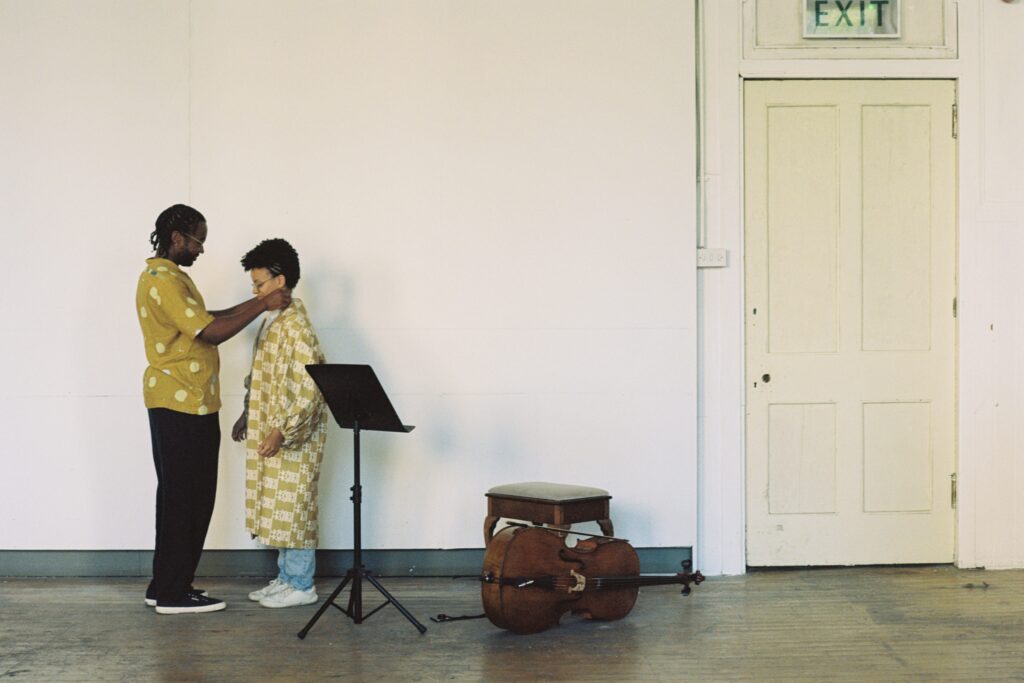
Thulani Rachia and Simone Seales, during a live performance of 'obuyile' at "mum sends me a note, with some cuttings, and other things she's remembered" (July 2026). Image Credit: Miriam Ali
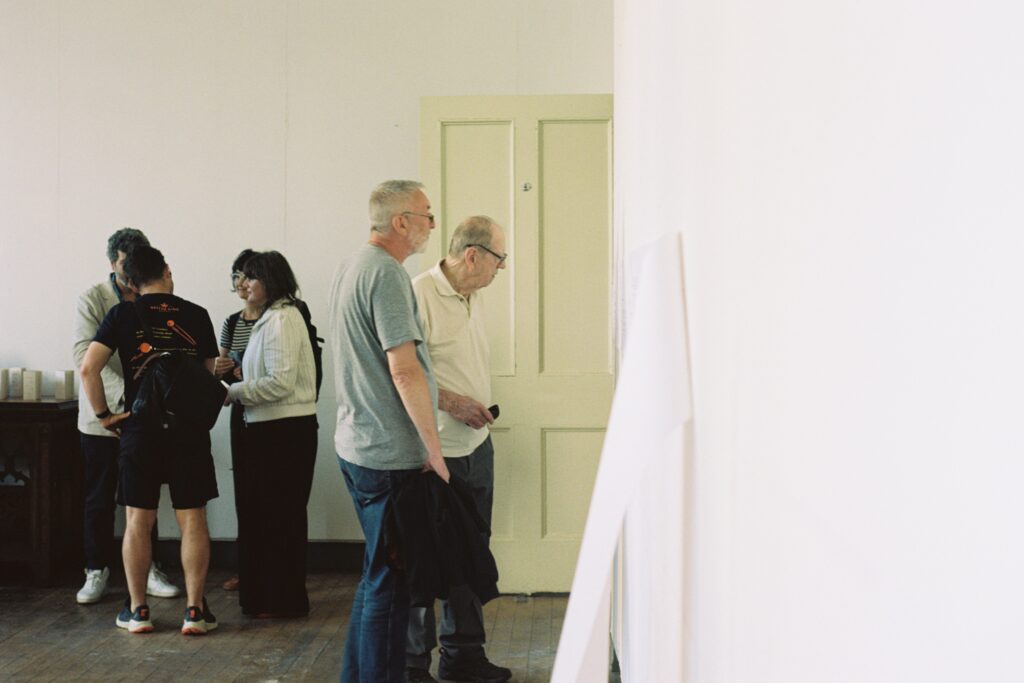
Audience members reading a scroll essay - the first iteration of this project - written by Isabella Sheridan-Moore. Image Credit: Miriam Ali
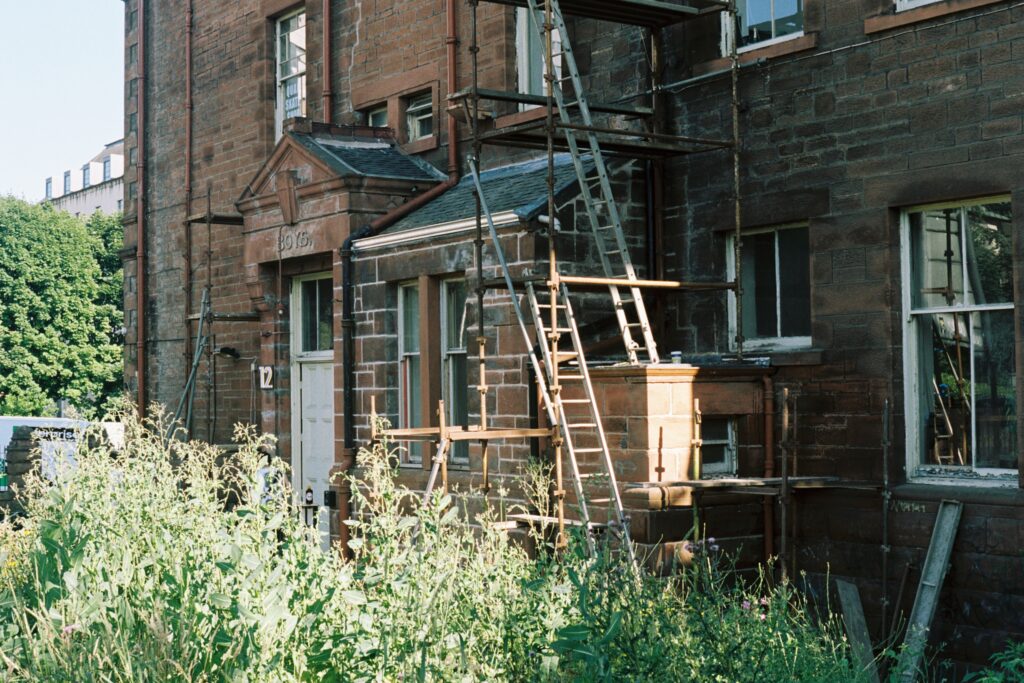
Restoration works at the venue, End Studios - The Old School, 12 Washington Street, Glasgow. Image Credit: Miriam Ali
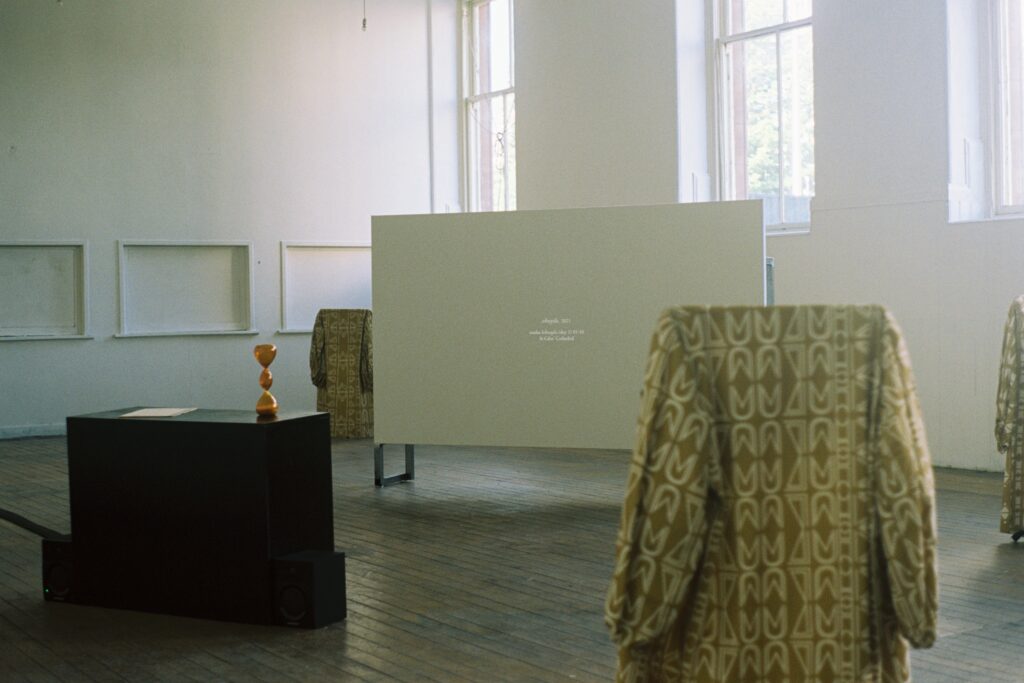
obuyile (2021 - ongoing) by Thulani Rachia. The steel structure that the moving image component was projected on was made by Glasgow-based artist, Ruby Stewart. Image Credit: Miriam Ali
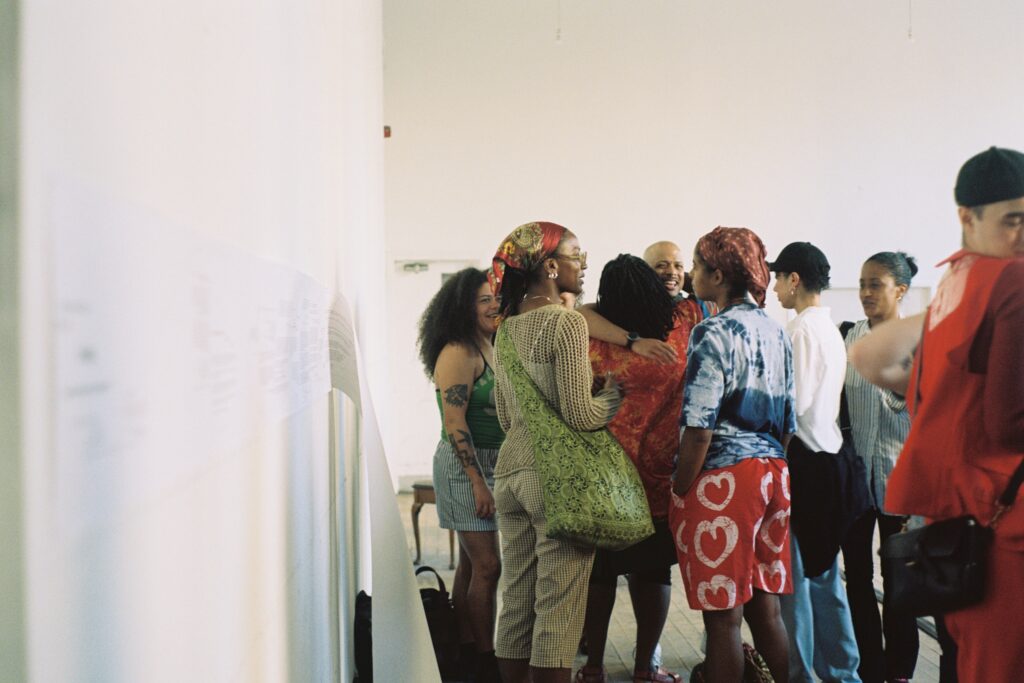
Opening night. Image Credit: Miriam Ali
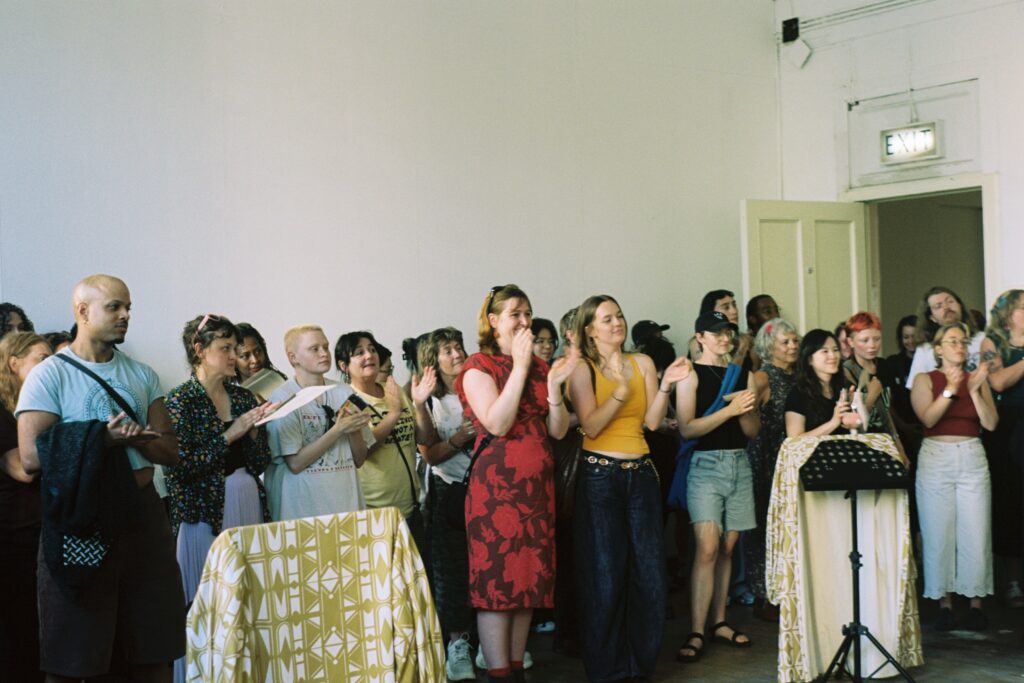
Opening night. Image Credit: Miriam Ali
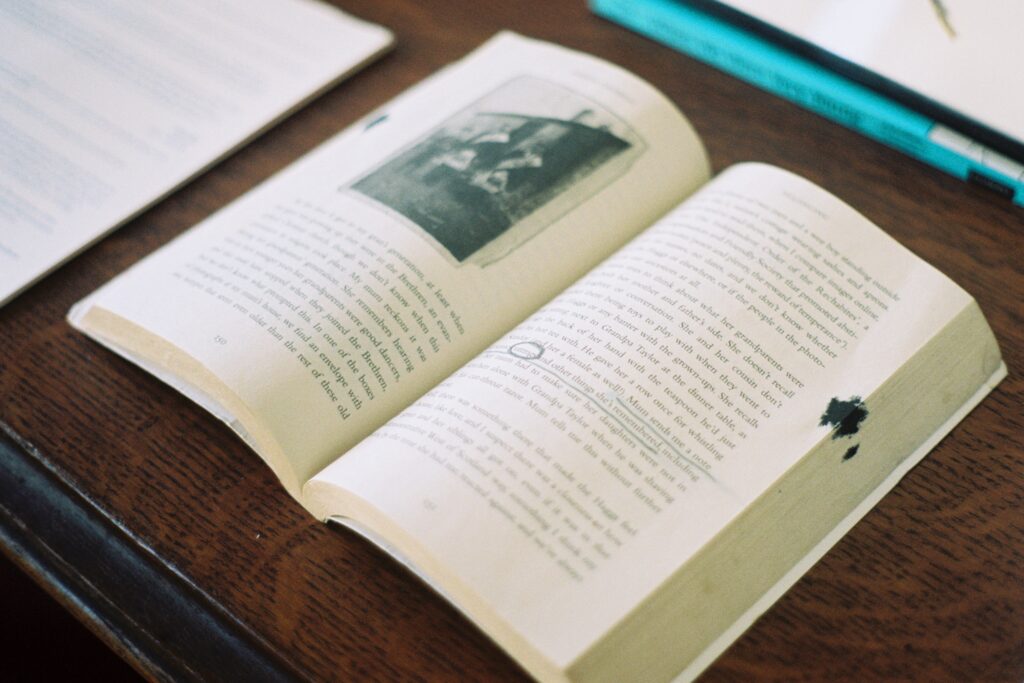
Dr Amanda Thomson's book 'belonging: Natural Histories of Place, Identity, and Home' - where the project borrows its' name, and the catalyst to the framing of Isabella's research.